
Herbie Hancock
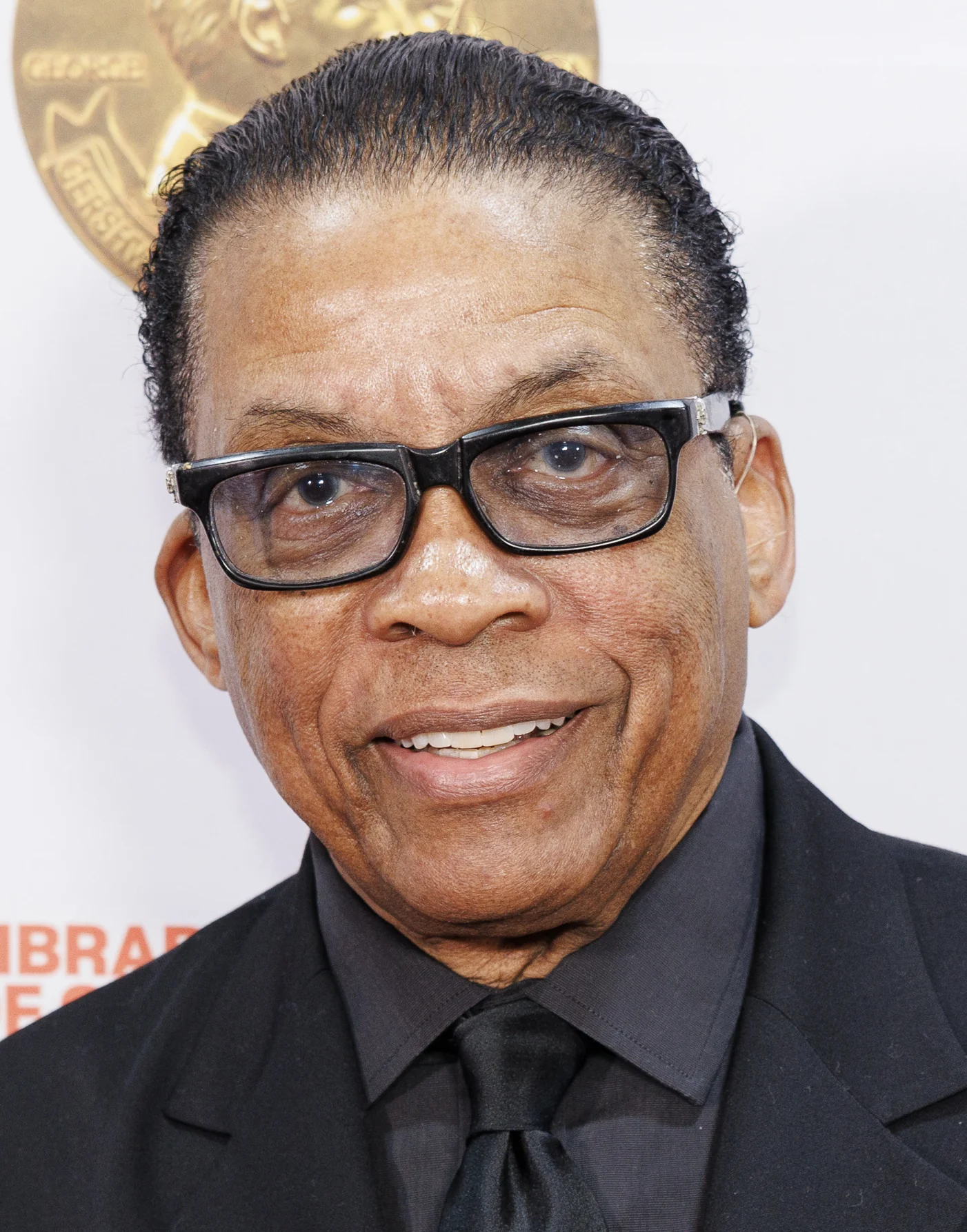
Image from Wikipedia
Image from Wikipedia
Herbie Hancock: The Visionary of Jazz between Bebop, Fusion, and Electronic Future
An artist who has continually reinvented jazz
Herbie Hancock is one of the most influential pianists, composers, and bandleaders in modern music history. Born on April 12, 1940, in Chicago, he evolved from a child prodigy to a stylistic architect of jazz, whose artistic development combines acoustic virtuosity, electronic innovation, and funk-infused groove culture. Early on, Hancock fused musical precision with curiosity for technology and sound exploration, making his music career extraordinary and adaptable over decades. (britannica.com)
From Chicago to the forefront of jazz
Hancock's career began with classical training and an early sensation: at the age of eleven, he performed a Mozart piano concerto with the Chicago Symphony Orchestra. This combination of discipline, harmonic understanding, and openness to improvisation permanently shaped his style. During his high school years, he formed his first ensembles, later studying music and electrical engineering simultaneously at Grinnell College—a rare dual profile that explains his later fascination with synthesizers, studio technology, and electronic sound design. (britannica.com)
The real breakthrough came in 1960 when Donald Byrd discovered him and brought Hancock to New York. After two years of session work, he signed with Blue Note and released his debut album Takin’ Off in 1963, which immediately made an impression with "Watermelon Man." Here, he showcased his talent for combining complex jazz language with catchy melodies—a feature that later allowed his career to oscillate between artistic boldness and broad popularity. (herbiehancock.com)
The Miles Davis Years: School of Modernity
In 1963, Miles Davis invited him into his quintet, making Hancock part of one of the most creative ensembles in jazz history. Alongside Wayne Shorter, Ron Carter, and Tony Williams, he developed a style of interplay that raised harmonic openness, rhythmic elasticity, and collective improvisation to a new level. During this period, classics like ESP, Nefertiti, and Sorcerer emerged; Hancock also contributed to Davis’ groundbreaking In a Silent Way. (herbiehancock.com)
These years were more than just a chapter of collaboration: they were an aesthetic school. Hancock learned how to compose, accompany, and solo in the tension between structure and freedom. His ability to not only play rhythmic figures but to position them dramatically made him a pianist whose accompaniments often have as much impact as his solos. This is where a core of his artistic authority lies: He thinks of music as living architecture, not merely a sequence of chords. (herbiehancock.com)
Blue Note, Sound Colors, and the Great Early Masterpieces
Alongside his work with Davis, Hancock pursued a solo career of outstanding quality. On Blue Note, albums like Maiden Voyage, Empyrean Isles, and Speak Like a Child became reference points in modern jazz. These recordings feature a composer who combines melodic clarity with harmonic sophistication, achieving an unmistakable blend of lyrical lightness and structural depth. (herbiehancock.com)
Particularly Maiden Voyage and the resulting standards made Hancock an improvisational source for generations of other musicians. His compositions became open formulas that invited development rather than becoming stagnant in jazz. His film work, such as the score for Michelangelo Antonioni's Blow Up, further expanded his profile: Hancock became an early artist who not only released albums but created soundscapes. (herbiehancock.com)
Head Hunters and the Radical Step into Fusion
With Head Hunters, Hancock reached a turning point in 1973 that opened jazz well beyond its scene. The album marked a massive stylistic leap: funk-oriented rhythms, electric keyboards, and a groove understanding influenced by soul, R&B, and the energy of James Brown. According to the official Herbie Hancock biography, Head Hunters became the first jazz album to reach platinum; Pitchfork describes it as an album that remained in the Billboard charts for 42 weeks and made history as the first platinum jazz album. (herbiehancock.com)
The song "Chameleon" became the central emblem of this phase, while Hancock's funky reinterpretation of "Watermelon Man" demonstrated his ability to transform his own material into new contexts. The artistic evolution was by no means a betrayal of jazz tradition but rather its expansion. Hancock proved that improvisation, electronics, and club aesthetics do not have to work against each other but can merge into a new language in modern music production. (herbiehancock.com)
Electronics, Hip-Hop, and the Culture of Experimentation
In the 1980s, Hancock shifted his focus further towards electronic modernity. With Future Shock and the hit "Rockit," he reached a broad audience beyond jazz, winning a Grammy and signaling an early integration of jazz, hip-hop, and club culture with the scratch techniques in his sound. The official biography characterizes "Rockit" as a dance and R&B success; the video also won five MTV Awards, confirming Hancock's status as a boundary crosser between music and pop culture. (herbiehancock.com)
Hancock did not treat electronic instruments merely as effects but as compositional tools. He experimented with vocoders, synthesizers, and sampling long before these means became commonplace in the mainstream. His Harvard lecture on jazz innovations emphasizes this approach: he discussed technological expansion, creative risk-taking, and how music can become larger, not smaller, through new tools. (herbiehancock.com)
Awards, Recognition, and Cultural Reach
Hancock's work has also been recognized institutionally. The official biography mentions an Oscar for the score to ’Round Midnight, several Grammys, and other awards for his style-defining projects. In the 1990s and 2000s, he remained productive: The New Standard, Gershwin’s World, Possibilities, and River: The Joni Letters showcased a musician who doesn't just interpret standards but recontextualizes them culturally. (herbiehancock.com)
His influence extends far beyond jazz. The official biography emphasizes that his productions from the 1970s influenced and were sampled by generations of hip-hop and dance artists. This highlights Hancock's role as a cultural figure: he is not just a virtuoso but a generator of musical ideas that continue to thrive in funk, electronics, pop, and sampling culture. (herbiehancock.com)
Current Projects, Tours, and Artistic Presence
Even at an advanced stage of his career, Herbie Hancock remains active on stage. The official website announced a fall tour in the USA for 2024 and reported a European tour in 2025 with stops in Paris, Hamburg, Ghent, Stuttgart, Munich, Essen, Rotterdam, Perugia, Rome, Udine, Bergamo, Antibes, Naples, London, Marciac, Madrid, and other cities. This demonstrates an artist who sees his stage presence not as a retrospective but as an ongoing present. (herbiehancock.com)
His public role today also encompasses education and institutional work. Through the Herbie Hancock Institute of Jazz and his website, he remains connected with educational initiatives, jazz promotion, and cultural programming. This connection between concert practice, youth development, and musical education strengthens his status as an authority in an entire art form. (hancockinstitute.org)
Discography and Critical Reception
Herbie Hancock's discography reads like a map of modern jazz and its shifting boundaries. Essential cornerstones include Takin’ Off, Maiden Voyage, Empyrean Isles, Speak Like a Child, Head Hunters, Thrust, Future Shock, Gershwin’s World, and River: The Joni Letters. Reception has not always been unanimous, as his electric and funk-oriented phases often divided critics, while the broader audience frequently responded more quickly than jazz purists. (herbiehancock.com)
It is precisely this tension that contributes to his historical significance. Hancock never settled into one definition: he is a jazz pianist, fusion pioneer, film composer, studio experimenter, and a bridge-builder between African American musical history, club culture, and pop. His most significant works remain enduring because they are not only technically brilliant but translate cultural movements into sound. (herbiehancock.com)
Style, Signature, and Musical Development
Herbie Hancock's style combines sparkling touch with complex harmonics, funk impulses with an elegant, often almost dance-like phrasing. His improvisations thrive on expressive cross-rhythms, pointed accents, and a sensuality of timing that becomes immediately audible in the ensemble. He does not think in mere scales but in colors, arcs of tension, and rhythmic textures—this is what has distinguished him from the crowd for decades. (herbiehancock.com)
This musical development remains so exciting because it never feels complete. Hancock has not abandoned acoustic jazz; instead, he has continually recontextualized it; he has not viewed electronics as a trend but as an extension of expression. To listen to his career is to hear the history of jazz in motion—from the bebop legacy through fusion to the digital present. (herbiehancock.com)
Conclusion: A Living Standard for Musical Renewal
Herbie Hancock is compelling because he embodies the rare combination of historical depth, technical mastery, and unbroken curiosity. He has created standards, broken down genres, and influenced generations of musicians without ever dwelling in nostalgia. Those who experience him live encounter not just a jazz legend status but an artist who continues to view his music as an open laboratory today. (herbiehancock.com)
His performances remain an event because they connect experience, improvisation, and the present. This is where the special magic of this musician lies: Herbie Hancock does not merely play his history; he continues to write it in the moment of the concert. Anyone who loves jazz, fusion, and musical innovation should see him live. (herbiehancock.com)
Official Channels of Herbie Hancock:
- Instagram: https://www.instagram.com/herbiehancockofficial/
- Facebook: https://www.facebook.com/herbiehancock/
- YouTube: no official profile found
- Spotify: no official profile found
- TikTok: no official profile found
Sources:
- Herbie Hancock - Biography Full Page - Herbie Hancock
- Herbie Hancock - Official Website
- Herbie Hancock - Contacts / Social Media / Management
- Herbie Hancock - 2024 Fall Tour Announced!
- Herbie Hancock - Herbie returns to Europe this Summer
- Britannica - Herbie Hancock
- Pitchfork - Herbie Hancock: Head Hunters Album Review
- Herbie Hancock - Head Hunters
- Herbie Hancock - Harvard Lectures On Innovations In Jazz
- Wikipedia: Image and text source - Herbie Hancock
Upcoming Events
Secrets: The Funky Herbie Hancock