
Kübra Gümüşay
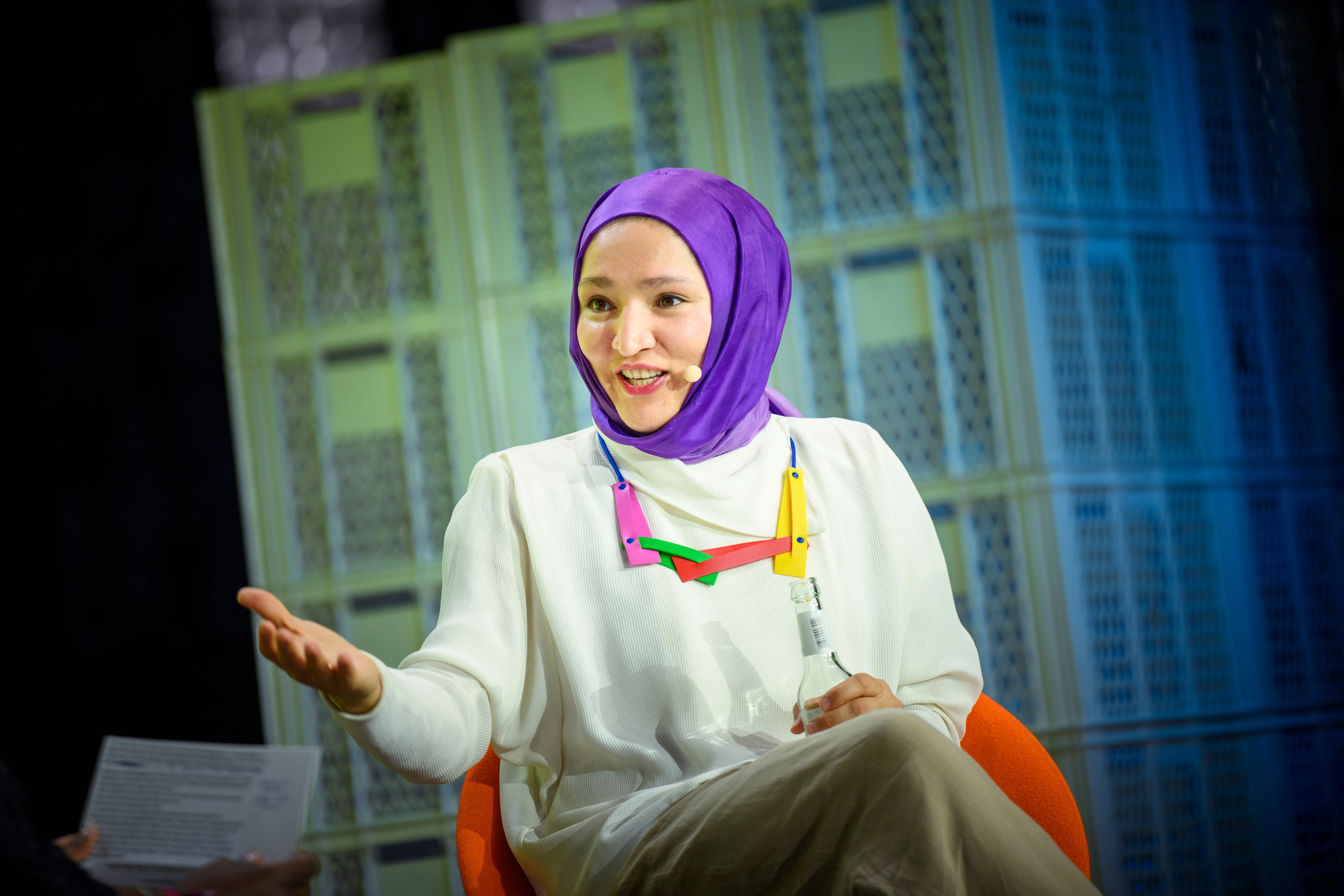
Image from Wikipedia
Image from Wikipedia
Kübra Gümüşay – Author, Net Activist, and a Defining Voice for Language, Identity, and Social Change
An Intellectual Who Changes Debates
Kübra Gümüşay, born on June 28, 1988, in Hamburg, is one of the most prominent German-speaking authors and net activists of her generation. Her public journey began not on a stage, but in the digital sphere, in blogs, columns, and debates about racism, feminism, religion, and social participation. From this blend of journalistic clarity, political stance, and personal experience, she developed a voice that resonates far beyond traditional literary boundaries. ([de.wikipedia.org](https://de.wikipedia.org/wiki/K%C3%BCbra_G%C3%BCm%C3%BC%C5%9Fay?utm_source=openai))
Biographical Roots and Early Influences
Gümüşay studied political science in Hamburg and at the School of Oriental and African Studies at the University of London. Her family history is closely tied to migration, education, and the struggles for visibility: her parents left Turkey because her mother was no longer allowed to teach at Istanbul University due to her headscarf. This biographical experience forms a central resonance space for her thinking, which consistently combines political analysis with personal empowerment. ([de.wikipedia.org](https://de.wikipedia.org/wiki/K%C3%BCbra_G%C3%BCm%C3%BC%C5%9Fay?utm_source=openai))
From an early age, she combined journalistic work with societal intervention. As editor-in-chief of the Hamburg youth magazine Freihafen, she gained editorial experience before publishing as a freelance journalist on topics such as migration, integration, Islam, and feminism. Her focus on language, assignments, and power became her trademark. From the very beginning, her public appearance was characterized not by self-promotion, but by precision and friction. ([de.wikipedia.org](https://de.wikipedia.org/wiki/K%C3%BCbra_G%C3%BCm%C3%BC%C5%9Fay?utm_source=openai))
The Breakthrough Online: Blog, Column, and Debate
In 2008, Gümüşay launched the blog “Ein Fremdwörterbuch,” where she wrote about the internet, politics, society, feminism, and Islam until the end of 2019. The blog attracted up to 13,000 visits per month and was nominated for the Grimme Online Award in 2011. Here, the profile of an author emerges who not only utilizes digital public spaces but also structures and comments on them. She aimed to break stereotypes and give visibility to people who rarely appear in the media mainstream. ([de.wikipedia.org](https://de.wikipedia.org/wiki/K%C3%BCbra_G%C3%BCm%C3%BC%C5%9Fay?utm_source=openai))
Particular attention was drawn to her column “Das Tuch” in taz, where she regularly wrote from the perspective of a Muslim woman wearing a headscarf from 2010 to June 2013. This made her one of the first hijab-wearing columnists in Germany. The texts made it clear how closely politics, everyday perception, and projection are intertwined, and established Gümüşay as a pointed commentator on a pluralistic society. ([de.wikipedia.org](https://de.wikipedia.org/wiki/K%C3%BCbra_G%C3%BCm%C3%BC%C5%9Fay?utm_source=openai))
Author Profile, Bestsellers, and International Visibility
Gümüşay achieved literary and discursive breakthrough with her essay book “Sprache und Sein.” The book was published in 2020 by Hanser Berlin, later translated into English, Italian, Dutch, Mandarin, and Korean, and positioned her internationally as an author with substantial reach. The thesis of the book, that language is never neutral, was widely discussed in the press and regarded as an analytical key to racism, identity, and power. ([kubragumusay.com](https://kubragumusay.com/about-en/))
The critical reception particularly praised her ability to describe structural discrimination with a clear, essayistic approach. Zeit emphasized that she argues against racism and sexism and advocates for inclusive language; other reviews highlighted how consistently she exposes the political dimension of naming and assignment. Her writing combines theory, experience, and societal intervention into a concise form of contemporary non-fiction. ([zeit.de](https://www.zeit.de/2020/21/kuebra-guemuesay-autorin-anschlag-hanau-rassismus-islamismus?utm_source=openai))
Current Projects, Fellowship Work, and Cultural Practice
Gümüşay is currently working as a fellow at The New Institute in Hamburg, exploring "just futures," "real utopias," and the politics of imagination. Her website also mentions upcoming positions at the Centre for Futures of Sustainability at the University of Hamburg from 2026. These projects show that she does not limit herself to publications but understands social futures as an intellectual and cultural task. ([kubragumusay.com](https://kubragumusay.com/about-en/))
Her ongoing formats include the conversation series “Utopia Talks” at the Thalia Theater and “Resistance and Life” at eeden. Additionally, she plays a role as a co-founder of various initiatives, including the feminist co-creation space eeden and the #ausnahmslos alliance. The #ausnahmslos campaign received the Clara Zetkin Women’s Award in 2016; eeden was awarded “Cultural and Creative Pilot Germany” in 2019. ([kubragumusay.com](https://kubragumusay.com/about-en/))
Work, Discography, and Critical Reception
As Kübra Gümüşay is not a musician, her “discography” in the strict sense consists of her journalistic work. The central title remains “Sprache und Sein,” supplemented by translations like “Speaking and Being” and further publications in anthologies and essays. These include contributions and forewords in literary and political anthologies, such as those on Islamic feminisms, cultural cohesion, fake news, and social responsibility. ([kubragumusay.com](https://kubragumusay.com/about-en/))
Her media impact is based on debate capability rather than chart logic. Forbes listed her among the “30 under 30” in Europe in 2018, and her earlier awards range from the nomination for the Grimme Online Award to being honored as “Ambassador for Equality” by the Federal Anti-Discrimination Agency. The reception shows an author whose influence is measured less by sales figures and more by shifts in discourse. ([kubragumusay.com](https://kubragumusay.com/about-en/))
Style, Language, and Cultural Influence
Gümüşay’s style is analytical, accessible, and confrontational. She argues with a blend of journalistic sharpness, essayistic density, and political consistency. Particularly in the realm of language, she demonstrates authority: words do not appear to her merely as tools but as social forces that can order, impede, or open up reality. ([zeit.de](https://www.zeit.de/kultur/literatur/2020-01/kuebra-guemuesay-sprache-und-sein-rassismus-kritik?utm_source=openai))
Culturally, she acts as a bridge figure between media, literature, activism, and academic debate. Her contributions in press, stage formats, and book projects showcase an author who does not smooth societal conflicts but rather makes them precisely visible. Those who read Gümüşay or experience her live encounter not a superficial attitude, but a clear, reflective, and simultaneously emotionally charged language that demands responsibility. ([silbersalz-festival.com](https://www.silbersalz-festival.com/en/p/kubra-gumusay?utm_source=openai))
Conclusion: Why Kübra Gümüşay Remains Exciting
Kübra Gümüşay represents a rare combination of intellectual sharpness, media presence, and societal impact. She has demonstrated how a public authorship can emerge from blogs, columns, books, and discussion formats that not only accompany debates but shape them. Anyone interested in language, identity, feminism, and contemporary culture finds in her an indispensable voice. Her thinking remains relevant because it touches on fundamental questions of modern societies: Who gets seen, who gets named, and who gets heard? ([kubragumusay.com](https://kubragumusay.com/about-en/))
A live encounter with Kübra Gümüşay is worthwhile for anyone who wants to understand language not just as a medium but as a societal force. Her lectures and discussion series combine political analysis with literary presence, making clear why she is one of the most prominent voices in the German-speaking cultural sphere. ([kubragumusay.com](https://kubragumusay.com/about-en/))
Official Channels of Kübra Gümüşay:
- Instagram: https://instagram.com/kuebrag
- Facebook: No official profile found
- YouTube: No official profile found
- Spotify: No official profile found
- TikTok: No official profile found
- X/Twitter: https://twitter.com/kuebra
Sources:
- Kübra Gümüşay – Official Website
- Kübra Gümüşay – About / Projects / Publications
- Wikipedia: Kübra Gümüşay
- DIE ZEIT – Kübra Gümüşay: Symbol Woman
- DIE ZEIT – Never Again Intellectual Cleaning Lady
- RND – Author Kübra Gümüşay: Language is Not a Neutral Tool
- Silbersalz Festival – Kübra Gümüşay
- Official Website – Contact / Social Links