
Bielefeld
Heinrichstraße 24, 33602 Bielefeld, Deutschland
BGW Bielefeld Model | Heinrichstraße & Living Café
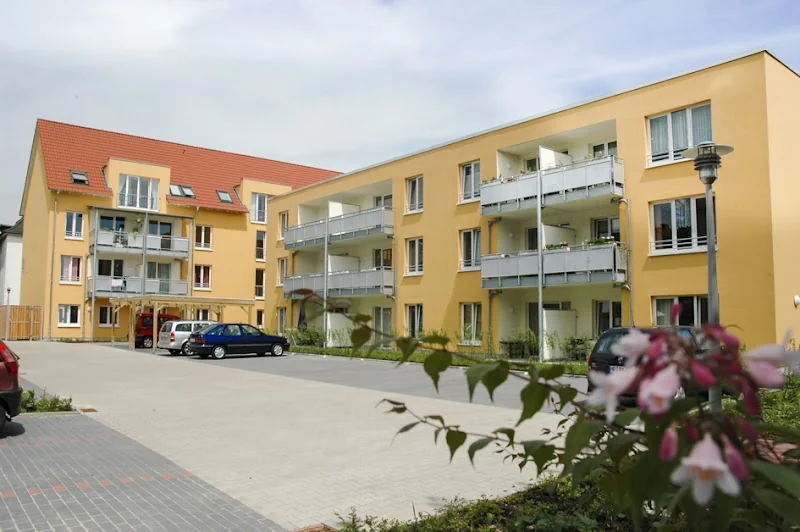
The BGW Bielefeld Model at Heinrichstraße 24 / Walther-Rathenau-Straße 65 is one of the defining housing offers of BGW in Bielefeld-Mitte. The facility combines barrier-free living with a clear neighborhood concept, a living café, and a neighborhood and care office. Therefore, those who search here will not find a classic event location, but a living environment with services, community, and reliable support. Official information describes the location as central, close to the city, and well integrated into the infrastructure; the care consultation additionally mentions shopping opportunities and bus stops in the vicinity. The offer is particularly relevant for people who wish to live independently while also paying attention to a reliable support network. With 43 apartments, different apartment sizes, and a social concept, the location has developed into an important example of the Bielefeld Model. This makes it interesting for seekers who are looking for not just an address, but a practical living solution with structure and perspective. ([bgw-bielefeld.de](https://www.bgw-bielefeld.de/immobilien/heinrichstrasse-24-walther-rathenau-strasse-65-in-mitte/))
Independent living with security of supply
The central principle of the Bielefeld Model is the connection of independent living and security of supply. BGW has described the concept since the 1990s as a neighborhood-based approach that does not rely on fixed care or service fees. This means: tenants only pay for services they actually use and are not required to take advantage of the support from the cooperation partner if needed. This freedom of choice is a core aspect of the model and distinguishes it from many classic service living forms. The documents also emphasize that barrier-free apartments, a living café, a temporary care apartment, and a neighborhood and care office work together. The Heinrichstraße location thus represents a living concept that organizes security not through rigid packages, but through good structures in everyday life. The concept appears very modern because it takes autonomy seriously and only offers help where it is really needed. ([bgw-bielefeld.de](https://www.bgw-bielefeld.de/wp-content/uploads/2024/01/Bi_Modell_2024web3.pdf))
This is particularly interesting for seekers because the model is not only intended for older people. BGW describes apartments for people with and without support needs and points out that the concept also benefits younger individuals with disabilities or temporary assistance needs. According to MellyCox, the location even offers 24-hour security of supply within the framework of the Bielefeld Model. This makes it clear that here, not only living itself is considered, but also the social and care embedding in the neighborhood. The feeling of home is thus created not only by the apartment but by the interplay of the community, service providers, and an environment designed for everyday practicality. Those who apply here are not just choosing an address, but a system that brings together familiar surroundings, social closeness, and reliable support. ([mellycox.de](https://mellycox.de/heinrichstrasse/?utm_source=openai))
Apartments, floor plans, and barrier-free features
The facility at Heinrichstraße comprises 43 barrier-free apartments. The municipal care consultation states sizes of 45 to 70 square meters as well as 2 to 3 rooms, kitchen, bathroom, and balcony; BGW adds terrace or balcony as a feature on its property page. It is also documented that 22 of the apartments are publicly funded. For interested parties, a housing entitlement certificate may also be relevant, as the care consultation explicitly points out that it is sometimes required. This mix of privately financed and subsidized apartments makes the location interesting for different life situations. The apartments are not oversized, but large enough for comfortable, practical use with a clear focus on barrier-free living. The relationship between manageable living space and functional features is an advantage when paths are short, rooms are usable, and the living situation remains planable. ([bgw-bielefeld.de](https://www.bgw-bielefeld.de/immobilien/heinrichstrasse-24-walther-rathenau-strasse-65-in-mitte/))
The practical profile of the house can be well derived from the facts: Those looking for a central location, short paths, and a barrier-free living form will find a clearly structured offer here. Barrier-free living is not just a buzzword, but part of the entire construction and usage concept. BGW speaks of barrier-free apartments as a cornerstone of the model, and the facility at Heinrichstraße is listed as newly built in 2005 on the property page. For seekers, this means: The property is designed for long-term, comfortable living and not for short-term effects. The sizes between 45 and 70 square meters also show that different household sizes are addressed without losing focus on clarity and freedom of movement. Therefore, those considering the facility quickly recognize that it is not about a single highlight, but about a well-thought-out overall package of space, accessibility, and reliable living quality. ([bgw-bielefeld.de](https://www.bgw-bielefeld.de/bgw-insights/eine-erfolgsgeschichte-mit-zukunft-30-jahre-bielefelder-modell/))
Living café, neighborhood office, and everyday life in the house
A central feature of the Bielefeld Model is the living café. BGW describes it as a meeting place for shared meals, communication, and other activities; the city of Bielefeld also refers to the living café as a fixed component of the offer. It is here that it becomes clear that Heinrichstraße is more than just a residential address. The living café creates a space where neighborhood can develop in everyday life without the need to first enroll in a separate offer. For residents, this is particularly valuable because social contacts, reliability, and low-threshold encounters can take place directly at the place of residence. At the same time, the living café is a signal to the surroundings: The neighborhood remains open, not closed. It enables contacts between generations, promotes short paths in interaction, and turns the house into a place where living and encounters can meaningfully coexist. ([bgw-bielefeld.de](https://www.bgw-bielefeld.de/bgw-insights/eine-erfolgsgeschichte-mit-zukunft-30-jahre-bielefelder-modell/))
The living café is complemented by the neighborhood and care office. In the BGW documents, it is described as an on-site component of the model; the care consultation of the city additionally names MellyCox GmbH and Gepflegt Wohnen e.V. as cooperation partners. This transforms the residential building into a place where organization, assistance, and everyday support can be bundled. Self-help activities, intergenerational encounters, and the promotion of diversity in the neighborhood also belong to the guiding principles of the model according to BGW. This is important in everyday life because support needs do not always look the same. Some people only need occasional help, while others require more structure or personal guidance. The Bielefeld Model responds to this not with one-size-fits-all solutions, but with an adaptable social infrastructure directly in the house and in the neighborhood. This creates a living environment that does not patronize but accompanies. ([bgw-bielefeld.de](https://www.bgw-bielefeld.de/wp-content/uploads/2024/01/Bi_Modell_2024web3.pdf))
Location in Bielefeld-Mitte and good connections
The address Heinrichstraße 24 / Walther-Rathenau-Straße 65 is located in Bielefeld-Mitte. The care consultation describes the living environment as central with shopping opportunities and bus stops; MellyCox additionally assigns the location to the heart of Bielefeld-Mitte in the Paulusviertel. For practical housing searches, this is a strong argument because short paths in everyday life are often more important than large, representative areas. City-close locations facilitate shopping, medical appointments, meetings with relatives, and the use of public transport. BGW itself summarizes the location as central and city-close. This shows: The location is deliberately positioned so that living, accessibility, and infrastructure fit together. For many seekers, this combination is crucial because it promotes independence without sacrificing urban comfort. ([bgw-bielefeld.de](https://www.bgw-bielefeld.de/immobilien/heinrichstrasse-24-walther-rathenau-strasse-65-in-mitte/))
Those looking for Heinrichstraße should therefore think less of a classic event address and more of a residential neighborhood with everyday comfort. This combination of urban location and quiet residential function is already laid out in the title of the BGW brochure: living quietly and close to the city. The location supports the entire concept because it does not consider barrier-free living and security of supply in isolation but aligns them with a real, accessible environment. This is also a crucial point for people with support needs, as proximity to infrastructure creates independence. Thus, the location benefits not from individual superlatives, but from the sum of its practical advantages: central location, good connections, and a neighborhood structure tailored to everyday life. Those who live here are not isolated but integrated into a functioning environment with clear paths and short distances. ([bgw-bielefeld.de](https://www.bgw-bielefeld.de/wp-content/uploads/2024/01/Bi_Modell_2024web3.pdf))
History of the location and significance for Bielefeld
Heinrichstraße is one of the important milestones in the development of the Bielefeld Model. According to BGW, the residential complex was occupied on April 1, 2005, and it was then the third location where the concept of independent living with security of supply was implemented. In 2025, BGW celebrated a 20th anniversary for this. This timeline is important because it shows that the location was not designed experimentally or short-term, but is part of a housing strategy that has developed over the years. The facility at Heinrichstraße thus exemplifies an approach that has proven itself in practice and has been continuously developed for a long time. The anniversary made it clear that not only buildings have grown here, but also social relationships. The facility is thus not just a project, but a piece of lived neighborhood history. ([bgw-bielefeld.de](https://www.bgw-bielefeld.de/bgw-insights/20-jahre-bielefelder-modell-an-der-heinrichstrasse/))
The historical significance of the overall model is even greater. BGW states that it has been implementing the Bielefeld Model in practice together with cooperation partners since 1996; it is currently being realized in eleven neighborhoods. Recent BGW publications emphasize that the concept has gained national attention and is also being implemented in other cities. This indicates that the Heinrichstraße location is not only locally important but is part of a regionally recognized socio-spatial approach. For Bielefeld, this is an image factor and at the same time a concrete supply component. The housing concept shows how urban development, care, community, and barrier-free living space can be meaningfully connected. Especially because the idea does not end with the apartment but considers the neighborhood, the model has an impact far beyond the individual location. ([bgw-bielefeld.de](https://www.bgw-bielefeld.de/bgw-insights/eine-erfolgsgeschichte-mit-zukunft-30-jahre-bielefelder-modell/))
Photos, reviews, and inquiries: What seekers should know
Those looking for photos of the BGW Bielefeld Model Heinrichstraße will find image material about the location and housing concepts on the official pages and in the brochure. The BGW property page contains several images, and the brochure presents the living form with floor plans and illustrations. In terms of reviews, the situation is somewhat different: Verified sources focus mainly on property facts, location, features, and services. For a residential complex like this, such information is often more meaningful than short reviews because the offer strongly relies on barrier-free living, organization, and everyday practicality. Therefore, it is more worthwhile to look at the official property page, the municipal care consultation, and the BGW brochure rather than scattered review snippets. Those who want to understand the concept will find the most reliable information about the house, usage, and environment there. ([bgw-bielefeld.de](https://www.bgw-bielefeld.de/immobilien/heinrichstrasse-24-walther-rathenau-strasse-65-in-mitte/))
For a concrete inquiry, the key data is clear: 43 barrier-free apartments, 2 to 3 rooms, 45 to 70 square meters, balcony or terrace, plus living café and neighborhood and care office. The care consultation names BGW as the landlord and points out that a housing entitlement certificate may sometimes be required. Those who are seriously interested should therefore not only compare photos but also check the access requirements, funding, and the location in everyday life. This is exactly where the advantage of this location lies: It is planable, well documented, and designed for permanent living with reliable support. This makes Heinrichstraße a factually convincing address for all those seeking a barrier-free housing concept with social backing. ([bielefeld-pflegeberatung.de](https://www.bielefeld-pflegeberatung.de/Bielefelder-Modell-Heinrichstrasse/Wohnen-mit-Service-0120263335.html))
Sources:
Mehr anzeigenWeniger anzeigen
BGW Bielefeld Model | Heinrichstraße & Living Café
The BGW Bielefeld Model at Heinrichstraße 24 / Walther-Rathenau-Straße 65 is one of the defining housing offers of BGW in Bielefeld-Mitte. The facility combines barrier-free living with a clear neighborhood concept, a living café, and a neighborhood and care office. Therefore, those who search here will not find a classic event location, but a living environment with services, community, and reliable support. Official information describes the location as central, close to the city, and well integrated into the infrastructure; the care consultation additionally mentions shopping opportunities and bus stops in the vicinity. The offer is particularly relevant for people who wish to live independently while also paying attention to a reliable support network. With 43 apartments, different apartment sizes, and a social concept, the location has developed into an important example of the Bielefeld Model. This makes it interesting for seekers who are looking for not just an address, but a practical living solution with structure and perspective. ([bgw-bielefeld.de](https://www.bgw-bielefeld.de/immobilien/heinrichstrasse-24-walther-rathenau-strasse-65-in-mitte/))
Independent living with security of supply
The central principle of the Bielefeld Model is the connection of independent living and security of supply. BGW has described the concept since the 1990s as a neighborhood-based approach that does not rely on fixed care or service fees. This means: tenants only pay for services they actually use and are not required to take advantage of the support from the cooperation partner if needed. This freedom of choice is a core aspect of the model and distinguishes it from many classic service living forms. The documents also emphasize that barrier-free apartments, a living café, a temporary care apartment, and a neighborhood and care office work together. The Heinrichstraße location thus represents a living concept that organizes security not through rigid packages, but through good structures in everyday life. The concept appears very modern because it takes autonomy seriously and only offers help where it is really needed. ([bgw-bielefeld.de](https://www.bgw-bielefeld.de/wp-content/uploads/2024/01/Bi_Modell_2024web3.pdf))
This is particularly interesting for seekers because the model is not only intended for older people. BGW describes apartments for people with and without support needs and points out that the concept also benefits younger individuals with disabilities or temporary assistance needs. According to MellyCox, the location even offers 24-hour security of supply within the framework of the Bielefeld Model. This makes it clear that here, not only living itself is considered, but also the social and care embedding in the neighborhood. The feeling of home is thus created not only by the apartment but by the interplay of the community, service providers, and an environment designed for everyday practicality. Those who apply here are not just choosing an address, but a system that brings together familiar surroundings, social closeness, and reliable support. ([mellycox.de](https://mellycox.de/heinrichstrasse/?utm_source=openai))
Apartments, floor plans, and barrier-free features
The facility at Heinrichstraße comprises 43 barrier-free apartments. The municipal care consultation states sizes of 45 to 70 square meters as well as 2 to 3 rooms, kitchen, bathroom, and balcony; BGW adds terrace or balcony as a feature on its property page. It is also documented that 22 of the apartments are publicly funded. For interested parties, a housing entitlement certificate may also be relevant, as the care consultation explicitly points out that it is sometimes required. This mix of privately financed and subsidized apartments makes the location interesting for different life situations. The apartments are not oversized, but large enough for comfortable, practical use with a clear focus on barrier-free living. The relationship between manageable living space and functional features is an advantage when paths are short, rooms are usable, and the living situation remains planable. ([bgw-bielefeld.de](https://www.bgw-bielefeld.de/immobilien/heinrichstrasse-24-walther-rathenau-strasse-65-in-mitte/))
The practical profile of the house can be well derived from the facts: Those looking for a central location, short paths, and a barrier-free living form will find a clearly structured offer here. Barrier-free living is not just a buzzword, but part of the entire construction and usage concept. BGW speaks of barrier-free apartments as a cornerstone of the model, and the facility at Heinrichstraße is listed as newly built in 2005 on the property page. For seekers, this means: The property is designed for long-term, comfortable living and not for short-term effects. The sizes between 45 and 70 square meters also show that different household sizes are addressed without losing focus on clarity and freedom of movement. Therefore, those considering the facility quickly recognize that it is not about a single highlight, but about a well-thought-out overall package of space, accessibility, and reliable living quality. ([bgw-bielefeld.de](https://www.bgw-bielefeld.de/bgw-insights/eine-erfolgsgeschichte-mit-zukunft-30-jahre-bielefelder-modell/))
Living café, neighborhood office, and everyday life in the house
A central feature of the Bielefeld Model is the living café. BGW describes it as a meeting place for shared meals, communication, and other activities; the city of Bielefeld also refers to the living café as a fixed component of the offer. It is here that it becomes clear that Heinrichstraße is more than just a residential address. The living café creates a space where neighborhood can develop in everyday life without the need to first enroll in a separate offer. For residents, this is particularly valuable because social contacts, reliability, and low-threshold encounters can take place directly at the place of residence. At the same time, the living café is a signal to the surroundings: The neighborhood remains open, not closed. It enables contacts between generations, promotes short paths in interaction, and turns the house into a place where living and encounters can meaningfully coexist. ([bgw-bielefeld.de](https://www.bgw-bielefeld.de/bgw-insights/eine-erfolgsgeschichte-mit-zukunft-30-jahre-bielefelder-modell/))
The living café is complemented by the neighborhood and care office. In the BGW documents, it is described as an on-site component of the model; the care consultation of the city additionally names MellyCox GmbH and Gepflegt Wohnen e.V. as cooperation partners. This transforms the residential building into a place where organization, assistance, and everyday support can be bundled. Self-help activities, intergenerational encounters, and the promotion of diversity in the neighborhood also belong to the guiding principles of the model according to BGW. This is important in everyday life because support needs do not always look the same. Some people only need occasional help, while others require more structure or personal guidance. The Bielefeld Model responds to this not with one-size-fits-all solutions, but with an adaptable social infrastructure directly in the house and in the neighborhood. This creates a living environment that does not patronize but accompanies. ([bgw-bielefeld.de](https://www.bgw-bielefeld.de/wp-content/uploads/2024/01/Bi_Modell_2024web3.pdf))
Location in Bielefeld-Mitte and good connections
The address Heinrichstraße 24 / Walther-Rathenau-Straße 65 is located in Bielefeld-Mitte. The care consultation describes the living environment as central with shopping opportunities and bus stops; MellyCox additionally assigns the location to the heart of Bielefeld-Mitte in the Paulusviertel. For practical housing searches, this is a strong argument because short paths in everyday life are often more important than large, representative areas. City-close locations facilitate shopping, medical appointments, meetings with relatives, and the use of public transport. BGW itself summarizes the location as central and city-close. This shows: The location is deliberately positioned so that living, accessibility, and infrastructure fit together. For many seekers, this combination is crucial because it promotes independence without sacrificing urban comfort. ([bgw-bielefeld.de](https://www.bgw-bielefeld.de/immobilien/heinrichstrasse-24-walther-rathenau-strasse-65-in-mitte/))
Those looking for Heinrichstraße should therefore think less of a classic event address and more of a residential neighborhood with everyday comfort. This combination of urban location and quiet residential function is already laid out in the title of the BGW brochure: living quietly and close to the city. The location supports the entire concept because it does not consider barrier-free living and security of supply in isolation but aligns them with a real, accessible environment. This is also a crucial point for people with support needs, as proximity to infrastructure creates independence. Thus, the location benefits not from individual superlatives, but from the sum of its practical advantages: central location, good connections, and a neighborhood structure tailored to everyday life. Those who live here are not isolated but integrated into a functioning environment with clear paths and short distances. ([bgw-bielefeld.de](https://www.bgw-bielefeld.de/wp-content/uploads/2024/01/Bi_Modell_2024web3.pdf))
History of the location and significance for Bielefeld
Heinrichstraße is one of the important milestones in the development of the Bielefeld Model. According to BGW, the residential complex was occupied on April 1, 2005, and it was then the third location where the concept of independent living with security of supply was implemented. In 2025, BGW celebrated a 20th anniversary for this. This timeline is important because it shows that the location was not designed experimentally or short-term, but is part of a housing strategy that has developed over the years. The facility at Heinrichstraße thus exemplifies an approach that has proven itself in practice and has been continuously developed for a long time. The anniversary made it clear that not only buildings have grown here, but also social relationships. The facility is thus not just a project, but a piece of lived neighborhood history. ([bgw-bielefeld.de](https://www.bgw-bielefeld.de/bgw-insights/20-jahre-bielefelder-modell-an-der-heinrichstrasse/))
The historical significance of the overall model is even greater. BGW states that it has been implementing the Bielefeld Model in practice together with cooperation partners since 1996; it is currently being realized in eleven neighborhoods. Recent BGW publications emphasize that the concept has gained national attention and is also being implemented in other cities. This indicates that the Heinrichstraße location is not only locally important but is part of a regionally recognized socio-spatial approach. For Bielefeld, this is an image factor and at the same time a concrete supply component. The housing concept shows how urban development, care, community, and barrier-free living space can be meaningfully connected. Especially because the idea does not end with the apartment but considers the neighborhood, the model has an impact far beyond the individual location. ([bgw-bielefeld.de](https://www.bgw-bielefeld.de/bgw-insights/eine-erfolgsgeschichte-mit-zukunft-30-jahre-bielefelder-modell/))
Photos, reviews, and inquiries: What seekers should know
Those looking for photos of the BGW Bielefeld Model Heinrichstraße will find image material about the location and housing concepts on the official pages and in the brochure. The BGW property page contains several images, and the brochure presents the living form with floor plans and illustrations. In terms of reviews, the situation is somewhat different: Verified sources focus mainly on property facts, location, features, and services. For a residential complex like this, such information is often more meaningful than short reviews because the offer strongly relies on barrier-free living, organization, and everyday practicality. Therefore, it is more worthwhile to look at the official property page, the municipal care consultation, and the BGW brochure rather than scattered review snippets. Those who want to understand the concept will find the most reliable information about the house, usage, and environment there. ([bgw-bielefeld.de](https://www.bgw-bielefeld.de/immobilien/heinrichstrasse-24-walther-rathenau-strasse-65-in-mitte/))
For a concrete inquiry, the key data is clear: 43 barrier-free apartments, 2 to 3 rooms, 45 to 70 square meters, balcony or terrace, plus living café and neighborhood and care office. The care consultation names BGW as the landlord and points out that a housing entitlement certificate may sometimes be required. Those who are seriously interested should therefore not only compare photos but also check the access requirements, funding, and the location in everyday life. This is exactly where the advantage of this location lies: It is planable, well documented, and designed for permanent living with reliable support. This makes Heinrichstraße a factually convincing address for all those seeking a barrier-free housing concept with social backing. ([bielefeld-pflegeberatung.de](https://www.bielefeld-pflegeberatung.de/Bielefelder-Modell-Heinrichstrasse/Wohnen-mit-Service-0120263335.html))
Sources:
BGW Bielefeld Model | Heinrichstraße & Living Café
The BGW Bielefeld Model at Heinrichstraße 24 / Walther-Rathenau-Straße 65 is one of the defining housing offers of BGW in Bielefeld-Mitte. The facility combines barrier-free living with a clear neighborhood concept, a living café, and a neighborhood and care office. Therefore, those who search here will not find a classic event location, but a living environment with services, community, and reliable support. Official information describes the location as central, close to the city, and well integrated into the infrastructure; the care consultation additionally mentions shopping opportunities and bus stops in the vicinity. The offer is particularly relevant for people who wish to live independently while also paying attention to a reliable support network. With 43 apartments, different apartment sizes, and a social concept, the location has developed into an important example of the Bielefeld Model. This makes it interesting for seekers who are looking for not just an address, but a practical living solution with structure and perspective. ([bgw-bielefeld.de](https://www.bgw-bielefeld.de/immobilien/heinrichstrasse-24-walther-rathenau-strasse-65-in-mitte/))
Independent living with security of supply
The central principle of the Bielefeld Model is the connection of independent living and security of supply. BGW has described the concept since the 1990s as a neighborhood-based approach that does not rely on fixed care or service fees. This means: tenants only pay for services they actually use and are not required to take advantage of the support from the cooperation partner if needed. This freedom of choice is a core aspect of the model and distinguishes it from many classic service living forms. The documents also emphasize that barrier-free apartments, a living café, a temporary care apartment, and a neighborhood and care office work together. The Heinrichstraße location thus represents a living concept that organizes security not through rigid packages, but through good structures in everyday life. The concept appears very modern because it takes autonomy seriously and only offers help where it is really needed. ([bgw-bielefeld.de](https://www.bgw-bielefeld.de/wp-content/uploads/2024/01/Bi_Modell_2024web3.pdf))
This is particularly interesting for seekers because the model is not only intended for older people. BGW describes apartments for people with and without support needs and points out that the concept also benefits younger individuals with disabilities or temporary assistance needs. According to MellyCox, the location even offers 24-hour security of supply within the framework of the Bielefeld Model. This makes it clear that here, not only living itself is considered, but also the social and care embedding in the neighborhood. The feeling of home is thus created not only by the apartment but by the interplay of the community, service providers, and an environment designed for everyday practicality. Those who apply here are not just choosing an address, but a system that brings together familiar surroundings, social closeness, and reliable support. ([mellycox.de](https://mellycox.de/heinrichstrasse/?utm_source=openai))
Apartments, floor plans, and barrier-free features
The facility at Heinrichstraße comprises 43 barrier-free apartments. The municipal care consultation states sizes of 45 to 70 square meters as well as 2 to 3 rooms, kitchen, bathroom, and balcony; BGW adds terrace or balcony as a feature on its property page. It is also documented that 22 of the apartments are publicly funded. For interested parties, a housing entitlement certificate may also be relevant, as the care consultation explicitly points out that it is sometimes required. This mix of privately financed and subsidized apartments makes the location interesting for different life situations. The apartments are not oversized, but large enough for comfortable, practical use with a clear focus on barrier-free living. The relationship between manageable living space and functional features is an advantage when paths are short, rooms are usable, and the living situation remains planable. ([bgw-bielefeld.de](https://www.bgw-bielefeld.de/immobilien/heinrichstrasse-24-walther-rathenau-strasse-65-in-mitte/))
The practical profile of the house can be well derived from the facts: Those looking for a central location, short paths, and a barrier-free living form will find a clearly structured offer here. Barrier-free living is not just a buzzword, but part of the entire construction and usage concept. BGW speaks of barrier-free apartments as a cornerstone of the model, and the facility at Heinrichstraße is listed as newly built in 2005 on the property page. For seekers, this means: The property is designed for long-term, comfortable living and not for short-term effects. The sizes between 45 and 70 square meters also show that different household sizes are addressed without losing focus on clarity and freedom of movement. Therefore, those considering the facility quickly recognize that it is not about a single highlight, but about a well-thought-out overall package of space, accessibility, and reliable living quality. ([bgw-bielefeld.de](https://www.bgw-bielefeld.de/bgw-insights/eine-erfolgsgeschichte-mit-zukunft-30-jahre-bielefelder-modell/))
Living café, neighborhood office, and everyday life in the house
A central feature of the Bielefeld Model is the living café. BGW describes it as a meeting place for shared meals, communication, and other activities; the city of Bielefeld also refers to the living café as a fixed component of the offer. It is here that it becomes clear that Heinrichstraße is more than just a residential address. The living café creates a space where neighborhood can develop in everyday life without the need to first enroll in a separate offer. For residents, this is particularly valuable because social contacts, reliability, and low-threshold encounters can take place directly at the place of residence. At the same time, the living café is a signal to the surroundings: The neighborhood remains open, not closed. It enables contacts between generations, promotes short paths in interaction, and turns the house into a place where living and encounters can meaningfully coexist. ([bgw-bielefeld.de](https://www.bgw-bielefeld.de/bgw-insights/eine-erfolgsgeschichte-mit-zukunft-30-jahre-bielefelder-modell/))
The living café is complemented by the neighborhood and care office. In the BGW documents, it is described as an on-site component of the model; the care consultation of the city additionally names MellyCox GmbH and Gepflegt Wohnen e.V. as cooperation partners. This transforms the residential building into a place where organization, assistance, and everyday support can be bundled. Self-help activities, intergenerational encounters, and the promotion of diversity in the neighborhood also belong to the guiding principles of the model according to BGW. This is important in everyday life because support needs do not always look the same. Some people only need occasional help, while others require more structure or personal guidance. The Bielefeld Model responds to this not with one-size-fits-all solutions, but with an adaptable social infrastructure directly in the house and in the neighborhood. This creates a living environment that does not patronize but accompanies. ([bgw-bielefeld.de](https://www.bgw-bielefeld.de/wp-content/uploads/2024/01/Bi_Modell_2024web3.pdf))
Location in Bielefeld-Mitte and good connections
The address Heinrichstraße 24 / Walther-Rathenau-Straße 65 is located in Bielefeld-Mitte. The care consultation describes the living environment as central with shopping opportunities and bus stops; MellyCox additionally assigns the location to the heart of Bielefeld-Mitte in the Paulusviertel. For practical housing searches, this is a strong argument because short paths in everyday life are often more important than large, representative areas. City-close locations facilitate shopping, medical appointments, meetings with relatives, and the use of public transport. BGW itself summarizes the location as central and city-close. This shows: The location is deliberately positioned so that living, accessibility, and infrastructure fit together. For many seekers, this combination is crucial because it promotes independence without sacrificing urban comfort. ([bgw-bielefeld.de](https://www.bgw-bielefeld.de/immobilien/heinrichstrasse-24-walther-rathenau-strasse-65-in-mitte/))
Those looking for Heinrichstraße should therefore think less of a classic event address and more of a residential neighborhood with everyday comfort. This combination of urban location and quiet residential function is already laid out in the title of the BGW brochure: living quietly and close to the city. The location supports the entire concept because it does not consider barrier-free living and security of supply in isolation but aligns them with a real, accessible environment. This is also a crucial point for people with support needs, as proximity to infrastructure creates independence. Thus, the location benefits not from individual superlatives, but from the sum of its practical advantages: central location, good connections, and a neighborhood structure tailored to everyday life. Those who live here are not isolated but integrated into a functioning environment with clear paths and short distances. ([bgw-bielefeld.de](https://www.bgw-bielefeld.de/wp-content/uploads/2024/01/Bi_Modell_2024web3.pdf))
History of the location and significance for Bielefeld
Heinrichstraße is one of the important milestones in the development of the Bielefeld Model. According to BGW, the residential complex was occupied on April 1, 2005, and it was then the third location where the concept of independent living with security of supply was implemented. In 2025, BGW celebrated a 20th anniversary for this. This timeline is important because it shows that the location was not designed experimentally or short-term, but is part of a housing strategy that has developed over the years. The facility at Heinrichstraße thus exemplifies an approach that has proven itself in practice and has been continuously developed for a long time. The anniversary made it clear that not only buildings have grown here, but also social relationships. The facility is thus not just a project, but a piece of lived neighborhood history. ([bgw-bielefeld.de](https://www.bgw-bielefeld.de/bgw-insights/20-jahre-bielefelder-modell-an-der-heinrichstrasse/))
The historical significance of the overall model is even greater. BGW states that it has been implementing the Bielefeld Model in practice together with cooperation partners since 1996; it is currently being realized in eleven neighborhoods. Recent BGW publications emphasize that the concept has gained national attention and is also being implemented in other cities. This indicates that the Heinrichstraße location is not only locally important but is part of a regionally recognized socio-spatial approach. For Bielefeld, this is an image factor and at the same time a concrete supply component. The housing concept shows how urban development, care, community, and barrier-free living space can be meaningfully connected. Especially because the idea does not end with the apartment but considers the neighborhood, the model has an impact far beyond the individual location. ([bgw-bielefeld.de](https://www.bgw-bielefeld.de/bgw-insights/eine-erfolgsgeschichte-mit-zukunft-30-jahre-bielefelder-modell/))
Photos, reviews, and inquiries: What seekers should know
Those looking for photos of the BGW Bielefeld Model Heinrichstraße will find image material about the location and housing concepts on the official pages and in the brochure. The BGW property page contains several images, and the brochure presents the living form with floor plans and illustrations. In terms of reviews, the situation is somewhat different: Verified sources focus mainly on property facts, location, features, and services. For a residential complex like this, such information is often more meaningful than short reviews because the offer strongly relies on barrier-free living, organization, and everyday practicality. Therefore, it is more worthwhile to look at the official property page, the municipal care consultation, and the BGW brochure rather than scattered review snippets. Those who want to understand the concept will find the most reliable information about the house, usage, and environment there. ([bgw-bielefeld.de](https://www.bgw-bielefeld.de/immobilien/heinrichstrasse-24-walther-rathenau-strasse-65-in-mitte/))
For a concrete inquiry, the key data is clear: 43 barrier-free apartments, 2 to 3 rooms, 45 to 70 square meters, balcony or terrace, plus living café and neighborhood and care office. The care consultation names BGW as the landlord and points out that a housing entitlement certificate may sometimes be required. Those who are seriously interested should therefore not only compare photos but also check the access requirements, funding, and the location in everyday life. This is exactly where the advantage of this location lies: It is planable, well documented, and designed for permanent living with reliable support. This makes Heinrichstraße a factually convincing address for all those seeking a barrier-free housing concept with social backing. ([bielefeld-pflegeberatung.de](https://www.bielefeld-pflegeberatung.de/Bielefelder-Modell-Heinrichstrasse/Wohnen-mit-Service-0120263335.html))
Sources:
Upcoming Events
No events found
Frequently Asked Questions
Reviews
No reviews found