
Bielefeld
Am Kahlenberg 16, 33617 Bielefeld, Deutschland
Bielefeld Botanical Garden | Directions & Opening Hours
The Bielefeld Botanical Garden is one of the defining green addresses of the city and combines in a small space what many visitors seek: tranquility, knowledge, nature experience, and a place where one can linger without an entrance fee and without time pressure. The garden is centrally located near Kahlenberg, is open year-round around the clock, and with over four hectares and more than 3,000 plant species, it is one of the most important urban excursion destinations in Bielefeld. Particularly striking are the winding paths, dense vegetation, the historic half-timbered house from 1823, and the characteristic garden courtyard with pavilion. This mixture of proximity to the city center, botanical diversity, and historical atmosphere is what makes it appealing. Anyone who views the garden merely as a pretty park is missing the point: it is also a teaching and showcase garden, a nature experience space, and a place with a rich history. ([bielefeld.de](https://www.bielefeld.de/botanischer-garten))
Opening Hours, Admission, and Directions to the Bielefeld Botanical Garden
For many inquiries, practical questions come first: When is the Bielefeld Botanical Garden open, how do I get there, and do I have to pay an entrance fee? The good news is simple and clear: The garden is open year-round around the clock, and admission is free. This makes it suitable for both a short walk in between as well as longer visits in the morning, afternoon, or on balmy summer evenings. The city also points out that there are only a few parking spaces available. For this reason, traveling by public transport is explicitly recommended. Those arriving by city train should go to the Bethel stop and then walk along Haller Weg and Langenhagen. By bus, lines 29 to Langenhagen and 24 to Johannisfriedhof are mentioned, among others. This accessibility is an important advantage for visitors who want to experience the garden comfortably and without searching for parking. ([bielefeld.de](https://www.bielefeld.de/node/6991?utm_source=openai))
Also interesting for those looking to park is the location of the Botanical Garden, as it combines proximity to the city center with a rather quiet, green environment. However, those arriving by car will find only limited parking spaces in the area and should pay careful attention to the signage. The address Am Kahlenberg 16 in 33617 Bielefeld is the central orientation for navigation systems and travel planning. It is also practically important that public toilets are closed during the winter months. Therefore, a quick look at the current situation on site is worthwhile for a spontaneous visit, especially in winter or at off-peak times. In summary, getting there is uncomplicated if you rely on public transport, and this is exactly what the city consistently recommends. This way, the visit remains relaxed, and you arrive directly where the garden has its strongest effect: in the midst of nature and yet close to the city. ([bielefeld.de](https://www.bielefeld.de/node/6991?utm_source=openai))
Plant Worlds with Rhododendrons, Alpine Garden, and Fern Staircase
The heart of the Bielefeld Botanical Garden beats in its plant worlds. The garden sees itself as a teaching and showcase garden and displays communities of life, special trees, shrubs, and perennials from around the world, as well as plant combinations for garden design. Particularly prominent are the rhododendrons and azaleas that have shaped the garden from the beginning. According to official representation, their flowering spectrum ranges from January to August, with the Japanese azaleas peaking in May. The fact that the garden is a member of the German Genebank for Rhododendrons due to its rare wild species underscores the botanical value of the site. Accompanying plants such as epimedium, false poppy, show leaf, creeping thyme, and Solomon's seal not only complement the picture in terms of color but also shape the character of the garden as a finely composed showcase planting. Therefore, this area is particularly relevant for inquiries about rhododendrons, flowering times, or special plants. ([botanischer-garten-bielefeld.de](https://www.botanischer-garten-bielefeld.de/pflanzenwelten/))
Equally important are the other thematic areas that make the garden a versatile natural space. The alpine garden, established in the early years around 1914, represents the alpine habitat with well-drained soil and a southern slope. There, alpine species from various continents grow, making the garden exciting for botanically interested visitors as well. This is complemented by the fern staircase, the heather garden, the medicinal herb garden, the primrose valley, the showcase house, the beech forest flora, the bulb flower meadow, and the area with water lily ponds, wetland plants, and carnivorous plants. This diversity shows that the Botanical Garden not only looks beautiful but also conveys plant ecology in an illustrative way. Newer developments such as the expansion area with stream bed, open design, and a planned medicinal herb garden further enhance this impression. Those seeking plant diversity, landscape art, and educational ambition will find a particularly dense offering here. ([botanischer-garten-bielefeld.de](https://www.botanischer-garten-bielefeld.de/pflanzenwelten/))
Half-Timbered House, Garden Courtyard, and Bee House as Centerpieces
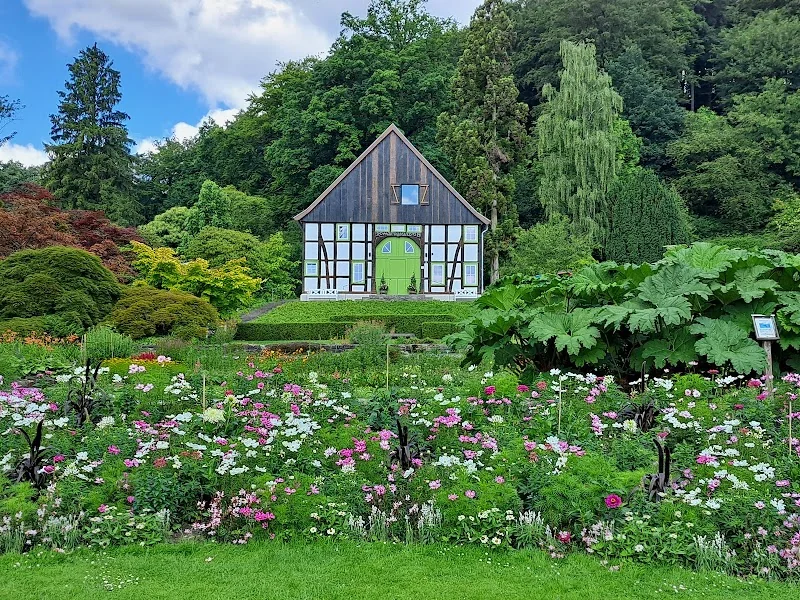
Among the most defining building and meeting places of the Bielefeld Botanical Garden is the half-timbered house from 1823. It is located in the center of the garden and, together with the garden courtyard and the pavilion, is a place where the historical substance of the site connects with today’s visitor experience. The garden courtyard was developed from the previously privately used garden at the half-timbered house and was completed in 2010 with the pavilion. Since then, it has served as a communicative meeting point for encounters, celebrations, and events. Especially during summer festivals, the area is used for concerts and cultural offerings, while also providing a beautiful view over the garden and the city. The half-timbered house itself partially serves the gardeners and administration, while the Friends of the Bielefeld Botanical Garden e.V. also uses rooms there. For visitors, this area is a good place to arrive, rest, and categorize the garden as a vibrant cultural and natural space. ([botanischer-garten-bielefeld.de](https://www.botanischer-garten-bielefeld.de/fachwerkhaus/))
A second central attraction is the bee house. According to official representation, it was opened in 2002 to celebrate the 90th anniversary of the Botanical Garden. The small half-timbered house with clay bricks and old roof tiles is more than a decorative detail: Here, several bee colonies live, and visitors can observe in display cases how the queen lays eggs, worker bees care for larvae, build honeycombs, and produce honey. The city speaks of about 250,000 bees working here. At the same time, the bee house is an educational place where kindergarten groups, school classes, youth groups, and families receive information about the life of honey bees. In this way, the Botanical Garden fulfills its role as a learning place in the best sense: it makes ecological connections visible and tangible. So, anyone searching for terms like bee house, beekeeper, honey bees, or children's offerings will find one of the most exciting components of the garden here. ([bielefeld.de](https://www.bielefeld.de/bienenhaus))
History of the Botanical Garden and the Earth Time Clock
The history of the Bielefeld Botanical Garden does not begin by chance but with a clear urban planning and educational idea. In 1910, the city of Bielefeld purchased the land on the southern slope of Kahlenberg. In 1912, a municipal garden was created based on a plan by the then garden director Paul Meyerkamp. Meyerkamp aimed to create a botanical garden for everyone that serves as teaching material for the natural science education of schools and is also open as a showcase and teaching garden for citizens. Therefore, the facility was not to be fenced. This openness characterizes the garden to this day. The half-timbered house from 1823 has always been the focal point, and the idea of connecting nature, education, and recreation has been the actual DNA of the place for over a century. Those searching for history, founding year, or historical backgrounds will find a remarkably consistent line here. ([bielefeld.de](https://www.bielefeld.de/node/6994))
The further development shows how lively this facility has remained. Already between 1914 and 1915, the alpine garden was created with about 500 different plant species. Between 1925 and 1927, the garden area was expanded by another 2.5 hectares into the forest; during this time, rhododendron stocks developed, and water lily ponds and a rose garden were created. The idea of development and expansion continues to the present day, such as in the new stream valley design and the open entrance area. A special eye-catcher is also the Earth Time Clock at the Riedhaus near the bee house. It was created for the 75th anniversary of the Botanical Garden and illustrates 4.5 billion years of Earth history on a 24-hour dial. There are also 22 large rock exhibits and information panels explaining geological and botanical development. Thus, the Earth Time Clock is an ideal destination for families, school classes, and anyone who wants to not only see nature but also classify it temporally and scientifically. ([bielefeld.de](https://www.bielefeld.de/node/6994))
Program 2026, Tours, and Events Throughout the Year
Anyone looking for the current program of the Bielefeld Botanical Garden will find a diverse annual offering in 2026. The city and the support association have once again put together a joint program that includes numerous free tours. In addition, events show the garden not only as a botanical place but also as a cultural and meeting space. The official announcement mentions, among other things, a plant exchange, a behind-the-scenes look at seed harvesting, a new craft workshop for children, as well as musical formats such as the Day of Song and concerts by regional artists in the garden courtyard. Also part of the program is the popular glowworm tour. Such content particularly addresses the search intentions surrounding programs, events, tours, and annual calendars. So, anyone searching for the Bielefeld Botanical Garden in connection with a current program will receive not only general information but a real event profile with a focus on natural science and culture. ([bielefeld.de](https://www.bielefeld.de/node/34768))
The annual program for 2026 is also available not only online but also in printed form, among others in the tourist information, in the Bielefeld museums, and in the district offices. This is practical for visitors who want to plan their stay in advance or spontaneously look for a suitable date on site. Noteworthy is the combination of free tours and thematic special dates, as it makes the garden attractive for different target groups: for nature-interested adults, families with children, people with botanical expertise, and visitors who simply want to experience a special afternoon in the green. The rhythm of events is consciously seasonal, so the garden always offers new perspectives throughout the year. This provides an SEO-relevant advantage: search queries about the program 2026, tours, or events can be answered with concrete, currently substantiated facts and not just with general formulations. ([bielefeld.de](https://www.bielefeld.de/node/34768))
Animal Worlds, Nature Observation, and Practical Visitor Tips
The Bielefeld Botanical Garden is not only a plant space but also a habitat for animals. The official animal worlds page describes that the garden, due to its various habitats and the associated plant diversity, offers a place for many native animal species. Amphibians such as common toads, grass frogs, and pond and mountain newts can be particularly well observed at the water lily ponds. Additionally, lizards can be seen on sunny stone walls, fire salamanders in wetter areas, and numerous insect species. Honey bees and wild bees are also present here, making the garden particularly valuable from an ecological perspective. This aspect is important for search queries about nature experiences, animal worlds, wild bees, or fire salamanders, as the Botanical Garden is not a static exhibition site but a living ecosystem. The official request not to take animals and to disturb them as little as possible also shows the sensitive handling of this habitat. ([botanischer-garten-bielefeld.de](https://www.botanischer-garten-bielefeld.de/tierwelten/))
For the visit itself, the following applies: Those seeking tranquility, short paths, and much botanical diversity are exactly right here. The garden is located near the city center but atmospherically far from urban everyday life. The paths lead through dense vegetation, along water lily ponds, fern staircases, showcase gardens, and smaller quiet zones. This makes the garden particularly suitable for walks, photo tours, family outings, and relaxed breaks. The environmental operation of the city of Bielefeld maintains and manages the facility, while the support association has been consolidating ideological and financial support since 1998. This collaboration explains why the garden not only appears well-maintained but is also continually being developed, for example, through expansion areas, bridges, and new planting areas. Those visiting the Bielefeld Botanical Garden thus experience not only a park but a developed educational and cultural site that remarkably brings together nature, history, the city, and community. ([bielefeld.de](https://www.bielefeld.de/botanischer-garten))
Sources:
- City of Bielefeld - Botanical Garden ([bielefeld.de](https://www.bielefeld.de/botanischer-garten))
- City of Bielefeld - Directions ([bielefeld.de](https://www.bielefeld.de/node/6991?utm_source=openai))
- City of Bielefeld - History ([bielefeld.de](https://www.bielefeld.de/node/6994))
- City of Bielefeld - The Bee House ([bielefeld.de](https://www.bielefeld.de/bienenhaus))
- City of Bielefeld - Trees in the Botanical Garden ([bielefeld.de](https://www.bielefeld.de/node/7170))
- City of Bielefeld - Annual Program of the Botanical Garden Published ([bielefeld.de](https://www.bielefeld.de/node/34768))
- Friends of the Bielefeld Botanical Garden - Plant Worlds ([botanischer-garten-bielefeld.de](https://www.botanischer-garten-bielefeld.de/pflanzenwelten/))
- Friends of the Bielefeld Botanical Garden - Half-Timbered House and Garden Courtyard ([botanischer-garten-bielefeld.de](https://www.botanischer-garten-bielefeld.de/fachwerkhaus/))
- Friends of the Bielefeld Botanical Garden - Expansion ([botanischer-garten-bielefeld.de](https://www.botanischer-garten-bielefeld.de/erweiterung/))
- Friends of the Bielefeld Botanical Garden - Earth Time Clock ([botanischer-garten-bielefeld.de](https://www.botanischer-garten-bielefeld.de/erdzeituhr/))
- Friends of the Bielefeld Botanical Garden - Animal Worlds ([botanischer-garten-bielefeld.de](https://www.botanischer-garten-bielefeld.de/tierwelten/))
- Friends of the Bielefeld Botanical Garden - Directions ([botanischer-garten-bielefeld.de](https://www.botanischer-garten-bielefeld.de/anfahrt/?utm_source=openai))
Show moreShow less
Bielefeld Botanical Garden | Directions & Opening Hours
The Bielefeld Botanical Garden is one of the defining green addresses of the city and combines in a small space what many visitors seek: tranquility, knowledge, nature experience, and a place where one can linger without an entrance fee and without time pressure. The garden is centrally located near Kahlenberg, is open year-round around the clock, and with over four hectares and more than 3,000 plant species, it is one of the most important urban excursion destinations in Bielefeld. Particularly striking are the winding paths, dense vegetation, the historic half-timbered house from 1823, and the characteristic garden courtyard with pavilion. This mixture of proximity to the city center, botanical diversity, and historical atmosphere is what makes it appealing. Anyone who views the garden merely as a pretty park is missing the point: it is also a teaching and showcase garden, a nature experience space, and a place with a rich history. ([bielefeld.de](https://www.bielefeld.de/botanischer-garten))
Opening Hours, Admission, and Directions to the Bielefeld Botanical Garden
For many inquiries, practical questions come first: When is the Bielefeld Botanical Garden open, how do I get there, and do I have to pay an entrance fee? The good news is simple and clear: The garden is open year-round around the clock, and admission is free. This makes it suitable for both a short walk in between as well as longer visits in the morning, afternoon, or on balmy summer evenings. The city also points out that there are only a few parking spaces available. For this reason, traveling by public transport is explicitly recommended. Those arriving by city train should go to the Bethel stop and then walk along Haller Weg and Langenhagen. By bus, lines 29 to Langenhagen and 24 to Johannisfriedhof are mentioned, among others. This accessibility is an important advantage for visitors who want to experience the garden comfortably and without searching for parking. ([bielefeld.de](https://www.bielefeld.de/node/6991?utm_source=openai))
Also interesting for those looking to park is the location of the Botanical Garden, as it combines proximity to the city center with a rather quiet, green environment. However, those arriving by car will find only limited parking spaces in the area and should pay careful attention to the signage. The address Am Kahlenberg 16 in 33617 Bielefeld is the central orientation for navigation systems and travel planning. It is also practically important that public toilets are closed during the winter months. Therefore, a quick look at the current situation on site is worthwhile for a spontaneous visit, especially in winter or at off-peak times. In summary, getting there is uncomplicated if you rely on public transport, and this is exactly what the city consistently recommends. This way, the visit remains relaxed, and you arrive directly where the garden has its strongest effect: in the midst of nature and yet close to the city. ([bielefeld.de](https://www.bielefeld.de/node/6991?utm_source=openai))
Plant Worlds with Rhododendrons, Alpine Garden, and Fern Staircase
The heart of the Bielefeld Botanical Garden beats in its plant worlds. The garden sees itself as a teaching and showcase garden and displays communities of life, special trees, shrubs, and perennials from around the world, as well as plant combinations for garden design. Particularly prominent are the rhododendrons and azaleas that have shaped the garden from the beginning. According to official representation, their flowering spectrum ranges from January to August, with the Japanese azaleas peaking in May. The fact that the garden is a member of the German Genebank for Rhododendrons due to its rare wild species underscores the botanical value of the site. Accompanying plants such as epimedium, false poppy, show leaf, creeping thyme, and Solomon's seal not only complement the picture in terms of color but also shape the character of the garden as a finely composed showcase planting. Therefore, this area is particularly relevant for inquiries about rhododendrons, flowering times, or special plants. ([botanischer-garten-bielefeld.de](https://www.botanischer-garten-bielefeld.de/pflanzenwelten/))
Equally important are the other thematic areas that make the garden a versatile natural space. The alpine garden, established in the early years around 1914, represents the alpine habitat with well-drained soil and a southern slope. There, alpine species from various continents grow, making the garden exciting for botanically interested visitors as well. This is complemented by the fern staircase, the heather garden, the medicinal herb garden, the primrose valley, the showcase house, the beech forest flora, the bulb flower meadow, and the area with water lily ponds, wetland plants, and carnivorous plants. This diversity shows that the Botanical Garden not only looks beautiful but also conveys plant ecology in an illustrative way. Newer developments such as the expansion area with stream bed, open design, and a planned medicinal herb garden further enhance this impression. Those seeking plant diversity, landscape art, and educational ambition will find a particularly dense offering here. ([botanischer-garten-bielefeld.de](https://www.botanischer-garten-bielefeld.de/pflanzenwelten/))
Half-Timbered House, Garden Courtyard, and Bee House as Centerpieces
Among the most defining building and meeting places of the Bielefeld Botanical Garden is the half-timbered house from 1823. It is located in the center of the garden and, together with the garden courtyard and the pavilion, is a place where the historical substance of the site connects with today’s visitor experience. The garden courtyard was developed from the previously privately used garden at the half-timbered house and was completed in 2010 with the pavilion. Since then, it has served as a communicative meeting point for encounters, celebrations, and events. Especially during summer festivals, the area is used for concerts and cultural offerings, while also providing a beautiful view over the garden and the city. The half-timbered house itself partially serves the gardeners and administration, while the Friends of the Bielefeld Botanical Garden e.V. also uses rooms there. For visitors, this area is a good place to arrive, rest, and categorize the garden as a vibrant cultural and natural space. ([botanischer-garten-bielefeld.de](https://www.botanischer-garten-bielefeld.de/fachwerkhaus/))
A second central attraction is the bee house. According to official representation, it was opened in 2002 to celebrate the 90th anniversary of the Botanical Garden. The small half-timbered house with clay bricks and old roof tiles is more than a decorative detail: Here, several bee colonies live, and visitors can observe in display cases how the queen lays eggs, worker bees care for larvae, build honeycombs, and produce honey. The city speaks of about 250,000 bees working here. At the same time, the bee house is an educational place where kindergarten groups, school classes, youth groups, and families receive information about the life of honey bees. In this way, the Botanical Garden fulfills its role as a learning place in the best sense: it makes ecological connections visible and tangible. So, anyone searching for terms like bee house, beekeeper, honey bees, or children's offerings will find one of the most exciting components of the garden here. ([bielefeld.de](https://www.bielefeld.de/bienenhaus))
History of the Botanical Garden and the Earth Time Clock
The history of the Bielefeld Botanical Garden does not begin by chance but with a clear urban planning and educational idea. In 1910, the city of Bielefeld purchased the land on the southern slope of Kahlenberg. In 1912, a municipal garden was created based on a plan by the then garden director Paul Meyerkamp. Meyerkamp aimed to create a botanical garden for everyone that serves as teaching material for the natural science education of schools and is also open as a showcase and teaching garden for citizens. Therefore, the facility was not to be fenced. This openness characterizes the garden to this day. The half-timbered house from 1823 has always been the focal point, and the idea of connecting nature, education, and recreation has been the actual DNA of the place for over a century. Those searching for history, founding year, or historical backgrounds will find a remarkably consistent line here. ([bielefeld.de](https://www.bielefeld.de/node/6994))
The further development shows how lively this facility has remained. Already between 1914 and 1915, the alpine garden was created with about 500 different plant species. Between 1925 and 1927, the garden area was expanded by another 2.5 hectares into the forest; during this time, rhododendron stocks developed, and water lily ponds and a rose garden were created. The idea of development and expansion continues to the present day, such as in the new stream valley design and the open entrance area. A special eye-catcher is also the Earth Time Clock at the Riedhaus near the bee house. It was created for the 75th anniversary of the Botanical Garden and illustrates 4.5 billion years of Earth history on a 24-hour dial. There are also 22 large rock exhibits and information panels explaining geological and botanical development. Thus, the Earth Time Clock is an ideal destination for families, school classes, and anyone who wants to not only see nature but also classify it temporally and scientifically. ([bielefeld.de](https://www.bielefeld.de/node/6994))
Program 2026, Tours, and Events Throughout the Year
Anyone looking for the current program of the Bielefeld Botanical Garden will find a diverse annual offering in 2026. The city and the support association have once again put together a joint program that includes numerous free tours. In addition, events show the garden not only as a botanical place but also as a cultural and meeting space. The official announcement mentions, among other things, a plant exchange, a behind-the-scenes look at seed harvesting, a new craft workshop for children, as well as musical formats such as the Day of Song and concerts by regional artists in the garden courtyard. Also part of the program is the popular glowworm tour. Such content particularly addresses the search intentions surrounding programs, events, tours, and annual calendars. So, anyone searching for the Bielefeld Botanical Garden in connection with a current program will receive not only general information but a real event profile with a focus on natural science and culture. ([bielefeld.de](https://www.bielefeld.de/node/34768))
The annual program for 2026 is also available not only online but also in printed form, among others in the tourist information, in the Bielefeld museums, and in the district offices. This is practical for visitors who want to plan their stay in advance or spontaneously look for a suitable date on site. Noteworthy is the combination of free tours and thematic special dates, as it makes the garden attractive for different target groups: for nature-interested adults, families with children, people with botanical expertise, and visitors who simply want to experience a special afternoon in the green. The rhythm of events is consciously seasonal, so the garden always offers new perspectives throughout the year. This provides an SEO-relevant advantage: search queries about the program 2026, tours, or events can be answered with concrete, currently substantiated facts and not just with general formulations. ([bielefeld.de](https://www.bielefeld.de/node/34768))
Animal Worlds, Nature Observation, and Practical Visitor Tips
The Bielefeld Botanical Garden is not only a plant space but also a habitat for animals. The official animal worlds page describes that the garden, due to its various habitats and the associated plant diversity, offers a place for many native animal species. Amphibians such as common toads, grass frogs, and pond and mountain newts can be particularly well observed at the water lily ponds. Additionally, lizards can be seen on sunny stone walls, fire salamanders in wetter areas, and numerous insect species. Honey bees and wild bees are also present here, making the garden particularly valuable from an ecological perspective. This aspect is important for search queries about nature experiences, animal worlds, wild bees, or fire salamanders, as the Botanical Garden is not a static exhibition site but a living ecosystem. The official request not to take animals and to disturb them as little as possible also shows the sensitive handling of this habitat. ([botanischer-garten-bielefeld.de](https://www.botanischer-garten-bielefeld.de/tierwelten/))
For the visit itself, the following applies: Those seeking tranquility, short paths, and much botanical diversity are exactly right here. The garden is located near the city center but atmospherically far from urban everyday life. The paths lead through dense vegetation, along water lily ponds, fern staircases, showcase gardens, and smaller quiet zones. This makes the garden particularly suitable for walks, photo tours, family outings, and relaxed breaks. The environmental operation of the city of Bielefeld maintains and manages the facility, while the support association has been consolidating ideological and financial support since 1998. This collaboration explains why the garden not only appears well-maintained but is also continually being developed, for example, through expansion areas, bridges, and new planting areas. Those visiting the Bielefeld Botanical Garden thus experience not only a park but a developed educational and cultural site that remarkably brings together nature, history, the city, and community. ([bielefeld.de](https://www.bielefeld.de/botanischer-garten))
Sources:
- City of Bielefeld - Botanical Garden ([bielefeld.de](https://www.bielefeld.de/botanischer-garten))
- City of Bielefeld - Directions ([bielefeld.de](https://www.bielefeld.de/node/6991?utm_source=openai))
- City of Bielefeld - History ([bielefeld.de](https://www.bielefeld.de/node/6994))
- City of Bielefeld - The Bee House ([bielefeld.de](https://www.bielefeld.de/bienenhaus))
- City of Bielefeld - Trees in the Botanical Garden ([bielefeld.de](https://www.bielefeld.de/node/7170))
- City of Bielefeld - Annual Program of the Botanical Garden Published ([bielefeld.de](https://www.bielefeld.de/node/34768))
- Friends of the Bielefeld Botanical Garden - Plant Worlds ([botanischer-garten-bielefeld.de](https://www.botanischer-garten-bielefeld.de/pflanzenwelten/))
- Friends of the Bielefeld Botanical Garden - Half-Timbered House and Garden Courtyard ([botanischer-garten-bielefeld.de](https://www.botanischer-garten-bielefeld.de/fachwerkhaus/))
- Friends of the Bielefeld Botanical Garden - Expansion ([botanischer-garten-bielefeld.de](https://www.botanischer-garten-bielefeld.de/erweiterung/))
- Friends of the Bielefeld Botanical Garden - Earth Time Clock ([botanischer-garten-bielefeld.de](https://www.botanischer-garten-bielefeld.de/erdzeituhr/))
- Friends of the Bielefeld Botanical Garden - Animal Worlds ([botanischer-garten-bielefeld.de](https://www.botanischer-garten-bielefeld.de/tierwelten/))
- Friends of the Bielefeld Botanical Garden - Directions ([botanischer-garten-bielefeld.de](https://www.botanischer-garten-bielefeld.de/anfahrt/?utm_source=openai))
Bielefeld Botanical Garden | Directions & Opening Hours
The Bielefeld Botanical Garden is one of the defining green addresses of the city and combines in a small space what many visitors seek: tranquility, knowledge, nature experience, and a place where one can linger without an entrance fee and without time pressure. The garden is centrally located near Kahlenberg, is open year-round around the clock, and with over four hectares and more than 3,000 plant species, it is one of the most important urban excursion destinations in Bielefeld. Particularly striking are the winding paths, dense vegetation, the historic half-timbered house from 1823, and the characteristic garden courtyard with pavilion. This mixture of proximity to the city center, botanical diversity, and historical atmosphere is what makes it appealing. Anyone who views the garden merely as a pretty park is missing the point: it is also a teaching and showcase garden, a nature experience space, and a place with a rich history. ([bielefeld.de](https://www.bielefeld.de/botanischer-garten))
Opening Hours, Admission, and Directions to the Bielefeld Botanical Garden
For many inquiries, practical questions come first: When is the Bielefeld Botanical Garden open, how do I get there, and do I have to pay an entrance fee? The good news is simple and clear: The garden is open year-round around the clock, and admission is free. This makes it suitable for both a short walk in between as well as longer visits in the morning, afternoon, or on balmy summer evenings. The city also points out that there are only a few parking spaces available. For this reason, traveling by public transport is explicitly recommended. Those arriving by city train should go to the Bethel stop and then walk along Haller Weg and Langenhagen. By bus, lines 29 to Langenhagen and 24 to Johannisfriedhof are mentioned, among others. This accessibility is an important advantage for visitors who want to experience the garden comfortably and without searching for parking. ([bielefeld.de](https://www.bielefeld.de/node/6991?utm_source=openai))
Also interesting for those looking to park is the location of the Botanical Garden, as it combines proximity to the city center with a rather quiet, green environment. However, those arriving by car will find only limited parking spaces in the area and should pay careful attention to the signage. The address Am Kahlenberg 16 in 33617 Bielefeld is the central orientation for navigation systems and travel planning. It is also practically important that public toilets are closed during the winter months. Therefore, a quick look at the current situation on site is worthwhile for a spontaneous visit, especially in winter or at off-peak times. In summary, getting there is uncomplicated if you rely on public transport, and this is exactly what the city consistently recommends. This way, the visit remains relaxed, and you arrive directly where the garden has its strongest effect: in the midst of nature and yet close to the city. ([bielefeld.de](https://www.bielefeld.de/node/6991?utm_source=openai))
Plant Worlds with Rhododendrons, Alpine Garden, and Fern Staircase
The heart of the Bielefeld Botanical Garden beats in its plant worlds. The garden sees itself as a teaching and showcase garden and displays communities of life, special trees, shrubs, and perennials from around the world, as well as plant combinations for garden design. Particularly prominent are the rhododendrons and azaleas that have shaped the garden from the beginning. According to official representation, their flowering spectrum ranges from January to August, with the Japanese azaleas peaking in May. The fact that the garden is a member of the German Genebank for Rhododendrons due to its rare wild species underscores the botanical value of the site. Accompanying plants such as epimedium, false poppy, show leaf, creeping thyme, and Solomon's seal not only complement the picture in terms of color but also shape the character of the garden as a finely composed showcase planting. Therefore, this area is particularly relevant for inquiries about rhododendrons, flowering times, or special plants. ([botanischer-garten-bielefeld.de](https://www.botanischer-garten-bielefeld.de/pflanzenwelten/))
Equally important are the other thematic areas that make the garden a versatile natural space. The alpine garden, established in the early years around 1914, represents the alpine habitat with well-drained soil and a southern slope. There, alpine species from various continents grow, making the garden exciting for botanically interested visitors as well. This is complemented by the fern staircase, the heather garden, the medicinal herb garden, the primrose valley, the showcase house, the beech forest flora, the bulb flower meadow, and the area with water lily ponds, wetland plants, and carnivorous plants. This diversity shows that the Botanical Garden not only looks beautiful but also conveys plant ecology in an illustrative way. Newer developments such as the expansion area with stream bed, open design, and a planned medicinal herb garden further enhance this impression. Those seeking plant diversity, landscape art, and educational ambition will find a particularly dense offering here. ([botanischer-garten-bielefeld.de](https://www.botanischer-garten-bielefeld.de/pflanzenwelten/))
Half-Timbered House, Garden Courtyard, and Bee House as Centerpieces
Among the most defining building and meeting places of the Bielefeld Botanical Garden is the half-timbered house from 1823. It is located in the center of the garden and, together with the garden courtyard and the pavilion, is a place where the historical substance of the site connects with today’s visitor experience. The garden courtyard was developed from the previously privately used garden at the half-timbered house and was completed in 2010 with the pavilion. Since then, it has served as a communicative meeting point for encounters, celebrations, and events. Especially during summer festivals, the area is used for concerts and cultural offerings, while also providing a beautiful view over the garden and the city. The half-timbered house itself partially serves the gardeners and administration, while the Friends of the Bielefeld Botanical Garden e.V. also uses rooms there. For visitors, this area is a good place to arrive, rest, and categorize the garden as a vibrant cultural and natural space. ([botanischer-garten-bielefeld.de](https://www.botanischer-garten-bielefeld.de/fachwerkhaus/))
A second central attraction is the bee house. According to official representation, it was opened in 2002 to celebrate the 90th anniversary of the Botanical Garden. The small half-timbered house with clay bricks and old roof tiles is more than a decorative detail: Here, several bee colonies live, and visitors can observe in display cases how the queen lays eggs, worker bees care for larvae, build honeycombs, and produce honey. The city speaks of about 250,000 bees working here. At the same time, the bee house is an educational place where kindergarten groups, school classes, youth groups, and families receive information about the life of honey bees. In this way, the Botanical Garden fulfills its role as a learning place in the best sense: it makes ecological connections visible and tangible. So, anyone searching for terms like bee house, beekeeper, honey bees, or children's offerings will find one of the most exciting components of the garden here. ([bielefeld.de](https://www.bielefeld.de/bienenhaus))
History of the Botanical Garden and the Earth Time Clock
The history of the Bielefeld Botanical Garden does not begin by chance but with a clear urban planning and educational idea. In 1910, the city of Bielefeld purchased the land on the southern slope of Kahlenberg. In 1912, a municipal garden was created based on a plan by the then garden director Paul Meyerkamp. Meyerkamp aimed to create a botanical garden for everyone that serves as teaching material for the natural science education of schools and is also open as a showcase and teaching garden for citizens. Therefore, the facility was not to be fenced. This openness characterizes the garden to this day. The half-timbered house from 1823 has always been the focal point, and the idea of connecting nature, education, and recreation has been the actual DNA of the place for over a century. Those searching for history, founding year, or historical backgrounds will find a remarkably consistent line here. ([bielefeld.de](https://www.bielefeld.de/node/6994))
The further development shows how lively this facility has remained. Already between 1914 and 1915, the alpine garden was created with about 500 different plant species. Between 1925 and 1927, the garden area was expanded by another 2.5 hectares into the forest; during this time, rhododendron stocks developed, and water lily ponds and a rose garden were created. The idea of development and expansion continues to the present day, such as in the new stream valley design and the open entrance area. A special eye-catcher is also the Earth Time Clock at the Riedhaus near the bee house. It was created for the 75th anniversary of the Botanical Garden and illustrates 4.5 billion years of Earth history on a 24-hour dial. There are also 22 large rock exhibits and information panels explaining geological and botanical development. Thus, the Earth Time Clock is an ideal destination for families, school classes, and anyone who wants to not only see nature but also classify it temporally and scientifically. ([bielefeld.de](https://www.bielefeld.de/node/6994))
Program 2026, Tours, and Events Throughout the Year
Anyone looking for the current program of the Bielefeld Botanical Garden will find a diverse annual offering in 2026. The city and the support association have once again put together a joint program that includes numerous free tours. In addition, events show the garden not only as a botanical place but also as a cultural and meeting space. The official announcement mentions, among other things, a plant exchange, a behind-the-scenes look at seed harvesting, a new craft workshop for children, as well as musical formats such as the Day of Song and concerts by regional artists in the garden courtyard. Also part of the program is the popular glowworm tour. Such content particularly addresses the search intentions surrounding programs, events, tours, and annual calendars. So, anyone searching for the Bielefeld Botanical Garden in connection with a current program will receive not only general information but a real event profile with a focus on natural science and culture. ([bielefeld.de](https://www.bielefeld.de/node/34768))
The annual program for 2026 is also available not only online but also in printed form, among others in the tourist information, in the Bielefeld museums, and in the district offices. This is practical for visitors who want to plan their stay in advance or spontaneously look for a suitable date on site. Noteworthy is the combination of free tours and thematic special dates, as it makes the garden attractive for different target groups: for nature-interested adults, families with children, people with botanical expertise, and visitors who simply want to experience a special afternoon in the green. The rhythm of events is consciously seasonal, so the garden always offers new perspectives throughout the year. This provides an SEO-relevant advantage: search queries about the program 2026, tours, or events can be answered with concrete, currently substantiated facts and not just with general formulations. ([bielefeld.de](https://www.bielefeld.de/node/34768))
Animal Worlds, Nature Observation, and Practical Visitor Tips
The Bielefeld Botanical Garden is not only a plant space but also a habitat for animals. The official animal worlds page describes that the garden, due to its various habitats and the associated plant diversity, offers a place for many native animal species. Amphibians such as common toads, grass frogs, and pond and mountain newts can be particularly well observed at the water lily ponds. Additionally, lizards can be seen on sunny stone walls, fire salamanders in wetter areas, and numerous insect species. Honey bees and wild bees are also present here, making the garden particularly valuable from an ecological perspective. This aspect is important for search queries about nature experiences, animal worlds, wild bees, or fire salamanders, as the Botanical Garden is not a static exhibition site but a living ecosystem. The official request not to take animals and to disturb them as little as possible also shows the sensitive handling of this habitat. ([botanischer-garten-bielefeld.de](https://www.botanischer-garten-bielefeld.de/tierwelten/))
For the visit itself, the following applies: Those seeking tranquility, short paths, and much botanical diversity are exactly right here. The garden is located near the city center but atmospherically far from urban everyday life. The paths lead through dense vegetation, along water lily ponds, fern staircases, showcase gardens, and smaller quiet zones. This makes the garden particularly suitable for walks, photo tours, family outings, and relaxed breaks. The environmental operation of the city of Bielefeld maintains and manages the facility, while the support association has been consolidating ideological and financial support since 1998. This collaboration explains why the garden not only appears well-maintained but is also continually being developed, for example, through expansion areas, bridges, and new planting areas. Those visiting the Bielefeld Botanical Garden thus experience not only a park but a developed educational and cultural site that remarkably brings together nature, history, the city, and community. ([bielefeld.de](https://www.bielefeld.de/botanischer-garten))
Sources:
- City of Bielefeld - Botanical Garden ([bielefeld.de](https://www.bielefeld.de/botanischer-garten))
- City of Bielefeld - Directions ([bielefeld.de](https://www.bielefeld.de/node/6991?utm_source=openai))
- City of Bielefeld - History ([bielefeld.de](https://www.bielefeld.de/node/6994))
- City of Bielefeld - The Bee House ([bielefeld.de](https://www.bielefeld.de/bienenhaus))
- City of Bielefeld - Trees in the Botanical Garden ([bielefeld.de](https://www.bielefeld.de/node/7170))
- City of Bielefeld - Annual Program of the Botanical Garden Published ([bielefeld.de](https://www.bielefeld.de/node/34768))
- Friends of the Bielefeld Botanical Garden - Plant Worlds ([botanischer-garten-bielefeld.de](https://www.botanischer-garten-bielefeld.de/pflanzenwelten/))
- Friends of the Bielefeld Botanical Garden - Half-Timbered House and Garden Courtyard ([botanischer-garten-bielefeld.de](https://www.botanischer-garten-bielefeld.de/fachwerkhaus/))
- Friends of the Bielefeld Botanical Garden - Expansion ([botanischer-garten-bielefeld.de](https://www.botanischer-garten-bielefeld.de/erweiterung/))
- Friends of the Bielefeld Botanical Garden - Earth Time Clock ([botanischer-garten-bielefeld.de](https://www.botanischer-garten-bielefeld.de/erdzeituhr/))
- Friends of the Bielefeld Botanical Garden - Animal Worlds ([botanischer-garten-bielefeld.de](https://www.botanischer-garten-bielefeld.de/tierwelten/))
- Friends of the Bielefeld Botanical Garden - Directions ([botanischer-garten-bielefeld.de](https://www.botanischer-garten-bielefeld.de/anfahrt/?utm_source=openai))
Upcoming Events
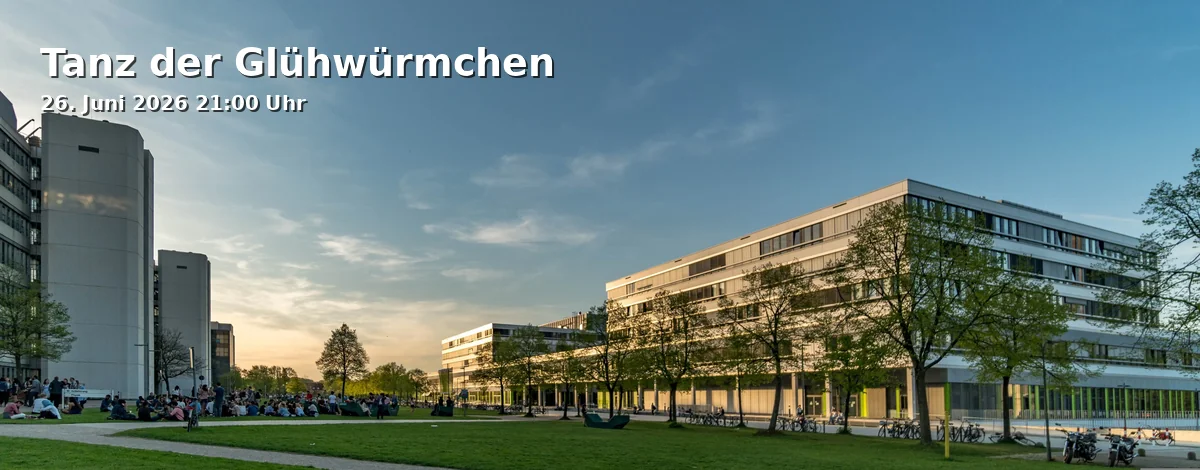
Dance of the Fireflies
An evening full of gentle magic in the Botanical Garden Bielefeld: The fully booked Dance of the Fireflies with Peter Urban brings nature and summer mood together. 06/26/2026 at 9:00 PM. #Bielefeld #NatureExperience
Healing and Interesting Information in the Apothecary Garden
Healing plant knowledge in the Botanical Garden Bielefeld: Guided tour with Heike Dreppenstedt on 27.06.2026. Experience nature, discover medicinal herbs, join for free. #Bielefeld #BotanischerGarten
Z.O.F.F. - Concert in the Botanical Garden
Visit the concert of Z.O.F.F. on June 28, 2026, in the Botanical Garden Bielefeld. Enjoy live music in a relaxed atmosphere.

Central Orchestra of Finnish Fish Markets
Worldfolk in the Green: The Central Orchestra of Finnish Fish Markets plays in the Botanical Garden Bielefeld. 06/28/2026, 5 to 7 PM. #Bielefeld #LiveMusic

Musical Reading in the Botanical Garden
Join the culture lovers in Bielefeld for a special reading with musical accompaniment in the Botanical Garden.
Concert – Saitenwirbeln in the Botanical Garden
Enjoy a relaxing summer evening with the sounds of jazz and gypsy swing in Bielefeld.
Frequently Asked Questions
Reviews
Benjamin P
23. April 2025
It is lovely to just walk around and relax after a busy day, or just to escape the city quickly. The entrance is free, with no tickets or whatsoever needed. Park is dog friendly, but they have to be on a line. There are lots of different types of flowers and plants.
Ny Barber
30. April 2025
Such an adorable garden. Had beautiful flowers everywhere. The walking path is nice. It’s a hardscaping pavers which looks beautiful throughout the garden. They had a pond that we were able to watch the baby tadpoles swimming around. Everything was maintained beautifully.
fun with Mustafa
10. February 2024
Beautiful scenic view from the top ...but we visited in this season, the end of winter so flowers are not much over there, May be we will find more in spring ..
Herr Merlin
4. May 2025
Beautiful place. Nearly no parking spots.
Sadori Aslam
15. January 2026
Lovely place to see, lots of cool plants, the weather inside the green house is very humid. Loved it.