
Bielefeld
Brackwede, Bielefeld, Deutschland
Brackwede | Events & Directions
Brackwede is one of the most versatile districts of Bielefeld. In the south of the East Westphalian city, the local history, retail, crafts, industry, schools, clubs, gastronomy, and nature-oriented leisure activities come together. Those searching for Brackwede Bielefeld are often interested in the main street, the Brackwede train station, the natural swimming pool, the Bartholomew Church, the Brackwede Hof, or traditional events such as the pig market and the Glückstalertage. The district is not just a residential area but an independent urban center with a long development history and a pronounced community life.
Brackwede was first mentioned in a document in 1151. The Bartholomew Church, which is considered the landmark of the district, is mentioned as early as 1216. During the industrialization, numerous companies emerged, making Brackwede a significant industrial and craft location. In 1956, the area was granted city rights, and in 1973, Brackwede was incorporated as a district into Bielefeld as part of the municipal reorganization. Today, the district combines historical traces with modern mobility, neighborhood festivals, educational offerings, and recreational opportunities. This mix makes Brackwede as interesting for visitors as it is for people who live, work, or shop here.
Brackwede Events: Pig Market, Glückstalertage, and Neighborhood Culture
The event life is one of the main reasons why people search for Brackwede. Unlike a single event hall, the entire district serves as a venue in Brackwede. The main street, the church square, the surroundings of the district office, and other squares become meeting points for markets, festivals, and community actions depending on the occasion. The most well-known dates include the Brackwede pig market and the Brackwede Glückstalertage. Both events are closely linked to local identity and demonstrate how strongly trade, clubs, district administration, and the community collaborate.
The Brackwede pig market has a long tradition and is one of the events that make Brackwede known far beyond the immediate district. For the year 2026, the pig market was scheduled from August 28 to 30. The specific design can vary from year to year, but traditionally, market activities, encounters, entertainment, and a diverse range of offerings for different age groups characterize the festival. Therefore, anyone searching for the pig market Brackwede should always check the current information from the city of Bielefeld or the respective organizer, as dates, closures, and accompanying programs can change.
Another fixed element is the Brackwede Glückstalertage. Its name comes from the Brackwede Glückstaler, a shopping coin introduced by the advertising and interest community in 1974. The coin was intended to promote shopping locally and could be redeemed at participating stores. This system developed into a neighborhood festival that livens up the main street with fairs, sales promotions, club offerings, and entertainment. In 2025, the 50th Glückstalertage took place. The anniversary was also marked by the redesigned main street and showed how closely urban development and event culture are connected in Brackwede.
In addition, the advertising and interest community Brackwede, together with the district office and local partners, organizes further actions. These include the Brackwede Spring, Advent events, Christmas lighting, shopping Sundays, and various main street activities. Such dates are particularly interesting for people who want to experience Brackwede not just as a shopping place but as a vibrant neighborhood. Instead of an anonymous center, an open atmosphere is created at these events, where local businesses, gastronomy, clubs, and neighborhoods become visible.
Sporting events are also part of the district's history. The Brackwede cycling race for the Great Prize of the Sparkasse Bielefeld was previously held on the city ring and organized by the cycling club Teutoburg of 1891 Bielefeld-Brackwede. For current race dates, checking the organizer's information is necessary, as not every historical event is continued in the same form regularly. However, the search term Brackwede cycling race still refers to the sporting tradition and the importance of cycling in the district.
Brackwede Main Street: Shopping, Encounters, and New Neighborhood Center
The Brackwede main street is the defining center of the district. It serves as a traffic route, shopping area, event space, and social meeting point at the same time. Those searching for Brackwede main street will find a mix of retail, services, gastronomy, practices, and everyday necessities. The street combines functions that are often distributed across different neighborhoods in larger cities. In Brackwede, they are comparatively concentrated and easily accessible from the adjacent residential areas.
The development of the main street has been characterized by extensive construction and modernization measures in recent years. In connection with the redesign, traffic management, stop areas, quality of stay, and accessibility have been reconsidered. The Glückstalertage 2025 was explicitly referred to by the advertising and interest community as the first edition after the extensive renovation. For visitors, this means that the exact routing, the location of individual stops, and accessibility may change depending on the construction phase or event. Therefore, it is worthwhile to check current traffic information before arriving by car.
The main street is not only interesting for shopping. During neighborhood festivals, it transforms into a lively event space. Vendors present offers, clubs inform about their work, food stalls complement the offerings, and families find various entertainment options at fair or market events. Especially during the Glückstalertage, it becomes clear how local trade and the neighborhood community work together. The street then becomes a place where people from Brackwede, Quelle, Ummeln, Senne, and other parts of Bielefeld meet.
Another important element is the church square. Advent events take place there, among others. The square, with its proximity to the Bartholomew Church, creates a historical setting that clearly differs from modern shopping centers. In winter, market stalls, lighting, and church collaborations create a special atmosphere. Even with smaller actions, orientation remains simple, as the main street, church square, church, and district office are closely connected.
The urban development of Brackwede aims to strengthen the town center as a medium center in the southern part of Bielefeld. This includes better connections for public transport, an attractive design of the street space, more quality of stay, and a stronger connection between the train station, main street, and adjacent neighborhoods. Visitors to Brackwede can observe this change directly: historical buildings and established business structures stand alongside modernized stops, new traffic areas, and contemporary offerings. This transition between tradition and renewal particularly shapes the current image of the district.
Brackwede Train Station and Access by Light Rail, Regional Train, and Bicycle
The Brackwede train station is one of the most important transport hubs in the southern part of Bielefeld. Various regional train lines stop there, including connections to Paderborn, Münster, Osnabrück, Halle, and Steinhagen. This makes Brackwede accessible not only from the Bielefeld city area but also from places in East Westphalia and the Münsterland. For travelers, commuters, and guests of the district, the train station is therefore an important starting point.
The light rail stop Brackwede Bahnhof is about 300 meters from the train station. There is access to light rail line 1. Since September 2, 2026, line 1 has been running continuously to Senne again after temporary replacement services were implemented during construction work. The route between Rosenhöhe and Senne has been renewed, and stop areas have also been modernized. For the specific connection, travelers should check the current timetable, as construction sites, events, or operational changes can affect travel times.
The connection between rail, light rail, bus, and bicycle is a central part of further mobility planning. The city of Bielefeld designates the Brackwede train station as an important transport hub but also points out that the existing situation does not yet fully meet traffic requirements. Planned or examined are, among other things, a better barrier-free connection between the train station and the light rail stop, an elevator in the area of Hüttenstraße and Gütersloher Straße, and a stronger integration into the bus network. Such projects are implemented in construction phases and may change over time.
The train station also has special significance for cycling. A central cycling main route of category 1 runs along the directly adjacent Eisenbahnstraße. It connects the district centers Brackwede and Quelle. Those who want to explore Brackwede by bicycle can ride from the train station to the main street, the natural swimming pool, towards Quelle, or further into southern city areas. For longer excursions, the cycling routes described by the city of Bielefeld through Brackwede, Windflöte, Luttertal, and adjacent landscapes are suitable.
Brackwede is accessible by car via several major traffic axes. The Gütersloher Straße, the city ring, and the main street play an important role in orientation. During large events, there may be closures, changed traffic management, or limited parking options. Especially during the pig market, Glückstalertage, and Advent market, it is advisable to park the car outside the immediate event area and cover the last meters on foot or by public transport. The specific parking options depend on the occasion and should be checked in advance based on current information.
Brackwede Natural Swimming Pool and Swimming Pool: Swimming Without Chlorine in Nature
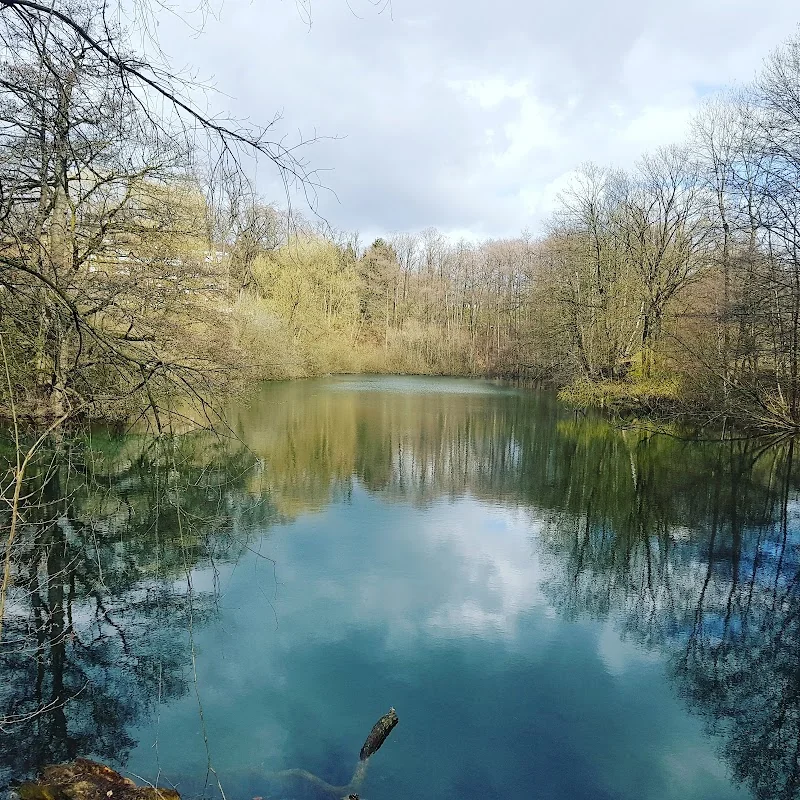
The Brackwede natural swimming pool is one of the most well-known leisure offerings in the district. It differs from a classic outdoor pool due to its natural water treatment. Since its reopening in 2009, swimming there has been completely without chemical water treatment. The location itself has a longer swimming tradition: an outdoor pool was opened at this site as early as 1926. The former pool has developed into the current natural swimming pool with a nature-oriented design and spacious outdoor areas.
The pool caters to different target groups. Families appreciate the children's area with a water playground, paddling pool, and adjacent mud zone. Swimmers find a combined pool with swimming and diving areas. For diving enthusiasts, there are a one-meter and a three-meter diving board available. A 45-meter slide complements the offering. Additionally, there is a non-swimmer area, large sunbathing and family lawns, as well as a sandy beach area. Old trees provide shady spots, while the open design conveys a feeling of beach and lake right in Bielefeld.
The natural swimming pool character is the most important unique selling point. The water is naturally purified and provides a different swimming experience than a classic chlorine pool. At the same time, the area is equipped so that different age groups can find their own space. Children can splash and play, teenagers use the slide and diving facilities, while adults relax on the lawns or at the beach. The pool is generally designed to be barrier-free, but visitors with special requirements should inform themselves about the current conditions before their visit.
For seasonal planning, it is important that opening hours and operational status do not remain permanently the same. At the time of research, the official information page indicated that the natural swimming pool was temporarily closed. Prices and seasonal tickets can also be adjusted. The rates mentioned there included, among other things, a day ticket for adults, a reduced day ticket, an evening rate, and a family ticket. Since entrance fees and opening days can change, the current information from the Bielefeld pools should be checked before each visit.
The natural swimming pool is supported by the Naturbad Brackwede association. The support association is committed to the long-term preservation of the pool on a voluntary basis. This commitment fits into the overall structure of Brackwede, where clubs, initiatives, and local facilities play an important role. Therefore, the natural swimming pool is not just an outdoor pool but also an example of how a leisure location can be permanently anchored in the district through civic support, urban infrastructure, and nature-oriented design.
Brackwede Church and History: Bartholomew Church, Industry, and Urban Development
The history of Brackwede goes back a long way. The place was first mentioned in a document in 1151 and initially developed as a church village and farming community. The Bartholomew Church is mentioned as early as 1216. Its location and long history make it an important point of orientation and an identity-forming building. For many people, the church is the actual landmark of Brackwede because historical structures, paths, and the center of the place developed around it.
The church has also experienced severe cuts in its history. In a fire in 1990, the church was almost completely destroyed. Subsequently, the Bartholomew Church was rebuilt. Today, it stands not only for the medieval origins of Brackwede but also for the preservation and renewal of a central place. Visitors to Brackwede can connect a tour of the church with a walk through the main street, over the church square, and to the district office.
The location along historical transport routes favored the development of the place. Brackwede was located on connections to Bielefeld, Paderborn, and Lippstadt. With industrialization, the former farming village changed fundamentally. Numerous company foundations made the place an important industrial and craft location. The economic development shaped jobs, transport routes, residential areas, and the self-understanding of the population. Even today, trade, crafts, and services are central components of the district.
In 1956, Brackwede was granted city rights. In 1970, Quelle, Holtkamp, and Ummeln were incorporated into Brackwede. As part of the municipal reorganization of 1973, Brackwede finally became part of the city of Bielefeld as a district. This development explains why the current district is larger and more diverse than the historical town center. In addition to the actual district Brackwede, various settlement, commercial, and landscape areas belong to the district area.
International and local connections are also part of history and present. Since 1958, there has been a partnership between Bielefeld-Brackwede and Enniskillen or Fermanagh in Northern Ireland. A regular student exchange is associated with the Brackwede Gymnasium. Schools such as the Brackwede Gymnasium and the Brackwede Secondary School are therefore not only educational institutions but also important components of public life. They represent the connection between local roots, educational work, and international exchange.
Those interested in the history of the region will also find traces of industrial and landscape history around Brackwede. The Luttertal recalls the significance of waterways, mills, and commercial use. Historical facilities such as Niemöllers Mühle and the Mühlenteich refer to earlier forms of energy generation and production. These places can be partially connected with walks and cycling tours. Thus, history can be experienced not only in buildings but also in landscapes, waters, and old transport routes.
Brackwede Hof and Brackwede Restaurants: Staying, Celebrating, and Enjoying
The Brackwede Hof is a hotel and restaurant located at Gütersloher Straße 236 in Bielefeld-Brackwede. The address is situated on an important traffic axis of the district, making the establishment easily accessible for overnight guests, business travelers, event visitors, and people from the region. The hotel has 40 modern rooms. The room amenities include shower and toilet, cable television, and Wi-Fi. Single and double rooms of various sizes and prices are offered. Breakfast is included in the room rate according to the establishment's information.
As an event venue, the Brackwede Hof is particularly interesting for private and business celebrations. The light-flooded dome hall accommodates up to 75 people, while the large hall can host up to 110 guests. This makes the establishment suitable for family celebrations, weddings, anniversaries, confirmations, company parties, and conferences. The rooms can be designed differently depending on the occasion. The offerings range from smaller gatherings to larger celebrations where a coordinated menu or buffet is required.
The gastronomic concept includes various types of dishes and thematic events. The Brackwede Hof offers, among other things, Westphalian buffets, Italian evenings, and French multi-course menus. This allows the establishment to cater to different tastes and event occasions. Additionally, a catering service is available for hosts. This can range from finger food to menus to extensive buffets. Upon request, the team also provides services at the event location.
The search for Brackwede restaurants therefore leads not only to everyday dining options but also to establishments that combine celebrations and overnight stays. The Brackwede Hof is a concrete example of this. Guests can attend an event, stay overnight in the same establishment, and have breakfast the next morning. For companies, the rooms are interesting for meetings and company parties, while families can benefit from the combination of hall, kitchen, and organizational support.
As a starting point for a stay in Bielefeld, the Brackwede Hof is also suitable. From Brackwede, the city center, Sparrenburg, the Art Hall, the Botanical Garden, and other destinations in Bielefeld can be reached. The district itself offers enough points of interest for a varied stay with the natural swimming pool, main street, church, train station, and cycling paths. Those planning an event should inquire about capacity, room layout, menu, overnight stay, and current prices directly with the establishment, as offers and conditions can be adjusted seasonally or based on the event.
Overall, the Brackwede Hof exemplifies how Brackwede has developed as a location. Historical local structures and modern services lie close together. Visitors can explore the district during the day, attend events on the main street, continue by light rail or regional train, and end the evening in a restaurant or event space. Thus, the Brackwede Hof complements the public offerings of the district with a private address for hospitality, celebrations, and overnight stays.
Discover Brackwede: Practical Planning for a Visit
A visit to Brackwede can be shaped very differently depending on interest. Those interested in history should start at the Bartholomew Church and follow the path over the church square to the main street. There, it becomes visible how historical identity, retail, and modern urban development are interconnected. For families, a visit to the natural swimming pool is then recommended, provided it is open. Those interested in sports can use the cycling paths in the vicinity and explore connections towards Quelle, Luttertal, Ummeln, or adjacent landscapes.
For events, the calendar of the city of Bielefeld, the advertising and interest community, and the respective organizers is crucial. This is especially true for the pig market, the Glückstalertage, Advent events, and shopping Sundays. Dates, times, venues, and traffic regulations can change annually. The search term Brackwede weather is also relevant for planning outdoor events, visits to the outdoor pool, and cycling tours. However, a current weather check does not replace checking the official event program.
When arriving by train, the Brackwede train station is a sensible destination. From there, the light rail stop Brackwede Bahnhof is within short walking distance. Those wanting to go to the center should also pay attention to the current location of the light rail stops and possible construction sites. Line 1 connects the district with other areas of Bielefeld and has been running continuously to Senne again since September 2026. For specific departures, connections, and barrier information, the current timetable is decisive.
By bicycle, Brackwede offers a good opportunity to connect the neighborhood center and landscape. The train station is located on an important cycling route. The city of Bielefeld has also published cycling tours through Brackwede and Windflöte, which include the natural swimming pool, Luttertal, Niemöllers Mühle, the Osthusschule, and other destinations in the southern part of the city. The tours show that Brackwede consists not only of streets and shops but also has nature-oriented areas, historical farms, and bodies of water.
For drivers, it is advisable to define the destination as precisely as possible. Main street, church square, train station, natural swimming pool, and Brackwede Hof are not located at the same spot. During large events, parking spaces may be occupied or streets may be temporarily closed. Those attending a celebration at the Brackwede Hof should use the address Gütersloher Straße 236. For the main street and church square, it is advisable to use designated parking options or public transport, especially during festivals with high visitor numbers.
Brackwede is thus a district that combines many search interests in a small area. The terms Brackwede Bielefeld, Brackweder Hof, Brackwede natural swimming pool, Brackwede train station, Brackwede church, Brackwede main street, and Brackwede events each represent different facets of the same place. History, mobility, trade, leisure, education, gastronomy, and club life complement each other. This diversity makes Brackwede an independent destination within Bielefeld and a neighborhood that can be discovered in many ways during a visit to the south of the city.
Sources:
- Brackwede – City of Bielefeld
- Mobility Concept for Brackwede Train Station – City of Bielefeld
- Natural Swimming Pool Brackwede – Bielefeld Pools
- Advertising and Interest Community Brackwede
- Brackwede Hof – Hotel
- Brackwede Hof – Celebrations and Catering
- Line 1 runs continuously to Senne again from September 2 – City of Bielefeld
- Brackwede Pig Market – Service Portal City of Bielefeld
- Cycling Tour Tip Brackwede and Windflöte – City of Bielefeld
Mehr anzeigenWeniger anzeigen
Brackwede | Events & Directions
Brackwede is one of the most versatile districts of Bielefeld. In the south of the East Westphalian city, the local history, retail, crafts, industry, schools, clubs, gastronomy, and nature-oriented leisure activities come together. Those searching for Brackwede Bielefeld are often interested in the main street, the Brackwede train station, the natural swimming pool, the Bartholomew Church, the Brackwede Hof, or traditional events such as the pig market and the Glückstalertage. The district is not just a residential area but an independent urban center with a long development history and a pronounced community life.
Brackwede was first mentioned in a document in 1151. The Bartholomew Church, which is considered the landmark of the district, is mentioned as early as 1216. During the industrialization, numerous companies emerged, making Brackwede a significant industrial and craft location. In 1956, the area was granted city rights, and in 1973, Brackwede was incorporated as a district into Bielefeld as part of the municipal reorganization. Today, the district combines historical traces with modern mobility, neighborhood festivals, educational offerings, and recreational opportunities. This mix makes Brackwede as interesting for visitors as it is for people who live, work, or shop here.
Brackwede Events: Pig Market, Glückstalertage, and Neighborhood Culture
The event life is one of the main reasons why people search for Brackwede. Unlike a single event hall, the entire district serves as a venue in Brackwede. The main street, the church square, the surroundings of the district office, and other squares become meeting points for markets, festivals, and community actions depending on the occasion. The most well-known dates include the Brackwede pig market and the Brackwede Glückstalertage. Both events are closely linked to local identity and demonstrate how strongly trade, clubs, district administration, and the community collaborate.
The Brackwede pig market has a long tradition and is one of the events that make Brackwede known far beyond the immediate district. For the year 2026, the pig market was scheduled from August 28 to 30. The specific design can vary from year to year, but traditionally, market activities, encounters, entertainment, and a diverse range of offerings for different age groups characterize the festival. Therefore, anyone searching for the pig market Brackwede should always check the current information from the city of Bielefeld or the respective organizer, as dates, closures, and accompanying programs can change.
Another fixed element is the Brackwede Glückstalertage. Its name comes from the Brackwede Glückstaler, a shopping coin introduced by the advertising and interest community in 1974. The coin was intended to promote shopping locally and could be redeemed at participating stores. This system developed into a neighborhood festival that livens up the main street with fairs, sales promotions, club offerings, and entertainment. In 2025, the 50th Glückstalertage took place. The anniversary was also marked by the redesigned main street and showed how closely urban development and event culture are connected in Brackwede.
In addition, the advertising and interest community Brackwede, together with the district office and local partners, organizes further actions. These include the Brackwede Spring, Advent events, Christmas lighting, shopping Sundays, and various main street activities. Such dates are particularly interesting for people who want to experience Brackwede not just as a shopping place but as a vibrant neighborhood. Instead of an anonymous center, an open atmosphere is created at these events, where local businesses, gastronomy, clubs, and neighborhoods become visible.
Sporting events are also part of the district's history. The Brackwede cycling race for the Great Prize of the Sparkasse Bielefeld was previously held on the city ring and organized by the cycling club Teutoburg of 1891 Bielefeld-Brackwede. For current race dates, checking the organizer's information is necessary, as not every historical event is continued in the same form regularly. However, the search term Brackwede cycling race still refers to the sporting tradition and the importance of cycling in the district.
Brackwede Main Street: Shopping, Encounters, and New Neighborhood Center
The Brackwede main street is the defining center of the district. It serves as a traffic route, shopping area, event space, and social meeting point at the same time. Those searching for Brackwede main street will find a mix of retail, services, gastronomy, practices, and everyday necessities. The street combines functions that are often distributed across different neighborhoods in larger cities. In Brackwede, they are comparatively concentrated and easily accessible from the adjacent residential areas.
The development of the main street has been characterized by extensive construction and modernization measures in recent years. In connection with the redesign, traffic management, stop areas, quality of stay, and accessibility have been reconsidered. The Glückstalertage 2025 was explicitly referred to by the advertising and interest community as the first edition after the extensive renovation. For visitors, this means that the exact routing, the location of individual stops, and accessibility may change depending on the construction phase or event. Therefore, it is worthwhile to check current traffic information before arriving by car.
The main street is not only interesting for shopping. During neighborhood festivals, it transforms into a lively event space. Vendors present offers, clubs inform about their work, food stalls complement the offerings, and families find various entertainment options at fair or market events. Especially during the Glückstalertage, it becomes clear how local trade and the neighborhood community work together. The street then becomes a place where people from Brackwede, Quelle, Ummeln, Senne, and other parts of Bielefeld meet.
Another important element is the church square. Advent events take place there, among others. The square, with its proximity to the Bartholomew Church, creates a historical setting that clearly differs from modern shopping centers. In winter, market stalls, lighting, and church collaborations create a special atmosphere. Even with smaller actions, orientation remains simple, as the main street, church square, church, and district office are closely connected.
The urban development of Brackwede aims to strengthen the town center as a medium center in the southern part of Bielefeld. This includes better connections for public transport, an attractive design of the street space, more quality of stay, and a stronger connection between the train station, main street, and adjacent neighborhoods. Visitors to Brackwede can observe this change directly: historical buildings and established business structures stand alongside modernized stops, new traffic areas, and contemporary offerings. This transition between tradition and renewal particularly shapes the current image of the district.
Brackwede Train Station and Access by Light Rail, Regional Train, and Bicycle
The Brackwede train station is one of the most important transport hubs in the southern part of Bielefeld. Various regional train lines stop there, including connections to Paderborn, Münster, Osnabrück, Halle, and Steinhagen. This makes Brackwede accessible not only from the Bielefeld city area but also from places in East Westphalia and the Münsterland. For travelers, commuters, and guests of the district, the train station is therefore an important starting point.
The light rail stop Brackwede Bahnhof is about 300 meters from the train station. There is access to light rail line 1. Since September 2, 2026, line 1 has been running continuously to Senne again after temporary replacement services were implemented during construction work. The route between Rosenhöhe and Senne has been renewed, and stop areas have also been modernized. For the specific connection, travelers should check the current timetable, as construction sites, events, or operational changes can affect travel times.
The connection between rail, light rail, bus, and bicycle is a central part of further mobility planning. The city of Bielefeld designates the Brackwede train station as an important transport hub but also points out that the existing situation does not yet fully meet traffic requirements. Planned or examined are, among other things, a better barrier-free connection between the train station and the light rail stop, an elevator in the area of Hüttenstraße and Gütersloher Straße, and a stronger integration into the bus network. Such projects are implemented in construction phases and may change over time.
The train station also has special significance for cycling. A central cycling main route of category 1 runs along the directly adjacent Eisenbahnstraße. It connects the district centers Brackwede and Quelle. Those who want to explore Brackwede by bicycle can ride from the train station to the main street, the natural swimming pool, towards Quelle, or further into southern city areas. For longer excursions, the cycling routes described by the city of Bielefeld through Brackwede, Windflöte, Luttertal, and adjacent landscapes are suitable.
Brackwede is accessible by car via several major traffic axes. The Gütersloher Straße, the city ring, and the main street play an important role in orientation. During large events, there may be closures, changed traffic management, or limited parking options. Especially during the pig market, Glückstalertage, and Advent market, it is advisable to park the car outside the immediate event area and cover the last meters on foot or by public transport. The specific parking options depend on the occasion and should be checked in advance based on current information.
Brackwede Natural Swimming Pool and Swimming Pool: Swimming Without Chlorine in Nature
The Brackwede natural swimming pool is one of the most well-known leisure offerings in the district. It differs from a classic outdoor pool due to its natural water treatment. Since its reopening in 2009, swimming there has been completely without chemical water treatment. The location itself has a longer swimming tradition: an outdoor pool was opened at this site as early as 1926. The former pool has developed into the current natural swimming pool with a nature-oriented design and spacious outdoor areas.
The pool caters to different target groups. Families appreciate the children's area with a water playground, paddling pool, and adjacent mud zone. Swimmers find a combined pool with swimming and diving areas. For diving enthusiasts, there are a one-meter and a three-meter diving board available. A 45-meter slide complements the offering. Additionally, there is a non-swimmer area, large sunbathing and family lawns, as well as a sandy beach area. Old trees provide shady spots, while the open design conveys a feeling of beach and lake right in Bielefeld.
The natural swimming pool character is the most important unique selling point. The water is naturally purified and provides a different swimming experience than a classic chlorine pool. At the same time, the area is equipped so that different age groups can find their own space. Children can splash and play, teenagers use the slide and diving facilities, while adults relax on the lawns or at the beach. The pool is generally designed to be barrier-free, but visitors with special requirements should inform themselves about the current conditions before their visit.
For seasonal planning, it is important that opening hours and operational status do not remain permanently the same. At the time of research, the official information page indicated that the natural swimming pool was temporarily closed. Prices and seasonal tickets can also be adjusted. The rates mentioned there included, among other things, a day ticket for adults, a reduced day ticket, an evening rate, and a family ticket. Since entrance fees and opening days can change, the current information from the Bielefeld pools should be checked before each visit.
The natural swimming pool is supported by the Naturbad Brackwede association. The support association is committed to the long-term preservation of the pool on a voluntary basis. This commitment fits into the overall structure of Brackwede, where clubs, initiatives, and local facilities play an important role. Therefore, the natural swimming pool is not just an outdoor pool but also an example of how a leisure location can be permanently anchored in the district through civic support, urban infrastructure, and nature-oriented design.
Brackwede Church and History: Bartholomew Church, Industry, and Urban Development
The history of Brackwede goes back a long way. The place was first mentioned in a document in 1151 and initially developed as a church village and farming community. The Bartholomew Church is mentioned as early as 1216. Its location and long history make it an important point of orientation and an identity-forming building. For many people, the church is the actual landmark of Brackwede because historical structures, paths, and the center of the place developed around it.
The church has also experienced severe cuts in its history. In a fire in 1990, the church was almost completely destroyed. Subsequently, the Bartholomew Church was rebuilt. Today, it stands not only for the medieval origins of Brackwede but also for the preservation and renewal of a central place. Visitors to Brackwede can connect a tour of the church with a walk through the main street, over the church square, and to the district office.
The location along historical transport routes favored the development of the place. Brackwede was located on connections to Bielefeld, Paderborn, and Lippstadt. With industrialization, the former farming village changed fundamentally. Numerous company foundations made the place an important industrial and craft location. The economic development shaped jobs, transport routes, residential areas, and the self-understanding of the population. Even today, trade, crafts, and services are central components of the district.
In 1956, Brackwede was granted city rights. In 1970, Quelle, Holtkamp, and Ummeln were incorporated into Brackwede. As part of the municipal reorganization of 1973, Brackwede finally became part of the city of Bielefeld as a district. This development explains why the current district is larger and more diverse than the historical town center. In addition to the actual district Brackwede, various settlement, commercial, and landscape areas belong to the district area.
International and local connections are also part of history and present. Since 1958, there has been a partnership between Bielefeld-Brackwede and Enniskillen or Fermanagh in Northern Ireland. A regular student exchange is associated with the Brackwede Gymnasium. Schools such as the Brackwede Gymnasium and the Brackwede Secondary School are therefore not only educational institutions but also important components of public life. They represent the connection between local roots, educational work, and international exchange.
Those interested in the history of the region will also find traces of industrial and landscape history around Brackwede. The Luttertal recalls the significance of waterways, mills, and commercial use. Historical facilities such as Niemöllers Mühle and the Mühlenteich refer to earlier forms of energy generation and production. These places can be partially connected with walks and cycling tours. Thus, history can be experienced not only in buildings but also in landscapes, waters, and old transport routes.
Brackwede Hof and Brackwede Restaurants: Staying, Celebrating, and Enjoying
The Brackwede Hof is a hotel and restaurant located at Gütersloher Straße 236 in Bielefeld-Brackwede. The address is situated on an important traffic axis of the district, making the establishment easily accessible for overnight guests, business travelers, event visitors, and people from the region. The hotel has 40 modern rooms. The room amenities include shower and toilet, cable television, and Wi-Fi. Single and double rooms of various sizes and prices are offered. Breakfast is included in the room rate according to the establishment's information.
As an event venue, the Brackwede Hof is particularly interesting for private and business celebrations. The light-flooded dome hall accommodates up to 75 people, while the large hall can host up to 110 guests. This makes the establishment suitable for family celebrations, weddings, anniversaries, confirmations, company parties, and conferences. The rooms can be designed differently depending on the occasion. The offerings range from smaller gatherings to larger celebrations where a coordinated menu or buffet is required.
The gastronomic concept includes various types of dishes and thematic events. The Brackwede Hof offers, among other things, Westphalian buffets, Italian evenings, and French multi-course menus. This allows the establishment to cater to different tastes and event occasions. Additionally, a catering service is available for hosts. This can range from finger food to menus to extensive buffets. Upon request, the team also provides services at the event location.
The search for Brackwede restaurants therefore leads not only to everyday dining options but also to establishments that combine celebrations and overnight stays. The Brackwede Hof is a concrete example of this. Guests can attend an event, stay overnight in the same establishment, and have breakfast the next morning. For companies, the rooms are interesting for meetings and company parties, while families can benefit from the combination of hall, kitchen, and organizational support.
As a starting point for a stay in Bielefeld, the Brackwede Hof is also suitable. From Brackwede, the city center, Sparrenburg, the Art Hall, the Botanical Garden, and other destinations in Bielefeld can be reached. The district itself offers enough points of interest for a varied stay with the natural swimming pool, main street, church, train station, and cycling paths. Those planning an event should inquire about capacity, room layout, menu, overnight stay, and current prices directly with the establishment, as offers and conditions can be adjusted seasonally or based on the event.
Overall, the Brackwede Hof exemplifies how Brackwede has developed as a location. Historical local structures and modern services lie close together. Visitors can explore the district during the day, attend events on the main street, continue by light rail or regional train, and end the evening in a restaurant or event space. Thus, the Brackwede Hof complements the public offerings of the district with a private address for hospitality, celebrations, and overnight stays.
Discover Brackwede: Practical Planning for a Visit
A visit to Brackwede can be shaped very differently depending on interest. Those interested in history should start at the Bartholomew Church and follow the path over the church square to the main street. There, it becomes visible how historical identity, retail, and modern urban development are interconnected. For families, a visit to the natural swimming pool is then recommended, provided it is open. Those interested in sports can use the cycling paths in the vicinity and explore connections towards Quelle, Luttertal, Ummeln, or adjacent landscapes.
For events, the calendar of the city of Bielefeld, the advertising and interest community, and the respective organizers is crucial. This is especially true for the pig market, the Glückstalertage, Advent events, and shopping Sundays. Dates, times, venues, and traffic regulations can change annually. The search term Brackwede weather is also relevant for planning outdoor events, visits to the outdoor pool, and cycling tours. However, a current weather check does not replace checking the official event program.
When arriving by train, the Brackwede train station is a sensible destination. From there, the light rail stop Brackwede Bahnhof is within short walking distance. Those wanting to go to the center should also pay attention to the current location of the light rail stops and possible construction sites. Line 1 connects the district with other areas of Bielefeld and has been running continuously to Senne again since September 2026. For specific departures, connections, and barrier information, the current timetable is decisive.
By bicycle, Brackwede offers a good opportunity to connect the neighborhood center and landscape. The train station is located on an important cycling route. The city of Bielefeld has also published cycling tours through Brackwede and Windflöte, which include the natural swimming pool, Luttertal, Niemöllers Mühle, the Osthusschule, and other destinations in the southern part of the city. The tours show that Brackwede consists not only of streets and shops but also has nature-oriented areas, historical farms, and bodies of water.
For drivers, it is advisable to define the destination as precisely as possible. Main street, church square, train station, natural swimming pool, and Brackwede Hof are not located at the same spot. During large events, parking spaces may be occupied or streets may be temporarily closed. Those attending a celebration at the Brackwede Hof should use the address Gütersloher Straße 236. For the main street and church square, it is advisable to use designated parking options or public transport, especially during festivals with high visitor numbers.
Brackwede is thus a district that combines many search interests in a small area. The terms Brackwede Bielefeld, Brackweder Hof, Brackwede natural swimming pool, Brackwede train station, Brackwede church, Brackwede main street, and Brackwede events each represent different facets of the same place. History, mobility, trade, leisure, education, gastronomy, and club life complement each other. This diversity makes Brackwede an independent destination within Bielefeld and a neighborhood that can be discovered in many ways during a visit to the south of the city.
Sources:
- Brackwede – City of Bielefeld
- Mobility Concept for Brackwede Train Station – City of Bielefeld
- Natural Swimming Pool Brackwede – Bielefeld Pools
- Advertising and Interest Community Brackwede
- Brackwede Hof – Hotel
- Brackwede Hof – Celebrations and Catering
- Line 1 runs continuously to Senne again from September 2 – City of Bielefeld
- Brackwede Pig Market – Service Portal City of Bielefeld
- Cycling Tour Tip Brackwede and Windflöte – City of Bielefeld
Frequently Asked Questions
Reviews
No reviews found