
Bielefeld
Lampingstraße 3, 33615 Bielefeld, Deutschland
Citizen Park Bielefeld | Water Playground & Parking
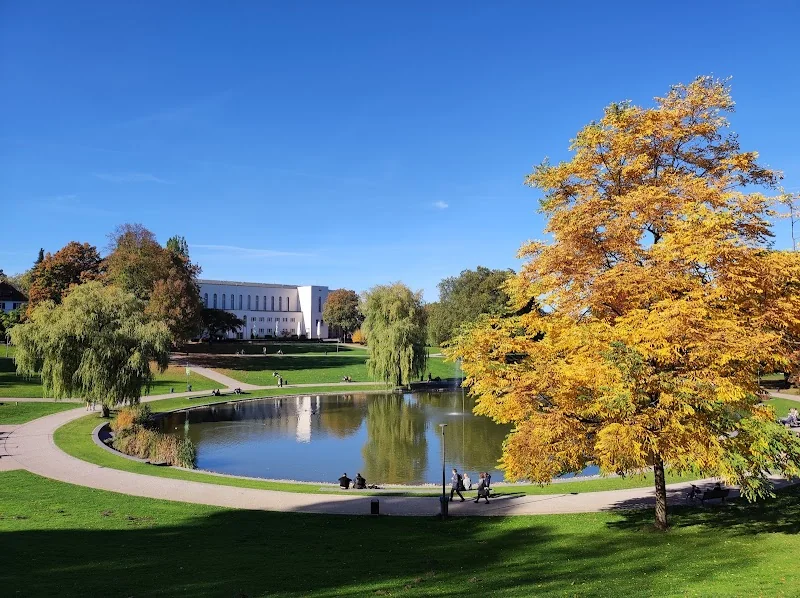
The Citizen Park Bielefeld is one of the most well-known green spaces in the city and is located in the western part of Bielefeld. The city describes it as a popular place for sun seekers, those looking for relaxation, and families, featuring large lawns, a pond, a fountain, flower and perennial beds, as well as old trees, giving it a distinctly open character. This blend of tranquility, nature, and small attractions makes the park a destination for short breaks as well as longer stays in the green. Therefore, those looking for the Citizen Park are not searching for a classic event hall, but rather a spacious park area with a high quality of stay and clear reference points in the urban space. ([bielefeld.de](https://www.bielefeld.de/buergerpark))
Water Playground and Family Time in the Citizen Park
When the Citizen Park in Bielefeld is searched for particularly often, it is almost always due to its family-friendly aspect. The key term is the water playground, which opened in 2015 and, according to the city, provides a beach-like feeling on warm days. This description is not an exaggeration out of nowhere, but fits perfectly with the character of the park: wide, gently sloping lawns invite lying down, playing, and resting, while the tall trees provide shade in the summer. For families, this combination is valuable because it allows for both movement and relaxation in the same place. Children can play in the water, while adults have the opportunity to relax with a view of the pond, beds, and meadows. Thus, the Citizen Park is not a compact playground with a narrow functional scheme, but an open park landscape designed for small everyday escapes. Those traveling with children also benefit from the fact that the park consists not only of lawns and paths but also of several experience zones: water, bird enclosures, perennial areas, and the spacious open areas interconnect. This is precisely why the Citizen Park feels like a place where short visits can quickly extend for many visitors. A planned walk easily turns into a picnic, a short detour to the playground into a half afternoon in the green. For the search intent surrounding water playgrounds, playgrounds, and family outings, the Citizen Park is therefore a very suitable destination because it actually offers more than just a passage area. The official city website also emphasizes that the park is maintained by the environmental agency and is thus part of a consciously designed urban green structure. This is evident on-site in the mix of well-kept areas and natural effects, which are particularly attractive for families and spontaneous visits. ([bielefeld.de](https://www.bielefeld.de/buergerpark))
Access, Parking, and Public Toilets
In a public park in a densely built city, the question of access and parking is almost always central, and this is where the Citizen Park offers several practical options. The city explicitly mentions the underground stop Rudolf-Oetker-Halle, which is accessible via city train line 4. This is the most convenient access for many visitors as it leads directly into the park without long walks and, according to the rose garden report, is also suitable for strollers and wheelchairs. Those arriving by car will find an adjacent parking lot on Lampingstraße in the immediate vicinity. In the city's rose garden reporting, this parking lot is mentioned as part of the redesign; it has been reorganized, received permeable paving, and is intended to heat up less in summer and allow rainwater to seep away better. Practically, it is important: The city does not specify a fixed number of parking spaces in the available sources, so one should expect a lively visitor turnout in good weather and, if possible, prefer the city train or bicycle. The bicycle is also a sensible option thanks to the distributed bike racks in the vicinity. Public toilets are also practical: The city provides a toilet at the Citizen Park on Wertherstraße 88 from 8 AM to 10 PM, opposite the café in the Citizen Park. Additionally, there is another publicly accessible toilet at the Rudolf-Oetker-Halle stop, which also fits well into the route to the park. These details make the visit more pleasant, especially for families, walkers, and people with longer stays. For the SEO topics of parking, access, and public toilets, the Citizen Park is well equipped, even if it is not a classic event location with large visitor flows and huge parking areas. The overall picture is more that of an urban recreational facility that is consciously connected to public transport, footpaths, and different forms of mobility. ([bielefeld.de](https://www.bielefeld.de/buergerpark))
History from Clay Pit to Popular Park
The history of the Citizen Park is one of the strongest reasons why the facility is much more than just a beautiful meadow in western Bielefeld. The city clearly describes that about 100 years ago, a former clay pit was transformed into an urban recreational area. After two years of construction, the park was opened in 1921, primarily with the help of unemployed former soldiers from World War I. The construction costs at that time were around half a million Reichsmarks. This origin already explains why the Citizen Park still appears so unique today: it did not emerge from a historically grown palace garden but from an upgraded area that was consciously designed for the population. Another significant turning point was the year 1929 when the Oetkerhalle was built right next to the park. This early on gave the environment a cultural and urban development boost that still shapes the Citizen Park today. Between 1933 and 1945, it was named Adolf-Hitler-Park; after the end of the Nazi regime, it regained its old name, Citizen Park. This also belongs to the historical classification, as the current name consciously stands for publicness, openness, and urban identity. In the 1950s, the motto already stated that entering the lawn area was explicitly welcome. This was a clear signal at that time for a different, modern use of urban green: sunbathing, picnicking, and relaxation should not only be tolerated but actively facilitated. The most important design axes remained intact despite several changes, especially the main axis from Stapenhorststraße to Wertherstraße and the pond as the centerpiece. For visitors, this means: The Citizen Park has grown historically but has surprisingly remained stable in its fundamental idea. It combines the character of an early city park with modern usage demands without losing its central structure. This is precisely why it can be described today as a historical, scenic, and practically everyday destination. ([bielefeld.de](https://www.bielefeld.de/buergerpark))
Pond, Fountain, Cranes, and the Gumbinnen Elk
Those searching for the special character of the Citizen Park almost automatically land at its visible trademarks: the large pond with fountain, the water and shore areas, the flower and perennial beds, as well as the animal inhabitants. The city names the pond as the centerpiece of the park, and this very centerpiece structures the stay on-site. Around the water, the typical Citizen Park moments arise: ducks and geese, reflective water surfaces, old trees, and changing light moods that make the park appear very differently depending on the time of day. Additionally, the bird aspect of the park distinguishes it significantly from many other green spaces. Above the park, cranes live in their own large enclosure below Werther Straße. Furthermore, aviaries with chickens and other bird species provide additional movement and soundscape. According to the city, the facility and its inhabitants come from donations from the city association of poultry breeders and other clubs. This shows that the Citizen Park is not only a natural space but also a place of local participation and care. Particularly exciting is the development of the crane facility: In 2021, a new covered bird aviary was put into operation, and in 2023, two new cranes moved into the Citizen Park, including a crowned crane and a young crane. This keeps the facility lively and evolving without losing its character. Also characteristic is the Gumbinnen Elk near the pond. It was erected in 1961 and has since served as a memorial and meeting place for displaced persons from East Prussia; the city has maintained a sponsorship with Gumbinnen since 1954. This historical sculpture adds an additional layer to the park between nature, memory culture, and urban history. It is this blend of water, wildlife, and symbols that makes the Citizen Park so distinguishable. Those looking for the pond, fountain, cranes, or the Gumbinnen Elk will find in the Citizen Park not an artificial themed world but a real city park with grown details and clear identity. ([bielefeld.de](https://www.bielefeld.de/buergerpark))
Rose Garden, Rudolf-Oetker-Halle, and the Green Surroundings
The Citizen Park does not function in isolation but is part of a green and culturally charged urban space in western Bielefeld. Directly adjacent, the Oetkerhalle was built in 1929, now Rudolf-Oetker-Halle, and this neighborhood continues to shape the area today. In close proximity is also the Rose Garden, which reopened to the public in May 2025 after about a year of construction. The city describes it as a climate-resilient and forward-looking urban park that significantly extends into the surroundings of the Citizen Park. This is interesting for visitors because it creates a cohesive experience of greenery, architecture, and footpaths around the Citizen Park. The Rose Garden was not only newly designed but also functionally improved: insect-friendly roses, herbs at nose height, numerous perennial mixtures, a flowering grove with around 50 newly planted trees, and retention areas for rainwater were created. Additionally, as part of the measure, 16 more trees were planted in the park area and eleven street trees in the adjacent parking lot on Lampingstraße. Access has also been improved: From the Rudolf-Oetker-Halle stop, the facility is now easily accessible with strollers and wheelchairs, and there are about 20 bike racks throughout the park. For the Citizen Park itself, this means an important enhancement of the surroundings, as visitors experience not just a single green area but an entire green urban space with good accessibility and a short distance to cultural and recreational offerings. It is precisely in this environment that the search intent for Citizen Park, Rose Garden, Rudolf-Oetker-Halle, access, and parking is particularly strong. Those visiting the park can therefore meaningfully extend their walk: first the open meadow and water landscape of the Citizen Park, then the garden spaces and seating areas of the Rose Garden, and finally the cultural address of the Rudolf-Oetker-Halle. This makes the location particularly attractive for walks, small breaks, and nature-oriented urban exploration. ([bielefeld.de](https://www.bielefeld.de/buergerpark))
Walking, Picnicking, and Quiet Breaks in Western Bielefeld
The best description of the Citizen Park may be the simplest: it is a place where one can feel comfortable without a grand plan. The urban texts emphasize the gently sloping lawns, the shade of old trees, the flower and perennial beds, and the observation of chickens, birds, and cranes. This creates an image of a park suitable for walks, lying on the grass, short sports or play phases, and quiet conversations. For families, walkers, older visitors, and people seeking a break in the midst of everyday life, the Citizen Park thus functions in a very direct way. It is not a staged amusement park but an open green area that makes the stay itself the content. This is one of its strengths: one does not have to consume anything here to enjoy the place. Simply being in the green is enough. At the same time, the maintenance by the urban environmental agency shows that this simple impression is not a coincidence but the result of continuous urban green care. The Citizen Park is part of the representative green infrastructure of the city and stands alongside other important park facilities such as the Botanical Garden or the North Park. This classification also explains why the park is so present for the people of Bielefeld: it is not only a destination for outings but part of the daily urban fabric. Therefore, anyone looking for a place for picnics, relaxation, small nature observations, or a short walk in the fresh air will find just the right mix in the Citizen Park. The park's great strength lies in the fact that despite its historical depth, it still appears uncomplicated. One can visit it specifically for the water playground, cranes, or history, but just as easily stumble upon it and immediately have a pleasant stay. This blend of familiarity, openness, and local character makes the Citizen Park Bielefeld one of the most valuable park facilities in the city to this day. ([bielefeld.de](https://www.bielefeld.de/buergerpark))
Sources:
- Citizen Park | Bielefeld - Official Park Page
- Parks | Bielefeld - Overview Citizen Park
- Public Toilets in the City Center | Bielefeld
- Opening of the Rose Garden in Western Bielefeld | City of Bielefeld
- Two New Cranes for the Citizen Park | City of Bielefeld
- Water Playground for Bielefeld Children in the Citizen Park | SessionNet
Show moreShow less
Citizen Park Bielefeld | Water Playground & Parking
The Citizen Park Bielefeld is one of the most well-known green spaces in the city and is located in the western part of Bielefeld. The city describes it as a popular place for sun seekers, those looking for relaxation, and families, featuring large lawns, a pond, a fountain, flower and perennial beds, as well as old trees, giving it a distinctly open character. This blend of tranquility, nature, and small attractions makes the park a destination for short breaks as well as longer stays in the green. Therefore, those looking for the Citizen Park are not searching for a classic event hall, but rather a spacious park area with a high quality of stay and clear reference points in the urban space. ([bielefeld.de](https://www.bielefeld.de/buergerpark))
Water Playground and Family Time in the Citizen Park
When the Citizen Park in Bielefeld is searched for particularly often, it is almost always due to its family-friendly aspect. The key term is the water playground, which opened in 2015 and, according to the city, provides a beach-like feeling on warm days. This description is not an exaggeration out of nowhere, but fits perfectly with the character of the park: wide, gently sloping lawns invite lying down, playing, and resting, while the tall trees provide shade in the summer. For families, this combination is valuable because it allows for both movement and relaxation in the same place. Children can play in the water, while adults have the opportunity to relax with a view of the pond, beds, and meadows. Thus, the Citizen Park is not a compact playground with a narrow functional scheme, but an open park landscape designed for small everyday escapes. Those traveling with children also benefit from the fact that the park consists not only of lawns and paths but also of several experience zones: water, bird enclosures, perennial areas, and the spacious open areas interconnect. This is precisely why the Citizen Park feels like a place where short visits can quickly extend for many visitors. A planned walk easily turns into a picnic, a short detour to the playground into a half afternoon in the green. For the search intent surrounding water playgrounds, playgrounds, and family outings, the Citizen Park is therefore a very suitable destination because it actually offers more than just a passage area. The official city website also emphasizes that the park is maintained by the environmental agency and is thus part of a consciously designed urban green structure. This is evident on-site in the mix of well-kept areas and natural effects, which are particularly attractive for families and spontaneous visits. ([bielefeld.de](https://www.bielefeld.de/buergerpark))
Access, Parking, and Public Toilets
In a public park in a densely built city, the question of access and parking is almost always central, and this is where the Citizen Park offers several practical options. The city explicitly mentions the underground stop Rudolf-Oetker-Halle, which is accessible via city train line 4. This is the most convenient access for many visitors as it leads directly into the park without long walks and, according to the rose garden report, is also suitable for strollers and wheelchairs. Those arriving by car will find an adjacent parking lot on Lampingstraße in the immediate vicinity. In the city's rose garden reporting, this parking lot is mentioned as part of the redesign; it has been reorganized, received permeable paving, and is intended to heat up less in summer and allow rainwater to seep away better. Practically, it is important: The city does not specify a fixed number of parking spaces in the available sources, so one should expect a lively visitor turnout in good weather and, if possible, prefer the city train or bicycle. The bicycle is also a sensible option thanks to the distributed bike racks in the vicinity. Public toilets are also practical: The city provides a toilet at the Citizen Park on Wertherstraße 88 from 8 AM to 10 PM, opposite the café in the Citizen Park. Additionally, there is another publicly accessible toilet at the Rudolf-Oetker-Halle stop, which also fits well into the route to the park. These details make the visit more pleasant, especially for families, walkers, and people with longer stays. For the SEO topics of parking, access, and public toilets, the Citizen Park is well equipped, even if it is not a classic event location with large visitor flows and huge parking areas. The overall picture is more that of an urban recreational facility that is consciously connected to public transport, footpaths, and different forms of mobility. ([bielefeld.de](https://www.bielefeld.de/buergerpark))
History from Clay Pit to Popular Park
The history of the Citizen Park is one of the strongest reasons why the facility is much more than just a beautiful meadow in western Bielefeld. The city clearly describes that about 100 years ago, a former clay pit was transformed into an urban recreational area. After two years of construction, the park was opened in 1921, primarily with the help of unemployed former soldiers from World War I. The construction costs at that time were around half a million Reichsmarks. This origin already explains why the Citizen Park still appears so unique today: it did not emerge from a historically grown palace garden but from an upgraded area that was consciously designed for the population. Another significant turning point was the year 1929 when the Oetkerhalle was built right next to the park. This early on gave the environment a cultural and urban development boost that still shapes the Citizen Park today. Between 1933 and 1945, it was named Adolf-Hitler-Park; after the end of the Nazi regime, it regained its old name, Citizen Park. This also belongs to the historical classification, as the current name consciously stands for publicness, openness, and urban identity. In the 1950s, the motto already stated that entering the lawn area was explicitly welcome. This was a clear signal at that time for a different, modern use of urban green: sunbathing, picnicking, and relaxation should not only be tolerated but actively facilitated. The most important design axes remained intact despite several changes, especially the main axis from Stapenhorststraße to Wertherstraße and the pond as the centerpiece. For visitors, this means: The Citizen Park has grown historically but has surprisingly remained stable in its fundamental idea. It combines the character of an early city park with modern usage demands without losing its central structure. This is precisely why it can be described today as a historical, scenic, and practically everyday destination. ([bielefeld.de](https://www.bielefeld.de/buergerpark))
Pond, Fountain, Cranes, and the Gumbinnen Elk
Those searching for the special character of the Citizen Park almost automatically land at its visible trademarks: the large pond with fountain, the water and shore areas, the flower and perennial beds, as well as the animal inhabitants. The city names the pond as the centerpiece of the park, and this very centerpiece structures the stay on-site. Around the water, the typical Citizen Park moments arise: ducks and geese, reflective water surfaces, old trees, and changing light moods that make the park appear very differently depending on the time of day. Additionally, the bird aspect of the park distinguishes it significantly from many other green spaces. Above the park, cranes live in their own large enclosure below Werther Straße. Furthermore, aviaries with chickens and other bird species provide additional movement and soundscape. According to the city, the facility and its inhabitants come from donations from the city association of poultry breeders and other clubs. This shows that the Citizen Park is not only a natural space but also a place of local participation and care. Particularly exciting is the development of the crane facility: In 2021, a new covered bird aviary was put into operation, and in 2023, two new cranes moved into the Citizen Park, including a crowned crane and a young crane. This keeps the facility lively and evolving without losing its character. Also characteristic is the Gumbinnen Elk near the pond. It was erected in 1961 and has since served as a memorial and meeting place for displaced persons from East Prussia; the city has maintained a sponsorship with Gumbinnen since 1954. This historical sculpture adds an additional layer to the park between nature, memory culture, and urban history. It is this blend of water, wildlife, and symbols that makes the Citizen Park so distinguishable. Those looking for the pond, fountain, cranes, or the Gumbinnen Elk will find in the Citizen Park not an artificial themed world but a real city park with grown details and clear identity. ([bielefeld.de](https://www.bielefeld.de/buergerpark))
Rose Garden, Rudolf-Oetker-Halle, and the Green Surroundings
The Citizen Park does not function in isolation but is part of a green and culturally charged urban space in western Bielefeld. Directly adjacent, the Oetkerhalle was built in 1929, now Rudolf-Oetker-Halle, and this neighborhood continues to shape the area today. In close proximity is also the Rose Garden, which reopened to the public in May 2025 after about a year of construction. The city describes it as a climate-resilient and forward-looking urban park that significantly extends into the surroundings of the Citizen Park. This is interesting for visitors because it creates a cohesive experience of greenery, architecture, and footpaths around the Citizen Park. The Rose Garden was not only newly designed but also functionally improved: insect-friendly roses, herbs at nose height, numerous perennial mixtures, a flowering grove with around 50 newly planted trees, and retention areas for rainwater were created. Additionally, as part of the measure, 16 more trees were planted in the park area and eleven street trees in the adjacent parking lot on Lampingstraße. Access has also been improved: From the Rudolf-Oetker-Halle stop, the facility is now easily accessible with strollers and wheelchairs, and there are about 20 bike racks throughout the park. For the Citizen Park itself, this means an important enhancement of the surroundings, as visitors experience not just a single green area but an entire green urban space with good accessibility and a short distance to cultural and recreational offerings. It is precisely in this environment that the search intent for Citizen Park, Rose Garden, Rudolf-Oetker-Halle, access, and parking is particularly strong. Those visiting the park can therefore meaningfully extend their walk: first the open meadow and water landscape of the Citizen Park, then the garden spaces and seating areas of the Rose Garden, and finally the cultural address of the Rudolf-Oetker-Halle. This makes the location particularly attractive for walks, small breaks, and nature-oriented urban exploration. ([bielefeld.de](https://www.bielefeld.de/buergerpark))
Walking, Picnicking, and Quiet Breaks in Western Bielefeld
The best description of the Citizen Park may be the simplest: it is a place where one can feel comfortable without a grand plan. The urban texts emphasize the gently sloping lawns, the shade of old trees, the flower and perennial beds, and the observation of chickens, birds, and cranes. This creates an image of a park suitable for walks, lying on the grass, short sports or play phases, and quiet conversations. For families, walkers, older visitors, and people seeking a break in the midst of everyday life, the Citizen Park thus functions in a very direct way. It is not a staged amusement park but an open green area that makes the stay itself the content. This is one of its strengths: one does not have to consume anything here to enjoy the place. Simply being in the green is enough. At the same time, the maintenance by the urban environmental agency shows that this simple impression is not a coincidence but the result of continuous urban green care. The Citizen Park is part of the representative green infrastructure of the city and stands alongside other important park facilities such as the Botanical Garden or the North Park. This classification also explains why the park is so present for the people of Bielefeld: it is not only a destination for outings but part of the daily urban fabric. Therefore, anyone looking for a place for picnics, relaxation, small nature observations, or a short walk in the fresh air will find just the right mix in the Citizen Park. The park's great strength lies in the fact that despite its historical depth, it still appears uncomplicated. One can visit it specifically for the water playground, cranes, or history, but just as easily stumble upon it and immediately have a pleasant stay. This blend of familiarity, openness, and local character makes the Citizen Park Bielefeld one of the most valuable park facilities in the city to this day. ([bielefeld.de](https://www.bielefeld.de/buergerpark))
Sources:
- Citizen Park | Bielefeld - Official Park Page
- Parks | Bielefeld - Overview Citizen Park
- Public Toilets in the City Center | Bielefeld
- Opening of the Rose Garden in Western Bielefeld | City of Bielefeld
- Two New Cranes for the Citizen Park | City of Bielefeld
- Water Playground for Bielefeld Children in the Citizen Park | SessionNet
Citizen Park Bielefeld | Water Playground & Parking
The Citizen Park Bielefeld is one of the most well-known green spaces in the city and is located in the western part of Bielefeld. The city describes it as a popular place for sun seekers, those looking for relaxation, and families, featuring large lawns, a pond, a fountain, flower and perennial beds, as well as old trees, giving it a distinctly open character. This blend of tranquility, nature, and small attractions makes the park a destination for short breaks as well as longer stays in the green. Therefore, those looking for the Citizen Park are not searching for a classic event hall, but rather a spacious park area with a high quality of stay and clear reference points in the urban space. ([bielefeld.de](https://www.bielefeld.de/buergerpark))
Water Playground and Family Time in the Citizen Park
When the Citizen Park in Bielefeld is searched for particularly often, it is almost always due to its family-friendly aspect. The key term is the water playground, which opened in 2015 and, according to the city, provides a beach-like feeling on warm days. This description is not an exaggeration out of nowhere, but fits perfectly with the character of the park: wide, gently sloping lawns invite lying down, playing, and resting, while the tall trees provide shade in the summer. For families, this combination is valuable because it allows for both movement and relaxation in the same place. Children can play in the water, while adults have the opportunity to relax with a view of the pond, beds, and meadows. Thus, the Citizen Park is not a compact playground with a narrow functional scheme, but an open park landscape designed for small everyday escapes. Those traveling with children also benefit from the fact that the park consists not only of lawns and paths but also of several experience zones: water, bird enclosures, perennial areas, and the spacious open areas interconnect. This is precisely why the Citizen Park feels like a place where short visits can quickly extend for many visitors. A planned walk easily turns into a picnic, a short detour to the playground into a half afternoon in the green. For the search intent surrounding water playgrounds, playgrounds, and family outings, the Citizen Park is therefore a very suitable destination because it actually offers more than just a passage area. The official city website also emphasizes that the park is maintained by the environmental agency and is thus part of a consciously designed urban green structure. This is evident on-site in the mix of well-kept areas and natural effects, which are particularly attractive for families and spontaneous visits. ([bielefeld.de](https://www.bielefeld.de/buergerpark))
Access, Parking, and Public Toilets
In a public park in a densely built city, the question of access and parking is almost always central, and this is where the Citizen Park offers several practical options. The city explicitly mentions the underground stop Rudolf-Oetker-Halle, which is accessible via city train line 4. This is the most convenient access for many visitors as it leads directly into the park without long walks and, according to the rose garden report, is also suitable for strollers and wheelchairs. Those arriving by car will find an adjacent parking lot on Lampingstraße in the immediate vicinity. In the city's rose garden reporting, this parking lot is mentioned as part of the redesign; it has been reorganized, received permeable paving, and is intended to heat up less in summer and allow rainwater to seep away better. Practically, it is important: The city does not specify a fixed number of parking spaces in the available sources, so one should expect a lively visitor turnout in good weather and, if possible, prefer the city train or bicycle. The bicycle is also a sensible option thanks to the distributed bike racks in the vicinity. Public toilets are also practical: The city provides a toilet at the Citizen Park on Wertherstraße 88 from 8 AM to 10 PM, opposite the café in the Citizen Park. Additionally, there is another publicly accessible toilet at the Rudolf-Oetker-Halle stop, which also fits well into the route to the park. These details make the visit more pleasant, especially for families, walkers, and people with longer stays. For the SEO topics of parking, access, and public toilets, the Citizen Park is well equipped, even if it is not a classic event location with large visitor flows and huge parking areas. The overall picture is more that of an urban recreational facility that is consciously connected to public transport, footpaths, and different forms of mobility. ([bielefeld.de](https://www.bielefeld.de/buergerpark))
History from Clay Pit to Popular Park
The history of the Citizen Park is one of the strongest reasons why the facility is much more than just a beautiful meadow in western Bielefeld. The city clearly describes that about 100 years ago, a former clay pit was transformed into an urban recreational area. After two years of construction, the park was opened in 1921, primarily with the help of unemployed former soldiers from World War I. The construction costs at that time were around half a million Reichsmarks. This origin already explains why the Citizen Park still appears so unique today: it did not emerge from a historically grown palace garden but from an upgraded area that was consciously designed for the population. Another significant turning point was the year 1929 when the Oetkerhalle was built right next to the park. This early on gave the environment a cultural and urban development boost that still shapes the Citizen Park today. Between 1933 and 1945, it was named Adolf-Hitler-Park; after the end of the Nazi regime, it regained its old name, Citizen Park. This also belongs to the historical classification, as the current name consciously stands for publicness, openness, and urban identity. In the 1950s, the motto already stated that entering the lawn area was explicitly welcome. This was a clear signal at that time for a different, modern use of urban green: sunbathing, picnicking, and relaxation should not only be tolerated but actively facilitated. The most important design axes remained intact despite several changes, especially the main axis from Stapenhorststraße to Wertherstraße and the pond as the centerpiece. For visitors, this means: The Citizen Park has grown historically but has surprisingly remained stable in its fundamental idea. It combines the character of an early city park with modern usage demands without losing its central structure. This is precisely why it can be described today as a historical, scenic, and practically everyday destination. ([bielefeld.de](https://www.bielefeld.de/buergerpark))
Pond, Fountain, Cranes, and the Gumbinnen Elk
Those searching for the special character of the Citizen Park almost automatically land at its visible trademarks: the large pond with fountain, the water and shore areas, the flower and perennial beds, as well as the animal inhabitants. The city names the pond as the centerpiece of the park, and this very centerpiece structures the stay on-site. Around the water, the typical Citizen Park moments arise: ducks and geese, reflective water surfaces, old trees, and changing light moods that make the park appear very differently depending on the time of day. Additionally, the bird aspect of the park distinguishes it significantly from many other green spaces. Above the park, cranes live in their own large enclosure below Werther Straße. Furthermore, aviaries with chickens and other bird species provide additional movement and soundscape. According to the city, the facility and its inhabitants come from donations from the city association of poultry breeders and other clubs. This shows that the Citizen Park is not only a natural space but also a place of local participation and care. Particularly exciting is the development of the crane facility: In 2021, a new covered bird aviary was put into operation, and in 2023, two new cranes moved into the Citizen Park, including a crowned crane and a young crane. This keeps the facility lively and evolving without losing its character. Also characteristic is the Gumbinnen Elk near the pond. It was erected in 1961 and has since served as a memorial and meeting place for displaced persons from East Prussia; the city has maintained a sponsorship with Gumbinnen since 1954. This historical sculpture adds an additional layer to the park between nature, memory culture, and urban history. It is this blend of water, wildlife, and symbols that makes the Citizen Park so distinguishable. Those looking for the pond, fountain, cranes, or the Gumbinnen Elk will find in the Citizen Park not an artificial themed world but a real city park with grown details and clear identity. ([bielefeld.de](https://www.bielefeld.de/buergerpark))
Rose Garden, Rudolf-Oetker-Halle, and the Green Surroundings
The Citizen Park does not function in isolation but is part of a green and culturally charged urban space in western Bielefeld. Directly adjacent, the Oetkerhalle was built in 1929, now Rudolf-Oetker-Halle, and this neighborhood continues to shape the area today. In close proximity is also the Rose Garden, which reopened to the public in May 2025 after about a year of construction. The city describes it as a climate-resilient and forward-looking urban park that significantly extends into the surroundings of the Citizen Park. This is interesting for visitors because it creates a cohesive experience of greenery, architecture, and footpaths around the Citizen Park. The Rose Garden was not only newly designed but also functionally improved: insect-friendly roses, herbs at nose height, numerous perennial mixtures, a flowering grove with around 50 newly planted trees, and retention areas for rainwater were created. Additionally, as part of the measure, 16 more trees were planted in the park area and eleven street trees in the adjacent parking lot on Lampingstraße. Access has also been improved: From the Rudolf-Oetker-Halle stop, the facility is now easily accessible with strollers and wheelchairs, and there are about 20 bike racks throughout the park. For the Citizen Park itself, this means an important enhancement of the surroundings, as visitors experience not just a single green area but an entire green urban space with good accessibility and a short distance to cultural and recreational offerings. It is precisely in this environment that the search intent for Citizen Park, Rose Garden, Rudolf-Oetker-Halle, access, and parking is particularly strong. Those visiting the park can therefore meaningfully extend their walk: first the open meadow and water landscape of the Citizen Park, then the garden spaces and seating areas of the Rose Garden, and finally the cultural address of the Rudolf-Oetker-Halle. This makes the location particularly attractive for walks, small breaks, and nature-oriented urban exploration. ([bielefeld.de](https://www.bielefeld.de/buergerpark))
Walking, Picnicking, and Quiet Breaks in Western Bielefeld
The best description of the Citizen Park may be the simplest: it is a place where one can feel comfortable without a grand plan. The urban texts emphasize the gently sloping lawns, the shade of old trees, the flower and perennial beds, and the observation of chickens, birds, and cranes. This creates an image of a park suitable for walks, lying on the grass, short sports or play phases, and quiet conversations. For families, walkers, older visitors, and people seeking a break in the midst of everyday life, the Citizen Park thus functions in a very direct way. It is not a staged amusement park but an open green area that makes the stay itself the content. This is one of its strengths: one does not have to consume anything here to enjoy the place. Simply being in the green is enough. At the same time, the maintenance by the urban environmental agency shows that this simple impression is not a coincidence but the result of continuous urban green care. The Citizen Park is part of the representative green infrastructure of the city and stands alongside other important park facilities such as the Botanical Garden or the North Park. This classification also explains why the park is so present for the people of Bielefeld: it is not only a destination for outings but part of the daily urban fabric. Therefore, anyone looking for a place for picnics, relaxation, small nature observations, or a short walk in the fresh air will find just the right mix in the Citizen Park. The park's great strength lies in the fact that despite its historical depth, it still appears uncomplicated. One can visit it specifically for the water playground, cranes, or history, but just as easily stumble upon it and immediately have a pleasant stay. This blend of familiarity, openness, and local character makes the Citizen Park Bielefeld one of the most valuable park facilities in the city to this day. ([bielefeld.de](https://www.bielefeld.de/buergerpark))
Sources:
- Citizen Park | Bielefeld - Official Park Page
- Parks | Bielefeld - Overview Citizen Park
- Public Toilets in the City Center | Bielefeld
- Opening of the Rose Garden in Western Bielefeld | City of Bielefeld
- Two New Cranes for the Citizen Park | City of Bielefeld
- Water Playground for Bielefeld Children in the Citizen Park | SessionNet
Upcoming Events
No events found
Frequently Asked Questions
Reviews
Ankit Auddy
21. April 2025
Lovely place to visit at any time of the day. Filled with nature and even prettier in the evenings. A must-visit.
Ruzanna Konjoryan
10. April 2022
Amazing park, very clean and harmonious, good for relaxing and just morning sports or jogging, quiet and relaxing, good for family walks and maybe even having some picnic without barbecue.
Vivek Padayattil
27. May 2022
The place is good for an evening stroll but it really needs proper maintenance. Waste can be seen floating in water. Birds/animal shit everywhere.
Jagoda Basic
26. June 2022
Nice walk full of birds singing, bees buzzing and flowering plants… simply an eye candy.
Kamya Ashok
6. June 2025
Lovely park to relax in. Easily reachable with bus 61, 62, 63 & 64 or tram to Rudolf Oetker Halle.