
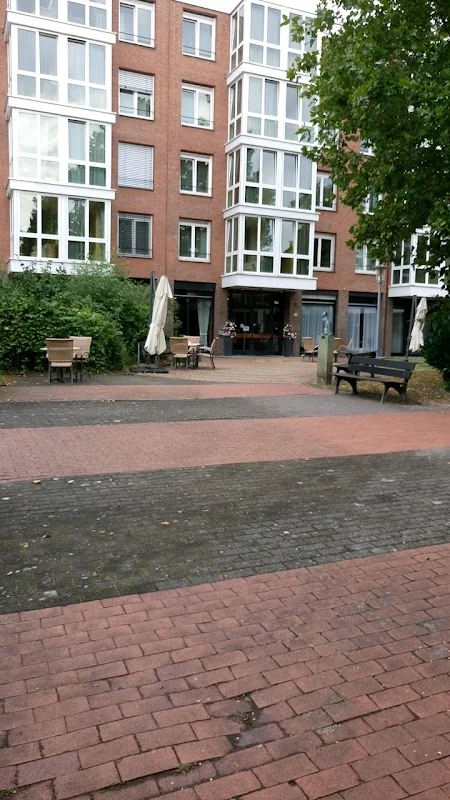
Bielefeld
Rheinallee 45A, 33689 Bielefeld-Sennestadt, Deutschland
Ernst-Barlach-Haus | Photos & Reviews
The Ernst-Barlach-Haus in Bielefeld-Sennestadt is much more than just a name on a map. Those looking for photos, reviews, or a first impression usually want to know not only the address but also understand how the facility feels, what role it plays in the neighborhood, and what residents and their families can expect there. This is where the strength of this house lies: It is a well-established, diaconal nursing home with a long history, clear structure, and a palpable sense of community. Officially, the house is described as part of a diaconal center, together with a diaconal station, service living, and hospice work under one roof. It currently has 99 places, located at Rheinallee 45a in 33689 Bielefeld-Sennestadt. The house has been in operation since 1977, and in 2026, the 50th anniversary will be celebrated. This mix of continuity, care competence, and social interaction makes the Ernst-Barlach-Haus interesting for many seekers, especially when it comes to reliable information rather than mere buzzwords. ([deine-diakonie.de](https://www.deine-diakonie.de/pflegen-wohnen/pflegeheime))
Photos, Impressions, and Atmosphere at the Ernst-Barlach-Haus
Those searching for photos of the Ernst-Barlach-Haus on Google or other portals usually want to take a look behind the sober facility designation. The official pages provide important clues for this: In a jubilee article, several images are shown, including a photo of the house's construction, an old postcard, shots of the facility management and social services, as well as a picture at the entrance. This selection already shows that the house is perceived not only as a care address but as a place with history, identity, and a recognizable face. Images here are more than decoration. They tell that it is a well-established facility that has grown together with the neighborhood over decades and is now considered a familiar part of Sennestadt. The visual effect arises not only from architecture but also from the people who shape everyday life. The official presentation emphasizes the familial, harmonious, and appreciative interaction described by both residents and staff. This is an important factor when photos and reviews are considered together. Photos show rooms, paths, entrances, and garden areas. Reviews and descriptions provide the emotional level: Is the house experienced as friendly, lively, and approachable? At the Ernst-Barlach-Haus, the official texts indicate an environment where community is visibly lived. It fits that the website mentions concerts, celebrations, activity offerings, and small as well as larger sports units. The sensory garden also plays an important visual and content role, as it is not just an outdoor area but a consciously designed place of tranquility, movement, and encounter. For seekers, this creates an image that goes far beyond classic home photos: It is about atmosphere, reliability, and a daily life that feels human. ([deine-diakonie.de](https://www.deine-diakonie.de/news/news-detail/50-jahre-ernst-barlach-haus-viele-geschichten-ein-zuhause))
Especially in care facilities, photos are often the first step toward a conscious decision. Relatives want to see if the environment appears open, well-kept, and practical for everyday life. At the Ernst-Barlach-Haus, public information speaks for a house that does not seem sterile or anonymous but is consciously understood as a place of living and life. The official descriptions mention a large dining room, an appealing sensory garden, celebrations in the house, and offerings that also involve relatives. Such details transform a mere building name into a place with atmosphere. When images from various time phases are added, from construction to the present house, a credible impression of development rather than staging emerges. This is particularly important for the search intent behind the keyword photos: Users want no glossy promises but visual orientation. At the Ernst-Barlach-Haus, much suggests that the photos make visible the transformation from a retirement home to a modern care facility. This development is explicitly described in the jubilee article. The images thus serve not only as documentation but also as classification: Those searching for photos today see a house that has grown over decades yet remains current. This visually clarifies why the house is a firm reference point for many people in Sennestadt. ([deine-diakonie.de](https://www.deine-diakonie.de/news/news-detail/50-jahre-ernst-barlach-haus-viele-geschichten-ein-zuhause))
Reviews, Ratings, and What People Really Value in Care Facilities
Reviews are rarely just about a number. Especially in a nursing home, seekers inquire about reliability, communication, attention, and atmosphere. That is exactly why the combination of ratings and concrete facts is so important. The Ernst-Barlach-Haus is officially described as a diaconal facility with 99 places, accompanying services, domestic care, and a socially and culturally shaped everyday life. These are precisely the points that many relatives pay attention to in reviews: How are people treated? Are there fixed contacts? Are residents not only cared for but also activated and involved? The public information speaks a clear language here. The accompanying service organizes celebrations, activity offerings, sports units, concerts, and activities in the sensory garden. Furthermore, the facility is described as part of a center for older, sick, and care-dependent people, along with a diaconal station, service living, and hospice work. For reviews, this means: Those seeking an impression should pay less attention to individual standout formulations and more to recurring themes. If relatives, residents, and staff repeatedly mention friendliness, community, music, structure, and accessibility, it is a reliable indication of the character of the house. This also applies to the official self-presentation, which describes the house as familial, harmonious, and characterized by an equal treatment approach. Such information does not replace a personal visit but helps to classify reviews and distinguish between subjective individual opinions and typical everyday life. Especially because the house is not an anonymous large facility but a clearly anchored neighborhood house, personal impressions are particularly valuable. Reviews should therefore always be read together with the hard facts: location, availability, care concept, protected areas, cultural offerings, and fixed contacts. This creates a realistic overall picture that better supports seekers than a mere star rating. ([deine-diakonie.de](https://www.deine-diakonie.de/pflegen-wohnen/pflegeheime))
For many families, it is also important how open a facility remains for contacts. The available information shows that the Ernst-Barlach-Haus is not only organized internally but also has an outward effect. In 2026, the house was described as a fixed part of Sennestadt, as a place of security, togetherness, and humanity. This description is relevant for evaluating reviews because it provides a framework against which experiences can be measured. If a house uses music as a bridge according to the official presentation, regularly hosts concerts, and actively engages residents, then this is not a random addition but part of the profile. At the same time, care is not romanticized but clearly understood as a professional task: There are staff in care, domestic services, management team, and building technology, and the facility has been working for years with targeted concepts, such as for training and responsible station work. Therefore, those searching for reviews should ask questions like: Does the house seem lively? Are relatives taken seriously? Is there variety in daily life? Is the social aspect of care visible? In these points, the public information provides strong clues. The individual user experiences are important, but only the connection with the official facts makes the evaluation robust. Thus, a search term like reviews becomes a real decision helper. ([deine-diakonie.de](https://www.deine-diakonie.de/news/news-detail/50-jahre-ernst-barlach-haus-viele-geschichten-ein-zuhause))
Location, Address, and Integration in Sennestadt
The location of the Ernst-Barlach-Haus is one of the central advantages when considering the facility objectively. The official address is Rheinallee 45a, 33689 Bielefeld-Sennestadt. In care portals, the house is described as a nursing home in a quiet residential area south of the Teutoburg Forest. At the same time, it is stated that the facility is situated in the midst of a well-established neighborhood in Sennestadt. This combination of residential environment and neighborhood connection is important for many relatives because it does not convey the impression of an isolated large building but rather of a house that is embedded in its surroundings. The care portal of the city of Bielefeld adds that the house includes well-maintained green areas with a pavilion and a protected area with lawn, sensory garden, raised beds, and a walker-friendly circular path. This is very valuable for the classification of the location because not only the pure address counts but also the environment for walks, orientation, and quality of stay. The official diaconal site additionally emphasizes that the house is located in the southern part of Bielefeld in a central location and in the midst of established residential neighborhoods. For those searching for the keyword location or address, this is strong information: The house is not on the edge of perception but firmly anchored in the neighborhood. The historical development also fits this. Established in 1977, the facility has built relationships in the neighborhood over decades and is now a familiar part of Sennestadt. This is explicitly highlighted in the jubilee article. Therefore, those wanting to evaluate location and integration should not only consider the Ernst-Barlach-Haus as a care object but as a neighborhood place with a social function. This also explains why concerts, celebrations, and public encounters take place there. The location is thus not only relevant for postal purposes but also shapes the identity, daily life, and accessibility of the facility. ([bielefeld-pflegeberatung.de](https://www.bielefeld-pflegeberatung.de/Ernst-Barlach-Haus/Allgemeines-0507424859.html))
For relatives, the location is often also decisive because it influences visits, care, and accessibility. Even if the available sources do not mention a separate parking or public transport page, the location in an established residential area is an indication of generally accessible reachability. What is crucial is that the house is not isolated but embedded in an existing network. This concerns not only the neighborhood itself but also the collaboration with the diaconal station, service living, and hospice work. Those looking for a place with short distances within the social system find a coherent picture here. The location in Sennestadt is thus relevant not only for access but also for the intertwining of care, support, and neighborhood life. This explains why the house is described in official texts as firmly anchored and well-known. Such integrations are often an underestimated factor in reviews: Families then experience not just a building but a network that functions in everyday life. This is precisely where the strength of the Ernst-Barlach-Haus lies. It combines a quiet residential location, a well-established neighborhood, and diaconal embedding. The result is a location that conveys stability and closeness. For a care facility, this is an essential advantage as it fosters security and trust. ([deine-diakonie.de](https://www.deine-diakonie.de/pflegen-wohnen/pflegeheime))
Care Offers, Living Areas, and Everyday Life at the Ernst-Barlach-Haus
The Ernst-Barlach-Haus is described in public information as a full-time nursing home with 99 residents. This is important for assessing the size, as the facility is neither small nor unmanageable but large enough for differentiated offerings while being structured clearly enough to allow for personal closeness. The diaconal site emphasizes that the house provides nursing and domestic care and that the accompanying service is a reliable contact for residents and their families. This includes celebrations, activity offerings, small and larger sports units, concerts in the large dining room, and outdoor activities in the sensory garden. This mix is what characterizes everyday life in a care facility today: not just basic care but activating life design. The care portal of the city of Bielefeld adds that there are two special living areas for people with dementia, generously sized single rooms, communal areas on all floors, a large dining room on the ground floor, and a monthly cultural program. Additionally, a protected area with a sensory garden, raised beds, and a walker-friendly circular path is mentioned. This combination is professionally significant because it shows that the house is tailored to different needs: security, orientation, movement, community, and retreat. The official diaconal site also speaks of activity offerings, sports units, and an open, active everyday design. For relatives, these are strong signals because they point to a house that does not understand care as static support but as an accompanied life phase. Particularly relevant is the statement that residents' wishes and favorite meals are included in the menu and that the kitchen cooks fresh daily. This may sound unspectacular, but it is enormously important for quality of life in everyday life. Additionally, the structure into individual living areas aims to create a homely atmosphere despite the overall size. This is a key term for many search inquiries: How can size be combined with personality? The Ernst-Barlach-Haus answers this question with clear neighborhood ties, small living groups, protected areas, and active togetherness. ([deine-diakonie.de](https://www.deine-diakonie.de/pflegen-wohnen/pflegeheime))
Another important aspect is the professional framework. The facility works not only with caregivers but also with an accompanying service and other support structures. Public information mentions assistance with applications and official matters, interdenominational pastoral care, its own kitchen, domestic services, laundry, and janitorial services. Such points are often crucial in everyday life because they relieve relatives and provide residents with orientation. Furthermore, according to the care portal, there are collaborations with palliative networks, medical networks, hospice services, as well as general practitioners, specialists, and physiotherapy practices. This is particularly relevant for people seeking closely networked care. The facility thus becomes visible as a place where care, medical support, and social assistance interact. Additionally, the trainee station is described as an innovative concept: Trainees take on responsibility for a complete care station under supervision. This shows that the house is not only managed but also developed. For seekers asking about care offers, rooms, or living areas, this combination of structure and activity is a strong plus. The Ernst-Barlach-Haus is thus not just a nursing home in the narrow sense but a place where daily life, care, culture, and training intertwine. This added value distinguishes the facility from many purely functional care addresses. ([deine-diakonie.de](https://www.deine-diakonie.de/pflegen-wohnen/pflegeheime))
History, Anniversary, and Cultural Profile
The history of the Ernst-Barlach-Haus is a central theme because it gives depth to the facility. According to the care portal, the house was occupied in mid-1977 and named after the sculptor and graphic artist Ernst Barlach. In 2026, the facility will celebrate its 50th anniversary. The anniversary is more than just a formal number. In the official retrospective, it becomes clear that the house has developed from a retirement home for largely independent people into a modern care facility with comprehensive support. This development makes it interesting for seekers who are looking for not just a place but a story. The house is described as a fixed part of Sennestadt, as a place of security, togetherness, and humanity. Such formulations are important because they show that the facility is not foreign to the neighborhood but has grown and is recognized. The jubilee article also mentions that the atmosphere is experienced as warm, appreciative, and humorous, and that many residents feel at home there. At the same time, the cultural dimension plays a special role. Concerts are regularly held, not only for residents but also for the public. Mentioned are, among others, guitar sounds at the beginning of spring and a concert featuring film music. The house is even described in this context as a small cultural center. For a nursing home, this is remarkable because culture and care are not thought of separately but together. Music is understood as a way to create access and revive memories for people with dementia. This gives the house a profile that goes far beyond the classic home function. Therefore, when users search for history, special features, or background, they find here a house with biographical depth, social anchoring, and cultural openness. ([bielefeld-pflegeberatung.de](https://www.bielefeld-pflegeberatung.de/Ernst-Barlach-Haus/Pflegeheime-0311134851.html?utm_source=openai))
Particularly exciting is also the current development of the house. The official diaconal report mentions the trainee station, which has been awarded a prize for employee recruitment. For over a year, trainees have taken responsibility for a complete care station there. This shows that the Ernst-Barlach-Haus is not only building on tradition but also on the future. In times of skilled labor shortages, this is an important signal. At the same time, the house remains true to its diaconal and church orientation. The owner is the Protestant parish of Sennestadt, and the facility is operated by the DiakonieVerband Brackwede. This creates a mix of continuity, responsibility, and social mission. For relatives and seekers, this is a relevant trust factor. The history of the house is thus not merely a retrospective but a key to today's profile. Those viewing photos see building history and the present. Those reading reviews feel community and care everyday life. Those reading the official texts recognize a house that has developed without losing its identity. This is exactly what makes the Ernst-Barlach-Haus a search query with substance. It is a place with a past, present, and a clearly articulated future. ([deine-diakonie.de](https://www.deine-diakonie.de/news/news-detail/50-jahre-ernst-barlach-haus-viele-geschichten-ein-zuhause?utm_source=openai))
Contact, Practical Information, and Orientation for Relatives
For all those who need concrete information, the official contact details are particularly helpful. The Ernst-Barlach-Haus is located at Rheinallee 45a in 33689 Bielefeld-Sennestadt. The care portal of the city of Bielefeld also lists the telephone switchboard at 0521 94 239 400 as well as the admissions and counseling at 0521 94239-417. Natalya Dyachuk is listed as the facility manager, and the official page also names Nicole Schipplick as the contact person for admissions and counseling. This information is practically important because many relatives are not only looking for photos and reviews but also for direct contact for questions about admissions, care, or personal situations. The structure of the house helps to quickly find the right contacts. At the same time, the public information shows that the facility is well-organized. There are clear responsibilities, an accompanying service, and an environment where celebrations, activities, and cultural offerings are part of everyday life. Therefore, if a conversation is planned, one can already get an idea: The Ernst-Barlach-Haus is not an anonymous place but a house with a name, history, and faces. For many families, that is crucial. When searching for a care place or a nursing home, one does not want to just list facts but build trust. Here, the search terms photos, reviews, address, contact, and dementia area work very well together because they create a complete picture. The facility presents itself as a well-networked, established house with 99 places, protected areas, sensory garden, cultural offerings, and diaconal embedding. Therefore, those wondering how the Ernst-Barlach-Haus works in everyday life should connect the official information with their own impressions. Then it quickly becomes clear: This is about care with structure, a strong neighborhood feeling, and a place where community is consciously shaped. ([bielefeld-pflegeberatung.de](https://www.bielefeld-pflegeberatung.de/Ernst-Barlach-Haus/Allgemeines-0507424859.html))
Sources:
Mehr anzeigenWeniger anzeigen
Ernst-Barlach-Haus | Photos & Reviews
The Ernst-Barlach-Haus in Bielefeld-Sennestadt is much more than just a name on a map. Those looking for photos, reviews, or a first impression usually want to know not only the address but also understand how the facility feels, what role it plays in the neighborhood, and what residents and their families can expect there. This is where the strength of this house lies: It is a well-established, diaconal nursing home with a long history, clear structure, and a palpable sense of community. Officially, the house is described as part of a diaconal center, together with a diaconal station, service living, and hospice work under one roof. It currently has 99 places, located at Rheinallee 45a in 33689 Bielefeld-Sennestadt. The house has been in operation since 1977, and in 2026, the 50th anniversary will be celebrated. This mix of continuity, care competence, and social interaction makes the Ernst-Barlach-Haus interesting for many seekers, especially when it comes to reliable information rather than mere buzzwords. ([deine-diakonie.de](https://www.deine-diakonie.de/pflegen-wohnen/pflegeheime))
Photos, Impressions, and Atmosphere at the Ernst-Barlach-Haus
Those searching for photos of the Ernst-Barlach-Haus on Google or other portals usually want to take a look behind the sober facility designation. The official pages provide important clues for this: In a jubilee article, several images are shown, including a photo of the house's construction, an old postcard, shots of the facility management and social services, as well as a picture at the entrance. This selection already shows that the house is perceived not only as a care address but as a place with history, identity, and a recognizable face. Images here are more than decoration. They tell that it is a well-established facility that has grown together with the neighborhood over decades and is now considered a familiar part of Sennestadt. The visual effect arises not only from architecture but also from the people who shape everyday life. The official presentation emphasizes the familial, harmonious, and appreciative interaction described by both residents and staff. This is an important factor when photos and reviews are considered together. Photos show rooms, paths, entrances, and garden areas. Reviews and descriptions provide the emotional level: Is the house experienced as friendly, lively, and approachable? At the Ernst-Barlach-Haus, the official texts indicate an environment where community is visibly lived. It fits that the website mentions concerts, celebrations, activity offerings, and small as well as larger sports units. The sensory garden also plays an important visual and content role, as it is not just an outdoor area but a consciously designed place of tranquility, movement, and encounter. For seekers, this creates an image that goes far beyond classic home photos: It is about atmosphere, reliability, and a daily life that feels human. ([deine-diakonie.de](https://www.deine-diakonie.de/news/news-detail/50-jahre-ernst-barlach-haus-viele-geschichten-ein-zuhause))
Especially in care facilities, photos are often the first step toward a conscious decision. Relatives want to see if the environment appears open, well-kept, and practical for everyday life. At the Ernst-Barlach-Haus, public information speaks for a house that does not seem sterile or anonymous but is consciously understood as a place of living and life. The official descriptions mention a large dining room, an appealing sensory garden, celebrations in the house, and offerings that also involve relatives. Such details transform a mere building name into a place with atmosphere. When images from various time phases are added, from construction to the present house, a credible impression of development rather than staging emerges. This is particularly important for the search intent behind the keyword photos: Users want no glossy promises but visual orientation. At the Ernst-Barlach-Haus, much suggests that the photos make visible the transformation from a retirement home to a modern care facility. This development is explicitly described in the jubilee article. The images thus serve not only as documentation but also as classification: Those searching for photos today see a house that has grown over decades yet remains current. This visually clarifies why the house is a firm reference point for many people in Sennestadt. ([deine-diakonie.de](https://www.deine-diakonie.de/news/news-detail/50-jahre-ernst-barlach-haus-viele-geschichten-ein-zuhause))
Reviews, Ratings, and What People Really Value in Care Facilities
Reviews are rarely just about a number. Especially in a nursing home, seekers inquire about reliability, communication, attention, and atmosphere. That is exactly why the combination of ratings and concrete facts is so important. The Ernst-Barlach-Haus is officially described as a diaconal facility with 99 places, accompanying services, domestic care, and a socially and culturally shaped everyday life. These are precisely the points that many relatives pay attention to in reviews: How are people treated? Are there fixed contacts? Are residents not only cared for but also activated and involved? The public information speaks a clear language here. The accompanying service organizes celebrations, activity offerings, sports units, concerts, and activities in the sensory garden. Furthermore, the facility is described as part of a center for older, sick, and care-dependent people, along with a diaconal station, service living, and hospice work. For reviews, this means: Those seeking an impression should pay less attention to individual standout formulations and more to recurring themes. If relatives, residents, and staff repeatedly mention friendliness, community, music, structure, and accessibility, it is a reliable indication of the character of the house. This also applies to the official self-presentation, which describes the house as familial, harmonious, and characterized by an equal treatment approach. Such information does not replace a personal visit but helps to classify reviews and distinguish between subjective individual opinions and typical everyday life. Especially because the house is not an anonymous large facility but a clearly anchored neighborhood house, personal impressions are particularly valuable. Reviews should therefore always be read together with the hard facts: location, availability, care concept, protected areas, cultural offerings, and fixed contacts. This creates a realistic overall picture that better supports seekers than a mere star rating. ([deine-diakonie.de](https://www.deine-diakonie.de/pflegen-wohnen/pflegeheime))
For many families, it is also important how open a facility remains for contacts. The available information shows that the Ernst-Barlach-Haus is not only organized internally but also has an outward effect. In 2026, the house was described as a fixed part of Sennestadt, as a place of security, togetherness, and humanity. This description is relevant for evaluating reviews because it provides a framework against which experiences can be measured. If a house uses music as a bridge according to the official presentation, regularly hosts concerts, and actively engages residents, then this is not a random addition but part of the profile. At the same time, care is not romanticized but clearly understood as a professional task: There are staff in care, domestic services, management team, and building technology, and the facility has been working for years with targeted concepts, such as for training and responsible station work. Therefore, those searching for reviews should ask questions like: Does the house seem lively? Are relatives taken seriously? Is there variety in daily life? Is the social aspect of care visible? In these points, the public information provides strong clues. The individual user experiences are important, but only the connection with the official facts makes the evaluation robust. Thus, a search term like reviews becomes a real decision helper. ([deine-diakonie.de](https://www.deine-diakonie.de/news/news-detail/50-jahre-ernst-barlach-haus-viele-geschichten-ein-zuhause))
Location, Address, and Integration in Sennestadt
The location of the Ernst-Barlach-Haus is one of the central advantages when considering the facility objectively. The official address is Rheinallee 45a, 33689 Bielefeld-Sennestadt. In care portals, the house is described as a nursing home in a quiet residential area south of the Teutoburg Forest. At the same time, it is stated that the facility is situated in the midst of a well-established neighborhood in Sennestadt. This combination of residential environment and neighborhood connection is important for many relatives because it does not convey the impression of an isolated large building but rather of a house that is embedded in its surroundings. The care portal of the city of Bielefeld adds that the house includes well-maintained green areas with a pavilion and a protected area with lawn, sensory garden, raised beds, and a walker-friendly circular path. This is very valuable for the classification of the location because not only the pure address counts but also the environment for walks, orientation, and quality of stay. The official diaconal site additionally emphasizes that the house is located in the southern part of Bielefeld in a central location and in the midst of established residential neighborhoods. For those searching for the keyword location or address, this is strong information: The house is not on the edge of perception but firmly anchored in the neighborhood. The historical development also fits this. Established in 1977, the facility has built relationships in the neighborhood over decades and is now a familiar part of Sennestadt. This is explicitly highlighted in the jubilee article. Therefore, those wanting to evaluate location and integration should not only consider the Ernst-Barlach-Haus as a care object but as a neighborhood place with a social function. This also explains why concerts, celebrations, and public encounters take place there. The location is thus not only relevant for postal purposes but also shapes the identity, daily life, and accessibility of the facility. ([bielefeld-pflegeberatung.de](https://www.bielefeld-pflegeberatung.de/Ernst-Barlach-Haus/Allgemeines-0507424859.html))
For relatives, the location is often also decisive because it influences visits, care, and accessibility. Even if the available sources do not mention a separate parking or public transport page, the location in an established residential area is an indication of generally accessible reachability. What is crucial is that the house is not isolated but embedded in an existing network. This concerns not only the neighborhood itself but also the collaboration with the diaconal station, service living, and hospice work. Those looking for a place with short distances within the social system find a coherent picture here. The location in Sennestadt is thus relevant not only for access but also for the intertwining of care, support, and neighborhood life. This explains why the house is described in official texts as firmly anchored and well-known. Such integrations are often an underestimated factor in reviews: Families then experience not just a building but a network that functions in everyday life. This is precisely where the strength of the Ernst-Barlach-Haus lies. It combines a quiet residential location, a well-established neighborhood, and diaconal embedding. The result is a location that conveys stability and closeness. For a care facility, this is an essential advantage as it fosters security and trust. ([deine-diakonie.de](https://www.deine-diakonie.de/pflegen-wohnen/pflegeheime))
Care Offers, Living Areas, and Everyday Life at the Ernst-Barlach-Haus
The Ernst-Barlach-Haus is described in public information as a full-time nursing home with 99 residents. This is important for assessing the size, as the facility is neither small nor unmanageable but large enough for differentiated offerings while being structured clearly enough to allow for personal closeness. The diaconal site emphasizes that the house provides nursing and domestic care and that the accompanying service is a reliable contact for residents and their families. This includes celebrations, activity offerings, small and larger sports units, concerts in the large dining room, and outdoor activities in the sensory garden. This mix is what characterizes everyday life in a care facility today: not just basic care but activating life design. The care portal of the city of Bielefeld adds that there are two special living areas for people with dementia, generously sized single rooms, communal areas on all floors, a large dining room on the ground floor, and a monthly cultural program. Additionally, a protected area with a sensory garden, raised beds, and a walker-friendly circular path is mentioned. This combination is professionally significant because it shows that the house is tailored to different needs: security, orientation, movement, community, and retreat. The official diaconal site also speaks of activity offerings, sports units, and an open, active everyday design. For relatives, these are strong signals because they point to a house that does not understand care as static support but as an accompanied life phase. Particularly relevant is the statement that residents' wishes and favorite meals are included in the menu and that the kitchen cooks fresh daily. This may sound unspectacular, but it is enormously important for quality of life in everyday life. Additionally, the structure into individual living areas aims to create a homely atmosphere despite the overall size. This is a key term for many search inquiries: How can size be combined with personality? The Ernst-Barlach-Haus answers this question with clear neighborhood ties, small living groups, protected areas, and active togetherness. ([deine-diakonie.de](https://www.deine-diakonie.de/pflegen-wohnen/pflegeheime))
Another important aspect is the professional framework. The facility works not only with caregivers but also with an accompanying service and other support structures. Public information mentions assistance with applications and official matters, interdenominational pastoral care, its own kitchen, domestic services, laundry, and janitorial services. Such points are often crucial in everyday life because they relieve relatives and provide residents with orientation. Furthermore, according to the care portal, there are collaborations with palliative networks, medical networks, hospice services, as well as general practitioners, specialists, and physiotherapy practices. This is particularly relevant for people seeking closely networked care. The facility thus becomes visible as a place where care, medical support, and social assistance interact. Additionally, the trainee station is described as an innovative concept: Trainees take on responsibility for a complete care station under supervision. This shows that the house is not only managed but also developed. For seekers asking about care offers, rooms, or living areas, this combination of structure and activity is a strong plus. The Ernst-Barlach-Haus is thus not just a nursing home in the narrow sense but a place where daily life, care, culture, and training intertwine. This added value distinguishes the facility from many purely functional care addresses. ([deine-diakonie.de](https://www.deine-diakonie.de/pflegen-wohnen/pflegeheime))
History, Anniversary, and Cultural Profile
The history of the Ernst-Barlach-Haus is a central theme because it gives depth to the facility. According to the care portal, the house was occupied in mid-1977 and named after the sculptor and graphic artist Ernst Barlach. In 2026, the facility will celebrate its 50th anniversary. The anniversary is more than just a formal number. In the official retrospective, it becomes clear that the house has developed from a retirement home for largely independent people into a modern care facility with comprehensive support. This development makes it interesting for seekers who are looking for not just a place but a story. The house is described as a fixed part of Sennestadt, as a place of security, togetherness, and humanity. Such formulations are important because they show that the facility is not foreign to the neighborhood but has grown and is recognized. The jubilee article also mentions that the atmosphere is experienced as warm, appreciative, and humorous, and that many residents feel at home there. At the same time, the cultural dimension plays a special role. Concerts are regularly held, not only for residents but also for the public. Mentioned are, among others, guitar sounds at the beginning of spring and a concert featuring film music. The house is even described in this context as a small cultural center. For a nursing home, this is remarkable because culture and care are not thought of separately but together. Music is understood as a way to create access and revive memories for people with dementia. This gives the house a profile that goes far beyond the classic home function. Therefore, when users search for history, special features, or background, they find here a house with biographical depth, social anchoring, and cultural openness. ([bielefeld-pflegeberatung.de](https://www.bielefeld-pflegeberatung.de/Ernst-Barlach-Haus/Pflegeheime-0311134851.html?utm_source=openai))
Particularly exciting is also the current development of the house. The official diaconal report mentions the trainee station, which has been awarded a prize for employee recruitment. For over a year, trainees have taken responsibility for a complete care station there. This shows that the Ernst-Barlach-Haus is not only building on tradition but also on the future. In times of skilled labor shortages, this is an important signal. At the same time, the house remains true to its diaconal and church orientation. The owner is the Protestant parish of Sennestadt, and the facility is operated by the DiakonieVerband Brackwede. This creates a mix of continuity, responsibility, and social mission. For relatives and seekers, this is a relevant trust factor. The history of the house is thus not merely a retrospective but a key to today's profile. Those viewing photos see building history and the present. Those reading reviews feel community and care everyday life. Those reading the official texts recognize a house that has developed without losing its identity. This is exactly what makes the Ernst-Barlach-Haus a search query with substance. It is a place with a past, present, and a clearly articulated future. ([deine-diakonie.de](https://www.deine-diakonie.de/news/news-detail/50-jahre-ernst-barlach-haus-viele-geschichten-ein-zuhause?utm_source=openai))
Contact, Practical Information, and Orientation for Relatives
For all those who need concrete information, the official contact details are particularly helpful. The Ernst-Barlach-Haus is located at Rheinallee 45a in 33689 Bielefeld-Sennestadt. The care portal of the city of Bielefeld also lists the telephone switchboard at 0521 94 239 400 as well as the admissions and counseling at 0521 94239-417. Natalya Dyachuk is listed as the facility manager, and the official page also names Nicole Schipplick as the contact person for admissions and counseling. This information is practically important because many relatives are not only looking for photos and reviews but also for direct contact for questions about admissions, care, or personal situations. The structure of the house helps to quickly find the right contacts. At the same time, the public information shows that the facility is well-organized. There are clear responsibilities, an accompanying service, and an environment where celebrations, activities, and cultural offerings are part of everyday life. Therefore, if a conversation is planned, one can already get an idea: The Ernst-Barlach-Haus is not an anonymous place but a house with a name, history, and faces. For many families, that is crucial. When searching for a care place or a nursing home, one does not want to just list facts but build trust. Here, the search terms photos, reviews, address, contact, and dementia area work very well together because they create a complete picture. The facility presents itself as a well-networked, established house with 99 places, protected areas, sensory garden, cultural offerings, and diaconal embedding. Therefore, those wondering how the Ernst-Barlach-Haus works in everyday life should connect the official information with their own impressions. Then it quickly becomes clear: This is about care with structure, a strong neighborhood feeling, and a place where community is consciously shaped. ([bielefeld-pflegeberatung.de](https://www.bielefeld-pflegeberatung.de/Ernst-Barlach-Haus/Allgemeines-0507424859.html))
Sources:
Upcoming Events
No events found
Frequently Asked Questions
Reviews
J. H.
26. July 2025
Catastrophic!!! As a relative, you have to search for a caregiver for 10 minutes, residents are left alone in the wards or outside in the sun without drinks (risk of dehydration!). If a resident is in the hospital, the dirty laundry is left in the laundry chute for 3 weeks. The conditions in this facility are shocking. Despite the lack of care, residents in other facilities are clearly better taken care of.
Gaby Aistermann
6. October 2025
I can't understand the bad reviews. My mother has been there since March. The staff is very friendly and she is lovingly cared for. There are many activities offered for entertainment.
Sabine Sablatnig
19. April 2026
Our Uschi is there, they take great care of her.
KekskKruemelwarrior
5. August 2019
Not bad.
Tristan Höpfner
13. September 2026
No comment.