Bielefeld
Universitätsstraße 25, 33615 Bielefeld, Deutschland
Faculty of Sociology Bielefeld | Reviews & Contact
Those looking for reviews of the Faculty of Sociology at Bielefeld University often want not just to compare stars but to get a sense of the place, size, and profile. The official context helps with this: The faculty describes itself as one of the largest social science research and teaching institutions in Europe, uniting general and specialized sociology, political science, social anthropology, and social sciences. Around 3,000 students study in twelve degree programs or structured doctoral programs, accompanied by about 30 faculty members and around 40 academic staff. These key figures already show that this is not a small subject group but a highly differentiated scientific location with a clear academic identity. ([uni-bielefeld.de](https://www.uni-bielefeld.de/fakultaeten/soziologie/fakultaet/))
The search intent behind reviews is particularly interesting in this case because the faculty is perceived not only for its teaching offerings but also for its history. Bielefeld sociology is closely associated with names like Niklas Luhmann, who significantly shaped the faculty's external image for decades, and with its founding in 1969, when Bielefeld established the first faculty of sociology in the German higher education system. Those who visit the faculty on-site also find themselves in Building X on campus, a modern link between the main building, Campus North, library, and cafeteria. This creates a very dense first impression of research, teaching, architecture, and campus life. ([chronik.uni-bielefeld.de](https://chronik.uni-bielefeld.de/chronik/einzigartig-die-gruendung-der-fakultaet-fuer-soziologie/))
Reviews, Profile, and First Impression
For many visitors, the search for information begins with a simple question: Is it worth taking a look at this faculty at all? The answer in Bielefeld is relatively clear because the institution is not described in its official self-presentation as a marginal area but as a central sociological heavyweight. The combination of general sociology, several specialized sociologies, political science, social anthropology, and social sciences makes the faculty broadly positioned academically. The fact that around 3,000 students learn there also says a lot about the organizational and academic reach. So those looking for reviews or testimonials are often actually seeking orientation: How established is the institution, how large is it, and what scientific culture can I expect there? The faculty's profile provides the strongest clues for exactly this. ([uni-bielefeld.de](https://www.uni-bielefeld.de/fakultaeten/soziologie/fakultaet/))
The first impression is also strongly historically influenced. The university explicitly points out that the faculty was founded in 1969 as the first faculty of sociology in the German higher education system. This founding was not just an administrative act but a conscious new beginning for education and research. At that time, the faculty was able to develop concepts freely, reorganize research fields, and position itself with a profession-oriented understanding of sociology. This explains why the institution is still perceived today not only as a place of study but also as an intellectual brand. For people reading reviews, this context is important: The quality of an academic place is reflected not only in daily routines but also in the developed tradition and scientific self-understanding. ([chronik.uni-bielefeld.de](https://chronik.uni-bielefeld.de/chronik/einzigartig-die-gruendung-der-fakultaet-fuer-soziologie/))
Directions to the Faculty of Sociology and Parking on Campus
The faculty is located on the campus of Bielefeld University at Universitätsstraße 24 or in the postal vicinity of Universitätsstraße 25. For public transport, the connection is simple and well documented: The city tram line 4 departs from Bielefeld main station towards Lohmannshof to the stop Universität, and the journey takes about seven minutes. Taxis are also available directly in front of the main station. For those traveling from outside, this provides a clear and short route to the campus. This is particularly helpful for students, guests, colleagues with appointments in the dean's office, as orientation on a large campus often takes more time than the actual journey. ([uni-bielefeld.de](https://www.uni-bielefeld.de/uni/anreise-kontakt/anreise/))
By car, the location is also well connected. The university describes access from the north via the A2 with the Bi-Ost exit and from the south via the A2 and A33 with the Bi-Zentrum exit. On-site, the routes are signposted. The university mentions numerous free parking spaces for the entire campus area. For Building X, around 350 parking spaces are also indicated, which is remarkable for an inner-city university location. Additionally, there are barrier-free parking spaces and special access for people with disabilities, including parking options in the underground garage of Building X. So those looking for parking at the faculty in Bielefeld will find not only theoretical but also concretely described infrastructure. ([uni-bielefeld.de](https://www.uni-bielefeld.de/uni/anreise-kontakt/anreise/))
Study, Counseling, and Scientific Focus
The faculty is not only a place for research but also a diverse study location. Officially, general sociology, several specialized sociologies, political science, social anthropology, and social sciences are represented there. This results in twelve study programs and structured doctoral offerings, accompanied by many different counseling and service units. This ranges from student advisory services to international counseling to student councils, examination offices, and support for students without a traditional high school diploma. Those researching the term reviews in relation to a faculty will quickly encounter the question of how well the place functions organizationally. At this point, the structures of the faculty show that there are clear contacts and a broadly positioned study network. ([uni-bielefeld.de](https://www.uni-bielefeld.de/fakultaeten/soziologie/fakultaet/))
Particularly valuable for daily study life is the integration of counseling and practical support. The counseling service for sociology, political science, and social sciences is located in Building X C2-109, the international counseling in room C2-239, and the faculty additionally refers to the methods lab. This lab is located at Universitätsstraße 24 in room X-D2-107 and supports with software, lending, and workspaces. The official information thus contains not only abstract references but also concrete rooms, email addresses, and responsibilities. This is also part of the impression that many actually mean with the word reviews: reliability in daily life, quick orientation, and visible structures. ([uni-bielefeld.de](https://www.uni-bielefeld.de/fakultaeten/soziologie/studium/beratung/index.xml))
Building X, Subject Library, and Learning Spaces
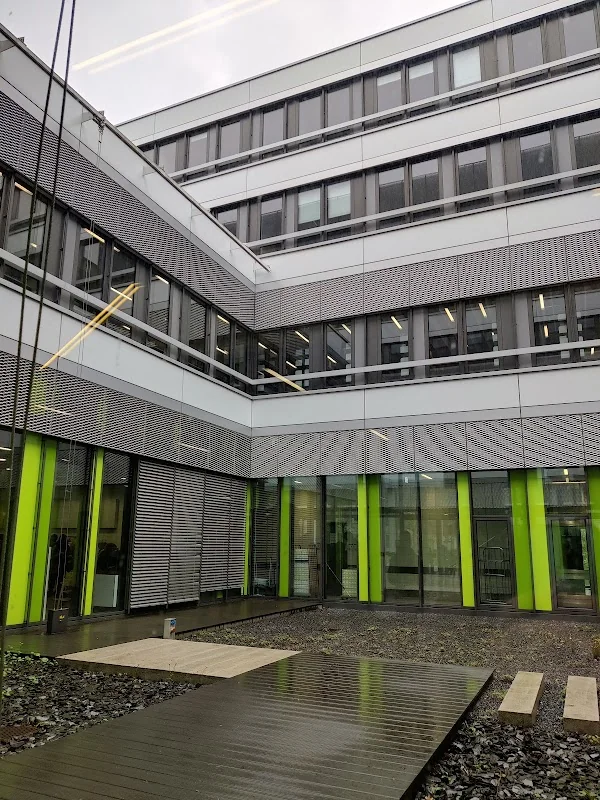
Building X is the spatial core of the faculty and one of the most important architectural elements of the campus. The university describes the building as a link between the main building and the new Campus North. It was officially opened in June 2014 and encompasses around 27,800 square meters of usable space. The Faculty of Sociology, subject libraries, various research alliances, the Interdisciplinary Institute for Conflict and Violence Research, the Interdisciplinary Center for Gender Studies, and the central cafeteria are housed there. This is relevant for visitors because teaching, service, and daily supply are concentrated here in one place. The entrance to Building X is accessible via a barrier-free access with an elevator, making the location additionally practical. ([uni-bielefeld.de](https://www.uni-bielefeld.de/uni/campus-bauen/bau/bauprojekte/x/))
The subject-specific library in Building X is particularly interesting for sociology. It belongs to the departments of the university library, is responsible for several humanities and social science subjects, and offers a range of work forms: open workspaces, quiet areas, discussion rooms, 12 bookable workspaces, 10 discussion rooms, PC workstations, WLAN, book scanners, and printers. The opening hours are generous: Monday to Friday from 8 a.m. to midnight, on weekends and holidays from 9 a.m. to 10 p.m. The offer is complemented by reading corners, magazines, textbook collections, a parent-child room, and a baby room. This makes it clear that the faculty not only offers teaching content but also a very concrete learning and working space for focused scientific work. ([uni-bielefeld.de](https://www.uni-bielefeld.de/ub/about/departments/bldg-x/))
History of the Faculty and Its Significance for Sociology
The history of the faculty is an essential part of its current reputation. On September 16, 1969, the first faculty of sociology in the history of the German higher education system was founded at Schloss Rheda. The university describes this founding as a breakthrough for sociology in Germany because education and research could be reorganized in Bielefeld. Joachim Matthes was elected as the dean, and Niklas Luhmann became the deputy dean. The founding staff largely came from the Social Research Center Dortmund of the University of Münster. Already in the first years, the search for a profession-oriented diploma program, active professionalization, and new research fields was at the forefront. This historical starting point shapes the identity of the faculty to this day. ([chronik.uni-bielefeld.de](https://chronik.uni-bielefeld.de/chronik/einzigartig-die-gruendung-der-fakultaet-fuer-soziologie/))
The cultural and scientific significance of Bielefeld sociology was also enhanced by international events. The university's chronicle refers to the 18th German Sociologists' Day in 1976 in Bielefeld as well as the XIII World Congress of Sociology in 1994, where thousands of scientists from around the world met in Bielefeld. Norbert Elias, who lived in Bielefeld from 1978 to 1984, is also mentioned, as well as the crucial role of Niklas Luhmann in the development of systems theory and the faculty's external image. Thus, those who visit the faculty today encounter not just an administrative or study location but an institution with international scientific resonance and an unusually dense tradition. ([chronik.uni-bielefeld.de](https://chronik.uni-bielefeld.de/chronik/einzigartig-die-gruendung-der-fakultaet-fuer-soziologie/))
Contact, Opening Hours, and Practical Tips
For practical questions, the dean's office secretariat is the central point of contact. It is located in X-C2-234, is reachable on weekdays from 9 a.m. to 4 p.m., and has a clear postal assignment via the faculty's mailbox. The package address is Universitätsstraße 25, 33615 Bielefeld. This is important for visitors who have an appointment at the faculty because it allows for quick differentiation between arrival address, postal address, and room information. The student advisory service also works with clear room designations, mostly in Building X C2-109. The advantage of this structure is obvious: Those who prepare find the right place without detours. ([uni-bielefeld.de](https://www.uni-bielefeld.de/fakultaeten/soziologie/fakultaet/kontakt/))
Another practical tip concerns orientation on campus. Those heading to the library, counseling, or methods lab should use the signage in Building X and, if necessary, choose the barrier-free access via the elevator in unit F1. For workspaces in the library, early reservation is recommended, especially for discussion rooms and bookable workspaces. The subject library is not just an archive but an actively used learning space with clear rules, quiet zones, and group areas. This is exactly what makes the faculty attractive to many: It is a scientifically profile campus, well connected, well advised, and well equipped. So those looking for reviews will find here primarily a place that explains its quality through structure, history, and usability. ([uni-bielefeld.de](https://www.uni-bielefeld.de/ub/about/departments/bldg-x/))
Sources:
- Faculty of Sociology - Our Faculty ([uni-bielefeld.de](https://www.uni-bielefeld.de/fakultaeten/soziologie/fakultaet/))
- Unique - the founding of the Faculty of Sociology - Chronicle ([chronik.uni-bielefeld.de](https://chronik.uni-bielefeld.de/chronik/einzigartig-die-gruendung-der-fakultaet-fuer-soziologie/))
- Building X - Bielefeld University ([uni-bielefeld.de](https://www.uni-bielefeld.de/uni/campus-bauen/bau/bauprojekte/x/))
- Contacts and Directions - Bielefeld University ([uni-bielefeld.de](https://www.uni-bielefeld.de/uni/anreise-kontakt/anreise/))
- Departmental Library Building X - University Library ([uni-bielefeld.de](https://www.uni-bielefeld.de/ub/about/departments/bldg-x/))
- How to find and contact us - Faculty of Sociology ([uni-bielefeld.de](https://www.uni-bielefeld.de/fakultaeten/soziologie/fakultaet/kontakt/))
- Counseling - Faculty of Sociology ([uni-bielefeld.de](https://www.uni-bielefeld.de/fakultaeten/soziologie/studium/beratung/index.xml))
- Contact Details - The Methods Lab ([uni-bielefeld.de](https://www.uni-bielefeld.de/fakultaeten/soziologie/studium/methodenlabor/kontakt/))
Mehr anzeigenWeniger anzeigen
Faculty of Sociology Bielefeld | Reviews & Contact
Those looking for reviews of the Faculty of Sociology at Bielefeld University often want not just to compare stars but to get a sense of the place, size, and profile. The official context helps with this: The faculty describes itself as one of the largest social science research and teaching institutions in Europe, uniting general and specialized sociology, political science, social anthropology, and social sciences. Around 3,000 students study in twelve degree programs or structured doctoral programs, accompanied by about 30 faculty members and around 40 academic staff. These key figures already show that this is not a small subject group but a highly differentiated scientific location with a clear academic identity. ([uni-bielefeld.de](https://www.uni-bielefeld.de/fakultaeten/soziologie/fakultaet/))
The search intent behind reviews is particularly interesting in this case because the faculty is perceived not only for its teaching offerings but also for its history. Bielefeld sociology is closely associated with names like Niklas Luhmann, who significantly shaped the faculty's external image for decades, and with its founding in 1969, when Bielefeld established the first faculty of sociology in the German higher education system. Those who visit the faculty on-site also find themselves in Building X on campus, a modern link between the main building, Campus North, library, and cafeteria. This creates a very dense first impression of research, teaching, architecture, and campus life. ([chronik.uni-bielefeld.de](https://chronik.uni-bielefeld.de/chronik/einzigartig-die-gruendung-der-fakultaet-fuer-soziologie/))
Reviews, Profile, and First Impression
For many visitors, the search for information begins with a simple question: Is it worth taking a look at this faculty at all? The answer in Bielefeld is relatively clear because the institution is not described in its official self-presentation as a marginal area but as a central sociological heavyweight. The combination of general sociology, several specialized sociologies, political science, social anthropology, and social sciences makes the faculty broadly positioned academically. The fact that around 3,000 students learn there also says a lot about the organizational and academic reach. So those looking for reviews or testimonials are often actually seeking orientation: How established is the institution, how large is it, and what scientific culture can I expect there? The faculty's profile provides the strongest clues for exactly this. ([uni-bielefeld.de](https://www.uni-bielefeld.de/fakultaeten/soziologie/fakultaet/))
The first impression is also strongly historically influenced. The university explicitly points out that the faculty was founded in 1969 as the first faculty of sociology in the German higher education system. This founding was not just an administrative act but a conscious new beginning for education and research. At that time, the faculty was able to develop concepts freely, reorganize research fields, and position itself with a profession-oriented understanding of sociology. This explains why the institution is still perceived today not only as a place of study but also as an intellectual brand. For people reading reviews, this context is important: The quality of an academic place is reflected not only in daily routines but also in the developed tradition and scientific self-understanding. ([chronik.uni-bielefeld.de](https://chronik.uni-bielefeld.de/chronik/einzigartig-die-gruendung-der-fakultaet-fuer-soziologie/))
Directions to the Faculty of Sociology and Parking on Campus
The faculty is located on the campus of Bielefeld University at Universitätsstraße 24 or in the postal vicinity of Universitätsstraße 25. For public transport, the connection is simple and well documented: The city tram line 4 departs from Bielefeld main station towards Lohmannshof to the stop Universität, and the journey takes about seven minutes. Taxis are also available directly in front of the main station. For those traveling from outside, this provides a clear and short route to the campus. This is particularly helpful for students, guests, colleagues with appointments in the dean's office, as orientation on a large campus often takes more time than the actual journey. ([uni-bielefeld.de](https://www.uni-bielefeld.de/uni/anreise-kontakt/anreise/))
By car, the location is also well connected. The university describes access from the north via the A2 with the Bi-Ost exit and from the south via the A2 and A33 with the Bi-Zentrum exit. On-site, the routes are signposted. The university mentions numerous free parking spaces for the entire campus area. For Building X, around 350 parking spaces are also indicated, which is remarkable for an inner-city university location. Additionally, there are barrier-free parking spaces and special access for people with disabilities, including parking options in the underground garage of Building X. So those looking for parking at the faculty in Bielefeld will find not only theoretical but also concretely described infrastructure. ([uni-bielefeld.de](https://www.uni-bielefeld.de/uni/anreise-kontakt/anreise/))
Study, Counseling, and Scientific Focus
The faculty is not only a place for research but also a diverse study location. Officially, general sociology, several specialized sociologies, political science, social anthropology, and social sciences are represented there. This results in twelve study programs and structured doctoral offerings, accompanied by many different counseling and service units. This ranges from student advisory services to international counseling to student councils, examination offices, and support for students without a traditional high school diploma. Those researching the term reviews in relation to a faculty will quickly encounter the question of how well the place functions organizationally. At this point, the structures of the faculty show that there are clear contacts and a broadly positioned study network. ([uni-bielefeld.de](https://www.uni-bielefeld.de/fakultaeten/soziologie/fakultaet/))
Particularly valuable for daily study life is the integration of counseling and practical support. The counseling service for sociology, political science, and social sciences is located in Building X C2-109, the international counseling in room C2-239, and the faculty additionally refers to the methods lab. This lab is located at Universitätsstraße 24 in room X-D2-107 and supports with software, lending, and workspaces. The official information thus contains not only abstract references but also concrete rooms, email addresses, and responsibilities. This is also part of the impression that many actually mean with the word reviews: reliability in daily life, quick orientation, and visible structures. ([uni-bielefeld.de](https://www.uni-bielefeld.de/fakultaeten/soziologie/studium/beratung/index.xml))
Building X, Subject Library, and Learning Spaces
Building X is the spatial core of the faculty and one of the most important architectural elements of the campus. The university describes the building as a link between the main building and the new Campus North. It was officially opened in June 2014 and encompasses around 27,800 square meters of usable space. The Faculty of Sociology, subject libraries, various research alliances, the Interdisciplinary Institute for Conflict and Violence Research, the Interdisciplinary Center for Gender Studies, and the central cafeteria are housed there. This is relevant for visitors because teaching, service, and daily supply are concentrated here in one place. The entrance to Building X is accessible via a barrier-free access with an elevator, making the location additionally practical. ([uni-bielefeld.de](https://www.uni-bielefeld.de/uni/campus-bauen/bau/bauprojekte/x/))
The subject-specific library in Building X is particularly interesting for sociology. It belongs to the departments of the university library, is responsible for several humanities and social science subjects, and offers a range of work forms: open workspaces, quiet areas, discussion rooms, 12 bookable workspaces, 10 discussion rooms, PC workstations, WLAN, book scanners, and printers. The opening hours are generous: Monday to Friday from 8 a.m. to midnight, on weekends and holidays from 9 a.m. to 10 p.m. The offer is complemented by reading corners, magazines, textbook collections, a parent-child room, and a baby room. This makes it clear that the faculty not only offers teaching content but also a very concrete learning and working space for focused scientific work. ([uni-bielefeld.de](https://www.uni-bielefeld.de/ub/about/departments/bldg-x/))
History of the Faculty and Its Significance for Sociology
The history of the faculty is an essential part of its current reputation. On September 16, 1969, the first faculty of sociology in the history of the German higher education system was founded at Schloss Rheda. The university describes this founding as a breakthrough for sociology in Germany because education and research could be reorganized in Bielefeld. Joachim Matthes was elected as the dean, and Niklas Luhmann became the deputy dean. The founding staff largely came from the Social Research Center Dortmund of the University of Münster. Already in the first years, the search for a profession-oriented diploma program, active professionalization, and new research fields was at the forefront. This historical starting point shapes the identity of the faculty to this day. ([chronik.uni-bielefeld.de](https://chronik.uni-bielefeld.de/chronik/einzigartig-die-gruendung-der-fakultaet-fuer-soziologie/))
The cultural and scientific significance of Bielefeld sociology was also enhanced by international events. The university's chronicle refers to the 18th German Sociologists' Day in 1976 in Bielefeld as well as the XIII World Congress of Sociology in 1994, where thousands of scientists from around the world met in Bielefeld. Norbert Elias, who lived in Bielefeld from 1978 to 1984, is also mentioned, as well as the crucial role of Niklas Luhmann in the development of systems theory and the faculty's external image. Thus, those who visit the faculty today encounter not just an administrative or study location but an institution with international scientific resonance and an unusually dense tradition. ([chronik.uni-bielefeld.de](https://chronik.uni-bielefeld.de/chronik/einzigartig-die-gruendung-der-fakultaet-fuer-soziologie/))
Contact, Opening Hours, and Practical Tips
For practical questions, the dean's office secretariat is the central point of contact. It is located in X-C2-234, is reachable on weekdays from 9 a.m. to 4 p.m., and has a clear postal assignment via the faculty's mailbox. The package address is Universitätsstraße 25, 33615 Bielefeld. This is important for visitors who have an appointment at the faculty because it allows for quick differentiation between arrival address, postal address, and room information. The student advisory service also works with clear room designations, mostly in Building X C2-109. The advantage of this structure is obvious: Those who prepare find the right place without detours. ([uni-bielefeld.de](https://www.uni-bielefeld.de/fakultaeten/soziologie/fakultaet/kontakt/))
Another practical tip concerns orientation on campus. Those heading to the library, counseling, or methods lab should use the signage in Building X and, if necessary, choose the barrier-free access via the elevator in unit F1. For workspaces in the library, early reservation is recommended, especially for discussion rooms and bookable workspaces. The subject library is not just an archive but an actively used learning space with clear rules, quiet zones, and group areas. This is exactly what makes the faculty attractive to many: It is a scientifically profile campus, well connected, well advised, and well equipped. So those looking for reviews will find here primarily a place that explains its quality through structure, history, and usability. ([uni-bielefeld.de](https://www.uni-bielefeld.de/ub/about/departments/bldg-x/))
Sources:
- Faculty of Sociology - Our Faculty ([uni-bielefeld.de](https://www.uni-bielefeld.de/fakultaeten/soziologie/fakultaet/))
- Unique - the founding of the Faculty of Sociology - Chronicle ([chronik.uni-bielefeld.de](https://chronik.uni-bielefeld.de/chronik/einzigartig-die-gruendung-der-fakultaet-fuer-soziologie/))
- Building X - Bielefeld University ([uni-bielefeld.de](https://www.uni-bielefeld.de/uni/campus-bauen/bau/bauprojekte/x/))
- Contacts and Directions - Bielefeld University ([uni-bielefeld.de](https://www.uni-bielefeld.de/uni/anreise-kontakt/anreise/))
- Departmental Library Building X - University Library ([uni-bielefeld.de](https://www.uni-bielefeld.de/ub/about/departments/bldg-x/))
- How to find and contact us - Faculty of Sociology ([uni-bielefeld.de](https://www.uni-bielefeld.de/fakultaeten/soziologie/fakultaet/kontakt/))
- Counseling - Faculty of Sociology ([uni-bielefeld.de](https://www.uni-bielefeld.de/fakultaeten/soziologie/studium/beratung/index.xml))
- Contact Details - The Methods Lab ([uni-bielefeld.de](https://www.uni-bielefeld.de/fakultaeten/soziologie/studium/methodenlabor/kontakt/))
Upcoming Events
No events found
Frequently Asked Questions
Reviews
No reviews found