
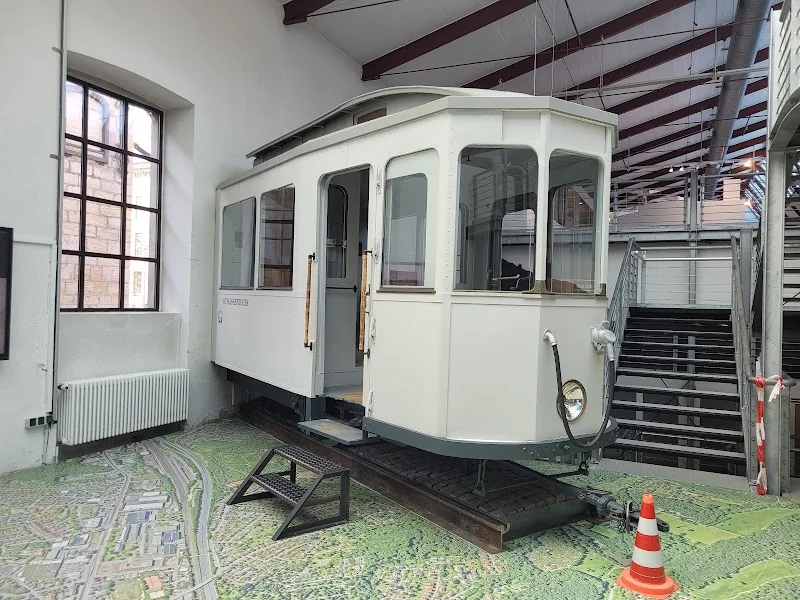
Bielefeld
Ravensberger Park 2, 33607 Bielefeld, Deutschland
Historical Museum Bielefeld | Opening Hours & Directions
The Historical Museum Bielefeld at Ravensberger Park 2 is a city history museum with a very clear profile: it tells the development of Bielefeld from its beginnings in the High Middle Ages to the present day and connects city history, industrial history, everyday culture, and object stories into a coherent overall picture. Particularly exciting is that the place itself is part of the narrative, as the museum is located in the former Ravensberger Spinning Mill, a listed industrial ensemble that makes visible the transformation of Bielefeld from a production city to a cultural location. Therefore, visitors to the museum experience not only exhibitions but also an authentic historical site where architecture, collection, and urban development intertwine. The official website also continuously shows events, special exhibitions, and educational offers, making it easy to combine a visit with the current program. This makes the museum a very good starting point for first-time visitors, families, school groups, and travelers to Bielefeld to understand the city not just as a name but as a historically grown living environment. ([historisches-museum-bielefeld.de](https://www.historisches-museum-bielefeld.de/die-sammlung/))
Opening Hours, Admission, and Visit Planning
For concrete planning, the opening hours are pleasantly clear and practical: from Tuesday to Friday, the Historical Museum Bielefeld is open from 10:00 AM to 5:00 PM, and on Saturdays, Sundays, and public holidays from 11:00 AM to 6:00 PM. The museum is closed on Mondays. Those who want to time their visit sensibly can orient themselves to these fixed times and thus combine their museum stay well with a walk through Ravensberger Park or with other appointments in the city center. The visitor information of the museum states a standard admission fee of 6.00 euros for individual visitors and a reduced admission of 3.00 euros. Additionally, there are combo tickets for the museums in Ravensberger Park, including the Natural History Museum, the Historical Museum, and the Huelsmann Museum, which is especially interesting for culture fans who want to visit several venues in one day. Families, school groups, and certain visitor groups benefit from free or reduced admissions, such as for children and young people under 18 years or for school groups in class context. The website also points out special regulations for public holidays, which are documented separately throughout the year. This is practical because the museum not only offers a static exhibition but also changing events and special formats that make a spontaneous visit as attractive as a planned excursion. Therefore, those who want to make the most efficient use of a free afternoon or a weekend will find very transparent conditions here. ([historisches-museum-bielefeld.de](https://www.historisches-museum-bielefeld.de/))
Directions and Parking at Ravensberger Park
Getting to the Historical Museum Bielefeld is uncomplicated both by public transport and by car. The official directions page lists numerous bus lines that serve the museum in the area of Ravensberger Park and the adult education center; these include lines 21, 22, 29, 52, 196, and 369, among others. Additionally, lines such as 20, 23, 24, 96, 349, 350, 351, 352, and 369 are also listed on the directions page, which stop in the immediate vicinity or serve the neighborhood. Those arriving by car will find short-term and disabled parking directly at the museum as well as additional parking options nearby. Particularly important for visitors with mobility impairments are the notes on three public disabled parking spaces on Bleichstraße and the barrier-free stop Ravensberger Park, which is explicitly mentioned on the corresponding museum page. This not only facilitates access but also makes the entire surroundings better planned, as the museum visit can be combined with a tour through Ravensberger Park, with cultural neighboring sites, and with other downtown destinations. The official website also offers the option to plan the journey via Google Maps, which is especially helpful for guests from other districts or from outside the city. Those who do not want to lose much time benefit from the compact location: the museum is situated in such a way that it works well both as an independent destination and as part of a larger cultural program in the Ravensberger district. ([historisches-museum-bielefeld.de](https://www.historisches-museum-bielefeld.de/anfahrt/))
The History of the Building in the Ravensberger Spinning Mill
The history of the museum is inseparably linked to the industrial history of Bielefeld. The Ravensberger Spinning Mill was built starting in 1855 and was at times the largest flax spinning mill on the European continent. It exemplifies the phase in which Bielefeld transformed into a modern industrial city, with textile production, mechanical engineering, and manufacturing shaping the cityscape. In the 1970s, the ensemble faced demolition due to traffic planning, but sustained protests from the citizens led to the preservation of the historic site. Today, the building complex in the park is considered an industrial monument of European significance. This rescue story gives the place additional meaning, as it shows how monument protection, civic engagement, and urban development can work together. The Historical Museum Bielefeld has been utilizing this environment since 1994 and is thus itself part of the careful repurposing of an old factory area into a cultural learning and memorial site. The historical context is crucial for the visit: as visitors walk through the exhibitions, they see not only objects related to industrialization but also move within a building that embodies this era directly. This connection makes the permanent exhibition credible and vivid, as history does not remain abstract but becomes spatially tangible. For many visitors, this connection of factory architecture, city history, and museum mediation is one of the strongest reasons to visit the museum at all. ([historisches-museum-bielefeld.de](https://www.historisches-museum-bielefeld.de/stadtfuhrungen/))
Permanent Exhibition, Collections, and Digital Offers
In terms of content, the Historical Museum Bielefeld offers a very broad yet clearly focused collection. The museum documents the city history of Bielefeld from the High Middle Ages to the present day and works with objects from various areas of life. These include archaeological finds from the old town or from Sparrenburg, Christian and Jewish cult objects, paintings, graphics, sculptures, flags, and furnishings of public buildings. The emphasis on industry and technology is particularly significant. The collections showcase products from Bielefeld factories and their operating facilities, including sewing machines, bicycles, as well as cash registers and booking machines. This is not only interesting for technology fans but also for anyone who wants to understand how strongly industrial production has shaped the self-image of the city. The official texts emphasize that industrialization has been crucial for Bielefeld since the mid-19th century and that particularly the textile, metal, printing, and food industries accelerated the development into a major city. These focuses are complemented by collections on everyday culture, crafts, trade, advertising, and Bielefeld artists, which make urban life visible from different perspectives. The digital access is also noteworthy: with HMB Digital, the museum offers virtual tours, object stories, and other online formats. These offers are sensible because only a part of the collection can be shown simultaneously, and many topics can be deepened digitally. This way, a visit that begins on-site can be extended online and opens up new access points through changing formats. ([historisches-museum-bielefeld.de](https://www.historisches-museum-bielefeld.de/die-sammlung/))
For those interested in concrete examples, the collection features numerous objects that reflect larger developments. The sewing machine collection refers to Bielefeld as once an important center of German sewing machine production; according to the museum's website, at times up to 20 percent of all German sewing machines were manufactured in Bielefeld. The cash register collection, on the other hand, is one of the most extensive and significant collections of its kind in German museums. Such holdings show how technological innovations, mass production, and corporate history intertwine. At the same time, the museum does not stop at machines and industry. The everyday culture collection is dedicated to furniture, household goods, toys, clothing, and school objects, precisely those things that shaped people's lives in everyday life. This way, the history of the city is not only presented as a sequence of large companies and dates but as a history of living environments, work, consumption, and social order. This is particularly important for visitors, as it allows them to see not only what was produced but also how people lived, learned, worked, and moved in different times. The museum thus aims to make visible that city history is always also everyday history. ([historisches-museum-bielefeld.de](https://www.historisches-museum-bielefeld.de/die-sammlung/))
The current exhibition program also shows how the museum works between historical depth and contemporary relevance. The homepage presents changing special exhibitions and events, including in spring 2026, for example, “Family Matters – Life Between Ideal and Everyday” and “Urban Sketching: Bielefeld and OWL in the Sketchbook.” Such formats make it clear that the museum not only has a solid historical core but also repeatedly picks up themes and places them in new contexts. For visitors, this is an advantage because a return visit is worthwhile and because the program addresses different interests, from family and social history to visual and artistic approaches. Additionally, events such as Film+Museum formats, night views, monthly programs, and special tours further enliven the place. The digital offers complement this practice by making selected objects, interviews, and virtual tours accessible. Especially for those who want to inform themselves in advance or continue exploring after the visit, this provides real added value. The museum thus becomes a place where collection, mediation, and contemporary online offers work together. ([historisches-museum-bielefeld.de](https://www.historisches-museum-bielefeld.de/))
Guided Tours, City Tours, and Group Offers
A significant part of the museum's offerings consists of guided tours and city tours. The official guided tour page lists thematic tours on Bielefeld in the Middle Ages, in the Early Modern Period, in the long 19th century, on stations of Bielefeld's history, as well as on the founding of the city and industrialization. Particularly attractive is the tour on industrialization in Bielefeld, which can even be combined with a machine demonstration on a historical spinning and weaving machine upon request. Additionally, themes such as National Socialism or “Women – Between Earning a Living and Housework” are included in the program. The tours usually last 60 to 90 minutes, can be tailored to target groups and time requirements, and are also available in foreign language variants. For individual visitors, there are also public Sunday tours at 11:30 AM, where either the permanent exhibition or a special exhibition is the focus, depending on the date. Therefore, those who do not understand the museum visit as mere silent observation but as dialogical mediation receive very good conditions here. The bookable city tours also significantly expand the spectrum: the museum offers walks from the factory site to the cultural park, life and work in the industrial age, Bielefeld during the Nazi era, traces of Jewish life, forced labor in Bielefeld, the old town, the new town, the old cemetery, Bielefeld West, and other themes. This way, the museum not only covers indoor mediation but also opens up the city itself as an open history archive. ([historisches-museum-bielefeld.de](https://www.historisches-museum-bielefeld.de/fuhrungen/))
For groups and educational institutions, the offerings are also very well structured. The museum pages refer to special mediation formats for schools, where city history can be addressed as an extracurricular learning location. This is not only about general knowledge transfer but often also about personal and local access, such as one's own family history, the history of one's street, or specific projects on urban development. This orientation is particularly fitting for the Historical Museum Bielefeld because the museum consistently takes the connection between local space and historical experience seriously. The fees are also transparent: for group tours and school classes, the website states clear costs and booking contacts. Furthermore, the educational offerings are designed so that they work not only for history experts but also for children, young people, and mixed groups. The combination of professional depth, illustrative objects, and thematic tours ensures that the visit remains lively. Therefore, those planning an outing that combines knowledge, movement, dialogue, and concrete city references will find a very well-thought-out program here. ([historisches-museum-bielefeld.de](https://www.historisches-museum-bielefeld.de/fuhrungen/))
From a practical perspective, the museum is also well suited for many target groups because it values accessibility and easy orientation. All exhibition and event spaces are accessible without steps, the gallery in the permanent exhibition is reachable via a wheelchair-accessible elevator, the main entrance has an automatically opening door, and contrasting texts as well as audio elements improve orientation. A disabled-accessible restroom is available on the ground floor, and a wheelchair can be borrowed at the cash desk upon request. Guided tours for blind and visually impaired visitors are also offered by arrangement. This is important because the museum is not only historically strong but also organizationally modern. The combination of barrier-free access, clear opening hours, comprehensible admission prices, good public transport connections, and complementary educational offers creates a visit that can be planned without much hurdle. This is a real advantage, especially for families, senior groups, school classes, and tourist guests, as the outing can be prepared easily and little organizational effort is required on-site. At the same time, the atmosphere of the house remains particularly distinctive due to its historical industrial character. Those who really want to understand Bielefeld will find a place here that brings together city, work, everyday life, and memory in a very vivid way. ([historisches-museum-bielefeld.de](https://www.historisches-museum-bielefeld.de/2019/07/02/barrierefreies-museum/))
Why the Visit is Particularly Worthwhile
The Historical Museum Bielefeld is much more than a classic local museum. It is a place where city history, industrial culture, everyday life, and mediation culture overlap in a very harmonious form. The location in the Ravensberger Spinning Mill gives the visit a special authenticity because one does not just read the history of the city in showcases but experiences it in a historical working and monument space. At the same time, the museum is surprisingly broad in content: from archaeological finds to industrial products to digital tours, family offerings, and city tours. For tourists, the museum is an ideal entry point to understand Bielefeld as a historical industrial city with many layers. For locals, it is a place where familiar streets, companies, and neighborhoods gain a new context. For families and school groups, it is very accessible due to the educational offers, guided tours, and barrier-free access. And for people simply looking for a well-organized cultural visit, the clear opening hours, transparent prices, and good connections are a real plus. This combination of content, place, and usability makes the museum so attractive. It not only shows what has happened in Bielefeld but also how a city has changed, asserted itself, and reinvented itself over the centuries. Therefore, those seeking a well-founded, lively, and simultaneously well-planned museum visit are exactly right here. ([historisches-museum-bielefeld.de](https://www.historisches-museum-bielefeld.de/die-sammlung/))
Sources:
- Historical Museum Bielefeld - Official Website
- Historical Museum Bielefeld - Visitor Information
- Historical Museum Bielefeld - Directions
- Historical Museum Bielefeld - Collection Areas
- Historical Museum Bielefeld - Guided Tours
- Historical Museum Bielefeld - Barrier-Free Museum
- Historical Museum Bielefeld - City Tours
Show moreShow less
Historical Museum Bielefeld | Opening Hours & Directions
The Historical Museum Bielefeld at Ravensberger Park 2 is a city history museum with a very clear profile: it tells the development of Bielefeld from its beginnings in the High Middle Ages to the present day and connects city history, industrial history, everyday culture, and object stories into a coherent overall picture. Particularly exciting is that the place itself is part of the narrative, as the museum is located in the former Ravensberger Spinning Mill, a listed industrial ensemble that makes visible the transformation of Bielefeld from a production city to a cultural location. Therefore, visitors to the museum experience not only exhibitions but also an authentic historical site where architecture, collection, and urban development intertwine. The official website also continuously shows events, special exhibitions, and educational offers, making it easy to combine a visit with the current program. This makes the museum a very good starting point for first-time visitors, families, school groups, and travelers to Bielefeld to understand the city not just as a name but as a historically grown living environment. ([historisches-museum-bielefeld.de](https://www.historisches-museum-bielefeld.de/die-sammlung/))
Opening Hours, Admission, and Visit Planning
For concrete planning, the opening hours are pleasantly clear and practical: from Tuesday to Friday, the Historical Museum Bielefeld is open from 10:00 AM to 5:00 PM, and on Saturdays, Sundays, and public holidays from 11:00 AM to 6:00 PM. The museum is closed on Mondays. Those who want to time their visit sensibly can orient themselves to these fixed times and thus combine their museum stay well with a walk through Ravensberger Park or with other appointments in the city center. The visitor information of the museum states a standard admission fee of 6.00 euros for individual visitors and a reduced admission of 3.00 euros. Additionally, there are combo tickets for the museums in Ravensberger Park, including the Natural History Museum, the Historical Museum, and the Huelsmann Museum, which is especially interesting for culture fans who want to visit several venues in one day. Families, school groups, and certain visitor groups benefit from free or reduced admissions, such as for children and young people under 18 years or for school groups in class context. The website also points out special regulations for public holidays, which are documented separately throughout the year. This is practical because the museum not only offers a static exhibition but also changing events and special formats that make a spontaneous visit as attractive as a planned excursion. Therefore, those who want to make the most efficient use of a free afternoon or a weekend will find very transparent conditions here. ([historisches-museum-bielefeld.de](https://www.historisches-museum-bielefeld.de/))
Directions and Parking at Ravensberger Park
Getting to the Historical Museum Bielefeld is uncomplicated both by public transport and by car. The official directions page lists numerous bus lines that serve the museum in the area of Ravensberger Park and the adult education center; these include lines 21, 22, 29, 52, 196, and 369, among others. Additionally, lines such as 20, 23, 24, 96, 349, 350, 351, 352, and 369 are also listed on the directions page, which stop in the immediate vicinity or serve the neighborhood. Those arriving by car will find short-term and disabled parking directly at the museum as well as additional parking options nearby. Particularly important for visitors with mobility impairments are the notes on three public disabled parking spaces on Bleichstraße and the barrier-free stop Ravensberger Park, which is explicitly mentioned on the corresponding museum page. This not only facilitates access but also makes the entire surroundings better planned, as the museum visit can be combined with a tour through Ravensberger Park, with cultural neighboring sites, and with other downtown destinations. The official website also offers the option to plan the journey via Google Maps, which is especially helpful for guests from other districts or from outside the city. Those who do not want to lose much time benefit from the compact location: the museum is situated in such a way that it works well both as an independent destination and as part of a larger cultural program in the Ravensberger district. ([historisches-museum-bielefeld.de](https://www.historisches-museum-bielefeld.de/anfahrt/))
The History of the Building in the Ravensberger Spinning Mill
The history of the museum is inseparably linked to the industrial history of Bielefeld. The Ravensberger Spinning Mill was built starting in 1855 and was at times the largest flax spinning mill on the European continent. It exemplifies the phase in which Bielefeld transformed into a modern industrial city, with textile production, mechanical engineering, and manufacturing shaping the cityscape. In the 1970s, the ensemble faced demolition due to traffic planning, but sustained protests from the citizens led to the preservation of the historic site. Today, the building complex in the park is considered an industrial monument of European significance. This rescue story gives the place additional meaning, as it shows how monument protection, civic engagement, and urban development can work together. The Historical Museum Bielefeld has been utilizing this environment since 1994 and is thus itself part of the careful repurposing of an old factory area into a cultural learning and memorial site. The historical context is crucial for the visit: as visitors walk through the exhibitions, they see not only objects related to industrialization but also move within a building that embodies this era directly. This connection makes the permanent exhibition credible and vivid, as history does not remain abstract but becomes spatially tangible. For many visitors, this connection of factory architecture, city history, and museum mediation is one of the strongest reasons to visit the museum at all. ([historisches-museum-bielefeld.de](https://www.historisches-museum-bielefeld.de/stadtfuhrungen/))
Permanent Exhibition, Collections, and Digital Offers
In terms of content, the Historical Museum Bielefeld offers a very broad yet clearly focused collection. The museum documents the city history of Bielefeld from the High Middle Ages to the present day and works with objects from various areas of life. These include archaeological finds from the old town or from Sparrenburg, Christian and Jewish cult objects, paintings, graphics, sculptures, flags, and furnishings of public buildings. The emphasis on industry and technology is particularly significant. The collections showcase products from Bielefeld factories and their operating facilities, including sewing machines, bicycles, as well as cash registers and booking machines. This is not only interesting for technology fans but also for anyone who wants to understand how strongly industrial production has shaped the self-image of the city. The official texts emphasize that industrialization has been crucial for Bielefeld since the mid-19th century and that particularly the textile, metal, printing, and food industries accelerated the development into a major city. These focuses are complemented by collections on everyday culture, crafts, trade, advertising, and Bielefeld artists, which make urban life visible from different perspectives. The digital access is also noteworthy: with HMB Digital, the museum offers virtual tours, object stories, and other online formats. These offers are sensible because only a part of the collection can be shown simultaneously, and many topics can be deepened digitally. This way, a visit that begins on-site can be extended online and opens up new access points through changing formats. ([historisches-museum-bielefeld.de](https://www.historisches-museum-bielefeld.de/die-sammlung/))
For those interested in concrete examples, the collection features numerous objects that reflect larger developments. The sewing machine collection refers to Bielefeld as once an important center of German sewing machine production; according to the museum's website, at times up to 20 percent of all German sewing machines were manufactured in Bielefeld. The cash register collection, on the other hand, is one of the most extensive and significant collections of its kind in German museums. Such holdings show how technological innovations, mass production, and corporate history intertwine. At the same time, the museum does not stop at machines and industry. The everyday culture collection is dedicated to furniture, household goods, toys, clothing, and school objects, precisely those things that shaped people's lives in everyday life. This way, the history of the city is not only presented as a sequence of large companies and dates but as a history of living environments, work, consumption, and social order. This is particularly important for visitors, as it allows them to see not only what was produced but also how people lived, learned, worked, and moved in different times. The museum thus aims to make visible that city history is always also everyday history. ([historisches-museum-bielefeld.de](https://www.historisches-museum-bielefeld.de/die-sammlung/))
The current exhibition program also shows how the museum works between historical depth and contemporary relevance. The homepage presents changing special exhibitions and events, including in spring 2026, for example, “Family Matters – Life Between Ideal and Everyday” and “Urban Sketching: Bielefeld and OWL in the Sketchbook.” Such formats make it clear that the museum not only has a solid historical core but also repeatedly picks up themes and places them in new contexts. For visitors, this is an advantage because a return visit is worthwhile and because the program addresses different interests, from family and social history to visual and artistic approaches. Additionally, events such as Film+Museum formats, night views, monthly programs, and special tours further enliven the place. The digital offers complement this practice by making selected objects, interviews, and virtual tours accessible. Especially for those who want to inform themselves in advance or continue exploring after the visit, this provides real added value. The museum thus becomes a place where collection, mediation, and contemporary online offers work together. ([historisches-museum-bielefeld.de](https://www.historisches-museum-bielefeld.de/))
Guided Tours, City Tours, and Group Offers
A significant part of the museum's offerings consists of guided tours and city tours. The official guided tour page lists thematic tours on Bielefeld in the Middle Ages, in the Early Modern Period, in the long 19th century, on stations of Bielefeld's history, as well as on the founding of the city and industrialization. Particularly attractive is the tour on industrialization in Bielefeld, which can even be combined with a machine demonstration on a historical spinning and weaving machine upon request. Additionally, themes such as National Socialism or “Women – Between Earning a Living and Housework” are included in the program. The tours usually last 60 to 90 minutes, can be tailored to target groups and time requirements, and are also available in foreign language variants. For individual visitors, there are also public Sunday tours at 11:30 AM, where either the permanent exhibition or a special exhibition is the focus, depending on the date. Therefore, those who do not understand the museum visit as mere silent observation but as dialogical mediation receive very good conditions here. The bookable city tours also significantly expand the spectrum: the museum offers walks from the factory site to the cultural park, life and work in the industrial age, Bielefeld during the Nazi era, traces of Jewish life, forced labor in Bielefeld, the old town, the new town, the old cemetery, Bielefeld West, and other themes. This way, the museum not only covers indoor mediation but also opens up the city itself as an open history archive. ([historisches-museum-bielefeld.de](https://www.historisches-museum-bielefeld.de/fuhrungen/))
For groups and educational institutions, the offerings are also very well structured. The museum pages refer to special mediation formats for schools, where city history can be addressed as an extracurricular learning location. This is not only about general knowledge transfer but often also about personal and local access, such as one's own family history, the history of one's street, or specific projects on urban development. This orientation is particularly fitting for the Historical Museum Bielefeld because the museum consistently takes the connection between local space and historical experience seriously. The fees are also transparent: for group tours and school classes, the website states clear costs and booking contacts. Furthermore, the educational offerings are designed so that they work not only for history experts but also for children, young people, and mixed groups. The combination of professional depth, illustrative objects, and thematic tours ensures that the visit remains lively. Therefore, those planning an outing that combines knowledge, movement, dialogue, and concrete city references will find a very well-thought-out program here. ([historisches-museum-bielefeld.de](https://www.historisches-museum-bielefeld.de/fuhrungen/))
From a practical perspective, the museum is also well suited for many target groups because it values accessibility and easy orientation. All exhibition and event spaces are accessible without steps, the gallery in the permanent exhibition is reachable via a wheelchair-accessible elevator, the main entrance has an automatically opening door, and contrasting texts as well as audio elements improve orientation. A disabled-accessible restroom is available on the ground floor, and a wheelchair can be borrowed at the cash desk upon request. Guided tours for blind and visually impaired visitors are also offered by arrangement. This is important because the museum is not only historically strong but also organizationally modern. The combination of barrier-free access, clear opening hours, comprehensible admission prices, good public transport connections, and complementary educational offers creates a visit that can be planned without much hurdle. This is a real advantage, especially for families, senior groups, school classes, and tourist guests, as the outing can be prepared easily and little organizational effort is required on-site. At the same time, the atmosphere of the house remains particularly distinctive due to its historical industrial character. Those who really want to understand Bielefeld will find a place here that brings together city, work, everyday life, and memory in a very vivid way. ([historisches-museum-bielefeld.de](https://www.historisches-museum-bielefeld.de/2019/07/02/barrierefreies-museum/))
Why the Visit is Particularly Worthwhile
The Historical Museum Bielefeld is much more than a classic local museum. It is a place where city history, industrial culture, everyday life, and mediation culture overlap in a very harmonious form. The location in the Ravensberger Spinning Mill gives the visit a special authenticity because one does not just read the history of the city in showcases but experiences it in a historical working and monument space. At the same time, the museum is surprisingly broad in content: from archaeological finds to industrial products to digital tours, family offerings, and city tours. For tourists, the museum is an ideal entry point to understand Bielefeld as a historical industrial city with many layers. For locals, it is a place where familiar streets, companies, and neighborhoods gain a new context. For families and school groups, it is very accessible due to the educational offers, guided tours, and barrier-free access. And for people simply looking for a well-organized cultural visit, the clear opening hours, transparent prices, and good connections are a real plus. This combination of content, place, and usability makes the museum so attractive. It not only shows what has happened in Bielefeld but also how a city has changed, asserted itself, and reinvented itself over the centuries. Therefore, those seeking a well-founded, lively, and simultaneously well-planned museum visit are exactly right here. ([historisches-museum-bielefeld.de](https://www.historisches-museum-bielefeld.de/die-sammlung/))
Sources:
- Historical Museum Bielefeld - Official Website
- Historical Museum Bielefeld - Visitor Information
- Historical Museum Bielefeld - Directions
- Historical Museum Bielefeld - Collection Areas
- Historical Museum Bielefeld - Guided Tours
- Historical Museum Bielefeld - Barrier-Free Museum
- Historical Museum Bielefeld - City Tours
Historical Museum Bielefeld | Opening Hours & Directions
The Historical Museum Bielefeld at Ravensberger Park 2 is a city history museum with a very clear profile: it tells the development of Bielefeld from its beginnings in the High Middle Ages to the present day and connects city history, industrial history, everyday culture, and object stories into a coherent overall picture. Particularly exciting is that the place itself is part of the narrative, as the museum is located in the former Ravensberger Spinning Mill, a listed industrial ensemble that makes visible the transformation of Bielefeld from a production city to a cultural location. Therefore, visitors to the museum experience not only exhibitions but also an authentic historical site where architecture, collection, and urban development intertwine. The official website also continuously shows events, special exhibitions, and educational offers, making it easy to combine a visit with the current program. This makes the museum a very good starting point for first-time visitors, families, school groups, and travelers to Bielefeld to understand the city not just as a name but as a historically grown living environment. ([historisches-museum-bielefeld.de](https://www.historisches-museum-bielefeld.de/die-sammlung/))
Opening Hours, Admission, and Visit Planning
For concrete planning, the opening hours are pleasantly clear and practical: from Tuesday to Friday, the Historical Museum Bielefeld is open from 10:00 AM to 5:00 PM, and on Saturdays, Sundays, and public holidays from 11:00 AM to 6:00 PM. The museum is closed on Mondays. Those who want to time their visit sensibly can orient themselves to these fixed times and thus combine their museum stay well with a walk through Ravensberger Park or with other appointments in the city center. The visitor information of the museum states a standard admission fee of 6.00 euros for individual visitors and a reduced admission of 3.00 euros. Additionally, there are combo tickets for the museums in Ravensberger Park, including the Natural History Museum, the Historical Museum, and the Huelsmann Museum, which is especially interesting for culture fans who want to visit several venues in one day. Families, school groups, and certain visitor groups benefit from free or reduced admissions, such as for children and young people under 18 years or for school groups in class context. The website also points out special regulations for public holidays, which are documented separately throughout the year. This is practical because the museum not only offers a static exhibition but also changing events and special formats that make a spontaneous visit as attractive as a planned excursion. Therefore, those who want to make the most efficient use of a free afternoon or a weekend will find very transparent conditions here. ([historisches-museum-bielefeld.de](https://www.historisches-museum-bielefeld.de/))
Directions and Parking at Ravensberger Park
Getting to the Historical Museum Bielefeld is uncomplicated both by public transport and by car. The official directions page lists numerous bus lines that serve the museum in the area of Ravensberger Park and the adult education center; these include lines 21, 22, 29, 52, 196, and 369, among others. Additionally, lines such as 20, 23, 24, 96, 349, 350, 351, 352, and 369 are also listed on the directions page, which stop in the immediate vicinity or serve the neighborhood. Those arriving by car will find short-term and disabled parking directly at the museum as well as additional parking options nearby. Particularly important for visitors with mobility impairments are the notes on three public disabled parking spaces on Bleichstraße and the barrier-free stop Ravensberger Park, which is explicitly mentioned on the corresponding museum page. This not only facilitates access but also makes the entire surroundings better planned, as the museum visit can be combined with a tour through Ravensberger Park, with cultural neighboring sites, and with other downtown destinations. The official website also offers the option to plan the journey via Google Maps, which is especially helpful for guests from other districts or from outside the city. Those who do not want to lose much time benefit from the compact location: the museum is situated in such a way that it works well both as an independent destination and as part of a larger cultural program in the Ravensberger district. ([historisches-museum-bielefeld.de](https://www.historisches-museum-bielefeld.de/anfahrt/))
The History of the Building in the Ravensberger Spinning Mill
The history of the museum is inseparably linked to the industrial history of Bielefeld. The Ravensberger Spinning Mill was built starting in 1855 and was at times the largest flax spinning mill on the European continent. It exemplifies the phase in which Bielefeld transformed into a modern industrial city, with textile production, mechanical engineering, and manufacturing shaping the cityscape. In the 1970s, the ensemble faced demolition due to traffic planning, but sustained protests from the citizens led to the preservation of the historic site. Today, the building complex in the park is considered an industrial monument of European significance. This rescue story gives the place additional meaning, as it shows how monument protection, civic engagement, and urban development can work together. The Historical Museum Bielefeld has been utilizing this environment since 1994 and is thus itself part of the careful repurposing of an old factory area into a cultural learning and memorial site. The historical context is crucial for the visit: as visitors walk through the exhibitions, they see not only objects related to industrialization but also move within a building that embodies this era directly. This connection makes the permanent exhibition credible and vivid, as history does not remain abstract but becomes spatially tangible. For many visitors, this connection of factory architecture, city history, and museum mediation is one of the strongest reasons to visit the museum at all. ([historisches-museum-bielefeld.de](https://www.historisches-museum-bielefeld.de/stadtfuhrungen/))
Permanent Exhibition, Collections, and Digital Offers
In terms of content, the Historical Museum Bielefeld offers a very broad yet clearly focused collection. The museum documents the city history of Bielefeld from the High Middle Ages to the present day and works with objects from various areas of life. These include archaeological finds from the old town or from Sparrenburg, Christian and Jewish cult objects, paintings, graphics, sculptures, flags, and furnishings of public buildings. The emphasis on industry and technology is particularly significant. The collections showcase products from Bielefeld factories and their operating facilities, including sewing machines, bicycles, as well as cash registers and booking machines. This is not only interesting for technology fans but also for anyone who wants to understand how strongly industrial production has shaped the self-image of the city. The official texts emphasize that industrialization has been crucial for Bielefeld since the mid-19th century and that particularly the textile, metal, printing, and food industries accelerated the development into a major city. These focuses are complemented by collections on everyday culture, crafts, trade, advertising, and Bielefeld artists, which make urban life visible from different perspectives. The digital access is also noteworthy: with HMB Digital, the museum offers virtual tours, object stories, and other online formats. These offers are sensible because only a part of the collection can be shown simultaneously, and many topics can be deepened digitally. This way, a visit that begins on-site can be extended online and opens up new access points through changing formats. ([historisches-museum-bielefeld.de](https://www.historisches-museum-bielefeld.de/die-sammlung/))
For those interested in concrete examples, the collection features numerous objects that reflect larger developments. The sewing machine collection refers to Bielefeld as once an important center of German sewing machine production; according to the museum's website, at times up to 20 percent of all German sewing machines were manufactured in Bielefeld. The cash register collection, on the other hand, is one of the most extensive and significant collections of its kind in German museums. Such holdings show how technological innovations, mass production, and corporate history intertwine. At the same time, the museum does not stop at machines and industry. The everyday culture collection is dedicated to furniture, household goods, toys, clothing, and school objects, precisely those things that shaped people's lives in everyday life. This way, the history of the city is not only presented as a sequence of large companies and dates but as a history of living environments, work, consumption, and social order. This is particularly important for visitors, as it allows them to see not only what was produced but also how people lived, learned, worked, and moved in different times. The museum thus aims to make visible that city history is always also everyday history. ([historisches-museum-bielefeld.de](https://www.historisches-museum-bielefeld.de/die-sammlung/))
The current exhibition program also shows how the museum works between historical depth and contemporary relevance. The homepage presents changing special exhibitions and events, including in spring 2026, for example, “Family Matters – Life Between Ideal and Everyday” and “Urban Sketching: Bielefeld and OWL in the Sketchbook.” Such formats make it clear that the museum not only has a solid historical core but also repeatedly picks up themes and places them in new contexts. For visitors, this is an advantage because a return visit is worthwhile and because the program addresses different interests, from family and social history to visual and artistic approaches. Additionally, events such as Film+Museum formats, night views, monthly programs, and special tours further enliven the place. The digital offers complement this practice by making selected objects, interviews, and virtual tours accessible. Especially for those who want to inform themselves in advance or continue exploring after the visit, this provides real added value. The museum thus becomes a place where collection, mediation, and contemporary online offers work together. ([historisches-museum-bielefeld.de](https://www.historisches-museum-bielefeld.de/))
Guided Tours, City Tours, and Group Offers
A significant part of the museum's offerings consists of guided tours and city tours. The official guided tour page lists thematic tours on Bielefeld in the Middle Ages, in the Early Modern Period, in the long 19th century, on stations of Bielefeld's history, as well as on the founding of the city and industrialization. Particularly attractive is the tour on industrialization in Bielefeld, which can even be combined with a machine demonstration on a historical spinning and weaving machine upon request. Additionally, themes such as National Socialism or “Women – Between Earning a Living and Housework” are included in the program. The tours usually last 60 to 90 minutes, can be tailored to target groups and time requirements, and are also available in foreign language variants. For individual visitors, there are also public Sunday tours at 11:30 AM, where either the permanent exhibition or a special exhibition is the focus, depending on the date. Therefore, those who do not understand the museum visit as mere silent observation but as dialogical mediation receive very good conditions here. The bookable city tours also significantly expand the spectrum: the museum offers walks from the factory site to the cultural park, life and work in the industrial age, Bielefeld during the Nazi era, traces of Jewish life, forced labor in Bielefeld, the old town, the new town, the old cemetery, Bielefeld West, and other themes. This way, the museum not only covers indoor mediation but also opens up the city itself as an open history archive. ([historisches-museum-bielefeld.de](https://www.historisches-museum-bielefeld.de/fuhrungen/))
For groups and educational institutions, the offerings are also very well structured. The museum pages refer to special mediation formats for schools, where city history can be addressed as an extracurricular learning location. This is not only about general knowledge transfer but often also about personal and local access, such as one's own family history, the history of one's street, or specific projects on urban development. This orientation is particularly fitting for the Historical Museum Bielefeld because the museum consistently takes the connection between local space and historical experience seriously. The fees are also transparent: for group tours and school classes, the website states clear costs and booking contacts. Furthermore, the educational offerings are designed so that they work not only for history experts but also for children, young people, and mixed groups. The combination of professional depth, illustrative objects, and thematic tours ensures that the visit remains lively. Therefore, those planning an outing that combines knowledge, movement, dialogue, and concrete city references will find a very well-thought-out program here. ([historisches-museum-bielefeld.de](https://www.historisches-museum-bielefeld.de/fuhrungen/))
From a practical perspective, the museum is also well suited for many target groups because it values accessibility and easy orientation. All exhibition and event spaces are accessible without steps, the gallery in the permanent exhibition is reachable via a wheelchair-accessible elevator, the main entrance has an automatically opening door, and contrasting texts as well as audio elements improve orientation. A disabled-accessible restroom is available on the ground floor, and a wheelchair can be borrowed at the cash desk upon request. Guided tours for blind and visually impaired visitors are also offered by arrangement. This is important because the museum is not only historically strong but also organizationally modern. The combination of barrier-free access, clear opening hours, comprehensible admission prices, good public transport connections, and complementary educational offers creates a visit that can be planned without much hurdle. This is a real advantage, especially for families, senior groups, school classes, and tourist guests, as the outing can be prepared easily and little organizational effort is required on-site. At the same time, the atmosphere of the house remains particularly distinctive due to its historical industrial character. Those who really want to understand Bielefeld will find a place here that brings together city, work, everyday life, and memory in a very vivid way. ([historisches-museum-bielefeld.de](https://www.historisches-museum-bielefeld.de/2019/07/02/barrierefreies-museum/))
Why the Visit is Particularly Worthwhile
The Historical Museum Bielefeld is much more than a classic local museum. It is a place where city history, industrial culture, everyday life, and mediation culture overlap in a very harmonious form. The location in the Ravensberger Spinning Mill gives the visit a special authenticity because one does not just read the history of the city in showcases but experiences it in a historical working and monument space. At the same time, the museum is surprisingly broad in content: from archaeological finds to industrial products to digital tours, family offerings, and city tours. For tourists, the museum is an ideal entry point to understand Bielefeld as a historical industrial city with many layers. For locals, it is a place where familiar streets, companies, and neighborhoods gain a new context. For families and school groups, it is very accessible due to the educational offers, guided tours, and barrier-free access. And for people simply looking for a well-organized cultural visit, the clear opening hours, transparent prices, and good connections are a real plus. This combination of content, place, and usability makes the museum so attractive. It not only shows what has happened in Bielefeld but also how a city has changed, asserted itself, and reinvented itself over the centuries. Therefore, those seeking a well-founded, lively, and simultaneously well-planned museum visit are exactly right here. ([historisches-museum-bielefeld.de](https://www.historisches-museum-bielefeld.de/die-sammlung/))
Sources:
- Historical Museum Bielefeld - Official Website
- Historical Museum Bielefeld - Visitor Information
- Historical Museum Bielefeld - Directions
- Historical Museum Bielefeld - Collection Areas
- Historical Museum Bielefeld - Guided Tours
- Historical Museum Bielefeld - Barrier-Free Museum
- Historical Museum Bielefeld - City Tours
Upcoming Events
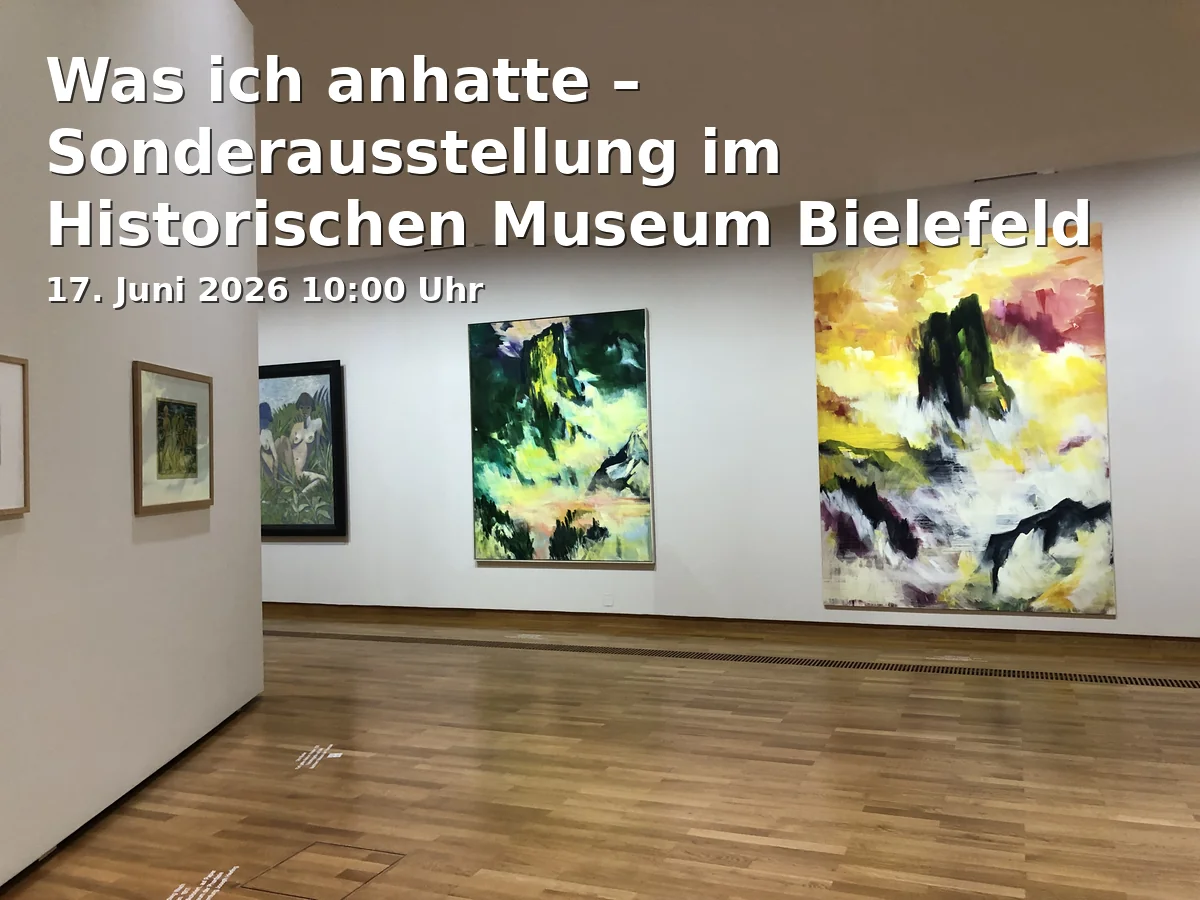
What I Wore – Special Exhibition at the Historical Museum Bielefeld
An exhibition that goes under the skin: What I Wore at the Historical Museum Bielefeld combines dignity, education, and remembrance. #Bielefeld #Museum

City Tour WOMEN MOVED
Discover Bielefeld’s feminist traces on a special city tour starting from the Historical Museum. 27.06.2026, 11 AM, 7 euros. #Bielefeld #WomenMoved
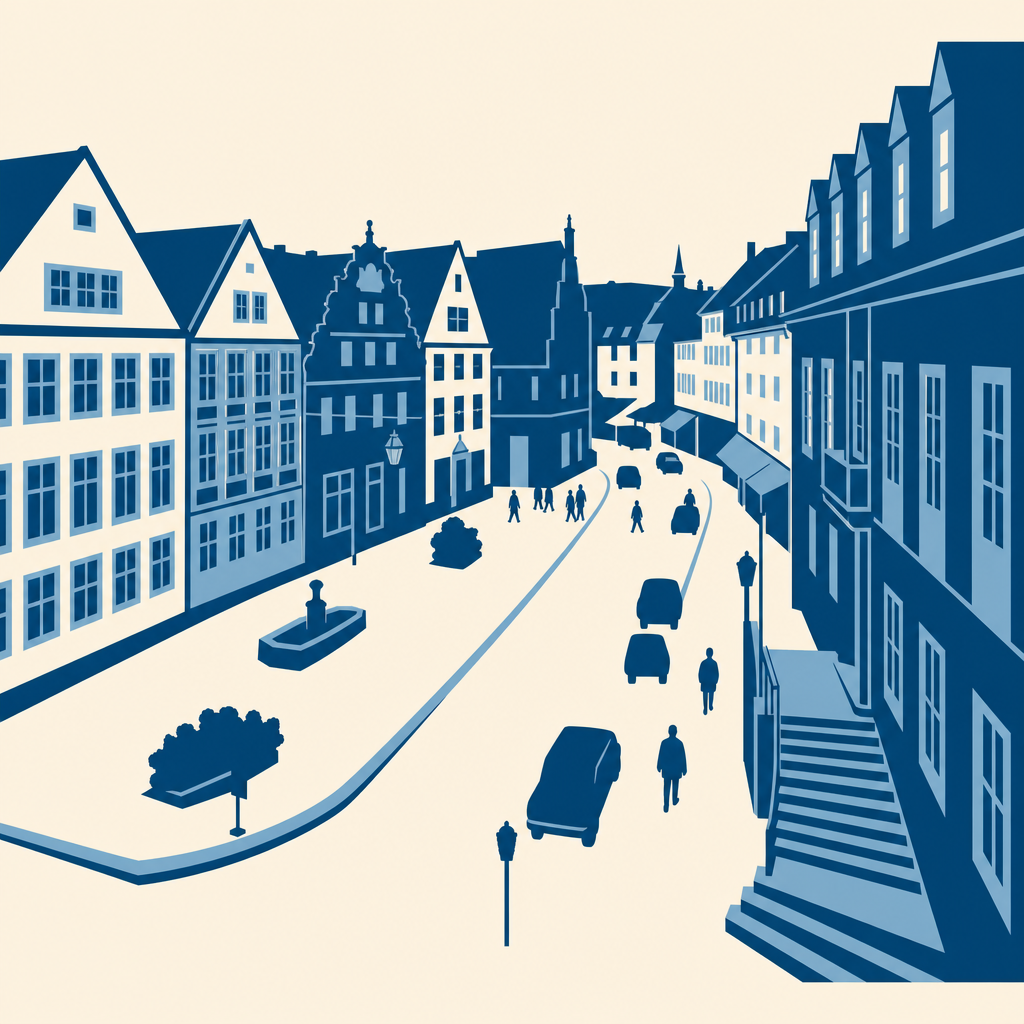
The Bielefeld Old Town
City tour:
Frequently Asked Questions
Reviews
Livage
12. January 2017
It's super nice. You can find out about sooo many interesting things about the Bielefeld history and can even book some special events for special occasions like birthdays or things like that. I was on a birthday party there were we could dress up in dresses from the last 100 years or so... Amazing! They even took our pictures and it was a lot of fun. But even just going around and finding out about cool historical facts is amazing. The only reason it doesn't get five stars from me is because they could have covered more things and could have gone more into detail about specifically the history of Bielefeld. But it is definitely worth visiting and a must see for all interested in history or simply just tourists.
Ronald Engeringh
3. April 2019
Nice museum but very much focussed on German visitors. If you don't speak German it is a waste of time.
Ivan Milkovski
8. July 2023
I am rating this museum 4 stars just because it missed the English translation of the things. Overall pretty interesting museum. The employees were very nice :)
Lexn
4. September 2019
Good local museum. Brief history of the town and main achievements. Temporary display about beards was also interesting. Prices are ok. Shame NO information in English. Staff was friendly. Lockers and toilets available and are clean.
Daniela Ricardez
22. September 2024
Really interesting and pretty.