
Bielefeld
Konsequenz 41b, 33615 Bielefeld, Deutschland
Lecture Hall Building Y, Bielefeld University | Directions & Parking
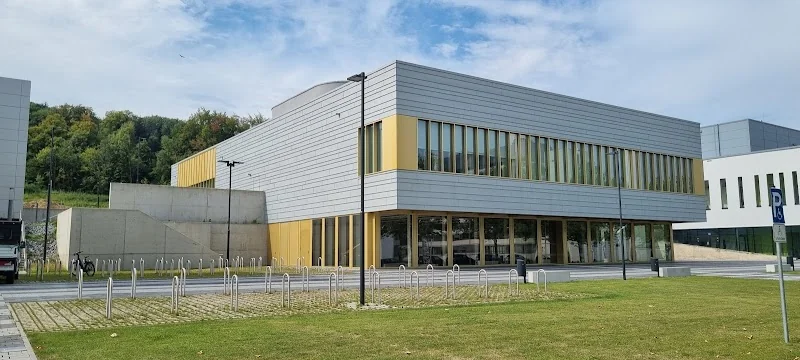
The Lecture Hall Building Y of Bielefeld University is a relatively new addition to the South Campus and was opened in September 2021. The building is located at Konsequenz 41b in 33615 Bielefeld, just a few meters from the main university building and directly adjacent to Building Z. The university describes Y as an additional teaching space that was needed during the modernization of the Audimax and provides long-term space for lectures, seminars, and events. Those searching for photos, location, or seating plans for Lecture Hall Building Y will find a building that combines modern campus architecture with very concrete university practice. ([uni-bielefeld.de](https://www.uni-bielefeld.de/uni/anreise-kontakt/adressen/index.xml))
Directions and Parking at Lecture Hall Building Y
The directions to Lecture Hall Building Y are strikingly clear for a campus building of Bielefeld University. The official address is Konsequenz 41b, 33615 Bielefeld. Those arriving by public transport can take tram line 4 towards Lohmannshof directly to the university; according to the university, the journey from Bielefeld main station takes about seven minutes. The university stop is located near the parking garages, and from there, a pedestrian bridge leads directly to the main entrance. This is particularly convenient for visitors, as the campus can be navigated relatively intuitively despite its size. Especially during conferences, introductions, or first visits, this direct connection is a real advantage as it reduces walking distance and eases orientation. ([uni-bielefeld.de](https://www.uni-bielefeld.de/themen/qm-studium-lehre/aktuelles/tagung_2025/tagungsort-anreise/))
There are also clear instructions for arriving by car. The university recommends entering the university's address into the GPS, as this helps to find the free parking spaces in the campus parking garages more easily. For people with reduced mobility, the university additionally mentions accessible parking spaces in parking garages 2 and 3, as well as additional spaces in the underground garage of Building X and in the underground garage of CITEC. Particularly important for Lecture Hall Building Y: there are also excellent parking spaces directly in front of the building that can be used with the blue EU parking permit for people with disabilities. For orientation on campus, the university also refers to an accessible path that connects the main building with the buildings on Konsequenz and Morgenbreede in the shape of a Y and is supposed to have a maximum incline of six percent. Thus, Lecture Hall Building Y is not only centrally located but also practically connected. ([uni-bielefeld.de](https://www.uni-bielefeld.de/einrichtungen/zab/campus-leben/parkplaetze/))
Capacity, Room Plan, and Media Technology Equipment
The capacity of Lecture Hall Building Y is one of the most important search topics related to the location. In the central eKVV room directory, the large lecture hall Y-0-111 is listed with 638 seats. Additionally, there are three seminar rooms Y-1-200 with 40 seats, Y-1-201 with 56 seats, and Y-1-202 with 40 seats. The university itself describes the building as a location for a lecture hall with about 650 seats and three seminar rooms; in the sustainability presentation, a total of 800 students is mentioned. In practice, this means: the building is large enough for lectures with a large audience but flexible enough for smaller teaching formats, workshops, and parallel group work. This exact mix makes Y so valuable in university everyday life. ([ekvv.uni-bielefeld.de](https://ekvv.uni-bielefeld.de/kvv_publ/publ/Raum_Tabelle.jsp))
The equipment is modern and clearly focused on teaching. According to eKVV, the lecture hall Y-0-111 has windows, blackout, hybrid lecture equipment, DTEN D7, microphone technology, fixed seating, and an inductive hearing loop. Additionally, two headsets, two handheld microphones, and the possibility of lecture recording are noted. This makes the room suitable not only for classic in-person lectures but also for hybrid formats, recordings, and events with changing speakers. The seminar rooms Y-1-200, Y-1-201, and Y-1-202 are also equipped with windows, hybrid equipment, DTEN D7, microphone, flexible seating, and inductive hearing loops. Particularly interesting for organizational processes is also the foyer Y-0-900, which is listed in eKVV with 290 seats and cannot be booked simultaneously with the seminar rooms on the first floor. This shows how well thought out the usage logic of the building is: a large core room, complementary seminar rooms, and a foyer for registration, breaks, or reception situations. ([ekvv.uni-bielefeld.de](https://ekvv.uni-bielefeld.de/kvv_publ/publ/Raum_Tabelle.jsp))
Accessibility, Unisex Toilets, and Orientation on Campus
Accessibility is not just an addition at Lecture Hall Building Y, but a clearly documented part of the concept. The central contact point for accessibility at the university lists accessible unisex toilets in Building Y at rooms Y-00-107 and Y-01-203. A university-wide document also explicitly mentions that Lecture Hall Building Y has all-gender toilets. For many visitors, this is an important signal, as it is not only about technical accessibility but also about inclusive use of the building in everyday life. Therefore, those searching for accessible or all-gender toilets at Lecture Hall Building Y will find concrete, officially documented information instead of vague formulations. ([uni-bielefeld.de](https://www.uni-bielefeld.de/%3Cen%3E/einrichtungen/zab/campus-leben/toiletten/))
Additionally, there is technical support for people with hearing impairments. According to ZAB, inductive hearing systems are permanently installed in lecture hall Y-0-111 and in seminar rooms Y-1-200, Y-1-201, and Y-1-202. This is particularly helpful during lectures, conferences, and presentations, as it allows for better transmission of speech. For orientation on campus, the university refers to UniMaps, an app for accessible navigation that helps find paths, rooms, and sanitary facilities. Together with the accessible path between the main building and the new buildings on Konsequenz and Morgenbreede, this creates a campus area that significantly eases access. The parking spaces directly in front of Building Y and the accessible parking spaces in the parking garages also support this claim. For a large university, this makes a practical difference in everyday life, as the paths between the stop, parking lot, building access, and room are often crucial for how stress-free a visit is. ([uni-bielefeld.de](https://www.uni-bielefeld.de/einrichtungen/zab/campus-leben/induktive-hoeranlagen/))
Sustainable Architecture and Construction History
Lecture Hall Building Y is not only functional but also an example of sustainable university architecture. It is part of the Site Concept for Campus South and was built at Konsequenz in direct proximity to the main building. The university's construction project page states that the completion was in the third quarter of 2021, with a main usable area of 940 square meters, a lecture hall with 650 seats, three seminar rooms, and total costs of around 13.3 million euros. Even the planning phase shows how closely the new building was linked to campus needs: the Audimax in the main building was only available until early 2020 during modernization, so a long-term replacement had to be created. Thus, Lecture Hall Building Y is not just an architectural standalone object but a response to a concrete teaching need. ([uni-bielefeld.de](https://www.uni-bielefeld.de/uni/campus-bauen/bau/bauprojekte/y/))
The sustainability page of the university adds numerous technical details to this picture. It describes the building as opened in September 2021; it offers a lecture hall with natural light and three seminar rooms for a total of 800 students. It also mentions a wooden supporting structure from sustainable forestry, heating and cooling via a heat pump, a photovoltaic system on the roof, a north-facing orientation, and a demand-controlled ventilation system with heat recovery. Digital building information controllers manage up to 28,000 cubic meters of air per hour in the large lecture hall. For on-site perception, this means: the building attempts to combine comfort, efficiency, and climate responsibility. So, for those wondering why Lecture Hall Building Y is often described as modern and future-oriented, the answer lies in this combination of wood, technology, light management, and energy efficiency. ([uni-bielefeld.de](https://www.uni-bielefeld.de/themen/nachhaltigkeit/wissenswertes/wissenswertes/horsaalgebaude-y/))
The construction history is also well documented. In February 2020, the shell construction phase was underway, in June 2020, the first of a total of twelve several-meter-long supporting beams were placed over the shell construction, in October 2020, the building between Z and ExPhy was already clearly recognizable, in May 2021, work on the outdoor facilities could begin, and in September 2021, Y was opened. Additionally, the university reported in February 2020 about an accessible path in the shape of a Y between the main building, Konsequenz, and Morgenbreede. This chronological sequence shows how the new building has gradually integrated into the campus. Instead of an abrupt standalone building, a structure emerged that is spatially, functionally, and infrastructurally coordinated with the surrounding buildings. That is exactly why Lecture Hall Building Y can be so well categorized in search queries about history, construction, photos, and Campus South today. ([uni-bielefeld.de](https://www.uni-bielefeld.de/uni/campus-bauen/bau/bauprojekte/y/))
Events, Seminars, and Conferences at Lecture Hall Building Y
Although Lecture Hall Building Y is primarily a teaching building, its use extends far beyond the classic lecture. The room structure with a large lecture hall, three seminar rooms, and a bookable foyer is suitable for plenaries, workshops, presentations, discussion events, and conferences. An official conference page of the university explicitly names Building Y as a location for an event with public transport access, signposted paths, and parking options. Another university arrival page even describes plenary events, workshops, catering, and exhibitions for Building Y. This shows that Y is not only intended for regular semester operations but also for academic formats that require more organizational space. Therefore, those searching for events at Lecture Hall Building Y will find a place where teaching and event logic converge in a very direct way. ([uni-bielefeld.de](https://www.uni-bielefeld.de/themen/qm-studium-lehre/aktuelles/tagung_2025/tagungsort-anreise/))
Particularly sensible is the mix of in-person and hybrid technology. Through DTEN D7, microphone technology, recording options, and inductive hearing loops, events of varying sizes and reach can be planned. The large lecture hall offers enough capacity for central lectures, guest presentations, or conference sessions, while the seminar rooms can be used in parallel for group work, breakout formats, or parallel working groups. The foyer Y-0-900 complements this process with a space for arrival, registration, and breaks, which is often just as important for conferences or information events as the actual lecture hall. This structure makes Y attractive for university organization, departments, and external guests, as very different formats can be combined with minimal travel effort. Especially in a university that closely intertwines teaching, research, and exchange, this is a practical advantage. ([ekvv.uni-bielefeld.de](https://ekvv.uni-bielefeld.de/kvv_publ/publ/Raum_Tabelle.jsp))
The location between the main building, Building Z, and the southern campus areas further enhances this benefit. Participants can be directed relatively directly to the building after arriving at the train station or in the parking garages, and the accessible paths reduce unnecessary detours. This creates an event location that is convincing not only technically but also organizationally. For students, this means short distances between courses, for teachers well-planned rooms, and for guests an easily understandable arrival. That is exactly why Lecture Hall Building Y is an excellent starting point for searches related to topics like lecture rooms, seminar rooms, conference locations, Campus South, or Bielefeld University directions. ([uni-bielefeld.de](https://www.uni-bielefeld.de/einrichtungen/zab/campus-leben/parkplaetze/))
Photos, Images, and the First Impression of the New Building
Those searching for photos or images of Lecture Hall Building Y usually expect not pure architectural theory but a quick visual impression: How does the building appear? Is it bright, modern, open, or rather technical? The official documentation from the university provides a clear answer to this. On the construction project page, several construction and view photos as well as visualizations are provided, including the view of the new building between Building Z and ExPhy, a picture of the supporting wooden beams, the shell construction phase, and the later outdoor facilities. The sustainability page complements this image with a photo of the campus and describes the new lecture hall building as a structure with natural light, wooden supporting structure, north-facing orientation, and modern technical equipment. This creates the impression of a campus building that appears more light and contemporary than monumental. ([uni-bielefeld.de](https://www.uni-bielefeld.de/uni/campus-bauen/bau/bauprojekte/y/))
The images used suggest a consciously bright and clear architecture. Even the official formulation light and modern on the construction project page makes it clear in which direction the design was intended. This is matched by the visualizations with large window fronts and a friendly entrance area, as well as the later photos that embed the building in the campus context. From the available sources, a cautious categorization can be derived that Lecture Hall Building Y does not appear like a classic lecture block but rather like a functional yet design-open new building. This exact mix is important for search queries related to images or photos, as many users initially seek a visual impression before deciding on route, seating plan, or event. ([uni-bielefeld.de](https://www.uni-bielefeld.de/uni/campus-bauen/bau/bauprojekte/y/))
These images are also useful for internal orientation. The new building is not isolated but located between the main building, Building Z, and the southern campus areas. Those comparing photos will quickly recognize that Y is part of a larger campus development and not just a single new building on the edge. This is particularly helpful for people visiting the building for the first time and wanting to know how it is embedded in the overall structure of the university. In search engines, this combination of images, address, seating plan, and directions is particularly relevant. Lecture Hall Building Y is thus a typical example of a campus location where the first visual impression and practical information are closely linked. ([uni-bielefeld.de](https://www.uni-bielefeld.de/uni/campus-bauen/bau/bauprojekte/y/))
Sources:
- Bielefeld University – Lecture Hall Building Y
- Bielefeld University – Lecture Hall Building Y Sustainability
- Bielefeld University – Conference Location & Directions
- Bielefeld University – Parking and Mobility
- Bielefeld University – Accessible toilet facilities
- eKVV – Rooms managed in eKVV
- Bielefeld University Blog – Accessible Path between Konsequenz and Main University Building
Show moreShow less
Lecture Hall Building Y, Bielefeld University | Directions & Parking
The Lecture Hall Building Y of Bielefeld University is a relatively new addition to the South Campus and was opened in September 2021. The building is located at Konsequenz 41b in 33615 Bielefeld, just a few meters from the main university building and directly adjacent to Building Z. The university describes Y as an additional teaching space that was needed during the modernization of the Audimax and provides long-term space for lectures, seminars, and events. Those searching for photos, location, or seating plans for Lecture Hall Building Y will find a building that combines modern campus architecture with very concrete university practice. ([uni-bielefeld.de](https://www.uni-bielefeld.de/uni/anreise-kontakt/adressen/index.xml))
Directions and Parking at Lecture Hall Building Y
The directions to Lecture Hall Building Y are strikingly clear for a campus building of Bielefeld University. The official address is Konsequenz 41b, 33615 Bielefeld. Those arriving by public transport can take tram line 4 towards Lohmannshof directly to the university; according to the university, the journey from Bielefeld main station takes about seven minutes. The university stop is located near the parking garages, and from there, a pedestrian bridge leads directly to the main entrance. This is particularly convenient for visitors, as the campus can be navigated relatively intuitively despite its size. Especially during conferences, introductions, or first visits, this direct connection is a real advantage as it reduces walking distance and eases orientation. ([uni-bielefeld.de](https://www.uni-bielefeld.de/themen/qm-studium-lehre/aktuelles/tagung_2025/tagungsort-anreise/))
There are also clear instructions for arriving by car. The university recommends entering the university's address into the GPS, as this helps to find the free parking spaces in the campus parking garages more easily. For people with reduced mobility, the university additionally mentions accessible parking spaces in parking garages 2 and 3, as well as additional spaces in the underground garage of Building X and in the underground garage of CITEC. Particularly important for Lecture Hall Building Y: there are also excellent parking spaces directly in front of the building that can be used with the blue EU parking permit for people with disabilities. For orientation on campus, the university also refers to an accessible path that connects the main building with the buildings on Konsequenz and Morgenbreede in the shape of a Y and is supposed to have a maximum incline of six percent. Thus, Lecture Hall Building Y is not only centrally located but also practically connected. ([uni-bielefeld.de](https://www.uni-bielefeld.de/einrichtungen/zab/campus-leben/parkplaetze/))
Capacity, Room Plan, and Media Technology Equipment
The capacity of Lecture Hall Building Y is one of the most important search topics related to the location. In the central eKVV room directory, the large lecture hall Y-0-111 is listed with 638 seats. Additionally, there are three seminar rooms Y-1-200 with 40 seats, Y-1-201 with 56 seats, and Y-1-202 with 40 seats. The university itself describes the building as a location for a lecture hall with about 650 seats and three seminar rooms; in the sustainability presentation, a total of 800 students is mentioned. In practice, this means: the building is large enough for lectures with a large audience but flexible enough for smaller teaching formats, workshops, and parallel group work. This exact mix makes Y so valuable in university everyday life. ([ekvv.uni-bielefeld.de](https://ekvv.uni-bielefeld.de/kvv_publ/publ/Raum_Tabelle.jsp))
The equipment is modern and clearly focused on teaching. According to eKVV, the lecture hall Y-0-111 has windows, blackout, hybrid lecture equipment, DTEN D7, microphone technology, fixed seating, and an inductive hearing loop. Additionally, two headsets, two handheld microphones, and the possibility of lecture recording are noted. This makes the room suitable not only for classic in-person lectures but also for hybrid formats, recordings, and events with changing speakers. The seminar rooms Y-1-200, Y-1-201, and Y-1-202 are also equipped with windows, hybrid equipment, DTEN D7, microphone, flexible seating, and inductive hearing loops. Particularly interesting for organizational processes is also the foyer Y-0-900, which is listed in eKVV with 290 seats and cannot be booked simultaneously with the seminar rooms on the first floor. This shows how well thought out the usage logic of the building is: a large core room, complementary seminar rooms, and a foyer for registration, breaks, or reception situations. ([ekvv.uni-bielefeld.de](https://ekvv.uni-bielefeld.de/kvv_publ/publ/Raum_Tabelle.jsp))
Accessibility, Unisex Toilets, and Orientation on Campus
Accessibility is not just an addition at Lecture Hall Building Y, but a clearly documented part of the concept. The central contact point for accessibility at the university lists accessible unisex toilets in Building Y at rooms Y-00-107 and Y-01-203. A university-wide document also explicitly mentions that Lecture Hall Building Y has all-gender toilets. For many visitors, this is an important signal, as it is not only about technical accessibility but also about inclusive use of the building in everyday life. Therefore, those searching for accessible or all-gender toilets at Lecture Hall Building Y will find concrete, officially documented information instead of vague formulations. ([uni-bielefeld.de](https://www.uni-bielefeld.de/%3Cen%3E/einrichtungen/zab/campus-leben/toiletten/))
Additionally, there is technical support for people with hearing impairments. According to ZAB, inductive hearing systems are permanently installed in lecture hall Y-0-111 and in seminar rooms Y-1-200, Y-1-201, and Y-1-202. This is particularly helpful during lectures, conferences, and presentations, as it allows for better transmission of speech. For orientation on campus, the university refers to UniMaps, an app for accessible navigation that helps find paths, rooms, and sanitary facilities. Together with the accessible path between the main building and the new buildings on Konsequenz and Morgenbreede, this creates a campus area that significantly eases access. The parking spaces directly in front of Building Y and the accessible parking spaces in the parking garages also support this claim. For a large university, this makes a practical difference in everyday life, as the paths between the stop, parking lot, building access, and room are often crucial for how stress-free a visit is. ([uni-bielefeld.de](https://www.uni-bielefeld.de/einrichtungen/zab/campus-leben/induktive-hoeranlagen/))
Sustainable Architecture and Construction History
Lecture Hall Building Y is not only functional but also an example of sustainable university architecture. It is part of the Site Concept for Campus South and was built at Konsequenz in direct proximity to the main building. The university's construction project page states that the completion was in the third quarter of 2021, with a main usable area of 940 square meters, a lecture hall with 650 seats, three seminar rooms, and total costs of around 13.3 million euros. Even the planning phase shows how closely the new building was linked to campus needs: the Audimax in the main building was only available until early 2020 during modernization, so a long-term replacement had to be created. Thus, Lecture Hall Building Y is not just an architectural standalone object but a response to a concrete teaching need. ([uni-bielefeld.de](https://www.uni-bielefeld.de/uni/campus-bauen/bau/bauprojekte/y/))
The sustainability page of the university adds numerous technical details to this picture. It describes the building as opened in September 2021; it offers a lecture hall with natural light and three seminar rooms for a total of 800 students. It also mentions a wooden supporting structure from sustainable forestry, heating and cooling via a heat pump, a photovoltaic system on the roof, a north-facing orientation, and a demand-controlled ventilation system with heat recovery. Digital building information controllers manage up to 28,000 cubic meters of air per hour in the large lecture hall. For on-site perception, this means: the building attempts to combine comfort, efficiency, and climate responsibility. So, for those wondering why Lecture Hall Building Y is often described as modern and future-oriented, the answer lies in this combination of wood, technology, light management, and energy efficiency. ([uni-bielefeld.de](https://www.uni-bielefeld.de/themen/nachhaltigkeit/wissenswertes/wissenswertes/horsaalgebaude-y/))
The construction history is also well documented. In February 2020, the shell construction phase was underway, in June 2020, the first of a total of twelve several-meter-long supporting beams were placed over the shell construction, in October 2020, the building between Z and ExPhy was already clearly recognizable, in May 2021, work on the outdoor facilities could begin, and in September 2021, Y was opened. Additionally, the university reported in February 2020 about an accessible path in the shape of a Y between the main building, Konsequenz, and Morgenbreede. This chronological sequence shows how the new building has gradually integrated into the campus. Instead of an abrupt standalone building, a structure emerged that is spatially, functionally, and infrastructurally coordinated with the surrounding buildings. That is exactly why Lecture Hall Building Y can be so well categorized in search queries about history, construction, photos, and Campus South today. ([uni-bielefeld.de](https://www.uni-bielefeld.de/uni/campus-bauen/bau/bauprojekte/y/))
Events, Seminars, and Conferences at Lecture Hall Building Y
Although Lecture Hall Building Y is primarily a teaching building, its use extends far beyond the classic lecture. The room structure with a large lecture hall, three seminar rooms, and a bookable foyer is suitable for plenaries, workshops, presentations, discussion events, and conferences. An official conference page of the university explicitly names Building Y as a location for an event with public transport access, signposted paths, and parking options. Another university arrival page even describes plenary events, workshops, catering, and exhibitions for Building Y. This shows that Y is not only intended for regular semester operations but also for academic formats that require more organizational space. Therefore, those searching for events at Lecture Hall Building Y will find a place where teaching and event logic converge in a very direct way. ([uni-bielefeld.de](https://www.uni-bielefeld.de/themen/qm-studium-lehre/aktuelles/tagung_2025/tagungsort-anreise/))
Particularly sensible is the mix of in-person and hybrid technology. Through DTEN D7, microphone technology, recording options, and inductive hearing loops, events of varying sizes and reach can be planned. The large lecture hall offers enough capacity for central lectures, guest presentations, or conference sessions, while the seminar rooms can be used in parallel for group work, breakout formats, or parallel working groups. The foyer Y-0-900 complements this process with a space for arrival, registration, and breaks, which is often just as important for conferences or information events as the actual lecture hall. This structure makes Y attractive for university organization, departments, and external guests, as very different formats can be combined with minimal travel effort. Especially in a university that closely intertwines teaching, research, and exchange, this is a practical advantage. ([ekvv.uni-bielefeld.de](https://ekvv.uni-bielefeld.de/kvv_publ/publ/Raum_Tabelle.jsp))
The location between the main building, Building Z, and the southern campus areas further enhances this benefit. Participants can be directed relatively directly to the building after arriving at the train station or in the parking garages, and the accessible paths reduce unnecessary detours. This creates an event location that is convincing not only technically but also organizationally. For students, this means short distances between courses, for teachers well-planned rooms, and for guests an easily understandable arrival. That is exactly why Lecture Hall Building Y is an excellent starting point for searches related to topics like lecture rooms, seminar rooms, conference locations, Campus South, or Bielefeld University directions. ([uni-bielefeld.de](https://www.uni-bielefeld.de/einrichtungen/zab/campus-leben/parkplaetze/))
Photos, Images, and the First Impression of the New Building
Those searching for photos or images of Lecture Hall Building Y usually expect not pure architectural theory but a quick visual impression: How does the building appear? Is it bright, modern, open, or rather technical? The official documentation from the university provides a clear answer to this. On the construction project page, several construction and view photos as well as visualizations are provided, including the view of the new building between Building Z and ExPhy, a picture of the supporting wooden beams, the shell construction phase, and the later outdoor facilities. The sustainability page complements this image with a photo of the campus and describes the new lecture hall building as a structure with natural light, wooden supporting structure, north-facing orientation, and modern technical equipment. This creates the impression of a campus building that appears more light and contemporary than monumental. ([uni-bielefeld.de](https://www.uni-bielefeld.de/uni/campus-bauen/bau/bauprojekte/y/))
The images used suggest a consciously bright and clear architecture. Even the official formulation light and modern on the construction project page makes it clear in which direction the design was intended. This is matched by the visualizations with large window fronts and a friendly entrance area, as well as the later photos that embed the building in the campus context. From the available sources, a cautious categorization can be derived that Lecture Hall Building Y does not appear like a classic lecture block but rather like a functional yet design-open new building. This exact mix is important for search queries related to images or photos, as many users initially seek a visual impression before deciding on route, seating plan, or event. ([uni-bielefeld.de](https://www.uni-bielefeld.de/uni/campus-bauen/bau/bauprojekte/y/))
These images are also useful for internal orientation. The new building is not isolated but located between the main building, Building Z, and the southern campus areas. Those comparing photos will quickly recognize that Y is part of a larger campus development and not just a single new building on the edge. This is particularly helpful for people visiting the building for the first time and wanting to know how it is embedded in the overall structure of the university. In search engines, this combination of images, address, seating plan, and directions is particularly relevant. Lecture Hall Building Y is thus a typical example of a campus location where the first visual impression and practical information are closely linked. ([uni-bielefeld.de](https://www.uni-bielefeld.de/uni/campus-bauen/bau/bauprojekte/y/))
Sources:
- Bielefeld University – Lecture Hall Building Y
- Bielefeld University – Lecture Hall Building Y Sustainability
- Bielefeld University – Conference Location & Directions
- Bielefeld University – Parking and Mobility
- Bielefeld University – Accessible toilet facilities
- eKVV – Rooms managed in eKVV
- Bielefeld University Blog – Accessible Path between Konsequenz and Main University Building
Lecture Hall Building Y, Bielefeld University | Directions & Parking
The Lecture Hall Building Y of Bielefeld University is a relatively new addition to the South Campus and was opened in September 2021. The building is located at Konsequenz 41b in 33615 Bielefeld, just a few meters from the main university building and directly adjacent to Building Z. The university describes Y as an additional teaching space that was needed during the modernization of the Audimax and provides long-term space for lectures, seminars, and events. Those searching for photos, location, or seating plans for Lecture Hall Building Y will find a building that combines modern campus architecture with very concrete university practice. ([uni-bielefeld.de](https://www.uni-bielefeld.de/uni/anreise-kontakt/adressen/index.xml))
Directions and Parking at Lecture Hall Building Y
The directions to Lecture Hall Building Y are strikingly clear for a campus building of Bielefeld University. The official address is Konsequenz 41b, 33615 Bielefeld. Those arriving by public transport can take tram line 4 towards Lohmannshof directly to the university; according to the university, the journey from Bielefeld main station takes about seven minutes. The university stop is located near the parking garages, and from there, a pedestrian bridge leads directly to the main entrance. This is particularly convenient for visitors, as the campus can be navigated relatively intuitively despite its size. Especially during conferences, introductions, or first visits, this direct connection is a real advantage as it reduces walking distance and eases orientation. ([uni-bielefeld.de](https://www.uni-bielefeld.de/themen/qm-studium-lehre/aktuelles/tagung_2025/tagungsort-anreise/))
There are also clear instructions for arriving by car. The university recommends entering the university's address into the GPS, as this helps to find the free parking spaces in the campus parking garages more easily. For people with reduced mobility, the university additionally mentions accessible parking spaces in parking garages 2 and 3, as well as additional spaces in the underground garage of Building X and in the underground garage of CITEC. Particularly important for Lecture Hall Building Y: there are also excellent parking spaces directly in front of the building that can be used with the blue EU parking permit for people with disabilities. For orientation on campus, the university also refers to an accessible path that connects the main building with the buildings on Konsequenz and Morgenbreede in the shape of a Y and is supposed to have a maximum incline of six percent. Thus, Lecture Hall Building Y is not only centrally located but also practically connected. ([uni-bielefeld.de](https://www.uni-bielefeld.de/einrichtungen/zab/campus-leben/parkplaetze/))
Capacity, Room Plan, and Media Technology Equipment
The capacity of Lecture Hall Building Y is one of the most important search topics related to the location. In the central eKVV room directory, the large lecture hall Y-0-111 is listed with 638 seats. Additionally, there are three seminar rooms Y-1-200 with 40 seats, Y-1-201 with 56 seats, and Y-1-202 with 40 seats. The university itself describes the building as a location for a lecture hall with about 650 seats and three seminar rooms; in the sustainability presentation, a total of 800 students is mentioned. In practice, this means: the building is large enough for lectures with a large audience but flexible enough for smaller teaching formats, workshops, and parallel group work. This exact mix makes Y so valuable in university everyday life. ([ekvv.uni-bielefeld.de](https://ekvv.uni-bielefeld.de/kvv_publ/publ/Raum_Tabelle.jsp))
The equipment is modern and clearly focused on teaching. According to eKVV, the lecture hall Y-0-111 has windows, blackout, hybrid lecture equipment, DTEN D7, microphone technology, fixed seating, and an inductive hearing loop. Additionally, two headsets, two handheld microphones, and the possibility of lecture recording are noted. This makes the room suitable not only for classic in-person lectures but also for hybrid formats, recordings, and events with changing speakers. The seminar rooms Y-1-200, Y-1-201, and Y-1-202 are also equipped with windows, hybrid equipment, DTEN D7, microphone, flexible seating, and inductive hearing loops. Particularly interesting for organizational processes is also the foyer Y-0-900, which is listed in eKVV with 290 seats and cannot be booked simultaneously with the seminar rooms on the first floor. This shows how well thought out the usage logic of the building is: a large core room, complementary seminar rooms, and a foyer for registration, breaks, or reception situations. ([ekvv.uni-bielefeld.de](https://ekvv.uni-bielefeld.de/kvv_publ/publ/Raum_Tabelle.jsp))
Accessibility, Unisex Toilets, and Orientation on Campus
Accessibility is not just an addition at Lecture Hall Building Y, but a clearly documented part of the concept. The central contact point for accessibility at the university lists accessible unisex toilets in Building Y at rooms Y-00-107 and Y-01-203. A university-wide document also explicitly mentions that Lecture Hall Building Y has all-gender toilets. For many visitors, this is an important signal, as it is not only about technical accessibility but also about inclusive use of the building in everyday life. Therefore, those searching for accessible or all-gender toilets at Lecture Hall Building Y will find concrete, officially documented information instead of vague formulations. ([uni-bielefeld.de](https://www.uni-bielefeld.de/%3Cen%3E/einrichtungen/zab/campus-leben/toiletten/))
Additionally, there is technical support for people with hearing impairments. According to ZAB, inductive hearing systems are permanently installed in lecture hall Y-0-111 and in seminar rooms Y-1-200, Y-1-201, and Y-1-202. This is particularly helpful during lectures, conferences, and presentations, as it allows for better transmission of speech. For orientation on campus, the university refers to UniMaps, an app for accessible navigation that helps find paths, rooms, and sanitary facilities. Together with the accessible path between the main building and the new buildings on Konsequenz and Morgenbreede, this creates a campus area that significantly eases access. The parking spaces directly in front of Building Y and the accessible parking spaces in the parking garages also support this claim. For a large university, this makes a practical difference in everyday life, as the paths between the stop, parking lot, building access, and room are often crucial for how stress-free a visit is. ([uni-bielefeld.de](https://www.uni-bielefeld.de/einrichtungen/zab/campus-leben/induktive-hoeranlagen/))
Sustainable Architecture and Construction History
Lecture Hall Building Y is not only functional but also an example of sustainable university architecture. It is part of the Site Concept for Campus South and was built at Konsequenz in direct proximity to the main building. The university's construction project page states that the completion was in the third quarter of 2021, with a main usable area of 940 square meters, a lecture hall with 650 seats, three seminar rooms, and total costs of around 13.3 million euros. Even the planning phase shows how closely the new building was linked to campus needs: the Audimax in the main building was only available until early 2020 during modernization, so a long-term replacement had to be created. Thus, Lecture Hall Building Y is not just an architectural standalone object but a response to a concrete teaching need. ([uni-bielefeld.de](https://www.uni-bielefeld.de/uni/campus-bauen/bau/bauprojekte/y/))
The sustainability page of the university adds numerous technical details to this picture. It describes the building as opened in September 2021; it offers a lecture hall with natural light and three seminar rooms for a total of 800 students. It also mentions a wooden supporting structure from sustainable forestry, heating and cooling via a heat pump, a photovoltaic system on the roof, a north-facing orientation, and a demand-controlled ventilation system with heat recovery. Digital building information controllers manage up to 28,000 cubic meters of air per hour in the large lecture hall. For on-site perception, this means: the building attempts to combine comfort, efficiency, and climate responsibility. So, for those wondering why Lecture Hall Building Y is often described as modern and future-oriented, the answer lies in this combination of wood, technology, light management, and energy efficiency. ([uni-bielefeld.de](https://www.uni-bielefeld.de/themen/nachhaltigkeit/wissenswertes/wissenswertes/horsaalgebaude-y/))
The construction history is also well documented. In February 2020, the shell construction phase was underway, in June 2020, the first of a total of twelve several-meter-long supporting beams were placed over the shell construction, in October 2020, the building between Z and ExPhy was already clearly recognizable, in May 2021, work on the outdoor facilities could begin, and in September 2021, Y was opened. Additionally, the university reported in February 2020 about an accessible path in the shape of a Y between the main building, Konsequenz, and Morgenbreede. This chronological sequence shows how the new building has gradually integrated into the campus. Instead of an abrupt standalone building, a structure emerged that is spatially, functionally, and infrastructurally coordinated with the surrounding buildings. That is exactly why Lecture Hall Building Y can be so well categorized in search queries about history, construction, photos, and Campus South today. ([uni-bielefeld.de](https://www.uni-bielefeld.de/uni/campus-bauen/bau/bauprojekte/y/))
Events, Seminars, and Conferences at Lecture Hall Building Y
Although Lecture Hall Building Y is primarily a teaching building, its use extends far beyond the classic lecture. The room structure with a large lecture hall, three seminar rooms, and a bookable foyer is suitable for plenaries, workshops, presentations, discussion events, and conferences. An official conference page of the university explicitly names Building Y as a location for an event with public transport access, signposted paths, and parking options. Another university arrival page even describes plenary events, workshops, catering, and exhibitions for Building Y. This shows that Y is not only intended for regular semester operations but also for academic formats that require more organizational space. Therefore, those searching for events at Lecture Hall Building Y will find a place where teaching and event logic converge in a very direct way. ([uni-bielefeld.de](https://www.uni-bielefeld.de/themen/qm-studium-lehre/aktuelles/tagung_2025/tagungsort-anreise/))
Particularly sensible is the mix of in-person and hybrid technology. Through DTEN D7, microphone technology, recording options, and inductive hearing loops, events of varying sizes and reach can be planned. The large lecture hall offers enough capacity for central lectures, guest presentations, or conference sessions, while the seminar rooms can be used in parallel for group work, breakout formats, or parallel working groups. The foyer Y-0-900 complements this process with a space for arrival, registration, and breaks, which is often just as important for conferences or information events as the actual lecture hall. This structure makes Y attractive for university organization, departments, and external guests, as very different formats can be combined with minimal travel effort. Especially in a university that closely intertwines teaching, research, and exchange, this is a practical advantage. ([ekvv.uni-bielefeld.de](https://ekvv.uni-bielefeld.de/kvv_publ/publ/Raum_Tabelle.jsp))
The location between the main building, Building Z, and the southern campus areas further enhances this benefit. Participants can be directed relatively directly to the building after arriving at the train station or in the parking garages, and the accessible paths reduce unnecessary detours. This creates an event location that is convincing not only technically but also organizationally. For students, this means short distances between courses, for teachers well-planned rooms, and for guests an easily understandable arrival. That is exactly why Lecture Hall Building Y is an excellent starting point for searches related to topics like lecture rooms, seminar rooms, conference locations, Campus South, or Bielefeld University directions. ([uni-bielefeld.de](https://www.uni-bielefeld.de/einrichtungen/zab/campus-leben/parkplaetze/))
Photos, Images, and the First Impression of the New Building
Those searching for photos or images of Lecture Hall Building Y usually expect not pure architectural theory but a quick visual impression: How does the building appear? Is it bright, modern, open, or rather technical? The official documentation from the university provides a clear answer to this. On the construction project page, several construction and view photos as well as visualizations are provided, including the view of the new building between Building Z and ExPhy, a picture of the supporting wooden beams, the shell construction phase, and the later outdoor facilities. The sustainability page complements this image with a photo of the campus and describes the new lecture hall building as a structure with natural light, wooden supporting structure, north-facing orientation, and modern technical equipment. This creates the impression of a campus building that appears more light and contemporary than monumental. ([uni-bielefeld.de](https://www.uni-bielefeld.de/uni/campus-bauen/bau/bauprojekte/y/))
The images used suggest a consciously bright and clear architecture. Even the official formulation light and modern on the construction project page makes it clear in which direction the design was intended. This is matched by the visualizations with large window fronts and a friendly entrance area, as well as the later photos that embed the building in the campus context. From the available sources, a cautious categorization can be derived that Lecture Hall Building Y does not appear like a classic lecture block but rather like a functional yet design-open new building. This exact mix is important for search queries related to images or photos, as many users initially seek a visual impression before deciding on route, seating plan, or event. ([uni-bielefeld.de](https://www.uni-bielefeld.de/uni/campus-bauen/bau/bauprojekte/y/))
These images are also useful for internal orientation. The new building is not isolated but located between the main building, Building Z, and the southern campus areas. Those comparing photos will quickly recognize that Y is part of a larger campus development and not just a single new building on the edge. This is particularly helpful for people visiting the building for the first time and wanting to know how it is embedded in the overall structure of the university. In search engines, this combination of images, address, seating plan, and directions is particularly relevant. Lecture Hall Building Y is thus a typical example of a campus location where the first visual impression and practical information are closely linked. ([uni-bielefeld.de](https://www.uni-bielefeld.de/uni/campus-bauen/bau/bauprojekte/y/))
Sources:
- Bielefeld University – Lecture Hall Building Y
- Bielefeld University – Lecture Hall Building Y Sustainability
- Bielefeld University – Conference Location & Directions
- Bielefeld University – Parking and Mobility
- Bielefeld University – Accessible toilet facilities
- eKVV – Rooms managed in eKVV
- Bielefeld University Blog – Accessible Path between Konsequenz and Main University Building
Upcoming Events
No events found
Frequently Asked Questions
Reviews
No reviews found