
Bielefeld
Jerrendorfweg 8A, 33729 Bielefeld, Deutschland
Johannisbachaue | Storks & Recreation
The Johannisbachaue in Bielefeld is not a classic event venue, but a vibrant natural and recreational area with surprisingly many facets. Those who come here seek tranquility, openness, good paths for a walk or a bike ride, and at the same time a piece of original, well-maintained cultural landscape in the middle of the city. Official city and tourism information describes the area as part of the recreational landscape Obersee/Johannisbachtal, one of the most significant and popular recreational areas in Bielefeld. Characteristic are open floodplain areas, the meandering stream, meadows, shrubs, old farmsteads, and wide views over the valley to the Teutoburg Forest. For excursions, the Johannisbachaue is therefore equally a natural space, a place of learning, and a quiet retreat. At the same time, the area is freely accessible year-round and, according to tourist representation, can be reached on foot or by bicycle. ([bielefeld.de](https://www.bielefeld.de/node/4002?utm_source=openai))
Johannisbachaue Bielefeld: Natural Space between Obersee and Jerrendorfweg
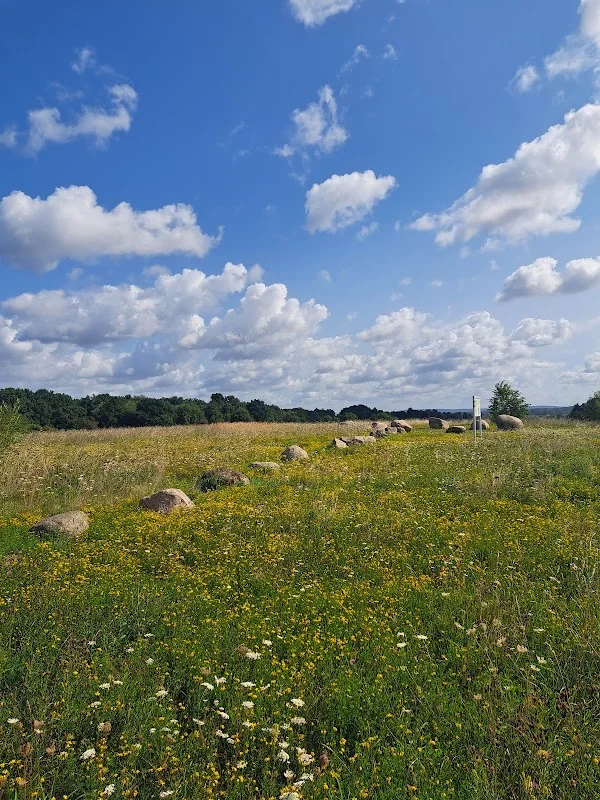
The Johannisbachaue is located east of the railway viaduct in the lower Johannisbachtal and is part of a total area of around 310 hectares surrounding the Obersee and the Johannisbachtal. The city of Bielefeld describes this space as a spacious, open cultural landscape with a meandering stream, large grazing areas in the valley floor, and agricultural use on the slopes. It is precisely this juxtaposition of open land, water, meadow, field, and shrub that creates the special charm. Those who take their time here do not experience a staged park with a clear separation between city and nature, but a transitional space where agricultural use, nature conservation, and recreation intertwine. On the paths around the Johannisbachaue and the landscape park Jerrendorf, free sightlines over the valley, historical farmsteads like Meyer zu Jerrendorf and Wehmeyer, and towards the Teutoburg Forest open up repeatedly. The area is thus not only beautiful but also readable: one can recognize in a small space how landscape, use, and maintenance influence each other. ([bielefeld.de](https://www.bielefeld.de/node/4002?utm_source=openai))
Also noteworthy is the high recreational value that the city explicitly attributes to the area. The surrounding green spaces are structured with larger forest stands, extensively used meadows, groups of trees, tree rows, and individual trees. For families, walkers, or people looking for a quiet route for a short movement in nature, this is particularly attractive because the area remains varied without becoming confusing. At the same time, the landscape remains open enough to perceive typical features of a floodplain: the watercourse, the wet areas, the extensively maintained areas, and the spaciousness. The tourist representation also emphasizes attractive walking, cycling, and riding paths. Thus, the Johannisbachaue is not limited to a single type of use but offers a realistic mix of nature-oriented experience and practical recreation. This is precisely what feeds the special SEO relevance of the place: Those searching for Johannisbachaue Bielefeld usually mean not just a point on the map, but a coherent landscape experience. ([bielefeld.de](https://www.bielefeld.de/node/4002?utm_source=openai))
Storks, Heck Cattle, and Rare Bird Species in the Johannisbachaue
The Johannisbachaue is particularly known for its rich mix of species. In the official texts of the city and conservation actors, white storks, skylarks, cuckoos, yellow wagtails, partridges, nightingales, field sparrows, starlings, red kites, kestrels, and shrikes repeatedly appear. A central turning point was the year 2016: After over 100 years of absence, the white stork returned to the floodplain, and a nesting aid was occupied and successfully incubated at the Wehmeyer farm. Already in 2015, nine white storks were observed in the area of the fields south and north of the Heck cattle pastures during their migration to winter quarters. This shows that the Johannisbachaue is not only a beautiful place to stay but also a functioning habitat for disturbance-sensitive species. Therefore, those searching online for storks Johannisbachaue find not just a symbolic image but a solid conservation background. ([bielefeld.de](https://www.bielefeld.de/node/4002?utm_source=openai))
Another defining pillar is the extensive year-round grazing with Heck cattle. According to the city of Bielefeld, the grazing project has been running since 2010; in other official documents, the start of implementation is described as beginning in 2009. The animals keep areas open, promote structural diversity, and thus support precisely that open cultural landscape that is characteristic of the Johannisbachaue. Reports from the Biological Station state that due to nature-friendly use, the number of plant species in some areas increased by 50 percent between 2011 and 2015, and in others even doubled; by 2020, this development particularly continued on the former arable land, which is now flower-rich meadows. It fits that the Johannisbachaue is considered a habitat for numerous bird species of open and semi-open landscapes. For visitors, this is not only ecologically interesting but also immediately perceptible: Depending on the season, vegetation, visibility, and animal observations change significantly. The floodplain is thus a good example of how maintenance, land use, and nature conservation can jointly create a high-quality landscape. ([bielefeld.de](https://www.bielefeld.de/node/5153?utm_source=openai))
The NABU also explicitly assesses the landscape axis Obersee/Johannisbachaue as significant for nature conservation and points out that nesting aids have already been installed in the Johannisbachaue, such as for house martins and tawny owls. Since 2021, NABU has also owned a waterfront property there, which is being maintained and developed as a small nature oasis. This information underscores that the Johannisbachaue is not only a recreational area but an actively managed natural space with a long-term perspective. Those who are out and about here are thus moving in a landscape where biodiversity does not occur by chance but is maintained through care, grazing, and targeted protection measures. This is precisely what makes the area particularly exciting for nature lovers, families, and bird watchers. The search query bird watching Johannisbachaue is therefore very apt, as the area is particularly suitable for people who want to experience species not only by hearing them but in a functioning landscape structure. ([nabu-bielefeld.de](https://www.nabu-bielefeld.de/biotopschutzprojekte/obersee-johannisbachaue/))
Access, Entry, and Parking at the Johannisbachaue
Practically, the Johannisbachaue is especially attractive because it remains easily accessible while still retaining its natural character. The tourist entry explicitly states that a passage or access on foot or by bicycle is possible. At the same time, entry is free, and the area is always open. For everyday use, this means: The Johannisbachaue is not a place with complicated opening hours, no ticket obligation, and no classic event logic, but an open landscape space that can be visited spontaneously. This fits ideally with search queries like access Johannisbachaue or parking Johannisbachaue, as many users first look for a quick, uncomplicated solution. However, the official information primarily results in a clear principle: The area is designed for active, slow mobility. So, those who want to prepare best plan a walk or a short bike ride and use the paths around the Jerrendorfweg as a starting point. ([teutonavigator.de](https://www.teutonavigator.de/en/teutonavigator/streaming/detail/POI/p_100269887/johannisbachaue))
For drivers, it is important to know that the Johannisbachaue itself is not described in the sources as a classic parking location. However, the Obersee parking lot at the viaduct is frequently mentioned as a common meeting point for an official tour. This shows that the area is established as a starting point for nature excursions, even if the area itself is not geared towards a large car infrastructure. Further municipal information about the immediate surroundings of the Jerrendorfweg mentions parking opportunities in this area, which additionally facilitates accessibility. Those who want to experience the Johannisbachaue not just as a point but as part of the larger recreational landscape can therefore easily combine the visit with a walk around the Obersee, a detour to the open valley areas, or a tour towards the landscape park Jerrendorf. This way, access becomes not just a pure traffic problem but part of a nature-oriented excursion. This is also the reason why the search intent parking Johannisbachaue is often closely linked with walking paths, Obersee, and viewpoints. ([bielefeld.de](https://www.bielefeld.de/node/31464?utm_source=openai))
Orchard Meadow, Sitting Stones, and Nature Experience on Site
A particularly visible example of the development of the area is the orchard meadow in the Johannisbachaue. According to the city of Bielefeld, it was implemented on 28.10.2021 as part of the INSEK Baumheide. On around 5,140 square meters, a species- and structure-rich cultural biotope was created, which is also intended as an attractive entrance area to the Johannisbachaue. Typical high-stem fruit varieties for East Westphalia and a regional meadow mixture were primarily used. Additionally, sitting stones and a balancing course invite visitors to linger. The meadow is freely accessible, and the harvest of the fruit trees and shrubs is available to residents for communal activities such as juice production or baking. This mix of ecological enhancement, social benefit, and experiential openness is very typical of the overall picture of the Johannisbachaue. Therefore, those searching for orchard meadow Johannisbachaue find not just a decorative individual project but a conscious component in a larger landscape strategy. ([bielefeld.de](https://www.bielefeld.de/node/25182))
Moreover, the Johannisbachaue thrives on the transitions between functional maintenance and open nature experience. From the walking paths, one can see not only the open valley area but also the historical structure of the landscape with its farms, meadows, groups of shrubs, and sightlines. The city describes the area as particularly family-friendly because recreational offers and nature experiences coexist side by side. This quality is already noticeable in small things: one can pause briefly, choose a quieter path, observe the floodplain, or simply enjoy the view. For many visitors, this is precisely the added value compared to more urban parks: The landscape does not appear through artificial furnishings but through its natural order, which remains well-maintained and accessible. When one understands the Johannisbachaue as a complete experience, the orchard meadow, the wide views, the open paths, and the nature conservation care belong together. The place is thus an ideal destination for all who want to not only consume nature but observe it in its development. ([bielefeld.de](https://www.bielefeld.de/node/4002?utm_source=openai))
History and Development of the Recreational Landscape Obersee/Johannisbachtal
The present Johannisbachaue is the result of a long landscape development. In the municipal documents, it is associated with the old farmsteads Meyer zu Jerrendorf and Wehmeyer, which continue to shape the landscape today. An important chapter began with the construction of the Obersee in the 1970s and early 1980s; the dam was completed in 1982. After that, carried suspended and solid materials led to sedimentation tendencies, which is why a dredging took place in 2008 and in 2009 Johannisbach and Jölle were separated from the lake by a dam about one kilometer long. The city also describes that the Obersee is now considered a still water body, while the surrounding green areas and paths structure the recreational area. These interventions show how strongly water management, landscape maintenance, and recreation are intertwined in this space. Today, those walking through the Johannisbachaue see not only nature but also the traces of purposeful design and development. ([bielefeld.de](https://www.bielefeld.de/node/4002?utm_source=openai))
The further maintenance was carried out step by step and with a clear nature conservation objective. In 2005, the administration was tasked with developing a comprehensive usage and protection concept for Obersee and Johannisbachaue. Based on this, the extensive year-round grazing with Heck cattle was implemented, which has been mentioned in official documents since 2009 or 2010. Additionally, areas east of the Jerrendorfweg were redesigned in the 2000s, partly recultivated, and provided with a viewpoint and boulder garden. The stork nesting aids set up in 2016 also show that the landscape is not intended as a completed monument but as a living natural and cultural space. Particularly important in this context is the official classification as a nature conservation priority area or as a landscape planning significant space. The Johannisbachaue is thus a good example of how a suburban area can develop into a versatile and ecologically valuable recreational space through consistent care. For SEO purposes, this history is relevant because it explains why the Johannisbachaue today does not simply appear as a place on the city map but is associated with nature, storks, grazing, and recreation as a search term. ([bielefeld.de](https://www.bielefeld.de/sites/default/files/datei/2021/Monitoring2000.pdf?utm_source=openai))
For visitors, this history is not abstract but clearly visible. The open valley shape, the meadows, the development of the meadows, bird watching, and the orchard meadow are all results of a process that has gradually enhanced the area without losing its grounding. This is precisely why the Johannisbachaue today appears both original and well-maintained. This is rare and makes the place particularly valuable for city dwellers who want to switch quickly between everyday life and nature. Those walking here experience not only a beautiful green corridor but an example of how an urban landscape can be permanently improved when ecological goals and use are considered together. This mix of history, maintenance, and open usability is one of the strongest reasons why the Johannisbachaue plays such a significant role in the local nature and leisure context. ([bielefeld.de](https://www.bielefeld.de/node/4002?utm_source=openai))
Sources:
- City of Bielefeld - Recreational Landscape Obersee/Johannisbachtal
- City of Bielefeld - Orchard Meadow in the Johannisbachaue
- City of Bielefeld - Landscape Maintenance and Contract Nature Conservation
- City of Bielefeld - Landscape Planning Development Concept Johannisbachtal/Obersee
- City of Bielefeld / VHS - Ornithological Walk through the Johannisbachaue
- Bielefeld Marketing / TeutoNavigator - Johannisbachaue
Mehr anzeigenWeniger anzeigen
Johannisbachaue | Storks & Recreation
The Johannisbachaue in Bielefeld is not a classic event venue, but a vibrant natural and recreational area with surprisingly many facets. Those who come here seek tranquility, openness, good paths for a walk or a bike ride, and at the same time a piece of original, well-maintained cultural landscape in the middle of the city. Official city and tourism information describes the area as part of the recreational landscape Obersee/Johannisbachtal, one of the most significant and popular recreational areas in Bielefeld. Characteristic are open floodplain areas, the meandering stream, meadows, shrubs, old farmsteads, and wide views over the valley to the Teutoburg Forest. For excursions, the Johannisbachaue is therefore equally a natural space, a place of learning, and a quiet retreat. At the same time, the area is freely accessible year-round and, according to tourist representation, can be reached on foot or by bicycle. ([bielefeld.de](https://www.bielefeld.de/node/4002?utm_source=openai))
Johannisbachaue Bielefeld: Natural Space between Obersee and Jerrendorfweg
The Johannisbachaue is located east of the railway viaduct in the lower Johannisbachtal and is part of a total area of around 310 hectares surrounding the Obersee and the Johannisbachtal. The city of Bielefeld describes this space as a spacious, open cultural landscape with a meandering stream, large grazing areas in the valley floor, and agricultural use on the slopes. It is precisely this juxtaposition of open land, water, meadow, field, and shrub that creates the special charm. Those who take their time here do not experience a staged park with a clear separation between city and nature, but a transitional space where agricultural use, nature conservation, and recreation intertwine. On the paths around the Johannisbachaue and the landscape park Jerrendorf, free sightlines over the valley, historical farmsteads like Meyer zu Jerrendorf and Wehmeyer, and towards the Teutoburg Forest open up repeatedly. The area is thus not only beautiful but also readable: one can recognize in a small space how landscape, use, and maintenance influence each other. ([bielefeld.de](https://www.bielefeld.de/node/4002?utm_source=openai))
Also noteworthy is the high recreational value that the city explicitly attributes to the area. The surrounding green spaces are structured with larger forest stands, extensively used meadows, groups of trees, tree rows, and individual trees. For families, walkers, or people looking for a quiet route for a short movement in nature, this is particularly attractive because the area remains varied without becoming confusing. At the same time, the landscape remains open enough to perceive typical features of a floodplain: the watercourse, the wet areas, the extensively maintained areas, and the spaciousness. The tourist representation also emphasizes attractive walking, cycling, and riding paths. Thus, the Johannisbachaue is not limited to a single type of use but offers a realistic mix of nature-oriented experience and practical recreation. This is precisely what feeds the special SEO relevance of the place: Those searching for Johannisbachaue Bielefeld usually mean not just a point on the map, but a coherent landscape experience. ([bielefeld.de](https://www.bielefeld.de/node/4002?utm_source=openai))
Storks, Heck Cattle, and Rare Bird Species in the Johannisbachaue
The Johannisbachaue is particularly known for its rich mix of species. In the official texts of the city and conservation actors, white storks, skylarks, cuckoos, yellow wagtails, partridges, nightingales, field sparrows, starlings, red kites, kestrels, and shrikes repeatedly appear. A central turning point was the year 2016: After over 100 years of absence, the white stork returned to the floodplain, and a nesting aid was occupied and successfully incubated at the Wehmeyer farm. Already in 2015, nine white storks were observed in the area of the fields south and north of the Heck cattle pastures during their migration to winter quarters. This shows that the Johannisbachaue is not only a beautiful place to stay but also a functioning habitat for disturbance-sensitive species. Therefore, those searching online for storks Johannisbachaue find not just a symbolic image but a solid conservation background. ([bielefeld.de](https://www.bielefeld.de/node/4002?utm_source=openai))
Another defining pillar is the extensive year-round grazing with Heck cattle. According to the city of Bielefeld, the grazing project has been running since 2010; in other official documents, the start of implementation is described as beginning in 2009. The animals keep areas open, promote structural diversity, and thus support precisely that open cultural landscape that is characteristic of the Johannisbachaue. Reports from the Biological Station state that due to nature-friendly use, the number of plant species in some areas increased by 50 percent between 2011 and 2015, and in others even doubled; by 2020, this development particularly continued on the former arable land, which is now flower-rich meadows. It fits that the Johannisbachaue is considered a habitat for numerous bird species of open and semi-open landscapes. For visitors, this is not only ecologically interesting but also immediately perceptible: Depending on the season, vegetation, visibility, and animal observations change significantly. The floodplain is thus a good example of how maintenance, land use, and nature conservation can jointly create a high-quality landscape. ([bielefeld.de](https://www.bielefeld.de/node/5153?utm_source=openai))
The NABU also explicitly assesses the landscape axis Obersee/Johannisbachaue as significant for nature conservation and points out that nesting aids have already been installed in the Johannisbachaue, such as for house martins and tawny owls. Since 2021, NABU has also owned a waterfront property there, which is being maintained and developed as a small nature oasis. This information underscores that the Johannisbachaue is not only a recreational area but an actively managed natural space with a long-term perspective. Those who are out and about here are thus moving in a landscape where biodiversity does not occur by chance but is maintained through care, grazing, and targeted protection measures. This is precisely what makes the area particularly exciting for nature lovers, families, and bird watchers. The search query bird watching Johannisbachaue is therefore very apt, as the area is particularly suitable for people who want to experience species not only by hearing them but in a functioning landscape structure. ([nabu-bielefeld.de](https://www.nabu-bielefeld.de/biotopschutzprojekte/obersee-johannisbachaue/))
Access, Entry, and Parking at the Johannisbachaue
Practically, the Johannisbachaue is especially attractive because it remains easily accessible while still retaining its natural character. The tourist entry explicitly states that a passage or access on foot or by bicycle is possible. At the same time, entry is free, and the area is always open. For everyday use, this means: The Johannisbachaue is not a place with complicated opening hours, no ticket obligation, and no classic event logic, but an open landscape space that can be visited spontaneously. This fits ideally with search queries like access Johannisbachaue or parking Johannisbachaue, as many users first look for a quick, uncomplicated solution. However, the official information primarily results in a clear principle: The area is designed for active, slow mobility. So, those who want to prepare best plan a walk or a short bike ride and use the paths around the Jerrendorfweg as a starting point. ([teutonavigator.de](https://www.teutonavigator.de/en/teutonavigator/streaming/detail/POI/p_100269887/johannisbachaue))
For drivers, it is important to know that the Johannisbachaue itself is not described in the sources as a classic parking location. However, the Obersee parking lot at the viaduct is frequently mentioned as a common meeting point for an official tour. This shows that the area is established as a starting point for nature excursions, even if the area itself is not geared towards a large car infrastructure. Further municipal information about the immediate surroundings of the Jerrendorfweg mentions parking opportunities in this area, which additionally facilitates accessibility. Those who want to experience the Johannisbachaue not just as a point but as part of the larger recreational landscape can therefore easily combine the visit with a walk around the Obersee, a detour to the open valley areas, or a tour towards the landscape park Jerrendorf. This way, access becomes not just a pure traffic problem but part of a nature-oriented excursion. This is also the reason why the search intent parking Johannisbachaue is often closely linked with walking paths, Obersee, and viewpoints. ([bielefeld.de](https://www.bielefeld.de/node/31464?utm_source=openai))
Orchard Meadow, Sitting Stones, and Nature Experience on Site
A particularly visible example of the development of the area is the orchard meadow in the Johannisbachaue. According to the city of Bielefeld, it was implemented on 28.10.2021 as part of the INSEK Baumheide. On around 5,140 square meters, a species- and structure-rich cultural biotope was created, which is also intended as an attractive entrance area to the Johannisbachaue. Typical high-stem fruit varieties for East Westphalia and a regional meadow mixture were primarily used. Additionally, sitting stones and a balancing course invite visitors to linger. The meadow is freely accessible, and the harvest of the fruit trees and shrubs is available to residents for communal activities such as juice production or baking. This mix of ecological enhancement, social benefit, and experiential openness is very typical of the overall picture of the Johannisbachaue. Therefore, those searching for orchard meadow Johannisbachaue find not just a decorative individual project but a conscious component in a larger landscape strategy. ([bielefeld.de](https://www.bielefeld.de/node/25182))
Moreover, the Johannisbachaue thrives on the transitions between functional maintenance and open nature experience. From the walking paths, one can see not only the open valley area but also the historical structure of the landscape with its farms, meadows, groups of shrubs, and sightlines. The city describes the area as particularly family-friendly because recreational offers and nature experiences coexist side by side. This quality is already noticeable in small things: one can pause briefly, choose a quieter path, observe the floodplain, or simply enjoy the view. For many visitors, this is precisely the added value compared to more urban parks: The landscape does not appear through artificial furnishings but through its natural order, which remains well-maintained and accessible. When one understands the Johannisbachaue as a complete experience, the orchard meadow, the wide views, the open paths, and the nature conservation care belong together. The place is thus an ideal destination for all who want to not only consume nature but observe it in its development. ([bielefeld.de](https://www.bielefeld.de/node/4002?utm_source=openai))
History and Development of the Recreational Landscape Obersee/Johannisbachtal
The present Johannisbachaue is the result of a long landscape development. In the municipal documents, it is associated with the old farmsteads Meyer zu Jerrendorf and Wehmeyer, which continue to shape the landscape today. An important chapter began with the construction of the Obersee in the 1970s and early 1980s; the dam was completed in 1982. After that, carried suspended and solid materials led to sedimentation tendencies, which is why a dredging took place in 2008 and in 2009 Johannisbach and Jölle were separated from the lake by a dam about one kilometer long. The city also describes that the Obersee is now considered a still water body, while the surrounding green areas and paths structure the recreational area. These interventions show how strongly water management, landscape maintenance, and recreation are intertwined in this space. Today, those walking through the Johannisbachaue see not only nature but also the traces of purposeful design and development. ([bielefeld.de](https://www.bielefeld.de/node/4002?utm_source=openai))
The further maintenance was carried out step by step and with a clear nature conservation objective. In 2005, the administration was tasked with developing a comprehensive usage and protection concept for Obersee and Johannisbachaue. Based on this, the extensive year-round grazing with Heck cattle was implemented, which has been mentioned in official documents since 2009 or 2010. Additionally, areas east of the Jerrendorfweg were redesigned in the 2000s, partly recultivated, and provided with a viewpoint and boulder garden. The stork nesting aids set up in 2016 also show that the landscape is not intended as a completed monument but as a living natural and cultural space. Particularly important in this context is the official classification as a nature conservation priority area or as a landscape planning significant space. The Johannisbachaue is thus a good example of how a suburban area can develop into a versatile and ecologically valuable recreational space through consistent care. For SEO purposes, this history is relevant because it explains why the Johannisbachaue today does not simply appear as a place on the city map but is associated with nature, storks, grazing, and recreation as a search term. ([bielefeld.de](https://www.bielefeld.de/sites/default/files/datei/2021/Monitoring2000.pdf?utm_source=openai))
For visitors, this history is not abstract but clearly visible. The open valley shape, the meadows, the development of the meadows, bird watching, and the orchard meadow are all results of a process that has gradually enhanced the area without losing its grounding. This is precisely why the Johannisbachaue today appears both original and well-maintained. This is rare and makes the place particularly valuable for city dwellers who want to switch quickly between everyday life and nature. Those walking here experience not only a beautiful green corridor but an example of how an urban landscape can be permanently improved when ecological goals and use are considered together. This mix of history, maintenance, and open usability is one of the strongest reasons why the Johannisbachaue plays such a significant role in the local nature and leisure context. ([bielefeld.de](https://www.bielefeld.de/node/4002?utm_source=openai))
Sources:
- City of Bielefeld - Recreational Landscape Obersee/Johannisbachtal
- City of Bielefeld - Orchard Meadow in the Johannisbachaue
- City of Bielefeld - Landscape Maintenance and Contract Nature Conservation
- City of Bielefeld - Landscape Planning Development Concept Johannisbachtal/Obersee
- City of Bielefeld / VHS - Ornithological Walk through the Johannisbachaue
- Bielefeld Marketing / TeutoNavigator - Johannisbachaue
Johannisbachaue | Storks & Recreation
The Johannisbachaue in Bielefeld is not a classic event venue, but a vibrant natural and recreational area with surprisingly many facets. Those who come here seek tranquility, openness, good paths for a walk or a bike ride, and at the same time a piece of original, well-maintained cultural landscape in the middle of the city. Official city and tourism information describes the area as part of the recreational landscape Obersee/Johannisbachtal, one of the most significant and popular recreational areas in Bielefeld. Characteristic are open floodplain areas, the meandering stream, meadows, shrubs, old farmsteads, and wide views over the valley to the Teutoburg Forest. For excursions, the Johannisbachaue is therefore equally a natural space, a place of learning, and a quiet retreat. At the same time, the area is freely accessible year-round and, according to tourist representation, can be reached on foot or by bicycle. ([bielefeld.de](https://www.bielefeld.de/node/4002?utm_source=openai))
Johannisbachaue Bielefeld: Natural Space between Obersee and Jerrendorfweg
The Johannisbachaue is located east of the railway viaduct in the lower Johannisbachtal and is part of a total area of around 310 hectares surrounding the Obersee and the Johannisbachtal. The city of Bielefeld describes this space as a spacious, open cultural landscape with a meandering stream, large grazing areas in the valley floor, and agricultural use on the slopes. It is precisely this juxtaposition of open land, water, meadow, field, and shrub that creates the special charm. Those who take their time here do not experience a staged park with a clear separation between city and nature, but a transitional space where agricultural use, nature conservation, and recreation intertwine. On the paths around the Johannisbachaue and the landscape park Jerrendorf, free sightlines over the valley, historical farmsteads like Meyer zu Jerrendorf and Wehmeyer, and towards the Teutoburg Forest open up repeatedly. The area is thus not only beautiful but also readable: one can recognize in a small space how landscape, use, and maintenance influence each other. ([bielefeld.de](https://www.bielefeld.de/node/4002?utm_source=openai))
Also noteworthy is the high recreational value that the city explicitly attributes to the area. The surrounding green spaces are structured with larger forest stands, extensively used meadows, groups of trees, tree rows, and individual trees. For families, walkers, or people looking for a quiet route for a short movement in nature, this is particularly attractive because the area remains varied without becoming confusing. At the same time, the landscape remains open enough to perceive typical features of a floodplain: the watercourse, the wet areas, the extensively maintained areas, and the spaciousness. The tourist representation also emphasizes attractive walking, cycling, and riding paths. Thus, the Johannisbachaue is not limited to a single type of use but offers a realistic mix of nature-oriented experience and practical recreation. This is precisely what feeds the special SEO relevance of the place: Those searching for Johannisbachaue Bielefeld usually mean not just a point on the map, but a coherent landscape experience. ([bielefeld.de](https://www.bielefeld.de/node/4002?utm_source=openai))
Storks, Heck Cattle, and Rare Bird Species in the Johannisbachaue
The Johannisbachaue is particularly known for its rich mix of species. In the official texts of the city and conservation actors, white storks, skylarks, cuckoos, yellow wagtails, partridges, nightingales, field sparrows, starlings, red kites, kestrels, and shrikes repeatedly appear. A central turning point was the year 2016: After over 100 years of absence, the white stork returned to the floodplain, and a nesting aid was occupied and successfully incubated at the Wehmeyer farm. Already in 2015, nine white storks were observed in the area of the fields south and north of the Heck cattle pastures during their migration to winter quarters. This shows that the Johannisbachaue is not only a beautiful place to stay but also a functioning habitat for disturbance-sensitive species. Therefore, those searching online for storks Johannisbachaue find not just a symbolic image but a solid conservation background. ([bielefeld.de](https://www.bielefeld.de/node/4002?utm_source=openai))
Another defining pillar is the extensive year-round grazing with Heck cattle. According to the city of Bielefeld, the grazing project has been running since 2010; in other official documents, the start of implementation is described as beginning in 2009. The animals keep areas open, promote structural diversity, and thus support precisely that open cultural landscape that is characteristic of the Johannisbachaue. Reports from the Biological Station state that due to nature-friendly use, the number of plant species in some areas increased by 50 percent between 2011 and 2015, and in others even doubled; by 2020, this development particularly continued on the former arable land, which is now flower-rich meadows. It fits that the Johannisbachaue is considered a habitat for numerous bird species of open and semi-open landscapes. For visitors, this is not only ecologically interesting but also immediately perceptible: Depending on the season, vegetation, visibility, and animal observations change significantly. The floodplain is thus a good example of how maintenance, land use, and nature conservation can jointly create a high-quality landscape. ([bielefeld.de](https://www.bielefeld.de/node/5153?utm_source=openai))
The NABU also explicitly assesses the landscape axis Obersee/Johannisbachaue as significant for nature conservation and points out that nesting aids have already been installed in the Johannisbachaue, such as for house martins and tawny owls. Since 2021, NABU has also owned a waterfront property there, which is being maintained and developed as a small nature oasis. This information underscores that the Johannisbachaue is not only a recreational area but an actively managed natural space with a long-term perspective. Those who are out and about here are thus moving in a landscape where biodiversity does not occur by chance but is maintained through care, grazing, and targeted protection measures. This is precisely what makes the area particularly exciting for nature lovers, families, and bird watchers. The search query bird watching Johannisbachaue is therefore very apt, as the area is particularly suitable for people who want to experience species not only by hearing them but in a functioning landscape structure. ([nabu-bielefeld.de](https://www.nabu-bielefeld.de/biotopschutzprojekte/obersee-johannisbachaue/))
Access, Entry, and Parking at the Johannisbachaue
Practically, the Johannisbachaue is especially attractive because it remains easily accessible while still retaining its natural character. The tourist entry explicitly states that a passage or access on foot or by bicycle is possible. At the same time, entry is free, and the area is always open. For everyday use, this means: The Johannisbachaue is not a place with complicated opening hours, no ticket obligation, and no classic event logic, but an open landscape space that can be visited spontaneously. This fits ideally with search queries like access Johannisbachaue or parking Johannisbachaue, as many users first look for a quick, uncomplicated solution. However, the official information primarily results in a clear principle: The area is designed for active, slow mobility. So, those who want to prepare best plan a walk or a short bike ride and use the paths around the Jerrendorfweg as a starting point. ([teutonavigator.de](https://www.teutonavigator.de/en/teutonavigator/streaming/detail/POI/p_100269887/johannisbachaue))
For drivers, it is important to know that the Johannisbachaue itself is not described in the sources as a classic parking location. However, the Obersee parking lot at the viaduct is frequently mentioned as a common meeting point for an official tour. This shows that the area is established as a starting point for nature excursions, even if the area itself is not geared towards a large car infrastructure. Further municipal information about the immediate surroundings of the Jerrendorfweg mentions parking opportunities in this area, which additionally facilitates accessibility. Those who want to experience the Johannisbachaue not just as a point but as part of the larger recreational landscape can therefore easily combine the visit with a walk around the Obersee, a detour to the open valley areas, or a tour towards the landscape park Jerrendorf. This way, access becomes not just a pure traffic problem but part of a nature-oriented excursion. This is also the reason why the search intent parking Johannisbachaue is often closely linked with walking paths, Obersee, and viewpoints. ([bielefeld.de](https://www.bielefeld.de/node/31464?utm_source=openai))
Orchard Meadow, Sitting Stones, and Nature Experience on Site
A particularly visible example of the development of the area is the orchard meadow in the Johannisbachaue. According to the city of Bielefeld, it was implemented on 28.10.2021 as part of the INSEK Baumheide. On around 5,140 square meters, a species- and structure-rich cultural biotope was created, which is also intended as an attractive entrance area to the Johannisbachaue. Typical high-stem fruit varieties for East Westphalia and a regional meadow mixture were primarily used. Additionally, sitting stones and a balancing course invite visitors to linger. The meadow is freely accessible, and the harvest of the fruit trees and shrubs is available to residents for communal activities such as juice production or baking. This mix of ecological enhancement, social benefit, and experiential openness is very typical of the overall picture of the Johannisbachaue. Therefore, those searching for orchard meadow Johannisbachaue find not just a decorative individual project but a conscious component in a larger landscape strategy. ([bielefeld.de](https://www.bielefeld.de/node/25182))
Moreover, the Johannisbachaue thrives on the transitions between functional maintenance and open nature experience. From the walking paths, one can see not only the open valley area but also the historical structure of the landscape with its farms, meadows, groups of shrubs, and sightlines. The city describes the area as particularly family-friendly because recreational offers and nature experiences coexist side by side. This quality is already noticeable in small things: one can pause briefly, choose a quieter path, observe the floodplain, or simply enjoy the view. For many visitors, this is precisely the added value compared to more urban parks: The landscape does not appear through artificial furnishings but through its natural order, which remains well-maintained and accessible. When one understands the Johannisbachaue as a complete experience, the orchard meadow, the wide views, the open paths, and the nature conservation care belong together. The place is thus an ideal destination for all who want to not only consume nature but observe it in its development. ([bielefeld.de](https://www.bielefeld.de/node/4002?utm_source=openai))
History and Development of the Recreational Landscape Obersee/Johannisbachtal
The present Johannisbachaue is the result of a long landscape development. In the municipal documents, it is associated with the old farmsteads Meyer zu Jerrendorf and Wehmeyer, which continue to shape the landscape today. An important chapter began with the construction of the Obersee in the 1970s and early 1980s; the dam was completed in 1982. After that, carried suspended and solid materials led to sedimentation tendencies, which is why a dredging took place in 2008 and in 2009 Johannisbach and Jölle were separated from the lake by a dam about one kilometer long. The city also describes that the Obersee is now considered a still water body, while the surrounding green areas and paths structure the recreational area. These interventions show how strongly water management, landscape maintenance, and recreation are intertwined in this space. Today, those walking through the Johannisbachaue see not only nature but also the traces of purposeful design and development. ([bielefeld.de](https://www.bielefeld.de/node/4002?utm_source=openai))
The further maintenance was carried out step by step and with a clear nature conservation objective. In 2005, the administration was tasked with developing a comprehensive usage and protection concept for Obersee and Johannisbachaue. Based on this, the extensive year-round grazing with Heck cattle was implemented, which has been mentioned in official documents since 2009 or 2010. Additionally, areas east of the Jerrendorfweg were redesigned in the 2000s, partly recultivated, and provided with a viewpoint and boulder garden. The stork nesting aids set up in 2016 also show that the landscape is not intended as a completed monument but as a living natural and cultural space. Particularly important in this context is the official classification as a nature conservation priority area or as a landscape planning significant space. The Johannisbachaue is thus a good example of how a suburban area can develop into a versatile and ecologically valuable recreational space through consistent care. For SEO purposes, this history is relevant because it explains why the Johannisbachaue today does not simply appear as a place on the city map but is associated with nature, storks, grazing, and recreation as a search term. ([bielefeld.de](https://www.bielefeld.de/sites/default/files/datei/2021/Monitoring2000.pdf?utm_source=openai))
For visitors, this history is not abstract but clearly visible. The open valley shape, the meadows, the development of the meadows, bird watching, and the orchard meadow are all results of a process that has gradually enhanced the area without losing its grounding. This is precisely why the Johannisbachaue today appears both original and well-maintained. This is rare and makes the place particularly valuable for city dwellers who want to switch quickly between everyday life and nature. Those walking here experience not only a beautiful green corridor but an example of how an urban landscape can be permanently improved when ecological goals and use are considered together. This mix of history, maintenance, and open usability is one of the strongest reasons why the Johannisbachaue plays such a significant role in the local nature and leisure context. ([bielefeld.de](https://www.bielefeld.de/node/4002?utm_source=openai))
Sources:
- City of Bielefeld - Recreational Landscape Obersee/Johannisbachtal
- City of Bielefeld - Orchard Meadow in the Johannisbachaue
- City of Bielefeld - Landscape Maintenance and Contract Nature Conservation
- City of Bielefeld - Landscape Planning Development Concept Johannisbachtal/Obersee
- City of Bielefeld / VHS - Ornithological Walk through the Johannisbachaue
- Bielefeld Marketing / TeutoNavigator - Johannisbachaue
Upcoming Events
No events found
Frequently Asked Questions
Reviews
No reviews found