
Bielefeld
Am Botanischen Garten 1E, 33617 Bielefeld, Deutschland
Johannisfriedhof Bielefeld | Opening Hours & Parking
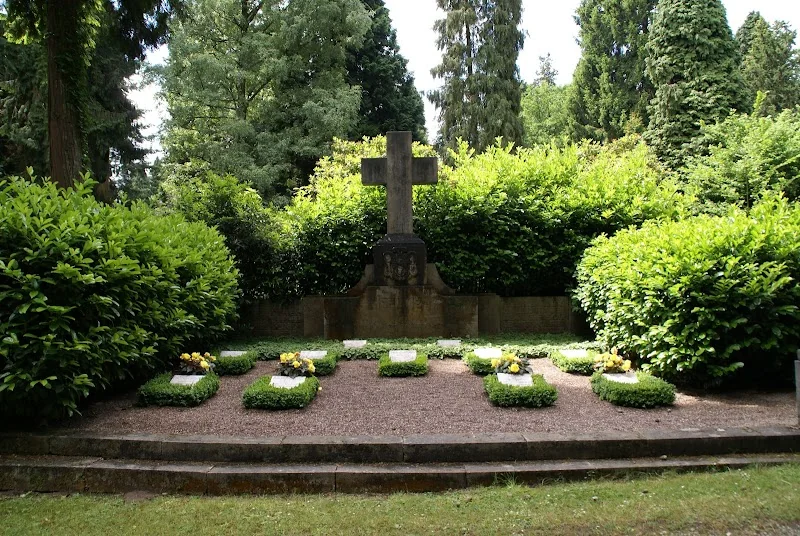
The Johannisfriedhof in Bielefeld is much more than a classic cemetery. It is one of the oldest sites in the city, combining historical significance with an exceptionally peaceful park atmosphere and is located in one of the greenest areas of Bielefeld. Between the Botanical Garden, Olderdissen Zoo, and the city forest unfolds a place that uniquely connects memory, nature, and urban history. Those who visit the Johannisfriedhof experience not a stark facility, but a park-like space with old trees, winding paths, lush planting strips, and a quiet dignity that can be felt after just a few steps. The city describes the site as a place of tranquility away from noise and hustle, and this impression is confirmed by every walk on the grounds. Additionally, there is an extraordinarily rich cultural history: The cemetery was opened in 1874, placed under monument protection in 1986, and is now a vibrant part of the urban green system. Particularly striking are the listed graves, the chapel, the arboretum, and the proximity to other popular excursion destinations in Bielefeld. The Johannisfriedhof is thus a place for people who want to see history, experience nature, and consciously perceive silence.
From an SEO perspective, the Johannisfriedhof is also an exciting topic because many search queries show very specific user intentions: opening hours, parking, directions, map, history, chapel, graves, and special plants are the central interests. These topics are crucial for visitors when they want to get to know the cemetery for the first time or visit it purposefully. The municipal information provides reliable facts: The Johannisfriedhof is accessible to pedestrians around the clock, there are parking facilities on the grounds, and bus lines 24 and 29 connect the site with Bielefeld's local transport. Additionally, there is a zoomable cemetery map, public toilets in the building next to the chapel, and an administration with clear office hours. In the following sections, these practical pieces of information will be categorized along with the history, special plants, the chapel, and the types of graves. This creates a complete picture of this Bielefeld park cemetery that is helpful for both relatives and culture and nature-interested visitors.
Opening Hours, Directions, and Parking at Johannisfriedhof Bielefeld
Those wishing to visit the Johannisfriedhof benefit from pleasantly easy accessibility. According to municipal information, the site is accessible to pedestrians around the clock. This is particularly practical for a cemetery with a park-like character, as walks, quiet visits, or a brief moment of reflection are not bound to tight time windows. At the same time, it should be noted that the opening hours of the cemetery administration differ from this. It is open Monday to Friday from 8 AM to 12 PM, additionally Monday to Wednesday from 2 PM to 4 PM, and Thursday from 2 PM to 5 PM. Therefore, for inquiries regarding organizational matters, graves, or administrative issues, clear contact times are available. For visits on weekends or in the evening, the cemetery is accessible to pedestrians, but the administration itself is not regularly staffed. This separation is helpful for planning, as one can distinguish between quiet visits, consultations, and organizational appointments.
The journey is also straightforward. The Johannisfriedhof is located at the Botanical Garden in 33617 Bielefeld. The official site lists the address as Am Botanischen Garten 1D. The site is well accessible by public transport in two ways: Line 24 stops at the Johannisfriedhof stop, while the southern part can additionally be reached via the Langenhagen stop with Line 29. Both lines are connected via Jahnplatz, simplifying access from different districts. For visitors coming from the city center, this provides a direct and comprehensible connection without complicated detours. For visitors who consciously forgo the car, this is a real advantage. The Johannisfriedhof thus seamlessly integrates into the urban network while remaining a quiet place with its own atmosphere.
For drivers, there are also practical solutions. There are parking facilities on the grounds that can be accessed via the main entrance. The location on the cemetery grounds itself is particularly pleasant, as access does not point to distant parking zones but is directly connected to the site. This makes the visit easier, especially for older people, relatives with flowers, or visitors with limited mobility. Additionally, public toilets are located in the building next to the cemetery chapel. Therefore, those planning a longer visit are well catered for in this regard. For good orientation, it is also worthwhile to take a look at the municipal cemetery map. It allows for the search for graves and helps to better assess paths on the site. In total, a clearly structured visit picture emerges: very good public transport connections, parking options on site, toilets in close proximity, and an administration with fixed office hours. This makes the Johannisfriedhof not only historically interesting but also practically usable in everyday life.
History of Johannisfriedhof from 1874 to Today
The history of the Johannisfriedhof begins in 1874 and is closely linked to the growth of the city of Bielefeld. The population steadily increased in the 19th century, and the old cemetery at Jahnplatz was no longer sufficient for burials. Therefore, a new facility was opened west of the city center, which would later be among the oldest cemeteries in the city. This origin already shows that the Johannisfriedhof did not arise by chance but as a response to a specific urban development. It was designed from the beginning as an important cemetery for the city community and gradually gained cultural-historical significance over the years. That it is now under monument protection is the logical consequence of this long development. The cemetery is thus not only a place of mourning and remembrance but also a document of Bielefeld's urban history. Its existence reflects the change in burial culture as well as the growth and densification of the city.
Over time, the use of the site changed several times. In 1894, the cemetery was expanded, indicating the ongoing significance of the site. A further turning point occurred in 1912 with the opening of the Sennefriedhof, which sustainably changed the burial situation in Bielefeld. For the Johannisfriedhof, this meant that hereditary burials were no longer allocated, and row graves were not used to the same extent. The facility remained important but lost parts of its original function as a central burial site. After World War II, war damage had to be repaired. In this context, the current chapel was built on the foundations of the old chapel, which had been heavily damaged in the war. The remodeling of the entrance area and the renewal of the structural elements gave the cemetery a new face without erasing its historical depth.
The most significant interventions occurred at the Johannisfriedhof in the 1970s. The construction of the Ostwestfalendamm permanently changed the site, as some facilities and buildings had to make way, and the former main entrance disappeared. Today, the cemetery is therefore only accessible via the former back entrance. This incision makes the site historically exciting: it shows how infrastructure projects can reshape even historical places. At the same time, much substance has been preserved. In 1986, the Johannisfriedhof was placed under monument protection, as was the adjacent cemetery of the Jewish community. In connection with the rich tree population, the artistic grave monuments, and the family graves, the site received a clear protection status. The city also points out that many well-known Bielefeld citizens, manufacturers, and politicians found their final resting place here. Therefore, the Johannisfriedhof is not just an old cemetery but a historical archive in the open air.
Arboretum, Old Trees, and the Quiet Park Cemetery Atmosphere
The Johannisfriedhof was established as a classic park cemetery, and this basic layout continues to shape it today. Between the graves are lush planting strips, there is an extensive lawn axis, and a winding circular path. Together with the old tree population, this creates an image that resembles a green oasis rather than a strictly functional cemetery facility. This design is not coincidental but an expression of a historical cemetery conception, where nature and remembrance were closely linked. The Johannisfriedhof therefore offers not only a place for mourning and remembrance but also a space for quiet walks, observations, and peaceful lingering. The city itself emphasizes that the site is often used as a welcome place for a stroll. This is understandable, as those walking through the paths experience a mix of urban proximity and landscape tranquility that has become rare in everyday life.
Particularly striking is the arboretum, where visitors can find a variety of old rhododendrons, Thuja, and Chamaecyparis species. This ensemble of plants gives the cemetery an almost botanical quality. The arboretum was decommissioned in 1986 to preserve the plants. This information is important because it shows that the site is understood not only as a cemetery but also as a protected green space. Old rhododendrons, evergreen shrubs, and the long-established stock create an atmosphere that varies in every season. In spring, blooming dominates, in summer the lush green, in autumn the quiet colors, and in winter the clear structure of the trees and paths. This seasonal change makes the Johannisfriedhof so appealing. It is not a backdrop that only works in a certain season but a living garden space with lasting presence.
Additionally, the location in conjunction with other popular green spaces in Bielefeld is noteworthy. The Botanical Garden, the Olderdissen Zoo, and the city forest are in direct or immediate proximity. This means that the Johannisfriedhof is not isolated but part of a larger landscape context. The city explicitly describes it as a contribution to local recreation. The view of the opposite Sparrenburg is also an essential element of this environment. Those who take their time will recognize how carefully the cemetery integrates into the northern slope of the Teutoburg Forest. The site appears open yet sheltered, historically grown yet friendly. For many people, this mix is important: a place where one does not disturb anyone, where one can walk respectfully, and where one can directly experience the quiet interplay of plants, paths, and monuments. Therefore, the Johannisfriedhof is not just a cemetery but also a special place of urban nature.
Chapel, Graves, and Listed Features
A central building at the Johannisfriedhof is the chapel. It was built as a replacement for the older chapel, which was constructed in 1896 in the neo-Gothic style and was heavily damaged in World War II. The current chapel was built on the foundations of the predecessor building and was consecrated in 1950. Its clear, simple form reflects the spirit of the post-war years and deliberately differs from the earlier neo-Gothic style. Particularly worth seeing are the stained glass windows in the nave. Two round windows to the right and left of the entrance door come from the Bielefeld artist Alfred Wiese and depict the Christogram XP as well as the Alpha and Omega symbol. Two additional stained glass windows in the side rooms refer to hope, love, and faith. The chapel accommodates 90 people and is thus an important place for memorial services and farewells on the grounds.
The graves themselves are also among the special features of the Johannisfriedhof. The site is characterized by historically and artistically valuable grave monuments, including extensive family burial sites with ornate monuments and elaborate enclosures. The city points out that many well-known Bielefeld citizens are buried here, including people from business, politics, and the urban community. Examples of individual grave monuments show how diverse the site is: The Bozi grave is adorned with a half-relief that refers to Bielefeld's industrial and family history, while the Hammerschmidt grave stands out with a detailed stone featuring literary quotes. Such monuments make it clear that the Johannisfriedhof can be read not only as a burial site but also as a space of art and cultural history. Those who observe the site attentively discover not only names and dates but also craftsmanship and artistic testimonies from past epochs.
The listed status of the cemetery is therefore particularly important. Since 1986, the entire site has been protected, as has the adjacent cemetery of the Jewish community. This protects not only individual graves but the overall appearance with paths, trees, green spaces, and architectural elements. Additionally, the offered types of graves keep the cemetery functionally relevant today: earth and urn choice graves, row graves for children, as well as urn lawn care choice graves are offered. Thus, the Johannisfriedhof connects historical depth with modern burial practices. It is not a museum-like place in the strict sense but a cemetery that continues to be used while visibly preserving its cultural heritage. This dual function makes it one of the most characteristic cemeteries in the city of Bielefeld.
Map, Orientation, and Practical Tips for the Visit
For the first visit, the cemetery map is particularly helpful. The city provides a digital map that can be enlarged and reduced. Graves can be viewed in more detail, which is useful for relatives, researchers, and interested visitors alike. Especially in a historical site with many grave fields and individual significant monuments, a map significantly eases orientation. Those who want to experience the Johannisfriedhof not just as a transit point but consciously as a place of remembrance should therefore get an overview in advance. The circular path, the location of the chapel, the parking options, and the proximity to the entrances can be better categorized. This is especially important when searching for a specific grave or when wanting to combine the visit with a walk through the green surroundings. The digital orientation ideally complements the quieter, analog experience on site.
Practically, the infrastructural details that make the visit pleasant are also noteworthy. Toilets are located in the building next to the cemetery chapel. The parking facilities are on the grounds and are accessible via the main entrance. Those arriving by bus can reach the cemetery directly via Line 24 or via the Langenhagen stop with Line 29. This makes the Johannisfriedhof a well-accessible place, even though it appears quiet and secluded. This contrast is part of its charm: good accessibility on one side, quiet atmosphere on the other. Those visiting the cemetery should still take their time. It is a place where slow walking, quiet conversations, and respectful interaction with the surroundings should be the norm. The mix of memorial space, garden facility, and protected monument unfolds its effect best when one does not rush.
Current events and guided tours also show that the Johannisfriedhof is not only historically significant but also of current interest. The municipal cemetery programs include, for example, nature-related offerings such as observation walks for birdlife as well as cultural tours and cabaret walks. This underscores that the cemetery is understood as part of urban life without losing its quiet character. Therefore, those visiting the Johannisfriedhof encounter a place with multiple layers: of history, of nature, of art, of memory, and of a surprisingly lively visitor perspective. This is precisely what makes it so special in Bielefeld. It is not a loud place, but a quiet one that is by no means simple. Its effect arises from the interplay of location, vegetation, architecture, and history. Therefore, a visit is worthwhile for both people with a personal connection and for anyone wanting to get to know Bielefeld beyond the usual sights.
Sources:
Show moreShow less
Johannisfriedhof Bielefeld | Opening Hours & Parking
The Johannisfriedhof in Bielefeld is much more than a classic cemetery. It is one of the oldest sites in the city, combining historical significance with an exceptionally peaceful park atmosphere and is located in one of the greenest areas of Bielefeld. Between the Botanical Garden, Olderdissen Zoo, and the city forest unfolds a place that uniquely connects memory, nature, and urban history. Those who visit the Johannisfriedhof experience not a stark facility, but a park-like space with old trees, winding paths, lush planting strips, and a quiet dignity that can be felt after just a few steps. The city describes the site as a place of tranquility away from noise and hustle, and this impression is confirmed by every walk on the grounds. Additionally, there is an extraordinarily rich cultural history: The cemetery was opened in 1874, placed under monument protection in 1986, and is now a vibrant part of the urban green system. Particularly striking are the listed graves, the chapel, the arboretum, and the proximity to other popular excursion destinations in Bielefeld. The Johannisfriedhof is thus a place for people who want to see history, experience nature, and consciously perceive silence.
From an SEO perspective, the Johannisfriedhof is also an exciting topic because many search queries show very specific user intentions: opening hours, parking, directions, map, history, chapel, graves, and special plants are the central interests. These topics are crucial for visitors when they want to get to know the cemetery for the first time or visit it purposefully. The municipal information provides reliable facts: The Johannisfriedhof is accessible to pedestrians around the clock, there are parking facilities on the grounds, and bus lines 24 and 29 connect the site with Bielefeld's local transport. Additionally, there is a zoomable cemetery map, public toilets in the building next to the chapel, and an administration with clear office hours. In the following sections, these practical pieces of information will be categorized along with the history, special plants, the chapel, and the types of graves. This creates a complete picture of this Bielefeld park cemetery that is helpful for both relatives and culture and nature-interested visitors.
Opening Hours, Directions, and Parking at Johannisfriedhof Bielefeld
Those wishing to visit the Johannisfriedhof benefit from pleasantly easy accessibility. According to municipal information, the site is accessible to pedestrians around the clock. This is particularly practical for a cemetery with a park-like character, as walks, quiet visits, or a brief moment of reflection are not bound to tight time windows. At the same time, it should be noted that the opening hours of the cemetery administration differ from this. It is open Monday to Friday from 8 AM to 12 PM, additionally Monday to Wednesday from 2 PM to 4 PM, and Thursday from 2 PM to 5 PM. Therefore, for inquiries regarding organizational matters, graves, or administrative issues, clear contact times are available. For visits on weekends or in the evening, the cemetery is accessible to pedestrians, but the administration itself is not regularly staffed. This separation is helpful for planning, as one can distinguish between quiet visits, consultations, and organizational appointments.
The journey is also straightforward. The Johannisfriedhof is located at the Botanical Garden in 33617 Bielefeld. The official site lists the address as Am Botanischen Garten 1D. The site is well accessible by public transport in two ways: Line 24 stops at the Johannisfriedhof stop, while the southern part can additionally be reached via the Langenhagen stop with Line 29. Both lines are connected via Jahnplatz, simplifying access from different districts. For visitors coming from the city center, this provides a direct and comprehensible connection without complicated detours. For visitors who consciously forgo the car, this is a real advantage. The Johannisfriedhof thus seamlessly integrates into the urban network while remaining a quiet place with its own atmosphere.
For drivers, there are also practical solutions. There are parking facilities on the grounds that can be accessed via the main entrance. The location on the cemetery grounds itself is particularly pleasant, as access does not point to distant parking zones but is directly connected to the site. This makes the visit easier, especially for older people, relatives with flowers, or visitors with limited mobility. Additionally, public toilets are located in the building next to the cemetery chapel. Therefore, those planning a longer visit are well catered for in this regard. For good orientation, it is also worthwhile to take a look at the municipal cemetery map. It allows for the search for graves and helps to better assess paths on the site. In total, a clearly structured visit picture emerges: very good public transport connections, parking options on site, toilets in close proximity, and an administration with fixed office hours. This makes the Johannisfriedhof not only historically interesting but also practically usable in everyday life.
History of Johannisfriedhof from 1874 to Today
The history of the Johannisfriedhof begins in 1874 and is closely linked to the growth of the city of Bielefeld. The population steadily increased in the 19th century, and the old cemetery at Jahnplatz was no longer sufficient for burials. Therefore, a new facility was opened west of the city center, which would later be among the oldest cemeteries in the city. This origin already shows that the Johannisfriedhof did not arise by chance but as a response to a specific urban development. It was designed from the beginning as an important cemetery for the city community and gradually gained cultural-historical significance over the years. That it is now under monument protection is the logical consequence of this long development. The cemetery is thus not only a place of mourning and remembrance but also a document of Bielefeld's urban history. Its existence reflects the change in burial culture as well as the growth and densification of the city.
Over time, the use of the site changed several times. In 1894, the cemetery was expanded, indicating the ongoing significance of the site. A further turning point occurred in 1912 with the opening of the Sennefriedhof, which sustainably changed the burial situation in Bielefeld. For the Johannisfriedhof, this meant that hereditary burials were no longer allocated, and row graves were not used to the same extent. The facility remained important but lost parts of its original function as a central burial site. After World War II, war damage had to be repaired. In this context, the current chapel was built on the foundations of the old chapel, which had been heavily damaged in the war. The remodeling of the entrance area and the renewal of the structural elements gave the cemetery a new face without erasing its historical depth.
The most significant interventions occurred at the Johannisfriedhof in the 1970s. The construction of the Ostwestfalendamm permanently changed the site, as some facilities and buildings had to make way, and the former main entrance disappeared. Today, the cemetery is therefore only accessible via the former back entrance. This incision makes the site historically exciting: it shows how infrastructure projects can reshape even historical places. At the same time, much substance has been preserved. In 1986, the Johannisfriedhof was placed under monument protection, as was the adjacent cemetery of the Jewish community. In connection with the rich tree population, the artistic grave monuments, and the family graves, the site received a clear protection status. The city also points out that many well-known Bielefeld citizens, manufacturers, and politicians found their final resting place here. Therefore, the Johannisfriedhof is not just an old cemetery but a historical archive in the open air.
Arboretum, Old Trees, and the Quiet Park Cemetery Atmosphere
The Johannisfriedhof was established as a classic park cemetery, and this basic layout continues to shape it today. Between the graves are lush planting strips, there is an extensive lawn axis, and a winding circular path. Together with the old tree population, this creates an image that resembles a green oasis rather than a strictly functional cemetery facility. This design is not coincidental but an expression of a historical cemetery conception, where nature and remembrance were closely linked. The Johannisfriedhof therefore offers not only a place for mourning and remembrance but also a space for quiet walks, observations, and peaceful lingering. The city itself emphasizes that the site is often used as a welcome place for a stroll. This is understandable, as those walking through the paths experience a mix of urban proximity and landscape tranquility that has become rare in everyday life.
Particularly striking is the arboretum, where visitors can find a variety of old rhododendrons, Thuja, and Chamaecyparis species. This ensemble of plants gives the cemetery an almost botanical quality. The arboretum was decommissioned in 1986 to preserve the plants. This information is important because it shows that the site is understood not only as a cemetery but also as a protected green space. Old rhododendrons, evergreen shrubs, and the long-established stock create an atmosphere that varies in every season. In spring, blooming dominates, in summer the lush green, in autumn the quiet colors, and in winter the clear structure of the trees and paths. This seasonal change makes the Johannisfriedhof so appealing. It is not a backdrop that only works in a certain season but a living garden space with lasting presence.
Additionally, the location in conjunction with other popular green spaces in Bielefeld is noteworthy. The Botanical Garden, the Olderdissen Zoo, and the city forest are in direct or immediate proximity. This means that the Johannisfriedhof is not isolated but part of a larger landscape context. The city explicitly describes it as a contribution to local recreation. The view of the opposite Sparrenburg is also an essential element of this environment. Those who take their time will recognize how carefully the cemetery integrates into the northern slope of the Teutoburg Forest. The site appears open yet sheltered, historically grown yet friendly. For many people, this mix is important: a place where one does not disturb anyone, where one can walk respectfully, and where one can directly experience the quiet interplay of plants, paths, and monuments. Therefore, the Johannisfriedhof is not just a cemetery but also a special place of urban nature.
Chapel, Graves, and Listed Features
A central building at the Johannisfriedhof is the chapel. It was built as a replacement for the older chapel, which was constructed in 1896 in the neo-Gothic style and was heavily damaged in World War II. The current chapel was built on the foundations of the predecessor building and was consecrated in 1950. Its clear, simple form reflects the spirit of the post-war years and deliberately differs from the earlier neo-Gothic style. Particularly worth seeing are the stained glass windows in the nave. Two round windows to the right and left of the entrance door come from the Bielefeld artist Alfred Wiese and depict the Christogram XP as well as the Alpha and Omega symbol. Two additional stained glass windows in the side rooms refer to hope, love, and faith. The chapel accommodates 90 people and is thus an important place for memorial services and farewells on the grounds.
The graves themselves are also among the special features of the Johannisfriedhof. The site is characterized by historically and artistically valuable grave monuments, including extensive family burial sites with ornate monuments and elaborate enclosures. The city points out that many well-known Bielefeld citizens are buried here, including people from business, politics, and the urban community. Examples of individual grave monuments show how diverse the site is: The Bozi grave is adorned with a half-relief that refers to Bielefeld's industrial and family history, while the Hammerschmidt grave stands out with a detailed stone featuring literary quotes. Such monuments make it clear that the Johannisfriedhof can be read not only as a burial site but also as a space of art and cultural history. Those who observe the site attentively discover not only names and dates but also craftsmanship and artistic testimonies from past epochs.
The listed status of the cemetery is therefore particularly important. Since 1986, the entire site has been protected, as has the adjacent cemetery of the Jewish community. This protects not only individual graves but the overall appearance with paths, trees, green spaces, and architectural elements. Additionally, the offered types of graves keep the cemetery functionally relevant today: earth and urn choice graves, row graves for children, as well as urn lawn care choice graves are offered. Thus, the Johannisfriedhof connects historical depth with modern burial practices. It is not a museum-like place in the strict sense but a cemetery that continues to be used while visibly preserving its cultural heritage. This dual function makes it one of the most characteristic cemeteries in the city of Bielefeld.
Map, Orientation, and Practical Tips for the Visit
For the first visit, the cemetery map is particularly helpful. The city provides a digital map that can be enlarged and reduced. Graves can be viewed in more detail, which is useful for relatives, researchers, and interested visitors alike. Especially in a historical site with many grave fields and individual significant monuments, a map significantly eases orientation. Those who want to experience the Johannisfriedhof not just as a transit point but consciously as a place of remembrance should therefore get an overview in advance. The circular path, the location of the chapel, the parking options, and the proximity to the entrances can be better categorized. This is especially important when searching for a specific grave or when wanting to combine the visit with a walk through the green surroundings. The digital orientation ideally complements the quieter, analog experience on site.
Practically, the infrastructural details that make the visit pleasant are also noteworthy. Toilets are located in the building next to the cemetery chapel. The parking facilities are on the grounds and are accessible via the main entrance. Those arriving by bus can reach the cemetery directly via Line 24 or via the Langenhagen stop with Line 29. This makes the Johannisfriedhof a well-accessible place, even though it appears quiet and secluded. This contrast is part of its charm: good accessibility on one side, quiet atmosphere on the other. Those visiting the cemetery should still take their time. It is a place where slow walking, quiet conversations, and respectful interaction with the surroundings should be the norm. The mix of memorial space, garden facility, and protected monument unfolds its effect best when one does not rush.
Current events and guided tours also show that the Johannisfriedhof is not only historically significant but also of current interest. The municipal cemetery programs include, for example, nature-related offerings such as observation walks for birdlife as well as cultural tours and cabaret walks. This underscores that the cemetery is understood as part of urban life without losing its quiet character. Therefore, those visiting the Johannisfriedhof encounter a place with multiple layers: of history, of nature, of art, of memory, and of a surprisingly lively visitor perspective. This is precisely what makes it so special in Bielefeld. It is not a loud place, but a quiet one that is by no means simple. Its effect arises from the interplay of location, vegetation, architecture, and history. Therefore, a visit is worthwhile for both people with a personal connection and for anyone wanting to get to know Bielefeld beyond the usual sights.
Sources:
Johannisfriedhof Bielefeld | Opening Hours & Parking
The Johannisfriedhof in Bielefeld is much more than a classic cemetery. It is one of the oldest sites in the city, combining historical significance with an exceptionally peaceful park atmosphere and is located in one of the greenest areas of Bielefeld. Between the Botanical Garden, Olderdissen Zoo, and the city forest unfolds a place that uniquely connects memory, nature, and urban history. Those who visit the Johannisfriedhof experience not a stark facility, but a park-like space with old trees, winding paths, lush planting strips, and a quiet dignity that can be felt after just a few steps. The city describes the site as a place of tranquility away from noise and hustle, and this impression is confirmed by every walk on the grounds. Additionally, there is an extraordinarily rich cultural history: The cemetery was opened in 1874, placed under monument protection in 1986, and is now a vibrant part of the urban green system. Particularly striking are the listed graves, the chapel, the arboretum, and the proximity to other popular excursion destinations in Bielefeld. The Johannisfriedhof is thus a place for people who want to see history, experience nature, and consciously perceive silence.
From an SEO perspective, the Johannisfriedhof is also an exciting topic because many search queries show very specific user intentions: opening hours, parking, directions, map, history, chapel, graves, and special plants are the central interests. These topics are crucial for visitors when they want to get to know the cemetery for the first time or visit it purposefully. The municipal information provides reliable facts: The Johannisfriedhof is accessible to pedestrians around the clock, there are parking facilities on the grounds, and bus lines 24 and 29 connect the site with Bielefeld's local transport. Additionally, there is a zoomable cemetery map, public toilets in the building next to the chapel, and an administration with clear office hours. In the following sections, these practical pieces of information will be categorized along with the history, special plants, the chapel, and the types of graves. This creates a complete picture of this Bielefeld park cemetery that is helpful for both relatives and culture and nature-interested visitors.
Opening Hours, Directions, and Parking at Johannisfriedhof Bielefeld
Those wishing to visit the Johannisfriedhof benefit from pleasantly easy accessibility. According to municipal information, the site is accessible to pedestrians around the clock. This is particularly practical for a cemetery with a park-like character, as walks, quiet visits, or a brief moment of reflection are not bound to tight time windows. At the same time, it should be noted that the opening hours of the cemetery administration differ from this. It is open Monday to Friday from 8 AM to 12 PM, additionally Monday to Wednesday from 2 PM to 4 PM, and Thursday from 2 PM to 5 PM. Therefore, for inquiries regarding organizational matters, graves, or administrative issues, clear contact times are available. For visits on weekends or in the evening, the cemetery is accessible to pedestrians, but the administration itself is not regularly staffed. This separation is helpful for planning, as one can distinguish between quiet visits, consultations, and organizational appointments.
The journey is also straightforward. The Johannisfriedhof is located at the Botanical Garden in 33617 Bielefeld. The official site lists the address as Am Botanischen Garten 1D. The site is well accessible by public transport in two ways: Line 24 stops at the Johannisfriedhof stop, while the southern part can additionally be reached via the Langenhagen stop with Line 29. Both lines are connected via Jahnplatz, simplifying access from different districts. For visitors coming from the city center, this provides a direct and comprehensible connection without complicated detours. For visitors who consciously forgo the car, this is a real advantage. The Johannisfriedhof thus seamlessly integrates into the urban network while remaining a quiet place with its own atmosphere.
For drivers, there are also practical solutions. There are parking facilities on the grounds that can be accessed via the main entrance. The location on the cemetery grounds itself is particularly pleasant, as access does not point to distant parking zones but is directly connected to the site. This makes the visit easier, especially for older people, relatives with flowers, or visitors with limited mobility. Additionally, public toilets are located in the building next to the cemetery chapel. Therefore, those planning a longer visit are well catered for in this regard. For good orientation, it is also worthwhile to take a look at the municipal cemetery map. It allows for the search for graves and helps to better assess paths on the site. In total, a clearly structured visit picture emerges: very good public transport connections, parking options on site, toilets in close proximity, and an administration with fixed office hours. This makes the Johannisfriedhof not only historically interesting but also practically usable in everyday life.
History of Johannisfriedhof from 1874 to Today
The history of the Johannisfriedhof begins in 1874 and is closely linked to the growth of the city of Bielefeld. The population steadily increased in the 19th century, and the old cemetery at Jahnplatz was no longer sufficient for burials. Therefore, a new facility was opened west of the city center, which would later be among the oldest cemeteries in the city. This origin already shows that the Johannisfriedhof did not arise by chance but as a response to a specific urban development. It was designed from the beginning as an important cemetery for the city community and gradually gained cultural-historical significance over the years. That it is now under monument protection is the logical consequence of this long development. The cemetery is thus not only a place of mourning and remembrance but also a document of Bielefeld's urban history. Its existence reflects the change in burial culture as well as the growth and densification of the city.
Over time, the use of the site changed several times. In 1894, the cemetery was expanded, indicating the ongoing significance of the site. A further turning point occurred in 1912 with the opening of the Sennefriedhof, which sustainably changed the burial situation in Bielefeld. For the Johannisfriedhof, this meant that hereditary burials were no longer allocated, and row graves were not used to the same extent. The facility remained important but lost parts of its original function as a central burial site. After World War II, war damage had to be repaired. In this context, the current chapel was built on the foundations of the old chapel, which had been heavily damaged in the war. The remodeling of the entrance area and the renewal of the structural elements gave the cemetery a new face without erasing its historical depth.
The most significant interventions occurred at the Johannisfriedhof in the 1970s. The construction of the Ostwestfalendamm permanently changed the site, as some facilities and buildings had to make way, and the former main entrance disappeared. Today, the cemetery is therefore only accessible via the former back entrance. This incision makes the site historically exciting: it shows how infrastructure projects can reshape even historical places. At the same time, much substance has been preserved. In 1986, the Johannisfriedhof was placed under monument protection, as was the adjacent cemetery of the Jewish community. In connection with the rich tree population, the artistic grave monuments, and the family graves, the site received a clear protection status. The city also points out that many well-known Bielefeld citizens, manufacturers, and politicians found their final resting place here. Therefore, the Johannisfriedhof is not just an old cemetery but a historical archive in the open air.
Arboretum, Old Trees, and the Quiet Park Cemetery Atmosphere
The Johannisfriedhof was established as a classic park cemetery, and this basic layout continues to shape it today. Between the graves are lush planting strips, there is an extensive lawn axis, and a winding circular path. Together with the old tree population, this creates an image that resembles a green oasis rather than a strictly functional cemetery facility. This design is not coincidental but an expression of a historical cemetery conception, where nature and remembrance were closely linked. The Johannisfriedhof therefore offers not only a place for mourning and remembrance but also a space for quiet walks, observations, and peaceful lingering. The city itself emphasizes that the site is often used as a welcome place for a stroll. This is understandable, as those walking through the paths experience a mix of urban proximity and landscape tranquility that has become rare in everyday life.
Particularly striking is the arboretum, where visitors can find a variety of old rhododendrons, Thuja, and Chamaecyparis species. This ensemble of plants gives the cemetery an almost botanical quality. The arboretum was decommissioned in 1986 to preserve the plants. This information is important because it shows that the site is understood not only as a cemetery but also as a protected green space. Old rhododendrons, evergreen shrubs, and the long-established stock create an atmosphere that varies in every season. In spring, blooming dominates, in summer the lush green, in autumn the quiet colors, and in winter the clear structure of the trees and paths. This seasonal change makes the Johannisfriedhof so appealing. It is not a backdrop that only works in a certain season but a living garden space with lasting presence.
Additionally, the location in conjunction with other popular green spaces in Bielefeld is noteworthy. The Botanical Garden, the Olderdissen Zoo, and the city forest are in direct or immediate proximity. This means that the Johannisfriedhof is not isolated but part of a larger landscape context. The city explicitly describes it as a contribution to local recreation. The view of the opposite Sparrenburg is also an essential element of this environment. Those who take their time will recognize how carefully the cemetery integrates into the northern slope of the Teutoburg Forest. The site appears open yet sheltered, historically grown yet friendly. For many people, this mix is important: a place where one does not disturb anyone, where one can walk respectfully, and where one can directly experience the quiet interplay of plants, paths, and monuments. Therefore, the Johannisfriedhof is not just a cemetery but also a special place of urban nature.
Chapel, Graves, and Listed Features
A central building at the Johannisfriedhof is the chapel. It was built as a replacement for the older chapel, which was constructed in 1896 in the neo-Gothic style and was heavily damaged in World War II. The current chapel was built on the foundations of the predecessor building and was consecrated in 1950. Its clear, simple form reflects the spirit of the post-war years and deliberately differs from the earlier neo-Gothic style. Particularly worth seeing are the stained glass windows in the nave. Two round windows to the right and left of the entrance door come from the Bielefeld artist Alfred Wiese and depict the Christogram XP as well as the Alpha and Omega symbol. Two additional stained glass windows in the side rooms refer to hope, love, and faith. The chapel accommodates 90 people and is thus an important place for memorial services and farewells on the grounds.
The graves themselves are also among the special features of the Johannisfriedhof. The site is characterized by historically and artistically valuable grave monuments, including extensive family burial sites with ornate monuments and elaborate enclosures. The city points out that many well-known Bielefeld citizens are buried here, including people from business, politics, and the urban community. Examples of individual grave monuments show how diverse the site is: The Bozi grave is adorned with a half-relief that refers to Bielefeld's industrial and family history, while the Hammerschmidt grave stands out with a detailed stone featuring literary quotes. Such monuments make it clear that the Johannisfriedhof can be read not only as a burial site but also as a space of art and cultural history. Those who observe the site attentively discover not only names and dates but also craftsmanship and artistic testimonies from past epochs.
The listed status of the cemetery is therefore particularly important. Since 1986, the entire site has been protected, as has the adjacent cemetery of the Jewish community. This protects not only individual graves but the overall appearance with paths, trees, green spaces, and architectural elements. Additionally, the offered types of graves keep the cemetery functionally relevant today: earth and urn choice graves, row graves for children, as well as urn lawn care choice graves are offered. Thus, the Johannisfriedhof connects historical depth with modern burial practices. It is not a museum-like place in the strict sense but a cemetery that continues to be used while visibly preserving its cultural heritage. This dual function makes it one of the most characteristic cemeteries in the city of Bielefeld.
Map, Orientation, and Practical Tips for the Visit
For the first visit, the cemetery map is particularly helpful. The city provides a digital map that can be enlarged and reduced. Graves can be viewed in more detail, which is useful for relatives, researchers, and interested visitors alike. Especially in a historical site with many grave fields and individual significant monuments, a map significantly eases orientation. Those who want to experience the Johannisfriedhof not just as a transit point but consciously as a place of remembrance should therefore get an overview in advance. The circular path, the location of the chapel, the parking options, and the proximity to the entrances can be better categorized. This is especially important when searching for a specific grave or when wanting to combine the visit with a walk through the green surroundings. The digital orientation ideally complements the quieter, analog experience on site.
Practically, the infrastructural details that make the visit pleasant are also noteworthy. Toilets are located in the building next to the cemetery chapel. The parking facilities are on the grounds and are accessible via the main entrance. Those arriving by bus can reach the cemetery directly via Line 24 or via the Langenhagen stop with Line 29. This makes the Johannisfriedhof a well-accessible place, even though it appears quiet and secluded. This contrast is part of its charm: good accessibility on one side, quiet atmosphere on the other. Those visiting the cemetery should still take their time. It is a place where slow walking, quiet conversations, and respectful interaction with the surroundings should be the norm. The mix of memorial space, garden facility, and protected monument unfolds its effect best when one does not rush.
Current events and guided tours also show that the Johannisfriedhof is not only historically significant but also of current interest. The municipal cemetery programs include, for example, nature-related offerings such as observation walks for birdlife as well as cultural tours and cabaret walks. This underscores that the cemetery is understood as part of urban life without losing its quiet character. Therefore, those visiting the Johannisfriedhof encounter a place with multiple layers: of history, of nature, of art, of memory, and of a surprisingly lively visitor perspective. This is precisely what makes it so special in Bielefeld. It is not a loud place, but a quiet one that is by no means simple. Its effect arises from the interplay of location, vegetation, architecture, and history. Therefore, a visit is worthwhile for both people with a personal connection and for anyone wanting to get to know Bielefeld beyond the usual sights.
Sources:
Upcoming Events
No events found
Frequently Asked Questions
Reviews
ulrike schücker (bieleulli)
5. December 2025
The cemetery is very beautiful, but unfortunately the chapel is very close to the OWD, making it relatively loud during a funeral (even with the door closed). This makes it difficult to create a solemn atmosphere, and depending on the speech, the speakers can be hard to understand - which is really a shame.
Thomas Reineke
26. March 2022
Right below the Botanical Garden lies the Johannis Cemetery. It's definitely worth visiting this beautiful historic place of silence. It's a great spot for reflecting on life and death in a well-kept environment. Many artistic monuments, often in the form of angels, watch over the deceased. The beautiful old and diverse tree population resembles an arboretum.
Sahand S.Kurdi
26. June 2023
The Johannis Cemetery in Bielefeld is a place with historic charm and a peaceful atmosphere. The old gravestones and the well-maintained greenery give it a special aura. It's a place of remembrance and silence that invites you to linger and reflect. Highly recommended for a contemplative walk.
S
11. July 2019
The Johannis Cemetery is located near the Botanical Garden. The entire area, with its rich tree population and rhododendron bushes, resembles a large park filled with numerous monuments. The whole site is very well maintained.
Holger Weihrauch
5. March 2016
Okay, I admit, 5 stars for a cemetery are just as unusual as writing a review about this place at all. But due to its proximity to the Botanical Garden, it's definitely worth a visit. Especially the amazing tombs of the Landwehr and Friedländer families are worth seeing. Unfortunately, the constant noise from the nearby Ostfestwalendamm detracts a bit from the cemetery atmosphere. Still, I think it's worth a detour.