Bielefeld
Feilenstraße 4, 33602 Bielefeld, Deutschland
Camera Film Art Theater | Program & Tickets
The Camera Film Art Theater in Bielefeld represents a rare blend of cinema tradition, urban location, and carefully curated arthouse programming. Those searching for Camera Film Art Theater Bielefeld, Camera Film Art Theater Feilenstraße, or Camera Film Art Theater tickets usually want to find a special cinema environment rather than just watch a film. This venue offers exactly that: a traditional film art theater in the city center, close to the main train station, with three individual halls, a welcoming foyer, and a small bar. The Camera is part of the Bielefeld arthouse cinemas Lichtwerk & Kamera, which see themselves as a place for films beyond the mainstream and engage their audience with new releases, original versions, film series, and special screenings. ([arthousekinos-bielefeld.de](https://www.arthousekinos-bielefeld.de/service/ueber-uns/))
For SEO analysis, the search patterns around program, directions, parking, seating plan, tickets, photos, and reviews are particularly relevant. This shows that users perceive the Camera not just as a cinema address but as an experience-oriented location where they need reliable information as quickly as possible. Accordingly, this text focuses on the topics that are most frequently searched in practice: current films and series, online ticket purchase, seat selection, accessibility in the center of Bielefeld, the history of the venue, its rooms, and the possibility of renting individual halls. The Camera is more than just a place for screenings; it is a cultural meeting point that consciously creates space for exchange, film discussions, and special cinema evenings. ([arthousekinos-bielefeld.de](https://www.arthousekinos-bielefeld.de/service/ueber-uns/))
Current Program, Tickets, and Seating Plan
Those looking for the Camera Film Art Theater because of its program will find a clear structure on the joint website of Lichtwerk & Kamera: The current program is centrally bundled on the page, and the showtimes are directly linked to online ticket purchases. The official program policy does not rely on interchangeable mass products but on a mix of current new releases, carefully selected arthouse titles, European productions, films from Asia and overseas, as well as German productions that go beyond pure mainstream. The offering is complemented by documentaries, French comedies, horror, anime, classics, and regular screenings in the original language with subtitles. This makes the Camera particularly interesting for viewers who are consciously looking for programs, art cinema, original versions, or special film selections. Additionally, there are recurring series on topics such as architecture, psychoanalysis, documentary film, and classic films. ([arthousekinos-bielefeld.de](https://www.arthousekinos-bielefeld.de/service/ueber-uns/))
The Camera is also geared towards simple processes when it comes to ticket purchases. The official price and service area explains that the desired screening is selected in the program, the seating plan is opened, and seat selection is made directly online. Confirmation arrives within a few minutes via email, and purchased tickets can be canceled up to 60 minutes before the start. This is particularly convenient for those who want to plan their arrival flexibly or are not yet ready to make a final decision about their evening plans. For frequent visitors, there is also the cinema pass, which is valid for twelve months and provides a three-euro discount on the regular admission price. The cultural opener for certain eligible individuals is also interesting. This transforms a normal cinema booking into a service-oriented system that sensibly combines traditional box office and digital reservation. ([arthousekinos-bielefeld.de](https://www.arthousekinos-bielefeld.de/service/preise/))
Directions, Parking, and Central Location in Bielefeld
The Camera Film Art Theater is located at Feilenstraße 4 in the heart of Bielefeld City, near Willy-Brandt-Platz and close to the main train station. This location is one of the major practical advantages of the venue: The cinema is easily accessible on foot, by bicycle, and by public transport. According to the official directions page, various bus lines or all S-Bahn trains reach the main train station, making the Camera particularly attractive for visitors who want to arrive without a car. Those traveling centrally in Bielefeld can quickly reach the cinema from the city center, the train station, or surrounding neighborhoods. This proximity to the city makes the Camera a true urban cinema location, not a remote screening venue, and it fits perfectly with an audience that wants to eat, drink, or stay flexible in the city center in the evening. ([arthousekinos-bielefeld.de](https://www.arthousekinos-bielefeld.de/service/kontaktanfahrt/))
When it comes to parking, the Camera refers to the Feilenstraße parking garage directly opposite, as well as other options near the city hall. This is relevant for anyone specifically searching for Camera Film Art Theater parking, Camera Film Art Theater directions, or Feilenstraße cinema. The location is therefore not only well-connected but also relatively easy to organize, as car, train, and bus work together sensibly. For orientation, it is also important that the Camera is not hidden in a sprawling area but is situated in an urban environment with a clear address. Especially for evening screenings or special dates, this alleviates much of the stress from the visit. Those who want to see photos of the location can imagine the site as a classic city cinema with direct proximity to the train station and parking garage: functionally accessible, historically grown, and still in an urban environment that makes the cinema visit part of an entire evening. ([arthousekinos-bielefeld.de](https://www.arthousekinos-bielefeld.de/service/kontaktanfahrt/))
History and Development of the Camera
The Camera is not just any program cinema, but according to the official description, one of the oldest film art theaters in Germany. It was founded in 1950 by Karl Aul and opened in 1957 at Feilenstraße. This historical depth is an essential part of its profile, as it explains why the Camera has been perceived as a fixed part of cinema culture in Bielefeld for decades. In 2008, the operators of Lichtwerk took over the venue, thereby organizationally merging two Bielefeld arthouse locations without losing their respective character. Filmhaus Bielefeld describes the Camera as a traditional cinema with a long history and emphasizes that the three cinema halls at Feilenstraße have been independently operated since April 2008. Thus, the Camera connects continuity with a modern programming strategy. ([arthousekinos-bielefeld.de](https://www.arthousekinos-bielefeld.de/service/ueber-uns/))
The development of the venue is also architecturally traceable. As early as 1990, the operation was expanded to three halls according to Filmhaus Bielefeld, new cinema seats were installed in 2010, and the foyers were redesigned, and since November 2012, the Camera has been fully equipped with digital projection in all halls. The official website describes the venue today as a modern cinema with three very individual halls, two of which are on the fourth floor. The ground floor houses a friendly foyer, while upstairs a small bar complements the stay. This transformation is particularly interesting for many visitors because it shows how a traditional film house has become a contemporary arthouse cinema that does not exhibit history but translates it into a functioning present. Thus, the Camera remains nostalgic enough for enthusiasts but is technically and organizationally firmly anchored in the here and now. ([filmhaus-bielefeld.de](https://filmhaus-bielefeld.de/kamera-filmkunst-mit-langer-tradition/))
Halls, Foyer, and Bar in Detail
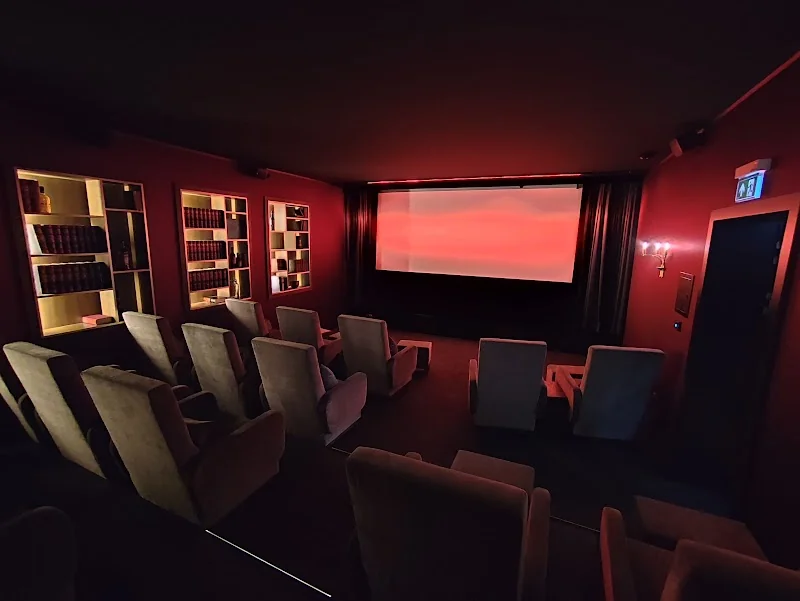
The spatial structure of the Camera is an important part of its character. It is officially described as a modern cinema with three auditoriums, each of which is of different sizes and character. Two of these halls are located on the fourth floor, giving the venue a special vertical structure. On the ground floor, visitors are welcomed by an inviting foyer that is not only a passageway but also a place to stay. This is complemented by a small bar in the upper area. This combination of a compact foyer, different halls, and a bar creates the atmosphere that many people appreciate in a good film art theater: not anonymous, but manageable, not oversized, but with a personal scale. The Camera thus appears as a place where the cinema visit itself becomes part of the evening. ([arthousekinos-bielefeld.de](https://www.arthousekinos-bielefeld.de/service/ueber-uns/))
It is also particularly practical that the halls are not only intended for regular screenings. According to the official website, they can be rented for birthdays, presentations, conferences, or private film screenings. This makes the Camera a versatile location that can also be used beyond regular cinema operations. Therefore, those searching for Camera Film Art Theater photos, a special event location in Bielefeld, or a hall for a closed event will find a reliable offering here. The rental starts at around 400 euros, with price and technical equipment varying depending on the day of the week, time of day, and needs. Together with the digital projection, the foyer, and the bar, a comprehensive picture emerges that is attractive for both private celebrations and business formats. This multifunctionality is part of the Camera's current relevance. ([arthousekinos-bielefeld.de](https://www.arthousekinos-bielefeld.de/service/lichtwerk-mieten/))
Film Culture Beyond the Mainstream
Content-wise, the Camera stands for a clear arthouse identity. The operators describe Lichtwerk and Camera as two cinemas in Bielefeld that consciously show films beyond the big blockbusters. The program includes premieres at national release, international productions from Europe, Asia, and overseas, independent film gems, Japanese anime, German productions, as well as documentaries and comedies. Original versions with subtitles are regularly shown, and classics and sneak previews are also part of the fixed repertoire. This mix is important because it meaningfully answers the search intentions behind terms like program, reviews, or arthouse cinema Bielefeld: Those coming here are not looking for a standardized multiplex experience but a curated selection of films suitable for discussion and rediscovery. ([arthousekinos-bielefeld.de](https://www.arthousekinos-bielefeld.de/service/ueber-uns/))
The film culture of the Camera also includes exchange with the audience and filmmakers. The historical description of the venue emphasizes that guests are regularly invited to the films to discuss with the audience. Furthermore, the venue's tradition points to its European profile: Filmhaus Bielefeld names the Camera as a member of the network of European film art theaters Europa Cinemas, and the official website also highlights its local cultural anchoring. This explains why the Camera functions not only as a cinema but as a cultural place. People looking for special films, original versions, or a cinema with a stance find here a place where program planning and cultural aspirations visibly belong together. For Bielefeld, this is an important building block of the cinema landscape because the Camera strengthens awareness of film as a cultural form and not merely as a consumer offering. ([filmhaus-bielefeld.de](https://filmhaus-bielefeld.de/kamera-filmkunst-mit-langer-tradition/))
Service, Vouchers, and Renting a Hall
The Camera is also well-equipped in the service area. The cinema pass costs 21 euros according to the official price page, is valid for twelve months from the date of issue, and provides a three-euro discount on the regular admission price at Lichtwerk and Camera. Excluded are, among others, children's cinema, cinema Monday, and special screenings like the sneak preview. Additionally, there are value vouchers available at the cinema box office during screening times that can be redeemed both on-site and online. For visitors who regularly go to the cinema or specifically search for Camera Film Art Theater tickets and price advantages, this is a clear plus. The service overall appears pragmatic: a system that supports both spontaneous visits and planned cinema dates. ([arthousekinos-bielefeld.de](https://www.arthousekinos-bielefeld.de/service/preise/))
Those planning more than a normal cinema visit can also inquire about renting the halls of the Camera for private or business events. The official rental page lists birthdays, company anniversaries, presentations, conferences, and private film evenings as possible formats. This is particularly interesting for users who want to turn a simple search query for Camera Film Art Theater Bielefeld into a location for a specific event. With digital projection technology, several hall sizes, and a central location, the venue is well-equipped for this. The Camera thus combines service, tradition, and usability in a form that is not self-evident in the local cinema market. It remains a program cinema but is also flexible enough for events where atmosphere, technology, and accessibility must fit together. This mix is what gives it long-term value. ([arthousekinos-bielefeld.de](https://www.arthousekinos-bielefeld.de/service/lichtwerk-mieten/))
Sources:
Show moreShow less
Camera Film Art Theater | Program & Tickets
The Camera Film Art Theater in Bielefeld represents a rare blend of cinema tradition, urban location, and carefully curated arthouse programming. Those searching for Camera Film Art Theater Bielefeld, Camera Film Art Theater Feilenstraße, or Camera Film Art Theater tickets usually want to find a special cinema environment rather than just watch a film. This venue offers exactly that: a traditional film art theater in the city center, close to the main train station, with three individual halls, a welcoming foyer, and a small bar. The Camera is part of the Bielefeld arthouse cinemas Lichtwerk & Kamera, which see themselves as a place for films beyond the mainstream and engage their audience with new releases, original versions, film series, and special screenings. ([arthousekinos-bielefeld.de](https://www.arthousekinos-bielefeld.de/service/ueber-uns/))
For SEO analysis, the search patterns around program, directions, parking, seating plan, tickets, photos, and reviews are particularly relevant. This shows that users perceive the Camera not just as a cinema address but as an experience-oriented location where they need reliable information as quickly as possible. Accordingly, this text focuses on the topics that are most frequently searched in practice: current films and series, online ticket purchase, seat selection, accessibility in the center of Bielefeld, the history of the venue, its rooms, and the possibility of renting individual halls. The Camera is more than just a place for screenings; it is a cultural meeting point that consciously creates space for exchange, film discussions, and special cinema evenings. ([arthousekinos-bielefeld.de](https://www.arthousekinos-bielefeld.de/service/ueber-uns/))
Current Program, Tickets, and Seating Plan
Those looking for the Camera Film Art Theater because of its program will find a clear structure on the joint website of Lichtwerk & Kamera: The current program is centrally bundled on the page, and the showtimes are directly linked to online ticket purchases. The official program policy does not rely on interchangeable mass products but on a mix of current new releases, carefully selected arthouse titles, European productions, films from Asia and overseas, as well as German productions that go beyond pure mainstream. The offering is complemented by documentaries, French comedies, horror, anime, classics, and regular screenings in the original language with subtitles. This makes the Camera particularly interesting for viewers who are consciously looking for programs, art cinema, original versions, or special film selections. Additionally, there are recurring series on topics such as architecture, psychoanalysis, documentary film, and classic films. ([arthousekinos-bielefeld.de](https://www.arthousekinos-bielefeld.de/service/ueber-uns/))
The Camera is also geared towards simple processes when it comes to ticket purchases. The official price and service area explains that the desired screening is selected in the program, the seating plan is opened, and seat selection is made directly online. Confirmation arrives within a few minutes via email, and purchased tickets can be canceled up to 60 minutes before the start. This is particularly convenient for those who want to plan their arrival flexibly or are not yet ready to make a final decision about their evening plans. For frequent visitors, there is also the cinema pass, which is valid for twelve months and provides a three-euro discount on the regular admission price. The cultural opener for certain eligible individuals is also interesting. This transforms a normal cinema booking into a service-oriented system that sensibly combines traditional box office and digital reservation. ([arthousekinos-bielefeld.de](https://www.arthousekinos-bielefeld.de/service/preise/))
Directions, Parking, and Central Location in Bielefeld
The Camera Film Art Theater is located at Feilenstraße 4 in the heart of Bielefeld City, near Willy-Brandt-Platz and close to the main train station. This location is one of the major practical advantages of the venue: The cinema is easily accessible on foot, by bicycle, and by public transport. According to the official directions page, various bus lines or all S-Bahn trains reach the main train station, making the Camera particularly attractive for visitors who want to arrive without a car. Those traveling centrally in Bielefeld can quickly reach the cinema from the city center, the train station, or surrounding neighborhoods. This proximity to the city makes the Camera a true urban cinema location, not a remote screening venue, and it fits perfectly with an audience that wants to eat, drink, or stay flexible in the city center in the evening. ([arthousekinos-bielefeld.de](https://www.arthousekinos-bielefeld.de/service/kontaktanfahrt/))
When it comes to parking, the Camera refers to the Feilenstraße parking garage directly opposite, as well as other options near the city hall. This is relevant for anyone specifically searching for Camera Film Art Theater parking, Camera Film Art Theater directions, or Feilenstraße cinema. The location is therefore not only well-connected but also relatively easy to organize, as car, train, and bus work together sensibly. For orientation, it is also important that the Camera is not hidden in a sprawling area but is situated in an urban environment with a clear address. Especially for evening screenings or special dates, this alleviates much of the stress from the visit. Those who want to see photos of the location can imagine the site as a classic city cinema with direct proximity to the train station and parking garage: functionally accessible, historically grown, and still in an urban environment that makes the cinema visit part of an entire evening. ([arthousekinos-bielefeld.de](https://www.arthousekinos-bielefeld.de/service/kontaktanfahrt/))
History and Development of the Camera
The Camera is not just any program cinema, but according to the official description, one of the oldest film art theaters in Germany. It was founded in 1950 by Karl Aul and opened in 1957 at Feilenstraße. This historical depth is an essential part of its profile, as it explains why the Camera has been perceived as a fixed part of cinema culture in Bielefeld for decades. In 2008, the operators of Lichtwerk took over the venue, thereby organizationally merging two Bielefeld arthouse locations without losing their respective character. Filmhaus Bielefeld describes the Camera as a traditional cinema with a long history and emphasizes that the three cinema halls at Feilenstraße have been independently operated since April 2008. Thus, the Camera connects continuity with a modern programming strategy. ([arthousekinos-bielefeld.de](https://www.arthousekinos-bielefeld.de/service/ueber-uns/))
The development of the venue is also architecturally traceable. As early as 1990, the operation was expanded to three halls according to Filmhaus Bielefeld, new cinema seats were installed in 2010, and the foyers were redesigned, and since November 2012, the Camera has been fully equipped with digital projection in all halls. The official website describes the venue today as a modern cinema with three very individual halls, two of which are on the fourth floor. The ground floor houses a friendly foyer, while upstairs a small bar complements the stay. This transformation is particularly interesting for many visitors because it shows how a traditional film house has become a contemporary arthouse cinema that does not exhibit history but translates it into a functioning present. Thus, the Camera remains nostalgic enough for enthusiasts but is technically and organizationally firmly anchored in the here and now. ([filmhaus-bielefeld.de](https://filmhaus-bielefeld.de/kamera-filmkunst-mit-langer-tradition/))
Halls, Foyer, and Bar in Detail
The spatial structure of the Camera is an important part of its character. It is officially described as a modern cinema with three auditoriums, each of which is of different sizes and character. Two of these halls are located on the fourth floor, giving the venue a special vertical structure. On the ground floor, visitors are welcomed by an inviting foyer that is not only a passageway but also a place to stay. This is complemented by a small bar in the upper area. This combination of a compact foyer, different halls, and a bar creates the atmosphere that many people appreciate in a good film art theater: not anonymous, but manageable, not oversized, but with a personal scale. The Camera thus appears as a place where the cinema visit itself becomes part of the evening. ([arthousekinos-bielefeld.de](https://www.arthousekinos-bielefeld.de/service/ueber-uns/))
It is also particularly practical that the halls are not only intended for regular screenings. According to the official website, they can be rented for birthdays, presentations, conferences, or private film screenings. This makes the Camera a versatile location that can also be used beyond regular cinema operations. Therefore, those searching for Camera Film Art Theater photos, a special event location in Bielefeld, or a hall for a closed event will find a reliable offering here. The rental starts at around 400 euros, with price and technical equipment varying depending on the day of the week, time of day, and needs. Together with the digital projection, the foyer, and the bar, a comprehensive picture emerges that is attractive for both private celebrations and business formats. This multifunctionality is part of the Camera's current relevance. ([arthousekinos-bielefeld.de](https://www.arthousekinos-bielefeld.de/service/lichtwerk-mieten/))
Film Culture Beyond the Mainstream
Content-wise, the Camera stands for a clear arthouse identity. The operators describe Lichtwerk and Camera as two cinemas in Bielefeld that consciously show films beyond the big blockbusters. The program includes premieres at national release, international productions from Europe, Asia, and overseas, independent film gems, Japanese anime, German productions, as well as documentaries and comedies. Original versions with subtitles are regularly shown, and classics and sneak previews are also part of the fixed repertoire. This mix is important because it meaningfully answers the search intentions behind terms like program, reviews, or arthouse cinema Bielefeld: Those coming here are not looking for a standardized multiplex experience but a curated selection of films suitable for discussion and rediscovery. ([arthousekinos-bielefeld.de](https://www.arthousekinos-bielefeld.de/service/ueber-uns/))
The film culture of the Camera also includes exchange with the audience and filmmakers. The historical description of the venue emphasizes that guests are regularly invited to the films to discuss with the audience. Furthermore, the venue's tradition points to its European profile: Filmhaus Bielefeld names the Camera as a member of the network of European film art theaters Europa Cinemas, and the official website also highlights its local cultural anchoring. This explains why the Camera functions not only as a cinema but as a cultural place. People looking for special films, original versions, or a cinema with a stance find here a place where program planning and cultural aspirations visibly belong together. For Bielefeld, this is an important building block of the cinema landscape because the Camera strengthens awareness of film as a cultural form and not merely as a consumer offering. ([filmhaus-bielefeld.de](https://filmhaus-bielefeld.de/kamera-filmkunst-mit-langer-tradition/))
Service, Vouchers, and Renting a Hall
The Camera is also well-equipped in the service area. The cinema pass costs 21 euros according to the official price page, is valid for twelve months from the date of issue, and provides a three-euro discount on the regular admission price at Lichtwerk and Camera. Excluded are, among others, children's cinema, cinema Monday, and special screenings like the sneak preview. Additionally, there are value vouchers available at the cinema box office during screening times that can be redeemed both on-site and online. For visitors who regularly go to the cinema or specifically search for Camera Film Art Theater tickets and price advantages, this is a clear plus. The service overall appears pragmatic: a system that supports both spontaneous visits and planned cinema dates. ([arthousekinos-bielefeld.de](https://www.arthousekinos-bielefeld.de/service/preise/))
Those planning more than a normal cinema visit can also inquire about renting the halls of the Camera for private or business events. The official rental page lists birthdays, company anniversaries, presentations, conferences, and private film evenings as possible formats. This is particularly interesting for users who want to turn a simple search query for Camera Film Art Theater Bielefeld into a location for a specific event. With digital projection technology, several hall sizes, and a central location, the venue is well-equipped for this. The Camera thus combines service, tradition, and usability in a form that is not self-evident in the local cinema market. It remains a program cinema but is also flexible enough for events where atmosphere, technology, and accessibility must fit together. This mix is what gives it long-term value. ([arthousekinos-bielefeld.de](https://www.arthousekinos-bielefeld.de/service/lichtwerk-mieten/))
Sources:
Camera Film Art Theater | Program & Tickets
The Camera Film Art Theater in Bielefeld represents a rare blend of cinema tradition, urban location, and carefully curated arthouse programming. Those searching for Camera Film Art Theater Bielefeld, Camera Film Art Theater Feilenstraße, or Camera Film Art Theater tickets usually want to find a special cinema environment rather than just watch a film. This venue offers exactly that: a traditional film art theater in the city center, close to the main train station, with three individual halls, a welcoming foyer, and a small bar. The Camera is part of the Bielefeld arthouse cinemas Lichtwerk & Kamera, which see themselves as a place for films beyond the mainstream and engage their audience with new releases, original versions, film series, and special screenings. ([arthousekinos-bielefeld.de](https://www.arthousekinos-bielefeld.de/service/ueber-uns/))
For SEO analysis, the search patterns around program, directions, parking, seating plan, tickets, photos, and reviews are particularly relevant. This shows that users perceive the Camera not just as a cinema address but as an experience-oriented location where they need reliable information as quickly as possible. Accordingly, this text focuses on the topics that are most frequently searched in practice: current films and series, online ticket purchase, seat selection, accessibility in the center of Bielefeld, the history of the venue, its rooms, and the possibility of renting individual halls. The Camera is more than just a place for screenings; it is a cultural meeting point that consciously creates space for exchange, film discussions, and special cinema evenings. ([arthousekinos-bielefeld.de](https://www.arthousekinos-bielefeld.de/service/ueber-uns/))
Current Program, Tickets, and Seating Plan
Those looking for the Camera Film Art Theater because of its program will find a clear structure on the joint website of Lichtwerk & Kamera: The current program is centrally bundled on the page, and the showtimes are directly linked to online ticket purchases. The official program policy does not rely on interchangeable mass products but on a mix of current new releases, carefully selected arthouse titles, European productions, films from Asia and overseas, as well as German productions that go beyond pure mainstream. The offering is complemented by documentaries, French comedies, horror, anime, classics, and regular screenings in the original language with subtitles. This makes the Camera particularly interesting for viewers who are consciously looking for programs, art cinema, original versions, or special film selections. Additionally, there are recurring series on topics such as architecture, psychoanalysis, documentary film, and classic films. ([arthousekinos-bielefeld.de](https://www.arthousekinos-bielefeld.de/service/ueber-uns/))
The Camera is also geared towards simple processes when it comes to ticket purchases. The official price and service area explains that the desired screening is selected in the program, the seating plan is opened, and seat selection is made directly online. Confirmation arrives within a few minutes via email, and purchased tickets can be canceled up to 60 minutes before the start. This is particularly convenient for those who want to plan their arrival flexibly or are not yet ready to make a final decision about their evening plans. For frequent visitors, there is also the cinema pass, which is valid for twelve months and provides a three-euro discount on the regular admission price. The cultural opener for certain eligible individuals is also interesting. This transforms a normal cinema booking into a service-oriented system that sensibly combines traditional box office and digital reservation. ([arthousekinos-bielefeld.de](https://www.arthousekinos-bielefeld.de/service/preise/))
Directions, Parking, and Central Location in Bielefeld
The Camera Film Art Theater is located at Feilenstraße 4 in the heart of Bielefeld City, near Willy-Brandt-Platz and close to the main train station. This location is one of the major practical advantages of the venue: The cinema is easily accessible on foot, by bicycle, and by public transport. According to the official directions page, various bus lines or all S-Bahn trains reach the main train station, making the Camera particularly attractive for visitors who want to arrive without a car. Those traveling centrally in Bielefeld can quickly reach the cinema from the city center, the train station, or surrounding neighborhoods. This proximity to the city makes the Camera a true urban cinema location, not a remote screening venue, and it fits perfectly with an audience that wants to eat, drink, or stay flexible in the city center in the evening. ([arthousekinos-bielefeld.de](https://www.arthousekinos-bielefeld.de/service/kontaktanfahrt/))
When it comes to parking, the Camera refers to the Feilenstraße parking garage directly opposite, as well as other options near the city hall. This is relevant for anyone specifically searching for Camera Film Art Theater parking, Camera Film Art Theater directions, or Feilenstraße cinema. The location is therefore not only well-connected but also relatively easy to organize, as car, train, and bus work together sensibly. For orientation, it is also important that the Camera is not hidden in a sprawling area but is situated in an urban environment with a clear address. Especially for evening screenings or special dates, this alleviates much of the stress from the visit. Those who want to see photos of the location can imagine the site as a classic city cinema with direct proximity to the train station and parking garage: functionally accessible, historically grown, and still in an urban environment that makes the cinema visit part of an entire evening. ([arthousekinos-bielefeld.de](https://www.arthousekinos-bielefeld.de/service/kontaktanfahrt/))
History and Development of the Camera
The Camera is not just any program cinema, but according to the official description, one of the oldest film art theaters in Germany. It was founded in 1950 by Karl Aul and opened in 1957 at Feilenstraße. This historical depth is an essential part of its profile, as it explains why the Camera has been perceived as a fixed part of cinema culture in Bielefeld for decades. In 2008, the operators of Lichtwerk took over the venue, thereby organizationally merging two Bielefeld arthouse locations without losing their respective character. Filmhaus Bielefeld describes the Camera as a traditional cinema with a long history and emphasizes that the three cinema halls at Feilenstraße have been independently operated since April 2008. Thus, the Camera connects continuity with a modern programming strategy. ([arthousekinos-bielefeld.de](https://www.arthousekinos-bielefeld.de/service/ueber-uns/))
The development of the venue is also architecturally traceable. As early as 1990, the operation was expanded to three halls according to Filmhaus Bielefeld, new cinema seats were installed in 2010, and the foyers were redesigned, and since November 2012, the Camera has been fully equipped with digital projection in all halls. The official website describes the venue today as a modern cinema with three very individual halls, two of which are on the fourth floor. The ground floor houses a friendly foyer, while upstairs a small bar complements the stay. This transformation is particularly interesting for many visitors because it shows how a traditional film house has become a contemporary arthouse cinema that does not exhibit history but translates it into a functioning present. Thus, the Camera remains nostalgic enough for enthusiasts but is technically and organizationally firmly anchored in the here and now. ([filmhaus-bielefeld.de](https://filmhaus-bielefeld.de/kamera-filmkunst-mit-langer-tradition/))
Halls, Foyer, and Bar in Detail
The spatial structure of the Camera is an important part of its character. It is officially described as a modern cinema with three auditoriums, each of which is of different sizes and character. Two of these halls are located on the fourth floor, giving the venue a special vertical structure. On the ground floor, visitors are welcomed by an inviting foyer that is not only a passageway but also a place to stay. This is complemented by a small bar in the upper area. This combination of a compact foyer, different halls, and a bar creates the atmosphere that many people appreciate in a good film art theater: not anonymous, but manageable, not oversized, but with a personal scale. The Camera thus appears as a place where the cinema visit itself becomes part of the evening. ([arthousekinos-bielefeld.de](https://www.arthousekinos-bielefeld.de/service/ueber-uns/))
It is also particularly practical that the halls are not only intended for regular screenings. According to the official website, they can be rented for birthdays, presentations, conferences, or private film screenings. This makes the Camera a versatile location that can also be used beyond regular cinema operations. Therefore, those searching for Camera Film Art Theater photos, a special event location in Bielefeld, or a hall for a closed event will find a reliable offering here. The rental starts at around 400 euros, with price and technical equipment varying depending on the day of the week, time of day, and needs. Together with the digital projection, the foyer, and the bar, a comprehensive picture emerges that is attractive for both private celebrations and business formats. This multifunctionality is part of the Camera's current relevance. ([arthousekinos-bielefeld.de](https://www.arthousekinos-bielefeld.de/service/lichtwerk-mieten/))
Film Culture Beyond the Mainstream
Content-wise, the Camera stands for a clear arthouse identity. The operators describe Lichtwerk and Camera as two cinemas in Bielefeld that consciously show films beyond the big blockbusters. The program includes premieres at national release, international productions from Europe, Asia, and overseas, independent film gems, Japanese anime, German productions, as well as documentaries and comedies. Original versions with subtitles are regularly shown, and classics and sneak previews are also part of the fixed repertoire. This mix is important because it meaningfully answers the search intentions behind terms like program, reviews, or arthouse cinema Bielefeld: Those coming here are not looking for a standardized multiplex experience but a curated selection of films suitable for discussion and rediscovery. ([arthousekinos-bielefeld.de](https://www.arthousekinos-bielefeld.de/service/ueber-uns/))
The film culture of the Camera also includes exchange with the audience and filmmakers. The historical description of the venue emphasizes that guests are regularly invited to the films to discuss with the audience. Furthermore, the venue's tradition points to its European profile: Filmhaus Bielefeld names the Camera as a member of the network of European film art theaters Europa Cinemas, and the official website also highlights its local cultural anchoring. This explains why the Camera functions not only as a cinema but as a cultural place. People looking for special films, original versions, or a cinema with a stance find here a place where program planning and cultural aspirations visibly belong together. For Bielefeld, this is an important building block of the cinema landscape because the Camera strengthens awareness of film as a cultural form and not merely as a consumer offering. ([filmhaus-bielefeld.de](https://filmhaus-bielefeld.de/kamera-filmkunst-mit-langer-tradition/))
Service, Vouchers, and Renting a Hall
The Camera is also well-equipped in the service area. The cinema pass costs 21 euros according to the official price page, is valid for twelve months from the date of issue, and provides a three-euro discount on the regular admission price at Lichtwerk and Camera. Excluded are, among others, children's cinema, cinema Monday, and special screenings like the sneak preview. Additionally, there are value vouchers available at the cinema box office during screening times that can be redeemed both on-site and online. For visitors who regularly go to the cinema or specifically search for Camera Film Art Theater tickets and price advantages, this is a clear plus. The service overall appears pragmatic: a system that supports both spontaneous visits and planned cinema dates. ([arthousekinos-bielefeld.de](https://www.arthousekinos-bielefeld.de/service/preise/))
Those planning more than a normal cinema visit can also inquire about renting the halls of the Camera for private or business events. The official rental page lists birthdays, company anniversaries, presentations, conferences, and private film evenings as possible formats. This is particularly interesting for users who want to turn a simple search query for Camera Film Art Theater Bielefeld into a location for a specific event. With digital projection technology, several hall sizes, and a central location, the venue is well-equipped for this. The Camera thus combines service, tradition, and usability in a form that is not self-evident in the local cinema market. It remains a program cinema but is also flexible enough for events where atmosphere, technology, and accessibility must fit together. This mix is what gives it long-term value. ([arthousekinos-bielefeld.de](https://www.arthousekinos-bielefeld.de/service/lichtwerk-mieten/))
Sources:
Upcoming Events
No events found
Frequently Asked Questions
Reviews
Jonas W
19. February 2020
Wonderful, small, charming screening rooms. Excellent selection of films. If you sit in The Kid, it feels more like a living room. With a huge screen and great speaker setup. My favourite cinema.
Felix Schymetzko
21. December 2024
Love the selection of films they show. Be aware that the screens are small and the sound systems are nothing to write home about.
Gareth Green
5. January 2023
Wow, great atmosphere for watching films, team very professional and welcoming, loved the seating great idea.
Hamed Faraghi
30. July 2023
I was in hall 3 and watched Oppenheimer. The hall was not very big but the sound quality was good.
Cram Quila
11. March 2019
Tiny modern art house cinema with a decent sized cafe area.