

Bielefeld
Jöllenbeck, 33739 Bielefeld, Deutschland
Marketplace Jöllenbeck | Weekly Market & Flea Market
The Marketplace Jöllenbeck is much more than an open space in the town center: it is the visible center of a district that consists of Jöllenbeck, Theesen, and Vilsendorf, and whose history dates back to the first documented mention of Jöllenbeck in 1191. The city of Bielefeld describes Jöllenbeck as a northern district with good infrastructure, many shopping opportunities, and a developed everyday function for the local people. That is why the marketplace does not feel like an isolated place, but rather like a meeting point where shopping, encounters, events, and district identity converge. Those looking for photos, images, market, flea market, or events will find a place that is used in everyday life and is continually revitalized. This is also shown by recent developments: between 2023 and 2025, ideas were developed to strengthen the district center, new furniture was set up, and a drinking water fountain was installed. Step by step, a more modern and inviting town center with a clear social function is being created. ([bielefeld.de](https://www.bielefeld.de/joellenbeck))
Weekly Market on Amtsstraße
The most important regular reference point at the marketplace is the weekly market in Jöllenbeck. The city of Bielefeld conducts it as the Jöllenbeck market at the location of the marketplace on Amtsstraße with selling hours on Fridays from 2 PM to 6 PM. Thus, the place is not just a name on the city map, but a concretely used market location with clear times and recurring frequency. For many people in the district, this means: Fridays are a time for fresh purchases, short distances, and spontaneous encounters. Especially in a district with good infrastructure, this weekly market gains significance because it enlivens the town center and connects it with the surrounding offers. The city describes Jöllenbeck as a residential area with kindergartens, primary schools, a secondary school, a real school, and many shopping opportunities. The weekly market fits seamlessly into this structure because it complements everyday supply and brings a fixed social rhythm to the district. The city also explicitly states that market days may vary on holidays, so visitors should pay attention to the notices in the daily press. The weekly market is therefore not just an offer, but a reliable part of local everyday life that shapes the brand Marketplace Jöllenbeck and logically explains the most common search queries for market and Amtsstraße. ([bielefeld.de](https://www.bielefeld.de/node/5835))
For practical orientation, the immediate surroundings are also part of the weekly market. The city’s toilet overview lists the district office Jöllenbeck at Amtsstraße 13 as a public location; there, a toilet is accessible during opening hours. This is particularly helpful for a market visit because the town center is not only a sales area but also an administrative and supply space. Therefore, anyone visiting the Marketplace Jöllenbeck will find municipal infrastructure nearby that makes the stay more comfortable. This proximity of the market, district office, and other local offers is typical for a lively district center. It shows that the place is not only intended for large events but primarily functions as a close-to-daily meeting point. This mix of practical supply and social presence makes the place interesting for searches for photos, market, images, and meeting point: The place is not an abstract object, but an urban space with usability quality. The city’s participation processes regarding the marketplace also take this function seriously and treat the place as a center that should connect quality of stay, accessibility, and identity. ([bielefeld.de](https://www.bielefeld.de/node/5770))
Flea Market Jöllenbeck: 84 Stalls, Rules, and Parking
A second major topic surrounding the Marketplace Jöllenbeck is the flea market. The city of Bielefeld informs that the flea markets at the marketplace in Bielefeld-Jöllenbeck take place four times a year from May to September. A total of 84 stalls are available, and registration is done online through the service portal. Private sales of used items, such as clothing, books, or toys, are permitted. Commercial vendors and new goods are explicitly not allowed. This makes it clear: The flea market is not just any market, but a clearly regulated, highly sought-after event with a regional character. For people searching for flea market Marketplace Jöllenbeck, not only the location is relevant, but also the structure of the offer. The number of 84 stalls shows that the market is large enough to accommodate many participants, but small enough to maintain a manageable district character. Booking is strictly bound to deadlines, and a maximum of two stalls can be reserved per person. This makes the flea market organizationally transparent and very popular. ([service.bielefeld.de](https://service.bielefeld.de/detail/-/vr-bis-detail/dienstleistung/7264773/show))
The processes on site are also precisely regulated. The city’s information brochure for the flea market states that the setup of the stalls begins only from 10 AM and sales run from 11 AM to 5 PM. The marketplace must not be driven on, a loading zone will be established, and vehicles must be removed immediately after unloading. For visitors and exhibitors, this means: The place remains organized as a pedestrian area during the market and not as a parking location. As alternative areas, the city mentions surrounding parking lots, for example, at the secondary school and on Amtsstraße. These details are particularly important for search queries regarding parking, access, and flea market because they explain the practical process. The flea market makes the marketplace a dynamic place on such days with high frequency, different visitor groups, and a clear focus on movement, encounters, and variety of goods. It is thus a central building block in the profile of the town center and explains why Marketplace Jöllenbeck is searched not only as a geographical term but also as an event location. ([bielefeld.de](https://www.bielefeld.de/sites/default/files/datei/2023/Flohmarkt_Joellenbeck.pdf))
Events and Open-Air Evenings at the Marketplace
The Marketplace Jöllenbeck is not only a market and flea market location but also a stage for culture and community. The city of Bielefeld describes it in its event format Culture in Jöllenbeck as a meeting point for young and old, where open-air events take place. Among other things, a concert by the fire brigade music corps of the city of Bielefeld, the Mediterranean evening, a puppet theater for children, and the moonlight cinema in the open air are mentioned. Some of these events are supported by the volunteer fire brigade Jöllenbeck, the youth fire brigade Vilsendorf/West, and the Red Cross. Set up beer tent furniture and on-site gastronomy create an atmosphere in which the place is not only passively used but actively experienced. This is an important reason why search queries for events, meeting points, and images fit so well with the place: The marketplace is an open, public space where the identity of the district visibly condenses. ([bielefeld.de](https://www.bielefeld.de/node/9969))
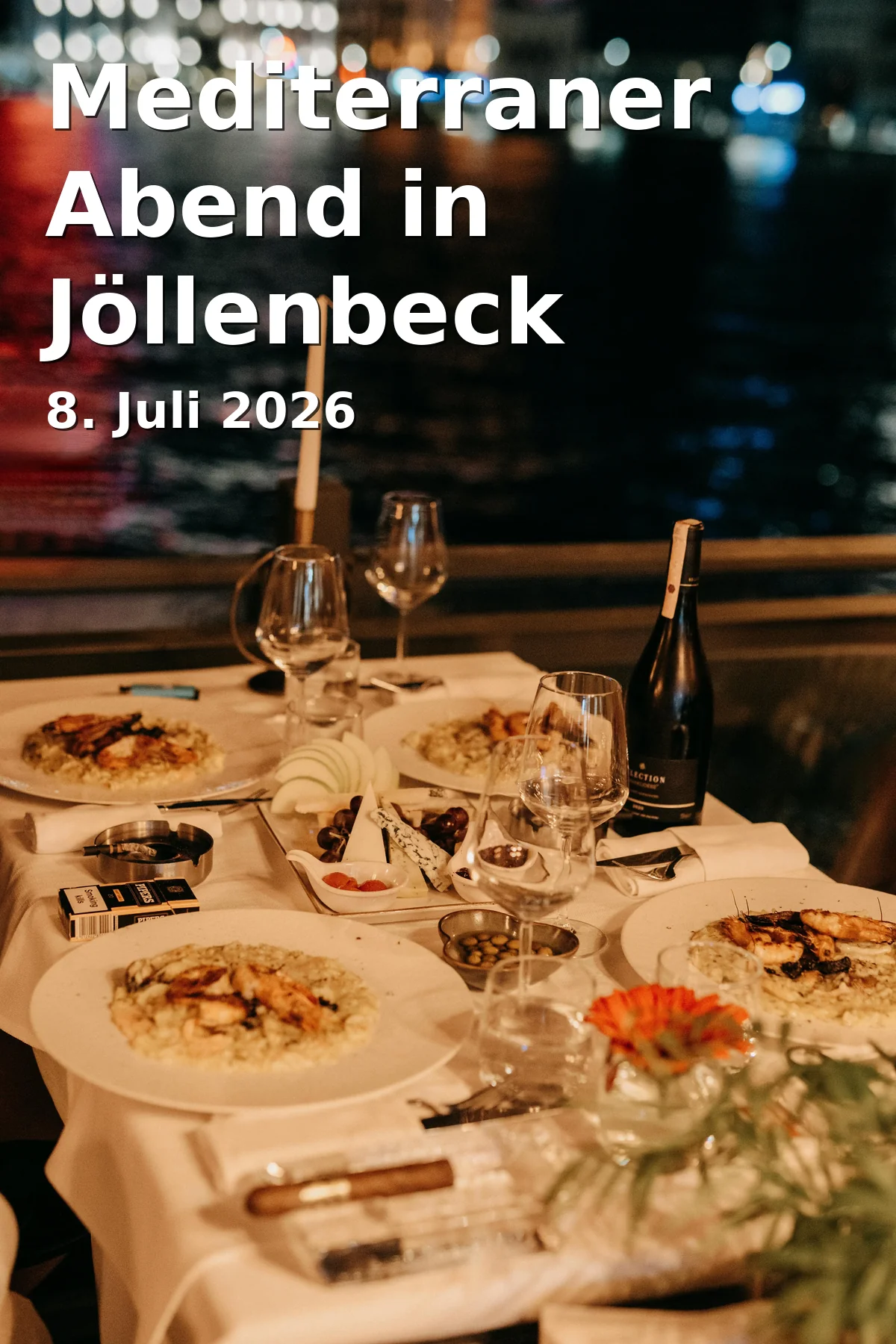
Particularly defining is the Mediterranean evening. The city describes it as an event that began in 2016 as an Italian evening and has established itself as a Mediterranean evening since 2017. Jöllenbeck restaurateurs, wine and beverage dealers, as well as vendors from the Jöllenbeck weekly market offer culinary delights. The ambiance thrives on live music, standing tables, and beer tent furniture, thus creating a consciously informal, neighborly form of togetherness. For 2026, the city names Wednesday, July 8, starting at 6 PM as the date. This description already shows that the marketplace stands not only for supply but also for emotional experiences. The place transforms into a social space on such evenings that makes the center of Jöllenbeck visible and audible. The children’s events on June 14 with participation activities, youth fire brigade, and puppet theater also emphasize the family-friendliness of the place. Those looking for a lively town center will find in Marketplace Jöllenbeck exactly this combination of culture, community, and free access. ([bielefeld.de](https://www.bielefeld.de/node/9956))
Upgrading, Seating Furniture, and Drinking Water Fountain
A third major topic surrounding the Marketplace Jöllenbeck is its ongoing upgrading. The city of Bielefeld has developed ideas to strengthen the district centers as learning spaces between 2023 and 2025 as part of the project. New furniture has been set up at the marketplace, and a drinking water fountain has already been implemented. This is more than just urban furniture: it is a clear signal that the place is taken seriously as a place to stay and is evolving from a mere transit or storage area into a place with higher quality of stay. It is particularly important that the city has actively involved the people from Jöllenbeck. In an online survey in February and March 2026, usage wishes and ideas for the marketplace and the adjacent Amtsstraße were collected; more than 600 interested parties participated. Subsequently, there were workshops in which the different needs of the place were worked out. The measures developed from this are to be tested in a six-week trial period in the summer of 2026. This shows how municipal participation and concrete urban design can come together. ([bielefeld.de](https://www.bielefeld.de/marktplatz))
The survey results also provide a very clear insight into the wishes of the user community. Particularly mentioned were more greenery, more flowers, seating without consumption obligation, and the activation of the fountain. At the same time, parked cars, dirt, and cigarette butts were perceived as disturbing. In contrast, positive impressions included the ice cream parlor, the bookstore, the Mediterranean evening, and the summer cinema. These feedbacks are important for both the SEO perspective and urban planning because they show which topics around the marketplace are actually searched and experienced. It is not just about photos and location, but about quality of stay, shade, water, encounters, and the balance between traffic and lingering. The new seating furniture that has been set up in the district of Jöllenbeck is part of a broader strategy to strengthen the place as the living room of the neighborhood. This is how Marketplace Jöllenbeck gets a modern profile: it is a place that continues to develop without losing its function as a meeting point, market area, and event location. ([bielefeld.de](https://www.bielefeld.de/sites/default/files/datei/2026/Ergebnisse-Befragung-aufbereitet.pdf))
Jöllenbeck in the Northern Bielefeld: History, Infrastructure, and Service
To properly classify the Marketplace Jöllenbeck, it helps to look at the district itself. The city of Bielefeld explains that Jöllenbeck consists of the districts of Jöllenbeck, Theesen, and Vilsendorf. Jöllenbeck was first mentioned in a document in 1191, while Theesen and Vilsendorf were already mentioned in 1151. Historically, the places belonged to the Kingdom of Westphalia from 1807 and even directly to France from 1810 to 1813. Today, the city describes the district as a northern district with good infrastructure and many shopping opportunities. The population has increased after the merger with Bielefeld, and the district is described as a popular residential area. This classification is important because the marketplace does not exist as an isolated event location but is situated in a developed environment with schools, administration, commerce, and community. The Marketplace Jöllenbeck benefits precisely from this mix of history and everyday proximity. ([bielefeld.de](https://www.bielefeld.de/joellenbeck))
Practical service points are also located near the place. The district office Jöllenbeck is located at Amtsstraße 13, and the city’s toilet overview lists a public toilet there. For visitors, this is an important advantage because it keeps the marketplace not only attractive but also practical for everyday use. The opening hours of the toilet are aligned with those of the district office, i.e., Monday to Friday from 8 AM to 12 PM and additionally on Thursdays from 2:30 PM to 6 PM. Such details may seem small at first glance, but they are crucial for the actual use of a place. That is why search queries not only include the market itself but also access, parking, and public facilities. The Marketplace Jöllenbeck is thus a very typical example of a place where municipal infrastructure, local commerce, district history, and social use intersect. Anyone visiting the place does not simply experience an area but the functioning center of a district that preserves its character between tradition and renewal. ([bielefeld.de](https://www.bielefeld.de/node/5770))
From an SEO perspective, the Marketplace Jöllenbeck can therefore be particularly well represented through the themes of weekly market, flea market, events, upgrading, photos, and practical information. These search intentions fit a place that is visible both in everyday life and on special occasions. The combination of a regular weekly market, four flea markets per year, public cultural evenings, participation projects, and new urban furniture makes the place relevant for different target groups. Families look for children’s events, market visitors are interested in times and location, exhibitors for flea market rules, and residents pay attention to quality of stay and greening. The Marketplace Jöllenbeck fulfills all these roles in a compact space. Therefore, it is not just a place in Bielefeld but a concrete social center in the district of Jöllenbeck that continues to develop visibly and repeatedly confirms its character as a meeting point for young and old. ([bielefeld.de](https://www.bielefeld.de/node/5835))
Sources:
- City of Bielefeld - Jöllenbeck
- City of Bielefeld - Upgrading of the Jöllenbeck Marketplace
- Service Portal City of Bielefeld - Book Flea Market Stall Jöllenbeck
- City of Bielefeld - Weekly Market in Jöllenbeck
- City of Bielefeld - Culture in Jöllenbeck
- City of Bielefeld - Public Toilets in Jöllenbeck
- City of Bielefeld - Results of the Survey on the Jöllenbeck Marketplace
- City of Bielefeld - Flea Market Jöllenbeck, Information and Site Plan
Show moreShow less
Marketplace Jöllenbeck | Weekly Market & Flea Market
The Marketplace Jöllenbeck is much more than an open space in the town center: it is the visible center of a district that consists of Jöllenbeck, Theesen, and Vilsendorf, and whose history dates back to the first documented mention of Jöllenbeck in 1191. The city of Bielefeld describes Jöllenbeck as a northern district with good infrastructure, many shopping opportunities, and a developed everyday function for the local people. That is why the marketplace does not feel like an isolated place, but rather like a meeting point where shopping, encounters, events, and district identity converge. Those looking for photos, images, market, flea market, or events will find a place that is used in everyday life and is continually revitalized. This is also shown by recent developments: between 2023 and 2025, ideas were developed to strengthen the district center, new furniture was set up, and a drinking water fountain was installed. Step by step, a more modern and inviting town center with a clear social function is being created. ([bielefeld.de](https://www.bielefeld.de/joellenbeck))
Weekly Market on Amtsstraße
The most important regular reference point at the marketplace is the weekly market in Jöllenbeck. The city of Bielefeld conducts it as the Jöllenbeck market at the location of the marketplace on Amtsstraße with selling hours on Fridays from 2 PM to 6 PM. Thus, the place is not just a name on the city map, but a concretely used market location with clear times and recurring frequency. For many people in the district, this means: Fridays are a time for fresh purchases, short distances, and spontaneous encounters. Especially in a district with good infrastructure, this weekly market gains significance because it enlivens the town center and connects it with the surrounding offers. The city describes Jöllenbeck as a residential area with kindergartens, primary schools, a secondary school, a real school, and many shopping opportunities. The weekly market fits seamlessly into this structure because it complements everyday supply and brings a fixed social rhythm to the district. The city also explicitly states that market days may vary on holidays, so visitors should pay attention to the notices in the daily press. The weekly market is therefore not just an offer, but a reliable part of local everyday life that shapes the brand Marketplace Jöllenbeck and logically explains the most common search queries for market and Amtsstraße. ([bielefeld.de](https://www.bielefeld.de/node/5835))
For practical orientation, the immediate surroundings are also part of the weekly market. The city’s toilet overview lists the district office Jöllenbeck at Amtsstraße 13 as a public location; there, a toilet is accessible during opening hours. This is particularly helpful for a market visit because the town center is not only a sales area but also an administrative and supply space. Therefore, anyone visiting the Marketplace Jöllenbeck will find municipal infrastructure nearby that makes the stay more comfortable. This proximity of the market, district office, and other local offers is typical for a lively district center. It shows that the place is not only intended for large events but primarily functions as a close-to-daily meeting point. This mix of practical supply and social presence makes the place interesting for searches for photos, market, images, and meeting point: The place is not an abstract object, but an urban space with usability quality. The city’s participation processes regarding the marketplace also take this function seriously and treat the place as a center that should connect quality of stay, accessibility, and identity. ([bielefeld.de](https://www.bielefeld.de/node/5770))
Flea Market Jöllenbeck: 84 Stalls, Rules, and Parking
A second major topic surrounding the Marketplace Jöllenbeck is the flea market. The city of Bielefeld informs that the flea markets at the marketplace in Bielefeld-Jöllenbeck take place four times a year from May to September. A total of 84 stalls are available, and registration is done online through the service portal. Private sales of used items, such as clothing, books, or toys, are permitted. Commercial vendors and new goods are explicitly not allowed. This makes it clear: The flea market is not just any market, but a clearly regulated, highly sought-after event with a regional character. For people searching for flea market Marketplace Jöllenbeck, not only the location is relevant, but also the structure of the offer. The number of 84 stalls shows that the market is large enough to accommodate many participants, but small enough to maintain a manageable district character. Booking is strictly bound to deadlines, and a maximum of two stalls can be reserved per person. This makes the flea market organizationally transparent and very popular. ([service.bielefeld.de](https://service.bielefeld.de/detail/-/vr-bis-detail/dienstleistung/7264773/show))
The processes on site are also precisely regulated. The city’s information brochure for the flea market states that the setup of the stalls begins only from 10 AM and sales run from 11 AM to 5 PM. The marketplace must not be driven on, a loading zone will be established, and vehicles must be removed immediately after unloading. For visitors and exhibitors, this means: The place remains organized as a pedestrian area during the market and not as a parking location. As alternative areas, the city mentions surrounding parking lots, for example, at the secondary school and on Amtsstraße. These details are particularly important for search queries regarding parking, access, and flea market because they explain the practical process. The flea market makes the marketplace a dynamic place on such days with high frequency, different visitor groups, and a clear focus on movement, encounters, and variety of goods. It is thus a central building block in the profile of the town center and explains why Marketplace Jöllenbeck is searched not only as a geographical term but also as an event location. ([bielefeld.de](https://www.bielefeld.de/sites/default/files/datei/2023/Flohmarkt_Joellenbeck.pdf))
Events and Open-Air Evenings at the Marketplace
The Marketplace Jöllenbeck is not only a market and flea market location but also a stage for culture and community. The city of Bielefeld describes it in its event format Culture in Jöllenbeck as a meeting point for young and old, where open-air events take place. Among other things, a concert by the fire brigade music corps of the city of Bielefeld, the Mediterranean evening, a puppet theater for children, and the moonlight cinema in the open air are mentioned. Some of these events are supported by the volunteer fire brigade Jöllenbeck, the youth fire brigade Vilsendorf/West, and the Red Cross. Set up beer tent furniture and on-site gastronomy create an atmosphere in which the place is not only passively used but actively experienced. This is an important reason why search queries for events, meeting points, and images fit so well with the place: The marketplace is an open, public space where the identity of the district visibly condenses. ([bielefeld.de](https://www.bielefeld.de/node/9969))
Particularly defining is the Mediterranean evening. The city describes it as an event that began in 2016 as an Italian evening and has established itself as a Mediterranean evening since 2017. Jöllenbeck restaurateurs, wine and beverage dealers, as well as vendors from the Jöllenbeck weekly market offer culinary delights. The ambiance thrives on live music, standing tables, and beer tent furniture, thus creating a consciously informal, neighborly form of togetherness. For 2026, the city names Wednesday, July 8, starting at 6 PM as the date. This description already shows that the marketplace stands not only for supply but also for emotional experiences. The place transforms into a social space on such evenings that makes the center of Jöllenbeck visible and audible. The children’s events on June 14 with participation activities, youth fire brigade, and puppet theater also emphasize the family-friendliness of the place. Those looking for a lively town center will find in Marketplace Jöllenbeck exactly this combination of culture, community, and free access. ([bielefeld.de](https://www.bielefeld.de/node/9956))
Upgrading, Seating Furniture, and Drinking Water Fountain
A third major topic surrounding the Marketplace Jöllenbeck is its ongoing upgrading. The city of Bielefeld has developed ideas to strengthen the district centers as learning spaces between 2023 and 2025 as part of the project. New furniture has been set up at the marketplace, and a drinking water fountain has already been implemented. This is more than just urban furniture: it is a clear signal that the place is taken seriously as a place to stay and is evolving from a mere transit or storage area into a place with higher quality of stay. It is particularly important that the city has actively involved the people from Jöllenbeck. In an online survey in February and March 2026, usage wishes and ideas for the marketplace and the adjacent Amtsstraße were collected; more than 600 interested parties participated. Subsequently, there were workshops in which the different needs of the place were worked out. The measures developed from this are to be tested in a six-week trial period in the summer of 2026. This shows how municipal participation and concrete urban design can come together. ([bielefeld.de](https://www.bielefeld.de/marktplatz))
The survey results also provide a very clear insight into the wishes of the user community. Particularly mentioned were more greenery, more flowers, seating without consumption obligation, and the activation of the fountain. At the same time, parked cars, dirt, and cigarette butts were perceived as disturbing. In contrast, positive impressions included the ice cream parlor, the bookstore, the Mediterranean evening, and the summer cinema. These feedbacks are important for both the SEO perspective and urban planning because they show which topics around the marketplace are actually searched and experienced. It is not just about photos and location, but about quality of stay, shade, water, encounters, and the balance between traffic and lingering. The new seating furniture that has been set up in the district of Jöllenbeck is part of a broader strategy to strengthen the place as the living room of the neighborhood. This is how Marketplace Jöllenbeck gets a modern profile: it is a place that continues to develop without losing its function as a meeting point, market area, and event location. ([bielefeld.de](https://www.bielefeld.de/sites/default/files/datei/2026/Ergebnisse-Befragung-aufbereitet.pdf))
Jöllenbeck in the Northern Bielefeld: History, Infrastructure, and Service
To properly classify the Marketplace Jöllenbeck, it helps to look at the district itself. The city of Bielefeld explains that Jöllenbeck consists of the districts of Jöllenbeck, Theesen, and Vilsendorf. Jöllenbeck was first mentioned in a document in 1191, while Theesen and Vilsendorf were already mentioned in 1151. Historically, the places belonged to the Kingdom of Westphalia from 1807 and even directly to France from 1810 to 1813. Today, the city describes the district as a northern district with good infrastructure and many shopping opportunities. The population has increased after the merger with Bielefeld, and the district is described as a popular residential area. This classification is important because the marketplace does not exist as an isolated event location but is situated in a developed environment with schools, administration, commerce, and community. The Marketplace Jöllenbeck benefits precisely from this mix of history and everyday proximity. ([bielefeld.de](https://www.bielefeld.de/joellenbeck))
Practical service points are also located near the place. The district office Jöllenbeck is located at Amtsstraße 13, and the city’s toilet overview lists a public toilet there. For visitors, this is an important advantage because it keeps the marketplace not only attractive but also practical for everyday use. The opening hours of the toilet are aligned with those of the district office, i.e., Monday to Friday from 8 AM to 12 PM and additionally on Thursdays from 2:30 PM to 6 PM. Such details may seem small at first glance, but they are crucial for the actual use of a place. That is why search queries not only include the market itself but also access, parking, and public facilities. The Marketplace Jöllenbeck is thus a very typical example of a place where municipal infrastructure, local commerce, district history, and social use intersect. Anyone visiting the place does not simply experience an area but the functioning center of a district that preserves its character between tradition and renewal. ([bielefeld.de](https://www.bielefeld.de/node/5770))
From an SEO perspective, the Marketplace Jöllenbeck can therefore be particularly well represented through the themes of weekly market, flea market, events, upgrading, photos, and practical information. These search intentions fit a place that is visible both in everyday life and on special occasions. The combination of a regular weekly market, four flea markets per year, public cultural evenings, participation projects, and new urban furniture makes the place relevant for different target groups. Families look for children’s events, market visitors are interested in times and location, exhibitors for flea market rules, and residents pay attention to quality of stay and greening. The Marketplace Jöllenbeck fulfills all these roles in a compact space. Therefore, it is not just a place in Bielefeld but a concrete social center in the district of Jöllenbeck that continues to develop visibly and repeatedly confirms its character as a meeting point for young and old. ([bielefeld.de](https://www.bielefeld.de/node/5835))
Sources:
- City of Bielefeld - Jöllenbeck
- City of Bielefeld - Upgrading of the Jöllenbeck Marketplace
- Service Portal City of Bielefeld - Book Flea Market Stall Jöllenbeck
- City of Bielefeld - Weekly Market in Jöllenbeck
- City of Bielefeld - Culture in Jöllenbeck
- City of Bielefeld - Public Toilets in Jöllenbeck
- City of Bielefeld - Results of the Survey on the Jöllenbeck Marketplace
- City of Bielefeld - Flea Market Jöllenbeck, Information and Site Plan
Marketplace Jöllenbeck | Weekly Market & Flea Market
The Marketplace Jöllenbeck is much more than an open space in the town center: it is the visible center of a district that consists of Jöllenbeck, Theesen, and Vilsendorf, and whose history dates back to the first documented mention of Jöllenbeck in 1191. The city of Bielefeld describes Jöllenbeck as a northern district with good infrastructure, many shopping opportunities, and a developed everyday function for the local people. That is why the marketplace does not feel like an isolated place, but rather like a meeting point where shopping, encounters, events, and district identity converge. Those looking for photos, images, market, flea market, or events will find a place that is used in everyday life and is continually revitalized. This is also shown by recent developments: between 2023 and 2025, ideas were developed to strengthen the district center, new furniture was set up, and a drinking water fountain was installed. Step by step, a more modern and inviting town center with a clear social function is being created. ([bielefeld.de](https://www.bielefeld.de/joellenbeck))
Weekly Market on Amtsstraße
The most important regular reference point at the marketplace is the weekly market in Jöllenbeck. The city of Bielefeld conducts it as the Jöllenbeck market at the location of the marketplace on Amtsstraße with selling hours on Fridays from 2 PM to 6 PM. Thus, the place is not just a name on the city map, but a concretely used market location with clear times and recurring frequency. For many people in the district, this means: Fridays are a time for fresh purchases, short distances, and spontaneous encounters. Especially in a district with good infrastructure, this weekly market gains significance because it enlivens the town center and connects it with the surrounding offers. The city describes Jöllenbeck as a residential area with kindergartens, primary schools, a secondary school, a real school, and many shopping opportunities. The weekly market fits seamlessly into this structure because it complements everyday supply and brings a fixed social rhythm to the district. The city also explicitly states that market days may vary on holidays, so visitors should pay attention to the notices in the daily press. The weekly market is therefore not just an offer, but a reliable part of local everyday life that shapes the brand Marketplace Jöllenbeck and logically explains the most common search queries for market and Amtsstraße. ([bielefeld.de](https://www.bielefeld.de/node/5835))
For practical orientation, the immediate surroundings are also part of the weekly market. The city’s toilet overview lists the district office Jöllenbeck at Amtsstraße 13 as a public location; there, a toilet is accessible during opening hours. This is particularly helpful for a market visit because the town center is not only a sales area but also an administrative and supply space. Therefore, anyone visiting the Marketplace Jöllenbeck will find municipal infrastructure nearby that makes the stay more comfortable. This proximity of the market, district office, and other local offers is typical for a lively district center. It shows that the place is not only intended for large events but primarily functions as a close-to-daily meeting point. This mix of practical supply and social presence makes the place interesting for searches for photos, market, images, and meeting point: The place is not an abstract object, but an urban space with usability quality. The city’s participation processes regarding the marketplace also take this function seriously and treat the place as a center that should connect quality of stay, accessibility, and identity. ([bielefeld.de](https://www.bielefeld.de/node/5770))
Flea Market Jöllenbeck: 84 Stalls, Rules, and Parking
A second major topic surrounding the Marketplace Jöllenbeck is the flea market. The city of Bielefeld informs that the flea markets at the marketplace in Bielefeld-Jöllenbeck take place four times a year from May to September. A total of 84 stalls are available, and registration is done online through the service portal. Private sales of used items, such as clothing, books, or toys, are permitted. Commercial vendors and new goods are explicitly not allowed. This makes it clear: The flea market is not just any market, but a clearly regulated, highly sought-after event with a regional character. For people searching for flea market Marketplace Jöllenbeck, not only the location is relevant, but also the structure of the offer. The number of 84 stalls shows that the market is large enough to accommodate many participants, but small enough to maintain a manageable district character. Booking is strictly bound to deadlines, and a maximum of two stalls can be reserved per person. This makes the flea market organizationally transparent and very popular. ([service.bielefeld.de](https://service.bielefeld.de/detail/-/vr-bis-detail/dienstleistung/7264773/show))
The processes on site are also precisely regulated. The city’s information brochure for the flea market states that the setup of the stalls begins only from 10 AM and sales run from 11 AM to 5 PM. The marketplace must not be driven on, a loading zone will be established, and vehicles must be removed immediately after unloading. For visitors and exhibitors, this means: The place remains organized as a pedestrian area during the market and not as a parking location. As alternative areas, the city mentions surrounding parking lots, for example, at the secondary school and on Amtsstraße. These details are particularly important for search queries regarding parking, access, and flea market because they explain the practical process. The flea market makes the marketplace a dynamic place on such days with high frequency, different visitor groups, and a clear focus on movement, encounters, and variety of goods. It is thus a central building block in the profile of the town center and explains why Marketplace Jöllenbeck is searched not only as a geographical term but also as an event location. ([bielefeld.de](https://www.bielefeld.de/sites/default/files/datei/2023/Flohmarkt_Joellenbeck.pdf))
Events and Open-Air Evenings at the Marketplace
The Marketplace Jöllenbeck is not only a market and flea market location but also a stage for culture and community. The city of Bielefeld describes it in its event format Culture in Jöllenbeck as a meeting point for young and old, where open-air events take place. Among other things, a concert by the fire brigade music corps of the city of Bielefeld, the Mediterranean evening, a puppet theater for children, and the moonlight cinema in the open air are mentioned. Some of these events are supported by the volunteer fire brigade Jöllenbeck, the youth fire brigade Vilsendorf/West, and the Red Cross. Set up beer tent furniture and on-site gastronomy create an atmosphere in which the place is not only passively used but actively experienced. This is an important reason why search queries for events, meeting points, and images fit so well with the place: The marketplace is an open, public space where the identity of the district visibly condenses. ([bielefeld.de](https://www.bielefeld.de/node/9969))
Particularly defining is the Mediterranean evening. The city describes it as an event that began in 2016 as an Italian evening and has established itself as a Mediterranean evening since 2017. Jöllenbeck restaurateurs, wine and beverage dealers, as well as vendors from the Jöllenbeck weekly market offer culinary delights. The ambiance thrives on live music, standing tables, and beer tent furniture, thus creating a consciously informal, neighborly form of togetherness. For 2026, the city names Wednesday, July 8, starting at 6 PM as the date. This description already shows that the marketplace stands not only for supply but also for emotional experiences. The place transforms into a social space on such evenings that makes the center of Jöllenbeck visible and audible. The children’s events on June 14 with participation activities, youth fire brigade, and puppet theater also emphasize the family-friendliness of the place. Those looking for a lively town center will find in Marketplace Jöllenbeck exactly this combination of culture, community, and free access. ([bielefeld.de](https://www.bielefeld.de/node/9956))
Upgrading, Seating Furniture, and Drinking Water Fountain
A third major topic surrounding the Marketplace Jöllenbeck is its ongoing upgrading. The city of Bielefeld has developed ideas to strengthen the district centers as learning spaces between 2023 and 2025 as part of the project. New furniture has been set up at the marketplace, and a drinking water fountain has already been implemented. This is more than just urban furniture: it is a clear signal that the place is taken seriously as a place to stay and is evolving from a mere transit or storage area into a place with higher quality of stay. It is particularly important that the city has actively involved the people from Jöllenbeck. In an online survey in February and March 2026, usage wishes and ideas for the marketplace and the adjacent Amtsstraße were collected; more than 600 interested parties participated. Subsequently, there were workshops in which the different needs of the place were worked out. The measures developed from this are to be tested in a six-week trial period in the summer of 2026. This shows how municipal participation and concrete urban design can come together. ([bielefeld.de](https://www.bielefeld.de/marktplatz))
The survey results also provide a very clear insight into the wishes of the user community. Particularly mentioned were more greenery, more flowers, seating without consumption obligation, and the activation of the fountain. At the same time, parked cars, dirt, and cigarette butts were perceived as disturbing. In contrast, positive impressions included the ice cream parlor, the bookstore, the Mediterranean evening, and the summer cinema. These feedbacks are important for both the SEO perspective and urban planning because they show which topics around the marketplace are actually searched and experienced. It is not just about photos and location, but about quality of stay, shade, water, encounters, and the balance between traffic and lingering. The new seating furniture that has been set up in the district of Jöllenbeck is part of a broader strategy to strengthen the place as the living room of the neighborhood. This is how Marketplace Jöllenbeck gets a modern profile: it is a place that continues to develop without losing its function as a meeting point, market area, and event location. ([bielefeld.de](https://www.bielefeld.de/sites/default/files/datei/2026/Ergebnisse-Befragung-aufbereitet.pdf))
Jöllenbeck in the Northern Bielefeld: History, Infrastructure, and Service
To properly classify the Marketplace Jöllenbeck, it helps to look at the district itself. The city of Bielefeld explains that Jöllenbeck consists of the districts of Jöllenbeck, Theesen, and Vilsendorf. Jöllenbeck was first mentioned in a document in 1191, while Theesen and Vilsendorf were already mentioned in 1151. Historically, the places belonged to the Kingdom of Westphalia from 1807 and even directly to France from 1810 to 1813. Today, the city describes the district as a northern district with good infrastructure and many shopping opportunities. The population has increased after the merger with Bielefeld, and the district is described as a popular residential area. This classification is important because the marketplace does not exist as an isolated event location but is situated in a developed environment with schools, administration, commerce, and community. The Marketplace Jöllenbeck benefits precisely from this mix of history and everyday proximity. ([bielefeld.de](https://www.bielefeld.de/joellenbeck))
Practical service points are also located near the place. The district office Jöllenbeck is located at Amtsstraße 13, and the city’s toilet overview lists a public toilet there. For visitors, this is an important advantage because it keeps the marketplace not only attractive but also practical for everyday use. The opening hours of the toilet are aligned with those of the district office, i.e., Monday to Friday from 8 AM to 12 PM and additionally on Thursdays from 2:30 PM to 6 PM. Such details may seem small at first glance, but they are crucial for the actual use of a place. That is why search queries not only include the market itself but also access, parking, and public facilities. The Marketplace Jöllenbeck is thus a very typical example of a place where municipal infrastructure, local commerce, district history, and social use intersect. Anyone visiting the place does not simply experience an area but the functioning center of a district that preserves its character between tradition and renewal. ([bielefeld.de](https://www.bielefeld.de/node/5770))
From an SEO perspective, the Marketplace Jöllenbeck can therefore be particularly well represented through the themes of weekly market, flea market, events, upgrading, photos, and practical information. These search intentions fit a place that is visible both in everyday life and on special occasions. The combination of a regular weekly market, four flea markets per year, public cultural evenings, participation projects, and new urban furniture makes the place relevant for different target groups. Families look for children’s events, market visitors are interested in times and location, exhibitors for flea market rules, and residents pay attention to quality of stay and greening. The Marketplace Jöllenbeck fulfills all these roles in a compact space. Therefore, it is not just a place in Bielefeld but a concrete social center in the district of Jöllenbeck that continues to develop visibly and repeatedly confirms its character as a meeting point for young and old. ([bielefeld.de](https://www.bielefeld.de/node/5835))
Sources:
- City of Bielefeld - Jöllenbeck
- City of Bielefeld - Upgrading of the Jöllenbeck Marketplace
- Service Portal City of Bielefeld - Book Flea Market Stall Jöllenbeck
- City of Bielefeld - Weekly Market in Jöllenbeck
- City of Bielefeld - Culture in Jöllenbeck
- City of Bielefeld - Public Toilets in Jöllenbeck
- City of Bielefeld - Results of the Survey on the Jöllenbeck Marketplace
- City of Bielefeld - Flea Market Jöllenbeck, Information and Site Plan
Frequently Asked Questions
Reviews
No reviews found