
Schloßstraße 109/111, Werther (Westfalen)
Schloßstraße 109/111, 33824 Werther (Westfalen), Germany
Museum Peter August Böckstiegel | Opening Hours & Photos
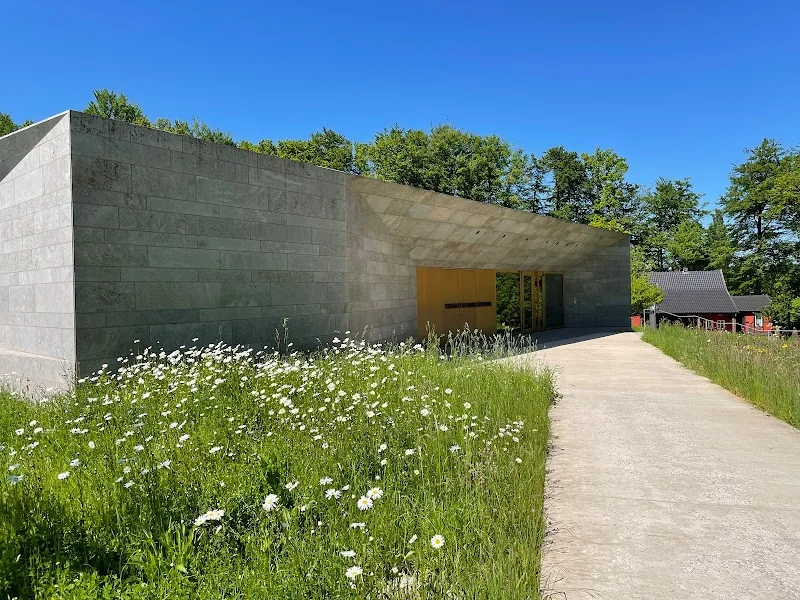
The Museum Peter August Böckstiegel in Werther uniquely combines a modern museum building with the historic artist's house where Peter August Böckstiegel was born and worked for decades. Nestled in the Westphalian landscape at the Teutoburg Forest, visitors experience the interplay of an authentic location and contemporary presentation of the artistic heritage. The museum features changing exhibitions that illuminate groups of works and themes from Böckstiegel's oeuvre as well as connections to companions and modern art. Just a few steps away stands the Böckstiegel House, painted in a vibrant red, whose studios and artisanal details make the spirit of the artist immediately palpable. Practical offerings round off the visit: barrier-free access, a free parking lot nearby, the community bus with a stop right at the entrance, and the Bistro and Café Vincent with homemade cakes and a terrace overlooking the artist's house and the orchard. Those who want to experience art, nature, and regional history in one ensemble are exactly right at Schloßstraße 109/111.
Opening Hours, Prices, and Tours at a Glance
For planning your visit, the regular opening hours are particularly helpful: the museum, shop, and café are generally open from Wednesday to Sunday from 12 to 18 o'clock. During exhibition changes, the museum and café remain closed; the respective renovation periods will be published in advance. On selected holidays, the museum is open, while on others it remains closed; current daily notices appear on the museum's website. Educational institutions such as daycare centers and schools can visit by arrangement starting at 8 o'clock, allowing for individual programs in the morning. The admission prices are transparent and family-friendly: the standard price is 7 euros, and the reduced price is 4 euros. Children and teenagers up to and including 18 years visit the museum for free, as do members of the P. A. Böckstiegel Friends Circle. Discounts are available for various groups, such as students, trainees, participants in FSJ or BFD, and people with a disability rating of 50 or higher; certain accompanying persons are granted free admission. To make art immediately tangible, the museum offers a clear tour program. On Wednesdays from 17 to 18 o'clock, there is a public tour of the current exhibition in the new building. On Saturdays, Sundays, and on open holidays, a combined tour runs from 15 to 16:30 through the museum and artist house; additionally, on Sundays, a one-hour tour from 13:30 to 14:30 is exclusively offered in the artist house. Tickets for these public tours can be obtained on the day of the event starting one hour before the beginning at the museum ticket office; reservations are not possible, group size is limited, and the offer is only valid during exhibition periods. For individual group visits, private tours can be booked; the museum team advises on duration and process. Important to know: the artist house can only be visited as part of a guided tour, which makes the mediation at the authentic location particularly intense. This way, a visit can be ideally structured, whether as a short art afternoon or an extended tour with a break at Café Vincent.
Photos, Images, and Usage: What is Allowed
Many guests want to take home memories of their visit or share impressions on social networks. The museum has formulated clear, visitor-friendly rules that also protect artworks and personal rights. Photography is allowed for private purposes, provided that flash and selfie sticks are avoided. Filming for private purposes is also permitted. This permission exclusively covers personal use; publishing, selling, reproducing, transmitting, passing on, or any form of commercial use of private recordings is not permitted. Those wishing to report on their museum visit will also find a regulation: recordings are possible within the framework of current reporting; a brief notification to the museum management is desired. For all forms of commercial photo or film productions, prior approval is required; depending on the scope, a fee may be charged. The house rules also point out that consideration for other guests should be taken in the exhibition rooms, such as by keeping phones on silent. As the rights holder of Böckstiegel's works, the Peter-August-Böckstiegel Foundation acts; the image rights management is entrusted to VG Bildkunst. Anyone wishing to work with images of Böckstiegel's works beyond pure private use should therefore clarify copyright and image rights in good time. In practice, this means: memory photos without flash are welcome, sharing in a private context is possible, but for publications in media, on organization websites, or for print products, the appropriate legal basis is required. The museum team supports inquiries and refers to the relevant contact points. This clear and fair regulation creates transparency and allows all visitors to enjoy art respectfully and at the same time relaxed.
The Böckstiegel House: History, Studios, and Special Features
Just a short walk from the new building is the Böckstiegel House, a small farmhouse built in 1826 and acquired by Böckstiegel's parents in May 1885. Here, Peter August Böckstiegel was born on April 7, 1889; the building, its yard, the orchard, and the surrounding cultural landscape shaped the artist's motifs and visual language. The house is much more than a residence: from 1922, Böckstiegel began to redesign it according to his ideas. He expanded it with a summer studio and additional living spaces for his family, allowing for better work on large formats. A striking feature is the red exterior paint that the artist gave to the house around 1920, which has since become a defining characteristic. After returning from the destroyed Dresden in 1945, Böckstiegel added another studio, the so-called New Studio; large windows provided the necessary light for painting and graphics. The facade and entrance area also bear artisanal artistic traces of the homeowner: Böckstiegel designed the oak beams on the house front and adorned them with a saying about truth and clarity, and he also decorated walls with mosaics. In front of the entrance to the New Studio, he placed several sculptures on brick steles; today these are presented as casts. From its agricultural origins, a highly authentic artist house grew. Since 2009, the Böckstiegel House has been a listed building, underscoring its special value for regional cultural history. Visitors reach the artist house via an approximately 80-meter path from the museum. It should be noted that the house is not barrier-free: some rooms are on the ground floor, while others are only accessible via steps. For safety and mediation reasons, visits are only possible as part of public or privately booked tours. However, this guided form opens up special insights, as in the studio, in the hall, and in the rooms shaped by Böckstiegel, it becomes palpable how closely work and living environment are intertwined. Together with the presentation in the new building, a complete picture emerges that impressively conveys artistic handwriting, material aesthetics, and landscape context.
Directions, Address, and Parking at Schloßstraße 109/111
The ensemble is located at Schloßstraße 109/111 in 33824 Werther and is easily accessible from the region. For guests arriving by car, a free parking lot is available in the immediate vicinity; from there, it is about 200 meters to the main entrance. On the way there, a street is crossed, and then a footpath leads directly to the museum. Immediately in front of the entrance, about 20 meters away, there are two designated parking spaces for people with disabilities. Those arriving by bicycle will find bike racks directly in front of the museum and along the path to the artist house. Convenient for active visitors are the bike service station and a charging point for e-bikes at or next to the building. There is no regular direct connection to buses or trains. Nevertheless, arriving by public transport via the local community bus is comfortable: in front of the entrance is the stop named Arrode, Museum PAB, or Böckstiegelhaus. The community bus with eight seats operates Monday to Friday according to schedule between the city center and the museum. For the return trip, a phone reservation is required at least 30 minutes before departure; the ticket costs 1 euro and is valid for 90 minutes. The combination of free parking and community bus ensures that both individual and group visits can be well planned. The location in greenery is also part of the experience: sightlines between the new building and the artist house already provide an impression of how strongly landscape and architecture respond to each other on the way from the parking lot. For travel groups, it is advisable to coordinate arrival times and possible tours in advance to keep entry and travel times relaxed. Overall, the paths are short, orientation is simple, and those who wish can combine the museum visit with a walk in the surroundings.
Experiences in the Museum and Café Vincent: What Visitors Particularly Appreciate
In the museum's new building, guests can expect a spacious exhibition area that unfolds the life and work of Böckstiegel in changing presentations and establishes connections to classical modernism. The focus is not only on paintings, drawings, and print graphics but also includes mosaics, designed stained glass windows, sculptural works, and colorfully framed furniture. This diversity is reflected in the educational offerings: public tours, thematic walks, and formats for children, schools, and daycare centers. The new building is barrier-free accessible; a ground-level entrance, an elevator to the basement with a cloakroom and barrier-free toilet, as well as good readability of the exhibition texts even while seated facilitate the visit. If needed, a wheelchair, walker, or height-adjustable cane can be borrowed free of charge; portable folding stools are available in the museum and artist house. Assistance dogs are permitted. Families find additional support with the program for breastfeeding, including changing tables and storage options for strollers. A special treat is the Bistro and Café Vincent. In the tradition of the Böckstiegel family, seasonal cakes and pastries made in-house are served here. Before or after the tour, the terrace invites guests to linger; the view extends over a blooming orchard to the red artist house. Those wishing to reserve a table or request catering for an event in the house can contact the café team directly. In the museum shop, books, postcards, and selected products complement the visit. The architecture itself creates an atmosphere that connects art and nature: Franconian shell limestone on the facade and oak wood on windows and furnishings contrast with a deliberately modern interior. This materiality provides calm and concentration in the exhibition rooms while also making the connection to the landscape clear. Thus, a rounded day trip emerges that cleverly combines art enjoyment, landscape impressions, and culinary breaks.
Foundation, Architecture, and Opening of the New Building
The museum is supported by the Peter-August-Böckstiegel Foundation, which is based in Werther and preserves, researches, and makes accessible Böckstiegel's work. On the occasion of the artist's 125th birthday on April 7, 2014, the decision was made in the Gütersloh district to establish a museum in close proximity to the birthplace. In December 2014, an architectural competition was announced, from which h.s.d. architects from Lemgo emerged as the winners. The design of the building comes from Prof. André Habermann and includes not only a large exhibition space but also areas for education, storage, and depot, as well as a café. The construction was made possible not least by the commitment of private sponsors and companies from the region, as well as support from the Landschaftsverband Westfalen-Lippe. The realization took place from 2016 to 2018; since 2018, the new building has been open to the public. The outdoor area was designed by the planning group Oberhausen; sightlines and the orchard refer to the cultural landscape and the former use of the meadow. In the warm season, the core idea of the architects becomes particularly clear: the new building lies like a boulder on the meadow in front of the artist house, without overshadowing its significance as the heart of the complex. Deliberately selected natural materials shape the appearance. The facade features Franconian shell limestone, which shows a lively yet calm structure depending on the light. Oak wood frames the large window areas and extends through the furnishings inside. This material contrast forms a counterpoint to the modern, clear exhibition space and creates a friendly, calm atmosphere. The concept combines respect for the authentic location with the requirements of contemporary museum presentation. Thus, there is room for monographic exhibitions on Böckstiegel, for presentations with works by his companions, and for discursive formats that place the work in larger art-historical and social contexts. Together with the listed Böckstiegel House, a vibrant place of memory and contemporary art emerges, connecting regional identity and supra-regional radiance.
Sources:
Show moreShow less
Museum Peter August Böckstiegel | Opening Hours & Photos
The Museum Peter August Böckstiegel in Werther uniquely combines a modern museum building with the historic artist's house where Peter August Böckstiegel was born and worked for decades. Nestled in the Westphalian landscape at the Teutoburg Forest, visitors experience the interplay of an authentic location and contemporary presentation of the artistic heritage. The museum features changing exhibitions that illuminate groups of works and themes from Böckstiegel's oeuvre as well as connections to companions and modern art. Just a few steps away stands the Böckstiegel House, painted in a vibrant red, whose studios and artisanal details make the spirit of the artist immediately palpable. Practical offerings round off the visit: barrier-free access, a free parking lot nearby, the community bus with a stop right at the entrance, and the Bistro and Café Vincent with homemade cakes and a terrace overlooking the artist's house and the orchard. Those who want to experience art, nature, and regional history in one ensemble are exactly right at Schloßstraße 109/111.
Opening Hours, Prices, and Tours at a Glance
For planning your visit, the regular opening hours are particularly helpful: the museum, shop, and café are generally open from Wednesday to Sunday from 12 to 18 o'clock. During exhibition changes, the museum and café remain closed; the respective renovation periods will be published in advance. On selected holidays, the museum is open, while on others it remains closed; current daily notices appear on the museum's website. Educational institutions such as daycare centers and schools can visit by arrangement starting at 8 o'clock, allowing for individual programs in the morning. The admission prices are transparent and family-friendly: the standard price is 7 euros, and the reduced price is 4 euros. Children and teenagers up to and including 18 years visit the museum for free, as do members of the P. A. Böckstiegel Friends Circle. Discounts are available for various groups, such as students, trainees, participants in FSJ or BFD, and people with a disability rating of 50 or higher; certain accompanying persons are granted free admission. To make art immediately tangible, the museum offers a clear tour program. On Wednesdays from 17 to 18 o'clock, there is a public tour of the current exhibition in the new building. On Saturdays, Sundays, and on open holidays, a combined tour runs from 15 to 16:30 through the museum and artist house; additionally, on Sundays, a one-hour tour from 13:30 to 14:30 is exclusively offered in the artist house. Tickets for these public tours can be obtained on the day of the event starting one hour before the beginning at the museum ticket office; reservations are not possible, group size is limited, and the offer is only valid during exhibition periods. For individual group visits, private tours can be booked; the museum team advises on duration and process. Important to know: the artist house can only be visited as part of a guided tour, which makes the mediation at the authentic location particularly intense. This way, a visit can be ideally structured, whether as a short art afternoon or an extended tour with a break at Café Vincent.
Photos, Images, and Usage: What is Allowed
Many guests want to take home memories of their visit or share impressions on social networks. The museum has formulated clear, visitor-friendly rules that also protect artworks and personal rights. Photography is allowed for private purposes, provided that flash and selfie sticks are avoided. Filming for private purposes is also permitted. This permission exclusively covers personal use; publishing, selling, reproducing, transmitting, passing on, or any form of commercial use of private recordings is not permitted. Those wishing to report on their museum visit will also find a regulation: recordings are possible within the framework of current reporting; a brief notification to the museum management is desired. For all forms of commercial photo or film productions, prior approval is required; depending on the scope, a fee may be charged. The house rules also point out that consideration for other guests should be taken in the exhibition rooms, such as by keeping phones on silent. As the rights holder of Böckstiegel's works, the Peter-August-Böckstiegel Foundation acts; the image rights management is entrusted to VG Bildkunst. Anyone wishing to work with images of Böckstiegel's works beyond pure private use should therefore clarify copyright and image rights in good time. In practice, this means: memory photos without flash are welcome, sharing in a private context is possible, but for publications in media, on organization websites, or for print products, the appropriate legal basis is required. The museum team supports inquiries and refers to the relevant contact points. This clear and fair regulation creates transparency and allows all visitors to enjoy art respectfully and at the same time relaxed.
The Böckstiegel House: History, Studios, and Special Features
Just a short walk from the new building is the Böckstiegel House, a small farmhouse built in 1826 and acquired by Böckstiegel's parents in May 1885. Here, Peter August Böckstiegel was born on April 7, 1889; the building, its yard, the orchard, and the surrounding cultural landscape shaped the artist's motifs and visual language. The house is much more than a residence: from 1922, Böckstiegel began to redesign it according to his ideas. He expanded it with a summer studio and additional living spaces for his family, allowing for better work on large formats. A striking feature is the red exterior paint that the artist gave to the house around 1920, which has since become a defining characteristic. After returning from the destroyed Dresden in 1945, Böckstiegel added another studio, the so-called New Studio; large windows provided the necessary light for painting and graphics. The facade and entrance area also bear artisanal artistic traces of the homeowner: Böckstiegel designed the oak beams on the house front and adorned them with a saying about truth and clarity, and he also decorated walls with mosaics. In front of the entrance to the New Studio, he placed several sculptures on brick steles; today these are presented as casts. From its agricultural origins, a highly authentic artist house grew. Since 2009, the Böckstiegel House has been a listed building, underscoring its special value for regional cultural history. Visitors reach the artist house via an approximately 80-meter path from the museum. It should be noted that the house is not barrier-free: some rooms are on the ground floor, while others are only accessible via steps. For safety and mediation reasons, visits are only possible as part of public or privately booked tours. However, this guided form opens up special insights, as in the studio, in the hall, and in the rooms shaped by Böckstiegel, it becomes palpable how closely work and living environment are intertwined. Together with the presentation in the new building, a complete picture emerges that impressively conveys artistic handwriting, material aesthetics, and landscape context.
Directions, Address, and Parking at Schloßstraße 109/111
The ensemble is located at Schloßstraße 109/111 in 33824 Werther and is easily accessible from the region. For guests arriving by car, a free parking lot is available in the immediate vicinity; from there, it is about 200 meters to the main entrance. On the way there, a street is crossed, and then a footpath leads directly to the museum. Immediately in front of the entrance, about 20 meters away, there are two designated parking spaces for people with disabilities. Those arriving by bicycle will find bike racks directly in front of the museum and along the path to the artist house. Convenient for active visitors are the bike service station and a charging point for e-bikes at or next to the building. There is no regular direct connection to buses or trains. Nevertheless, arriving by public transport via the local community bus is comfortable: in front of the entrance is the stop named Arrode, Museum PAB, or Böckstiegelhaus. The community bus with eight seats operates Monday to Friday according to schedule between the city center and the museum. For the return trip, a phone reservation is required at least 30 minutes before departure; the ticket costs 1 euro and is valid for 90 minutes. The combination of free parking and community bus ensures that both individual and group visits can be well planned. The location in greenery is also part of the experience: sightlines between the new building and the artist house already provide an impression of how strongly landscape and architecture respond to each other on the way from the parking lot. For travel groups, it is advisable to coordinate arrival times and possible tours in advance to keep entry and travel times relaxed. Overall, the paths are short, orientation is simple, and those who wish can combine the museum visit with a walk in the surroundings.
Experiences in the Museum and Café Vincent: What Visitors Particularly Appreciate
In the museum's new building, guests can expect a spacious exhibition area that unfolds the life and work of Böckstiegel in changing presentations and establishes connections to classical modernism. The focus is not only on paintings, drawings, and print graphics but also includes mosaics, designed stained glass windows, sculptural works, and colorfully framed furniture. This diversity is reflected in the educational offerings: public tours, thematic walks, and formats for children, schools, and daycare centers. The new building is barrier-free accessible; a ground-level entrance, an elevator to the basement with a cloakroom and barrier-free toilet, as well as good readability of the exhibition texts even while seated facilitate the visit. If needed, a wheelchair, walker, or height-adjustable cane can be borrowed free of charge; portable folding stools are available in the museum and artist house. Assistance dogs are permitted. Families find additional support with the program for breastfeeding, including changing tables and storage options for strollers. A special treat is the Bistro and Café Vincent. In the tradition of the Böckstiegel family, seasonal cakes and pastries made in-house are served here. Before or after the tour, the terrace invites guests to linger; the view extends over a blooming orchard to the red artist house. Those wishing to reserve a table or request catering for an event in the house can contact the café team directly. In the museum shop, books, postcards, and selected products complement the visit. The architecture itself creates an atmosphere that connects art and nature: Franconian shell limestone on the facade and oak wood on windows and furnishings contrast with a deliberately modern interior. This materiality provides calm and concentration in the exhibition rooms while also making the connection to the landscape clear. Thus, a rounded day trip emerges that cleverly combines art enjoyment, landscape impressions, and culinary breaks.
Foundation, Architecture, and Opening of the New Building
The museum is supported by the Peter-August-Böckstiegel Foundation, which is based in Werther and preserves, researches, and makes accessible Böckstiegel's work. On the occasion of the artist's 125th birthday on April 7, 2014, the decision was made in the Gütersloh district to establish a museum in close proximity to the birthplace. In December 2014, an architectural competition was announced, from which h.s.d. architects from Lemgo emerged as the winners. The design of the building comes from Prof. André Habermann and includes not only a large exhibition space but also areas for education, storage, and depot, as well as a café. The construction was made possible not least by the commitment of private sponsors and companies from the region, as well as support from the Landschaftsverband Westfalen-Lippe. The realization took place from 2016 to 2018; since 2018, the new building has been open to the public. The outdoor area was designed by the planning group Oberhausen; sightlines and the orchard refer to the cultural landscape and the former use of the meadow. In the warm season, the core idea of the architects becomes particularly clear: the new building lies like a boulder on the meadow in front of the artist house, without overshadowing its significance as the heart of the complex. Deliberately selected natural materials shape the appearance. The facade features Franconian shell limestone, which shows a lively yet calm structure depending on the light. Oak wood frames the large window areas and extends through the furnishings inside. This material contrast forms a counterpoint to the modern, clear exhibition space and creates a friendly, calm atmosphere. The concept combines respect for the authentic location with the requirements of contemporary museum presentation. Thus, there is room for monographic exhibitions on Böckstiegel, for presentations with works by his companions, and for discursive formats that place the work in larger art-historical and social contexts. Together with the listed Böckstiegel House, a vibrant place of memory and contemporary art emerges, connecting regional identity and supra-regional radiance.
Sources:
Museum Peter August Böckstiegel | Opening Hours & Photos
The Museum Peter August Böckstiegel in Werther uniquely combines a modern museum building with the historic artist's house where Peter August Böckstiegel was born and worked for decades. Nestled in the Westphalian landscape at the Teutoburg Forest, visitors experience the interplay of an authentic location and contemporary presentation of the artistic heritage. The museum features changing exhibitions that illuminate groups of works and themes from Böckstiegel's oeuvre as well as connections to companions and modern art. Just a few steps away stands the Böckstiegel House, painted in a vibrant red, whose studios and artisanal details make the spirit of the artist immediately palpable. Practical offerings round off the visit: barrier-free access, a free parking lot nearby, the community bus with a stop right at the entrance, and the Bistro and Café Vincent with homemade cakes and a terrace overlooking the artist's house and the orchard. Those who want to experience art, nature, and regional history in one ensemble are exactly right at Schloßstraße 109/111.
Opening Hours, Prices, and Tours at a Glance
For planning your visit, the regular opening hours are particularly helpful: the museum, shop, and café are generally open from Wednesday to Sunday from 12 to 18 o'clock. During exhibition changes, the museum and café remain closed; the respective renovation periods will be published in advance. On selected holidays, the museum is open, while on others it remains closed; current daily notices appear on the museum's website. Educational institutions such as daycare centers and schools can visit by arrangement starting at 8 o'clock, allowing for individual programs in the morning. The admission prices are transparent and family-friendly: the standard price is 7 euros, and the reduced price is 4 euros. Children and teenagers up to and including 18 years visit the museum for free, as do members of the P. A. Böckstiegel Friends Circle. Discounts are available for various groups, such as students, trainees, participants in FSJ or BFD, and people with a disability rating of 50 or higher; certain accompanying persons are granted free admission. To make art immediately tangible, the museum offers a clear tour program. On Wednesdays from 17 to 18 o'clock, there is a public tour of the current exhibition in the new building. On Saturdays, Sundays, and on open holidays, a combined tour runs from 15 to 16:30 through the museum and artist house; additionally, on Sundays, a one-hour tour from 13:30 to 14:30 is exclusively offered in the artist house. Tickets for these public tours can be obtained on the day of the event starting one hour before the beginning at the museum ticket office; reservations are not possible, group size is limited, and the offer is only valid during exhibition periods. For individual group visits, private tours can be booked; the museum team advises on duration and process. Important to know: the artist house can only be visited as part of a guided tour, which makes the mediation at the authentic location particularly intense. This way, a visit can be ideally structured, whether as a short art afternoon or an extended tour with a break at Café Vincent.
Photos, Images, and Usage: What is Allowed
Many guests want to take home memories of their visit or share impressions on social networks. The museum has formulated clear, visitor-friendly rules that also protect artworks and personal rights. Photography is allowed for private purposes, provided that flash and selfie sticks are avoided. Filming for private purposes is also permitted. This permission exclusively covers personal use; publishing, selling, reproducing, transmitting, passing on, or any form of commercial use of private recordings is not permitted. Those wishing to report on their museum visit will also find a regulation: recordings are possible within the framework of current reporting; a brief notification to the museum management is desired. For all forms of commercial photo or film productions, prior approval is required; depending on the scope, a fee may be charged. The house rules also point out that consideration for other guests should be taken in the exhibition rooms, such as by keeping phones on silent. As the rights holder of Böckstiegel's works, the Peter-August-Böckstiegel Foundation acts; the image rights management is entrusted to VG Bildkunst. Anyone wishing to work with images of Böckstiegel's works beyond pure private use should therefore clarify copyright and image rights in good time. In practice, this means: memory photos without flash are welcome, sharing in a private context is possible, but for publications in media, on organization websites, or for print products, the appropriate legal basis is required. The museum team supports inquiries and refers to the relevant contact points. This clear and fair regulation creates transparency and allows all visitors to enjoy art respectfully and at the same time relaxed.
The Böckstiegel House: History, Studios, and Special Features
Just a short walk from the new building is the Böckstiegel House, a small farmhouse built in 1826 and acquired by Böckstiegel's parents in May 1885. Here, Peter August Böckstiegel was born on April 7, 1889; the building, its yard, the orchard, and the surrounding cultural landscape shaped the artist's motifs and visual language. The house is much more than a residence: from 1922, Böckstiegel began to redesign it according to his ideas. He expanded it with a summer studio and additional living spaces for his family, allowing for better work on large formats. A striking feature is the red exterior paint that the artist gave to the house around 1920, which has since become a defining characteristic. After returning from the destroyed Dresden in 1945, Böckstiegel added another studio, the so-called New Studio; large windows provided the necessary light for painting and graphics. The facade and entrance area also bear artisanal artistic traces of the homeowner: Böckstiegel designed the oak beams on the house front and adorned them with a saying about truth and clarity, and he also decorated walls with mosaics. In front of the entrance to the New Studio, he placed several sculptures on brick steles; today these are presented as casts. From its agricultural origins, a highly authentic artist house grew. Since 2009, the Böckstiegel House has been a listed building, underscoring its special value for regional cultural history. Visitors reach the artist house via an approximately 80-meter path from the museum. It should be noted that the house is not barrier-free: some rooms are on the ground floor, while others are only accessible via steps. For safety and mediation reasons, visits are only possible as part of public or privately booked tours. However, this guided form opens up special insights, as in the studio, in the hall, and in the rooms shaped by Böckstiegel, it becomes palpable how closely work and living environment are intertwined. Together with the presentation in the new building, a complete picture emerges that impressively conveys artistic handwriting, material aesthetics, and landscape context.
Directions, Address, and Parking at Schloßstraße 109/111
The ensemble is located at Schloßstraße 109/111 in 33824 Werther and is easily accessible from the region. For guests arriving by car, a free parking lot is available in the immediate vicinity; from there, it is about 200 meters to the main entrance. On the way there, a street is crossed, and then a footpath leads directly to the museum. Immediately in front of the entrance, about 20 meters away, there are two designated parking spaces for people with disabilities. Those arriving by bicycle will find bike racks directly in front of the museum and along the path to the artist house. Convenient for active visitors are the bike service station and a charging point for e-bikes at or next to the building. There is no regular direct connection to buses or trains. Nevertheless, arriving by public transport via the local community bus is comfortable: in front of the entrance is the stop named Arrode, Museum PAB, or Böckstiegelhaus. The community bus with eight seats operates Monday to Friday according to schedule between the city center and the museum. For the return trip, a phone reservation is required at least 30 minutes before departure; the ticket costs 1 euro and is valid for 90 minutes. The combination of free parking and community bus ensures that both individual and group visits can be well planned. The location in greenery is also part of the experience: sightlines between the new building and the artist house already provide an impression of how strongly landscape and architecture respond to each other on the way from the parking lot. For travel groups, it is advisable to coordinate arrival times and possible tours in advance to keep entry and travel times relaxed. Overall, the paths are short, orientation is simple, and those who wish can combine the museum visit with a walk in the surroundings.
Experiences in the Museum and Café Vincent: What Visitors Particularly Appreciate
In the museum's new building, guests can expect a spacious exhibition area that unfolds the life and work of Böckstiegel in changing presentations and establishes connections to classical modernism. The focus is not only on paintings, drawings, and print graphics but also includes mosaics, designed stained glass windows, sculptural works, and colorfully framed furniture. This diversity is reflected in the educational offerings: public tours, thematic walks, and formats for children, schools, and daycare centers. The new building is barrier-free accessible; a ground-level entrance, an elevator to the basement with a cloakroom and barrier-free toilet, as well as good readability of the exhibition texts even while seated facilitate the visit. If needed, a wheelchair, walker, or height-adjustable cane can be borrowed free of charge; portable folding stools are available in the museum and artist house. Assistance dogs are permitted. Families find additional support with the program for breastfeeding, including changing tables and storage options for strollers. A special treat is the Bistro and Café Vincent. In the tradition of the Böckstiegel family, seasonal cakes and pastries made in-house are served here. Before or after the tour, the terrace invites guests to linger; the view extends over a blooming orchard to the red artist house. Those wishing to reserve a table or request catering for an event in the house can contact the café team directly. In the museum shop, books, postcards, and selected products complement the visit. The architecture itself creates an atmosphere that connects art and nature: Franconian shell limestone on the facade and oak wood on windows and furnishings contrast with a deliberately modern interior. This materiality provides calm and concentration in the exhibition rooms while also making the connection to the landscape clear. Thus, a rounded day trip emerges that cleverly combines art enjoyment, landscape impressions, and culinary breaks.
Foundation, Architecture, and Opening of the New Building
The museum is supported by the Peter-August-Böckstiegel Foundation, which is based in Werther and preserves, researches, and makes accessible Böckstiegel's work. On the occasion of the artist's 125th birthday on April 7, 2014, the decision was made in the Gütersloh district to establish a museum in close proximity to the birthplace. In December 2014, an architectural competition was announced, from which h.s.d. architects from Lemgo emerged as the winners. The design of the building comes from Prof. André Habermann and includes not only a large exhibition space but also areas for education, storage, and depot, as well as a café. The construction was made possible not least by the commitment of private sponsors and companies from the region, as well as support from the Landschaftsverband Westfalen-Lippe. The realization took place from 2016 to 2018; since 2018, the new building has been open to the public. The outdoor area was designed by the planning group Oberhausen; sightlines and the orchard refer to the cultural landscape and the former use of the meadow. In the warm season, the core idea of the architects becomes particularly clear: the new building lies like a boulder on the meadow in front of the artist house, without overshadowing its significance as the heart of the complex. Deliberately selected natural materials shape the appearance. The facade features Franconian shell limestone, which shows a lively yet calm structure depending on the light. Oak wood frames the large window areas and extends through the furnishings inside. This material contrast forms a counterpoint to the modern, clear exhibition space and creates a friendly, calm atmosphere. The concept combines respect for the authentic location with the requirements of contemporary museum presentation. Thus, there is room for monographic exhibitions on Böckstiegel, for presentations with works by his companions, and for discursive formats that place the work in larger art-historical and social contexts. Together with the listed Böckstiegel House, a vibrant place of memory and contemporary art emerges, connecting regional identity and supra-regional radiance.
Sources:
Upcoming Events
No events found
Frequently Asked Questions
Reviews
Dirk-Jan Smit
29. July 2025
Small, but very beautiful. A tribute to a relatively unknown painter and sculptor of the early 20th century. A good coffee shop and a building in a wonderful rural setting. Free parking.
Vik
31. July 2023
Very friendly museum with a wonderful collection of Peter A. Böckstiegel plus finger-licking good cakes and coffee. Great!
Lola Skw
19. August 2023
Very interesting selection of pictures, drawings, etchings, and xylographies by the artist in a small, ugly concrete museum. The viewing of Boeckstiegel's house (on the premises), in comparison, was a bit lackluster. The dwelling is tiny, and there's not much left of the original interior furnishings and decorations. But I liked the wedding chest (made by Boeckstiegel himself). That said, if you are not a massive fan, you could skip Boeckstiegel's house without missing too much... The café in the museum is excellent!
Klaus Daniel
23. April 2022
What a fantastic museum. Not too large, fantastic room, great artistry, a fine museum café with marvelous cake. A must-visit.
Liene Rokpelne
24. June 2022
Liked as always. The new part of the museum is really nice with delicious cakes.