
Bielefeld
Viktoriastraße 48A, 33602 Bielefeld, Deutschland
Museum Wäschefabrik | Opening Hours & Tours
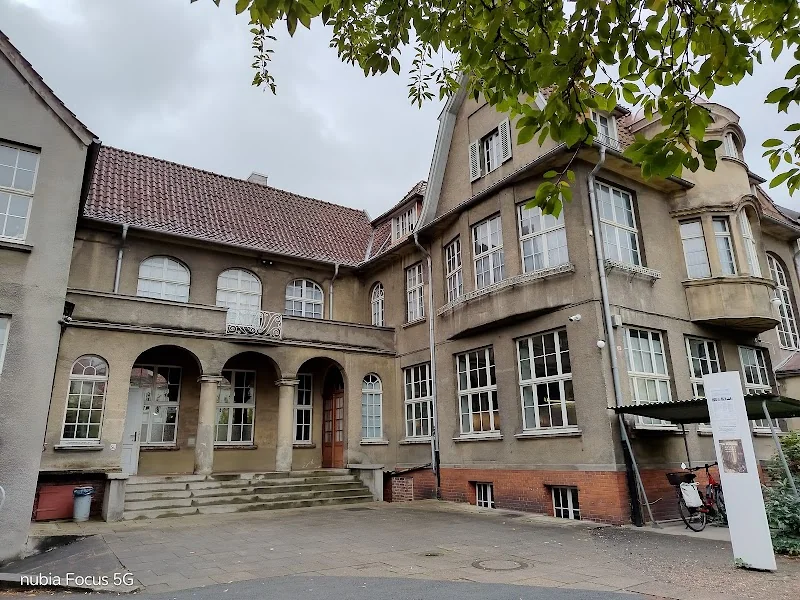
The Museum Wäschefabrik in Bielefeld is not an ordinary city museum, but a rare original testimony of German laundry and textile history. Hidden in a backyard in the Bielefeld spinning district, it invites visitors on a time travel into a working world that hardly exists in this form anymore. Upon entering the house, one experiences not only exhibition rooms but also an almost unchanged industrial monument that makes the everyday life of a former laundry factory tangible. The combination of authentic spatial effect, historical substance, and carefully conveyed history makes this location particularly special for culture enthusiasts, school classes, urban explorers, and visitors interested in industrial culture. The museum is operated by the Förderverein Projekt Wäschefabrik e. V. and keeps the history of the Bielefeld laundry and textile industry alive. In addition, there are tours, neighborhood walks, museum educational offerings, and the Kleine Kultursalon, which also culturally enlivens the place. ([museum-waeschefabrik.de](https://www.museum-waeschefabrik.de/))
Opening Hours, Admission, and Tickets for the Museum Wäschefabrik
Those looking for the opening hours, tickets, or admission for the Museum Wäschefabrik will find a clear and well-planned visiting structure. The museum is open every Sunday from 11 AM to 5 PM. Admission costs 6 euros, reduced 3 euros, and card payment is not possible. This makes the visit intentionally uncomplicated, while still being organized in a classic museum manner: admission on-site, direct encounter with the house, and no hurdles from complicated booking systems for regular museum visits. This is particularly pleasant for spontaneous visitors, as a Sunday trip to Bielefeld can easily be combined with a cultural stop. ([museum-waeschefabrik.de](https://www.museum-waeschefabrik.de/))
For many users searching for tickets online, it is important to know: during a regular museum visit, it is less about digital ticketing and more about direct entry at the cash register. This is different for public tours. These take place every first Sunday of the month at 11:30 AM, and tickets are sold at the museum cash register starting from 11 AM on the day of the event. Reservations are not possible, and the group size is limited to a maximum of 15 people. This makes the tours particularly popular, as the spots are limited and the experience remains intentionally intimate. So, those specifically searching with the keyword tickets will find here primarily an analog, but very authentic solution: arrive, enter, immerse. ([museum-waeschefabrik.de](https://www.museum-waeschefabrik.de/fuehrungen/))
The discounts also show that the museum appeals to many target groups. The website mentions, among others, children up to 6 years, students, holders of an engagement card, members of the support association, and other privileged groups. This fits a house that is not only of tourist interest but also wants to provide educational and mediation work. Those looking for a cultural site with real history and preferring an uncomplicated Sunday visit will find it here. The mix of free exploration, small tour experiences, and clear admission rules makes the Museum Wäschefabrik a well-calculated excursion destination with high substantive value. ([museum-waeschefabrik.de](https://www.museum-waeschefabrik.de/))
The History of the Laundry Factory Juhl & Helmke
The history of the museum is closely linked to the history of the Bielefeld laundry industry. From 1913 until the 1980s, laundry was produced in the building. The museum itself emphasizes that the sewing room with its over 50 sewing and embroidery machines is a particularly impressive testimony of this time. The factory remained almost unchanged with its inventory, creating the impression that the employees had just briefly left their workplace. This nearly frozen atmosphere is the core of its historical value: not just individual objects, but a complete workplace has been preserved. This makes the visit not only informative but also emotionally comprehensible. ([museum-waeschefabrik.de](https://www.museum-waeschefabrik.de/geschichte/))
The building was constructed by the Jewish entrepreneur Hugo Juhl. Under pressure from the National Socialists, it had to be sold in 1938 to the brothers Georg and Theodor Winkel. Thus, the laundry factory stands not only for industrial and economic history but also for the Jewish history of Bielefeld and for the violent ruptures of the 20th century. The museum explicitly addresses this aspect and offers tours on the Jewish history of the laundry factory Juhl & Helmke. This is a central added value of the location: it connects the everyday historical perspective of a production site with the memory of persecution, loss of property, and societal upheavals. ([museum-waeschefabrik.de](https://www.museum-waeschefabrik.de/geschichte/))
The significance of the house extends far beyond the city limits, as it preserves the character of an entire era as an industrial monument. Almost 70 years of operational activity are conveyed during tours, making the history tangible. Visitors experience not just a museum about laundry production but a real place where work, planning, sewing, embroidering, and organizing took place. This is why the house is also suitable for SEO addressing with terms like laundry museum, history, industrial culture, and Jewish history. It is a place where economic history, social history, and memory culture directly intersect. ([museum-waeschefabrik.de](https://www.museum-waeschefabrik.de/geschichte/))
Tours, Group Offers, and the Kleine Kultursalon
The Museum Wäschefabrik thrives not only on its substance but also on its mediation work. The website lists a wide range of tours and offerings: tours through the building, tours on the Jewish history, walks through the spinning district, the city tour “Textiles Write History (s) – Worldwide,” and the format “Museum in a Suitcase.” These offers are particularly interesting for groups as they expand the visit beyond mere viewing. A walk through the spinning district also shows how closely the museum is linked to the urban environment and how the history of the Bielefeld textile industry can be told through factory buildings and workers' houses. ([museum-waeschefabrik.de](https://www.museum-waeschefabrik.de/fuehrungen/))
Practically important is also: tours can be arranged at any time outside of regular opening hours. The tours through the building and the Jewish history each last 1.5 hours and are designed for groups of up to 15 people; larger groups will be split and guided in parallel. The spinning district walk lasts 1.5 to 2 hours, while the interactive city tour lasts 2 hours. For visitors who do not come in German, this is also attractive, as tours are also available in English, French, Italian, and Spanish. This makes the location particularly versatile for training, travel groups, and international guests. Admission is included in the price of the tours, which makes planning easier. ([museum-waeschefabrik.de](https://www.museum-waeschefabrik.de/fuehrungen/))
Particularly charming is the Kleine Kultursalon in the former entrepreneur's apartment. There, concerts, readings, and lectures take place several times a year. The event page also points out that only 30 people can participate per event in the Kleine Kultursalon. Tickets are available through the ticket service in the tourist information in the Wissenswerkstadt or online through the ticket service of Bielefeld Marketing; reservations at the museum itself are not possible. This mix of historical architecture and vibrant culture makes the Museum Wäschefabrik interesting as an event location. So, those looking for events will find here not only classic museum formats but also a space where culture can be experienced very directly in a small, concentrated setting. ([museum-waeschefabrik.de](https://www.museum-waeschefabrik.de/))
Photos, Original Condition, and the Special Spatial Feeling
Many people search for photos of the Museum Wäschefabrik because the place already appears very characteristic in pictures. The official description and the NRW Foundation emphasize the original condition: machines, furniture, fabrics, and finished shirts have been preserved. This documentary richness makes the museum visually striking. Instead of a smoothly staged exhibition, one sees rooms that actually look like frozen workplaces. The historical sewing room, the workpieces, the tools, and the furnishings create a spatial feeling that immediately fosters understanding. One does not have to explain the history abstractly first but can grasp it directly through the visible traces of work. ([nrw-stiftung.de](https://www.nrw-stiftung.de/entdecken/heimat-touren/museum-waeschefabrik.html?utm_source=openai))
The Bielefeld city page also describes the house as a walkable monument. From the bolts of fabric and spools of thread to the clock on the wall and the order book on the desk, the impression of a stopped time is present everywhere. For visitors looking for an authentic motif, these details are exciting: old machines, original working objects, and the simple, functional atmosphere of a factory from the mid-20th century. Therefore, the museum is suitable not only for those with historical interest but also for anyone seeking strong visual impressions and wanting to experience Bielefeld's industrial past in its real, unembellished state. ([bielefeld.jetzt](https://www.bielefeld.jetzt/museum-waeschefabrik?utm_source=openai))
However, the special spatial feeling arises not only from objects but also from contrasts. On one side is the sober working world of production, and on the other side is the former entrepreneur's apartment, where the Kleine Kultursalon now takes place. This juxtaposition brings the place to life and shows how working and living worlds can overlap in a single building. This is a strong theme, especially for photo motifs, social media, and editorial contributions, because the museum does not appear museum-like in a distant sense but rather immediate, close, and surprisingly atmospheric. Therefore, those searching for photos will primarily find originality, patina, and real history. ([museum-waeschefabrik.de](https://www.museum-waeschefabrik.de/))
Location, Directions, and Practical Tips for the Visit
The Museum Wäschefabrik is located at Viktoriastraße 48A, 33602 Bielefeld, and thus in a part of the city that is closely linked to textile and industrial culture. The website describes the location as a backyard in the Bielefeld spinning district, which already shapes the special character of arriving before entering. The path does not lead to a representative front building on a major thoroughfare but intentionally into a hidden, almost intimate environment. This location makes the visit appealing: one does not discover the museum by chance but enters a place that has preserved its authenticity. For questions and bookings, the museum provides the phone number 0521 60464 and the email address info@museum-waeschefabrik.de. ([museum-waeschefabrik.de](https://www.museum-waeschefabrik.de/))
A practical point that is important when planning the visit: According to Bielefeld.JETZT, the entrance is not barrier-free, but a restroom is available. Those traveling with individuals who require barrier-free access should definitely take this note into account. Such information is particularly relevant for search queries like museum wäschefabrik bielefeld, viktoriastraße bielefeld, or wäschefabrik museum, as they connect real everyday usability with the cultural attractiveness of the place. The museum is well-suited for a consciously planned Sunday visit, for tours by arrangement, or for an evening appointment at the Kleine Kultursalon. Its location in the center of Bielefeld also makes it easy to combine the museum visit with other cultural or downtown activities. ([bielefeld.jetzt](https://www.bielefeld.jetzt/node/206000))
In summary, the Museum Wäschefabrik is an extraordinary place for all those seeking real industrial culture rather than mere staging. The historical context, the unchanged sewing room, the tour topics, the cultural program, and the clear Sunday opening create a coherent overall picture. Those searching for reviews, photos, opening hours, tickets, or events will find here primarily a place with character, substance, and a history that goes far beyond mere exhibition effects. It is precisely this connection of authenticity, memory, and cultural use that makes the museum in Bielefeld a location with high SEO and experiential value. ([museum-waeschefabrik.de](https://www.museum-waeschefabrik.de/))
Sources:
Show moreShow less
Museum Wäschefabrik | Opening Hours & Tours
The Museum Wäschefabrik in Bielefeld is not an ordinary city museum, but a rare original testimony of German laundry and textile history. Hidden in a backyard in the Bielefeld spinning district, it invites visitors on a time travel into a working world that hardly exists in this form anymore. Upon entering the house, one experiences not only exhibition rooms but also an almost unchanged industrial monument that makes the everyday life of a former laundry factory tangible. The combination of authentic spatial effect, historical substance, and carefully conveyed history makes this location particularly special for culture enthusiasts, school classes, urban explorers, and visitors interested in industrial culture. The museum is operated by the Förderverein Projekt Wäschefabrik e. V. and keeps the history of the Bielefeld laundry and textile industry alive. In addition, there are tours, neighborhood walks, museum educational offerings, and the Kleine Kultursalon, which also culturally enlivens the place. ([museum-waeschefabrik.de](https://www.museum-waeschefabrik.de/))
Opening Hours, Admission, and Tickets for the Museum Wäschefabrik
Those looking for the opening hours, tickets, or admission for the Museum Wäschefabrik will find a clear and well-planned visiting structure. The museum is open every Sunday from 11 AM to 5 PM. Admission costs 6 euros, reduced 3 euros, and card payment is not possible. This makes the visit intentionally uncomplicated, while still being organized in a classic museum manner: admission on-site, direct encounter with the house, and no hurdles from complicated booking systems for regular museum visits. This is particularly pleasant for spontaneous visitors, as a Sunday trip to Bielefeld can easily be combined with a cultural stop. ([museum-waeschefabrik.de](https://www.museum-waeschefabrik.de/))
For many users searching for tickets online, it is important to know: during a regular museum visit, it is less about digital ticketing and more about direct entry at the cash register. This is different for public tours. These take place every first Sunday of the month at 11:30 AM, and tickets are sold at the museum cash register starting from 11 AM on the day of the event. Reservations are not possible, and the group size is limited to a maximum of 15 people. This makes the tours particularly popular, as the spots are limited and the experience remains intentionally intimate. So, those specifically searching with the keyword tickets will find here primarily an analog, but very authentic solution: arrive, enter, immerse. ([museum-waeschefabrik.de](https://www.museum-waeschefabrik.de/fuehrungen/))
The discounts also show that the museum appeals to many target groups. The website mentions, among others, children up to 6 years, students, holders of an engagement card, members of the support association, and other privileged groups. This fits a house that is not only of tourist interest but also wants to provide educational and mediation work. Those looking for a cultural site with real history and preferring an uncomplicated Sunday visit will find it here. The mix of free exploration, small tour experiences, and clear admission rules makes the Museum Wäschefabrik a well-calculated excursion destination with high substantive value. ([museum-waeschefabrik.de](https://www.museum-waeschefabrik.de/))
The History of the Laundry Factory Juhl & Helmke
The history of the museum is closely linked to the history of the Bielefeld laundry industry. From 1913 until the 1980s, laundry was produced in the building. The museum itself emphasizes that the sewing room with its over 50 sewing and embroidery machines is a particularly impressive testimony of this time. The factory remained almost unchanged with its inventory, creating the impression that the employees had just briefly left their workplace. This nearly frozen atmosphere is the core of its historical value: not just individual objects, but a complete workplace has been preserved. This makes the visit not only informative but also emotionally comprehensible. ([museum-waeschefabrik.de](https://www.museum-waeschefabrik.de/geschichte/))
The building was constructed by the Jewish entrepreneur Hugo Juhl. Under pressure from the National Socialists, it had to be sold in 1938 to the brothers Georg and Theodor Winkel. Thus, the laundry factory stands not only for industrial and economic history but also for the Jewish history of Bielefeld and for the violent ruptures of the 20th century. The museum explicitly addresses this aspect and offers tours on the Jewish history of the laundry factory Juhl & Helmke. This is a central added value of the location: it connects the everyday historical perspective of a production site with the memory of persecution, loss of property, and societal upheavals. ([museum-waeschefabrik.de](https://www.museum-waeschefabrik.de/geschichte/))
The significance of the house extends far beyond the city limits, as it preserves the character of an entire era as an industrial monument. Almost 70 years of operational activity are conveyed during tours, making the history tangible. Visitors experience not just a museum about laundry production but a real place where work, planning, sewing, embroidering, and organizing took place. This is why the house is also suitable for SEO addressing with terms like laundry museum, history, industrial culture, and Jewish history. It is a place where economic history, social history, and memory culture directly intersect. ([museum-waeschefabrik.de](https://www.museum-waeschefabrik.de/geschichte/))
Tours, Group Offers, and the Kleine Kultursalon
The Museum Wäschefabrik thrives not only on its substance but also on its mediation work. The website lists a wide range of tours and offerings: tours through the building, tours on the Jewish history, walks through the spinning district, the city tour “Textiles Write History (s) – Worldwide,” and the format “Museum in a Suitcase.” These offers are particularly interesting for groups as they expand the visit beyond mere viewing. A walk through the spinning district also shows how closely the museum is linked to the urban environment and how the history of the Bielefeld textile industry can be told through factory buildings and workers' houses. ([museum-waeschefabrik.de](https://www.museum-waeschefabrik.de/fuehrungen/))
Practically important is also: tours can be arranged at any time outside of regular opening hours. The tours through the building and the Jewish history each last 1.5 hours and are designed for groups of up to 15 people; larger groups will be split and guided in parallel. The spinning district walk lasts 1.5 to 2 hours, while the interactive city tour lasts 2 hours. For visitors who do not come in German, this is also attractive, as tours are also available in English, French, Italian, and Spanish. This makes the location particularly versatile for training, travel groups, and international guests. Admission is included in the price of the tours, which makes planning easier. ([museum-waeschefabrik.de](https://www.museum-waeschefabrik.de/fuehrungen/))
Particularly charming is the Kleine Kultursalon in the former entrepreneur's apartment. There, concerts, readings, and lectures take place several times a year. The event page also points out that only 30 people can participate per event in the Kleine Kultursalon. Tickets are available through the ticket service in the tourist information in the Wissenswerkstadt or online through the ticket service of Bielefeld Marketing; reservations at the museum itself are not possible. This mix of historical architecture and vibrant culture makes the Museum Wäschefabrik interesting as an event location. So, those looking for events will find here not only classic museum formats but also a space where culture can be experienced very directly in a small, concentrated setting. ([museum-waeschefabrik.de](https://www.museum-waeschefabrik.de/))
Photos, Original Condition, and the Special Spatial Feeling
Many people search for photos of the Museum Wäschefabrik because the place already appears very characteristic in pictures. The official description and the NRW Foundation emphasize the original condition: machines, furniture, fabrics, and finished shirts have been preserved. This documentary richness makes the museum visually striking. Instead of a smoothly staged exhibition, one sees rooms that actually look like frozen workplaces. The historical sewing room, the workpieces, the tools, and the furnishings create a spatial feeling that immediately fosters understanding. One does not have to explain the history abstractly first but can grasp it directly through the visible traces of work. ([nrw-stiftung.de](https://www.nrw-stiftung.de/entdecken/heimat-touren/museum-waeschefabrik.html?utm_source=openai))
The Bielefeld city page also describes the house as a walkable monument. From the bolts of fabric and spools of thread to the clock on the wall and the order book on the desk, the impression of a stopped time is present everywhere. For visitors looking for an authentic motif, these details are exciting: old machines, original working objects, and the simple, functional atmosphere of a factory from the mid-20th century. Therefore, the museum is suitable not only for those with historical interest but also for anyone seeking strong visual impressions and wanting to experience Bielefeld's industrial past in its real, unembellished state. ([bielefeld.jetzt](https://www.bielefeld.jetzt/museum-waeschefabrik?utm_source=openai))
However, the special spatial feeling arises not only from objects but also from contrasts. On one side is the sober working world of production, and on the other side is the former entrepreneur's apartment, where the Kleine Kultursalon now takes place. This juxtaposition brings the place to life and shows how working and living worlds can overlap in a single building. This is a strong theme, especially for photo motifs, social media, and editorial contributions, because the museum does not appear museum-like in a distant sense but rather immediate, close, and surprisingly atmospheric. Therefore, those searching for photos will primarily find originality, patina, and real history. ([museum-waeschefabrik.de](https://www.museum-waeschefabrik.de/))
Location, Directions, and Practical Tips for the Visit
The Museum Wäschefabrik is located at Viktoriastraße 48A, 33602 Bielefeld, and thus in a part of the city that is closely linked to textile and industrial culture. The website describes the location as a backyard in the Bielefeld spinning district, which already shapes the special character of arriving before entering. The path does not lead to a representative front building on a major thoroughfare but intentionally into a hidden, almost intimate environment. This location makes the visit appealing: one does not discover the museum by chance but enters a place that has preserved its authenticity. For questions and bookings, the museum provides the phone number 0521 60464 and the email address info@museum-waeschefabrik.de. ([museum-waeschefabrik.de](https://www.museum-waeschefabrik.de/))
A practical point that is important when planning the visit: According to Bielefeld.JETZT, the entrance is not barrier-free, but a restroom is available. Those traveling with individuals who require barrier-free access should definitely take this note into account. Such information is particularly relevant for search queries like museum wäschefabrik bielefeld, viktoriastraße bielefeld, or wäschefabrik museum, as they connect real everyday usability with the cultural attractiveness of the place. The museum is well-suited for a consciously planned Sunday visit, for tours by arrangement, or for an evening appointment at the Kleine Kultursalon. Its location in the center of Bielefeld also makes it easy to combine the museum visit with other cultural or downtown activities. ([bielefeld.jetzt](https://www.bielefeld.jetzt/node/206000))
In summary, the Museum Wäschefabrik is an extraordinary place for all those seeking real industrial culture rather than mere staging. The historical context, the unchanged sewing room, the tour topics, the cultural program, and the clear Sunday opening create a coherent overall picture. Those searching for reviews, photos, opening hours, tickets, or events will find here primarily a place with character, substance, and a history that goes far beyond mere exhibition effects. It is precisely this connection of authenticity, memory, and cultural use that makes the museum in Bielefeld a location with high SEO and experiential value. ([museum-waeschefabrik.de](https://www.museum-waeschefabrik.de/))
Sources:
Museum Wäschefabrik | Opening Hours & Tours
The Museum Wäschefabrik in Bielefeld is not an ordinary city museum, but a rare original testimony of German laundry and textile history. Hidden in a backyard in the Bielefeld spinning district, it invites visitors on a time travel into a working world that hardly exists in this form anymore. Upon entering the house, one experiences not only exhibition rooms but also an almost unchanged industrial monument that makes the everyday life of a former laundry factory tangible. The combination of authentic spatial effect, historical substance, and carefully conveyed history makes this location particularly special for culture enthusiasts, school classes, urban explorers, and visitors interested in industrial culture. The museum is operated by the Förderverein Projekt Wäschefabrik e. V. and keeps the history of the Bielefeld laundry and textile industry alive. In addition, there are tours, neighborhood walks, museum educational offerings, and the Kleine Kultursalon, which also culturally enlivens the place. ([museum-waeschefabrik.de](https://www.museum-waeschefabrik.de/))
Opening Hours, Admission, and Tickets for the Museum Wäschefabrik
Those looking for the opening hours, tickets, or admission for the Museum Wäschefabrik will find a clear and well-planned visiting structure. The museum is open every Sunday from 11 AM to 5 PM. Admission costs 6 euros, reduced 3 euros, and card payment is not possible. This makes the visit intentionally uncomplicated, while still being organized in a classic museum manner: admission on-site, direct encounter with the house, and no hurdles from complicated booking systems for regular museum visits. This is particularly pleasant for spontaneous visitors, as a Sunday trip to Bielefeld can easily be combined with a cultural stop. ([museum-waeschefabrik.de](https://www.museum-waeschefabrik.de/))
For many users searching for tickets online, it is important to know: during a regular museum visit, it is less about digital ticketing and more about direct entry at the cash register. This is different for public tours. These take place every first Sunday of the month at 11:30 AM, and tickets are sold at the museum cash register starting from 11 AM on the day of the event. Reservations are not possible, and the group size is limited to a maximum of 15 people. This makes the tours particularly popular, as the spots are limited and the experience remains intentionally intimate. So, those specifically searching with the keyword tickets will find here primarily an analog, but very authentic solution: arrive, enter, immerse. ([museum-waeschefabrik.de](https://www.museum-waeschefabrik.de/fuehrungen/))
The discounts also show that the museum appeals to many target groups. The website mentions, among others, children up to 6 years, students, holders of an engagement card, members of the support association, and other privileged groups. This fits a house that is not only of tourist interest but also wants to provide educational and mediation work. Those looking for a cultural site with real history and preferring an uncomplicated Sunday visit will find it here. The mix of free exploration, small tour experiences, and clear admission rules makes the Museum Wäschefabrik a well-calculated excursion destination with high substantive value. ([museum-waeschefabrik.de](https://www.museum-waeschefabrik.de/))
The History of the Laundry Factory Juhl & Helmke
The history of the museum is closely linked to the history of the Bielefeld laundry industry. From 1913 until the 1980s, laundry was produced in the building. The museum itself emphasizes that the sewing room with its over 50 sewing and embroidery machines is a particularly impressive testimony of this time. The factory remained almost unchanged with its inventory, creating the impression that the employees had just briefly left their workplace. This nearly frozen atmosphere is the core of its historical value: not just individual objects, but a complete workplace has been preserved. This makes the visit not only informative but also emotionally comprehensible. ([museum-waeschefabrik.de](https://www.museum-waeschefabrik.de/geschichte/))
The building was constructed by the Jewish entrepreneur Hugo Juhl. Under pressure from the National Socialists, it had to be sold in 1938 to the brothers Georg and Theodor Winkel. Thus, the laundry factory stands not only for industrial and economic history but also for the Jewish history of Bielefeld and for the violent ruptures of the 20th century. The museum explicitly addresses this aspect and offers tours on the Jewish history of the laundry factory Juhl & Helmke. This is a central added value of the location: it connects the everyday historical perspective of a production site with the memory of persecution, loss of property, and societal upheavals. ([museum-waeschefabrik.de](https://www.museum-waeschefabrik.de/geschichte/))
The significance of the house extends far beyond the city limits, as it preserves the character of an entire era as an industrial monument. Almost 70 years of operational activity are conveyed during tours, making the history tangible. Visitors experience not just a museum about laundry production but a real place where work, planning, sewing, embroidering, and organizing took place. This is why the house is also suitable for SEO addressing with terms like laundry museum, history, industrial culture, and Jewish history. It is a place where economic history, social history, and memory culture directly intersect. ([museum-waeschefabrik.de](https://www.museum-waeschefabrik.de/geschichte/))
Tours, Group Offers, and the Kleine Kultursalon
The Museum Wäschefabrik thrives not only on its substance but also on its mediation work. The website lists a wide range of tours and offerings: tours through the building, tours on the Jewish history, walks through the spinning district, the city tour “Textiles Write History (s) – Worldwide,” and the format “Museum in a Suitcase.” These offers are particularly interesting for groups as they expand the visit beyond mere viewing. A walk through the spinning district also shows how closely the museum is linked to the urban environment and how the history of the Bielefeld textile industry can be told through factory buildings and workers' houses. ([museum-waeschefabrik.de](https://www.museum-waeschefabrik.de/fuehrungen/))
Practically important is also: tours can be arranged at any time outside of regular opening hours. The tours through the building and the Jewish history each last 1.5 hours and are designed for groups of up to 15 people; larger groups will be split and guided in parallel. The spinning district walk lasts 1.5 to 2 hours, while the interactive city tour lasts 2 hours. For visitors who do not come in German, this is also attractive, as tours are also available in English, French, Italian, and Spanish. This makes the location particularly versatile for training, travel groups, and international guests. Admission is included in the price of the tours, which makes planning easier. ([museum-waeschefabrik.de](https://www.museum-waeschefabrik.de/fuehrungen/))
Particularly charming is the Kleine Kultursalon in the former entrepreneur's apartment. There, concerts, readings, and lectures take place several times a year. The event page also points out that only 30 people can participate per event in the Kleine Kultursalon. Tickets are available through the ticket service in the tourist information in the Wissenswerkstadt or online through the ticket service of Bielefeld Marketing; reservations at the museum itself are not possible. This mix of historical architecture and vibrant culture makes the Museum Wäschefabrik interesting as an event location. So, those looking for events will find here not only classic museum formats but also a space where culture can be experienced very directly in a small, concentrated setting. ([museum-waeschefabrik.de](https://www.museum-waeschefabrik.de/))
Photos, Original Condition, and the Special Spatial Feeling
Many people search for photos of the Museum Wäschefabrik because the place already appears very characteristic in pictures. The official description and the NRW Foundation emphasize the original condition: machines, furniture, fabrics, and finished shirts have been preserved. This documentary richness makes the museum visually striking. Instead of a smoothly staged exhibition, one sees rooms that actually look like frozen workplaces. The historical sewing room, the workpieces, the tools, and the furnishings create a spatial feeling that immediately fosters understanding. One does not have to explain the history abstractly first but can grasp it directly through the visible traces of work. ([nrw-stiftung.de](https://www.nrw-stiftung.de/entdecken/heimat-touren/museum-waeschefabrik.html?utm_source=openai))
The Bielefeld city page also describes the house as a walkable monument. From the bolts of fabric and spools of thread to the clock on the wall and the order book on the desk, the impression of a stopped time is present everywhere. For visitors looking for an authentic motif, these details are exciting: old machines, original working objects, and the simple, functional atmosphere of a factory from the mid-20th century. Therefore, the museum is suitable not only for those with historical interest but also for anyone seeking strong visual impressions and wanting to experience Bielefeld's industrial past in its real, unembellished state. ([bielefeld.jetzt](https://www.bielefeld.jetzt/museum-waeschefabrik?utm_source=openai))
However, the special spatial feeling arises not only from objects but also from contrasts. On one side is the sober working world of production, and on the other side is the former entrepreneur's apartment, where the Kleine Kultursalon now takes place. This juxtaposition brings the place to life and shows how working and living worlds can overlap in a single building. This is a strong theme, especially for photo motifs, social media, and editorial contributions, because the museum does not appear museum-like in a distant sense but rather immediate, close, and surprisingly atmospheric. Therefore, those searching for photos will primarily find originality, patina, and real history. ([museum-waeschefabrik.de](https://www.museum-waeschefabrik.de/))
Location, Directions, and Practical Tips for the Visit
The Museum Wäschefabrik is located at Viktoriastraße 48A, 33602 Bielefeld, and thus in a part of the city that is closely linked to textile and industrial culture. The website describes the location as a backyard in the Bielefeld spinning district, which already shapes the special character of arriving before entering. The path does not lead to a representative front building on a major thoroughfare but intentionally into a hidden, almost intimate environment. This location makes the visit appealing: one does not discover the museum by chance but enters a place that has preserved its authenticity. For questions and bookings, the museum provides the phone number 0521 60464 and the email address info@museum-waeschefabrik.de. ([museum-waeschefabrik.de](https://www.museum-waeschefabrik.de/))
A practical point that is important when planning the visit: According to Bielefeld.JETZT, the entrance is not barrier-free, but a restroom is available. Those traveling with individuals who require barrier-free access should definitely take this note into account. Such information is particularly relevant for search queries like museum wäschefabrik bielefeld, viktoriastraße bielefeld, or wäschefabrik museum, as they connect real everyday usability with the cultural attractiveness of the place. The museum is well-suited for a consciously planned Sunday visit, for tours by arrangement, or for an evening appointment at the Kleine Kultursalon. Its location in the center of Bielefeld also makes it easy to combine the museum visit with other cultural or downtown activities. ([bielefeld.jetzt](https://www.bielefeld.jetzt/node/206000))
In summary, the Museum Wäschefabrik is an extraordinary place for all those seeking real industrial culture rather than mere staging. The historical context, the unchanged sewing room, the tour topics, the cultural program, and the clear Sunday opening create a coherent overall picture. Those searching for reviews, photos, opening hours, tickets, or events will find here primarily a place with character, substance, and a history that goes far beyond mere exhibition effects. It is precisely this connection of authenticity, memory, and cultural use that makes the museum in Bielefeld a location with high SEO and experiential value. ([museum-waeschefabrik.de](https://www.museum-waeschefabrik.de/))
Sources:
Frequently Asked Questions
Reviews
Daniela Ricardez
25. September 2024
When you go inside it’s like a travel to the past, really pretty and has its essence, but I think it is more of a family museum.
Chris Storey
14. August 2024
Very odd place, but quite fascinating at the same time. It would appear to be a museum based around a family's history and maybe one they need to let go of? Little English translation. It is only open on a Sunday.
Ilka Silvera
9. May 2018
This is one of my most favourite places in Bielefeld. It was "found" in the 1980ies abandoned and left as it was found. It is quite an experience to walk through the factory rooms, looking like the seamstresses are just on lunch break. Only open on Sunday, but well worth the wait. Occasionally there are concerts in the adjacent former owners villa. Take your camera and be transported back in time.
Maga Mohammed
17. May 2025
I like it 😊
Женя Давиденко
23. July 2018
Nice