
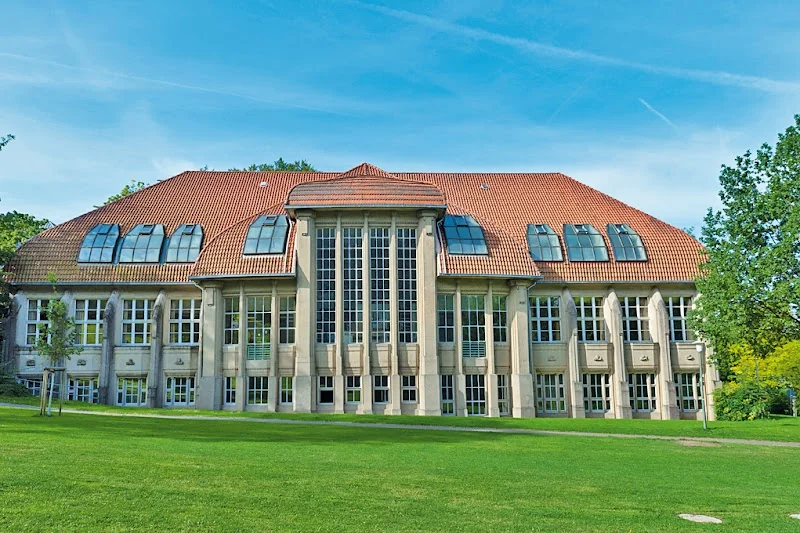
Bielefeld
Burgwiese 9, 33602 Bielefeld, Deutschland
Music and Art School of the City of Bielefeld | Directions & Classes
The Music and Art School of the City of Bielefeld is much more than just a school for instrumental lessons. It has grown into a cultural and learning center that has developed over decades into a staple of Bielefeld's city life. With 7,500 students and 130 employees, the MuKu is considered the largest music and art school in Germany. At the same time, it is a place where music, art, dance, and theater come together in one building and in many other teaching locations throughout the city. This combination of historical substance, broad offerings, and urban presence makes the location highly relevant for families, young people, adults, and culture-interested visitors. Those looking for a music school in Bielefeld, a specialized art school, or a creative place below the Sparrenburg will find an institution here with substance, diversity, and a clear identity. The MuKu has been organized as a municipal institution since 1956 and is connected to a much older history of the location, which remains closely linked to the cultural memory of the city to this day. ([muku-bielefeld.de](https://www.muku-bielefeld.de/info/die-muku/))
Directions, Parking, and Central Location at the Sparrenburg
The address of the Music and Art School is Burgwiese 9, 33602 Bielefeld. Those arriving by public transport can easily reach the MuKu via tram line 1 to the stops Adenauerplatz or Bethel; from there, the path leads to Gadderbaumerstraße. The bus is also a good option: at the Kunsthalle stop, lines 22, 23, 24, 27, 28, 29, 48, 59, 80.2, 83, 87, 88, and 95 stop, while at the Bethel stop, lines 29, 80.2, 83, 87, 88, 95, 121, and 122 are mentioned. The official recommendation leads towards Adenauerplatz or Gadderbaumerstraße. This makes the school very conveniently located for the city center, the western part of the city, and for visitors from the surrounding neighborhoods. This location is a real advantage, especially for families dropping off and picking up children, or for young people who stay for rehearsals and courses after classes. ([muku-bielefeld.de](https://www.muku-bielefeld.de/kontakt/anfahrt/))
By car, the situation is a bit more complex. According to the official directions page, there are only a few parking spaces directly at the school, especially from Monday to Thursday between 2 PM and 7 PM. Therefore, the MuKu recommends parking in Gadderbaumer Straße or in the parking lot above the Sparrenburg. Both options are so close to the building that the walk takes less than three minutes. This is an important practical note for visitors, as the school is located in a densely built and culturally frequented area. The location below the Sparrenburg not only shapes the orientation but also the character of the building: The structure is prominently situated on the slope, appears urbanly present, and is closely connected to the path to the castle and the surrounding cultural sites. Thus, those visiting the MuKu experience not only an educational institution but also a historical site with a clear address, easily understandable public transport connections, and realistic parking alternatives. ([muku-bielefeld.de](https://www.muku-bielefeld.de/kontakt/anfahrt/))
Music Lessons, Instruments, and Ensembles
In the area of music, the MuKu showcases its full strength as a broadly positioned educational institution. The official music section describes a spectrum that ranges from initial musical experiences to more advanced forms of collective music-making. Lessons are offered for 30 different instruments and vocal subjects, including wind instruments, string instruments, keyboard instruments, plucked instruments, percussion instruments, and singing. The school caters to all age groups and offers both individual and group lessons. For preschool children, there is a foundational level that provides an early introduction to musical experiences. It is also particularly important that the lessons are not limited to the central building: The MuKu operates at various teaching locations throughout the city, reaching children and young people where their daily lives already take place. This is not only practical but also strengthens the social anchoring of the school throughout the Bielefeld area. According to its own description, the goal of music education is to make music experienceable for oneself and with others and to develop musical potential individually. ([muku-bielefeld.de](https://www.muku-bielefeld.de/unterricht/musik/))
Additionally, there is a remarkable ensemble culture. On the music page of the MuKu, accordion ensembles, bands, big bands, wind orchestras, recorder ensembles, choirs, guitar ensembles, harp ensembles, woodwind quintets, percussion ensembles, flute ensembles, symphony orchestras, and string orchestras are mentioned, among others. This spectrum is complemented by competitions such as Jugend musiziert, Jugend jazzt, and the Hanns-Bisegger Promotion Prize. This structure shows that the music school not only offers individual lessons but also introduces young people to collective rehearsals, stage presence, and musical development. This also applies to projects like the JeKits program, which is anchored in primary and special schools focusing on instruments or dance. Therefore, those looking for a place where music lessons in Bielefeld, ensemble work, and support opportunities are considered together will find a very dense and professional infrastructure here. ([muku-bielefeld.de](https://www.muku-bielefeld.de/unterricht/musik/))
The Talent Academy OWL is also part of this musical profile. On the FAQ page, the MuKu explains that the Talent Academy is intended for students who wish to engage culturally and deepen their skills in music and dance. A prerequisite is regular involvement in a recognized ensemble. This form of support fits well with the school's structure, as it not only supports broad offerings and entry but also targeted development. Additionally, current reports on the website show that the musical life at the MuKu is very vibrant: For example, a year dedicated to the accordion is highlighted, and competitions as well as concerts by students and ensembles are recurring themes. This creates the image of a school that does not statically manage musical education but understands it as a process with performances, competitions, and community experiences. This is exactly what makes the location particularly attractive for music enthusiasts in Bielefeld. ([muku-bielefeld.de](https://www.muku-bielefeld.de/kontakt/fragen-und-antworten/))
Art, Dance, and Theater: The Creative Heart of the MuKu
The MuKu is explicitly a music and art school, not just a music school. This is particularly evident in the diversity of disciplines and the large number of offerings. The official overview page mentions over 100 offerings and opportunities that range from music to painting and photography to costume design, digital media, theater, dance, and stage design. It is clear: Those looking for an art school in Bielefeld will find not only traditional drawing courses here but also a broad artistic ecosystem. The school is aimed at people with creative interests who want to discover, deepen, or try something new. This open self-understanding is important because it does not describe the MuKu as an elite school for a few specialists but as a learning place for many. This is precisely what gives it its wide reach in the city and its significance as a cultural educational institution. ([muku-bielefeld.de](https://www.muku-bielefeld.de/info/die-muku/))
It is particularly interesting that the creative offerings are not only intended for children and young people. The website explicitly includes formats such as expressive painting for adults. Additionally, there are workshops and courses for young people, for example, in art, digital painting, photography, or experimental fashion. This shows that the MuKu does not limit its offerings to the traditional school context but understands creative education as a lifelong theme. In the central building, classes take place in all four disciplines: music, art, dance, and theater. At the same time, the school administration, the secretariat, and the place where loan instruments can be picked up or certificates submitted are also located there. Therefore, those looking for a school with real artistic breadth, dance lessons in Bielefeld, or a place for acting and stage work will find an unusually dense structure here. The building is not only a place of learning but also a production site, meeting place, and exhibition space. ([muku-bielefeld.de](https://www.muku-bielefeld.de/portfolio/zentrale-muku/))
The MuKu's own artistic work is also visible in its teaching staff. In the art department, exhibitions are regularly shown in which not only the learners but also the teachers present their own works. One example is the exhibition Four Corners, in which 26 teachers showcase their own artistic works. Painting, graphics, object art, photography, and other forms of expression are mentioned. This is important for a location with strong SEO relevance because it demonstrates that the school not only imparts knowledge but is also part of the vibrant art scene of the city. Visitors thus experience not only lessons but also exhibitions and insights into the professional practice of the faculty. This connection of education and its own artistic production gives the MuKu an authentic profile that goes beyond many ordinary course providers. ([muku-bielefeld.de](https://www.muku-bielefeld.de/unterricht/kunst/))
History of the Building under the Sparrenburg
The location of the MuKu is historically significant. In 1907, the state-city crafts and arts school was opened in Bielefeld. According to the official historical account, this institution developed into a crystallization point of artistic life in the city and one of the most prominent schools for design in the northwestern German region. In 1913, the city built a new school building below the Sparrenburg, designed by city architect Friedrich Schultz. It was the first large concrete building in Bielefeld and received a modern, functional design language. Schultz arranged workshops, studios, administrative rooms, a library, working and drawing rooms, as well as a large auditorium with a lecture hall above in the three-winged building. This architectural idea explains why the place is still so convincingly suitable for art and educational work: The building was designed for creative work from the very beginning. The combination of craftsmanship, design, and spatial generosity is therefore no coincidence but part of the historical DNA of the building. ([muku-bielefeld.de](https://www.muku-bielefeld.de/info/die-muku/))
The development of the institution itself is also closely linked to the city's history. Over time, the school changed its name several times, including crafts and arts school, crafts school, master school of German crafts, and in 1956, it became the Werkkunstschule. In the 1970s, the next major change occurred: during the municipal reorganization in 1973, the city of Bielefeld took over the school, and the youth music schools in Bielefeld and Sennestadt became a joint municipal institution. The current Music and Art School thus emerges from a long development that connects music, art, and municipal educational policy. The design department used the historic school building until 1978 before moving to Lampingstraße. In retrospect, the school describes the building not only as a functional place but also as a historically significant structure below the Sparrenburg, which early on became an atelier and resonance space for the city. This history is a strong argument for the location as it adds depth to its cultural impact. ([muku-bielefeld.de](https://www.muku-bielefeld.de/info/die-muku/))
For the current profile, it is also important that the MuKu was founded in 1956 by private, non-profit-minded citizens. The aim at that time was to create broad access to art and music and to attract an audience for both municipal and free cultural offerings. This spirit, according to its own description, has been preserved to this day. This is why the school does not see itself as an institution for aspiring specialists but as a learning place for many Bielefeld residents who want to experience music and art in their daily lives. This attitude also explains why the MuKu has grown over so many years and why it is now present with so many teaching locations throughout the city. The building at the foot of the Sparrenburg is therefore not only architecturally interesting but also a symbol of cultural continuity in Bielefeld. Those visiting the school thus encounter a place where city history, education, and the present are closely intertwined. ([muku-bielefeld.de](https://www.muku-bielefeld.de/info/die-muku/))
Events, Exhibitions, and MuKu Royal
The MuKu features a vibrant event life. The official website continuously lists exhibitions, project presentations, and event announcements. Various rooms are used, such as the café of the music and art school, the basement, the ground floor, and the first floor, as well as the rondiste. In the recent exhibition overviews, titles such as Every Stroke Tells a Story, Beautiful Pictures, or Four Corners appear. Additionally, there are exhibition formats outside the building, such as open-air projects around Jahnplatz, paths and meadows to the Sparrenburg, the Sparrenburg itself, and the promenade. This shows that the MuKu does not only organize its artistic program indoors but also extends it into the urban space. For visitors, this creates an attractive mix of school, gallery, and city stage. This is a strong signal, especially for people looking for events in Bielefeld, exhibitions, or cultural insights. ([muku-bielefeld.de](https://www.muku-bielefeld.de/veranstaltungen/ausstellungen/))
A particularly visible showcase is MuKu Royal. In 2025, the large variety concert returned after a four-year hiatus and was held for the first time in the Knowledge Workshop Bielefeld. According to the official announcement, more than 30 teachers were involved, and the audience experienced an evening full of artistic diversity. The program combined old music and folk with chamber music and jazz, as well as theater, dance, painting, and pop. There was also a red carpet with a photo shoot, a large stage, an XXL video wall, and other surprises. This mix clearly shows how strongly the MuKu brings its various disciplines together in large formats. The fact that the event was sold out underscores the public response. MuKu Royal is thus not just a concert but a kind of showcase for the school: it highlights the breadth of the teaching staff, the stage presence of the institution, and its role in the city's cultural calendar. ([muku-bielefeld.de](https://www.muku-bielefeld.de/muku-royal-2025-werkstatt-der-kuenste/?utm_source=openai))
The ticket sales are also clearly regulated for visitors. Some events are freely accessible according to the FAQ. For others, tickets can be obtained directly at the music and art school, without pre-sale fees during the administration's opening hours. For larger events, tickets are also sold through the ticket service of the Tourist Information at Niederwall 23. This is practical because visitors have multiple ways to obtain tickets without relying on a single platform. This point is important for the visibility of the location as it shows that the MuKu not only offers lessons but is also a regular cultural organizer with its own audience. Therefore, those looking for MuKu events, concert formats, or exhibitions will find both regularly new content and clear visitor logistics here. ([muku-bielefeld.de](https://www.muku-bielefeld.de/kontakt/fragen-und-antworten/))
Registration, Opening Hours, Fees, and Frequently Asked Questions
For interested parties, the registration is intentionally kept low-threshold. According to the FAQ, it is done online via the website. After registration and email confirmation, the registration is processed, and then the responsible department head or administrator checks which offer is possible and gets back to the applicant. The MuKu also points out that there may be longer waiting lists in certain areas, so it can sometimes take a while before an offer is assigned. This is honest and helpful information for families who want to start quickly. Additionally, the school explains its discounts: There are family or multiple discounts, social discounts, and a discount in the Talent Academy. The family discount can be applied for informally via email; for social discounts, an application and corresponding proof are required. Furthermore, part of the school fees can be settled through the BuT card under certain conditions. Therefore, those interested in courses or lessons can easily orient themselves on the website and save unnecessary trips through these hints. ([muku-bielefeld.de](https://www.muku-bielefeld.de/kontakt/fragen-und-antworten/))
The opening hours are also clearly documented. The teaching operation in the central building is possible Monday to Friday from 8 AM to 10 PM and Saturday from 9 AM to 5 PM outside of school holidays. The secretariat and administration are reachable Monday to Friday from 10 AM to 12:30 PM and from 1:30 PM to 5 PM; the administration remains closed during school holidays. Additionally, the school offers specific contacts with phone numbers for department and subject heads. This is very helpful for parents, adults, and cooperation partners because it means they do not have to search long when it comes to music, art, dance, or theater. It is also practical that the central building is not only a teaching location but also the place where loan instruments can be picked up and certificates can be submitted. The school thus consolidates many processes in one place, making the entry clear. ([muku-bielefeld.de](https://www.muku-bielefeld.de/kontakt/ansprechpartner-oeffnungszeiten/))
The MuKu also provides clear information on fees and contract questions. Teaching contracts generally run without a fixed term and must be terminated if no further lessons are desired; some subjects and projects such as early musical education, elementary education, pre-study art, JeKits, and big band classes are exceptions. Cancellations received by the third working day of a month become effective at the end of the following month. Payment can be made by bank transfer or SEPA direct debit, with the payment reference being important for correct allocation. The school fees are calculated as annual fees and distributed over twelve months. These details are important for seekers as they create transparency and make the entry planable. Therefore, those looking for fees, registration, and cancellation at the Music and Art School Bielefeld will find an institution with clear processes and comprehensible regulations. ([muku-bielefeld.de](https://www.muku-bielefeld.de/kontakt/fragen-und-antworten/))
In summary, the Music and Art School of the City of Bielefeld combines the advantages of a large municipal educational institution with the atmosphere of a historically charged cultural site. It is centrally accessible, offers broad artistic access, has a strong event and exhibition culture, and makes its organizational processes easily accessible. This is crucial for a modern location and SEO page: Interested parties receive not only an address but also a clear picture of what to expect on-site. The MuKu is a place of learning, a stage, an exhibition space, a meeting point, and a historic building all in one. Those wishing to explore the creative side of Bielefeld will find themselves at one of the city's most important addresses. ([muku-bielefeld.de](https://www.muku-bielefeld.de/info/die-muku/))
Sources:
- Music and Art School | Bielefeld - Official Homepage
- The Music and Art School in Bielefeld - History
- Music and Art School of the City of Bielefeld - Directions
- Music and Art School of the City of Bielefeld - Frequently Asked Questions
- Music and Art School of the City of Bielefeld - Opening Hours
- Music Lessons - Music and Art School of the City of Bielefeld
- Art Lessons - Music and Art School of the City of Bielefeld
Show moreShow less
Music and Art School of the City of Bielefeld | Directions & Classes
The Music and Art School of the City of Bielefeld is much more than just a school for instrumental lessons. It has grown into a cultural and learning center that has developed over decades into a staple of Bielefeld's city life. With 7,500 students and 130 employees, the MuKu is considered the largest music and art school in Germany. At the same time, it is a place where music, art, dance, and theater come together in one building and in many other teaching locations throughout the city. This combination of historical substance, broad offerings, and urban presence makes the location highly relevant for families, young people, adults, and culture-interested visitors. Those looking for a music school in Bielefeld, a specialized art school, or a creative place below the Sparrenburg will find an institution here with substance, diversity, and a clear identity. The MuKu has been organized as a municipal institution since 1956 and is connected to a much older history of the location, which remains closely linked to the cultural memory of the city to this day. ([muku-bielefeld.de](https://www.muku-bielefeld.de/info/die-muku/))
Directions, Parking, and Central Location at the Sparrenburg
The address of the Music and Art School is Burgwiese 9, 33602 Bielefeld. Those arriving by public transport can easily reach the MuKu via tram line 1 to the stops Adenauerplatz or Bethel; from there, the path leads to Gadderbaumerstraße. The bus is also a good option: at the Kunsthalle stop, lines 22, 23, 24, 27, 28, 29, 48, 59, 80.2, 83, 87, 88, and 95 stop, while at the Bethel stop, lines 29, 80.2, 83, 87, 88, 95, 121, and 122 are mentioned. The official recommendation leads towards Adenauerplatz or Gadderbaumerstraße. This makes the school very conveniently located for the city center, the western part of the city, and for visitors from the surrounding neighborhoods. This location is a real advantage, especially for families dropping off and picking up children, or for young people who stay for rehearsals and courses after classes. ([muku-bielefeld.de](https://www.muku-bielefeld.de/kontakt/anfahrt/))
By car, the situation is a bit more complex. According to the official directions page, there are only a few parking spaces directly at the school, especially from Monday to Thursday between 2 PM and 7 PM. Therefore, the MuKu recommends parking in Gadderbaumer Straße or in the parking lot above the Sparrenburg. Both options are so close to the building that the walk takes less than three minutes. This is an important practical note for visitors, as the school is located in a densely built and culturally frequented area. The location below the Sparrenburg not only shapes the orientation but also the character of the building: The structure is prominently situated on the slope, appears urbanly present, and is closely connected to the path to the castle and the surrounding cultural sites. Thus, those visiting the MuKu experience not only an educational institution but also a historical site with a clear address, easily understandable public transport connections, and realistic parking alternatives. ([muku-bielefeld.de](https://www.muku-bielefeld.de/kontakt/anfahrt/))
Music Lessons, Instruments, and Ensembles
In the area of music, the MuKu showcases its full strength as a broadly positioned educational institution. The official music section describes a spectrum that ranges from initial musical experiences to more advanced forms of collective music-making. Lessons are offered for 30 different instruments and vocal subjects, including wind instruments, string instruments, keyboard instruments, plucked instruments, percussion instruments, and singing. The school caters to all age groups and offers both individual and group lessons. For preschool children, there is a foundational level that provides an early introduction to musical experiences. It is also particularly important that the lessons are not limited to the central building: The MuKu operates at various teaching locations throughout the city, reaching children and young people where their daily lives already take place. This is not only practical but also strengthens the social anchoring of the school throughout the Bielefeld area. According to its own description, the goal of music education is to make music experienceable for oneself and with others and to develop musical potential individually. ([muku-bielefeld.de](https://www.muku-bielefeld.de/unterricht/musik/))
Additionally, there is a remarkable ensemble culture. On the music page of the MuKu, accordion ensembles, bands, big bands, wind orchestras, recorder ensembles, choirs, guitar ensembles, harp ensembles, woodwind quintets, percussion ensembles, flute ensembles, symphony orchestras, and string orchestras are mentioned, among others. This spectrum is complemented by competitions such as Jugend musiziert, Jugend jazzt, and the Hanns-Bisegger Promotion Prize. This structure shows that the music school not only offers individual lessons but also introduces young people to collective rehearsals, stage presence, and musical development. This also applies to projects like the JeKits program, which is anchored in primary and special schools focusing on instruments or dance. Therefore, those looking for a place where music lessons in Bielefeld, ensemble work, and support opportunities are considered together will find a very dense and professional infrastructure here. ([muku-bielefeld.de](https://www.muku-bielefeld.de/unterricht/musik/))
The Talent Academy OWL is also part of this musical profile. On the FAQ page, the MuKu explains that the Talent Academy is intended for students who wish to engage culturally and deepen their skills in music and dance. A prerequisite is regular involvement in a recognized ensemble. This form of support fits well with the school's structure, as it not only supports broad offerings and entry but also targeted development. Additionally, current reports on the website show that the musical life at the MuKu is very vibrant: For example, a year dedicated to the accordion is highlighted, and competitions as well as concerts by students and ensembles are recurring themes. This creates the image of a school that does not statically manage musical education but understands it as a process with performances, competitions, and community experiences. This is exactly what makes the location particularly attractive for music enthusiasts in Bielefeld. ([muku-bielefeld.de](https://www.muku-bielefeld.de/kontakt/fragen-und-antworten/))
Art, Dance, and Theater: The Creative Heart of the MuKu
The MuKu is explicitly a music and art school, not just a music school. This is particularly evident in the diversity of disciplines and the large number of offerings. The official overview page mentions over 100 offerings and opportunities that range from music to painting and photography to costume design, digital media, theater, dance, and stage design. It is clear: Those looking for an art school in Bielefeld will find not only traditional drawing courses here but also a broad artistic ecosystem. The school is aimed at people with creative interests who want to discover, deepen, or try something new. This open self-understanding is important because it does not describe the MuKu as an elite school for a few specialists but as a learning place for many. This is precisely what gives it its wide reach in the city and its significance as a cultural educational institution. ([muku-bielefeld.de](https://www.muku-bielefeld.de/info/die-muku/))
It is particularly interesting that the creative offerings are not only intended for children and young people. The website explicitly includes formats such as expressive painting for adults. Additionally, there are workshops and courses for young people, for example, in art, digital painting, photography, or experimental fashion. This shows that the MuKu does not limit its offerings to the traditional school context but understands creative education as a lifelong theme. In the central building, classes take place in all four disciplines: music, art, dance, and theater. At the same time, the school administration, the secretariat, and the place where loan instruments can be picked up or certificates submitted are also located there. Therefore, those looking for a school with real artistic breadth, dance lessons in Bielefeld, or a place for acting and stage work will find an unusually dense structure here. The building is not only a place of learning but also a production site, meeting place, and exhibition space. ([muku-bielefeld.de](https://www.muku-bielefeld.de/portfolio/zentrale-muku/))
The MuKu's own artistic work is also visible in its teaching staff. In the art department, exhibitions are regularly shown in which not only the learners but also the teachers present their own works. One example is the exhibition Four Corners, in which 26 teachers showcase their own artistic works. Painting, graphics, object art, photography, and other forms of expression are mentioned. This is important for a location with strong SEO relevance because it demonstrates that the school not only imparts knowledge but is also part of the vibrant art scene of the city. Visitors thus experience not only lessons but also exhibitions and insights into the professional practice of the faculty. This connection of education and its own artistic production gives the MuKu an authentic profile that goes beyond many ordinary course providers. ([muku-bielefeld.de](https://www.muku-bielefeld.de/unterricht/kunst/))
History of the Building under the Sparrenburg
The location of the MuKu is historically significant. In 1907, the state-city crafts and arts school was opened in Bielefeld. According to the official historical account, this institution developed into a crystallization point of artistic life in the city and one of the most prominent schools for design in the northwestern German region. In 1913, the city built a new school building below the Sparrenburg, designed by city architect Friedrich Schultz. It was the first large concrete building in Bielefeld and received a modern, functional design language. Schultz arranged workshops, studios, administrative rooms, a library, working and drawing rooms, as well as a large auditorium with a lecture hall above in the three-winged building. This architectural idea explains why the place is still so convincingly suitable for art and educational work: The building was designed for creative work from the very beginning. The combination of craftsmanship, design, and spatial generosity is therefore no coincidence but part of the historical DNA of the building. ([muku-bielefeld.de](https://www.muku-bielefeld.de/info/die-muku/))
The development of the institution itself is also closely linked to the city's history. Over time, the school changed its name several times, including crafts and arts school, crafts school, master school of German crafts, and in 1956, it became the Werkkunstschule. In the 1970s, the next major change occurred: during the municipal reorganization in 1973, the city of Bielefeld took over the school, and the youth music schools in Bielefeld and Sennestadt became a joint municipal institution. The current Music and Art School thus emerges from a long development that connects music, art, and municipal educational policy. The design department used the historic school building until 1978 before moving to Lampingstraße. In retrospect, the school describes the building not only as a functional place but also as a historically significant structure below the Sparrenburg, which early on became an atelier and resonance space for the city. This history is a strong argument for the location as it adds depth to its cultural impact. ([muku-bielefeld.de](https://www.muku-bielefeld.de/info/die-muku/))
For the current profile, it is also important that the MuKu was founded in 1956 by private, non-profit-minded citizens. The aim at that time was to create broad access to art and music and to attract an audience for both municipal and free cultural offerings. This spirit, according to its own description, has been preserved to this day. This is why the school does not see itself as an institution for aspiring specialists but as a learning place for many Bielefeld residents who want to experience music and art in their daily lives. This attitude also explains why the MuKu has grown over so many years and why it is now present with so many teaching locations throughout the city. The building at the foot of the Sparrenburg is therefore not only architecturally interesting but also a symbol of cultural continuity in Bielefeld. Those visiting the school thus encounter a place where city history, education, and the present are closely intertwined. ([muku-bielefeld.de](https://www.muku-bielefeld.de/info/die-muku/))
Events, Exhibitions, and MuKu Royal
The MuKu features a vibrant event life. The official website continuously lists exhibitions, project presentations, and event announcements. Various rooms are used, such as the café of the music and art school, the basement, the ground floor, and the first floor, as well as the rondiste. In the recent exhibition overviews, titles such as Every Stroke Tells a Story, Beautiful Pictures, or Four Corners appear. Additionally, there are exhibition formats outside the building, such as open-air projects around Jahnplatz, paths and meadows to the Sparrenburg, the Sparrenburg itself, and the promenade. This shows that the MuKu does not only organize its artistic program indoors but also extends it into the urban space. For visitors, this creates an attractive mix of school, gallery, and city stage. This is a strong signal, especially for people looking for events in Bielefeld, exhibitions, or cultural insights. ([muku-bielefeld.de](https://www.muku-bielefeld.de/veranstaltungen/ausstellungen/))
A particularly visible showcase is MuKu Royal. In 2025, the large variety concert returned after a four-year hiatus and was held for the first time in the Knowledge Workshop Bielefeld. According to the official announcement, more than 30 teachers were involved, and the audience experienced an evening full of artistic diversity. The program combined old music and folk with chamber music and jazz, as well as theater, dance, painting, and pop. There was also a red carpet with a photo shoot, a large stage, an XXL video wall, and other surprises. This mix clearly shows how strongly the MuKu brings its various disciplines together in large formats. The fact that the event was sold out underscores the public response. MuKu Royal is thus not just a concert but a kind of showcase for the school: it highlights the breadth of the teaching staff, the stage presence of the institution, and its role in the city's cultural calendar. ([muku-bielefeld.de](https://www.muku-bielefeld.de/muku-royal-2025-werkstatt-der-kuenste/?utm_source=openai))
The ticket sales are also clearly regulated for visitors. Some events are freely accessible according to the FAQ. For others, tickets can be obtained directly at the music and art school, without pre-sale fees during the administration's opening hours. For larger events, tickets are also sold through the ticket service of the Tourist Information at Niederwall 23. This is practical because visitors have multiple ways to obtain tickets without relying on a single platform. This point is important for the visibility of the location as it shows that the MuKu not only offers lessons but is also a regular cultural organizer with its own audience. Therefore, those looking for MuKu events, concert formats, or exhibitions will find both regularly new content and clear visitor logistics here. ([muku-bielefeld.de](https://www.muku-bielefeld.de/kontakt/fragen-und-antworten/))
Registration, Opening Hours, Fees, and Frequently Asked Questions
For interested parties, the registration is intentionally kept low-threshold. According to the FAQ, it is done online via the website. After registration and email confirmation, the registration is processed, and then the responsible department head or administrator checks which offer is possible and gets back to the applicant. The MuKu also points out that there may be longer waiting lists in certain areas, so it can sometimes take a while before an offer is assigned. This is honest and helpful information for families who want to start quickly. Additionally, the school explains its discounts: There are family or multiple discounts, social discounts, and a discount in the Talent Academy. The family discount can be applied for informally via email; for social discounts, an application and corresponding proof are required. Furthermore, part of the school fees can be settled through the BuT card under certain conditions. Therefore, those interested in courses or lessons can easily orient themselves on the website and save unnecessary trips through these hints. ([muku-bielefeld.de](https://www.muku-bielefeld.de/kontakt/fragen-und-antworten/))
The opening hours are also clearly documented. The teaching operation in the central building is possible Monday to Friday from 8 AM to 10 PM and Saturday from 9 AM to 5 PM outside of school holidays. The secretariat and administration are reachable Monday to Friday from 10 AM to 12:30 PM and from 1:30 PM to 5 PM; the administration remains closed during school holidays. Additionally, the school offers specific contacts with phone numbers for department and subject heads. This is very helpful for parents, adults, and cooperation partners because it means they do not have to search long when it comes to music, art, dance, or theater. It is also practical that the central building is not only a teaching location but also the place where loan instruments can be picked up and certificates can be submitted. The school thus consolidates many processes in one place, making the entry clear. ([muku-bielefeld.de](https://www.muku-bielefeld.de/kontakt/ansprechpartner-oeffnungszeiten/))
The MuKu also provides clear information on fees and contract questions. Teaching contracts generally run without a fixed term and must be terminated if no further lessons are desired; some subjects and projects such as early musical education, elementary education, pre-study art, JeKits, and big band classes are exceptions. Cancellations received by the third working day of a month become effective at the end of the following month. Payment can be made by bank transfer or SEPA direct debit, with the payment reference being important for correct allocation. The school fees are calculated as annual fees and distributed over twelve months. These details are important for seekers as they create transparency and make the entry planable. Therefore, those looking for fees, registration, and cancellation at the Music and Art School Bielefeld will find an institution with clear processes and comprehensible regulations. ([muku-bielefeld.de](https://www.muku-bielefeld.de/kontakt/fragen-und-antworten/))
In summary, the Music and Art School of the City of Bielefeld combines the advantages of a large municipal educational institution with the atmosphere of a historically charged cultural site. It is centrally accessible, offers broad artistic access, has a strong event and exhibition culture, and makes its organizational processes easily accessible. This is crucial for a modern location and SEO page: Interested parties receive not only an address but also a clear picture of what to expect on-site. The MuKu is a place of learning, a stage, an exhibition space, a meeting point, and a historic building all in one. Those wishing to explore the creative side of Bielefeld will find themselves at one of the city's most important addresses. ([muku-bielefeld.de](https://www.muku-bielefeld.de/info/die-muku/))
Sources:
- Music and Art School | Bielefeld - Official Homepage
- The Music and Art School in Bielefeld - History
- Music and Art School of the City of Bielefeld - Directions
- Music and Art School of the City of Bielefeld - Frequently Asked Questions
- Music and Art School of the City of Bielefeld - Opening Hours
- Music Lessons - Music and Art School of the City of Bielefeld
- Art Lessons - Music and Art School of the City of Bielefeld
Music and Art School of the City of Bielefeld | Directions & Classes
The Music and Art School of the City of Bielefeld is much more than just a school for instrumental lessons. It has grown into a cultural and learning center that has developed over decades into a staple of Bielefeld's city life. With 7,500 students and 130 employees, the MuKu is considered the largest music and art school in Germany. At the same time, it is a place where music, art, dance, and theater come together in one building and in many other teaching locations throughout the city. This combination of historical substance, broad offerings, and urban presence makes the location highly relevant for families, young people, adults, and culture-interested visitors. Those looking for a music school in Bielefeld, a specialized art school, or a creative place below the Sparrenburg will find an institution here with substance, diversity, and a clear identity. The MuKu has been organized as a municipal institution since 1956 and is connected to a much older history of the location, which remains closely linked to the cultural memory of the city to this day. ([muku-bielefeld.de](https://www.muku-bielefeld.de/info/die-muku/))
Directions, Parking, and Central Location at the Sparrenburg
The address of the Music and Art School is Burgwiese 9, 33602 Bielefeld. Those arriving by public transport can easily reach the MuKu via tram line 1 to the stops Adenauerplatz or Bethel; from there, the path leads to Gadderbaumerstraße. The bus is also a good option: at the Kunsthalle stop, lines 22, 23, 24, 27, 28, 29, 48, 59, 80.2, 83, 87, 88, and 95 stop, while at the Bethel stop, lines 29, 80.2, 83, 87, 88, 95, 121, and 122 are mentioned. The official recommendation leads towards Adenauerplatz or Gadderbaumerstraße. This makes the school very conveniently located for the city center, the western part of the city, and for visitors from the surrounding neighborhoods. This location is a real advantage, especially for families dropping off and picking up children, or for young people who stay for rehearsals and courses after classes. ([muku-bielefeld.de](https://www.muku-bielefeld.de/kontakt/anfahrt/))
By car, the situation is a bit more complex. According to the official directions page, there are only a few parking spaces directly at the school, especially from Monday to Thursday between 2 PM and 7 PM. Therefore, the MuKu recommends parking in Gadderbaumer Straße or in the parking lot above the Sparrenburg. Both options are so close to the building that the walk takes less than three minutes. This is an important practical note for visitors, as the school is located in a densely built and culturally frequented area. The location below the Sparrenburg not only shapes the orientation but also the character of the building: The structure is prominently situated on the slope, appears urbanly present, and is closely connected to the path to the castle and the surrounding cultural sites. Thus, those visiting the MuKu experience not only an educational institution but also a historical site with a clear address, easily understandable public transport connections, and realistic parking alternatives. ([muku-bielefeld.de](https://www.muku-bielefeld.de/kontakt/anfahrt/))
Music Lessons, Instruments, and Ensembles
In the area of music, the MuKu showcases its full strength as a broadly positioned educational institution. The official music section describes a spectrum that ranges from initial musical experiences to more advanced forms of collective music-making. Lessons are offered for 30 different instruments and vocal subjects, including wind instruments, string instruments, keyboard instruments, plucked instruments, percussion instruments, and singing. The school caters to all age groups and offers both individual and group lessons. For preschool children, there is a foundational level that provides an early introduction to musical experiences. It is also particularly important that the lessons are not limited to the central building: The MuKu operates at various teaching locations throughout the city, reaching children and young people where their daily lives already take place. This is not only practical but also strengthens the social anchoring of the school throughout the Bielefeld area. According to its own description, the goal of music education is to make music experienceable for oneself and with others and to develop musical potential individually. ([muku-bielefeld.de](https://www.muku-bielefeld.de/unterricht/musik/))
Additionally, there is a remarkable ensemble culture. On the music page of the MuKu, accordion ensembles, bands, big bands, wind orchestras, recorder ensembles, choirs, guitar ensembles, harp ensembles, woodwind quintets, percussion ensembles, flute ensembles, symphony orchestras, and string orchestras are mentioned, among others. This spectrum is complemented by competitions such as Jugend musiziert, Jugend jazzt, and the Hanns-Bisegger Promotion Prize. This structure shows that the music school not only offers individual lessons but also introduces young people to collective rehearsals, stage presence, and musical development. This also applies to projects like the JeKits program, which is anchored in primary and special schools focusing on instruments or dance. Therefore, those looking for a place where music lessons in Bielefeld, ensemble work, and support opportunities are considered together will find a very dense and professional infrastructure here. ([muku-bielefeld.de](https://www.muku-bielefeld.de/unterricht/musik/))
The Talent Academy OWL is also part of this musical profile. On the FAQ page, the MuKu explains that the Talent Academy is intended for students who wish to engage culturally and deepen their skills in music and dance. A prerequisite is regular involvement in a recognized ensemble. This form of support fits well with the school's structure, as it not only supports broad offerings and entry but also targeted development. Additionally, current reports on the website show that the musical life at the MuKu is very vibrant: For example, a year dedicated to the accordion is highlighted, and competitions as well as concerts by students and ensembles are recurring themes. This creates the image of a school that does not statically manage musical education but understands it as a process with performances, competitions, and community experiences. This is exactly what makes the location particularly attractive for music enthusiasts in Bielefeld. ([muku-bielefeld.de](https://www.muku-bielefeld.de/kontakt/fragen-und-antworten/))
Art, Dance, and Theater: The Creative Heart of the MuKu
The MuKu is explicitly a music and art school, not just a music school. This is particularly evident in the diversity of disciplines and the large number of offerings. The official overview page mentions over 100 offerings and opportunities that range from music to painting and photography to costume design, digital media, theater, dance, and stage design. It is clear: Those looking for an art school in Bielefeld will find not only traditional drawing courses here but also a broad artistic ecosystem. The school is aimed at people with creative interests who want to discover, deepen, or try something new. This open self-understanding is important because it does not describe the MuKu as an elite school for a few specialists but as a learning place for many. This is precisely what gives it its wide reach in the city and its significance as a cultural educational institution. ([muku-bielefeld.de](https://www.muku-bielefeld.de/info/die-muku/))
It is particularly interesting that the creative offerings are not only intended for children and young people. The website explicitly includes formats such as expressive painting for adults. Additionally, there are workshops and courses for young people, for example, in art, digital painting, photography, or experimental fashion. This shows that the MuKu does not limit its offerings to the traditional school context but understands creative education as a lifelong theme. In the central building, classes take place in all four disciplines: music, art, dance, and theater. At the same time, the school administration, the secretariat, and the place where loan instruments can be picked up or certificates submitted are also located there. Therefore, those looking for a school with real artistic breadth, dance lessons in Bielefeld, or a place for acting and stage work will find an unusually dense structure here. The building is not only a place of learning but also a production site, meeting place, and exhibition space. ([muku-bielefeld.de](https://www.muku-bielefeld.de/portfolio/zentrale-muku/))
The MuKu's own artistic work is also visible in its teaching staff. In the art department, exhibitions are regularly shown in which not only the learners but also the teachers present their own works. One example is the exhibition Four Corners, in which 26 teachers showcase their own artistic works. Painting, graphics, object art, photography, and other forms of expression are mentioned. This is important for a location with strong SEO relevance because it demonstrates that the school not only imparts knowledge but is also part of the vibrant art scene of the city. Visitors thus experience not only lessons but also exhibitions and insights into the professional practice of the faculty. This connection of education and its own artistic production gives the MuKu an authentic profile that goes beyond many ordinary course providers. ([muku-bielefeld.de](https://www.muku-bielefeld.de/unterricht/kunst/))
History of the Building under the Sparrenburg
The location of the MuKu is historically significant. In 1907, the state-city crafts and arts school was opened in Bielefeld. According to the official historical account, this institution developed into a crystallization point of artistic life in the city and one of the most prominent schools for design in the northwestern German region. In 1913, the city built a new school building below the Sparrenburg, designed by city architect Friedrich Schultz. It was the first large concrete building in Bielefeld and received a modern, functional design language. Schultz arranged workshops, studios, administrative rooms, a library, working and drawing rooms, as well as a large auditorium with a lecture hall above in the three-winged building. This architectural idea explains why the place is still so convincingly suitable for art and educational work: The building was designed for creative work from the very beginning. The combination of craftsmanship, design, and spatial generosity is therefore no coincidence but part of the historical DNA of the building. ([muku-bielefeld.de](https://www.muku-bielefeld.de/info/die-muku/))
The development of the institution itself is also closely linked to the city's history. Over time, the school changed its name several times, including crafts and arts school, crafts school, master school of German crafts, and in 1956, it became the Werkkunstschule. In the 1970s, the next major change occurred: during the municipal reorganization in 1973, the city of Bielefeld took over the school, and the youth music schools in Bielefeld and Sennestadt became a joint municipal institution. The current Music and Art School thus emerges from a long development that connects music, art, and municipal educational policy. The design department used the historic school building until 1978 before moving to Lampingstraße. In retrospect, the school describes the building not only as a functional place but also as a historically significant structure below the Sparrenburg, which early on became an atelier and resonance space for the city. This history is a strong argument for the location as it adds depth to its cultural impact. ([muku-bielefeld.de](https://www.muku-bielefeld.de/info/die-muku/))
For the current profile, it is also important that the MuKu was founded in 1956 by private, non-profit-minded citizens. The aim at that time was to create broad access to art and music and to attract an audience for both municipal and free cultural offerings. This spirit, according to its own description, has been preserved to this day. This is why the school does not see itself as an institution for aspiring specialists but as a learning place for many Bielefeld residents who want to experience music and art in their daily lives. This attitude also explains why the MuKu has grown over so many years and why it is now present with so many teaching locations throughout the city. The building at the foot of the Sparrenburg is therefore not only architecturally interesting but also a symbol of cultural continuity in Bielefeld. Those visiting the school thus encounter a place where city history, education, and the present are closely intertwined. ([muku-bielefeld.de](https://www.muku-bielefeld.de/info/die-muku/))
Events, Exhibitions, and MuKu Royal
The MuKu features a vibrant event life. The official website continuously lists exhibitions, project presentations, and event announcements. Various rooms are used, such as the café of the music and art school, the basement, the ground floor, and the first floor, as well as the rondiste. In the recent exhibition overviews, titles such as Every Stroke Tells a Story, Beautiful Pictures, or Four Corners appear. Additionally, there are exhibition formats outside the building, such as open-air projects around Jahnplatz, paths and meadows to the Sparrenburg, the Sparrenburg itself, and the promenade. This shows that the MuKu does not only organize its artistic program indoors but also extends it into the urban space. For visitors, this creates an attractive mix of school, gallery, and city stage. This is a strong signal, especially for people looking for events in Bielefeld, exhibitions, or cultural insights. ([muku-bielefeld.de](https://www.muku-bielefeld.de/veranstaltungen/ausstellungen/))
A particularly visible showcase is MuKu Royal. In 2025, the large variety concert returned after a four-year hiatus and was held for the first time in the Knowledge Workshop Bielefeld. According to the official announcement, more than 30 teachers were involved, and the audience experienced an evening full of artistic diversity. The program combined old music and folk with chamber music and jazz, as well as theater, dance, painting, and pop. There was also a red carpet with a photo shoot, a large stage, an XXL video wall, and other surprises. This mix clearly shows how strongly the MuKu brings its various disciplines together in large formats. The fact that the event was sold out underscores the public response. MuKu Royal is thus not just a concert but a kind of showcase for the school: it highlights the breadth of the teaching staff, the stage presence of the institution, and its role in the city's cultural calendar. ([muku-bielefeld.de](https://www.muku-bielefeld.de/muku-royal-2025-werkstatt-der-kuenste/?utm_source=openai))
The ticket sales are also clearly regulated for visitors. Some events are freely accessible according to the FAQ. For others, tickets can be obtained directly at the music and art school, without pre-sale fees during the administration's opening hours. For larger events, tickets are also sold through the ticket service of the Tourist Information at Niederwall 23. This is practical because visitors have multiple ways to obtain tickets without relying on a single platform. This point is important for the visibility of the location as it shows that the MuKu not only offers lessons but is also a regular cultural organizer with its own audience. Therefore, those looking for MuKu events, concert formats, or exhibitions will find both regularly new content and clear visitor logistics here. ([muku-bielefeld.de](https://www.muku-bielefeld.de/kontakt/fragen-und-antworten/))
Registration, Opening Hours, Fees, and Frequently Asked Questions
For interested parties, the registration is intentionally kept low-threshold. According to the FAQ, it is done online via the website. After registration and email confirmation, the registration is processed, and then the responsible department head or administrator checks which offer is possible and gets back to the applicant. The MuKu also points out that there may be longer waiting lists in certain areas, so it can sometimes take a while before an offer is assigned. This is honest and helpful information for families who want to start quickly. Additionally, the school explains its discounts: There are family or multiple discounts, social discounts, and a discount in the Talent Academy. The family discount can be applied for informally via email; for social discounts, an application and corresponding proof are required. Furthermore, part of the school fees can be settled through the BuT card under certain conditions. Therefore, those interested in courses or lessons can easily orient themselves on the website and save unnecessary trips through these hints. ([muku-bielefeld.de](https://www.muku-bielefeld.de/kontakt/fragen-und-antworten/))
The opening hours are also clearly documented. The teaching operation in the central building is possible Monday to Friday from 8 AM to 10 PM and Saturday from 9 AM to 5 PM outside of school holidays. The secretariat and administration are reachable Monday to Friday from 10 AM to 12:30 PM and from 1:30 PM to 5 PM; the administration remains closed during school holidays. Additionally, the school offers specific contacts with phone numbers for department and subject heads. This is very helpful for parents, adults, and cooperation partners because it means they do not have to search long when it comes to music, art, dance, or theater. It is also practical that the central building is not only a teaching location but also the place where loan instruments can be picked up and certificates can be submitted. The school thus consolidates many processes in one place, making the entry clear. ([muku-bielefeld.de](https://www.muku-bielefeld.de/kontakt/ansprechpartner-oeffnungszeiten/))
The MuKu also provides clear information on fees and contract questions. Teaching contracts generally run without a fixed term and must be terminated if no further lessons are desired; some subjects and projects such as early musical education, elementary education, pre-study art, JeKits, and big band classes are exceptions. Cancellations received by the third working day of a month become effective at the end of the following month. Payment can be made by bank transfer or SEPA direct debit, with the payment reference being important for correct allocation. The school fees are calculated as annual fees and distributed over twelve months. These details are important for seekers as they create transparency and make the entry planable. Therefore, those looking for fees, registration, and cancellation at the Music and Art School Bielefeld will find an institution with clear processes and comprehensible regulations. ([muku-bielefeld.de](https://www.muku-bielefeld.de/kontakt/fragen-und-antworten/))
In summary, the Music and Art School of the City of Bielefeld combines the advantages of a large municipal educational institution with the atmosphere of a historically charged cultural site. It is centrally accessible, offers broad artistic access, has a strong event and exhibition culture, and makes its organizational processes easily accessible. This is crucial for a modern location and SEO page: Interested parties receive not only an address but also a clear picture of what to expect on-site. The MuKu is a place of learning, a stage, an exhibition space, a meeting point, and a historic building all in one. Those wishing to explore the creative side of Bielefeld will find themselves at one of the city's most important addresses. ([muku-bielefeld.de](https://www.muku-bielefeld.de/info/die-muku/))
Sources:
- Music and Art School | Bielefeld - Official Homepage
- The Music and Art School in Bielefeld - History
- Music and Art School of the City of Bielefeld - Directions
- Music and Art School of the City of Bielefeld - Frequently Asked Questions
- Music and Art School of the City of Bielefeld - Opening Hours
- Music Lessons - Music and Art School of the City of Bielefeld
- Art Lessons - Music and Art School of the City of Bielefeld
Upcoming Events
No events found
Frequently Asked Questions
Reviews
Marek Jura
27. April 2024
I love admiring such paintings. If someone has painted their dreams, I envy them.
M. M.
22. October 2024
I was invited to a course (expressive painting) because a spot opened up. At the beginning, there was immediately a soul strip of the participants. I was also asked to share something about myself. The girls were all very nice, but I found it a bit too personal for a first time - and as it turned out to my surprise, the last time as well. I was invited at the same time as another participant. In the end, I was told that there was only one spot. Thanks for nothing. I was only informed about this upon inquiry. I find the art teacher to be unempathetic and unprofessional. Aside from that, the lady doesn't do much for her money. That was a year ago, and to this day, no spot has opened up. It was probably something personal. I wouldn't have come back anyway after reflecting on everything, but I still find it worth mentioning. By now, I'm also not on any waiting list anymore and wouldn't recommend the art school to anyone. It's a shame, I came with great anticipation.
Johannes
20. April 2024
Creativity meets passion… you can feel the energy in every corner of the house! The wonderful teachers and staff embody the energy and passion of letting art, music, and acting flow into the souls of students and guests! Thank you for being there, keep it up!
Reinhard Düning
26. June 2021
Exterior view, should be open today for the Day of Architecture.
Christopher Barkey-Kempa (Chris)
22. March 2025
Dream location at Sparrenburg and the MuKu itself is in an impressive building. There's a café, and different interesting art is always hanging on the walls.