
Bielefeld
Mitte, 33609 Bielefeld, Deutschland
Nicolaifriedhof | Bielefeld & History
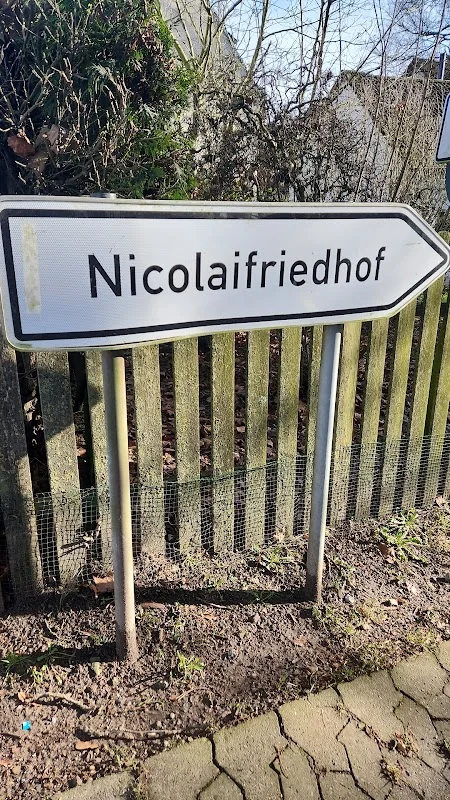
The Nicolaifriedhof in Bielefeld is a place that many search for as Nikolaifriedhof, but officially it is called Nicolaifriedhof. It is located at Herforder Straße 140 in 33609 Bielefeld, between Herforder Straße and Eckendorfer Straße, and despite the busy surroundings, it feels like a quiet green island. Old beeches, open meadow areas, and winding paths give the site a park-like character to this day. The city describes the place as a space of silence and reflection; at the same time, it is a historical cemetery with a developed structure, clear pathways, and a development closely linked to the city's history. ([bielefeld.de](https://www.bielefeld.de/nicolaifriedhof))
History and Development of the Nicolaifriedhof
When the Johannisfriedhof was opened west of the city center in 1874, it was too far away for the people in the east and northeast of Bielefeld. From this situation arose the idea of a cemetery of its own near the residential neighborhoods. Still in the same year, plots were purchased; on August 17, 1874, the official approval followed. After only one year of construction, the facility was completed. The original plan relied on a straight pathway layout with longitudinal and transverse paths, family graves along the paths, and row graves in the middle areas. The design remained deliberately simple; a chapel or a grave digger's house was not initially built. Just a year later, the city took over the administration. ([bielefeld.de](https://www.bielefeld.de/nicolaifriedhof))
By the turn of the century, the capacities were exhausted, which is why the cemetery was expanded. Later, the construction of the Sennefriedhof on August 15, 1912 fundamentally changed the usage: row graves were no longer allocated, instead, choice burial sites remained possible. Another cut came in 1969 when the Herforder Straße was widened for the city tram line to Milse, and the former main entrance was lost; the new access has since been located on the connecting path between Herforder and Eckendorfer Straße. Part of the facility was taken out of active cemetery use in 1986 and 1987. The city's redesign concept from 2017 provided for no further graves to be occupied and for the burial site to be gradually abandoned. In autumn 2023, this resulted in a cemetery park, which was ceremoniously inaugurated on September 8, 2024. ([bielefeld.de](https://www.bielefeld.de/nicolaifriedhof))
This development is crucial for the current impression of the place. The Nicolaifriedhof is not a static monument, but a facility that has evolved from an urban cemetery of the 19th century into a place consciously understood as a green space of the 21st century. The early, functional structure with straight paths and densely occupied fields explains the historical depth, while the later expansions and the later freeing of individual areas show how the needs of the city have shifted over time. This juxtaposition of original cemetery logic, later expansions, and current park use makes the facility so interesting for visitors who want to experience history, urban development, and quiet landscapes in one place. Those who visit the Nicolaifriedhof today read not only grave history along its paths but also Bielefeld's city history. ([bielefeld.de](https://www.bielefeld.de/nicolaifriedhof))
Access, Location, and Parking at Nicolaifriedhof
The location of the Nicolaifriedhof is important for both SEO and visitors, as the facility is situated in the middle of a densely built-up and well-connected urban area. The official address is Herforder Straße 140, 33609 Bielefeld. The cemetery does not have its own stop, but it is easily accessible via the city tram line 2 towards Milse. The access is located between the stops Beckhausstraße and Stadtheider Straße; according to the city's brochure, it is about a seven-minute walk from the Beckhausstraße stop. Those arriving by car can access the site via Herforder Straße or Eckendorfer Straße. ([bielefeld.de](https://www.bielefeld.de/nicolaifriedhof))
For parking, the city mentions several options: Coming from the city center, you can park on the right side of Herforder Straße, and according to the brochure, there are parking options on the cemetery grounds from both sides. This is a practical advantage for people coming to a grave site, for a quiet visit, or for a city event. At the same time, the place remains easily accessible on foot and thus suitable for short distances. The city's information sheet emphasizes that the Nicolaifriedhof forms a green oasis amidst commercial enterprises. It is precisely this mix of accessibility, proximity to the city, and seclusion that makes the address on Herforder Straße so interesting for visitors. ([bielefeld.de](https://www.bielefeld.de/nicolaifriedhof))
For users specifically looking for access, parking, or routes with public transport, the Nicolaifriedhof is clearly described: no complicated special situation, but a centrally located facility with easily understandable access. The combination of tram, footpaths, and parking options not only facilitates visits to a grave but also quiet walks or cultural tours. Especially in a densely built environment, this combination is valuable because it keeps the facility open without turning it into a mere thoroughfare or transit area. The cemetery remains accessible but not banal; therein lies part of its appeal. ([bielefeld.de](https://www.bielefeld.de/nicolaifriedhof))
Park Cemetery, Tree Population, and Natural Value
Those looking for photos of the Nicolaifriedhof will primarily want to see the atmosphere: old trees, open meadows, paths with depth, and a spatial feeling that resembles a historical park rather than a purely functional cemetery facility. This impression is explicitly described by the city itself. Characteristic are the old tree population, including some beeches from the founding period, as well as extensive meadow areas and enchanted corners. The brochure additionally emphasizes the diversity of deciduous shrubs, the impressive blood beeches, and the beautiful oaks in individual sections. Thus, the impression changes significantly depending on the season: spring, summer, and autumn each provide different colors and light moods. ([bielefeld.de](https://www.bielefeld.de/nicolaifriedhof))
From an ecological perspective, the Nicolaifriedhof is also remarkable. Since 1992, it has been included in the city biotope mapping of Bielefeld because it is considered one of the oldest park cemeteries on the edge of the city center. Old trees, hedges, and calcareous grasslands make it, according to the city, a refuge for humans and animals; on moss-rich calcareous grasslands, among other things, harebells grow wild, and solitary bees find niches there. The redesign into a cemetery park has not destroyed these qualities but emphasized them: the place is now intended to provide recreation as a nature-friendly green island while promoting nature. So, for those seeking nature, tranquility, park character, or a special cemetery in Bielefeld, they will find an unusual mix here. ([bielefeld.de](https://www.bielefeld.de/sites/default/files/datei/2020/faltblatt_nicolaifriedhof.pdf))
Additionally, there is the effect in the immediate urban space. Between Herforder and Eckendorfer Straße, the cemetery is not shielded in a peripheral location but is situated in a heavily used environment. It is precisely for this reason that the old trees and open green spaces have such a strong effect: they form a contrast to traffic, commerce, and building density. For visitors, this creates a place that is not only historically interesting but also functions as a short relaxation area. The Nicolaifriedhof is thus both a cultural-historical facility, an inner-city natural space, and an example of how cemetery areas in a growing city can take on new roles without losing their memorial power. ([bielefeld.de](https://www.bielefeld.de/nicolaifriedhof))
Types of Graves, Tree Burial Sites, and Current Use
Historically, the Nicolaifriedhof was initially designed as a classic municipal cemetery with family burial sites along the paths and row graves in the middle areas. With the construction of the Sennefriedhof, row graves were discontinued in 1912, so later only choice burial sites were allocated. The city's information page still names the classic earth choice burial site as the traditional type of grave for coffin burials. This type of grave can be selected in terms of its location and size during a site visit and can also be purchased in advance if desired. Additionally, up to two urns can be buried on an earth choice burial site. ([bielefeld.de](https://www.bielefeld.de/nicolaifriedhof))
A special role is played by the tree burial site. The cemetery administration has offered it since autumn 2012; several burial sites are arranged in a circular pattern around a tree, and up to two urns can be buried per burial site. According to the brochure, no individual grave maintenance is required and is also not possible. Instead of flower beds or elaborate planting, the facility remains deliberately understated to maintain the park-like character. After the redesign, there is still a separate area for the remaining resting places; at the same time, part of the area has been newly interpreted as a cemetery park and public green space. This makes the place readable for visitors, relatives, and walkers alike: as a cemetery, as a historical structure, and as an urban open space. ([bielefeld.de](https://www.bielefeld.de/sites/default/files/datei/2020/faltblatt_nicolaifriedhof.pdf))
For relatives, this development is practically relevant because it shows that the Nicolaifriedhof has not completely disappeared but continues to be used in parts. The city makes it clear that existing burial sites can still be used for burials. At the same time, the place remains in a transitional phase between traditional cemetery use and new park function. This results in a very concrete image for search queries like Nicolaifriedhof Bielefeld, tree burial sites Bielefeld, or cemetery park Bielefeld: It is about a place where spaces for remembrance, tranquility, nature, and limited continued use coexist. Those expecting a classic large cemetery are mistaken; those expecting a completely abandoned park are also mistaken. It is precisely this intermediate position that is special. ([bielefeld.de](https://www.bielefeld.de/sites/default/files/datei/2020/faltblatt_nicolaifriedhof.pdf))
Photos, Walks, and Special Motifs
The keyword photos fits very well with the Nicolaifriedhof because the place visually offers much more than a typical cemetery facility. Those who photograph there will first find the large lines: the paths between Herforder and Eckendorfer Straße, the old tree population, grassy areas with wide views, and repeatedly small, quiet perspectives. The city explicitly describes enchanted corners that invite you to linger, and these details make the location photographically interesting. The seasonal changes are particularly atmospheric: in May and June, the rhododendron bushes are among the highlights of the cemetery, in summer the meadows appear open and bright, and in autumn the tree crowns stand out more strongly. ([bielefeld.de](https://www.bielefeld.de/nicolaifriedhof))
Among the documentable peculiarities is also the family grave site Kuxmann with its Art Nouveau grave wall, which is mentioned in the brochure. Such historical grave markers give the place faces and tell of Bielefeld's industrial and family history. The cemetery is also geographically multifaceted due to its old main path, the later expansion areas, and the newer cemetery park; photographically, this allows for the visibility of change without repeating a single perspective. Those who publish images should treat the place with respect, as the Nicolaifriedhof remains a cemetery and for many people a very personal space. This mix of historical substance, nature, tranquility, and proximity to the city makes motifs here credible and unmistakable. ([bielefeld.de](https://www.bielefeld.de/sites/default/files/datei/2020/faltblatt_nicolaifriedhof.pdf))
Even for editorial or tourist photo series, the place is interesting because it offers not only individual sights but a sequence of moods: entrance situation, pathways, groups of trees, open spaces, and detailed views of historical grave markers. This results in a variety of motifs for social media, local reports, or city portraits. Therefore, those searching for Nicolaifriedhof photos will find not just a single viewpoint but a whole visual language of green, stone, shadow, and memory. Ideally, such photos show the character of the place: not loud, not spectacular, but quiet, grown, and surprisingly rich in details. ([bielefeld.de](https://www.bielefeld.de/nicolaifriedhof))
Guided Tours, Events, and Practical Information
Although the Nicolaifriedhof is not a classic event location, it is indeed used for urban and cultural purposes. The city of Bielefeld describes it as a station of the architectural cultural walk through the Lehmstichviertel; there, historical backgrounds regarding design and origin are conveyed. Additionally, the city lists a guided walk at the Nicolaifriedhof in the annual program of Bielefeld cemeteries for 2026. This is relevant for users looking for guided tours, walks, or events: the place is not a daily museum operation, but it is integrated into urban mediation formats. ([bielefeld.de](https://www.bielefeld.de/node/29612?utm_source=openai))
Practically important is also: The Nicolaifriedhof is accessible to pedestrians around the clock, according to the city's brochure. However, this does not mean that every area should be used at all times; consideration, tranquility, and respect for burial sites remain central. For visitors, this openness primarily means flexibility when planning a quiet walk, a visit to a grave site, or a thematic walk. Those interested in the area can additionally use the cemetery plan that the city provides online. There, the sections and paths can be traced, making the place easier to navigate during a first visit. Thus, the Nicolaifriedhof combines practical accessibility with historical depth and a newly interpreted green function today. ([bielefeld.de](https://www.bielefeld.de/sites/default/files/datei/2020/faltblatt_nicolaifriedhof.pdf))
For search queries like Nicolaifriedhof Bielefeld, Nicolaifriedhof photos, Nicolaifriedhof access, or Nicolaifriedhof guided tours, it is important to know that the place, while not a classic event space, is historically, scenically, and culturally surprisingly dense. Those looking for a quiet walk, a burial site, a view of historical trees, or a thematic walk will find an offer that lies precisely between a place of remembrance and a green space. This mix also explains why the Nicolaifriedhof appears in both the city biotope mapping and the architectural cultural walk. It is not just a cemetery but a part of urban everyday life that connects the past, nature, and present. ([bielefeld.de](https://www.bielefeld.de/sites/default/files/datei/2020/faltblatt_nicolaifriedhof.pdf))
Sources:
Show moreShow less
Nicolaifriedhof | Bielefeld & History
The Nicolaifriedhof in Bielefeld is a place that many search for as Nikolaifriedhof, but officially it is called Nicolaifriedhof. It is located at Herforder Straße 140 in 33609 Bielefeld, between Herforder Straße and Eckendorfer Straße, and despite the busy surroundings, it feels like a quiet green island. Old beeches, open meadow areas, and winding paths give the site a park-like character to this day. The city describes the place as a space of silence and reflection; at the same time, it is a historical cemetery with a developed structure, clear pathways, and a development closely linked to the city's history. ([bielefeld.de](https://www.bielefeld.de/nicolaifriedhof))
History and Development of the Nicolaifriedhof
When the Johannisfriedhof was opened west of the city center in 1874, it was too far away for the people in the east and northeast of Bielefeld. From this situation arose the idea of a cemetery of its own near the residential neighborhoods. Still in the same year, plots were purchased; on August 17, 1874, the official approval followed. After only one year of construction, the facility was completed. The original plan relied on a straight pathway layout with longitudinal and transverse paths, family graves along the paths, and row graves in the middle areas. The design remained deliberately simple; a chapel or a grave digger's house was not initially built. Just a year later, the city took over the administration. ([bielefeld.de](https://www.bielefeld.de/nicolaifriedhof))
By the turn of the century, the capacities were exhausted, which is why the cemetery was expanded. Later, the construction of the Sennefriedhof on August 15, 1912 fundamentally changed the usage: row graves were no longer allocated, instead, choice burial sites remained possible. Another cut came in 1969 when the Herforder Straße was widened for the city tram line to Milse, and the former main entrance was lost; the new access has since been located on the connecting path between Herforder and Eckendorfer Straße. Part of the facility was taken out of active cemetery use in 1986 and 1987. The city's redesign concept from 2017 provided for no further graves to be occupied and for the burial site to be gradually abandoned. In autumn 2023, this resulted in a cemetery park, which was ceremoniously inaugurated on September 8, 2024. ([bielefeld.de](https://www.bielefeld.de/nicolaifriedhof))
This development is crucial for the current impression of the place. The Nicolaifriedhof is not a static monument, but a facility that has evolved from an urban cemetery of the 19th century into a place consciously understood as a green space of the 21st century. The early, functional structure with straight paths and densely occupied fields explains the historical depth, while the later expansions and the later freeing of individual areas show how the needs of the city have shifted over time. This juxtaposition of original cemetery logic, later expansions, and current park use makes the facility so interesting for visitors who want to experience history, urban development, and quiet landscapes in one place. Those who visit the Nicolaifriedhof today read not only grave history along its paths but also Bielefeld's city history. ([bielefeld.de](https://www.bielefeld.de/nicolaifriedhof))
Access, Location, and Parking at Nicolaifriedhof
The location of the Nicolaifriedhof is important for both SEO and visitors, as the facility is situated in the middle of a densely built-up and well-connected urban area. The official address is Herforder Straße 140, 33609 Bielefeld. The cemetery does not have its own stop, but it is easily accessible via the city tram line 2 towards Milse. The access is located between the stops Beckhausstraße and Stadtheider Straße; according to the city's brochure, it is about a seven-minute walk from the Beckhausstraße stop. Those arriving by car can access the site via Herforder Straße or Eckendorfer Straße. ([bielefeld.de](https://www.bielefeld.de/nicolaifriedhof))
For parking, the city mentions several options: Coming from the city center, you can park on the right side of Herforder Straße, and according to the brochure, there are parking options on the cemetery grounds from both sides. This is a practical advantage for people coming to a grave site, for a quiet visit, or for a city event. At the same time, the place remains easily accessible on foot and thus suitable for short distances. The city's information sheet emphasizes that the Nicolaifriedhof forms a green oasis amidst commercial enterprises. It is precisely this mix of accessibility, proximity to the city, and seclusion that makes the address on Herforder Straße so interesting for visitors. ([bielefeld.de](https://www.bielefeld.de/nicolaifriedhof))
For users specifically looking for access, parking, or routes with public transport, the Nicolaifriedhof is clearly described: no complicated special situation, but a centrally located facility with easily understandable access. The combination of tram, footpaths, and parking options not only facilitates visits to a grave but also quiet walks or cultural tours. Especially in a densely built environment, this combination is valuable because it keeps the facility open without turning it into a mere thoroughfare or transit area. The cemetery remains accessible but not banal; therein lies part of its appeal. ([bielefeld.de](https://www.bielefeld.de/nicolaifriedhof))
Park Cemetery, Tree Population, and Natural Value
Those looking for photos of the Nicolaifriedhof will primarily want to see the atmosphere: old trees, open meadows, paths with depth, and a spatial feeling that resembles a historical park rather than a purely functional cemetery facility. This impression is explicitly described by the city itself. Characteristic are the old tree population, including some beeches from the founding period, as well as extensive meadow areas and enchanted corners. The brochure additionally emphasizes the diversity of deciduous shrubs, the impressive blood beeches, and the beautiful oaks in individual sections. Thus, the impression changes significantly depending on the season: spring, summer, and autumn each provide different colors and light moods. ([bielefeld.de](https://www.bielefeld.de/nicolaifriedhof))
From an ecological perspective, the Nicolaifriedhof is also remarkable. Since 1992, it has been included in the city biotope mapping of Bielefeld because it is considered one of the oldest park cemeteries on the edge of the city center. Old trees, hedges, and calcareous grasslands make it, according to the city, a refuge for humans and animals; on moss-rich calcareous grasslands, among other things, harebells grow wild, and solitary bees find niches there. The redesign into a cemetery park has not destroyed these qualities but emphasized them: the place is now intended to provide recreation as a nature-friendly green island while promoting nature. So, for those seeking nature, tranquility, park character, or a special cemetery in Bielefeld, they will find an unusual mix here. ([bielefeld.de](https://www.bielefeld.de/sites/default/files/datei/2020/faltblatt_nicolaifriedhof.pdf))
Additionally, there is the effect in the immediate urban space. Between Herforder and Eckendorfer Straße, the cemetery is not shielded in a peripheral location but is situated in a heavily used environment. It is precisely for this reason that the old trees and open green spaces have such a strong effect: they form a contrast to traffic, commerce, and building density. For visitors, this creates a place that is not only historically interesting but also functions as a short relaxation area. The Nicolaifriedhof is thus both a cultural-historical facility, an inner-city natural space, and an example of how cemetery areas in a growing city can take on new roles without losing their memorial power. ([bielefeld.de](https://www.bielefeld.de/nicolaifriedhof))
Types of Graves, Tree Burial Sites, and Current Use
Historically, the Nicolaifriedhof was initially designed as a classic municipal cemetery with family burial sites along the paths and row graves in the middle areas. With the construction of the Sennefriedhof, row graves were discontinued in 1912, so later only choice burial sites were allocated. The city's information page still names the classic earth choice burial site as the traditional type of grave for coffin burials. This type of grave can be selected in terms of its location and size during a site visit and can also be purchased in advance if desired. Additionally, up to two urns can be buried on an earth choice burial site. ([bielefeld.de](https://www.bielefeld.de/nicolaifriedhof))
A special role is played by the tree burial site. The cemetery administration has offered it since autumn 2012; several burial sites are arranged in a circular pattern around a tree, and up to two urns can be buried per burial site. According to the brochure, no individual grave maintenance is required and is also not possible. Instead of flower beds or elaborate planting, the facility remains deliberately understated to maintain the park-like character. After the redesign, there is still a separate area for the remaining resting places; at the same time, part of the area has been newly interpreted as a cemetery park and public green space. This makes the place readable for visitors, relatives, and walkers alike: as a cemetery, as a historical structure, and as an urban open space. ([bielefeld.de](https://www.bielefeld.de/sites/default/files/datei/2020/faltblatt_nicolaifriedhof.pdf))
For relatives, this development is practically relevant because it shows that the Nicolaifriedhof has not completely disappeared but continues to be used in parts. The city makes it clear that existing burial sites can still be used for burials. At the same time, the place remains in a transitional phase between traditional cemetery use and new park function. This results in a very concrete image for search queries like Nicolaifriedhof Bielefeld, tree burial sites Bielefeld, or cemetery park Bielefeld: It is about a place where spaces for remembrance, tranquility, nature, and limited continued use coexist. Those expecting a classic large cemetery are mistaken; those expecting a completely abandoned park are also mistaken. It is precisely this intermediate position that is special. ([bielefeld.de](https://www.bielefeld.de/sites/default/files/datei/2020/faltblatt_nicolaifriedhof.pdf))
Photos, Walks, and Special Motifs
The keyword photos fits very well with the Nicolaifriedhof because the place visually offers much more than a typical cemetery facility. Those who photograph there will first find the large lines: the paths between Herforder and Eckendorfer Straße, the old tree population, grassy areas with wide views, and repeatedly small, quiet perspectives. The city explicitly describes enchanted corners that invite you to linger, and these details make the location photographically interesting. The seasonal changes are particularly atmospheric: in May and June, the rhododendron bushes are among the highlights of the cemetery, in summer the meadows appear open and bright, and in autumn the tree crowns stand out more strongly. ([bielefeld.de](https://www.bielefeld.de/nicolaifriedhof))
Among the documentable peculiarities is also the family grave site Kuxmann with its Art Nouveau grave wall, which is mentioned in the brochure. Such historical grave markers give the place faces and tell of Bielefeld's industrial and family history. The cemetery is also geographically multifaceted due to its old main path, the later expansion areas, and the newer cemetery park; photographically, this allows for the visibility of change without repeating a single perspective. Those who publish images should treat the place with respect, as the Nicolaifriedhof remains a cemetery and for many people a very personal space. This mix of historical substance, nature, tranquility, and proximity to the city makes motifs here credible and unmistakable. ([bielefeld.de](https://www.bielefeld.de/sites/default/files/datei/2020/faltblatt_nicolaifriedhof.pdf))
Even for editorial or tourist photo series, the place is interesting because it offers not only individual sights but a sequence of moods: entrance situation, pathways, groups of trees, open spaces, and detailed views of historical grave markers. This results in a variety of motifs for social media, local reports, or city portraits. Therefore, those searching for Nicolaifriedhof photos will find not just a single viewpoint but a whole visual language of green, stone, shadow, and memory. Ideally, such photos show the character of the place: not loud, not spectacular, but quiet, grown, and surprisingly rich in details. ([bielefeld.de](https://www.bielefeld.de/nicolaifriedhof))
Guided Tours, Events, and Practical Information
Although the Nicolaifriedhof is not a classic event location, it is indeed used for urban and cultural purposes. The city of Bielefeld describes it as a station of the architectural cultural walk through the Lehmstichviertel; there, historical backgrounds regarding design and origin are conveyed. Additionally, the city lists a guided walk at the Nicolaifriedhof in the annual program of Bielefeld cemeteries for 2026. This is relevant for users looking for guided tours, walks, or events: the place is not a daily museum operation, but it is integrated into urban mediation formats. ([bielefeld.de](https://www.bielefeld.de/node/29612?utm_source=openai))
Practically important is also: The Nicolaifriedhof is accessible to pedestrians around the clock, according to the city's brochure. However, this does not mean that every area should be used at all times; consideration, tranquility, and respect for burial sites remain central. For visitors, this openness primarily means flexibility when planning a quiet walk, a visit to a grave site, or a thematic walk. Those interested in the area can additionally use the cemetery plan that the city provides online. There, the sections and paths can be traced, making the place easier to navigate during a first visit. Thus, the Nicolaifriedhof combines practical accessibility with historical depth and a newly interpreted green function today. ([bielefeld.de](https://www.bielefeld.de/sites/default/files/datei/2020/faltblatt_nicolaifriedhof.pdf))
For search queries like Nicolaifriedhof Bielefeld, Nicolaifriedhof photos, Nicolaifriedhof access, or Nicolaifriedhof guided tours, it is important to know that the place, while not a classic event space, is historically, scenically, and culturally surprisingly dense. Those looking for a quiet walk, a burial site, a view of historical trees, or a thematic walk will find an offer that lies precisely between a place of remembrance and a green space. This mix also explains why the Nicolaifriedhof appears in both the city biotope mapping and the architectural cultural walk. It is not just a cemetery but a part of urban everyday life that connects the past, nature, and present. ([bielefeld.de](https://www.bielefeld.de/sites/default/files/datei/2020/faltblatt_nicolaifriedhof.pdf))
Sources:
Nicolaifriedhof | Bielefeld & History
The Nicolaifriedhof in Bielefeld is a place that many search for as Nikolaifriedhof, but officially it is called Nicolaifriedhof. It is located at Herforder Straße 140 in 33609 Bielefeld, between Herforder Straße and Eckendorfer Straße, and despite the busy surroundings, it feels like a quiet green island. Old beeches, open meadow areas, and winding paths give the site a park-like character to this day. The city describes the place as a space of silence and reflection; at the same time, it is a historical cemetery with a developed structure, clear pathways, and a development closely linked to the city's history. ([bielefeld.de](https://www.bielefeld.de/nicolaifriedhof))
History and Development of the Nicolaifriedhof
When the Johannisfriedhof was opened west of the city center in 1874, it was too far away for the people in the east and northeast of Bielefeld. From this situation arose the idea of a cemetery of its own near the residential neighborhoods. Still in the same year, plots were purchased; on August 17, 1874, the official approval followed. After only one year of construction, the facility was completed. The original plan relied on a straight pathway layout with longitudinal and transverse paths, family graves along the paths, and row graves in the middle areas. The design remained deliberately simple; a chapel or a grave digger's house was not initially built. Just a year later, the city took over the administration. ([bielefeld.de](https://www.bielefeld.de/nicolaifriedhof))
By the turn of the century, the capacities were exhausted, which is why the cemetery was expanded. Later, the construction of the Sennefriedhof on August 15, 1912 fundamentally changed the usage: row graves were no longer allocated, instead, choice burial sites remained possible. Another cut came in 1969 when the Herforder Straße was widened for the city tram line to Milse, and the former main entrance was lost; the new access has since been located on the connecting path between Herforder and Eckendorfer Straße. Part of the facility was taken out of active cemetery use in 1986 and 1987. The city's redesign concept from 2017 provided for no further graves to be occupied and for the burial site to be gradually abandoned. In autumn 2023, this resulted in a cemetery park, which was ceremoniously inaugurated on September 8, 2024. ([bielefeld.de](https://www.bielefeld.de/nicolaifriedhof))
This development is crucial for the current impression of the place. The Nicolaifriedhof is not a static monument, but a facility that has evolved from an urban cemetery of the 19th century into a place consciously understood as a green space of the 21st century. The early, functional structure with straight paths and densely occupied fields explains the historical depth, while the later expansions and the later freeing of individual areas show how the needs of the city have shifted over time. This juxtaposition of original cemetery logic, later expansions, and current park use makes the facility so interesting for visitors who want to experience history, urban development, and quiet landscapes in one place. Those who visit the Nicolaifriedhof today read not only grave history along its paths but also Bielefeld's city history. ([bielefeld.de](https://www.bielefeld.de/nicolaifriedhof))
Access, Location, and Parking at Nicolaifriedhof
The location of the Nicolaifriedhof is important for both SEO and visitors, as the facility is situated in the middle of a densely built-up and well-connected urban area. The official address is Herforder Straße 140, 33609 Bielefeld. The cemetery does not have its own stop, but it is easily accessible via the city tram line 2 towards Milse. The access is located between the stops Beckhausstraße and Stadtheider Straße; according to the city's brochure, it is about a seven-minute walk from the Beckhausstraße stop. Those arriving by car can access the site via Herforder Straße or Eckendorfer Straße. ([bielefeld.de](https://www.bielefeld.de/nicolaifriedhof))
For parking, the city mentions several options: Coming from the city center, you can park on the right side of Herforder Straße, and according to the brochure, there are parking options on the cemetery grounds from both sides. This is a practical advantage for people coming to a grave site, for a quiet visit, or for a city event. At the same time, the place remains easily accessible on foot and thus suitable for short distances. The city's information sheet emphasizes that the Nicolaifriedhof forms a green oasis amidst commercial enterprises. It is precisely this mix of accessibility, proximity to the city, and seclusion that makes the address on Herforder Straße so interesting for visitors. ([bielefeld.de](https://www.bielefeld.de/nicolaifriedhof))
For users specifically looking for access, parking, or routes with public transport, the Nicolaifriedhof is clearly described: no complicated special situation, but a centrally located facility with easily understandable access. The combination of tram, footpaths, and parking options not only facilitates visits to a grave but also quiet walks or cultural tours. Especially in a densely built environment, this combination is valuable because it keeps the facility open without turning it into a mere thoroughfare or transit area. The cemetery remains accessible but not banal; therein lies part of its appeal. ([bielefeld.de](https://www.bielefeld.de/nicolaifriedhof))
Park Cemetery, Tree Population, and Natural Value
Those looking for photos of the Nicolaifriedhof will primarily want to see the atmosphere: old trees, open meadows, paths with depth, and a spatial feeling that resembles a historical park rather than a purely functional cemetery facility. This impression is explicitly described by the city itself. Characteristic are the old tree population, including some beeches from the founding period, as well as extensive meadow areas and enchanted corners. The brochure additionally emphasizes the diversity of deciduous shrubs, the impressive blood beeches, and the beautiful oaks in individual sections. Thus, the impression changes significantly depending on the season: spring, summer, and autumn each provide different colors and light moods. ([bielefeld.de](https://www.bielefeld.de/nicolaifriedhof))
From an ecological perspective, the Nicolaifriedhof is also remarkable. Since 1992, it has been included in the city biotope mapping of Bielefeld because it is considered one of the oldest park cemeteries on the edge of the city center. Old trees, hedges, and calcareous grasslands make it, according to the city, a refuge for humans and animals; on moss-rich calcareous grasslands, among other things, harebells grow wild, and solitary bees find niches there. The redesign into a cemetery park has not destroyed these qualities but emphasized them: the place is now intended to provide recreation as a nature-friendly green island while promoting nature. So, for those seeking nature, tranquility, park character, or a special cemetery in Bielefeld, they will find an unusual mix here. ([bielefeld.de](https://www.bielefeld.de/sites/default/files/datei/2020/faltblatt_nicolaifriedhof.pdf))
Additionally, there is the effect in the immediate urban space. Between Herforder and Eckendorfer Straße, the cemetery is not shielded in a peripheral location but is situated in a heavily used environment. It is precisely for this reason that the old trees and open green spaces have such a strong effect: they form a contrast to traffic, commerce, and building density. For visitors, this creates a place that is not only historically interesting but also functions as a short relaxation area. The Nicolaifriedhof is thus both a cultural-historical facility, an inner-city natural space, and an example of how cemetery areas in a growing city can take on new roles without losing their memorial power. ([bielefeld.de](https://www.bielefeld.de/nicolaifriedhof))
Types of Graves, Tree Burial Sites, and Current Use
Historically, the Nicolaifriedhof was initially designed as a classic municipal cemetery with family burial sites along the paths and row graves in the middle areas. With the construction of the Sennefriedhof, row graves were discontinued in 1912, so later only choice burial sites were allocated. The city's information page still names the classic earth choice burial site as the traditional type of grave for coffin burials. This type of grave can be selected in terms of its location and size during a site visit and can also be purchased in advance if desired. Additionally, up to two urns can be buried on an earth choice burial site. ([bielefeld.de](https://www.bielefeld.de/nicolaifriedhof))
A special role is played by the tree burial site. The cemetery administration has offered it since autumn 2012; several burial sites are arranged in a circular pattern around a tree, and up to two urns can be buried per burial site. According to the brochure, no individual grave maintenance is required and is also not possible. Instead of flower beds or elaborate planting, the facility remains deliberately understated to maintain the park-like character. After the redesign, there is still a separate area for the remaining resting places; at the same time, part of the area has been newly interpreted as a cemetery park and public green space. This makes the place readable for visitors, relatives, and walkers alike: as a cemetery, as a historical structure, and as an urban open space. ([bielefeld.de](https://www.bielefeld.de/sites/default/files/datei/2020/faltblatt_nicolaifriedhof.pdf))
For relatives, this development is practically relevant because it shows that the Nicolaifriedhof has not completely disappeared but continues to be used in parts. The city makes it clear that existing burial sites can still be used for burials. At the same time, the place remains in a transitional phase between traditional cemetery use and new park function. This results in a very concrete image for search queries like Nicolaifriedhof Bielefeld, tree burial sites Bielefeld, or cemetery park Bielefeld: It is about a place where spaces for remembrance, tranquility, nature, and limited continued use coexist. Those expecting a classic large cemetery are mistaken; those expecting a completely abandoned park are also mistaken. It is precisely this intermediate position that is special. ([bielefeld.de](https://www.bielefeld.de/sites/default/files/datei/2020/faltblatt_nicolaifriedhof.pdf))
Photos, Walks, and Special Motifs
The keyword photos fits very well with the Nicolaifriedhof because the place visually offers much more than a typical cemetery facility. Those who photograph there will first find the large lines: the paths between Herforder and Eckendorfer Straße, the old tree population, grassy areas with wide views, and repeatedly small, quiet perspectives. The city explicitly describes enchanted corners that invite you to linger, and these details make the location photographically interesting. The seasonal changes are particularly atmospheric: in May and June, the rhododendron bushes are among the highlights of the cemetery, in summer the meadows appear open and bright, and in autumn the tree crowns stand out more strongly. ([bielefeld.de](https://www.bielefeld.de/nicolaifriedhof))
Among the documentable peculiarities is also the family grave site Kuxmann with its Art Nouveau grave wall, which is mentioned in the brochure. Such historical grave markers give the place faces and tell of Bielefeld's industrial and family history. The cemetery is also geographically multifaceted due to its old main path, the later expansion areas, and the newer cemetery park; photographically, this allows for the visibility of change without repeating a single perspective. Those who publish images should treat the place with respect, as the Nicolaifriedhof remains a cemetery and for many people a very personal space. This mix of historical substance, nature, tranquility, and proximity to the city makes motifs here credible and unmistakable. ([bielefeld.de](https://www.bielefeld.de/sites/default/files/datei/2020/faltblatt_nicolaifriedhof.pdf))
Even for editorial or tourist photo series, the place is interesting because it offers not only individual sights but a sequence of moods: entrance situation, pathways, groups of trees, open spaces, and detailed views of historical grave markers. This results in a variety of motifs for social media, local reports, or city portraits. Therefore, those searching for Nicolaifriedhof photos will find not just a single viewpoint but a whole visual language of green, stone, shadow, and memory. Ideally, such photos show the character of the place: not loud, not spectacular, but quiet, grown, and surprisingly rich in details. ([bielefeld.de](https://www.bielefeld.de/nicolaifriedhof))
Guided Tours, Events, and Practical Information
Although the Nicolaifriedhof is not a classic event location, it is indeed used for urban and cultural purposes. The city of Bielefeld describes it as a station of the architectural cultural walk through the Lehmstichviertel; there, historical backgrounds regarding design and origin are conveyed. Additionally, the city lists a guided walk at the Nicolaifriedhof in the annual program of Bielefeld cemeteries for 2026. This is relevant for users looking for guided tours, walks, or events: the place is not a daily museum operation, but it is integrated into urban mediation formats. ([bielefeld.de](https://www.bielefeld.de/node/29612?utm_source=openai))
Practically important is also: The Nicolaifriedhof is accessible to pedestrians around the clock, according to the city's brochure. However, this does not mean that every area should be used at all times; consideration, tranquility, and respect for burial sites remain central. For visitors, this openness primarily means flexibility when planning a quiet walk, a visit to a grave site, or a thematic walk. Those interested in the area can additionally use the cemetery plan that the city provides online. There, the sections and paths can be traced, making the place easier to navigate during a first visit. Thus, the Nicolaifriedhof combines practical accessibility with historical depth and a newly interpreted green function today. ([bielefeld.de](https://www.bielefeld.de/sites/default/files/datei/2020/faltblatt_nicolaifriedhof.pdf))
For search queries like Nicolaifriedhof Bielefeld, Nicolaifriedhof photos, Nicolaifriedhof access, or Nicolaifriedhof guided tours, it is important to know that the place, while not a classic event space, is historically, scenically, and culturally surprisingly dense. Those looking for a quiet walk, a burial site, a view of historical trees, or a thematic walk will find an offer that lies precisely between a place of remembrance and a green space. This mix also explains why the Nicolaifriedhof appears in both the city biotope mapping and the architectural cultural walk. It is not just a cemetery but a part of urban everyday life that connects the past, nature, and present. ([bielefeld.de](https://www.bielefeld.de/sites/default/files/datei/2020/faltblatt_nicolaifriedhof.pdf))
Sources:
Frequently Asked Questions
Reviews
No reviews found