
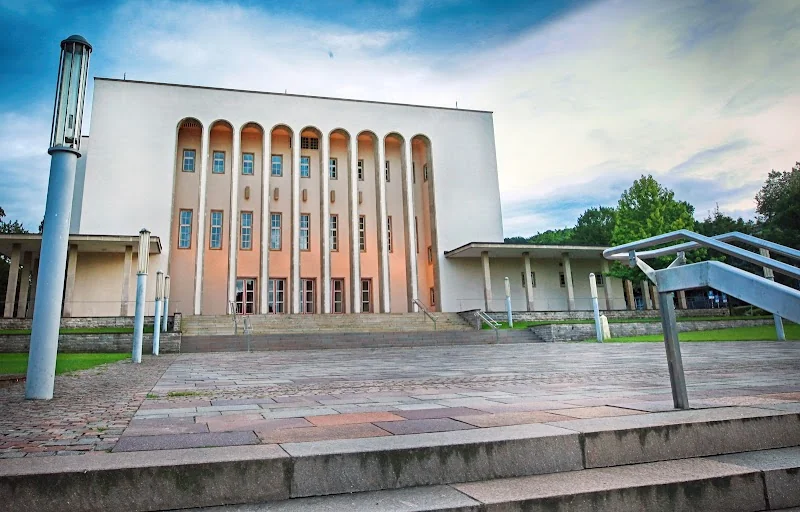
Bielefeld
Lampingstraße 16, 33615 Bielefeld, Deutschland
Rudolf-Oetker-Halle | Program & Parking 2026
The Rudolf-Oetker-Halle is the concert hall for Bielefeld and the OstWestfalenLippe region. It connects the Great Hall, the Small Hall, and a modern foyer to create a venue that hosts classical concerts as well as jazz, chamber music, readings, receptions, and special cultural formats. The house is not only an event venue but also a cultural meeting point with character: The Bielefeld Philharmonic Orchestra is the programmatic centerpiece, complemented by guest orchestras, ensembles, emerging artists, and recurring in-house formats. Since 1930, the hall has shaped the city's music scene, and since 2018, its management and artistic direction have been under the Bühnen und Orchester der Stadt Bielefeld. Those searching for Rudolf-Oetker-Halle program, Rudolf-Oetker-Halle events, or Rudolf-Oetker-Halle today will find a venue with a rich tradition, a vibrant schedule, and clear service paths for visitors. ([buo-bielefeld.de](https://buo-bielefeld.de/infos-mehr/das-sind-wir/ueber-uns))
Program today, 2026, and upcoming events
The search interest surrounding the Rudolf-Oetker-Halle is significantly shaped by programs and dates. Accordingly, the official calendar of the Bühnen und Orchester Bielefeld is very important, as it consolidates the concerts of the Bielefeld Philharmonic Orchestra and the in-house events of the Rudolf-Oetker-Halle. The 2026/27 season is already visible there, and various series are being conducted for the ongoing 2025/26 season, including ROH concerts, Jazz in the concert hall, Noctune, Bielefeld Philharmonic, and Specials. This structure is particularly relevant for the search intent program today, as it allows visitors not only to find individual dates but also to compare thematic series. Those interested in a specific genre can specifically orient themselves between orchestral concerts, jazz evenings, special concerts, and family offerings. ([buo-bielefeld.de](https://www.buo-bielefeld.de/kalender))
The current examples of dates show how broadly the house is utilized. The official overview includes, among other things, the special concert Heavenly Grand on June 26, 2026, in the Great Hall, the chamber concert Hidden Love on June 29, 2026, in the Small Hall, the ROH concert Enjoyment cubed with the WDR Funkhausorchester on July 3, 2026, and the children's concert Magic Dance & Sound Wonder on July 5, 2026. This makes it clear: The Rudolf-Oetker-Halle is not just a concert hall for a single genre, but a place where large orchestral evenings, intimate chamber music, choral concerts, family formats, and innovative special evenings coexist. For the search queries upcoming events and program 2026, it is therefore especially important that the calendar is regularly maintained and reflects both the next week and the season preview. ([buo-bielefeld.de](https://www.buo-bielefeld.de/kalender))
The program profile is also clearly recognizable in terms of content. The official pages emphasize that classical works, virtuosic jazz sessions, and progressive formats find their place in the house. This means for visitors: The Rudolf-Oetker-Halle is not limited to a single genre but is oriented towards musical diversity and high quality. The Bielefeld Philharmonic Orchestra remains the resident orchestra and the backbone of the house, but the program is consciously complemented by other sound worlds. This mixture is crucial for users with the keyword program today, as it shows why the hall remains interesting for both regular guests and first-time visitors. So, anyone looking for a concert in Bielefeld will find here a mix of established series, anniversary formats, new impulses, and family-friendly dates. ([buo-bielefeld.de](https://buo-bielefeld.de/infos-mehr/das-sind-wir/ueber-uns))
Parking at the Rudolf-Oetker-Halle and directions
When searching for Rudolf-Oetker-Halle parking, the most important information is initially the honest one: There is only a limited number of public parking spaces directly at the hall. Therefore, the official pages explicitly recommend arriving by public transport. For in-house events, the admission ticket within Bielefeld is valid as a ticket in the moBiel network two hours before and after the event at no extra charge. This is a practical advantage that makes the visit much more relaxed and simultaneously reduces the search for parking. The Rudolf-Oetker-Halle is accessible via the eponymous tram stop; particularly mentioned is tram line 4. Additionally, bus lines 21, 27, 61, and 62, as well as the night bus N1, also stop there. Especially for evening concerts, this is a good option for visitors, as the journey remains predictable and the return home is not dependent on parking availability. ([buo-bielefeld.de](https://buo-bielefeld.de/infos-mehr/service/anfahrt))
For those still arriving by car, there are several alternatives in the vicinity. The official visitor information mentions parking spaces at nearby schools and the large parking areas in the university area. Particularly practical is that the parking garages at the university are free and can be reached via Universitätsstraße. From there, tram line 4 takes about five minutes to the Rudolf-Oetker-Halle stop. Additionally, the music association mentions a parking lot at Lampingstraße 16 with about 53 spaces and two hours of free parking, as well as the parking area at Melanchthonstraße 15 with 160 free parking spaces, which is about a seven-minute walk away. For people with mobility impairments, it is also relevant that there are five disabled parking spaces available at the parking lot of Bielefeld University opposite the side entrance. All of this shows: The journey is possible, but the hall relies more on public transport, short walking distances, or early parking searches than on a large drop-off situation directly in front of the entrance. ([buo-bielefeld.de](https://buo-bielefeld.de/infos-mehr/service/anfahrt))
For the search query Rudolf-Oetker-Halle Lampingstraße Bielefeld, the location is also crucial. The hall is located at Bürgerpark in Bielefeld-Mitte or in Bielefeld-West and is thus close to the city but not in the middle of a classic shopping area. This is pleasant for concert visitors because the surroundings remain quiet, and the park character rounds off the visit. At the same time, one should plan enough time, as the official pages explicitly recommend this. Those preparing for an evening in the Great Hall or Small Hall should not wait until shortly before the start to look for parking but should either arrive early or plan directly with tram and bus. This is the most realistic and convenient strategy for the Rudolf-Oetker-Halle Bielefeld parking search. ([buo-bielefeld.de](https://buo-bielefeld.de/infos-mehr/service/anfahrt))
Great Hall, Small Hall, and Foyer
The Rudolf-Oetker-Halle consists of several rooms, each suitable for different event formats. The Great Hall is the heart of the house and is described on the official site as a space for music and dance events. It features a stage with 170 square meters of performance area, a bar and kitchen area, backstage facilities, dressing rooms for artists, and a four-level stage. Technically, the hall is equipped with sound and lighting systems; barrier-free access and accessible restrooms are available. For event organizers, it is important that the hall provides its own staff and no external personnel deployment is planned. The audience capacity is 1,561 people with a balcony or 941 without a balcony and without tiers. In rentals, the Great Hall is also described as a fixed-seated room with up to 1,500 people. This combination of historical aura, large capacity, and professional equipment makes the hall a strong location for concerts, award ceremonies, and representative cultural evenings. ([kulturamt-bielefeld.de](https://kulturamt-bielefeld.de/kultur-service/raeumlichkeiten/roh-grosser-saal/))
The Small Hall is the more suitable answer to the search query Rudolf-Oetker-Halle small hall. It is officially described as a space between historical authenticity and stylish elegance. Its sound quality is ideal for chamber music concerts, song evenings, and audio recordings. At the same time, the hall can be flexibly arranged and used for readings, award ceremonies, and similar cultural events. The maximum number of guests is up to 300 people. This is particularly appealing for visitors because the Small Hall allows for a different closeness to the stage than the Great Hall: more intimate, immediate, and usually more focused on sonic nuances. The fact that the hall regularly uses the Small Hall for chamber concerts and introductions also shows the current program planning. Especially dates with introductions in the Small Hall make it clear that the room is not just an additional space but an active part of the artistic concept. ([buo-bielefeld.de](https://www.buo-bielefeld.de/infos-mehr/tickets-abos/vermietung-rudolf-oetker-halle))
The modern foyer functionally and atmospherically complements both halls. It is described as flexible and contemporary, offering variable standing and seating combinations for up to 400 people and features an integrated stage. This makes it suitable for presentations, performances, panel discussions, receptions, and similar formats. The outdoor area at Bürgerpark can be included as an outdoor lounge area during the summer months. This is where it becomes clear why the Rudolf-Oetker-Halle is more than just a classical concert house: It combines traditional concert architecture with very practical spaces for encounters, communication, and gastronomy. For those looking for photos or special views of the rooms, these three areas are particularly relevant, as they shape the character of the house: a large hall with a classical concert feel, a small hall with intimacy, and a foyer that is consciously designed to be modern and adaptable. ([buo-bielefeld.de](https://www.buo-bielefeld.de/infos-mehr/tickets-abos/vermietung-rudolf-oetker-halle))
Seating, hall plan, and capacity
The question of the Rudolf-Oetker-Halle hall plan or the best seats is among the most common search patterns for event venues. For the Rudolf-Oetker-Halle, the Great Hall is particularly relevant, as the classic seating plan with parquet, tiers, and balcony comes into play here. The official rental page describes the hall as a fixed-seated room, which is divided into parquet as well as tiers and balcony. There are two official orientation values for capacity: 1,561 seats with a balcony or 941 without a balcony and tiers, while the rental speaks of up to 1,500 people. This difference is practically understandable, as the type of event, seating arrangement, and inclusion of the balcony influence the actual number of seats. So, anyone looking for the best seat or seating plan should always consider the specific event and its seating variant. For concerts with special acoustic demands, the location in the parquet is often very sought after, while areas in the tiers can also be attractive for a wide view of the stage and hall acoustics. ([kulturamt-bielefeld.de](https://kulturamt-bielefeld.de/kultur-service/raeumlichkeiten/roh-grosser-saal/))
There is also a clear seating logic for the Small Hall, but with significantly more flexible use. Up to 300 guests are possible there, and the seating can be adjusted depending on the occasion. This is particularly interesting for events with closeness between the audience and the stage, such as chamber music, song evenings, or readings. In the foyer, the seating question is even more variable, as standing and seating can be combined, and the architecture emphasizes openness. For event organizers, this range is an important reason to rent the Rudolf-Oetker-Halle: A house that allows both large hall plans and small, flexible settings without losing its cultural character. Visitors benefit again from the fact that they can choose not only a standard concert but also between very different spatial effects. ([buo-bielefeld.de](https://www.buo-bielefeld.de/infos-mehr/tickets-abos/vermietung-rudolf-oetker-halle))
Particularly helpful is the official connection of the hall plan and accessibility. In the Rudolf-Oetker-Halle, the Great Hall, the Small Hall, and the foyer are accessible; in the Great Hall, wheelchair spaces are available in price categories 1 to 4, and in the Small Hall and foyer, the visitor service assigns suitable places. This is essential for the use of the hall plan because the choice of seats is not only based on visibility and acoustics but also on accessibility. Those looking for the seating plan for Rudolf-Oetker-Halle Bielefeld should therefore pay attention not only to the graphic but also to the respective category and the specific event setup. In this way, the hall is well usable for both classical-oriented concertgoers and guests with special access needs. ([buo-bielefeld.de](https://www.buo-bielefeld.de/infos-mehr/service/barrierefreiheit))
History, architecture, and special features
The history of the Rudolf-Oetker-Halle begins in the 1920s and is closely linked to the cultural self-image of Bielefeld. The official pages describe that the Oetker family decided in 1925 to finance a concert hall in memory of Dr. Rudolf Oetker for their hometown. In 1926, the location decision was made in favor of the west side of Bürgerpark, in 1927, the Düsseldorf architects Hans Tietmann and Kurt Haake won the competition, in 1928, the design was optimized for acoustics, and in 1929, construction began. On October 31, 1930, the hall was ceremoniously inaugurated with the Municipal Orchestra, the present-day Bielefeld Philharmonic Orchestra. This chronology is central to the hall because it shows: Here, not just a building was created, but a place intentionally planned as a musical home. The idea of a concert hall with top-notch acoustics and its own cultural identity continues to shape the house to this day. ([buo-bielefeld.de](https://buo-bielefeld.de/infos-mehr/das-sind-wir/ueber-uns))
The further history is also well documented. In 1944, a bombing raid destroyed the northwestern extension towards Lampingstraße, but the damage was repaired with the help of the Oetker family. In 1945, the Rudolf-Oetker-Halle reopened on September 30 with Mozart's Requiem. In the following decades, the house was repeatedly used for other formats, for example, when the music theater operation was relocated to the hall during the renovation of the city theater. In 2018, the management and artistic direction were taken over by the Bühnen und Orchester der Stadt Bielefeld; at the same time, the foyer on the ground floor was redesigned by Wannemacher & Möller and equipped with a new bar and stage. In 2024, a new outdoor gastronomy called ROH Garten was added, expanding the stay at Bürgerpark to a summer meeting point. This development shows that the Rudolf-Oetker-Halle is a historic house that has continually adapted to new usage situations without losing its character. ([buo-bielefeld.de](https://buo-bielefeld.de/infos-mehr/das-sind-wir/ueber-uns))
Another special point is the programmatic role of the house. The official self-presentation describes the Rudolf-Oetker-Halle as a musical center of the region and emphasizes that classical repertoires, jazz sessions, and progressive formats take place side by side here. The Bielefeld Philharmonic Orchestra is also highlighted as the resident orchestra, while international guest orchestras and emerging artists expand the offerings. For the search query photos, it is particularly relevant that the house is visible in various views: The Great Hall, Small Hall, and foyer each have their own architectural qualities. This makes the hall attractive for culture enthusiasts, event planners, and concert audiences alike. The place is thus not only a piece of city history but also an active part of current cultural life. ([buo-bielefeld.de](https://buo-bielefeld.de/infos-mehr/das-sind-wir/ueber-uns))
Tickets, accessibility, and practical information
Those visiting the Rudolf-Oetker-Halle benefit from clear service information. For in-house events, the admission ticket within Bielefeld is valid as a ticket in public transport two hours before and after the event. This is an important advantage if one is traveling without a car or does not want to organize parking and the way home again after the concert. The ticket hotline and visitor service are also clearly indicated on the official pages, allowing practical questions to be resolved quickly. For regular visitors, it is also worth checking the calendar and offer pages of the Bühnen und Orchester Bielefeld, as tickets, subscriptions, prices, and information for the individual formats are bundled there. Especially for popular concerts or special formats, it is advisable to plan early, as some dates sell out quickly. ([buo-bielefeld.de](https://www.buo-bielefeld.de/infos-mehr/service/barrierefreiheit))
Accessibility is well documented in the Rudolf-Oetker-Halle. The side entrance on Lampingstraße allows access with a wheelchair or walking aid. There is an accessible restroom in the side foyer, and from there, one can reach the bar in the main foyer at ground level or via an elevator to the hall level. The Great Hall and the Small Hall are accessible; only the tiers and balcony in the Great Hall are not. Wheelchair spaces are available in the Great Hall in price categories 1 to 4 at the right edge of the parquet. Additionally, there are five disabled parking spaces at the HSBI parking lot opposite the side entrance. For guests with hearing aids, it is important that the Great Hall is equipped with a sound system. Even though there is no tactile guidance system, the hall is well prepared for many needs. This clarity is particularly valuable for search queries like rudolf-oetker-halle parking, rudolf-oetker-halle small hall, or rudolf-oetker-halle in bielefeld, as it provides not only marketing but also concrete orientation. ([buo-bielefeld.de](https://www.buo-bielefeld.de/infos-mehr/service/barrierefreiheit))
Finally, a look at the spatial atmosphere is also part of the visit. The Rudolf-Oetker-Halle is centrally located in Bielefeld-West with a view of Bürgerpark. The Great Hall represents balanced acoustics and festive concert evenings, the Small Hall for closeness and elegance, and the foyer for versatility and encounters. Precisely for this reason, the house is interesting for various target groups: classical fans, jazz audiences, families, guests of award ceremonies, corporate events, and cultural special formats. Therefore, anyone planning an evening at the Rudolf-Oetker-Halle should not only think about tickets but also about arrival, parking, seat selection, and personal expectations of the space. The house rewards good preparation with a very characteristic concert experience. ([buo-bielefeld.de](https://www.buo-bielefeld.de/infos-mehr/tickets-abos/vermietung-rudolf-oetker-halle))
Sources:
- Rudolf-Oetker-Halle - Bühnen und Orchester der Stadt Bielefeld
- Directions - Bühnen und Orchester der Stadt Bielefeld
- Rental - Bühnen und Orchester der Stadt Bielefeld
- About us - Bühnen und Orchester der Stadt Bielefeld
- Accessibility - Bühnen und Orchester der Stadt Bielefeld
- Calendar - Bühnen und Orchester der Stadt Bielefeld
- Rudolf-Oetker-Halle (Great Hall) - Kulturamt Bielefeld
Show moreShow less
Rudolf-Oetker-Halle | Program & Parking 2026
The Rudolf-Oetker-Halle is the concert hall for Bielefeld and the OstWestfalenLippe region. It connects the Great Hall, the Small Hall, and a modern foyer to create a venue that hosts classical concerts as well as jazz, chamber music, readings, receptions, and special cultural formats. The house is not only an event venue but also a cultural meeting point with character: The Bielefeld Philharmonic Orchestra is the programmatic centerpiece, complemented by guest orchestras, ensembles, emerging artists, and recurring in-house formats. Since 1930, the hall has shaped the city's music scene, and since 2018, its management and artistic direction have been under the Bühnen und Orchester der Stadt Bielefeld. Those searching for Rudolf-Oetker-Halle program, Rudolf-Oetker-Halle events, or Rudolf-Oetker-Halle today will find a venue with a rich tradition, a vibrant schedule, and clear service paths for visitors. ([buo-bielefeld.de](https://buo-bielefeld.de/infos-mehr/das-sind-wir/ueber-uns))
Program today, 2026, and upcoming events
The search interest surrounding the Rudolf-Oetker-Halle is significantly shaped by programs and dates. Accordingly, the official calendar of the Bühnen und Orchester Bielefeld is very important, as it consolidates the concerts of the Bielefeld Philharmonic Orchestra and the in-house events of the Rudolf-Oetker-Halle. The 2026/27 season is already visible there, and various series are being conducted for the ongoing 2025/26 season, including ROH concerts, Jazz in the concert hall, Noctune, Bielefeld Philharmonic, and Specials. This structure is particularly relevant for the search intent program today, as it allows visitors not only to find individual dates but also to compare thematic series. Those interested in a specific genre can specifically orient themselves between orchestral concerts, jazz evenings, special concerts, and family offerings. ([buo-bielefeld.de](https://www.buo-bielefeld.de/kalender))
The current examples of dates show how broadly the house is utilized. The official overview includes, among other things, the special concert Heavenly Grand on June 26, 2026, in the Great Hall, the chamber concert Hidden Love on June 29, 2026, in the Small Hall, the ROH concert Enjoyment cubed with the WDR Funkhausorchester on July 3, 2026, and the children's concert Magic Dance & Sound Wonder on July 5, 2026. This makes it clear: The Rudolf-Oetker-Halle is not just a concert hall for a single genre, but a place where large orchestral evenings, intimate chamber music, choral concerts, family formats, and innovative special evenings coexist. For the search queries upcoming events and program 2026, it is therefore especially important that the calendar is regularly maintained and reflects both the next week and the season preview. ([buo-bielefeld.de](https://www.buo-bielefeld.de/kalender))
The program profile is also clearly recognizable in terms of content. The official pages emphasize that classical works, virtuosic jazz sessions, and progressive formats find their place in the house. This means for visitors: The Rudolf-Oetker-Halle is not limited to a single genre but is oriented towards musical diversity and high quality. The Bielefeld Philharmonic Orchestra remains the resident orchestra and the backbone of the house, but the program is consciously complemented by other sound worlds. This mixture is crucial for users with the keyword program today, as it shows why the hall remains interesting for both regular guests and first-time visitors. So, anyone looking for a concert in Bielefeld will find here a mix of established series, anniversary formats, new impulses, and family-friendly dates. ([buo-bielefeld.de](https://buo-bielefeld.de/infos-mehr/das-sind-wir/ueber-uns))
Parking at the Rudolf-Oetker-Halle and directions
When searching for Rudolf-Oetker-Halle parking, the most important information is initially the honest one: There is only a limited number of public parking spaces directly at the hall. Therefore, the official pages explicitly recommend arriving by public transport. For in-house events, the admission ticket within Bielefeld is valid as a ticket in the moBiel network two hours before and after the event at no extra charge. This is a practical advantage that makes the visit much more relaxed and simultaneously reduces the search for parking. The Rudolf-Oetker-Halle is accessible via the eponymous tram stop; particularly mentioned is tram line 4. Additionally, bus lines 21, 27, 61, and 62, as well as the night bus N1, also stop there. Especially for evening concerts, this is a good option for visitors, as the journey remains predictable and the return home is not dependent on parking availability. ([buo-bielefeld.de](https://buo-bielefeld.de/infos-mehr/service/anfahrt))
For those still arriving by car, there are several alternatives in the vicinity. The official visitor information mentions parking spaces at nearby schools and the large parking areas in the university area. Particularly practical is that the parking garages at the university are free and can be reached via Universitätsstraße. From there, tram line 4 takes about five minutes to the Rudolf-Oetker-Halle stop. Additionally, the music association mentions a parking lot at Lampingstraße 16 with about 53 spaces and two hours of free parking, as well as the parking area at Melanchthonstraße 15 with 160 free parking spaces, which is about a seven-minute walk away. For people with mobility impairments, it is also relevant that there are five disabled parking spaces available at the parking lot of Bielefeld University opposite the side entrance. All of this shows: The journey is possible, but the hall relies more on public transport, short walking distances, or early parking searches than on a large drop-off situation directly in front of the entrance. ([buo-bielefeld.de](https://buo-bielefeld.de/infos-mehr/service/anfahrt))
For the search query Rudolf-Oetker-Halle Lampingstraße Bielefeld, the location is also crucial. The hall is located at Bürgerpark in Bielefeld-Mitte or in Bielefeld-West and is thus close to the city but not in the middle of a classic shopping area. This is pleasant for concert visitors because the surroundings remain quiet, and the park character rounds off the visit. At the same time, one should plan enough time, as the official pages explicitly recommend this. Those preparing for an evening in the Great Hall or Small Hall should not wait until shortly before the start to look for parking but should either arrive early or plan directly with tram and bus. This is the most realistic and convenient strategy for the Rudolf-Oetker-Halle Bielefeld parking search. ([buo-bielefeld.de](https://buo-bielefeld.de/infos-mehr/service/anfahrt))
Great Hall, Small Hall, and Foyer
The Rudolf-Oetker-Halle consists of several rooms, each suitable for different event formats. The Great Hall is the heart of the house and is described on the official site as a space for music and dance events. It features a stage with 170 square meters of performance area, a bar and kitchen area, backstage facilities, dressing rooms for artists, and a four-level stage. Technically, the hall is equipped with sound and lighting systems; barrier-free access and accessible restrooms are available. For event organizers, it is important that the hall provides its own staff and no external personnel deployment is planned. The audience capacity is 1,561 people with a balcony or 941 without a balcony and without tiers. In rentals, the Great Hall is also described as a fixed-seated room with up to 1,500 people. This combination of historical aura, large capacity, and professional equipment makes the hall a strong location for concerts, award ceremonies, and representative cultural evenings. ([kulturamt-bielefeld.de](https://kulturamt-bielefeld.de/kultur-service/raeumlichkeiten/roh-grosser-saal/))
The Small Hall is the more suitable answer to the search query Rudolf-Oetker-Halle small hall. It is officially described as a space between historical authenticity and stylish elegance. Its sound quality is ideal for chamber music concerts, song evenings, and audio recordings. At the same time, the hall can be flexibly arranged and used for readings, award ceremonies, and similar cultural events. The maximum number of guests is up to 300 people. This is particularly appealing for visitors because the Small Hall allows for a different closeness to the stage than the Great Hall: more intimate, immediate, and usually more focused on sonic nuances. The fact that the hall regularly uses the Small Hall for chamber concerts and introductions also shows the current program planning. Especially dates with introductions in the Small Hall make it clear that the room is not just an additional space but an active part of the artistic concept. ([buo-bielefeld.de](https://www.buo-bielefeld.de/infos-mehr/tickets-abos/vermietung-rudolf-oetker-halle))
The modern foyer functionally and atmospherically complements both halls. It is described as flexible and contemporary, offering variable standing and seating combinations for up to 400 people and features an integrated stage. This makes it suitable for presentations, performances, panel discussions, receptions, and similar formats. The outdoor area at Bürgerpark can be included as an outdoor lounge area during the summer months. This is where it becomes clear why the Rudolf-Oetker-Halle is more than just a classical concert house: It combines traditional concert architecture with very practical spaces for encounters, communication, and gastronomy. For those looking for photos or special views of the rooms, these three areas are particularly relevant, as they shape the character of the house: a large hall with a classical concert feel, a small hall with intimacy, and a foyer that is consciously designed to be modern and adaptable. ([buo-bielefeld.de](https://www.buo-bielefeld.de/infos-mehr/tickets-abos/vermietung-rudolf-oetker-halle))
Seating, hall plan, and capacity
The question of the Rudolf-Oetker-Halle hall plan or the best seats is among the most common search patterns for event venues. For the Rudolf-Oetker-Halle, the Great Hall is particularly relevant, as the classic seating plan with parquet, tiers, and balcony comes into play here. The official rental page describes the hall as a fixed-seated room, which is divided into parquet as well as tiers and balcony. There are two official orientation values for capacity: 1,561 seats with a balcony or 941 without a balcony and tiers, while the rental speaks of up to 1,500 people. This difference is practically understandable, as the type of event, seating arrangement, and inclusion of the balcony influence the actual number of seats. So, anyone looking for the best seat or seating plan should always consider the specific event and its seating variant. For concerts with special acoustic demands, the location in the parquet is often very sought after, while areas in the tiers can also be attractive for a wide view of the stage and hall acoustics. ([kulturamt-bielefeld.de](https://kulturamt-bielefeld.de/kultur-service/raeumlichkeiten/roh-grosser-saal/))
There is also a clear seating logic for the Small Hall, but with significantly more flexible use. Up to 300 guests are possible there, and the seating can be adjusted depending on the occasion. This is particularly interesting for events with closeness between the audience and the stage, such as chamber music, song evenings, or readings. In the foyer, the seating question is even more variable, as standing and seating can be combined, and the architecture emphasizes openness. For event organizers, this range is an important reason to rent the Rudolf-Oetker-Halle: A house that allows both large hall plans and small, flexible settings without losing its cultural character. Visitors benefit again from the fact that they can choose not only a standard concert but also between very different spatial effects. ([buo-bielefeld.de](https://www.buo-bielefeld.de/infos-mehr/tickets-abos/vermietung-rudolf-oetker-halle))
Particularly helpful is the official connection of the hall plan and accessibility. In the Rudolf-Oetker-Halle, the Great Hall, the Small Hall, and the foyer are accessible; in the Great Hall, wheelchair spaces are available in price categories 1 to 4, and in the Small Hall and foyer, the visitor service assigns suitable places. This is essential for the use of the hall plan because the choice of seats is not only based on visibility and acoustics but also on accessibility. Those looking for the seating plan for Rudolf-Oetker-Halle Bielefeld should therefore pay attention not only to the graphic but also to the respective category and the specific event setup. In this way, the hall is well usable for both classical-oriented concertgoers and guests with special access needs. ([buo-bielefeld.de](https://www.buo-bielefeld.de/infos-mehr/service/barrierefreiheit))
History, architecture, and special features
The history of the Rudolf-Oetker-Halle begins in the 1920s and is closely linked to the cultural self-image of Bielefeld. The official pages describe that the Oetker family decided in 1925 to finance a concert hall in memory of Dr. Rudolf Oetker for their hometown. In 1926, the location decision was made in favor of the west side of Bürgerpark, in 1927, the Düsseldorf architects Hans Tietmann and Kurt Haake won the competition, in 1928, the design was optimized for acoustics, and in 1929, construction began. On October 31, 1930, the hall was ceremoniously inaugurated with the Municipal Orchestra, the present-day Bielefeld Philharmonic Orchestra. This chronology is central to the hall because it shows: Here, not just a building was created, but a place intentionally planned as a musical home. The idea of a concert hall with top-notch acoustics and its own cultural identity continues to shape the house to this day. ([buo-bielefeld.de](https://buo-bielefeld.de/infos-mehr/das-sind-wir/ueber-uns))
The further history is also well documented. In 1944, a bombing raid destroyed the northwestern extension towards Lampingstraße, but the damage was repaired with the help of the Oetker family. In 1945, the Rudolf-Oetker-Halle reopened on September 30 with Mozart's Requiem. In the following decades, the house was repeatedly used for other formats, for example, when the music theater operation was relocated to the hall during the renovation of the city theater. In 2018, the management and artistic direction were taken over by the Bühnen und Orchester der Stadt Bielefeld; at the same time, the foyer on the ground floor was redesigned by Wannemacher & Möller and equipped with a new bar and stage. In 2024, a new outdoor gastronomy called ROH Garten was added, expanding the stay at Bürgerpark to a summer meeting point. This development shows that the Rudolf-Oetker-Halle is a historic house that has continually adapted to new usage situations without losing its character. ([buo-bielefeld.de](https://buo-bielefeld.de/infos-mehr/das-sind-wir/ueber-uns))
Another special point is the programmatic role of the house. The official self-presentation describes the Rudolf-Oetker-Halle as a musical center of the region and emphasizes that classical repertoires, jazz sessions, and progressive formats take place side by side here. The Bielefeld Philharmonic Orchestra is also highlighted as the resident orchestra, while international guest orchestras and emerging artists expand the offerings. For the search query photos, it is particularly relevant that the house is visible in various views: The Great Hall, Small Hall, and foyer each have their own architectural qualities. This makes the hall attractive for culture enthusiasts, event planners, and concert audiences alike. The place is thus not only a piece of city history but also an active part of current cultural life. ([buo-bielefeld.de](https://buo-bielefeld.de/infos-mehr/das-sind-wir/ueber-uns))
Tickets, accessibility, and practical information
Those visiting the Rudolf-Oetker-Halle benefit from clear service information. For in-house events, the admission ticket within Bielefeld is valid as a ticket in public transport two hours before and after the event. This is an important advantage if one is traveling without a car or does not want to organize parking and the way home again after the concert. The ticket hotline and visitor service are also clearly indicated on the official pages, allowing practical questions to be resolved quickly. For regular visitors, it is also worth checking the calendar and offer pages of the Bühnen und Orchester Bielefeld, as tickets, subscriptions, prices, and information for the individual formats are bundled there. Especially for popular concerts or special formats, it is advisable to plan early, as some dates sell out quickly. ([buo-bielefeld.de](https://www.buo-bielefeld.de/infos-mehr/service/barrierefreiheit))
Accessibility is well documented in the Rudolf-Oetker-Halle. The side entrance on Lampingstraße allows access with a wheelchair or walking aid. There is an accessible restroom in the side foyer, and from there, one can reach the bar in the main foyer at ground level or via an elevator to the hall level. The Great Hall and the Small Hall are accessible; only the tiers and balcony in the Great Hall are not. Wheelchair spaces are available in the Great Hall in price categories 1 to 4 at the right edge of the parquet. Additionally, there are five disabled parking spaces at the HSBI parking lot opposite the side entrance. For guests with hearing aids, it is important that the Great Hall is equipped with a sound system. Even though there is no tactile guidance system, the hall is well prepared for many needs. This clarity is particularly valuable for search queries like rudolf-oetker-halle parking, rudolf-oetker-halle small hall, or rudolf-oetker-halle in bielefeld, as it provides not only marketing but also concrete orientation. ([buo-bielefeld.de](https://www.buo-bielefeld.de/infos-mehr/service/barrierefreiheit))
Finally, a look at the spatial atmosphere is also part of the visit. The Rudolf-Oetker-Halle is centrally located in Bielefeld-West with a view of Bürgerpark. The Great Hall represents balanced acoustics and festive concert evenings, the Small Hall for closeness and elegance, and the foyer for versatility and encounters. Precisely for this reason, the house is interesting for various target groups: classical fans, jazz audiences, families, guests of award ceremonies, corporate events, and cultural special formats. Therefore, anyone planning an evening at the Rudolf-Oetker-Halle should not only think about tickets but also about arrival, parking, seat selection, and personal expectations of the space. The house rewards good preparation with a very characteristic concert experience. ([buo-bielefeld.de](https://www.buo-bielefeld.de/infos-mehr/tickets-abos/vermietung-rudolf-oetker-halle))
Sources:
- Rudolf-Oetker-Halle - Bühnen und Orchester der Stadt Bielefeld
- Directions - Bühnen und Orchester der Stadt Bielefeld
- Rental - Bühnen und Orchester der Stadt Bielefeld
- About us - Bühnen und Orchester der Stadt Bielefeld
- Accessibility - Bühnen und Orchester der Stadt Bielefeld
- Calendar - Bühnen und Orchester der Stadt Bielefeld
- Rudolf-Oetker-Halle (Great Hall) - Kulturamt Bielefeld
Rudolf-Oetker-Halle | Program & Parking 2026
The Rudolf-Oetker-Halle is the concert hall for Bielefeld and the OstWestfalenLippe region. It connects the Great Hall, the Small Hall, and a modern foyer to create a venue that hosts classical concerts as well as jazz, chamber music, readings, receptions, and special cultural formats. The house is not only an event venue but also a cultural meeting point with character: The Bielefeld Philharmonic Orchestra is the programmatic centerpiece, complemented by guest orchestras, ensembles, emerging artists, and recurring in-house formats. Since 1930, the hall has shaped the city's music scene, and since 2018, its management and artistic direction have been under the Bühnen und Orchester der Stadt Bielefeld. Those searching for Rudolf-Oetker-Halle program, Rudolf-Oetker-Halle events, or Rudolf-Oetker-Halle today will find a venue with a rich tradition, a vibrant schedule, and clear service paths for visitors. ([buo-bielefeld.de](https://buo-bielefeld.de/infos-mehr/das-sind-wir/ueber-uns))
Program today, 2026, and upcoming events
The search interest surrounding the Rudolf-Oetker-Halle is significantly shaped by programs and dates. Accordingly, the official calendar of the Bühnen und Orchester Bielefeld is very important, as it consolidates the concerts of the Bielefeld Philharmonic Orchestra and the in-house events of the Rudolf-Oetker-Halle. The 2026/27 season is already visible there, and various series are being conducted for the ongoing 2025/26 season, including ROH concerts, Jazz in the concert hall, Noctune, Bielefeld Philharmonic, and Specials. This structure is particularly relevant for the search intent program today, as it allows visitors not only to find individual dates but also to compare thematic series. Those interested in a specific genre can specifically orient themselves between orchestral concerts, jazz evenings, special concerts, and family offerings. ([buo-bielefeld.de](https://www.buo-bielefeld.de/kalender))
The current examples of dates show how broadly the house is utilized. The official overview includes, among other things, the special concert Heavenly Grand on June 26, 2026, in the Great Hall, the chamber concert Hidden Love on June 29, 2026, in the Small Hall, the ROH concert Enjoyment cubed with the WDR Funkhausorchester on July 3, 2026, and the children's concert Magic Dance & Sound Wonder on July 5, 2026. This makes it clear: The Rudolf-Oetker-Halle is not just a concert hall for a single genre, but a place where large orchestral evenings, intimate chamber music, choral concerts, family formats, and innovative special evenings coexist. For the search queries upcoming events and program 2026, it is therefore especially important that the calendar is regularly maintained and reflects both the next week and the season preview. ([buo-bielefeld.de](https://www.buo-bielefeld.de/kalender))
The program profile is also clearly recognizable in terms of content. The official pages emphasize that classical works, virtuosic jazz sessions, and progressive formats find their place in the house. This means for visitors: The Rudolf-Oetker-Halle is not limited to a single genre but is oriented towards musical diversity and high quality. The Bielefeld Philharmonic Orchestra remains the resident orchestra and the backbone of the house, but the program is consciously complemented by other sound worlds. This mixture is crucial for users with the keyword program today, as it shows why the hall remains interesting for both regular guests and first-time visitors. So, anyone looking for a concert in Bielefeld will find here a mix of established series, anniversary formats, new impulses, and family-friendly dates. ([buo-bielefeld.de](https://buo-bielefeld.de/infos-mehr/das-sind-wir/ueber-uns))
Parking at the Rudolf-Oetker-Halle and directions
When searching for Rudolf-Oetker-Halle parking, the most important information is initially the honest one: There is only a limited number of public parking spaces directly at the hall. Therefore, the official pages explicitly recommend arriving by public transport. For in-house events, the admission ticket within Bielefeld is valid as a ticket in the moBiel network two hours before and after the event at no extra charge. This is a practical advantage that makes the visit much more relaxed and simultaneously reduces the search for parking. The Rudolf-Oetker-Halle is accessible via the eponymous tram stop; particularly mentioned is tram line 4. Additionally, bus lines 21, 27, 61, and 62, as well as the night bus N1, also stop there. Especially for evening concerts, this is a good option for visitors, as the journey remains predictable and the return home is not dependent on parking availability. ([buo-bielefeld.de](https://buo-bielefeld.de/infos-mehr/service/anfahrt))
For those still arriving by car, there are several alternatives in the vicinity. The official visitor information mentions parking spaces at nearby schools and the large parking areas in the university area. Particularly practical is that the parking garages at the university are free and can be reached via Universitätsstraße. From there, tram line 4 takes about five minutes to the Rudolf-Oetker-Halle stop. Additionally, the music association mentions a parking lot at Lampingstraße 16 with about 53 spaces and two hours of free parking, as well as the parking area at Melanchthonstraße 15 with 160 free parking spaces, which is about a seven-minute walk away. For people with mobility impairments, it is also relevant that there are five disabled parking spaces available at the parking lot of Bielefeld University opposite the side entrance. All of this shows: The journey is possible, but the hall relies more on public transport, short walking distances, or early parking searches than on a large drop-off situation directly in front of the entrance. ([buo-bielefeld.de](https://buo-bielefeld.de/infos-mehr/service/anfahrt))
For the search query Rudolf-Oetker-Halle Lampingstraße Bielefeld, the location is also crucial. The hall is located at Bürgerpark in Bielefeld-Mitte or in Bielefeld-West and is thus close to the city but not in the middle of a classic shopping area. This is pleasant for concert visitors because the surroundings remain quiet, and the park character rounds off the visit. At the same time, one should plan enough time, as the official pages explicitly recommend this. Those preparing for an evening in the Great Hall or Small Hall should not wait until shortly before the start to look for parking but should either arrive early or plan directly with tram and bus. This is the most realistic and convenient strategy for the Rudolf-Oetker-Halle Bielefeld parking search. ([buo-bielefeld.de](https://buo-bielefeld.de/infos-mehr/service/anfahrt))
Great Hall, Small Hall, and Foyer
The Rudolf-Oetker-Halle consists of several rooms, each suitable for different event formats. The Great Hall is the heart of the house and is described on the official site as a space for music and dance events. It features a stage with 170 square meters of performance area, a bar and kitchen area, backstage facilities, dressing rooms for artists, and a four-level stage. Technically, the hall is equipped with sound and lighting systems; barrier-free access and accessible restrooms are available. For event organizers, it is important that the hall provides its own staff and no external personnel deployment is planned. The audience capacity is 1,561 people with a balcony or 941 without a balcony and without tiers. In rentals, the Great Hall is also described as a fixed-seated room with up to 1,500 people. This combination of historical aura, large capacity, and professional equipment makes the hall a strong location for concerts, award ceremonies, and representative cultural evenings. ([kulturamt-bielefeld.de](https://kulturamt-bielefeld.de/kultur-service/raeumlichkeiten/roh-grosser-saal/))
The Small Hall is the more suitable answer to the search query Rudolf-Oetker-Halle small hall. It is officially described as a space between historical authenticity and stylish elegance. Its sound quality is ideal for chamber music concerts, song evenings, and audio recordings. At the same time, the hall can be flexibly arranged and used for readings, award ceremonies, and similar cultural events. The maximum number of guests is up to 300 people. This is particularly appealing for visitors because the Small Hall allows for a different closeness to the stage than the Great Hall: more intimate, immediate, and usually more focused on sonic nuances. The fact that the hall regularly uses the Small Hall for chamber concerts and introductions also shows the current program planning. Especially dates with introductions in the Small Hall make it clear that the room is not just an additional space but an active part of the artistic concept. ([buo-bielefeld.de](https://www.buo-bielefeld.de/infos-mehr/tickets-abos/vermietung-rudolf-oetker-halle))
The modern foyer functionally and atmospherically complements both halls. It is described as flexible and contemporary, offering variable standing and seating combinations for up to 400 people and features an integrated stage. This makes it suitable for presentations, performances, panel discussions, receptions, and similar formats. The outdoor area at Bürgerpark can be included as an outdoor lounge area during the summer months. This is where it becomes clear why the Rudolf-Oetker-Halle is more than just a classical concert house: It combines traditional concert architecture with very practical spaces for encounters, communication, and gastronomy. For those looking for photos or special views of the rooms, these three areas are particularly relevant, as they shape the character of the house: a large hall with a classical concert feel, a small hall with intimacy, and a foyer that is consciously designed to be modern and adaptable. ([buo-bielefeld.de](https://www.buo-bielefeld.de/infos-mehr/tickets-abos/vermietung-rudolf-oetker-halle))
Seating, hall plan, and capacity
The question of the Rudolf-Oetker-Halle hall plan or the best seats is among the most common search patterns for event venues. For the Rudolf-Oetker-Halle, the Great Hall is particularly relevant, as the classic seating plan with parquet, tiers, and balcony comes into play here. The official rental page describes the hall as a fixed-seated room, which is divided into parquet as well as tiers and balcony. There are two official orientation values for capacity: 1,561 seats with a balcony or 941 without a balcony and tiers, while the rental speaks of up to 1,500 people. This difference is practically understandable, as the type of event, seating arrangement, and inclusion of the balcony influence the actual number of seats. So, anyone looking for the best seat or seating plan should always consider the specific event and its seating variant. For concerts with special acoustic demands, the location in the parquet is often very sought after, while areas in the tiers can also be attractive for a wide view of the stage and hall acoustics. ([kulturamt-bielefeld.de](https://kulturamt-bielefeld.de/kultur-service/raeumlichkeiten/roh-grosser-saal/))
There is also a clear seating logic for the Small Hall, but with significantly more flexible use. Up to 300 guests are possible there, and the seating can be adjusted depending on the occasion. This is particularly interesting for events with closeness between the audience and the stage, such as chamber music, song evenings, or readings. In the foyer, the seating question is even more variable, as standing and seating can be combined, and the architecture emphasizes openness. For event organizers, this range is an important reason to rent the Rudolf-Oetker-Halle: A house that allows both large hall plans and small, flexible settings without losing its cultural character. Visitors benefit again from the fact that they can choose not only a standard concert but also between very different spatial effects. ([buo-bielefeld.de](https://www.buo-bielefeld.de/infos-mehr/tickets-abos/vermietung-rudolf-oetker-halle))
Particularly helpful is the official connection of the hall plan and accessibility. In the Rudolf-Oetker-Halle, the Great Hall, the Small Hall, and the foyer are accessible; in the Great Hall, wheelchair spaces are available in price categories 1 to 4, and in the Small Hall and foyer, the visitor service assigns suitable places. This is essential for the use of the hall plan because the choice of seats is not only based on visibility and acoustics but also on accessibility. Those looking for the seating plan for Rudolf-Oetker-Halle Bielefeld should therefore pay attention not only to the graphic but also to the respective category and the specific event setup. In this way, the hall is well usable for both classical-oriented concertgoers and guests with special access needs. ([buo-bielefeld.de](https://www.buo-bielefeld.de/infos-mehr/service/barrierefreiheit))
History, architecture, and special features
The history of the Rudolf-Oetker-Halle begins in the 1920s and is closely linked to the cultural self-image of Bielefeld. The official pages describe that the Oetker family decided in 1925 to finance a concert hall in memory of Dr. Rudolf Oetker for their hometown. In 1926, the location decision was made in favor of the west side of Bürgerpark, in 1927, the Düsseldorf architects Hans Tietmann and Kurt Haake won the competition, in 1928, the design was optimized for acoustics, and in 1929, construction began. On October 31, 1930, the hall was ceremoniously inaugurated with the Municipal Orchestra, the present-day Bielefeld Philharmonic Orchestra. This chronology is central to the hall because it shows: Here, not just a building was created, but a place intentionally planned as a musical home. The idea of a concert hall with top-notch acoustics and its own cultural identity continues to shape the house to this day. ([buo-bielefeld.de](https://buo-bielefeld.de/infos-mehr/das-sind-wir/ueber-uns))
The further history is also well documented. In 1944, a bombing raid destroyed the northwestern extension towards Lampingstraße, but the damage was repaired with the help of the Oetker family. In 1945, the Rudolf-Oetker-Halle reopened on September 30 with Mozart's Requiem. In the following decades, the house was repeatedly used for other formats, for example, when the music theater operation was relocated to the hall during the renovation of the city theater. In 2018, the management and artistic direction were taken over by the Bühnen und Orchester der Stadt Bielefeld; at the same time, the foyer on the ground floor was redesigned by Wannemacher & Möller and equipped with a new bar and stage. In 2024, a new outdoor gastronomy called ROH Garten was added, expanding the stay at Bürgerpark to a summer meeting point. This development shows that the Rudolf-Oetker-Halle is a historic house that has continually adapted to new usage situations without losing its character. ([buo-bielefeld.de](https://buo-bielefeld.de/infos-mehr/das-sind-wir/ueber-uns))
Another special point is the programmatic role of the house. The official self-presentation describes the Rudolf-Oetker-Halle as a musical center of the region and emphasizes that classical repertoires, jazz sessions, and progressive formats take place side by side here. The Bielefeld Philharmonic Orchestra is also highlighted as the resident orchestra, while international guest orchestras and emerging artists expand the offerings. For the search query photos, it is particularly relevant that the house is visible in various views: The Great Hall, Small Hall, and foyer each have their own architectural qualities. This makes the hall attractive for culture enthusiasts, event planners, and concert audiences alike. The place is thus not only a piece of city history but also an active part of current cultural life. ([buo-bielefeld.de](https://buo-bielefeld.de/infos-mehr/das-sind-wir/ueber-uns))
Tickets, accessibility, and practical information
Those visiting the Rudolf-Oetker-Halle benefit from clear service information. For in-house events, the admission ticket within Bielefeld is valid as a ticket in public transport two hours before and after the event. This is an important advantage if one is traveling without a car or does not want to organize parking and the way home again after the concert. The ticket hotline and visitor service are also clearly indicated on the official pages, allowing practical questions to be resolved quickly. For regular visitors, it is also worth checking the calendar and offer pages of the Bühnen und Orchester Bielefeld, as tickets, subscriptions, prices, and information for the individual formats are bundled there. Especially for popular concerts or special formats, it is advisable to plan early, as some dates sell out quickly. ([buo-bielefeld.de](https://www.buo-bielefeld.de/infos-mehr/service/barrierefreiheit))
Accessibility is well documented in the Rudolf-Oetker-Halle. The side entrance on Lampingstraße allows access with a wheelchair or walking aid. There is an accessible restroom in the side foyer, and from there, one can reach the bar in the main foyer at ground level or via an elevator to the hall level. The Great Hall and the Small Hall are accessible; only the tiers and balcony in the Great Hall are not. Wheelchair spaces are available in the Great Hall in price categories 1 to 4 at the right edge of the parquet. Additionally, there are five disabled parking spaces at the HSBI parking lot opposite the side entrance. For guests with hearing aids, it is important that the Great Hall is equipped with a sound system. Even though there is no tactile guidance system, the hall is well prepared for many needs. This clarity is particularly valuable for search queries like rudolf-oetker-halle parking, rudolf-oetker-halle small hall, or rudolf-oetker-halle in bielefeld, as it provides not only marketing but also concrete orientation. ([buo-bielefeld.de](https://www.buo-bielefeld.de/infos-mehr/service/barrierefreiheit))
Finally, a look at the spatial atmosphere is also part of the visit. The Rudolf-Oetker-Halle is centrally located in Bielefeld-West with a view of Bürgerpark. The Great Hall represents balanced acoustics and festive concert evenings, the Small Hall for closeness and elegance, and the foyer for versatility and encounters. Precisely for this reason, the house is interesting for various target groups: classical fans, jazz audiences, families, guests of award ceremonies, corporate events, and cultural special formats. Therefore, anyone planning an evening at the Rudolf-Oetker-Halle should not only think about tickets but also about arrival, parking, seat selection, and personal expectations of the space. The house rewards good preparation with a very characteristic concert experience. ([buo-bielefeld.de](https://www.buo-bielefeld.de/infos-mehr/tickets-abos/vermietung-rudolf-oetker-halle))
Sources:
- Rudolf-Oetker-Halle - Bühnen und Orchester der Stadt Bielefeld
- Directions - Bühnen und Orchester der Stadt Bielefeld
- Rental - Bühnen und Orchester der Stadt Bielefeld
- About us - Bühnen und Orchester der Stadt Bielefeld
- Accessibility - Bühnen und Orchester der Stadt Bielefeld
- Calendar - Bühnen und Orchester der Stadt Bielefeld
- Rudolf-Oetker-Halle (Great Hall) - Kulturamt Bielefeld
Upcoming Events
Heavenly Grand: Mozart in Bielefeld
Experience a unique concert featuring works by Mozart on June 26, 2026, in Bielefeld.
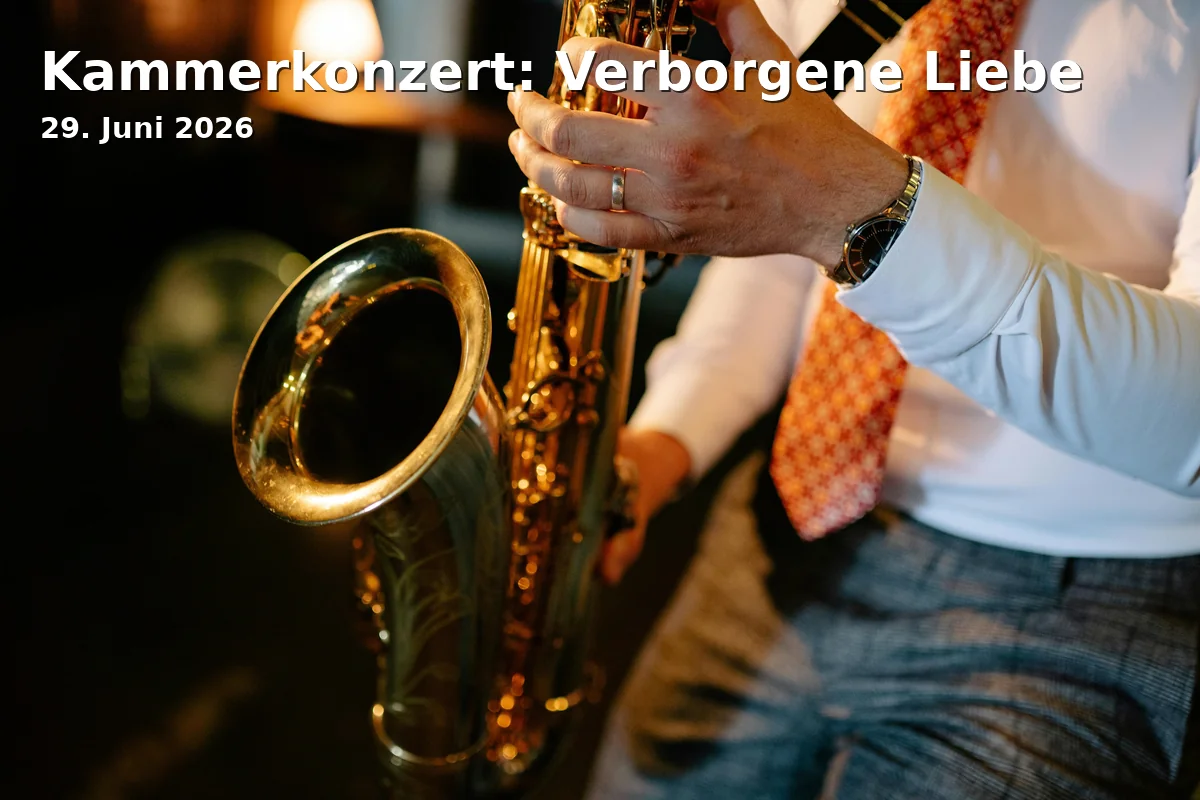
Chamber Concert: Hidden Love
Join the chamber concert 'Hidden Love' on June 29, 2026, at Theater Bielefeld. An evening full of musical masterpieces awaits you.
Hidden Love
A chamber concert for fine ears: Hidden Love brings rarely heard sonic colors to the Rudolf-Oetker-Halle. June 29, 2026, 8 PM, 29.30 euros. #Bielefeld #ChamberMusic

FameLab Germany: National Final
Visit the exciting FameLab final at the Rudolf-Oetker-Halle and discover the world of science with an entertaining twist!
FameLab Germany Final: Talking Science
Don't miss the FameLab Germany final at the Rudolf-Oetker-Halle Bielefeld. Research meets creativity.
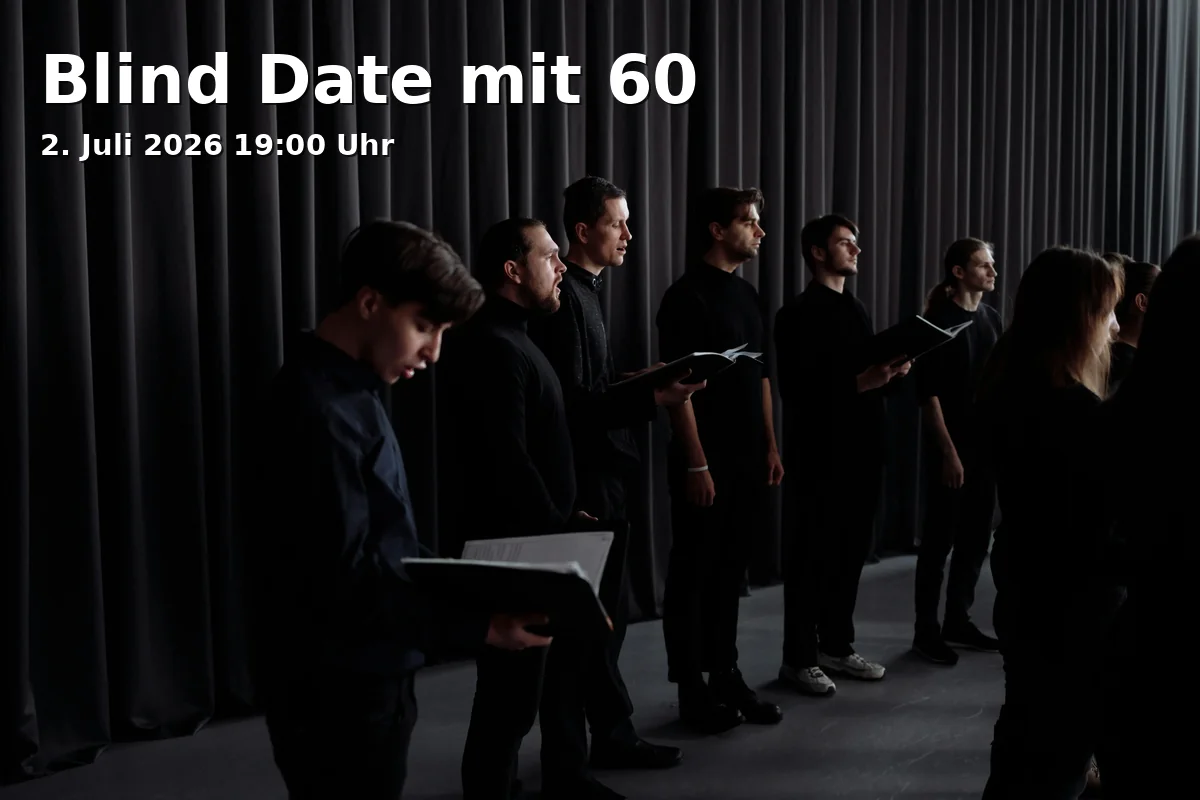
Blind Date with 60
A jubilee evening with goosebumps in Bielefeld: Blind Date with 60 brings choirs, guests, and a benefit flair to the Rudolf-Oetker-Halle. 02.07.2026, 15 Euros. #Bielefeld #Benefit

Queen x Taylor Swift x ...
Bielefeld is set for a night full of goosebumps and glamour: Queen, Taylor Swift, and Pride anthems in orchestral ecstasy. 03.07.2026, from €28.50. Secure your tickets now. #SoundsOfPride
Flashing Winds – Brass Festival
Dive into the world of brass music! Experience the Flashing Winds – Brass Festival at the Rudolf-Oetker-Halle Bielefeld.
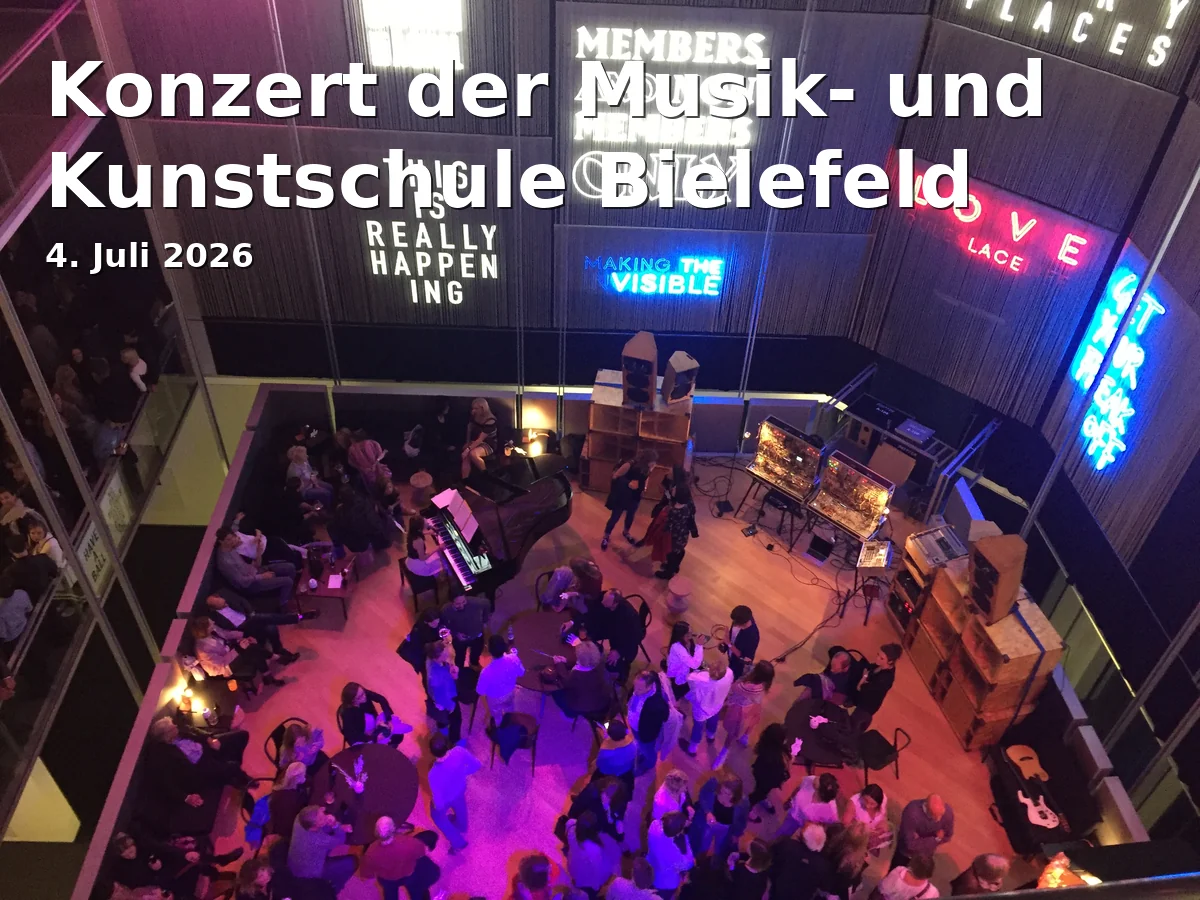
Concert of the Music and Art School Bielefeld
Come to an impressive concert of the Music and Art School Bielefeld in the Rudolf-Oetker-Halle on July 4, 2026!
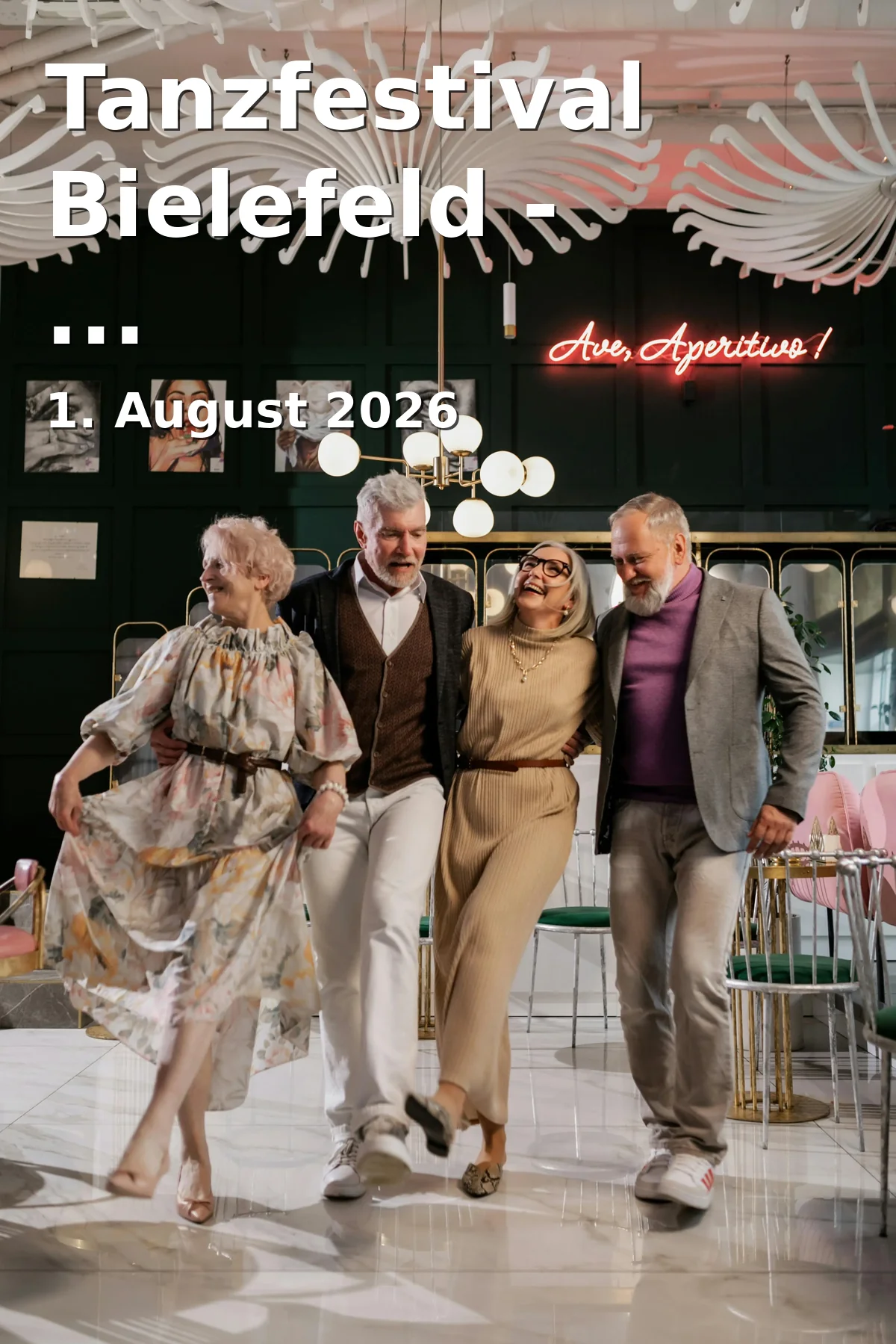
Bielefeld Dance Festival - Closing Night
Celebrate the finale of the Bielefeld Dance Festival 2026 at the Rudolf-Oetker-Halle. An evening full of dance and culture awaits you!
Frequently Asked Questions
Reviews
No reviews found