
Bielefeld
33611 Bielefeld, Deutschland
Schildesche | Final Stop & Schildescher Straße
Schildesche is one of the most distinctive districts of Bielefeld: historically developed, clearly connected by transport, and with the Obersee as a large open space for walks, bike tours, and short breaks in everyday life. The city of Bielefeld traces the origin of the place back to the year 939, when Marswidis founded a women's monastery on the site of today's Stiftskirche. After a fire in the 13th century, the current Gothic church was built; around it lies a historical town center that the city describes as one of the most beautiful in Bielefeld. At the same time, Schildesche is now closely connected to the StadtBahn line 1, the final stop Schildesche, bus connections, and paths leading to the Obersee. This very mix makes the district interesting for people looking for Schildesche Bielefeld, Schildescher Straße, Schildescher Viaduct, or simply a lively neighborhood with good orientation. ([bielefeld.de](https://www.bielefeld.de/schildesche))
Schildescher Straße and Final Stop: Arriving in the District
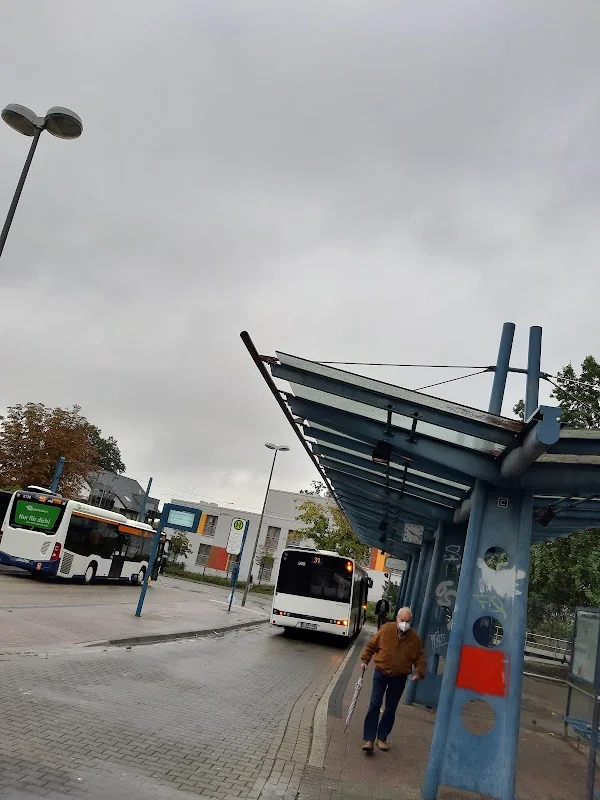
Those searching for Schildescher Straße Bielefeld or Schildescher Straße 99 Bielefeld will find themselves in a transport-rich area around the Stadtbahn, residential quarters, hospitals, and the town center. Official announcements from the city and moBiel repeatedly focus on track, line, and road works, showing how significant this axis is for everyday traffic and how strongly it remains integrated into the district's mobility network. For visitors, it is particularly important: The final stop Schildesche of the StadtBahn line 1 serves as a clear point of orientation from which the entire district can be easily accessed. Upon arrival, one quickly realizes that there is not just a stop, but a whole urban space begins, where train, bus, footpath, and car come together in close proximity. ([bielefeld.de](https://www.bielefeld.de/node/31784?utm_source=openai))
The Schildesche cemetery is a good example of this practical accessibility in the district: The city does not name a direct stop, but the stop Auf der Feldbrede with lines 31 and 33 as well as the connection to the final stop Schildesche of line 1. For drivers, the city refers to parking spaces on Engerschen Straße; municipal documents also mention the Viadukt/Schildesche parking lot with 120 parking spaces. This results in a district where train, bus, car, and footpaths intertwine. This is particularly important for search queries around Schildescher Straße bielefeld, Schildescher Straße 99 bielefeld, or Schildesche final stop, as many users are not just looking for a single destination, but need a clear, reliable orientation in the entire environment. ([bielefeld.de](https://www.bielefeld.de/node/3727))
Stiftskirche, Church Square, and the Historical Town Center
The historical core of Schildesche is not a coincidence but the result of a long development. The city of Bielefeld points out that here in 939 the noble widow Marswidis founded a women's monastery. A fire in the mid-13th century destroyed the monastery and church, after which the new house of worship in Gothic style was built, the current Stiftskirche. The city's bike tour flyer also confirms this historical depth and mentions the Gothic Stiftskirche from the 13th century, which is dedicated to John the Baptist. Together with the church square, the narrow paths, and the surrounding buildings, a place emerges that feels less like an arbitrary district and more like a grown historical framework within the metropolis. For this reason, Schildesche remains exciting for visitors who want to not only read history but experience it spatially. ([bielefeld.de](https://www.bielefeld.de/schildesche))
The preservation statute of the city additionally clarifies why this town center is perceived so strongly. It speaks of the special appeal of the place, of small-scale diversity, of the tangible urban planning situation, and of the noticeably preserved village-medieval formation. In the historical area, there are many half-timbered houses that, according to the statute, are characteristic of the townscape and are partly particularly worthy of protection. The street settlement Am Vorwerk and the area Achenkamp are also described as historically important testimonies that emerged around 1800 and served as a model for the Ravensberger Land. Therefore, those searching for Schildesche Bielefeld often unconsciously seek this mix of village history, urban proximity, and monument-shaped identity. ([bielefeld.de](https://www.bielefeld.de/sites/default/files/datei/2022/Erhaltungssatzung%20Schildesche%20%C3%9Cberarbeitung.pdf))
Schildescher Viaduct and Obersee as Landmarks
The Schildescher Viaduct is inextricably linked to Schildesche, appearing in official city documents as a significant technical and landscape element. The bike tour flyer mentions the viaduct as a structure built in 1847, which was complemented by a bridge in 1917. Of the originally 28 arches, 15 are still preserved; the total length is 400 meters, and the height is 18 meters. These figures explain why the viaduct is not only interesting for railway enthusiasts but also serves as a striking landmark in northern Bielefeld. It connects technical history with landscape and gives the entire area around Schildesche a distinctive spatial anchor. Those searching for Schildescher viaduct are thus looking not only for a structure but also for a piece of urban identity. ([bielefeld.de](https://www.bielefeld.de/sites/default/files/datei/2021/Tipp-3-Schildesche-Vilsendorf-Radtour-Faltblatt-mit-zoombarer-Karte.pdf))
Equally important is the Obersee, which the city describes as one of the most popular local recreation areas and is referred to in the recreation flyer as the largest standing body of water in Bielefeld. Around the lake, people walk, cycle, spend their leisure time with family and friends, or simply enjoy nature. The flyer also points out rules: Barbecuing is only allowed in designated areas, dogs must be kept on a leash, and animals at the lake should not be fed. At the same time, the city map illustrates the recreational qualities of the facility very clearly: At the 15-hectare Obersee, peace, movement, and short breaks can be well combined. Mini-golf, volleyball, and disc golf are also part of the experience there. Thus, Schildesche is not only a historical place but also a site for modern local recreation with clear rules and high quality of stay. ([bielefeld.de](https://www.bielefeld.de/schildesche))
Weekly Market, Supply, and Everyday Life in Schildesche
The search for Schildesche restaurant, Schildesche kiosk, Schildesche hairdresser, Schildesche ice cream parlor, or Schildesche pharmacy shows that the district is perceived not only as a destination for excursions but especially as a residential and supply area close to everyday life. The official city page for Schildesche confirms this very mix by bundling topics such as weekly market, schools, daycare, sports clubs, public toilets, and other areas of life under the district. This makes it clear: Schildesche is not just a cluster of attractions but a functioning neighborhood with a short distance between everyday life and leisure. Those who are here often do not seek the big spectacle but the reliable proximity of paths, meeting points, and basic supplies. This is exactly what makes the district attractive for people who prefer urban life without confusion. ([bielefeld.de](https://www.bielefeld.de/node/5784?utm_source=openai))
This becomes particularly tangible at the weekly market in Schildesche. The city names the location as the church square at the Stiftskirche and the time as Saturday from 7 to 13 o'clock. Thus, the market is not only a shopping point but also a social rhythm maker in the historical center. Between the Stiftskirche, the square, and the surrounding paths, short processes typical of the district emerge: shopping, getting a coffee, taking a walk, or simply staying in the town center. This everyday structure is complemented by sporting and community offerings. In the municipal systems, there is, for example, the Schildesche sports field, which enhances the impression of a lively district with local infrastructure. For SEO search queries like Schildesche Bielefeld or Schildesche football, this everyday level is particularly valuable because it makes the place appear not only beautiful but also usable. ([bielefeld.de](https://www.bielefeld.de/node/5836?utm_source=openai))
Walks, Bike Tours, and Leisure by the Water
Schildesche is also a starting point for movement. The city's bike tour flyer describes a round tour of 18 kilometers with a medium difficulty profile that can begin at the Stadtbahn final stop Schildesche. Along the route, one encounters meadows and fields, villages, the city, the Obersee, and other landscape transitions in northern Bielefeld. This makes Schildesche a real hub for recreational traffic: Those arriving by train can directly embark on a tour without having to organize long access routes first. The combination of good public transport connections and a picturesque environment is one of the district's greatest advantages. This is particularly relevant for users searching for Schildesche final stop or Schildescher viaduct, as both terms mark not only mobility but also the beginning of excursions. ([bielefeld.de](https://www.bielefeld.de/sites/default/files/datei/2021/Tipp-3-Schildesche-Vilsendorf-Radtour-Faltblatt-mit-zoombarer-Karte.pdf))
The Schildesche cemetery can also be read as part of this walking and path culture. The city describes it as a green connection from the town center to the local recreation area Obersee. Visitors often use it for a walk; smaller seating areas and niches invite you to linger. This shows that Schildesche offers not only individual attractions but also a coherent network of paths made up of historical, quiet, and nature-close places. The transition from the church square through the cemetery to the Obersee is therefore more than just a geographical path: it is a spatial narrative about the district, where history, memory, movement, and recreation intertwine. Those looking for a place with character will find in Schildesche exactly this connection between public space and quiet quality of stay. ([bielefeld.de](https://www.bielefeld.de/node/3727))
Parking, Bus Connections, and Practical Orientation on Site
For practical orientation in Schildesche, three points are particularly helpful: the final stop of StadtBahn line 1, the church square at the Stiftskirche, and the Obersee as a local recreation area. Together, they form a simple mental map that allows one to navigate the district well. Those arriving by public transport use the Stadtbahn and get off at the final stop Schildesche; those who then want to continue to the town center or the market orient themselves at the church square; those who want to go to the green areas follow the paths towards Obersee. This simplicity is a real advantage for guests who do not know Schildesche but want to arrive quickly. It also explains why search queries like Schildescher Straße Bielefeld or Schildesche pharmacy are often associated with everyday routes, shopping, and mobility. The place functions not only as an address but as a coherent movement space. ([mobiel.de](https://www.mobiel.de/aktuelles/aktuelle-news/linie-1-ersatzverkehr-schildesche-sudbrackstrasse/?utm_source=openai))
Even with temporary restrictions, orientation remains clear. The city and moBiel regularly publish notices about track, line, and renovation works for Schildescher Straße. For visitors, this is less of a disturbance than an indication of how strongly this street is integrated into the transport network. At the same time, such announcements underscore Schildesche's role as a well-connected but also dynamically used district. Those who plan ahead will find a stable structure with train, bus, market, parking, and Obersee. For this reason, Schildesche is suitable not only for short visits but also for recurring routes in everyday life, where reliability and clarity are more important than grand staging. The district thrives on its mix of history, mobility, and tranquility, and that is what makes it attractive in the long term. ([bielefeld.de](https://www.bielefeld.de/node/31784?utm_source=openai))
Sources:
Show moreShow less
Schildesche | Final Stop & Schildescher Straße
Schildesche is one of the most distinctive districts of Bielefeld: historically developed, clearly connected by transport, and with the Obersee as a large open space for walks, bike tours, and short breaks in everyday life. The city of Bielefeld traces the origin of the place back to the year 939, when Marswidis founded a women's monastery on the site of today's Stiftskirche. After a fire in the 13th century, the current Gothic church was built; around it lies a historical town center that the city describes as one of the most beautiful in Bielefeld. At the same time, Schildesche is now closely connected to the StadtBahn line 1, the final stop Schildesche, bus connections, and paths leading to the Obersee. This very mix makes the district interesting for people looking for Schildesche Bielefeld, Schildescher Straße, Schildescher Viaduct, or simply a lively neighborhood with good orientation. ([bielefeld.de](https://www.bielefeld.de/schildesche))
Schildescher Straße and Final Stop: Arriving in the District
Those searching for Schildescher Straße Bielefeld or Schildescher Straße 99 Bielefeld will find themselves in a transport-rich area around the Stadtbahn, residential quarters, hospitals, and the town center. Official announcements from the city and moBiel repeatedly focus on track, line, and road works, showing how significant this axis is for everyday traffic and how strongly it remains integrated into the district's mobility network. For visitors, it is particularly important: The final stop Schildesche of the StadtBahn line 1 serves as a clear point of orientation from which the entire district can be easily accessed. Upon arrival, one quickly realizes that there is not just a stop, but a whole urban space begins, where train, bus, footpath, and car come together in close proximity. ([bielefeld.de](https://www.bielefeld.de/node/31784?utm_source=openai))
The Schildesche cemetery is a good example of this practical accessibility in the district: The city does not name a direct stop, but the stop Auf der Feldbrede with lines 31 and 33 as well as the connection to the final stop Schildesche of line 1. For drivers, the city refers to parking spaces on Engerschen Straße; municipal documents also mention the Viadukt/Schildesche parking lot with 120 parking spaces. This results in a district where train, bus, car, and footpaths intertwine. This is particularly important for search queries around Schildescher Straße bielefeld, Schildescher Straße 99 bielefeld, or Schildesche final stop, as many users are not just looking for a single destination, but need a clear, reliable orientation in the entire environment. ([bielefeld.de](https://www.bielefeld.de/node/3727))
Stiftskirche, Church Square, and the Historical Town Center
The historical core of Schildesche is not a coincidence but the result of a long development. The city of Bielefeld points out that here in 939 the noble widow Marswidis founded a women's monastery. A fire in the mid-13th century destroyed the monastery and church, after which the new house of worship in Gothic style was built, the current Stiftskirche. The city's bike tour flyer also confirms this historical depth and mentions the Gothic Stiftskirche from the 13th century, which is dedicated to John the Baptist. Together with the church square, the narrow paths, and the surrounding buildings, a place emerges that feels less like an arbitrary district and more like a grown historical framework within the metropolis. For this reason, Schildesche remains exciting for visitors who want to not only read history but experience it spatially. ([bielefeld.de](https://www.bielefeld.de/schildesche))
The preservation statute of the city additionally clarifies why this town center is perceived so strongly. It speaks of the special appeal of the place, of small-scale diversity, of the tangible urban planning situation, and of the noticeably preserved village-medieval formation. In the historical area, there are many half-timbered houses that, according to the statute, are characteristic of the townscape and are partly particularly worthy of protection. The street settlement Am Vorwerk and the area Achenkamp are also described as historically important testimonies that emerged around 1800 and served as a model for the Ravensberger Land. Therefore, those searching for Schildesche Bielefeld often unconsciously seek this mix of village history, urban proximity, and monument-shaped identity. ([bielefeld.de](https://www.bielefeld.de/sites/default/files/datei/2022/Erhaltungssatzung%20Schildesche%20%C3%9Cberarbeitung.pdf))
Schildescher Viaduct and Obersee as Landmarks
The Schildescher Viaduct is inextricably linked to Schildesche, appearing in official city documents as a significant technical and landscape element. The bike tour flyer mentions the viaduct as a structure built in 1847, which was complemented by a bridge in 1917. Of the originally 28 arches, 15 are still preserved; the total length is 400 meters, and the height is 18 meters. These figures explain why the viaduct is not only interesting for railway enthusiasts but also serves as a striking landmark in northern Bielefeld. It connects technical history with landscape and gives the entire area around Schildesche a distinctive spatial anchor. Those searching for Schildescher viaduct are thus looking not only for a structure but also for a piece of urban identity. ([bielefeld.de](https://www.bielefeld.de/sites/default/files/datei/2021/Tipp-3-Schildesche-Vilsendorf-Radtour-Faltblatt-mit-zoombarer-Karte.pdf))
Equally important is the Obersee, which the city describes as one of the most popular local recreation areas and is referred to in the recreation flyer as the largest standing body of water in Bielefeld. Around the lake, people walk, cycle, spend their leisure time with family and friends, or simply enjoy nature. The flyer also points out rules: Barbecuing is only allowed in designated areas, dogs must be kept on a leash, and animals at the lake should not be fed. At the same time, the city map illustrates the recreational qualities of the facility very clearly: At the 15-hectare Obersee, peace, movement, and short breaks can be well combined. Mini-golf, volleyball, and disc golf are also part of the experience there. Thus, Schildesche is not only a historical place but also a site for modern local recreation with clear rules and high quality of stay. ([bielefeld.de](https://www.bielefeld.de/schildesche))
Weekly Market, Supply, and Everyday Life in Schildesche
The search for Schildesche restaurant, Schildesche kiosk, Schildesche hairdresser, Schildesche ice cream parlor, or Schildesche pharmacy shows that the district is perceived not only as a destination for excursions but especially as a residential and supply area close to everyday life. The official city page for Schildesche confirms this very mix by bundling topics such as weekly market, schools, daycare, sports clubs, public toilets, and other areas of life under the district. This makes it clear: Schildesche is not just a cluster of attractions but a functioning neighborhood with a short distance between everyday life and leisure. Those who are here often do not seek the big spectacle but the reliable proximity of paths, meeting points, and basic supplies. This is exactly what makes the district attractive for people who prefer urban life without confusion. ([bielefeld.de](https://www.bielefeld.de/node/5784?utm_source=openai))
This becomes particularly tangible at the weekly market in Schildesche. The city names the location as the church square at the Stiftskirche and the time as Saturday from 7 to 13 o'clock. Thus, the market is not only a shopping point but also a social rhythm maker in the historical center. Between the Stiftskirche, the square, and the surrounding paths, short processes typical of the district emerge: shopping, getting a coffee, taking a walk, or simply staying in the town center. This everyday structure is complemented by sporting and community offerings. In the municipal systems, there is, for example, the Schildesche sports field, which enhances the impression of a lively district with local infrastructure. For SEO search queries like Schildesche Bielefeld or Schildesche football, this everyday level is particularly valuable because it makes the place appear not only beautiful but also usable. ([bielefeld.de](https://www.bielefeld.de/node/5836?utm_source=openai))
Walks, Bike Tours, and Leisure by the Water
Schildesche is also a starting point for movement. The city's bike tour flyer describes a round tour of 18 kilometers with a medium difficulty profile that can begin at the Stadtbahn final stop Schildesche. Along the route, one encounters meadows and fields, villages, the city, the Obersee, and other landscape transitions in northern Bielefeld. This makes Schildesche a real hub for recreational traffic: Those arriving by train can directly embark on a tour without having to organize long access routes first. The combination of good public transport connections and a picturesque environment is one of the district's greatest advantages. This is particularly relevant for users searching for Schildesche final stop or Schildescher viaduct, as both terms mark not only mobility but also the beginning of excursions. ([bielefeld.de](https://www.bielefeld.de/sites/default/files/datei/2021/Tipp-3-Schildesche-Vilsendorf-Radtour-Faltblatt-mit-zoombarer-Karte.pdf))
The Schildesche cemetery can also be read as part of this walking and path culture. The city describes it as a green connection from the town center to the local recreation area Obersee. Visitors often use it for a walk; smaller seating areas and niches invite you to linger. This shows that Schildesche offers not only individual attractions but also a coherent network of paths made up of historical, quiet, and nature-close places. The transition from the church square through the cemetery to the Obersee is therefore more than just a geographical path: it is a spatial narrative about the district, where history, memory, movement, and recreation intertwine. Those looking for a place with character will find in Schildesche exactly this connection between public space and quiet quality of stay. ([bielefeld.de](https://www.bielefeld.de/node/3727))
Parking, Bus Connections, and Practical Orientation on Site
For practical orientation in Schildesche, three points are particularly helpful: the final stop of StadtBahn line 1, the church square at the Stiftskirche, and the Obersee as a local recreation area. Together, they form a simple mental map that allows one to navigate the district well. Those arriving by public transport use the Stadtbahn and get off at the final stop Schildesche; those who then want to continue to the town center or the market orient themselves at the church square; those who want to go to the green areas follow the paths towards Obersee. This simplicity is a real advantage for guests who do not know Schildesche but want to arrive quickly. It also explains why search queries like Schildescher Straße Bielefeld or Schildesche pharmacy are often associated with everyday routes, shopping, and mobility. The place functions not only as an address but as a coherent movement space. ([mobiel.de](https://www.mobiel.de/aktuelles/aktuelle-news/linie-1-ersatzverkehr-schildesche-sudbrackstrasse/?utm_source=openai))
Even with temporary restrictions, orientation remains clear. The city and moBiel regularly publish notices about track, line, and renovation works for Schildescher Straße. For visitors, this is less of a disturbance than an indication of how strongly this street is integrated into the transport network. At the same time, such announcements underscore Schildesche's role as a well-connected but also dynamically used district. Those who plan ahead will find a stable structure with train, bus, market, parking, and Obersee. For this reason, Schildesche is suitable not only for short visits but also for recurring routes in everyday life, where reliability and clarity are more important than grand staging. The district thrives on its mix of history, mobility, and tranquility, and that is what makes it attractive in the long term. ([bielefeld.de](https://www.bielefeld.de/node/31784?utm_source=openai))
Sources:
Schildesche | Final Stop & Schildescher Straße
Schildesche is one of the most distinctive districts of Bielefeld: historically developed, clearly connected by transport, and with the Obersee as a large open space for walks, bike tours, and short breaks in everyday life. The city of Bielefeld traces the origin of the place back to the year 939, when Marswidis founded a women's monastery on the site of today's Stiftskirche. After a fire in the 13th century, the current Gothic church was built; around it lies a historical town center that the city describes as one of the most beautiful in Bielefeld. At the same time, Schildesche is now closely connected to the StadtBahn line 1, the final stop Schildesche, bus connections, and paths leading to the Obersee. This very mix makes the district interesting for people looking for Schildesche Bielefeld, Schildescher Straße, Schildescher Viaduct, or simply a lively neighborhood with good orientation. ([bielefeld.de](https://www.bielefeld.de/schildesche))
Schildescher Straße and Final Stop: Arriving in the District
Those searching for Schildescher Straße Bielefeld or Schildescher Straße 99 Bielefeld will find themselves in a transport-rich area around the Stadtbahn, residential quarters, hospitals, and the town center. Official announcements from the city and moBiel repeatedly focus on track, line, and road works, showing how significant this axis is for everyday traffic and how strongly it remains integrated into the district's mobility network. For visitors, it is particularly important: The final stop Schildesche of the StadtBahn line 1 serves as a clear point of orientation from which the entire district can be easily accessed. Upon arrival, one quickly realizes that there is not just a stop, but a whole urban space begins, where train, bus, footpath, and car come together in close proximity. ([bielefeld.de](https://www.bielefeld.de/node/31784?utm_source=openai))
The Schildesche cemetery is a good example of this practical accessibility in the district: The city does not name a direct stop, but the stop Auf der Feldbrede with lines 31 and 33 as well as the connection to the final stop Schildesche of line 1. For drivers, the city refers to parking spaces on Engerschen Straße; municipal documents also mention the Viadukt/Schildesche parking lot with 120 parking spaces. This results in a district where train, bus, car, and footpaths intertwine. This is particularly important for search queries around Schildescher Straße bielefeld, Schildescher Straße 99 bielefeld, or Schildesche final stop, as many users are not just looking for a single destination, but need a clear, reliable orientation in the entire environment. ([bielefeld.de](https://www.bielefeld.de/node/3727))
Stiftskirche, Church Square, and the Historical Town Center
The historical core of Schildesche is not a coincidence but the result of a long development. The city of Bielefeld points out that here in 939 the noble widow Marswidis founded a women's monastery. A fire in the mid-13th century destroyed the monastery and church, after which the new house of worship in Gothic style was built, the current Stiftskirche. The city's bike tour flyer also confirms this historical depth and mentions the Gothic Stiftskirche from the 13th century, which is dedicated to John the Baptist. Together with the church square, the narrow paths, and the surrounding buildings, a place emerges that feels less like an arbitrary district and more like a grown historical framework within the metropolis. For this reason, Schildesche remains exciting for visitors who want to not only read history but experience it spatially. ([bielefeld.de](https://www.bielefeld.de/schildesche))
The preservation statute of the city additionally clarifies why this town center is perceived so strongly. It speaks of the special appeal of the place, of small-scale diversity, of the tangible urban planning situation, and of the noticeably preserved village-medieval formation. In the historical area, there are many half-timbered houses that, according to the statute, are characteristic of the townscape and are partly particularly worthy of protection. The street settlement Am Vorwerk and the area Achenkamp are also described as historically important testimonies that emerged around 1800 and served as a model for the Ravensberger Land. Therefore, those searching for Schildesche Bielefeld often unconsciously seek this mix of village history, urban proximity, and monument-shaped identity. ([bielefeld.de](https://www.bielefeld.de/sites/default/files/datei/2022/Erhaltungssatzung%20Schildesche%20%C3%9Cberarbeitung.pdf))
Schildescher Viaduct and Obersee as Landmarks
The Schildescher Viaduct is inextricably linked to Schildesche, appearing in official city documents as a significant technical and landscape element. The bike tour flyer mentions the viaduct as a structure built in 1847, which was complemented by a bridge in 1917. Of the originally 28 arches, 15 are still preserved; the total length is 400 meters, and the height is 18 meters. These figures explain why the viaduct is not only interesting for railway enthusiasts but also serves as a striking landmark in northern Bielefeld. It connects technical history with landscape and gives the entire area around Schildesche a distinctive spatial anchor. Those searching for Schildescher viaduct are thus looking not only for a structure but also for a piece of urban identity. ([bielefeld.de](https://www.bielefeld.de/sites/default/files/datei/2021/Tipp-3-Schildesche-Vilsendorf-Radtour-Faltblatt-mit-zoombarer-Karte.pdf))
Equally important is the Obersee, which the city describes as one of the most popular local recreation areas and is referred to in the recreation flyer as the largest standing body of water in Bielefeld. Around the lake, people walk, cycle, spend their leisure time with family and friends, or simply enjoy nature. The flyer also points out rules: Barbecuing is only allowed in designated areas, dogs must be kept on a leash, and animals at the lake should not be fed. At the same time, the city map illustrates the recreational qualities of the facility very clearly: At the 15-hectare Obersee, peace, movement, and short breaks can be well combined. Mini-golf, volleyball, and disc golf are also part of the experience there. Thus, Schildesche is not only a historical place but also a site for modern local recreation with clear rules and high quality of stay. ([bielefeld.de](https://www.bielefeld.de/schildesche))
Weekly Market, Supply, and Everyday Life in Schildesche
The search for Schildesche restaurant, Schildesche kiosk, Schildesche hairdresser, Schildesche ice cream parlor, or Schildesche pharmacy shows that the district is perceived not only as a destination for excursions but especially as a residential and supply area close to everyday life. The official city page for Schildesche confirms this very mix by bundling topics such as weekly market, schools, daycare, sports clubs, public toilets, and other areas of life under the district. This makes it clear: Schildesche is not just a cluster of attractions but a functioning neighborhood with a short distance between everyday life and leisure. Those who are here often do not seek the big spectacle but the reliable proximity of paths, meeting points, and basic supplies. This is exactly what makes the district attractive for people who prefer urban life without confusion. ([bielefeld.de](https://www.bielefeld.de/node/5784?utm_source=openai))
This becomes particularly tangible at the weekly market in Schildesche. The city names the location as the church square at the Stiftskirche and the time as Saturday from 7 to 13 o'clock. Thus, the market is not only a shopping point but also a social rhythm maker in the historical center. Between the Stiftskirche, the square, and the surrounding paths, short processes typical of the district emerge: shopping, getting a coffee, taking a walk, or simply staying in the town center. This everyday structure is complemented by sporting and community offerings. In the municipal systems, there is, for example, the Schildesche sports field, which enhances the impression of a lively district with local infrastructure. For SEO search queries like Schildesche Bielefeld or Schildesche football, this everyday level is particularly valuable because it makes the place appear not only beautiful but also usable. ([bielefeld.de](https://www.bielefeld.de/node/5836?utm_source=openai))
Walks, Bike Tours, and Leisure by the Water
Schildesche is also a starting point for movement. The city's bike tour flyer describes a round tour of 18 kilometers with a medium difficulty profile that can begin at the Stadtbahn final stop Schildesche. Along the route, one encounters meadows and fields, villages, the city, the Obersee, and other landscape transitions in northern Bielefeld. This makes Schildesche a real hub for recreational traffic: Those arriving by train can directly embark on a tour without having to organize long access routes first. The combination of good public transport connections and a picturesque environment is one of the district's greatest advantages. This is particularly relevant for users searching for Schildesche final stop or Schildescher viaduct, as both terms mark not only mobility but also the beginning of excursions. ([bielefeld.de](https://www.bielefeld.de/sites/default/files/datei/2021/Tipp-3-Schildesche-Vilsendorf-Radtour-Faltblatt-mit-zoombarer-Karte.pdf))
The Schildesche cemetery can also be read as part of this walking and path culture. The city describes it as a green connection from the town center to the local recreation area Obersee. Visitors often use it for a walk; smaller seating areas and niches invite you to linger. This shows that Schildesche offers not only individual attractions but also a coherent network of paths made up of historical, quiet, and nature-close places. The transition from the church square through the cemetery to the Obersee is therefore more than just a geographical path: it is a spatial narrative about the district, where history, memory, movement, and recreation intertwine. Those looking for a place with character will find in Schildesche exactly this connection between public space and quiet quality of stay. ([bielefeld.de](https://www.bielefeld.de/node/3727))
Parking, Bus Connections, and Practical Orientation on Site
For practical orientation in Schildesche, three points are particularly helpful: the final stop of StadtBahn line 1, the church square at the Stiftskirche, and the Obersee as a local recreation area. Together, they form a simple mental map that allows one to navigate the district well. Those arriving by public transport use the Stadtbahn and get off at the final stop Schildesche; those who then want to continue to the town center or the market orient themselves at the church square; those who want to go to the green areas follow the paths towards Obersee. This simplicity is a real advantage for guests who do not know Schildesche but want to arrive quickly. It also explains why search queries like Schildescher Straße Bielefeld or Schildesche pharmacy are often associated with everyday routes, shopping, and mobility. The place functions not only as an address but as a coherent movement space. ([mobiel.de](https://www.mobiel.de/aktuelles/aktuelle-news/linie-1-ersatzverkehr-schildesche-sudbrackstrasse/?utm_source=openai))
Even with temporary restrictions, orientation remains clear. The city and moBiel regularly publish notices about track, line, and renovation works for Schildescher Straße. For visitors, this is less of a disturbance than an indication of how strongly this street is integrated into the transport network. At the same time, such announcements underscore Schildesche's role as a well-connected but also dynamically used district. Those who plan ahead will find a stable structure with train, bus, market, parking, and Obersee. For this reason, Schildesche is suitable not only for short visits but also for recurring routes in everyday life, where reliability and clarity are more important than grand staging. The district thrives on its mix of history, mobility, and tranquility, and that is what makes it attractive in the long term. ([bielefeld.de](https://www.bielefeld.de/node/31784?utm_source=openai))
Sources:
Upcoming Events
Hiking Connects - Steps out of Loneliness
Hiking, talking, and breathing together: This tour from Halle to Bielefeld connects nature, movement, and encounters. #Hiking
Open House with Flea Market
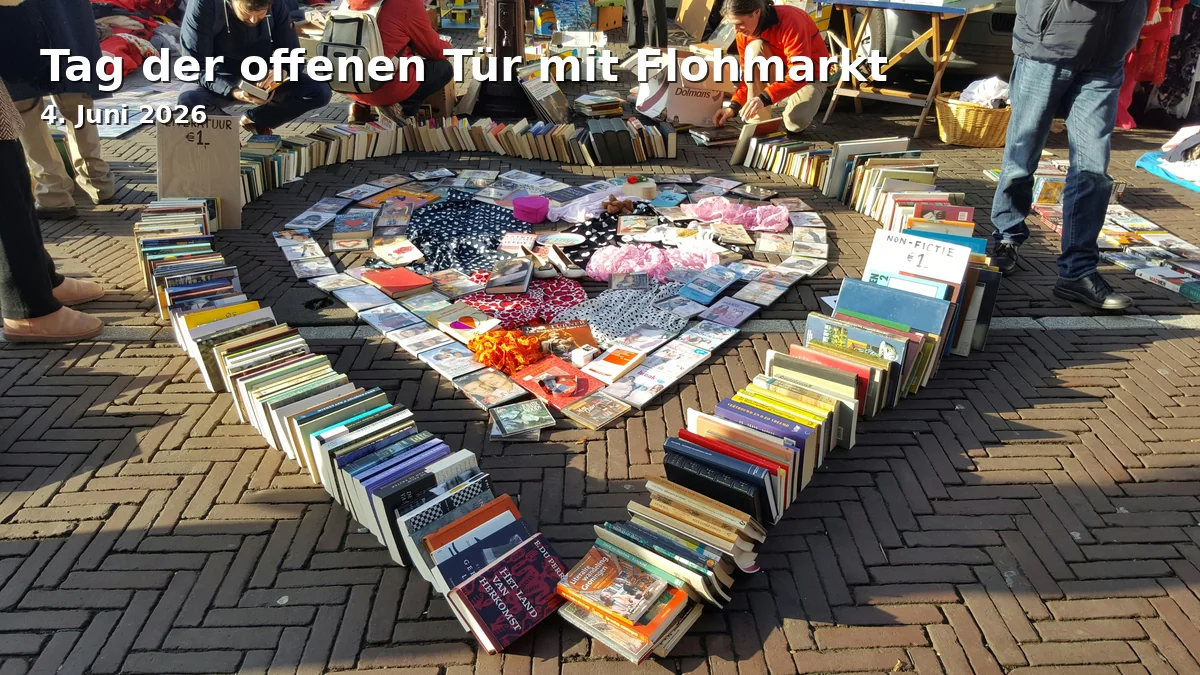
Visit the Family Education Center in Bielefeld-Schildesche on June 4, 2026, and discover participation activities, consultation booths, and a flea market.
Frequently Asked Questions
Reviews
No reviews found