
Bielefeld
Spandauer Allee, 33619 Bielefeld, Deutschland
Spandauer Allee | Holy Spirit & Access
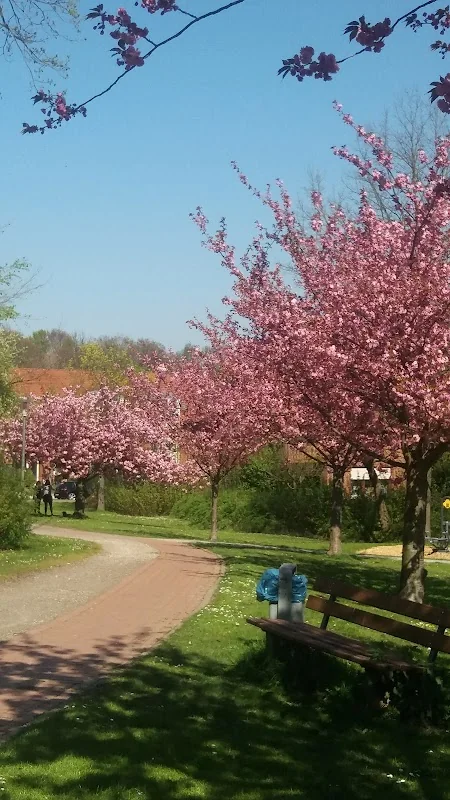
The Spandauer Allee in Bielefeld is not a wide thoroughfare, but a residential street in the Dornberg district, specifically in the Großdornberg district. The city of Bielefeld classifies Dornberg as a western district, and the street overview shows that Spandauer Allee is a local road with a speed limit of 30 km/h and a development from house number 1 to 107. Therefore, those searching for the address will not find an urban boulevard, but a clearly local environment characterized by living, community, and neighborhood. This mixture makes Spandauer Allee particularly interesting for search queries: many people simply look for the street, while others search for a specific house or a church event at this location. ([bielefeld.de](https://www.bielefeld.de/dornberg))
Where is Spandauer Allee located in Bielefeld-Dornberg?
The best way to start orienting oneself is to look at the district. Dornberg is located in the far west of Bielefeld and includes, among others, Großdornberg, Niederdornberg, Kirchdornberg, Deppendorf, Hoberge-Uerentrup, Schröttinghausen, and Babenhausen. Thus, Spandauer Allee is part of a district known in Bielefeld for its quiet residential areas, church locations, and a distinctively rural structure. The street description explicitly names Spandauer Allee as a residential street in the Großdornberg district; it also points out asphalt and cobblestones as the surface. These details may sound technical, but they are useful for visitors as they better contextualize the street's appearance and everyday usability. ([bielefeld.de](https://www.bielefeld.de/dornberg))
The immediate surroundings also shape the character of the street. Around Spandauer Allee, according to the street overview, are Friedenauer Weg, Kladower Weg, Dahlemer Straße, Nikolasseeweg, Lichterfelder Weg, Gatower Weg, Pichelsdorfer Weg, Zehlendorfer Damm, and Glienicker Weg, among others. Many of these names refer to Berlin districts and give the neighborhood a recognizable naming scheme. This is helpful for seekers, as addresses and directions are often referenced to these surrounding streets. Additionally, the street overview lists numerous residential buildings along the street and mentions interesting places such as the swimming club Dornberg 1948 e.V. at Spandauer Allee 30A. This creates the image of a street that is not isolated but part of a vibrant, clearly residential urban neighborhood. ([onlinestreet.de](https://onlinestreet.de/strassen/Spandauer%2BAllee.Bielefeld.205333.html))
Holy Spirit at Spandauer Allee 48
The most important institution on Spandauer Allee is the Holy Spirit parish with the parish church and parish office at house number 48. The official website of the community prominently lists the location as Holy Spirit Parish, states the address as Spandauer Allee 48 in 33619 Bielefeld, and additionally offers direct access to committees, news, groups, church, history, and contact. For visitors, this is a strong signal: Spandauer Allee is not just a residential address but also a church anchor point with regular offerings and reliable points of contact. The site also provides information on the next services and the schedule of the parish hall, making the address interesting for community members and guests alike. ([katholisch-bielefeld.de](https://katholisch-bielefeld.de/heilig-geist/))
The community itself is described on the website as a diverse place. It presents groups such as youth meetings, altar server training, a support association for church music, a medicinal herb garden, and Caritas. The youth meeting takes place every Friday according to the site and is aimed at children and teenagers, while the altar server training prepares new ministers for their service. The support association for church music was founded in 2001 and sees itself as a building block of the parish. Additionally, there are spiritual and social formats such as the open forum, which is highlighted as an opportunity for participation in community life. So, those searching for Spandauer Allee 48 are often looking for a place where worship, community, music, and volunteer engagement come together. ([katholisch-bielefeld.de](https://katholisch-bielefeld.de/heilig-geist/))
Access and Parking at Spandauer Allee
For specific access, the official information from the Holy Spirit community is particularly valuable. In the flyer for the nativity walk, the city rail line 4 to Lohmannshof is mentioned for Holy Spirit Dornberg, as well as explicitly parking spaces at the church. This answers the most important visitor questions: those arriving by public transport should orient themselves to line 4; those arriving by car will find parking options directly at the location. This information is especially important during community festivals, services, and action days, as the destination is not a large event center but a church-utilized location in a residential street. ([katholisch-bielefeld.de](https://katholisch-bielefeld.de/wp-content/uploads/2018/07/Flyer-Krippengang-2025-12-28.pdf))
The street characteristics also fit this. Spandauer Allee is described as a local road and designated with a speed limit of 30, indicating a rather calm traffic situation. The street overview also mentions several nearby stops and shows that the neighborhood is well integrated into the local infrastructure. For visitors, this means: access is not designed for mass transport but for the everyday life of a residential area with a church address. Those traveling to events should therefore not expect a large parking garage solution but should check the community's information in advance and plan a little time for orientation. For a pleasant arrival, the combination of a clear address, parking spaces at the church, and the city rail connection is the most practical solution. ([onlinestreet.de](https://onlinestreet.de/strassen/Spandauer%2BAllee.Bielefeld.205333.html))
History and Architecture of the Holy Spirit Church
The history of the Holy Spirit Church is closely linked to the development of the district. The official history page states that the plans for the church were created by Prof. Dieter Georg Baumewerd and Rainer Maria Kresing, and that the artistic design was also jointly responsible. The church was not conceived as a conventional rectangular building but as an architecturally clearly defined octagon. The floor plan as an octagon is a strong symbol for sacred buildings: it represents new life after baptism, harmony, and a space that gathers around the center. This is precisely what is intended here, as the community should be able to gather around the altar in the literal sense. ([katholisch-bielefeld.de](https://katholisch-bielefeld.de/heilig-geist/geschichte-heilig-geist/))
The internal architectural structure is also unusual and deliberately designed. In the octagon, eight supporting concrete columns rise upwards, referencing the eight Beatitudes. Additionally, there are four special side areas described as four tents in the church, reminiscent of large oriental tents. These spaces each represent different ways of encountering God. Particularly important is the central place of the Eucharist with the tabernacle. The altar itself is made of Tercy and is surrounded by a stainless steel band; its core contains the mensa of the former Holy Family Church. Thus, the architecture shows a strong continuity of the community, which does not separate the past and present but visibly connects them. ([katholisch-bielefeld.de](https://katholisch-bielefeld.de/heilig-geist/geschichte-heilig-geist/))
The furnishings of the church consistently continue this idea. The tabernacle stele carries a motif of the Emmaus disciples, telling of the resurrection and the breaking of bread. The central round window was designed by W. Buschulte and, like the colored windows, was created by the stained glass workshop O. Peters in Paderborn. In the window gallery, stained glass windows by Prof. Dieter Georg Baumewerd reflect the upward striving movement of the columns; the color scheme refers to the patronage of the Holy Spirit with a range from red to yellow, reminiscent of the flames of Pentecost, and green as the color of life. Such details are not mere decoration but part of a thoughtful theological imagery that makes the space a narrative building. ([katholisch-bielefeld.de](https://katholisch-bielefeld.de/heilig-geist/geschichte-heilig-geist/))
The history also includes traces of predecessor buildings. The community is older than the current church, and the current house of worship replaced earlier smaller churches in the district. Therefore, right and left of the entrance are foundation stones from the predecessor locations: a stone from 1939 from the old Holy Spirit Church at Wellensiek and a stone with the year 1963 from the Holy Family Church in Uerentrup. The community describes these stones as signs of the continuity of Christian prayer over the centuries. Additionally, the courtyard with the church, parish hall, and rectory is reminiscent of a space deliberately designed as a community area; in the center stands a fountain by Bielefeld artist E. Limberg with a crown of flames and four water flows symbolizing the evangelists. This makes the Holy Spirit Church not only a sacred building but an ensemble with strong memorial and identity value. ([katholisch-bielefeld.de](https://katholisch-bielefeld.de/heilig-geist/))
Services, Groups, and Events on Site
Those who associate Spandauer Allee with the community life of Holy Spirit quickly encounter a wide range of dates and groups. The official site highlights the upcoming services and refers to a dedicated overview of all services. In addition, groups and offerings are linked, ranging from youth work to altar server training to music, Caritas, and the medicinal herb garden. The reference to the schedule of the parish hall shows that the address is used not only for Sunday services but also for meetings, courses, and community work. For seekers, this is relevant because they often look for not just a location but a vibrant program under Spandauer Allee. ([katholisch-bielefeld.de](https://katholisch-bielefeld.de/heilig-geist/))
This becomes particularly visible during major community events. In September, the Holy Spirit community celebrates its church consecration and community festival. The official contribution mentions a weekend with cozy gatherings on Saturday evening, with drinks, food, and a campfire in the churchyard, as well as a festive high mass on Sunday. Afterwards, celebrations take place around the church tower. This wording shows that the place is consciously understood as a church center and a social meeting point. This is complemented by further formats such as the neighborhood flea market around Spandauer Allee, where courtyards, gardens, and garages in the vicinity are used, and everyone can participate on their own property. Thus, the street itself becomes part of an open, neighborhood event concept. ([katholisch-bielefeld.de](https://katholisch-bielefeld.de/pastoralverbund/kirchweih-und-gemeindefest-heilig-geist/132529/))
Seasonal and spiritual offerings are also included. The nativity walk flyer presents Holy Spirit Dornberg as a station in a larger church network and specifies concrete opening hours for visits. This makes it clear that Spandauer Allee 48 is not only relevant on a single festive day but plays a role throughout the church year. Additionally, the work in groups: youth meetings, altar servers, church music, and the medicinal herb garden give the place a social breadth that goes far beyond the actual service. Therefore, those searching for programs, community life, or church involvement at Spandauer Allee will find not an anonymous administrative location but a place with regular participation, clear contacts, and recurring occasions. ([katholisch-bielefeld.de](https://katholisch-bielefeld.de/heilig-geist/))
Neighborhood, Environment, and Practical Tips
For practical classification, it is helpful to understand Spandauer Allee as part of a larger but manageable neighborhood. The street overview lists 102 known buildings, making it clear that it is a lively inhabited street. The environment is characterized by further residential streets and local facilities, including the swimming club Dornberg 1948 e.V. and the Holy Spirit Church as a central point of contact. The naming pattern of the neighboring streets with references to Berlin districts also gives the environment a recognizable structure. For visitors, this means: those coming to Spandauer Allee should expect a quiet residential environment where church and neighborhood uses coexist. ([onlinestreet.de](https://onlinestreet.de/strassen/Spandauer%2BAllee.Bielefeld.205333.html))
Practically speaking, it is worth taking a look at the entire Dornberg district. The city of Bielefeld describes Dornberg as a western district with several districts and its own historical character. This is why Spandauer Allee works well as a search term for people looking for an address, a church, an event date, or a meeting place in Bielefeld-Dornberg. For such inquiries, the best orientation is always the same: the official community page for services and dates, the additional pages for history and groups, and the specific event information for special dates and access. This way, Spandauer Allee remains not just a street name but a reliable point of orientation in the everyday life of Dornberg. Therefore, those planning a visit should keep in mind the address Spandauer Allee 48, the note on parking spaces at the church, and the city rail line 4 to Lohmannshof as key information. ([bielefeld.de](https://www.bielefeld.de/dornberg))
In a place with a church presence, the combination of practical accessibility and substantive depth is important. The Holy Spirit Church is architecturally remarkable, the community is diverse, and the neighborhood is clearly locally anchored. This makes Spandauer Allee a destination for many visitors that is not only visited once but is associated with recurring dates. Whether service, community festival, youth offering, church music, or a neighborhood flea market in the vicinity: the street represents a form of Bielefeld urban space where living, faith, and community lie close together. That is why Spandauer Allee is more than just an address; it is a well-defined place in western Bielefeld where church identity and everyday life visibly come together. ([katholisch-bielefeld.de](https://katholisch-bielefeld.de/heilig-geist/))
Sources:
- Catholic in Bielefeld – Holy Spirit
- Catholic in Bielefeld – History of Holy Spirit
- City of Bielefeld – Dornberg
- Catholic in Bielefeld – Church Consecration and Community Festival Holy Spirit
- Catholic in Bielefeld – Invitation to the Nativity Walk
- Teutoburger Wald – Neighborhood Flea Market around Spandauer Allee
- Onlinestreet – Spandauer Allee in Bielefeld Großdornberg
Show moreShow less
Spandauer Allee | Holy Spirit & Access
The Spandauer Allee in Bielefeld is not a wide thoroughfare, but a residential street in the Dornberg district, specifically in the Großdornberg district. The city of Bielefeld classifies Dornberg as a western district, and the street overview shows that Spandauer Allee is a local road with a speed limit of 30 km/h and a development from house number 1 to 107. Therefore, those searching for the address will not find an urban boulevard, but a clearly local environment characterized by living, community, and neighborhood. This mixture makes Spandauer Allee particularly interesting for search queries: many people simply look for the street, while others search for a specific house or a church event at this location. ([bielefeld.de](https://www.bielefeld.de/dornberg))
Where is Spandauer Allee located in Bielefeld-Dornberg?
The best way to start orienting oneself is to look at the district. Dornberg is located in the far west of Bielefeld and includes, among others, Großdornberg, Niederdornberg, Kirchdornberg, Deppendorf, Hoberge-Uerentrup, Schröttinghausen, and Babenhausen. Thus, Spandauer Allee is part of a district known in Bielefeld for its quiet residential areas, church locations, and a distinctively rural structure. The street description explicitly names Spandauer Allee as a residential street in the Großdornberg district; it also points out asphalt and cobblestones as the surface. These details may sound technical, but they are useful for visitors as they better contextualize the street's appearance and everyday usability. ([bielefeld.de](https://www.bielefeld.de/dornberg))
The immediate surroundings also shape the character of the street. Around Spandauer Allee, according to the street overview, are Friedenauer Weg, Kladower Weg, Dahlemer Straße, Nikolasseeweg, Lichterfelder Weg, Gatower Weg, Pichelsdorfer Weg, Zehlendorfer Damm, and Glienicker Weg, among others. Many of these names refer to Berlin districts and give the neighborhood a recognizable naming scheme. This is helpful for seekers, as addresses and directions are often referenced to these surrounding streets. Additionally, the street overview lists numerous residential buildings along the street and mentions interesting places such as the swimming club Dornberg 1948 e.V. at Spandauer Allee 30A. This creates the image of a street that is not isolated but part of a vibrant, clearly residential urban neighborhood. ([onlinestreet.de](https://onlinestreet.de/strassen/Spandauer%2BAllee.Bielefeld.205333.html))
Holy Spirit at Spandauer Allee 48
The most important institution on Spandauer Allee is the Holy Spirit parish with the parish church and parish office at house number 48. The official website of the community prominently lists the location as Holy Spirit Parish, states the address as Spandauer Allee 48 in 33619 Bielefeld, and additionally offers direct access to committees, news, groups, church, history, and contact. For visitors, this is a strong signal: Spandauer Allee is not just a residential address but also a church anchor point with regular offerings and reliable points of contact. The site also provides information on the next services and the schedule of the parish hall, making the address interesting for community members and guests alike. ([katholisch-bielefeld.de](https://katholisch-bielefeld.de/heilig-geist/))
The community itself is described on the website as a diverse place. It presents groups such as youth meetings, altar server training, a support association for church music, a medicinal herb garden, and Caritas. The youth meeting takes place every Friday according to the site and is aimed at children and teenagers, while the altar server training prepares new ministers for their service. The support association for church music was founded in 2001 and sees itself as a building block of the parish. Additionally, there are spiritual and social formats such as the open forum, which is highlighted as an opportunity for participation in community life. So, those searching for Spandauer Allee 48 are often looking for a place where worship, community, music, and volunteer engagement come together. ([katholisch-bielefeld.de](https://katholisch-bielefeld.de/heilig-geist/))
Access and Parking at Spandauer Allee
For specific access, the official information from the Holy Spirit community is particularly valuable. In the flyer for the nativity walk, the city rail line 4 to Lohmannshof is mentioned for Holy Spirit Dornberg, as well as explicitly parking spaces at the church. This answers the most important visitor questions: those arriving by public transport should orient themselves to line 4; those arriving by car will find parking options directly at the location. This information is especially important during community festivals, services, and action days, as the destination is not a large event center but a church-utilized location in a residential street. ([katholisch-bielefeld.de](https://katholisch-bielefeld.de/wp-content/uploads/2018/07/Flyer-Krippengang-2025-12-28.pdf))
The street characteristics also fit this. Spandauer Allee is described as a local road and designated with a speed limit of 30, indicating a rather calm traffic situation. The street overview also mentions several nearby stops and shows that the neighborhood is well integrated into the local infrastructure. For visitors, this means: access is not designed for mass transport but for the everyday life of a residential area with a church address. Those traveling to events should therefore not expect a large parking garage solution but should check the community's information in advance and plan a little time for orientation. For a pleasant arrival, the combination of a clear address, parking spaces at the church, and the city rail connection is the most practical solution. ([onlinestreet.de](https://onlinestreet.de/strassen/Spandauer%2BAllee.Bielefeld.205333.html))
History and Architecture of the Holy Spirit Church
The history of the Holy Spirit Church is closely linked to the development of the district. The official history page states that the plans for the church were created by Prof. Dieter Georg Baumewerd and Rainer Maria Kresing, and that the artistic design was also jointly responsible. The church was not conceived as a conventional rectangular building but as an architecturally clearly defined octagon. The floor plan as an octagon is a strong symbol for sacred buildings: it represents new life after baptism, harmony, and a space that gathers around the center. This is precisely what is intended here, as the community should be able to gather around the altar in the literal sense. ([katholisch-bielefeld.de](https://katholisch-bielefeld.de/heilig-geist/geschichte-heilig-geist/))
The internal architectural structure is also unusual and deliberately designed. In the octagon, eight supporting concrete columns rise upwards, referencing the eight Beatitudes. Additionally, there are four special side areas described as four tents in the church, reminiscent of large oriental tents. These spaces each represent different ways of encountering God. Particularly important is the central place of the Eucharist with the tabernacle. The altar itself is made of Tercy and is surrounded by a stainless steel band; its core contains the mensa of the former Holy Family Church. Thus, the architecture shows a strong continuity of the community, which does not separate the past and present but visibly connects them. ([katholisch-bielefeld.de](https://katholisch-bielefeld.de/heilig-geist/geschichte-heilig-geist/))
The furnishings of the church consistently continue this idea. The tabernacle stele carries a motif of the Emmaus disciples, telling of the resurrection and the breaking of bread. The central round window was designed by W. Buschulte and, like the colored windows, was created by the stained glass workshop O. Peters in Paderborn. In the window gallery, stained glass windows by Prof. Dieter Georg Baumewerd reflect the upward striving movement of the columns; the color scheme refers to the patronage of the Holy Spirit with a range from red to yellow, reminiscent of the flames of Pentecost, and green as the color of life. Such details are not mere decoration but part of a thoughtful theological imagery that makes the space a narrative building. ([katholisch-bielefeld.de](https://katholisch-bielefeld.de/heilig-geist/geschichte-heilig-geist/))
The history also includes traces of predecessor buildings. The community is older than the current church, and the current house of worship replaced earlier smaller churches in the district. Therefore, right and left of the entrance are foundation stones from the predecessor locations: a stone from 1939 from the old Holy Spirit Church at Wellensiek and a stone with the year 1963 from the Holy Family Church in Uerentrup. The community describes these stones as signs of the continuity of Christian prayer over the centuries. Additionally, the courtyard with the church, parish hall, and rectory is reminiscent of a space deliberately designed as a community area; in the center stands a fountain by Bielefeld artist E. Limberg with a crown of flames and four water flows symbolizing the evangelists. This makes the Holy Spirit Church not only a sacred building but an ensemble with strong memorial and identity value. ([katholisch-bielefeld.de](https://katholisch-bielefeld.de/heilig-geist/))
Services, Groups, and Events on Site
Those who associate Spandauer Allee with the community life of Holy Spirit quickly encounter a wide range of dates and groups. The official site highlights the upcoming services and refers to a dedicated overview of all services. In addition, groups and offerings are linked, ranging from youth work to altar server training to music, Caritas, and the medicinal herb garden. The reference to the schedule of the parish hall shows that the address is used not only for Sunday services but also for meetings, courses, and community work. For seekers, this is relevant because they often look for not just a location but a vibrant program under Spandauer Allee. ([katholisch-bielefeld.de](https://katholisch-bielefeld.de/heilig-geist/))
This becomes particularly visible during major community events. In September, the Holy Spirit community celebrates its church consecration and community festival. The official contribution mentions a weekend with cozy gatherings on Saturday evening, with drinks, food, and a campfire in the churchyard, as well as a festive high mass on Sunday. Afterwards, celebrations take place around the church tower. This wording shows that the place is consciously understood as a church center and a social meeting point. This is complemented by further formats such as the neighborhood flea market around Spandauer Allee, where courtyards, gardens, and garages in the vicinity are used, and everyone can participate on their own property. Thus, the street itself becomes part of an open, neighborhood event concept. ([katholisch-bielefeld.de](https://katholisch-bielefeld.de/pastoralverbund/kirchweih-und-gemeindefest-heilig-geist/132529/))
Seasonal and spiritual offerings are also included. The nativity walk flyer presents Holy Spirit Dornberg as a station in a larger church network and specifies concrete opening hours for visits. This makes it clear that Spandauer Allee 48 is not only relevant on a single festive day but plays a role throughout the church year. Additionally, the work in groups: youth meetings, altar servers, church music, and the medicinal herb garden give the place a social breadth that goes far beyond the actual service. Therefore, those searching for programs, community life, or church involvement at Spandauer Allee will find not an anonymous administrative location but a place with regular participation, clear contacts, and recurring occasions. ([katholisch-bielefeld.de](https://katholisch-bielefeld.de/heilig-geist/))
Neighborhood, Environment, and Practical Tips
For practical classification, it is helpful to understand Spandauer Allee as part of a larger but manageable neighborhood. The street overview lists 102 known buildings, making it clear that it is a lively inhabited street. The environment is characterized by further residential streets and local facilities, including the swimming club Dornberg 1948 e.V. and the Holy Spirit Church as a central point of contact. The naming pattern of the neighboring streets with references to Berlin districts also gives the environment a recognizable structure. For visitors, this means: those coming to Spandauer Allee should expect a quiet residential environment where church and neighborhood uses coexist. ([onlinestreet.de](https://onlinestreet.de/strassen/Spandauer%2BAllee.Bielefeld.205333.html))
Practically speaking, it is worth taking a look at the entire Dornberg district. The city of Bielefeld describes Dornberg as a western district with several districts and its own historical character. This is why Spandauer Allee works well as a search term for people looking for an address, a church, an event date, or a meeting place in Bielefeld-Dornberg. For such inquiries, the best orientation is always the same: the official community page for services and dates, the additional pages for history and groups, and the specific event information for special dates and access. This way, Spandauer Allee remains not just a street name but a reliable point of orientation in the everyday life of Dornberg. Therefore, those planning a visit should keep in mind the address Spandauer Allee 48, the note on parking spaces at the church, and the city rail line 4 to Lohmannshof as key information. ([bielefeld.de](https://www.bielefeld.de/dornberg))
In a place with a church presence, the combination of practical accessibility and substantive depth is important. The Holy Spirit Church is architecturally remarkable, the community is diverse, and the neighborhood is clearly locally anchored. This makes Spandauer Allee a destination for many visitors that is not only visited once but is associated with recurring dates. Whether service, community festival, youth offering, church music, or a neighborhood flea market in the vicinity: the street represents a form of Bielefeld urban space where living, faith, and community lie close together. That is why Spandauer Allee is more than just an address; it is a well-defined place in western Bielefeld where church identity and everyday life visibly come together. ([katholisch-bielefeld.de](https://katholisch-bielefeld.de/heilig-geist/))
Sources:
- Catholic in Bielefeld – Holy Spirit
- Catholic in Bielefeld – History of Holy Spirit
- City of Bielefeld – Dornberg
- Catholic in Bielefeld – Church Consecration and Community Festival Holy Spirit
- Catholic in Bielefeld – Invitation to the Nativity Walk
- Teutoburger Wald – Neighborhood Flea Market around Spandauer Allee
- Onlinestreet – Spandauer Allee in Bielefeld Großdornberg
Spandauer Allee | Holy Spirit & Access
The Spandauer Allee in Bielefeld is not a wide thoroughfare, but a residential street in the Dornberg district, specifically in the Großdornberg district. The city of Bielefeld classifies Dornberg as a western district, and the street overview shows that Spandauer Allee is a local road with a speed limit of 30 km/h and a development from house number 1 to 107. Therefore, those searching for the address will not find an urban boulevard, but a clearly local environment characterized by living, community, and neighborhood. This mixture makes Spandauer Allee particularly interesting for search queries: many people simply look for the street, while others search for a specific house or a church event at this location. ([bielefeld.de](https://www.bielefeld.de/dornberg))
Where is Spandauer Allee located in Bielefeld-Dornberg?
The best way to start orienting oneself is to look at the district. Dornberg is located in the far west of Bielefeld and includes, among others, Großdornberg, Niederdornberg, Kirchdornberg, Deppendorf, Hoberge-Uerentrup, Schröttinghausen, and Babenhausen. Thus, Spandauer Allee is part of a district known in Bielefeld for its quiet residential areas, church locations, and a distinctively rural structure. The street description explicitly names Spandauer Allee as a residential street in the Großdornberg district; it also points out asphalt and cobblestones as the surface. These details may sound technical, but they are useful for visitors as they better contextualize the street's appearance and everyday usability. ([bielefeld.de](https://www.bielefeld.de/dornberg))
The immediate surroundings also shape the character of the street. Around Spandauer Allee, according to the street overview, are Friedenauer Weg, Kladower Weg, Dahlemer Straße, Nikolasseeweg, Lichterfelder Weg, Gatower Weg, Pichelsdorfer Weg, Zehlendorfer Damm, and Glienicker Weg, among others. Many of these names refer to Berlin districts and give the neighborhood a recognizable naming scheme. This is helpful for seekers, as addresses and directions are often referenced to these surrounding streets. Additionally, the street overview lists numerous residential buildings along the street and mentions interesting places such as the swimming club Dornberg 1948 e.V. at Spandauer Allee 30A. This creates the image of a street that is not isolated but part of a vibrant, clearly residential urban neighborhood. ([onlinestreet.de](https://onlinestreet.de/strassen/Spandauer%2BAllee.Bielefeld.205333.html))
Holy Spirit at Spandauer Allee 48
The most important institution on Spandauer Allee is the Holy Spirit parish with the parish church and parish office at house number 48. The official website of the community prominently lists the location as Holy Spirit Parish, states the address as Spandauer Allee 48 in 33619 Bielefeld, and additionally offers direct access to committees, news, groups, church, history, and contact. For visitors, this is a strong signal: Spandauer Allee is not just a residential address but also a church anchor point with regular offerings and reliable points of contact. The site also provides information on the next services and the schedule of the parish hall, making the address interesting for community members and guests alike. ([katholisch-bielefeld.de](https://katholisch-bielefeld.de/heilig-geist/))
The community itself is described on the website as a diverse place. It presents groups such as youth meetings, altar server training, a support association for church music, a medicinal herb garden, and Caritas. The youth meeting takes place every Friday according to the site and is aimed at children and teenagers, while the altar server training prepares new ministers for their service. The support association for church music was founded in 2001 and sees itself as a building block of the parish. Additionally, there are spiritual and social formats such as the open forum, which is highlighted as an opportunity for participation in community life. So, those searching for Spandauer Allee 48 are often looking for a place where worship, community, music, and volunteer engagement come together. ([katholisch-bielefeld.de](https://katholisch-bielefeld.de/heilig-geist/))
Access and Parking at Spandauer Allee
For specific access, the official information from the Holy Spirit community is particularly valuable. In the flyer for the nativity walk, the city rail line 4 to Lohmannshof is mentioned for Holy Spirit Dornberg, as well as explicitly parking spaces at the church. This answers the most important visitor questions: those arriving by public transport should orient themselves to line 4; those arriving by car will find parking options directly at the location. This information is especially important during community festivals, services, and action days, as the destination is not a large event center but a church-utilized location in a residential street. ([katholisch-bielefeld.de](https://katholisch-bielefeld.de/wp-content/uploads/2018/07/Flyer-Krippengang-2025-12-28.pdf))
The street characteristics also fit this. Spandauer Allee is described as a local road and designated with a speed limit of 30, indicating a rather calm traffic situation. The street overview also mentions several nearby stops and shows that the neighborhood is well integrated into the local infrastructure. For visitors, this means: access is not designed for mass transport but for the everyday life of a residential area with a church address. Those traveling to events should therefore not expect a large parking garage solution but should check the community's information in advance and plan a little time for orientation. For a pleasant arrival, the combination of a clear address, parking spaces at the church, and the city rail connection is the most practical solution. ([onlinestreet.de](https://onlinestreet.de/strassen/Spandauer%2BAllee.Bielefeld.205333.html))
History and Architecture of the Holy Spirit Church
The history of the Holy Spirit Church is closely linked to the development of the district. The official history page states that the plans for the church were created by Prof. Dieter Georg Baumewerd and Rainer Maria Kresing, and that the artistic design was also jointly responsible. The church was not conceived as a conventional rectangular building but as an architecturally clearly defined octagon. The floor plan as an octagon is a strong symbol for sacred buildings: it represents new life after baptism, harmony, and a space that gathers around the center. This is precisely what is intended here, as the community should be able to gather around the altar in the literal sense. ([katholisch-bielefeld.de](https://katholisch-bielefeld.de/heilig-geist/geschichte-heilig-geist/))
The internal architectural structure is also unusual and deliberately designed. In the octagon, eight supporting concrete columns rise upwards, referencing the eight Beatitudes. Additionally, there are four special side areas described as four tents in the church, reminiscent of large oriental tents. These spaces each represent different ways of encountering God. Particularly important is the central place of the Eucharist with the tabernacle. The altar itself is made of Tercy and is surrounded by a stainless steel band; its core contains the mensa of the former Holy Family Church. Thus, the architecture shows a strong continuity of the community, which does not separate the past and present but visibly connects them. ([katholisch-bielefeld.de](https://katholisch-bielefeld.de/heilig-geist/geschichte-heilig-geist/))
The furnishings of the church consistently continue this idea. The tabernacle stele carries a motif of the Emmaus disciples, telling of the resurrection and the breaking of bread. The central round window was designed by W. Buschulte and, like the colored windows, was created by the stained glass workshop O. Peters in Paderborn. In the window gallery, stained glass windows by Prof. Dieter Georg Baumewerd reflect the upward striving movement of the columns; the color scheme refers to the patronage of the Holy Spirit with a range from red to yellow, reminiscent of the flames of Pentecost, and green as the color of life. Such details are not mere decoration but part of a thoughtful theological imagery that makes the space a narrative building. ([katholisch-bielefeld.de](https://katholisch-bielefeld.de/heilig-geist/geschichte-heilig-geist/))
The history also includes traces of predecessor buildings. The community is older than the current church, and the current house of worship replaced earlier smaller churches in the district. Therefore, right and left of the entrance are foundation stones from the predecessor locations: a stone from 1939 from the old Holy Spirit Church at Wellensiek and a stone with the year 1963 from the Holy Family Church in Uerentrup. The community describes these stones as signs of the continuity of Christian prayer over the centuries. Additionally, the courtyard with the church, parish hall, and rectory is reminiscent of a space deliberately designed as a community area; in the center stands a fountain by Bielefeld artist E. Limberg with a crown of flames and four water flows symbolizing the evangelists. This makes the Holy Spirit Church not only a sacred building but an ensemble with strong memorial and identity value. ([katholisch-bielefeld.de](https://katholisch-bielefeld.de/heilig-geist/))
Services, Groups, and Events on Site
Those who associate Spandauer Allee with the community life of Holy Spirit quickly encounter a wide range of dates and groups. The official site highlights the upcoming services and refers to a dedicated overview of all services. In addition, groups and offerings are linked, ranging from youth work to altar server training to music, Caritas, and the medicinal herb garden. The reference to the schedule of the parish hall shows that the address is used not only for Sunday services but also for meetings, courses, and community work. For seekers, this is relevant because they often look for not just a location but a vibrant program under Spandauer Allee. ([katholisch-bielefeld.de](https://katholisch-bielefeld.de/heilig-geist/))
This becomes particularly visible during major community events. In September, the Holy Spirit community celebrates its church consecration and community festival. The official contribution mentions a weekend with cozy gatherings on Saturday evening, with drinks, food, and a campfire in the churchyard, as well as a festive high mass on Sunday. Afterwards, celebrations take place around the church tower. This wording shows that the place is consciously understood as a church center and a social meeting point. This is complemented by further formats such as the neighborhood flea market around Spandauer Allee, where courtyards, gardens, and garages in the vicinity are used, and everyone can participate on their own property. Thus, the street itself becomes part of an open, neighborhood event concept. ([katholisch-bielefeld.de](https://katholisch-bielefeld.de/pastoralverbund/kirchweih-und-gemeindefest-heilig-geist/132529/))
Seasonal and spiritual offerings are also included. The nativity walk flyer presents Holy Spirit Dornberg as a station in a larger church network and specifies concrete opening hours for visits. This makes it clear that Spandauer Allee 48 is not only relevant on a single festive day but plays a role throughout the church year. Additionally, the work in groups: youth meetings, altar servers, church music, and the medicinal herb garden give the place a social breadth that goes far beyond the actual service. Therefore, those searching for programs, community life, or church involvement at Spandauer Allee will find not an anonymous administrative location but a place with regular participation, clear contacts, and recurring occasions. ([katholisch-bielefeld.de](https://katholisch-bielefeld.de/heilig-geist/))
Neighborhood, Environment, and Practical Tips
For practical classification, it is helpful to understand Spandauer Allee as part of a larger but manageable neighborhood. The street overview lists 102 known buildings, making it clear that it is a lively inhabited street. The environment is characterized by further residential streets and local facilities, including the swimming club Dornberg 1948 e.V. and the Holy Spirit Church as a central point of contact. The naming pattern of the neighboring streets with references to Berlin districts also gives the environment a recognizable structure. For visitors, this means: those coming to Spandauer Allee should expect a quiet residential environment where church and neighborhood uses coexist. ([onlinestreet.de](https://onlinestreet.de/strassen/Spandauer%2BAllee.Bielefeld.205333.html))
Practically speaking, it is worth taking a look at the entire Dornberg district. The city of Bielefeld describes Dornberg as a western district with several districts and its own historical character. This is why Spandauer Allee works well as a search term for people looking for an address, a church, an event date, or a meeting place in Bielefeld-Dornberg. For such inquiries, the best orientation is always the same: the official community page for services and dates, the additional pages for history and groups, and the specific event information for special dates and access. This way, Spandauer Allee remains not just a street name but a reliable point of orientation in the everyday life of Dornberg. Therefore, those planning a visit should keep in mind the address Spandauer Allee 48, the note on parking spaces at the church, and the city rail line 4 to Lohmannshof as key information. ([bielefeld.de](https://www.bielefeld.de/dornberg))
In a place with a church presence, the combination of practical accessibility and substantive depth is important. The Holy Spirit Church is architecturally remarkable, the community is diverse, and the neighborhood is clearly locally anchored. This makes Spandauer Allee a destination for many visitors that is not only visited once but is associated with recurring dates. Whether service, community festival, youth offering, church music, or a neighborhood flea market in the vicinity: the street represents a form of Bielefeld urban space where living, faith, and community lie close together. That is why Spandauer Allee is more than just an address; it is a well-defined place in western Bielefeld where church identity and everyday life visibly come together. ([katholisch-bielefeld.de](https://katholisch-bielefeld.de/heilig-geist/))
Sources:
- Catholic in Bielefeld – Holy Spirit
- Catholic in Bielefeld – History of Holy Spirit
- City of Bielefeld – Dornberg
- Catholic in Bielefeld – Church Consecration and Community Festival Holy Spirit
- Catholic in Bielefeld – Invitation to the Nativity Walk
- Teutoburger Wald – Neighborhood Flea Market around Spandauer Allee
- Onlinestreet – Spandauer Allee in Bielefeld Großdornberg
Upcoming Events
No events found
Frequently Asked Questions
Reviews
No reviews found