
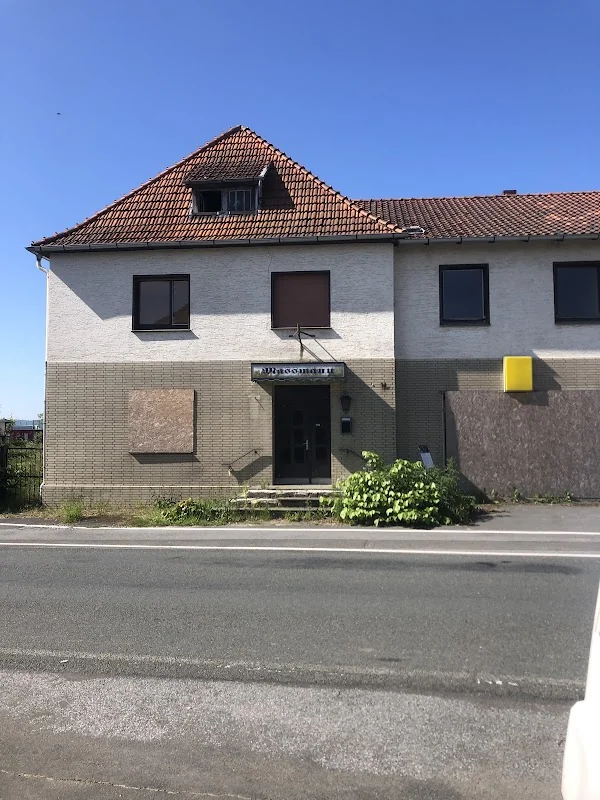
Werther (Westfalen)
Schröttinghausener Str. 14, 33824 Werther (Westfalen), Deutschland
SV Häger | 1st Team & 2nd Team
SV Häger is much more than just a club name from Werther (Westphalia): The club has stood for lived amateur football, a strong volunteer culture, and a clear local identity since 1921. In the current club and association profiles, the sports club is described as a red-white traditional club with several senior teams, a women's department, and a wide youth area; FuPa also mentions around 400 members as well as the departments of football, tennis, and gymnastics. The official address at Schröttinghausener Str. 14 makes the club's sporting home clearly tangible, while the club's history shows how closely sporting development and local ties are connected here. ([svhaeger.com](https://www.svhaeger.com/impressum/?utm_source=openai))
Those searching for SV Häger are usually looking not only for the club name but very specifically for teams, matches, youth teams, board members, logos, fan articles, or the football platform Fussball.de. These search intentions are reflected in the club's appearance: The senior department is clearly structured, the youth work is visible, and the sports facility at the RAVENOL-Arena is established as a fixed home game address. For visitors, parents, fans, and opponents, SV Häger is therefore a club that provides quick orientation both online and on-site. ([svhaeger.com](https://www.svhaeger.com/fussball/?utm_source=openai))
1st Team, 2nd Team, and 3rd Team in Competition
The search terms related to the first, second, and third teams are among the strongest topics at SV Häger, and this fits the club structure perfectly. On the official football page, the First Team, Second Team, and Third Team are listed separately; in addition, there are the women's team and the sports management of the men's area. For the First Team, the club names Sebastian Gräfe and Marcel Kranzioch as the coaching team, for the Second Team Orhan Cakar and Tim Schlüter, and for the Third Team Eric Schumacher and Jason Langosch. The fact that the teams each have their own contacts and training times shows how stable and organized the senior match operations are. ([svhaeger.com](https://www.svhaeger.com/fussball/?utm_source=openai))
Especially for search queries about SV Häger 1st Team and SV Häger 2nd Team, the training times are relevant, as both teams train according to the club's website on Tuesdays and Thursdays at 7 PM. This clear schedule is important for players, parents, and spectators because it makes home training and match preparation easily planable. The First Team is listed on the club's website as a Kreisliga A team for the 24/25 season; FuPa indicates the First Team in the Kreisliga A Bielefeld for the 2025/26 season and simultaneously lists the Second Team in the Kreisliga C4 Bielefeld as well as the women's team in the Kreisliga A. This makes it clear that the club remains present in the regional league operations with several teams. ([svhaeger.com](https://www.svhaeger.com/fussball/senioren/1-mannschaft/?utm_source=openai))
The Third Team is also important for the club's identity because it completes the broad men's offering and enables the transition between ambitious recreational and league football. On the main page of the club, Eric Schumacher and Jason Langosch are named as coaches for the Third Team. This is a strong signal from an SEO perspective, as the search query SV Häger 3rd Team usually represents users looking for specific team information, contacts, or match dates. Combined with the association entries on Fussball.de and the team pages on FuPa, a very complete picture emerges: SV Häger is a club with structure, not just a single team. ([svhaeger.com](https://www.svhaeger.com/fussball/?utm_source=openai))
For visitors who appreciate the village and club feeling of amateur football, this multi-tiered structure is particularly interesting. The teams have different responsibilities, different sporting tasks, and give the club a lively weekly structure. So when searching for SV Häger football, one finds not only results but a functioning match operation with fixed training rhythms, clear responsibilities, and a visible anchoring in the local football circle. ([svhaeger.com](https://www.svhaeger.com/fussball/?utm_source=openai))
Women's Football, Youth Football, and B-Junior Team at SV Häger
A second major area of search queries is the women's and youth sector. SV Häger not only fields senior teams but also a women's team and numerous youth teams. The club's chronicle page highlights that since 2010, particularly the artificial turf pitch and the women have shaped the small HSV. This aligns with the fact that the women's team celebrated the Kreisliga A championship in 2023. For the current 2025/26 season, both Fussball.de and FuPa list the women's team in the Kreisliga A, underscoring the sporting continuity in the women's area. ([svhaeger.com](https://www.svhaeger.com/verein/chronik/?utm_source=openai))
The youth area is particularly well established. The club's website explains that the youth department now consists of almost 100 active players and is supported by many engaged parents. On the junior pages, among others, mini-kickers, E-juniors, and B1-juniors are listed with years and training times. The mini-kickers train on Wednesdays from 4:30 PM to 5:30 PM, the E-juniors on Mondays and Wednesdays from 5:00 PM to 6:30 PM, and the B1-juniors on Mondays and Wednesdays from 6:30 PM to 8:00 PM. This allows the club to cover a large age range and provides a continuous offering in the youth sector early and late. ([svhaeger.com](https://www.svhaeger.com/fussball/junioren/?utm_source=openai))
Particularly the search query SV Häger B-Junior is an indication that users are looking for specific team information, not just general club data. On Fussball.de, B-juniors and also girls' or junior girls' playing communities appear in the club environment. The cooperation with SC Babenhausen and TuS Jöllenbeck is particularly important: The club describes the development of a JSG Häger/Babenhausen and later a JSG Jöllenbeck-Häger-Babenhausen as a practical solution to continue providing match operations for older age groups. This shows that SV Häger does not think of youth football in isolation but is organized regionally networked. ([svhaeger.com](https://www.svhaeger.com/neue-jsg-mit-joellenbeck-und-babenhausen-geht-an-den-start/?utm_source=openai))
This breadth is also valuable from a sporting perspective. Youth work here means not only training but also tournaments, festivals, pitch maintenance, and close communication with parents and players. The youth page explicitly names this as part of the tasks. So when searching for SV Häger B-Junior or SV Häger Juniors, one is looking for a club that understands children's and youth work not as a fringe topic but as the heart of its mission. For families from Werther and the surrounding area, this is a strong argument because a club with structure, continuity, and a youth focus offers more in the long term than just weekends on the pitch. ([svhaeger.com](https://www.svhaeger.com/fussball/junioren/?utm_source=openai))
RAVENOL-Arena, Sports Facility, and Directions to Schröttinghausener Str. 14
The sporting home of SV Häger is the RAVENOL-Arena at Schröttinghausener Str. 14 in 33824 Werther (Westphalia)-Häger. The official club communication and the association profiles pinpoint the home venue exactly at this address. The historical background is particularly important: The artificial turf pitch was built in 2012 and initially bore the name Oberwelland-Park before being renamed RAVENOL-Arena in 2021 through the naming partnership with RAVENOL from Werther. The club described this step as another milestone alongside the new clubhouse. ([svhaeger.com](https://www.svhaeger.com/oberwelland-park-wird-zur-ravenol-arena/?utm_source=openai))
For search queries related to directions, sports field, or parking, this clear location information is particularly valuable. Even if the found club pages do not provide a separate parking map or a detailed parking guidance system, the address itself is the most reliable orientation for visitors. The location in Häger is also deeply connected to the local landscape: It stands for amateur football in the immediate vicinity, short distances for members, and a club life that does not take place anonymously in a large arena but in a locally anchored sports facility. The home venue thus becomes a meeting point for players, families, and fans from the Werther urban area and the nearby Bielefeld environment. ([svhaeger.com](https://www.svhaeger.com/impressum/?utm_source=openai))
The naming partnership with RAVENOL is also relevant because it underscores the club's local connection. The partner also comes from Werther and stood by the club in 2021, which was highlighted by the club as an expression of regional solidarity. The official announcement additionally emphasizes that the Oberwelland family and the Werther furniture manufacturer had accompanied the pitch for almost a decade before. This makes it clear that the sports facility is not just a playing field but a place with sponsorship history, tradition, and local economic ties. ([svhaeger.com](https://www.svhaeger.com/oberwelland-park-wird-zur-ravenol-arena/?utm_source=openai))
For visitors searching for SV Häger Werther or SV Häger Bielefeld, the geographical categorization is also helpful. Werther is located in East Westphalia, and the club has a distinctly regional impact through match operations, youth cooperations, and derby references. The RAVENOL-Arena serves as the functional center: Here, home games, youth games, and club events take place. The location is therefore interesting not only as an address but as a symbol of the type of football that SV Häger embodies: down-to-earth, approachable, and with a clear connection to the local people. ([fupa.net](https://www.fupa.net/club/sv-haeger-1921?utm_source=openai))
Fan Shop, Logo, and Club Identity Since 1921
The search queries around SV Häger Fan Shop and SV Häger Logo show how important the club identity is even off the pitch. On the official fan article page, the club offers hoodies, t-shirts, as well as hats and scarves. The brand becomes particularly visible in the anniversary article, where a hoodie with the inscription Häger Sports Club since 1921 is presented. The page lists sizes from junior to senior formats and points out that orders can still be made via email. For everyday club life, this means: Identity is visible not only on the jersey but also in clothing and everyday items. ([svhaeger.com](https://www.svhaeger.com/fan-artikel/?utm_source=openai))
This is relevant from an SEO perspective because users often search for the term logo to find exactly this visual recognizability: colors, lettering, club name, and the connection to the place. Fussball.de names the club colors red-white and the founding year 1921. Together with the fan articles, a consistent appearance emerges that clearly distinguishes the club from others. So when searching for SV Häger Logo, users are often looking for belonging, recognition, and the small symbols that emotionally charge a local club. ([fussball.de](https://www.fussball.de/verein/sv-haeger-westfalen/-/id/00ES8GN8LS0000A7VV0AG08LVUPGND5I?utm_source=openai))
The team shop reference on the youth page is also important. There, the club refers to a JAKO shop with various products for players and fans. This makes it clear that SV Häger does not limit its brand world to special items but also extends it organizationally into the teams. This way, jerseys, training clothing, and fan articles become part of a unified appearance. This is a practical advantage for parents, youth players, and long-standing members, as the club thus presents itself visually and functionally as a community. ([svhaeger.com](https://www.svhaeger.com/fussball/junioren/?utm_source=openai))
The club character of the small HSV is thus very clearly visible: local, familial, and clearly designed. The anniversary in 2021, the red-white look, and the current fan articles create strong recognizability. Even if users initially search only for a logo or fan shop articles, the path quickly leads to a complete picture: Here stands a club that is proud of its history and connects this history with modern presentation. This mixture makes the SV Häger brand interesting for seekers, members, and sympathizers. ([fussball.de](https://www.fussball.de/verein/sv-haeger-westfalen/-/id/00ES8GN8LS0000A7VV0AG08LVUPGND5I?utm_source=openai))
Board, Contacts, and Membership
Another frequently searched area is the board, and here the club's website provides very concrete information. On the contact page, Olaf Heidemann is named as the First Chairman, Robin Holz as the Second Chairman, Ralf Wiedemann as the Treasurer, and Jan-Patrick Friedrichs as the Secretary. For the football area, Chris Heidemann and Nico Schubert are also listed as department heads of senior football. This makes it clear: The club is traditionally organized on a voluntary basis and has made responsibilities transparently visible. ([svhaeger.com](https://www.svhaeger.com/verein/ansprechpartner/?utm_source=openai))
For users searching for SV Häger Board or specific contact methods, the email structure is also important. The official page lists among others info@svhaeger.com, olaf.heidemann@svhaeger.com, as well as other function-related addresses. For membership, contributions, and changes to account details, the club explicitly refers to buchhaltung@svhaeger.com; cancellations should also be submitted in writing or via email. This is practical because it allows not only sporting but also administrative questions to be quickly directed to the right place. ([svhaeger.com](https://www.svhaeger.com/verein/ansprechpartner/?utm_source=openai))
Especially in the amateur sector, this clear approachability is a real advantage. Those who want to become members can find an application form and information about direct debit on the club's website. Those with questions about seniors, youth, or financing can reach specific individuals instead of anonymous contact forms. This builds trust because interested parties can immediately orient themselves. In connection with the search-strong topics board, membership, and contact, a very service-oriented club communication emerges. ([svhaeger.com](https://www.svhaeger.com/verein/werde-mitglied/?utm_source=openai))
For parents, active members, and supporters, it is also relevant that the club clearly names its responsibilities not only in senior football but also in youth and tennis. The naming of department heads shows that SV Häger functions as a multi-sport club and organizes its offerings cleanly. So when searching for SV Häger Board, one not only receives names but also a picture of a lively, well-networked club structure in which volunteering, football, and member administration closely interact. ([svhaeger.com](https://www.svhaeger.com/verein/ansprechpartner/?utm_source=openai))
History Since 1921: From Foundation to Modern Club Life
The chronicle of SV Häger is particularly valuable for SEO analysis because it gives the club a deep historical anchoring. The official club history begins in 1921 with an initial community in Häger, which initially operated under the name Deutsche Turnerschaft, Häger. Already in 1922, the first foundation festival was celebrated, which shows how quickly a small group became an organized club. In the early years, gymnastics, athletics, and later other forms of movement were added; for example, an athletics department was established in 1925. This early versatility is an important part of today's identity. ([svhaeger.com](https://www.svhaeger.com/verein/chronik/1921-1945/?utm_source=openai))
The chronicle also describes significant phases. Between 1945 and 1963, there was a handball restart and simultaneously a phase of stagnation before the club later grew into football. For the period from 1963 to 1990, the club mentions the first promotion to the football Kreisliga B, and for 1990 to 2000 the big leap after the A-League. Particularly interesting for today's search queries is the phase from 2000, in which the club is referred to as the undisputed number one in the urban area. This shows how strongly SV Häger has established itself in local football. ([svhaeger.com](https://www.svhaeger.com/verein/chronik/?utm_source=openai))
The section from 2010 to today is crucial for the modern image of the club. Here, the chronicle mentions an artificial turf pitch and the women as an enrichment of the small HSV. This phase also includes the development of the current RAVENOL-Arena, which was built as an artificial turf pitch in 2012 and renamed in 2021. Additionally, the development of women's and youth football has made the club broader, more visible, and more contemporary. This creates a club that not only preserves tradition but actively develops it. ([svhaeger.com](https://www.svhaeger.com/verein/chronik/?utm_source=openai))
The official chronicle is thus more than just a retrospective. It explains why SV Häger is today structured as it is: as a club with history, local ties, a strong youth program, and a clear focus on football. For search queries like SV Häger Oldenburg or SV Häger Bielefeld, the historical and geographical clarity is important because it clearly locates the club in Werther and reduces misunderstandings. The result is a precise club profile: grown since 1921, modernly organized today, and firmly anchored in local sports life. ([svhaeger.com](https://www.svhaeger.com/verein/chronik/?utm_source=openai))
Sources:
Show moreShow less
SV Häger | 1st Team & 2nd Team
SV Häger is much more than just a club name from Werther (Westphalia): The club has stood for lived amateur football, a strong volunteer culture, and a clear local identity since 1921. In the current club and association profiles, the sports club is described as a red-white traditional club with several senior teams, a women's department, and a wide youth area; FuPa also mentions around 400 members as well as the departments of football, tennis, and gymnastics. The official address at Schröttinghausener Str. 14 makes the club's sporting home clearly tangible, while the club's history shows how closely sporting development and local ties are connected here. ([svhaeger.com](https://www.svhaeger.com/impressum/?utm_source=openai))
Those searching for SV Häger are usually looking not only for the club name but very specifically for teams, matches, youth teams, board members, logos, fan articles, or the football platform Fussball.de. These search intentions are reflected in the club's appearance: The senior department is clearly structured, the youth work is visible, and the sports facility at the RAVENOL-Arena is established as a fixed home game address. For visitors, parents, fans, and opponents, SV Häger is therefore a club that provides quick orientation both online and on-site. ([svhaeger.com](https://www.svhaeger.com/fussball/?utm_source=openai))
1st Team, 2nd Team, and 3rd Team in Competition
The search terms related to the first, second, and third teams are among the strongest topics at SV Häger, and this fits the club structure perfectly. On the official football page, the First Team, Second Team, and Third Team are listed separately; in addition, there are the women's team and the sports management of the men's area. For the First Team, the club names Sebastian Gräfe and Marcel Kranzioch as the coaching team, for the Second Team Orhan Cakar and Tim Schlüter, and for the Third Team Eric Schumacher and Jason Langosch. The fact that the teams each have their own contacts and training times shows how stable and organized the senior match operations are. ([svhaeger.com](https://www.svhaeger.com/fussball/?utm_source=openai))
Especially for search queries about SV Häger 1st Team and SV Häger 2nd Team, the training times are relevant, as both teams train according to the club's website on Tuesdays and Thursdays at 7 PM. This clear schedule is important for players, parents, and spectators because it makes home training and match preparation easily planable. The First Team is listed on the club's website as a Kreisliga A team for the 24/25 season; FuPa indicates the First Team in the Kreisliga A Bielefeld for the 2025/26 season and simultaneously lists the Second Team in the Kreisliga C4 Bielefeld as well as the women's team in the Kreisliga A. This makes it clear that the club remains present in the regional league operations with several teams. ([svhaeger.com](https://www.svhaeger.com/fussball/senioren/1-mannschaft/?utm_source=openai))
The Third Team is also important for the club's identity because it completes the broad men's offering and enables the transition between ambitious recreational and league football. On the main page of the club, Eric Schumacher and Jason Langosch are named as coaches for the Third Team. This is a strong signal from an SEO perspective, as the search query SV Häger 3rd Team usually represents users looking for specific team information, contacts, or match dates. Combined with the association entries on Fussball.de and the team pages on FuPa, a very complete picture emerges: SV Häger is a club with structure, not just a single team. ([svhaeger.com](https://www.svhaeger.com/fussball/?utm_source=openai))
For visitors who appreciate the village and club feeling of amateur football, this multi-tiered structure is particularly interesting. The teams have different responsibilities, different sporting tasks, and give the club a lively weekly structure. So when searching for SV Häger football, one finds not only results but a functioning match operation with fixed training rhythms, clear responsibilities, and a visible anchoring in the local football circle. ([svhaeger.com](https://www.svhaeger.com/fussball/?utm_source=openai))
Women's Football, Youth Football, and B-Junior Team at SV Häger
A second major area of search queries is the women's and youth sector. SV Häger not only fields senior teams but also a women's team and numerous youth teams. The club's chronicle page highlights that since 2010, particularly the artificial turf pitch and the women have shaped the small HSV. This aligns with the fact that the women's team celebrated the Kreisliga A championship in 2023. For the current 2025/26 season, both Fussball.de and FuPa list the women's team in the Kreisliga A, underscoring the sporting continuity in the women's area. ([svhaeger.com](https://www.svhaeger.com/verein/chronik/?utm_source=openai))
The youth area is particularly well established. The club's website explains that the youth department now consists of almost 100 active players and is supported by many engaged parents. On the junior pages, among others, mini-kickers, E-juniors, and B1-juniors are listed with years and training times. The mini-kickers train on Wednesdays from 4:30 PM to 5:30 PM, the E-juniors on Mondays and Wednesdays from 5:00 PM to 6:30 PM, and the B1-juniors on Mondays and Wednesdays from 6:30 PM to 8:00 PM. This allows the club to cover a large age range and provides a continuous offering in the youth sector early and late. ([svhaeger.com](https://www.svhaeger.com/fussball/junioren/?utm_source=openai))
Particularly the search query SV Häger B-Junior is an indication that users are looking for specific team information, not just general club data. On Fussball.de, B-juniors and also girls' or junior girls' playing communities appear in the club environment. The cooperation with SC Babenhausen and TuS Jöllenbeck is particularly important: The club describes the development of a JSG Häger/Babenhausen and later a JSG Jöllenbeck-Häger-Babenhausen as a practical solution to continue providing match operations for older age groups. This shows that SV Häger does not think of youth football in isolation but is organized regionally networked. ([svhaeger.com](https://www.svhaeger.com/neue-jsg-mit-joellenbeck-und-babenhausen-geht-an-den-start/?utm_source=openai))
This breadth is also valuable from a sporting perspective. Youth work here means not only training but also tournaments, festivals, pitch maintenance, and close communication with parents and players. The youth page explicitly names this as part of the tasks. So when searching for SV Häger B-Junior or SV Häger Juniors, one is looking for a club that understands children's and youth work not as a fringe topic but as the heart of its mission. For families from Werther and the surrounding area, this is a strong argument because a club with structure, continuity, and a youth focus offers more in the long term than just weekends on the pitch. ([svhaeger.com](https://www.svhaeger.com/fussball/junioren/?utm_source=openai))
RAVENOL-Arena, Sports Facility, and Directions to Schröttinghausener Str. 14
The sporting home of SV Häger is the RAVENOL-Arena at Schröttinghausener Str. 14 in 33824 Werther (Westphalia)-Häger. The official club communication and the association profiles pinpoint the home venue exactly at this address. The historical background is particularly important: The artificial turf pitch was built in 2012 and initially bore the name Oberwelland-Park before being renamed RAVENOL-Arena in 2021 through the naming partnership with RAVENOL from Werther. The club described this step as another milestone alongside the new clubhouse. ([svhaeger.com](https://www.svhaeger.com/oberwelland-park-wird-zur-ravenol-arena/?utm_source=openai))
For search queries related to directions, sports field, or parking, this clear location information is particularly valuable. Even if the found club pages do not provide a separate parking map or a detailed parking guidance system, the address itself is the most reliable orientation for visitors. The location in Häger is also deeply connected to the local landscape: It stands for amateur football in the immediate vicinity, short distances for members, and a club life that does not take place anonymously in a large arena but in a locally anchored sports facility. The home venue thus becomes a meeting point for players, families, and fans from the Werther urban area and the nearby Bielefeld environment. ([svhaeger.com](https://www.svhaeger.com/impressum/?utm_source=openai))
The naming partnership with RAVENOL is also relevant because it underscores the club's local connection. The partner also comes from Werther and stood by the club in 2021, which was highlighted by the club as an expression of regional solidarity. The official announcement additionally emphasizes that the Oberwelland family and the Werther furniture manufacturer had accompanied the pitch for almost a decade before. This makes it clear that the sports facility is not just a playing field but a place with sponsorship history, tradition, and local economic ties. ([svhaeger.com](https://www.svhaeger.com/oberwelland-park-wird-zur-ravenol-arena/?utm_source=openai))
For visitors searching for SV Häger Werther or SV Häger Bielefeld, the geographical categorization is also helpful. Werther is located in East Westphalia, and the club has a distinctly regional impact through match operations, youth cooperations, and derby references. The RAVENOL-Arena serves as the functional center: Here, home games, youth games, and club events take place. The location is therefore interesting not only as an address but as a symbol of the type of football that SV Häger embodies: down-to-earth, approachable, and with a clear connection to the local people. ([fupa.net](https://www.fupa.net/club/sv-haeger-1921?utm_source=openai))
Fan Shop, Logo, and Club Identity Since 1921
The search queries around SV Häger Fan Shop and SV Häger Logo show how important the club identity is even off the pitch. On the official fan article page, the club offers hoodies, t-shirts, as well as hats and scarves. The brand becomes particularly visible in the anniversary article, where a hoodie with the inscription Häger Sports Club since 1921 is presented. The page lists sizes from junior to senior formats and points out that orders can still be made via email. For everyday club life, this means: Identity is visible not only on the jersey but also in clothing and everyday items. ([svhaeger.com](https://www.svhaeger.com/fan-artikel/?utm_source=openai))
This is relevant from an SEO perspective because users often search for the term logo to find exactly this visual recognizability: colors, lettering, club name, and the connection to the place. Fussball.de names the club colors red-white and the founding year 1921. Together with the fan articles, a consistent appearance emerges that clearly distinguishes the club from others. So when searching for SV Häger Logo, users are often looking for belonging, recognition, and the small symbols that emotionally charge a local club. ([fussball.de](https://www.fussball.de/verein/sv-haeger-westfalen/-/id/00ES8GN8LS0000A7VV0AG08LVUPGND5I?utm_source=openai))
The team shop reference on the youth page is also important. There, the club refers to a JAKO shop with various products for players and fans. This makes it clear that SV Häger does not limit its brand world to special items but also extends it organizationally into the teams. This way, jerseys, training clothing, and fan articles become part of a unified appearance. This is a practical advantage for parents, youth players, and long-standing members, as the club thus presents itself visually and functionally as a community. ([svhaeger.com](https://www.svhaeger.com/fussball/junioren/?utm_source=openai))
The club character of the small HSV is thus very clearly visible: local, familial, and clearly designed. The anniversary in 2021, the red-white look, and the current fan articles create strong recognizability. Even if users initially search only for a logo or fan shop articles, the path quickly leads to a complete picture: Here stands a club that is proud of its history and connects this history with modern presentation. This mixture makes the SV Häger brand interesting for seekers, members, and sympathizers. ([fussball.de](https://www.fussball.de/verein/sv-haeger-westfalen/-/id/00ES8GN8LS0000A7VV0AG08LVUPGND5I?utm_source=openai))
Board, Contacts, and Membership
Another frequently searched area is the board, and here the club's website provides very concrete information. On the contact page, Olaf Heidemann is named as the First Chairman, Robin Holz as the Second Chairman, Ralf Wiedemann as the Treasurer, and Jan-Patrick Friedrichs as the Secretary. For the football area, Chris Heidemann and Nico Schubert are also listed as department heads of senior football. This makes it clear: The club is traditionally organized on a voluntary basis and has made responsibilities transparently visible. ([svhaeger.com](https://www.svhaeger.com/verein/ansprechpartner/?utm_source=openai))
For users searching for SV Häger Board or specific contact methods, the email structure is also important. The official page lists among others info@svhaeger.com, olaf.heidemann@svhaeger.com, as well as other function-related addresses. For membership, contributions, and changes to account details, the club explicitly refers to buchhaltung@svhaeger.com; cancellations should also be submitted in writing or via email. This is practical because it allows not only sporting but also administrative questions to be quickly directed to the right place. ([svhaeger.com](https://www.svhaeger.com/verein/ansprechpartner/?utm_source=openai))
Especially in the amateur sector, this clear approachability is a real advantage. Those who want to become members can find an application form and information about direct debit on the club's website. Those with questions about seniors, youth, or financing can reach specific individuals instead of anonymous contact forms. This builds trust because interested parties can immediately orient themselves. In connection with the search-strong topics board, membership, and contact, a very service-oriented club communication emerges. ([svhaeger.com](https://www.svhaeger.com/verein/werde-mitglied/?utm_source=openai))
For parents, active members, and supporters, it is also relevant that the club clearly names its responsibilities not only in senior football but also in youth and tennis. The naming of department heads shows that SV Häger functions as a multi-sport club and organizes its offerings cleanly. So when searching for SV Häger Board, one not only receives names but also a picture of a lively, well-networked club structure in which volunteering, football, and member administration closely interact. ([svhaeger.com](https://www.svhaeger.com/verein/ansprechpartner/?utm_source=openai))
History Since 1921: From Foundation to Modern Club Life
The chronicle of SV Häger is particularly valuable for SEO analysis because it gives the club a deep historical anchoring. The official club history begins in 1921 with an initial community in Häger, which initially operated under the name Deutsche Turnerschaft, Häger. Already in 1922, the first foundation festival was celebrated, which shows how quickly a small group became an organized club. In the early years, gymnastics, athletics, and later other forms of movement were added; for example, an athletics department was established in 1925. This early versatility is an important part of today's identity. ([svhaeger.com](https://www.svhaeger.com/verein/chronik/1921-1945/?utm_source=openai))
The chronicle also describes significant phases. Between 1945 and 1963, there was a handball restart and simultaneously a phase of stagnation before the club later grew into football. For the period from 1963 to 1990, the club mentions the first promotion to the football Kreisliga B, and for 1990 to 2000 the big leap after the A-League. Particularly interesting for today's search queries is the phase from 2000, in which the club is referred to as the undisputed number one in the urban area. This shows how strongly SV Häger has established itself in local football. ([svhaeger.com](https://www.svhaeger.com/verein/chronik/?utm_source=openai))
The section from 2010 to today is crucial for the modern image of the club. Here, the chronicle mentions an artificial turf pitch and the women as an enrichment of the small HSV. This phase also includes the development of the current RAVENOL-Arena, which was built as an artificial turf pitch in 2012 and renamed in 2021. Additionally, the development of women's and youth football has made the club broader, more visible, and more contemporary. This creates a club that not only preserves tradition but actively develops it. ([svhaeger.com](https://www.svhaeger.com/verein/chronik/?utm_source=openai))
The official chronicle is thus more than just a retrospective. It explains why SV Häger is today structured as it is: as a club with history, local ties, a strong youth program, and a clear focus on football. For search queries like SV Häger Oldenburg or SV Häger Bielefeld, the historical and geographical clarity is important because it clearly locates the club in Werther and reduces misunderstandings. The result is a precise club profile: grown since 1921, modernly organized today, and firmly anchored in local sports life. ([svhaeger.com](https://www.svhaeger.com/verein/chronik/?utm_source=openai))
Sources:
SV Häger | 1st Team & 2nd Team
SV Häger is much more than just a club name from Werther (Westphalia): The club has stood for lived amateur football, a strong volunteer culture, and a clear local identity since 1921. In the current club and association profiles, the sports club is described as a red-white traditional club with several senior teams, a women's department, and a wide youth area; FuPa also mentions around 400 members as well as the departments of football, tennis, and gymnastics. The official address at Schröttinghausener Str. 14 makes the club's sporting home clearly tangible, while the club's history shows how closely sporting development and local ties are connected here. ([svhaeger.com](https://www.svhaeger.com/impressum/?utm_source=openai))
Those searching for SV Häger are usually looking not only for the club name but very specifically for teams, matches, youth teams, board members, logos, fan articles, or the football platform Fussball.de. These search intentions are reflected in the club's appearance: The senior department is clearly structured, the youth work is visible, and the sports facility at the RAVENOL-Arena is established as a fixed home game address. For visitors, parents, fans, and opponents, SV Häger is therefore a club that provides quick orientation both online and on-site. ([svhaeger.com](https://www.svhaeger.com/fussball/?utm_source=openai))
1st Team, 2nd Team, and 3rd Team in Competition
The search terms related to the first, second, and third teams are among the strongest topics at SV Häger, and this fits the club structure perfectly. On the official football page, the First Team, Second Team, and Third Team are listed separately; in addition, there are the women's team and the sports management of the men's area. For the First Team, the club names Sebastian Gräfe and Marcel Kranzioch as the coaching team, for the Second Team Orhan Cakar and Tim Schlüter, and for the Third Team Eric Schumacher and Jason Langosch. The fact that the teams each have their own contacts and training times shows how stable and organized the senior match operations are. ([svhaeger.com](https://www.svhaeger.com/fussball/?utm_source=openai))
Especially for search queries about SV Häger 1st Team and SV Häger 2nd Team, the training times are relevant, as both teams train according to the club's website on Tuesdays and Thursdays at 7 PM. This clear schedule is important for players, parents, and spectators because it makes home training and match preparation easily planable. The First Team is listed on the club's website as a Kreisliga A team for the 24/25 season; FuPa indicates the First Team in the Kreisliga A Bielefeld for the 2025/26 season and simultaneously lists the Second Team in the Kreisliga C4 Bielefeld as well as the women's team in the Kreisliga A. This makes it clear that the club remains present in the regional league operations with several teams. ([svhaeger.com](https://www.svhaeger.com/fussball/senioren/1-mannschaft/?utm_source=openai))
The Third Team is also important for the club's identity because it completes the broad men's offering and enables the transition between ambitious recreational and league football. On the main page of the club, Eric Schumacher and Jason Langosch are named as coaches for the Third Team. This is a strong signal from an SEO perspective, as the search query SV Häger 3rd Team usually represents users looking for specific team information, contacts, or match dates. Combined with the association entries on Fussball.de and the team pages on FuPa, a very complete picture emerges: SV Häger is a club with structure, not just a single team. ([svhaeger.com](https://www.svhaeger.com/fussball/?utm_source=openai))
For visitors who appreciate the village and club feeling of amateur football, this multi-tiered structure is particularly interesting. The teams have different responsibilities, different sporting tasks, and give the club a lively weekly structure. So when searching for SV Häger football, one finds not only results but a functioning match operation with fixed training rhythms, clear responsibilities, and a visible anchoring in the local football circle. ([svhaeger.com](https://www.svhaeger.com/fussball/?utm_source=openai))
Women's Football, Youth Football, and B-Junior Team at SV Häger
A second major area of search queries is the women's and youth sector. SV Häger not only fields senior teams but also a women's team and numerous youth teams. The club's chronicle page highlights that since 2010, particularly the artificial turf pitch and the women have shaped the small HSV. This aligns with the fact that the women's team celebrated the Kreisliga A championship in 2023. For the current 2025/26 season, both Fussball.de and FuPa list the women's team in the Kreisliga A, underscoring the sporting continuity in the women's area. ([svhaeger.com](https://www.svhaeger.com/verein/chronik/?utm_source=openai))
The youth area is particularly well established. The club's website explains that the youth department now consists of almost 100 active players and is supported by many engaged parents. On the junior pages, among others, mini-kickers, E-juniors, and B1-juniors are listed with years and training times. The mini-kickers train on Wednesdays from 4:30 PM to 5:30 PM, the E-juniors on Mondays and Wednesdays from 5:00 PM to 6:30 PM, and the B1-juniors on Mondays and Wednesdays from 6:30 PM to 8:00 PM. This allows the club to cover a large age range and provides a continuous offering in the youth sector early and late. ([svhaeger.com](https://www.svhaeger.com/fussball/junioren/?utm_source=openai))
Particularly the search query SV Häger B-Junior is an indication that users are looking for specific team information, not just general club data. On Fussball.de, B-juniors and also girls' or junior girls' playing communities appear in the club environment. The cooperation with SC Babenhausen and TuS Jöllenbeck is particularly important: The club describes the development of a JSG Häger/Babenhausen and later a JSG Jöllenbeck-Häger-Babenhausen as a practical solution to continue providing match operations for older age groups. This shows that SV Häger does not think of youth football in isolation but is organized regionally networked. ([svhaeger.com](https://www.svhaeger.com/neue-jsg-mit-joellenbeck-und-babenhausen-geht-an-den-start/?utm_source=openai))
This breadth is also valuable from a sporting perspective. Youth work here means not only training but also tournaments, festivals, pitch maintenance, and close communication with parents and players. The youth page explicitly names this as part of the tasks. So when searching for SV Häger B-Junior or SV Häger Juniors, one is looking for a club that understands children's and youth work not as a fringe topic but as the heart of its mission. For families from Werther and the surrounding area, this is a strong argument because a club with structure, continuity, and a youth focus offers more in the long term than just weekends on the pitch. ([svhaeger.com](https://www.svhaeger.com/fussball/junioren/?utm_source=openai))
RAVENOL-Arena, Sports Facility, and Directions to Schröttinghausener Str. 14
The sporting home of SV Häger is the RAVENOL-Arena at Schröttinghausener Str. 14 in 33824 Werther (Westphalia)-Häger. The official club communication and the association profiles pinpoint the home venue exactly at this address. The historical background is particularly important: The artificial turf pitch was built in 2012 and initially bore the name Oberwelland-Park before being renamed RAVENOL-Arena in 2021 through the naming partnership with RAVENOL from Werther. The club described this step as another milestone alongside the new clubhouse. ([svhaeger.com](https://www.svhaeger.com/oberwelland-park-wird-zur-ravenol-arena/?utm_source=openai))
For search queries related to directions, sports field, or parking, this clear location information is particularly valuable. Even if the found club pages do not provide a separate parking map or a detailed parking guidance system, the address itself is the most reliable orientation for visitors. The location in Häger is also deeply connected to the local landscape: It stands for amateur football in the immediate vicinity, short distances for members, and a club life that does not take place anonymously in a large arena but in a locally anchored sports facility. The home venue thus becomes a meeting point for players, families, and fans from the Werther urban area and the nearby Bielefeld environment. ([svhaeger.com](https://www.svhaeger.com/impressum/?utm_source=openai))
The naming partnership with RAVENOL is also relevant because it underscores the club's local connection. The partner also comes from Werther and stood by the club in 2021, which was highlighted by the club as an expression of regional solidarity. The official announcement additionally emphasizes that the Oberwelland family and the Werther furniture manufacturer had accompanied the pitch for almost a decade before. This makes it clear that the sports facility is not just a playing field but a place with sponsorship history, tradition, and local economic ties. ([svhaeger.com](https://www.svhaeger.com/oberwelland-park-wird-zur-ravenol-arena/?utm_source=openai))
For visitors searching for SV Häger Werther or SV Häger Bielefeld, the geographical categorization is also helpful. Werther is located in East Westphalia, and the club has a distinctly regional impact through match operations, youth cooperations, and derby references. The RAVENOL-Arena serves as the functional center: Here, home games, youth games, and club events take place. The location is therefore interesting not only as an address but as a symbol of the type of football that SV Häger embodies: down-to-earth, approachable, and with a clear connection to the local people. ([fupa.net](https://www.fupa.net/club/sv-haeger-1921?utm_source=openai))
Fan Shop, Logo, and Club Identity Since 1921
The search queries around SV Häger Fan Shop and SV Häger Logo show how important the club identity is even off the pitch. On the official fan article page, the club offers hoodies, t-shirts, as well as hats and scarves. The brand becomes particularly visible in the anniversary article, where a hoodie with the inscription Häger Sports Club since 1921 is presented. The page lists sizes from junior to senior formats and points out that orders can still be made via email. For everyday club life, this means: Identity is visible not only on the jersey but also in clothing and everyday items. ([svhaeger.com](https://www.svhaeger.com/fan-artikel/?utm_source=openai))
This is relevant from an SEO perspective because users often search for the term logo to find exactly this visual recognizability: colors, lettering, club name, and the connection to the place. Fussball.de names the club colors red-white and the founding year 1921. Together with the fan articles, a consistent appearance emerges that clearly distinguishes the club from others. So when searching for SV Häger Logo, users are often looking for belonging, recognition, and the small symbols that emotionally charge a local club. ([fussball.de](https://www.fussball.de/verein/sv-haeger-westfalen/-/id/00ES8GN8LS0000A7VV0AG08LVUPGND5I?utm_source=openai))
The team shop reference on the youth page is also important. There, the club refers to a JAKO shop with various products for players and fans. This makes it clear that SV Häger does not limit its brand world to special items but also extends it organizationally into the teams. This way, jerseys, training clothing, and fan articles become part of a unified appearance. This is a practical advantage for parents, youth players, and long-standing members, as the club thus presents itself visually and functionally as a community. ([svhaeger.com](https://www.svhaeger.com/fussball/junioren/?utm_source=openai))
The club character of the small HSV is thus very clearly visible: local, familial, and clearly designed. The anniversary in 2021, the red-white look, and the current fan articles create strong recognizability. Even if users initially search only for a logo or fan shop articles, the path quickly leads to a complete picture: Here stands a club that is proud of its history and connects this history with modern presentation. This mixture makes the SV Häger brand interesting for seekers, members, and sympathizers. ([fussball.de](https://www.fussball.de/verein/sv-haeger-westfalen/-/id/00ES8GN8LS0000A7VV0AG08LVUPGND5I?utm_source=openai))
Board, Contacts, and Membership
Another frequently searched area is the board, and here the club's website provides very concrete information. On the contact page, Olaf Heidemann is named as the First Chairman, Robin Holz as the Second Chairman, Ralf Wiedemann as the Treasurer, and Jan-Patrick Friedrichs as the Secretary. For the football area, Chris Heidemann and Nico Schubert are also listed as department heads of senior football. This makes it clear: The club is traditionally organized on a voluntary basis and has made responsibilities transparently visible. ([svhaeger.com](https://www.svhaeger.com/verein/ansprechpartner/?utm_source=openai))
For users searching for SV Häger Board or specific contact methods, the email structure is also important. The official page lists among others info@svhaeger.com, olaf.heidemann@svhaeger.com, as well as other function-related addresses. For membership, contributions, and changes to account details, the club explicitly refers to buchhaltung@svhaeger.com; cancellations should also be submitted in writing or via email. This is practical because it allows not only sporting but also administrative questions to be quickly directed to the right place. ([svhaeger.com](https://www.svhaeger.com/verein/ansprechpartner/?utm_source=openai))
Especially in the amateur sector, this clear approachability is a real advantage. Those who want to become members can find an application form and information about direct debit on the club's website. Those with questions about seniors, youth, or financing can reach specific individuals instead of anonymous contact forms. This builds trust because interested parties can immediately orient themselves. In connection with the search-strong topics board, membership, and contact, a very service-oriented club communication emerges. ([svhaeger.com](https://www.svhaeger.com/verein/werde-mitglied/?utm_source=openai))
For parents, active members, and supporters, it is also relevant that the club clearly names its responsibilities not only in senior football but also in youth and tennis. The naming of department heads shows that SV Häger functions as a multi-sport club and organizes its offerings cleanly. So when searching for SV Häger Board, one not only receives names but also a picture of a lively, well-networked club structure in which volunteering, football, and member administration closely interact. ([svhaeger.com](https://www.svhaeger.com/verein/ansprechpartner/?utm_source=openai))
History Since 1921: From Foundation to Modern Club Life
The chronicle of SV Häger is particularly valuable for SEO analysis because it gives the club a deep historical anchoring. The official club history begins in 1921 with an initial community in Häger, which initially operated under the name Deutsche Turnerschaft, Häger. Already in 1922, the first foundation festival was celebrated, which shows how quickly a small group became an organized club. In the early years, gymnastics, athletics, and later other forms of movement were added; for example, an athletics department was established in 1925. This early versatility is an important part of today's identity. ([svhaeger.com](https://www.svhaeger.com/verein/chronik/1921-1945/?utm_source=openai))
The chronicle also describes significant phases. Between 1945 and 1963, there was a handball restart and simultaneously a phase of stagnation before the club later grew into football. For the period from 1963 to 1990, the club mentions the first promotion to the football Kreisliga B, and for 1990 to 2000 the big leap after the A-League. Particularly interesting for today's search queries is the phase from 2000, in which the club is referred to as the undisputed number one in the urban area. This shows how strongly SV Häger has established itself in local football. ([svhaeger.com](https://www.svhaeger.com/verein/chronik/?utm_source=openai))
The section from 2010 to today is crucial for the modern image of the club. Here, the chronicle mentions an artificial turf pitch and the women as an enrichment of the small HSV. This phase also includes the development of the current RAVENOL-Arena, which was built as an artificial turf pitch in 2012 and renamed in 2021. Additionally, the development of women's and youth football has made the club broader, more visible, and more contemporary. This creates a club that not only preserves tradition but actively develops it. ([svhaeger.com](https://www.svhaeger.com/verein/chronik/?utm_source=openai))
The official chronicle is thus more than just a retrospective. It explains why SV Häger is today structured as it is: as a club with history, local ties, a strong youth program, and a clear focus on football. For search queries like SV Häger Oldenburg or SV Häger Bielefeld, the historical and geographical clarity is important because it clearly locates the club in Werther and reduces misunderstandings. The result is a precise club profile: grown since 1921, modernly organized today, and firmly anchored in local sports life. ([svhaeger.com](https://www.svhaeger.com/verein/chronik/?utm_source=openai))
Sources:

Frequently Asked Questions
Reviews
No reviews found