
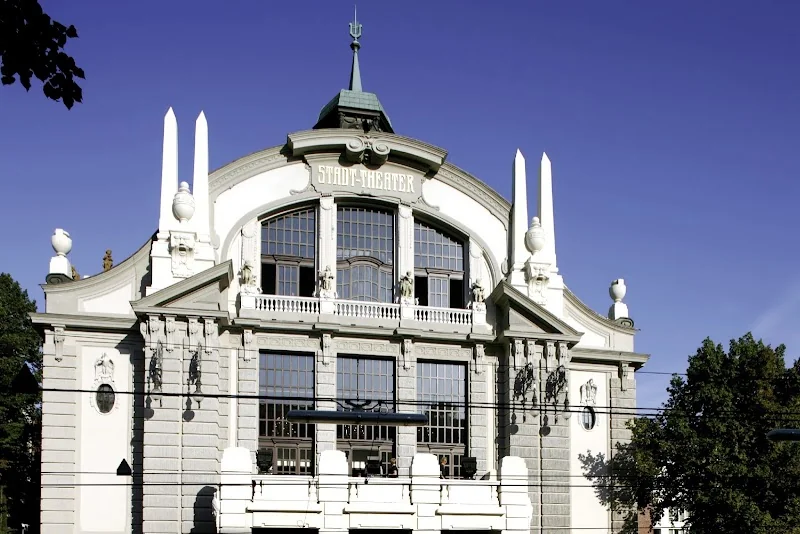
Bielefeld
Brunnenstraße 3-9, 33602 Bielefeld, Deutschland
Theater Bielefeld | Schedule & Tickets
Theater Bielefeld is the cultural heart of a venue that means much more in Bielefeld than just a stage for the evening. As a three-branch house with singing, dance, and acting, it operates in three buildings and eight venues, presenting over 600 performances per season and reaching more than 200,000 visitors. Those searching for Theater Bielefeld program, Theater Bielefeld schedule, Theater Bielefeld today, or Theater Bielefeld tickets usually want to quickly know what is currently playing, how ticket sales work, and what practical details are important for the visit. This overview addresses exactly that: it consolidates the most important information on the program, seating plan, directions, history, and jobs, organizing it so that a visit to Theater Bielefeld can be well planned. The stages and orchestras of the city of Bielefeld are among the largest cultural institutions in North Rhine-Westphalia, combining classical forms with contemporary projects, cross-genre productions, and a strong connection to the city. ([buo-bielefeld.de](https://www.buo-bielefeld.de/infos-mehr/das-sind-wir/ueber-uns))
Program, Calendar, and Tickets
The primary search intent behind many inquiries about Theater Bielefeld is clear: visitors want to know what is on the schedule today, tomorrow, or in the coming weeks. To this end, the house provides a calendar and program overview on its site. The homepage displays the upcoming events, including quick filters for Today, Tomorrow, and This Weekend. Additionally, the website shows the branches of the house separately, allowing for targeted discovery of singing, dance, plays, and other formats. This is particularly practical for searching Theater Bielefeld program today or Theater Bielefeld calendar, as it leads directly to the relevant section without having to click through menus for a long time. The official advance ticket sales are also clearly structured: currently, according to the website, all previously scheduled theater events are on sale until the end of October 2026; for concerts by the Bielefeld Philharmonic and in-house events at the Rudolf-Oetker-Halle, sales are ongoing for the entire 2026/27 season. This shows that advance sales are organized early and transparently. ([theater-bielefeld.de](https://theater-bielefeld.de/fileadmin/Downloads_Drucksachen/24-25/BiPhil_ROH_Konzert_Saisonheft_24-25.pdf))
Tickets can be purchased in several ways. The theater and concert box office is located at Altstädter Kirchstraße 14 in 33602 Bielefeld. It is open Tuesday to Friday from 10:00 AM to 6:00 PM and Saturday from 10:00 AM to 2:00 PM. Telephone ticket orders can be made at 0521 51-5454; email orders are explicitly not provided for. Those who prefer to book digitally can use the webshop to conveniently buy tickets online. The website also points out that TicketDirect is available via email, and tickets can be shown on a smartphone, in the wallet app, or printed at the entrance. Vouchers can also be redeemed online. For many search queries related to Theater Bielefeld tickets, this is the crucial point: the house combines traditional box office sales with modern online sales without losing clarity. The evening box office opens one hour before the performance begins, which is especially helpful for spontaneous visits. This way, both long-term planners and last-minute decision-makers are well served. ([buo-bielefeld.de](https://www.buo-bielefeld.de/infos-mehr/tickets-abos/rund-ums-ticket))
Particularly interesting for visitors is that the theater not only sells individual performances but understands the entire visit as a service. Ticket orders can be handled by phone, reservations must be picked up within a week, and a service fee applies for postal delivery. For many users of the search terms Theater Bielefeld program 2026 or Theater Bielefeld today, this is important because they want to plan not only the play but also the organizational side of the theater visit. The house provides a clear structure for this: program overview, calendar, webshop, telephone box office, and evening box office. This creates an uncomplicated access to a versatile repertoire that combines current productions, classical works, and special formats. The search intent behind the terms tickets, cards, calendar, and schedule is thus answered on a single official information basis. ([theater-bielefeld.de](https://theater-bielefeld.de/fileadmin/Downloads_Drucksachen/24-25/BiPhil_ROH_Konzert_Saisonheft_24-25.pdf))
Seating Plan, Seats, and Capacity in the City Theater
Many inquiries about Theater Bielefeld revolve not only around the program but also around the question of where the best seats in the auditorium are. For these users, terms like seating plan, seats, or best seats are particularly relevant. At Theater Bielefeld, the primary path for this leads to the City Theater, whose official seating plan is available as a PDF. The auditorium of the City Theater has a maximum capacity of 725 seats, including 6 wheelchair spaces. The official documents also show price categories I to V, allowing the choice of seats to be traced according to price and location. This is helpful for people who plan specifically: the seating plan makes visible how the space is divided and which areas belong to which price levels. This is especially interesting when looking for a specific experience, such as proximity to the stage, a good overview of the action, or a barrier-free seat with clear accessibility. ([theater-bielefeld.de](https://theater-bielefeld.de/fileadmin/Downloads_Drucksachen/23-24/BiPhil_ROH_Konzert_Saisonheft_23_24.pdf?utm_source=openai))
The accessibility page complements the seating plan with practical notes on using the auditorium. Wheelchair spaces can be reserved up to one week before the performance and are located in the first rows of the stalls in price category 2. The balcony of the City Theater and the loft are only accessible via stairs. At the same time, the house offers a catering service at all performances so that drinks can be prepared before the intermission. This shows that the official seating plan is not thought of in isolation but as part of a visitor experience. For search terms like Theater Bielefeld seating plan or Theater Bielefeld tickets, this means: those who use the seating plan not only see the location of the seats but also recognize how price structure, accessibility, and view of the stage are interconnected. The official PDF document is therefore not just a technical document but a concrete decision-making aid for the purchase. ([buo-bielefeld.de](https://www.buo-bielefeld.de/infos-mehr/service/barrierefreiheit))
Orientation also includes that theater visitors understand the seating structure in the context of the house. The City Theater is one of the three houses of the stages and orchestras of the city of Bielefeld and, together with the Theater am Alten Markt and the Rudolf-Oetker-Halle, forms the heart of the performance operations. Those looking at the seating plan of the City Theater thus see not only an individual auditorium but a part of the entire multi-branch system. This is as relevant for the search for Theater Bielefeld schedule as it is for the search for Theater Bielefeld program, as the choice of seat often depends on the play, the type of production, and the desired proximity to the action. The official system makes these connections transparent and helps to find the appropriate category without having to rely on assumptions. ([buo-bielefeld.de](https://www.buo-bielefeld.de/infos-mehr/das-sind-wir/ueber-uns))
Directions, Parking, and Barrier-Free Visit
The directions are among the most frequently searched topics related to Theater Bielefeld. The official site describes the City Theater as being located in close proximity to the town hall in the city center. Several city rail lines run directly to the Rathaus stop from the main train station or from Jahnplatz; from there, the way to the entrance is short and straightforward. Alternatively, the theater can also be reached on foot by walking from the pedestrian zone through Jahnplatz and Niederwall towards the city center. For the search for Theater Bielefeld directions, this point is crucial as it shows that the house is very centrally located and can be easily reached both by public transport and on foot. Furthermore, the website points out that the ticket serves as a ticket for local public transport in the Bielefeld area without additional cost, valid two hours before and after the performance. This is a practical advantage for many visitors, as arrival and departure are closely linked to the performance visit. ([buo-bielefeld.de](https://www.buo-bielefeld.de/infos-mehr/service/anfahrt))
Regarding parking, the theater primarily mentions the barrier-free and accessible options around the City Theater and the Theater am Alten Markt. Mentioned are, among others, parking spaces at Niederwall and Brunnenstraße, as well as the underground garage of the New Town Hall. There, parking for theater visitors costs 2.50 euros for the entire evening; exit tickets are available at the program booklet sales. For the Rudolf-Oetker-Halle, the website refers to additional accessible parking options near the side entrance. So, those searching for Theater Bielefeld parking will find primarily concrete information on barrier-free parking and its direct connection to the performance visit on the official site. The information is deliberately practical and helps especially guests who want to structure the evening's proceedings in advance. In conjunction with the central location, this creates a visit that can be well organized with public transport, on foot, or with targeted parking planning. ([buo-bielefeld.de](https://www.buo-bielefeld.de/infos-mehr/service/barrierefreiheit))
Accessibility at Theater Bielefeld is not just an additional offer but a clearly documented part of the visit. The City Theater is accessible from the city rail stop Rathaus without barriers. An elevator leads to the auditorium, and up to six wheelchair spaces can be set up in the auditorium. Additionally, there is an accessible toilet on the auditorium level. The other houses are also considered in the official presentation: the Theater am Alten Markt is also barrier-free, while the Rudolf-Oetker-Halle is accessible via the side entrance on Lampingstraße. There are also notes on wheelchair spaces, door accesses, elevators, and supporting services. For search queries like Theater Bielefeld today, Theater Bielefeld tickets, or Theater Bielefeld seating plan, this is particularly important as many visitors want to know in advance which paths, seats, and accesses are suitable for them before purchasing. The official information structure makes this planning much easier. ([buo-bielefeld.de](https://www.buo-bielefeld.de/infos-mehr/service/barrierefreiheit))
History, Three Houses, and Special Venues
The history of Theater Bielefeld is closely linked to the civic cultural engagement of the city. According to the official account, it all began with a citizens' initiative demanding more culture in Bielefeld. As early as 1885, Mrs. Crüwell donated 10,000 marks for the construction of a theater and concert hall; in 1900, the city decided to build the theater if one-third of the costs were covered by donations from citizens. The foundation stone was laid in 1901, and on April 3, 1904, the theater opened with the jubilation overture by Carl Maria von Weber. These early dates show that the house has been a communal project of the city society since its inception, not just a building. For the search intent behind Theater Bielefeld history, this is the core: the house is historically rooted and has been renewed repeatedly. Already in 1918, the city took over the theater, allowing a permanent ensemble to be established. In 1919, the orchestra was expanded, allowing operas to be permanently integrated into the schedule. ([buo-bielefeld.de](https://www.buo-bielefeld.de/infos-mehr/das-sind-wir/ueber-uns))
As history progressed, other venues were added that shape the current profile of the house. In 1930, the Rudolf-Oetker-Halle was inaugurated, in 1945 it was reopened after the war destruction and the difficult restart, and in 1950 the Theater am Alten Markt was created from the ruins of the old town hall. In 1959, the first musical, Kiss me, Kate, was performed on a Bielefeld stage. Later years brought further upheavals and renewals: in 2004, the City Theater was closed for two years for renovation work, reopened in 2005/06 with a large theater festival, and from 2005, new artistic signatures began to shape the house. In the following years, audio description, new dance formats, cross-genre projects, and a stronger focus on diversity were introduced. The official chronicles mention, among other things, 2018 as the year when the management and artistic direction of the Rudolf-Oetker-Halle were taken over, 2019 as the year when an agent for diversity was appointed, and 2023/24 as the year of the dual leadership in the management of theater and concert operations. Since the 2025/26 season, the stages and orchestras of the city of Bielefeld have been under the sole artistic direction of Nadja Loschky; Robin Davis is the new general music director. ([buo-bielefeld.de](https://www.buo-bielefeld.de/infos-mehr/das-sind-wir/ueber-uns))
Today, the profile of the house includes three buildings with eight venues and a program that combines music theater, dance, acting, concerts, and cross-genre projects. The theater describes itself as a place where centuries-old material is connected with contemporary issues and where alongside classical works, new formats, world premieres, and experimental productions have their place. This perspective on history and the present is as important for the search terms Theater Bielefeld program, Theater Bielefeld calendar, and Theater Bielefeld program 2026 as it is for searching for specific pieces. Because the identity of the house arises not only from the repertoire but also from its architectural and artistic development. The Rudolf-Oetker-Halle represents the concert side, the Theater am Alten Markt represents the special proximity in acting, and the City Theater represents the large main stage. Together, they form an ensemble that is constantly evolving while remaining clearly anchored in the city's history. ([buo-bielefeld.de](https://www.buo-bielefeld.de/infos-mehr/das-sind-wir/ueber-uns))
Jobs, Training, and Behind-the-Scenes Look
Search queries for Theater Bielefeld jobs are also well catered for on the official site. The house presents itself as an employer with around 370 employees and emphasizes an open, diverse, and cooperative working style. In its self-understanding, it speaks of diversity, tolerance, internationality, and respectful coexistence. The theater also describes itself as a place where creative working, experiments, and cross-genre projects can flourish. Those interested in the work behind the scenes will find not only an artistic but also a professionally organized environment. The so-called Bielefeld way is described on the city's career portal as a mix of innovative offerings, flat hierarchies, diversity-oriented focus, and open communication. For many people looking for a job in a creative environment, this is an important signal. ([buo-bielefeld.de](https://www.buo-bielefeld.de/infos-mehr/das-sind-wir/ueber-uns))
Practically relevant is also that the official website has its own section for jobs, training & internships. The city's career portal regularly publishes job openings, training positions, and practical entry opportunities for theater professions. In spring 2026, positions and training such as stage master, training for ladies' tailor, training for makeup artist, and training for event technology specialist were advertised. This shows how broad the spectrum of professions at the theater is: from technical and tailoring to makeup artistry and the stage itself. Thus, the house also answers the search intent behind the keyword Theater Bielefeld jobs very concretely. For young people, it is particularly important that training and practice are closely linked here; for experienced professionals, it is interesting that the theater operation brings together craft, technical, and artistic skills in a complex team. This makes the behind-the-scenes view as appealing as attending a performance. ([theater-bielefeld.de](https://theater-bielefeld.de/fileadmin/Downloads_Drucksachen/24-25/BiPhil_ROH_Konzert_Saisonheft_24-25.pdf))
Those who get to know the house from the inside quickly realize that the stage is just the visible tip. The official presentation speaks of many trades and departments where playing, singing, dancing, making music, creating, crafting, and conveying takes place. This mix of art and craftsmanship gives Theater Bielefeld its special character. It also explains why so many users are not only looking for a single piece but for context: for program, calendar, jobs, training, schedule, and the concrete opportunities to become part of the house. The official website and the career portal provide the appropriate structure for this. Thus, a complete picture of the theater as a cultural venue, employer, and meeting space emerges. ([buo-bielefeld.de](https://www.buo-bielefeld.de/infos-mehr/das-sind-wir/ueber-uns))
Sources:
- Stages and Orchestras of the City of Bielefeld – About Us
- Stages and Orchestras of the City of Bielefeld – All About Tickets
- Stages and Orchestras of the City of Bielefeld – Directions
- Stages and Orchestras of the City of Bielefeld – Accessibility
- City of Bielefeld – Stages and Orchestras
- Career at the City of Bielefeld – Stage Master
Show moreShow less
Theater Bielefeld | Schedule & Tickets
Theater Bielefeld is the cultural heart of a venue that means much more in Bielefeld than just a stage for the evening. As a three-branch house with singing, dance, and acting, it operates in three buildings and eight venues, presenting over 600 performances per season and reaching more than 200,000 visitors. Those searching for Theater Bielefeld program, Theater Bielefeld schedule, Theater Bielefeld today, or Theater Bielefeld tickets usually want to quickly know what is currently playing, how ticket sales work, and what practical details are important for the visit. This overview addresses exactly that: it consolidates the most important information on the program, seating plan, directions, history, and jobs, organizing it so that a visit to Theater Bielefeld can be well planned. The stages and orchestras of the city of Bielefeld are among the largest cultural institutions in North Rhine-Westphalia, combining classical forms with contemporary projects, cross-genre productions, and a strong connection to the city. ([buo-bielefeld.de](https://www.buo-bielefeld.de/infos-mehr/das-sind-wir/ueber-uns))
Program, Calendar, and Tickets
The primary search intent behind many inquiries about Theater Bielefeld is clear: visitors want to know what is on the schedule today, tomorrow, or in the coming weeks. To this end, the house provides a calendar and program overview on its site. The homepage displays the upcoming events, including quick filters for Today, Tomorrow, and This Weekend. Additionally, the website shows the branches of the house separately, allowing for targeted discovery of singing, dance, plays, and other formats. This is particularly practical for searching Theater Bielefeld program today or Theater Bielefeld calendar, as it leads directly to the relevant section without having to click through menus for a long time. The official advance ticket sales are also clearly structured: currently, according to the website, all previously scheduled theater events are on sale until the end of October 2026; for concerts by the Bielefeld Philharmonic and in-house events at the Rudolf-Oetker-Halle, sales are ongoing for the entire 2026/27 season. This shows that advance sales are organized early and transparently. ([theater-bielefeld.de](https://theater-bielefeld.de/fileadmin/Downloads_Drucksachen/24-25/BiPhil_ROH_Konzert_Saisonheft_24-25.pdf))
Tickets can be purchased in several ways. The theater and concert box office is located at Altstädter Kirchstraße 14 in 33602 Bielefeld. It is open Tuesday to Friday from 10:00 AM to 6:00 PM and Saturday from 10:00 AM to 2:00 PM. Telephone ticket orders can be made at 0521 51-5454; email orders are explicitly not provided for. Those who prefer to book digitally can use the webshop to conveniently buy tickets online. The website also points out that TicketDirect is available via email, and tickets can be shown on a smartphone, in the wallet app, or printed at the entrance. Vouchers can also be redeemed online. For many search queries related to Theater Bielefeld tickets, this is the crucial point: the house combines traditional box office sales with modern online sales without losing clarity. The evening box office opens one hour before the performance begins, which is especially helpful for spontaneous visits. This way, both long-term planners and last-minute decision-makers are well served. ([buo-bielefeld.de](https://www.buo-bielefeld.de/infos-mehr/tickets-abos/rund-ums-ticket))
Particularly interesting for visitors is that the theater not only sells individual performances but understands the entire visit as a service. Ticket orders can be handled by phone, reservations must be picked up within a week, and a service fee applies for postal delivery. For many users of the search terms Theater Bielefeld program 2026 or Theater Bielefeld today, this is important because they want to plan not only the play but also the organizational side of the theater visit. The house provides a clear structure for this: program overview, calendar, webshop, telephone box office, and evening box office. This creates an uncomplicated access to a versatile repertoire that combines current productions, classical works, and special formats. The search intent behind the terms tickets, cards, calendar, and schedule is thus answered on a single official information basis. ([theater-bielefeld.de](https://theater-bielefeld.de/fileadmin/Downloads_Drucksachen/24-25/BiPhil_ROH_Konzert_Saisonheft_24-25.pdf))
Seating Plan, Seats, and Capacity in the City Theater
Many inquiries about Theater Bielefeld revolve not only around the program but also around the question of where the best seats in the auditorium are. For these users, terms like seating plan, seats, or best seats are particularly relevant. At Theater Bielefeld, the primary path for this leads to the City Theater, whose official seating plan is available as a PDF. The auditorium of the City Theater has a maximum capacity of 725 seats, including 6 wheelchair spaces. The official documents also show price categories I to V, allowing the choice of seats to be traced according to price and location. This is helpful for people who plan specifically: the seating plan makes visible how the space is divided and which areas belong to which price levels. This is especially interesting when looking for a specific experience, such as proximity to the stage, a good overview of the action, or a barrier-free seat with clear accessibility. ([theater-bielefeld.de](https://theater-bielefeld.de/fileadmin/Downloads_Drucksachen/23-24/BiPhil_ROH_Konzert_Saisonheft_23_24.pdf?utm_source=openai))
The accessibility page complements the seating plan with practical notes on using the auditorium. Wheelchair spaces can be reserved up to one week before the performance and are located in the first rows of the stalls in price category 2. The balcony of the City Theater and the loft are only accessible via stairs. At the same time, the house offers a catering service at all performances so that drinks can be prepared before the intermission. This shows that the official seating plan is not thought of in isolation but as part of a visitor experience. For search terms like Theater Bielefeld seating plan or Theater Bielefeld tickets, this means: those who use the seating plan not only see the location of the seats but also recognize how price structure, accessibility, and view of the stage are interconnected. The official PDF document is therefore not just a technical document but a concrete decision-making aid for the purchase. ([buo-bielefeld.de](https://www.buo-bielefeld.de/infos-mehr/service/barrierefreiheit))
Orientation also includes that theater visitors understand the seating structure in the context of the house. The City Theater is one of the three houses of the stages and orchestras of the city of Bielefeld and, together with the Theater am Alten Markt and the Rudolf-Oetker-Halle, forms the heart of the performance operations. Those looking at the seating plan of the City Theater thus see not only an individual auditorium but a part of the entire multi-branch system. This is as relevant for the search for Theater Bielefeld schedule as it is for the search for Theater Bielefeld program, as the choice of seat often depends on the play, the type of production, and the desired proximity to the action. The official system makes these connections transparent and helps to find the appropriate category without having to rely on assumptions. ([buo-bielefeld.de](https://www.buo-bielefeld.de/infos-mehr/das-sind-wir/ueber-uns))
Directions, Parking, and Barrier-Free Visit
The directions are among the most frequently searched topics related to Theater Bielefeld. The official site describes the City Theater as being located in close proximity to the town hall in the city center. Several city rail lines run directly to the Rathaus stop from the main train station or from Jahnplatz; from there, the way to the entrance is short and straightforward. Alternatively, the theater can also be reached on foot by walking from the pedestrian zone through Jahnplatz and Niederwall towards the city center. For the search for Theater Bielefeld directions, this point is crucial as it shows that the house is very centrally located and can be easily reached both by public transport and on foot. Furthermore, the website points out that the ticket serves as a ticket for local public transport in the Bielefeld area without additional cost, valid two hours before and after the performance. This is a practical advantage for many visitors, as arrival and departure are closely linked to the performance visit. ([buo-bielefeld.de](https://www.buo-bielefeld.de/infos-mehr/service/anfahrt))
Regarding parking, the theater primarily mentions the barrier-free and accessible options around the City Theater and the Theater am Alten Markt. Mentioned are, among others, parking spaces at Niederwall and Brunnenstraße, as well as the underground garage of the New Town Hall. There, parking for theater visitors costs 2.50 euros for the entire evening; exit tickets are available at the program booklet sales. For the Rudolf-Oetker-Halle, the website refers to additional accessible parking options near the side entrance. So, those searching for Theater Bielefeld parking will find primarily concrete information on barrier-free parking and its direct connection to the performance visit on the official site. The information is deliberately practical and helps especially guests who want to structure the evening's proceedings in advance. In conjunction with the central location, this creates a visit that can be well organized with public transport, on foot, or with targeted parking planning. ([buo-bielefeld.de](https://www.buo-bielefeld.de/infos-mehr/service/barrierefreiheit))
Accessibility at Theater Bielefeld is not just an additional offer but a clearly documented part of the visit. The City Theater is accessible from the city rail stop Rathaus without barriers. An elevator leads to the auditorium, and up to six wheelchair spaces can be set up in the auditorium. Additionally, there is an accessible toilet on the auditorium level. The other houses are also considered in the official presentation: the Theater am Alten Markt is also barrier-free, while the Rudolf-Oetker-Halle is accessible via the side entrance on Lampingstraße. There are also notes on wheelchair spaces, door accesses, elevators, and supporting services. For search queries like Theater Bielefeld today, Theater Bielefeld tickets, or Theater Bielefeld seating plan, this is particularly important as many visitors want to know in advance which paths, seats, and accesses are suitable for them before purchasing. The official information structure makes this planning much easier. ([buo-bielefeld.de](https://www.buo-bielefeld.de/infos-mehr/service/barrierefreiheit))
History, Three Houses, and Special Venues
The history of Theater Bielefeld is closely linked to the civic cultural engagement of the city. According to the official account, it all began with a citizens' initiative demanding more culture in Bielefeld. As early as 1885, Mrs. Crüwell donated 10,000 marks for the construction of a theater and concert hall; in 1900, the city decided to build the theater if one-third of the costs were covered by donations from citizens. The foundation stone was laid in 1901, and on April 3, 1904, the theater opened with the jubilation overture by Carl Maria von Weber. These early dates show that the house has been a communal project of the city society since its inception, not just a building. For the search intent behind Theater Bielefeld history, this is the core: the house is historically rooted and has been renewed repeatedly. Already in 1918, the city took over the theater, allowing a permanent ensemble to be established. In 1919, the orchestra was expanded, allowing operas to be permanently integrated into the schedule. ([buo-bielefeld.de](https://www.buo-bielefeld.de/infos-mehr/das-sind-wir/ueber-uns))
As history progressed, other venues were added that shape the current profile of the house. In 1930, the Rudolf-Oetker-Halle was inaugurated, in 1945 it was reopened after the war destruction and the difficult restart, and in 1950 the Theater am Alten Markt was created from the ruins of the old town hall. In 1959, the first musical, Kiss me, Kate, was performed on a Bielefeld stage. Later years brought further upheavals and renewals: in 2004, the City Theater was closed for two years for renovation work, reopened in 2005/06 with a large theater festival, and from 2005, new artistic signatures began to shape the house. In the following years, audio description, new dance formats, cross-genre projects, and a stronger focus on diversity were introduced. The official chronicles mention, among other things, 2018 as the year when the management and artistic direction of the Rudolf-Oetker-Halle were taken over, 2019 as the year when an agent for diversity was appointed, and 2023/24 as the year of the dual leadership in the management of theater and concert operations. Since the 2025/26 season, the stages and orchestras of the city of Bielefeld have been under the sole artistic direction of Nadja Loschky; Robin Davis is the new general music director. ([buo-bielefeld.de](https://www.buo-bielefeld.de/infos-mehr/das-sind-wir/ueber-uns))
Today, the profile of the house includes three buildings with eight venues and a program that combines music theater, dance, acting, concerts, and cross-genre projects. The theater describes itself as a place where centuries-old material is connected with contemporary issues and where alongside classical works, new formats, world premieres, and experimental productions have their place. This perspective on history and the present is as important for the search terms Theater Bielefeld program, Theater Bielefeld calendar, and Theater Bielefeld program 2026 as it is for searching for specific pieces. Because the identity of the house arises not only from the repertoire but also from its architectural and artistic development. The Rudolf-Oetker-Halle represents the concert side, the Theater am Alten Markt represents the special proximity in acting, and the City Theater represents the large main stage. Together, they form an ensemble that is constantly evolving while remaining clearly anchored in the city's history. ([buo-bielefeld.de](https://www.buo-bielefeld.de/infos-mehr/das-sind-wir/ueber-uns))
Jobs, Training, and Behind-the-Scenes Look
Search queries for Theater Bielefeld jobs are also well catered for on the official site. The house presents itself as an employer with around 370 employees and emphasizes an open, diverse, and cooperative working style. In its self-understanding, it speaks of diversity, tolerance, internationality, and respectful coexistence. The theater also describes itself as a place where creative working, experiments, and cross-genre projects can flourish. Those interested in the work behind the scenes will find not only an artistic but also a professionally organized environment. The so-called Bielefeld way is described on the city's career portal as a mix of innovative offerings, flat hierarchies, diversity-oriented focus, and open communication. For many people looking for a job in a creative environment, this is an important signal. ([buo-bielefeld.de](https://www.buo-bielefeld.de/infos-mehr/das-sind-wir/ueber-uns))
Practically relevant is also that the official website has its own section for jobs, training & internships. The city's career portal regularly publishes job openings, training positions, and practical entry opportunities for theater professions. In spring 2026, positions and training such as stage master, training for ladies' tailor, training for makeup artist, and training for event technology specialist were advertised. This shows how broad the spectrum of professions at the theater is: from technical and tailoring to makeup artistry and the stage itself. Thus, the house also answers the search intent behind the keyword Theater Bielefeld jobs very concretely. For young people, it is particularly important that training and practice are closely linked here; for experienced professionals, it is interesting that the theater operation brings together craft, technical, and artistic skills in a complex team. This makes the behind-the-scenes view as appealing as attending a performance. ([theater-bielefeld.de](https://theater-bielefeld.de/fileadmin/Downloads_Drucksachen/24-25/BiPhil_ROH_Konzert_Saisonheft_24-25.pdf))
Those who get to know the house from the inside quickly realize that the stage is just the visible tip. The official presentation speaks of many trades and departments where playing, singing, dancing, making music, creating, crafting, and conveying takes place. This mix of art and craftsmanship gives Theater Bielefeld its special character. It also explains why so many users are not only looking for a single piece but for context: for program, calendar, jobs, training, schedule, and the concrete opportunities to become part of the house. The official website and the career portal provide the appropriate structure for this. Thus, a complete picture of the theater as a cultural venue, employer, and meeting space emerges. ([buo-bielefeld.de](https://www.buo-bielefeld.de/infos-mehr/das-sind-wir/ueber-uns))
Sources:
- Stages and Orchestras of the City of Bielefeld – About Us
- Stages and Orchestras of the City of Bielefeld – All About Tickets
- Stages and Orchestras of the City of Bielefeld – Directions
- Stages and Orchestras of the City of Bielefeld – Accessibility
- City of Bielefeld – Stages and Orchestras
- Career at the City of Bielefeld – Stage Master
Theater Bielefeld | Schedule & Tickets
Theater Bielefeld is the cultural heart of a venue that means much more in Bielefeld than just a stage for the evening. As a three-branch house with singing, dance, and acting, it operates in three buildings and eight venues, presenting over 600 performances per season and reaching more than 200,000 visitors. Those searching for Theater Bielefeld program, Theater Bielefeld schedule, Theater Bielefeld today, or Theater Bielefeld tickets usually want to quickly know what is currently playing, how ticket sales work, and what practical details are important for the visit. This overview addresses exactly that: it consolidates the most important information on the program, seating plan, directions, history, and jobs, organizing it so that a visit to Theater Bielefeld can be well planned. The stages and orchestras of the city of Bielefeld are among the largest cultural institutions in North Rhine-Westphalia, combining classical forms with contemporary projects, cross-genre productions, and a strong connection to the city. ([buo-bielefeld.de](https://www.buo-bielefeld.de/infos-mehr/das-sind-wir/ueber-uns))
Program, Calendar, and Tickets
The primary search intent behind many inquiries about Theater Bielefeld is clear: visitors want to know what is on the schedule today, tomorrow, or in the coming weeks. To this end, the house provides a calendar and program overview on its site. The homepage displays the upcoming events, including quick filters for Today, Tomorrow, and This Weekend. Additionally, the website shows the branches of the house separately, allowing for targeted discovery of singing, dance, plays, and other formats. This is particularly practical for searching Theater Bielefeld program today or Theater Bielefeld calendar, as it leads directly to the relevant section without having to click through menus for a long time. The official advance ticket sales are also clearly structured: currently, according to the website, all previously scheduled theater events are on sale until the end of October 2026; for concerts by the Bielefeld Philharmonic and in-house events at the Rudolf-Oetker-Halle, sales are ongoing for the entire 2026/27 season. This shows that advance sales are organized early and transparently. ([theater-bielefeld.de](https://theater-bielefeld.de/fileadmin/Downloads_Drucksachen/24-25/BiPhil_ROH_Konzert_Saisonheft_24-25.pdf))
Tickets can be purchased in several ways. The theater and concert box office is located at Altstädter Kirchstraße 14 in 33602 Bielefeld. It is open Tuesday to Friday from 10:00 AM to 6:00 PM and Saturday from 10:00 AM to 2:00 PM. Telephone ticket orders can be made at 0521 51-5454; email orders are explicitly not provided for. Those who prefer to book digitally can use the webshop to conveniently buy tickets online. The website also points out that TicketDirect is available via email, and tickets can be shown on a smartphone, in the wallet app, or printed at the entrance. Vouchers can also be redeemed online. For many search queries related to Theater Bielefeld tickets, this is the crucial point: the house combines traditional box office sales with modern online sales without losing clarity. The evening box office opens one hour before the performance begins, which is especially helpful for spontaneous visits. This way, both long-term planners and last-minute decision-makers are well served. ([buo-bielefeld.de](https://www.buo-bielefeld.de/infos-mehr/tickets-abos/rund-ums-ticket))
Particularly interesting for visitors is that the theater not only sells individual performances but understands the entire visit as a service. Ticket orders can be handled by phone, reservations must be picked up within a week, and a service fee applies for postal delivery. For many users of the search terms Theater Bielefeld program 2026 or Theater Bielefeld today, this is important because they want to plan not only the play but also the organizational side of the theater visit. The house provides a clear structure for this: program overview, calendar, webshop, telephone box office, and evening box office. This creates an uncomplicated access to a versatile repertoire that combines current productions, classical works, and special formats. The search intent behind the terms tickets, cards, calendar, and schedule is thus answered on a single official information basis. ([theater-bielefeld.de](https://theater-bielefeld.de/fileadmin/Downloads_Drucksachen/24-25/BiPhil_ROH_Konzert_Saisonheft_24-25.pdf))
Seating Plan, Seats, and Capacity in the City Theater
Many inquiries about Theater Bielefeld revolve not only around the program but also around the question of where the best seats in the auditorium are. For these users, terms like seating plan, seats, or best seats are particularly relevant. At Theater Bielefeld, the primary path for this leads to the City Theater, whose official seating plan is available as a PDF. The auditorium of the City Theater has a maximum capacity of 725 seats, including 6 wheelchair spaces. The official documents also show price categories I to V, allowing the choice of seats to be traced according to price and location. This is helpful for people who plan specifically: the seating plan makes visible how the space is divided and which areas belong to which price levels. This is especially interesting when looking for a specific experience, such as proximity to the stage, a good overview of the action, or a barrier-free seat with clear accessibility. ([theater-bielefeld.de](https://theater-bielefeld.de/fileadmin/Downloads_Drucksachen/23-24/BiPhil_ROH_Konzert_Saisonheft_23_24.pdf?utm_source=openai))
The accessibility page complements the seating plan with practical notes on using the auditorium. Wheelchair spaces can be reserved up to one week before the performance and are located in the first rows of the stalls in price category 2. The balcony of the City Theater and the loft are only accessible via stairs. At the same time, the house offers a catering service at all performances so that drinks can be prepared before the intermission. This shows that the official seating plan is not thought of in isolation but as part of a visitor experience. For search terms like Theater Bielefeld seating plan or Theater Bielefeld tickets, this means: those who use the seating plan not only see the location of the seats but also recognize how price structure, accessibility, and view of the stage are interconnected. The official PDF document is therefore not just a technical document but a concrete decision-making aid for the purchase. ([buo-bielefeld.de](https://www.buo-bielefeld.de/infos-mehr/service/barrierefreiheit))
Orientation also includes that theater visitors understand the seating structure in the context of the house. The City Theater is one of the three houses of the stages and orchestras of the city of Bielefeld and, together with the Theater am Alten Markt and the Rudolf-Oetker-Halle, forms the heart of the performance operations. Those looking at the seating plan of the City Theater thus see not only an individual auditorium but a part of the entire multi-branch system. This is as relevant for the search for Theater Bielefeld schedule as it is for the search for Theater Bielefeld program, as the choice of seat often depends on the play, the type of production, and the desired proximity to the action. The official system makes these connections transparent and helps to find the appropriate category without having to rely on assumptions. ([buo-bielefeld.de](https://www.buo-bielefeld.de/infos-mehr/das-sind-wir/ueber-uns))
Directions, Parking, and Barrier-Free Visit
The directions are among the most frequently searched topics related to Theater Bielefeld. The official site describes the City Theater as being located in close proximity to the town hall in the city center. Several city rail lines run directly to the Rathaus stop from the main train station or from Jahnplatz; from there, the way to the entrance is short and straightforward. Alternatively, the theater can also be reached on foot by walking from the pedestrian zone through Jahnplatz and Niederwall towards the city center. For the search for Theater Bielefeld directions, this point is crucial as it shows that the house is very centrally located and can be easily reached both by public transport and on foot. Furthermore, the website points out that the ticket serves as a ticket for local public transport in the Bielefeld area without additional cost, valid two hours before and after the performance. This is a practical advantage for many visitors, as arrival and departure are closely linked to the performance visit. ([buo-bielefeld.de](https://www.buo-bielefeld.de/infos-mehr/service/anfahrt))
Regarding parking, the theater primarily mentions the barrier-free and accessible options around the City Theater and the Theater am Alten Markt. Mentioned are, among others, parking spaces at Niederwall and Brunnenstraße, as well as the underground garage of the New Town Hall. There, parking for theater visitors costs 2.50 euros for the entire evening; exit tickets are available at the program booklet sales. For the Rudolf-Oetker-Halle, the website refers to additional accessible parking options near the side entrance. So, those searching for Theater Bielefeld parking will find primarily concrete information on barrier-free parking and its direct connection to the performance visit on the official site. The information is deliberately practical and helps especially guests who want to structure the evening's proceedings in advance. In conjunction with the central location, this creates a visit that can be well organized with public transport, on foot, or with targeted parking planning. ([buo-bielefeld.de](https://www.buo-bielefeld.de/infos-mehr/service/barrierefreiheit))
Accessibility at Theater Bielefeld is not just an additional offer but a clearly documented part of the visit. The City Theater is accessible from the city rail stop Rathaus without barriers. An elevator leads to the auditorium, and up to six wheelchair spaces can be set up in the auditorium. Additionally, there is an accessible toilet on the auditorium level. The other houses are also considered in the official presentation: the Theater am Alten Markt is also barrier-free, while the Rudolf-Oetker-Halle is accessible via the side entrance on Lampingstraße. There are also notes on wheelchair spaces, door accesses, elevators, and supporting services. For search queries like Theater Bielefeld today, Theater Bielefeld tickets, or Theater Bielefeld seating plan, this is particularly important as many visitors want to know in advance which paths, seats, and accesses are suitable for them before purchasing. The official information structure makes this planning much easier. ([buo-bielefeld.de](https://www.buo-bielefeld.de/infos-mehr/service/barrierefreiheit))
History, Three Houses, and Special Venues
The history of Theater Bielefeld is closely linked to the civic cultural engagement of the city. According to the official account, it all began with a citizens' initiative demanding more culture in Bielefeld. As early as 1885, Mrs. Crüwell donated 10,000 marks for the construction of a theater and concert hall; in 1900, the city decided to build the theater if one-third of the costs were covered by donations from citizens. The foundation stone was laid in 1901, and on April 3, 1904, the theater opened with the jubilation overture by Carl Maria von Weber. These early dates show that the house has been a communal project of the city society since its inception, not just a building. For the search intent behind Theater Bielefeld history, this is the core: the house is historically rooted and has been renewed repeatedly. Already in 1918, the city took over the theater, allowing a permanent ensemble to be established. In 1919, the orchestra was expanded, allowing operas to be permanently integrated into the schedule. ([buo-bielefeld.de](https://www.buo-bielefeld.de/infos-mehr/das-sind-wir/ueber-uns))
As history progressed, other venues were added that shape the current profile of the house. In 1930, the Rudolf-Oetker-Halle was inaugurated, in 1945 it was reopened after the war destruction and the difficult restart, and in 1950 the Theater am Alten Markt was created from the ruins of the old town hall. In 1959, the first musical, Kiss me, Kate, was performed on a Bielefeld stage. Later years brought further upheavals and renewals: in 2004, the City Theater was closed for two years for renovation work, reopened in 2005/06 with a large theater festival, and from 2005, new artistic signatures began to shape the house. In the following years, audio description, new dance formats, cross-genre projects, and a stronger focus on diversity were introduced. The official chronicles mention, among other things, 2018 as the year when the management and artistic direction of the Rudolf-Oetker-Halle were taken over, 2019 as the year when an agent for diversity was appointed, and 2023/24 as the year of the dual leadership in the management of theater and concert operations. Since the 2025/26 season, the stages and orchestras of the city of Bielefeld have been under the sole artistic direction of Nadja Loschky; Robin Davis is the new general music director. ([buo-bielefeld.de](https://www.buo-bielefeld.de/infos-mehr/das-sind-wir/ueber-uns))
Today, the profile of the house includes three buildings with eight venues and a program that combines music theater, dance, acting, concerts, and cross-genre projects. The theater describes itself as a place where centuries-old material is connected with contemporary issues and where alongside classical works, new formats, world premieres, and experimental productions have their place. This perspective on history and the present is as important for the search terms Theater Bielefeld program, Theater Bielefeld calendar, and Theater Bielefeld program 2026 as it is for searching for specific pieces. Because the identity of the house arises not only from the repertoire but also from its architectural and artistic development. The Rudolf-Oetker-Halle represents the concert side, the Theater am Alten Markt represents the special proximity in acting, and the City Theater represents the large main stage. Together, they form an ensemble that is constantly evolving while remaining clearly anchored in the city's history. ([buo-bielefeld.de](https://www.buo-bielefeld.de/infos-mehr/das-sind-wir/ueber-uns))
Jobs, Training, and Behind-the-Scenes Look
Search queries for Theater Bielefeld jobs are also well catered for on the official site. The house presents itself as an employer with around 370 employees and emphasizes an open, diverse, and cooperative working style. In its self-understanding, it speaks of diversity, tolerance, internationality, and respectful coexistence. The theater also describes itself as a place where creative working, experiments, and cross-genre projects can flourish. Those interested in the work behind the scenes will find not only an artistic but also a professionally organized environment. The so-called Bielefeld way is described on the city's career portal as a mix of innovative offerings, flat hierarchies, diversity-oriented focus, and open communication. For many people looking for a job in a creative environment, this is an important signal. ([buo-bielefeld.de](https://www.buo-bielefeld.de/infos-mehr/das-sind-wir/ueber-uns))
Practically relevant is also that the official website has its own section for jobs, training & internships. The city's career portal regularly publishes job openings, training positions, and practical entry opportunities for theater professions. In spring 2026, positions and training such as stage master, training for ladies' tailor, training for makeup artist, and training for event technology specialist were advertised. This shows how broad the spectrum of professions at the theater is: from technical and tailoring to makeup artistry and the stage itself. Thus, the house also answers the search intent behind the keyword Theater Bielefeld jobs very concretely. For young people, it is particularly important that training and practice are closely linked here; for experienced professionals, it is interesting that the theater operation brings together craft, technical, and artistic skills in a complex team. This makes the behind-the-scenes view as appealing as attending a performance. ([theater-bielefeld.de](https://theater-bielefeld.de/fileadmin/Downloads_Drucksachen/24-25/BiPhil_ROH_Konzert_Saisonheft_24-25.pdf))
Those who get to know the house from the inside quickly realize that the stage is just the visible tip. The official presentation speaks of many trades and departments where playing, singing, dancing, making music, creating, crafting, and conveying takes place. This mix of art and craftsmanship gives Theater Bielefeld its special character. It also explains why so many users are not only looking for a single piece but for context: for program, calendar, jobs, training, schedule, and the concrete opportunities to become part of the house. The official website and the career portal provide the appropriate structure for this. Thus, a complete picture of the theater as a cultural venue, employer, and meeting space emerges. ([buo-bielefeld.de](https://www.buo-bielefeld.de/infos-mehr/das-sind-wir/ueber-uns))
Sources:
- Stages and Orchestras of the City of Bielefeld – About Us
- Stages and Orchestras of the City of Bielefeld – All About Tickets
- Stages and Orchestras of the City of Bielefeld – Directions
- Stages and Orchestras of the City of Bielefeld – Accessibility
- City of Bielefeld – Stages and Orchestras
- Career at the City of Bielefeld – Stage Master
Upcoming Events
City Theater Tour Bielefeld
Discover the hidden world of Theater Bielefeld on this tour. An exclusive experience for culture enthusiasts.
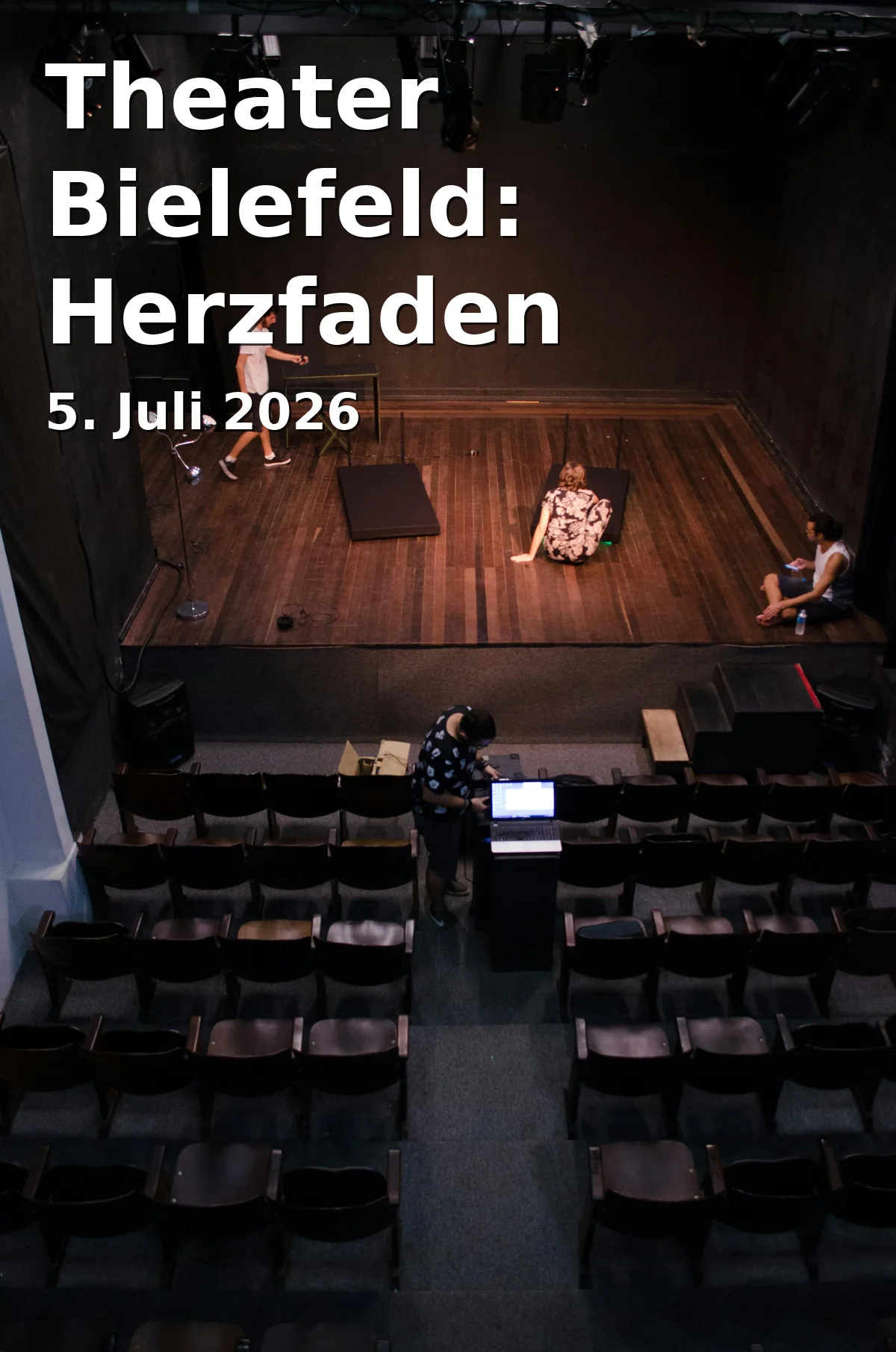
Theater Bielefeld: Heart Thread
Enjoy Heart Thread, a scenic evening at Stadttheater Bielefeld on July 5, 2026, and dive into the enchanting world of puppetry.
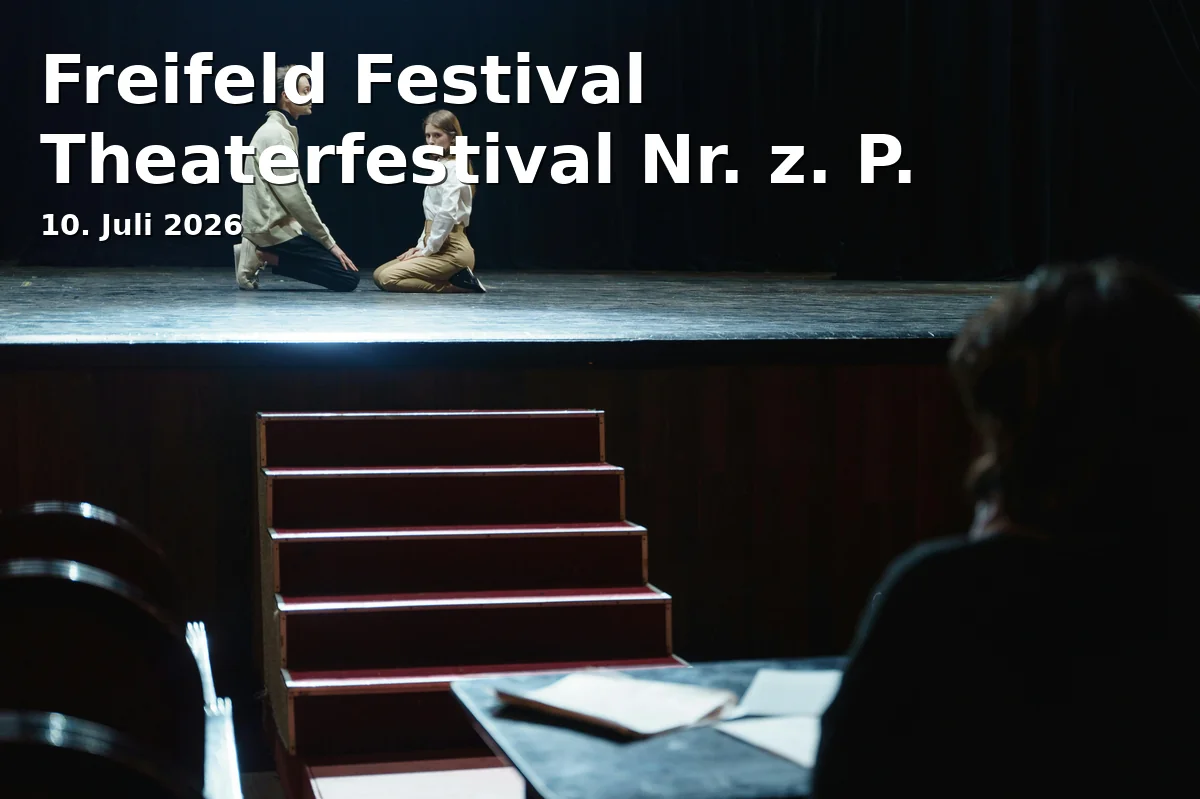
Freifeld Festival Theater Festival No. z. P.
The Freifeld Festival offers impressive theater performances in Bielefeld's summer program. A must for culture enthusiasts.
Frequently Asked Questions
Reviews
Brian Rozema
21. September 2025
I loved it! It was much better than "Cats"! I'm going to see it again and again!
Anıl Torun
6. April 2025
It is a GORGEOUS place! Went on a tour of the workshop of the opera house and then watched the Great Gatsby, everything is so well thought and made, it was awesome...
Marco Schicke
8. January 2023
New World was a very good show! I got really drawn into the story and the nice sounds. The theme is very well worked out and fits the story. Even though the running is quite old, it was translated and adapted very well. The humor was exactly on my level. When buying the tickets 🎟 I thought it was a bit expensive. After I've been to the show and have seen what they have to do and how much effort it is for such a show I think it's the opposite. There were nearly 30 musicians, all the characters playing, the people at the controlling the tickets, and the wardrobe, the translation and adaptation of the play, the planning and creation of the set design.
T. C.
4. July 2023
It is a nice place but after the shows mostly they are rushing to close the balcony. Why can't we just chill a bit on the balcony?
Gieorgij Puchalski
20. July 2018
Place in Bielefeld where the Art is strongly present. Good opera and musical adaptations. Very good team of artists passionate about their work. Can definitely recommend the dance company and their performances.