
Bielefeld
Methoden 1, 33615 Bielefeld, Deutschland
Center for Interdisciplinary Research | Program & Directions
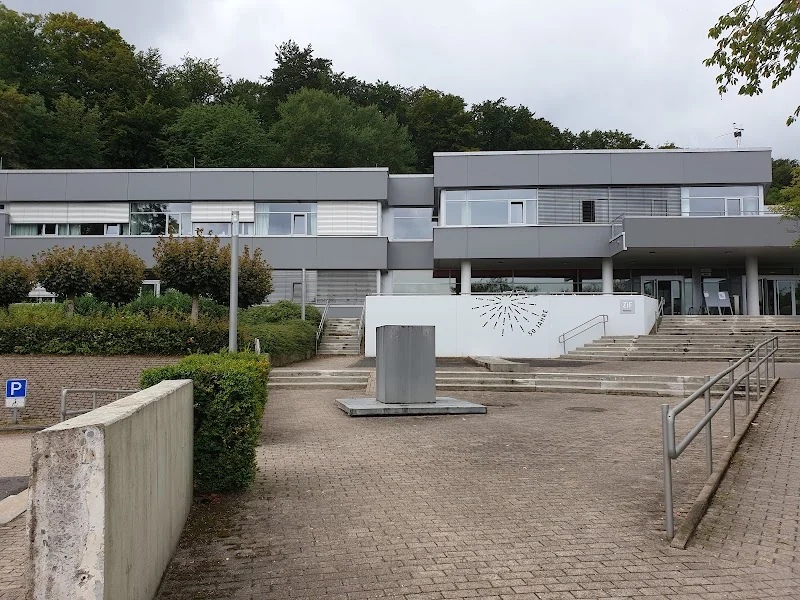
The Center for Interdisciplinary Research, short ZiF, is a special place within the University of Bielefeld: an independent, thematically open Institute for Advanced Study, where researchers from all countries and disciplines can come together. The location is situated above the university in the west of Bielefeld and combines scientific work, exchange, retreat, and conference-appropriate spaces on its own campus. This combination of intimacy and internationality makes the ZiF particularly interesting for conferences, workshops, and long-term research groups. Those looking for program, directions, parking, seating plan, or history will find not only practical information here but also a house with a clear academic identity and an unusually quiet environment.([uni-bielefeld.de](https://www.uni-bielefeld.de/zif))
Events, Workshops, and Research Groups at the ZiF
The ZiF is primarily not a classic venue for concerts or fairs, but a scientific center for interdisciplinary research. The official homepage highlights the areas of Events, Research in Groups, Workshops, and Funding Opportunities. This quickly clarifies what this is about: work formats in which different disciplines communicate, correct each other, and develop new perspectives on common questions. The University of Bielefeld also maintains an organizer entry, where specific dates of the ZiF appear with date, time, and location. There, for example, public conferences and lectures can be found, showing that the ZiF is not just an internal research space but also a place with public visibility.([uni-bielefeld.de](https://www.uni-bielefeld.de/zif))
Especially formative is the group character of the work. Even the official self-presentation emphasizes that the ZiF offers time, space, and support for research in groups and that its work is not focused on individuals but on thematically connecting projects. This creates a profile that distinguishes it from many other scientific institutions: it is not just about lectures but about joint thinking processes, workshops with depth, and research contexts that address multiple disciplines simultaneously. The current event overview of the University of Bielefeld also shows that scientific formats regularly take place at the ZiF, ranging from conferences to specialized workshops. For inquiries such as program, events, or workshops, the ZiF is therefore a location with clear substantive relevance.([uni-bielefeld.de](https://www.uni-bielefeld.de/zif))
Directions to the ZiF in Bielefeld: Address, Public Transport, and Car
The official address of the ZiF is Methoden 1, 33615 Bielefeld. The university describes the location as above the university in the west of the city. Those arriving by train first reach Bielefeld's main station; from there, the light rail line 4 goes towards the university or Lohmannshof. From the stops Universität or Bültmannshof, the path continues uphill behind the main building of the university to the ZiF. Alternatively, during the day, a bus from the main station goes towards the ZiF, specifically lines 61 and 62, with a stop at Universität/Studentenwohnheim. This information makes the journey clearly planable, especially for visitors coming to Bielefeld for the first time.([uni-bielefeld.de](https://www.uni-bielefeld.de/einrichtungen/ceus/navigating-uncertainty/general-information/))
For taxi arrivals, the university mentions a travel time of about ten minutes from the main station and gives a guideline of about 15 euros. Those traveling by car should not only rely on the navigation address but also consider the campus location, as the ZiF is situated on the slope above the main campus. It is particularly practical that the route from the light rail or bus is well described and that the university itself provides its site plans. For event and conference guests, this means: the location is not in the middle of the city center but well connected and deliberately positioned a bit more secluded for academic meetings. This location supports the quiet working atmosphere for which the ZiF is known.([uni-bielefeld.de](https://www.uni-bielefeld.de/einrichtungen/ceus/navigating-uncertainty/general-information/))
Parking at the ZiF and on Campus
When it comes to parking, the campus of the University of Bielefeld is the most important reference. The central contact point for accessibility indicates accessible parking spaces in parking garages 2 and 3; there is a designated parking space directly at the entrance in each. In addition, the university mentions further parking options in the basement of building X and in the CITEC parking garage. Between parking garages 2 and 3, there is also an elevator that leads to both the light rail stop Universität and the accessible entrance of the main building. This infrastructure is particularly relevant for guests with limited mobility, but it also shows how closely the access and campus paths are connected.([uni-bielefeld.de](https://www.uni-bielefeld.de/einrichtungen/zab/campus-leben/parkplaetze/))
For the immediate area around the ZiF, the location and safety plan is particularly informative, as it explicitly mentions a parking lot ZiF. Additionally, according to the university, there are designated parking spaces for people with disabilities in front of building Y on the street Konsequenz, which can be used with the European blue parking permit. For visitors, this results in a clear practical tip: do not rely on wild searching, but check the official campus and location plans of the university. This way, parking does not become a secondary issue but a planable part of the journey. Especially for conferences with many participants, this is an important advantage, as arrival can thus proceed in an orderly manner and without unnecessary stress.([uni-bielefeld.de](https://www.uni-bielefeld.de/einrichtungen/zab/campus-leben/parkplaetze/))
Plenary Hall, Seating Plan, and Other Rooms
The heart of the ZiF for events is the plenary hall. The official room overview describes it as characterized by its pentagonal floor plan and as the most distinctive conference room of the house. It is suitable for large conferences with 50 or more participants and offers a total of 150 seats, of which 74 are arranged at tables. Additionally, there are microphones at all tables, handheld microphones, and headsets for speakers on stage, a projector, a stage camera, and two boards. For the search for seating plan, hall plan, or plenary hall, this is an extremely concrete and helpful description, as it not only provides a number but also makes the usage concept of the room visible.([uni-bielefeld.de](https://www.uni-bielefeld.de/einrichtungen/zif/about/at-zif/))
The plenary hall is complemented by smaller rooms that are ideal for workshops and discussions. The Long Table is suitable for larger groups of up to 30 people and features an expanded table system, camera technology, projector, board, whiteboard, flipchart, and four magnetic walls. The Round Table offers 10 plus 4 seats and is designed for close discussions. The Corner is suitable for small workshops with 11 seats, while Bits 'n' Bytes is intended for up to ten people. Additionally, there are 19 magnetic walls available in the west wing for extensive poster presentations, and the cafeteria can accommodate up to 80 people. So, those looking for rooms, seating plans, or capacity will find not only a hall at the ZiF but also a very finely structured room offering for different scientific formats.([uni-bielefeld.de](https://www.uni-bielefeld.de/einrichtungen/zif/about/at-zif/))
History and Architectural Features of the ZiF
The history of the ZiF begins much earlier than its current campus architecture. The official history of the University of Bielefeld describes that Helmut Schelsky had been working on ideas for a research center for advanced studies since 1963. In 1966, he formulated a very precise list of the required rooms for the planned center, including a large library, several discussion and lecture rooms, as well as additional functional rooms. Among the early concepts was even a dining hall for 80 people, a sports room, and an indoor swimming pool. It is remarkable that many of these early ideas have been realized in similar form to this day. This is precisely where the architectural and conceptual uniqueness of the ZiF lies: it is not just a building but a research model that has been developed over decades.([uni-bielefeld.de](https://www.uni-bielefeld.de/einrichtungen/zif/about/history/))
Between 1968 and 1972, the ZiF initially worked at Schloss Rheda, about 30 kilometers from Bielefeld. There, the first working forms emerged, particularly shorter conferences that later continued as a workshop format. The current building was designed by Stephan Legge and Ursula Legge-Suwelack; the design dates back to 1970, the topping-out ceremony took place in 1972, and the official opening occurred in 1973. The university also emphasizes that the ZiF was conceived as the first German Institute for Advanced Study based on models in Princeton and Stanford, but differed in a crucial aspect: not individuals, but research groups were the focus. This history explains why the ZiF is still so strongly associated with interdisciplinarity, group work, and an independent campus identity.([uni-bielefeld.de](https://www.uni-bielefeld.de/einrichtungen/zif/about/history/))
Accommodation, Campus Life, and Practical Tips
The ZiF is not only a conference venue but also a place for longer stays. On campus, fellows live in apartments and flats designed for various needs and equipped with different numbers of bedrooms, spacious workspaces, kitchenettes, and bathrooms. Many apartments have a garden or terrace, and families are explicitly allowed. For guests staying several days or weeks, this is a central advantage: working and living are close together, paths are short, and the campus atmosphere remains palpable even outside the conference rooms. This is complemented by the own pool available to fellows and guests, as well as the Fellow Room for informal meetings, conversations, or reading newspapers and magazines.([uni-bielefeld.de](https://www.uni-bielefeld.de/einrichtungen/zif/about/at-zif/))
Even in everyday life, the campus proves to be a very independent place. The cafeteria can be organized for breakfast, lunch, coffee breaks, or buffets in advance and is bound to the times agreed upon with the organizers. In the vicinity of the ZiF, there is, according to the official welcome page, a supermarket, a pharmacy, a savings bank, and other shops within about ten minutes on foot towards Wertherstraße. Thus, the ZiF is not isolated but is also quietly and practically located. For visitors wondering whether the location only functions scientifically but not practically, this is a clear answer: the ZiF combines focused work with a surprisingly complete infrastructure. This is precisely why it is so well suited for conferences, research stays, and longer scientific projects.([uni-bielefeld.de](https://www.uni-bielefeld.de/einrichtungen/zif/welcome/?utm_source=openai))
In summary, the Center for Interdisciplinary Research in Bielefeld is a location with a clear identity: scientifically demanding, spatially versatile, and well connected organizationally. The search for program, directions, parking, seating plan, or history does not lead to arbitrary standard information but to a place that has been practically implementing interdisciplinarity, retreat, and encounter for decades. This is what makes the ZiF an extraordinary location for academic events and research stays.([uni-bielefeld.de](https://www.uni-bielefeld.de/zif))
Sources:
Show moreShow less
Center for Interdisciplinary Research | Program & Directions
The Center for Interdisciplinary Research, short ZiF, is a special place within the University of Bielefeld: an independent, thematically open Institute for Advanced Study, where researchers from all countries and disciplines can come together. The location is situated above the university in the west of Bielefeld and combines scientific work, exchange, retreat, and conference-appropriate spaces on its own campus. This combination of intimacy and internationality makes the ZiF particularly interesting for conferences, workshops, and long-term research groups. Those looking for program, directions, parking, seating plan, or history will find not only practical information here but also a house with a clear academic identity and an unusually quiet environment.([uni-bielefeld.de](https://www.uni-bielefeld.de/zif))
Events, Workshops, and Research Groups at the ZiF
The ZiF is primarily not a classic venue for concerts or fairs, but a scientific center for interdisciplinary research. The official homepage highlights the areas of Events, Research in Groups, Workshops, and Funding Opportunities. This quickly clarifies what this is about: work formats in which different disciplines communicate, correct each other, and develop new perspectives on common questions. The University of Bielefeld also maintains an organizer entry, where specific dates of the ZiF appear with date, time, and location. There, for example, public conferences and lectures can be found, showing that the ZiF is not just an internal research space but also a place with public visibility.([uni-bielefeld.de](https://www.uni-bielefeld.de/zif))
Especially formative is the group character of the work. Even the official self-presentation emphasizes that the ZiF offers time, space, and support for research in groups and that its work is not focused on individuals but on thematically connecting projects. This creates a profile that distinguishes it from many other scientific institutions: it is not just about lectures but about joint thinking processes, workshops with depth, and research contexts that address multiple disciplines simultaneously. The current event overview of the University of Bielefeld also shows that scientific formats regularly take place at the ZiF, ranging from conferences to specialized workshops. For inquiries such as program, events, or workshops, the ZiF is therefore a location with clear substantive relevance.([uni-bielefeld.de](https://www.uni-bielefeld.de/zif))
Directions to the ZiF in Bielefeld: Address, Public Transport, and Car
The official address of the ZiF is Methoden 1, 33615 Bielefeld. The university describes the location as above the university in the west of the city. Those arriving by train first reach Bielefeld's main station; from there, the light rail line 4 goes towards the university or Lohmannshof. From the stops Universität or Bültmannshof, the path continues uphill behind the main building of the university to the ZiF. Alternatively, during the day, a bus from the main station goes towards the ZiF, specifically lines 61 and 62, with a stop at Universität/Studentenwohnheim. This information makes the journey clearly planable, especially for visitors coming to Bielefeld for the first time.([uni-bielefeld.de](https://www.uni-bielefeld.de/einrichtungen/ceus/navigating-uncertainty/general-information/))
For taxi arrivals, the university mentions a travel time of about ten minutes from the main station and gives a guideline of about 15 euros. Those traveling by car should not only rely on the navigation address but also consider the campus location, as the ZiF is situated on the slope above the main campus. It is particularly practical that the route from the light rail or bus is well described and that the university itself provides its site plans. For event and conference guests, this means: the location is not in the middle of the city center but well connected and deliberately positioned a bit more secluded for academic meetings. This location supports the quiet working atmosphere for which the ZiF is known.([uni-bielefeld.de](https://www.uni-bielefeld.de/einrichtungen/ceus/navigating-uncertainty/general-information/))
Parking at the ZiF and on Campus
When it comes to parking, the campus of the University of Bielefeld is the most important reference. The central contact point for accessibility indicates accessible parking spaces in parking garages 2 and 3; there is a designated parking space directly at the entrance in each. In addition, the university mentions further parking options in the basement of building X and in the CITEC parking garage. Between parking garages 2 and 3, there is also an elevator that leads to both the light rail stop Universität and the accessible entrance of the main building. This infrastructure is particularly relevant for guests with limited mobility, but it also shows how closely the access and campus paths are connected.([uni-bielefeld.de](https://www.uni-bielefeld.de/einrichtungen/zab/campus-leben/parkplaetze/))
For the immediate area around the ZiF, the location and safety plan is particularly informative, as it explicitly mentions a parking lot ZiF. Additionally, according to the university, there are designated parking spaces for people with disabilities in front of building Y on the street Konsequenz, which can be used with the European blue parking permit. For visitors, this results in a clear practical tip: do not rely on wild searching, but check the official campus and location plans of the university. This way, parking does not become a secondary issue but a planable part of the journey. Especially for conferences with many participants, this is an important advantage, as arrival can thus proceed in an orderly manner and without unnecessary stress.([uni-bielefeld.de](https://www.uni-bielefeld.de/einrichtungen/zab/campus-leben/parkplaetze/))
Plenary Hall, Seating Plan, and Other Rooms
The heart of the ZiF for events is the plenary hall. The official room overview describes it as characterized by its pentagonal floor plan and as the most distinctive conference room of the house. It is suitable for large conferences with 50 or more participants and offers a total of 150 seats, of which 74 are arranged at tables. Additionally, there are microphones at all tables, handheld microphones, and headsets for speakers on stage, a projector, a stage camera, and two boards. For the search for seating plan, hall plan, or plenary hall, this is an extremely concrete and helpful description, as it not only provides a number but also makes the usage concept of the room visible.([uni-bielefeld.de](https://www.uni-bielefeld.de/einrichtungen/zif/about/at-zif/))
The plenary hall is complemented by smaller rooms that are ideal for workshops and discussions. The Long Table is suitable for larger groups of up to 30 people and features an expanded table system, camera technology, projector, board, whiteboard, flipchart, and four magnetic walls. The Round Table offers 10 plus 4 seats and is designed for close discussions. The Corner is suitable for small workshops with 11 seats, while Bits 'n' Bytes is intended for up to ten people. Additionally, there are 19 magnetic walls available in the west wing for extensive poster presentations, and the cafeteria can accommodate up to 80 people. So, those looking for rooms, seating plans, or capacity will find not only a hall at the ZiF but also a very finely structured room offering for different scientific formats.([uni-bielefeld.de](https://www.uni-bielefeld.de/einrichtungen/zif/about/at-zif/))
History and Architectural Features of the ZiF
The history of the ZiF begins much earlier than its current campus architecture. The official history of the University of Bielefeld describes that Helmut Schelsky had been working on ideas for a research center for advanced studies since 1963. In 1966, he formulated a very precise list of the required rooms for the planned center, including a large library, several discussion and lecture rooms, as well as additional functional rooms. Among the early concepts was even a dining hall for 80 people, a sports room, and an indoor swimming pool. It is remarkable that many of these early ideas have been realized in similar form to this day. This is precisely where the architectural and conceptual uniqueness of the ZiF lies: it is not just a building but a research model that has been developed over decades.([uni-bielefeld.de](https://www.uni-bielefeld.de/einrichtungen/zif/about/history/))
Between 1968 and 1972, the ZiF initially worked at Schloss Rheda, about 30 kilometers from Bielefeld. There, the first working forms emerged, particularly shorter conferences that later continued as a workshop format. The current building was designed by Stephan Legge and Ursula Legge-Suwelack; the design dates back to 1970, the topping-out ceremony took place in 1972, and the official opening occurred in 1973. The university also emphasizes that the ZiF was conceived as the first German Institute for Advanced Study based on models in Princeton and Stanford, but differed in a crucial aspect: not individuals, but research groups were the focus. This history explains why the ZiF is still so strongly associated with interdisciplinarity, group work, and an independent campus identity.([uni-bielefeld.de](https://www.uni-bielefeld.de/einrichtungen/zif/about/history/))
Accommodation, Campus Life, and Practical Tips
The ZiF is not only a conference venue but also a place for longer stays. On campus, fellows live in apartments and flats designed for various needs and equipped with different numbers of bedrooms, spacious workspaces, kitchenettes, and bathrooms. Many apartments have a garden or terrace, and families are explicitly allowed. For guests staying several days or weeks, this is a central advantage: working and living are close together, paths are short, and the campus atmosphere remains palpable even outside the conference rooms. This is complemented by the own pool available to fellows and guests, as well as the Fellow Room for informal meetings, conversations, or reading newspapers and magazines.([uni-bielefeld.de](https://www.uni-bielefeld.de/einrichtungen/zif/about/at-zif/))
Even in everyday life, the campus proves to be a very independent place. The cafeteria can be organized for breakfast, lunch, coffee breaks, or buffets in advance and is bound to the times agreed upon with the organizers. In the vicinity of the ZiF, there is, according to the official welcome page, a supermarket, a pharmacy, a savings bank, and other shops within about ten minutes on foot towards Wertherstraße. Thus, the ZiF is not isolated but is also quietly and practically located. For visitors wondering whether the location only functions scientifically but not practically, this is a clear answer: the ZiF combines focused work with a surprisingly complete infrastructure. This is precisely why it is so well suited for conferences, research stays, and longer scientific projects.([uni-bielefeld.de](https://www.uni-bielefeld.de/einrichtungen/zif/welcome/?utm_source=openai))
In summary, the Center for Interdisciplinary Research in Bielefeld is a location with a clear identity: scientifically demanding, spatially versatile, and well connected organizationally. The search for program, directions, parking, seating plan, or history does not lead to arbitrary standard information but to a place that has been practically implementing interdisciplinarity, retreat, and encounter for decades. This is what makes the ZiF an extraordinary location for academic events and research stays.([uni-bielefeld.de](https://www.uni-bielefeld.de/zif))
Sources:
Center for Interdisciplinary Research | Program & Directions
The Center for Interdisciplinary Research, short ZiF, is a special place within the University of Bielefeld: an independent, thematically open Institute for Advanced Study, where researchers from all countries and disciplines can come together. The location is situated above the university in the west of Bielefeld and combines scientific work, exchange, retreat, and conference-appropriate spaces on its own campus. This combination of intimacy and internationality makes the ZiF particularly interesting for conferences, workshops, and long-term research groups. Those looking for program, directions, parking, seating plan, or history will find not only practical information here but also a house with a clear academic identity and an unusually quiet environment.([uni-bielefeld.de](https://www.uni-bielefeld.de/zif))
Events, Workshops, and Research Groups at the ZiF
The ZiF is primarily not a classic venue for concerts or fairs, but a scientific center for interdisciplinary research. The official homepage highlights the areas of Events, Research in Groups, Workshops, and Funding Opportunities. This quickly clarifies what this is about: work formats in which different disciplines communicate, correct each other, and develop new perspectives on common questions. The University of Bielefeld also maintains an organizer entry, where specific dates of the ZiF appear with date, time, and location. There, for example, public conferences and lectures can be found, showing that the ZiF is not just an internal research space but also a place with public visibility.([uni-bielefeld.de](https://www.uni-bielefeld.de/zif))
Especially formative is the group character of the work. Even the official self-presentation emphasizes that the ZiF offers time, space, and support for research in groups and that its work is not focused on individuals but on thematically connecting projects. This creates a profile that distinguishes it from many other scientific institutions: it is not just about lectures but about joint thinking processes, workshops with depth, and research contexts that address multiple disciplines simultaneously. The current event overview of the University of Bielefeld also shows that scientific formats regularly take place at the ZiF, ranging from conferences to specialized workshops. For inquiries such as program, events, or workshops, the ZiF is therefore a location with clear substantive relevance.([uni-bielefeld.de](https://www.uni-bielefeld.de/zif))
Directions to the ZiF in Bielefeld: Address, Public Transport, and Car
The official address of the ZiF is Methoden 1, 33615 Bielefeld. The university describes the location as above the university in the west of the city. Those arriving by train first reach Bielefeld's main station; from there, the light rail line 4 goes towards the university or Lohmannshof. From the stops Universität or Bültmannshof, the path continues uphill behind the main building of the university to the ZiF. Alternatively, during the day, a bus from the main station goes towards the ZiF, specifically lines 61 and 62, with a stop at Universität/Studentenwohnheim. This information makes the journey clearly planable, especially for visitors coming to Bielefeld for the first time.([uni-bielefeld.de](https://www.uni-bielefeld.de/einrichtungen/ceus/navigating-uncertainty/general-information/))
For taxi arrivals, the university mentions a travel time of about ten minutes from the main station and gives a guideline of about 15 euros. Those traveling by car should not only rely on the navigation address but also consider the campus location, as the ZiF is situated on the slope above the main campus. It is particularly practical that the route from the light rail or bus is well described and that the university itself provides its site plans. For event and conference guests, this means: the location is not in the middle of the city center but well connected and deliberately positioned a bit more secluded for academic meetings. This location supports the quiet working atmosphere for which the ZiF is known.([uni-bielefeld.de](https://www.uni-bielefeld.de/einrichtungen/ceus/navigating-uncertainty/general-information/))
Parking at the ZiF and on Campus
When it comes to parking, the campus of the University of Bielefeld is the most important reference. The central contact point for accessibility indicates accessible parking spaces in parking garages 2 and 3; there is a designated parking space directly at the entrance in each. In addition, the university mentions further parking options in the basement of building X and in the CITEC parking garage. Between parking garages 2 and 3, there is also an elevator that leads to both the light rail stop Universität and the accessible entrance of the main building. This infrastructure is particularly relevant for guests with limited mobility, but it also shows how closely the access and campus paths are connected.([uni-bielefeld.de](https://www.uni-bielefeld.de/einrichtungen/zab/campus-leben/parkplaetze/))
For the immediate area around the ZiF, the location and safety plan is particularly informative, as it explicitly mentions a parking lot ZiF. Additionally, according to the university, there are designated parking spaces for people with disabilities in front of building Y on the street Konsequenz, which can be used with the European blue parking permit. For visitors, this results in a clear practical tip: do not rely on wild searching, but check the official campus and location plans of the university. This way, parking does not become a secondary issue but a planable part of the journey. Especially for conferences with many participants, this is an important advantage, as arrival can thus proceed in an orderly manner and without unnecessary stress.([uni-bielefeld.de](https://www.uni-bielefeld.de/einrichtungen/zab/campus-leben/parkplaetze/))
Plenary Hall, Seating Plan, and Other Rooms
The heart of the ZiF for events is the plenary hall. The official room overview describes it as characterized by its pentagonal floor plan and as the most distinctive conference room of the house. It is suitable for large conferences with 50 or more participants and offers a total of 150 seats, of which 74 are arranged at tables. Additionally, there are microphones at all tables, handheld microphones, and headsets for speakers on stage, a projector, a stage camera, and two boards. For the search for seating plan, hall plan, or plenary hall, this is an extremely concrete and helpful description, as it not only provides a number but also makes the usage concept of the room visible.([uni-bielefeld.de](https://www.uni-bielefeld.de/einrichtungen/zif/about/at-zif/))
The plenary hall is complemented by smaller rooms that are ideal for workshops and discussions. The Long Table is suitable for larger groups of up to 30 people and features an expanded table system, camera technology, projector, board, whiteboard, flipchart, and four magnetic walls. The Round Table offers 10 plus 4 seats and is designed for close discussions. The Corner is suitable for small workshops with 11 seats, while Bits 'n' Bytes is intended for up to ten people. Additionally, there are 19 magnetic walls available in the west wing for extensive poster presentations, and the cafeteria can accommodate up to 80 people. So, those looking for rooms, seating plans, or capacity will find not only a hall at the ZiF but also a very finely structured room offering for different scientific formats.([uni-bielefeld.de](https://www.uni-bielefeld.de/einrichtungen/zif/about/at-zif/))
History and Architectural Features of the ZiF
The history of the ZiF begins much earlier than its current campus architecture. The official history of the University of Bielefeld describes that Helmut Schelsky had been working on ideas for a research center for advanced studies since 1963. In 1966, he formulated a very precise list of the required rooms for the planned center, including a large library, several discussion and lecture rooms, as well as additional functional rooms. Among the early concepts was even a dining hall for 80 people, a sports room, and an indoor swimming pool. It is remarkable that many of these early ideas have been realized in similar form to this day. This is precisely where the architectural and conceptual uniqueness of the ZiF lies: it is not just a building but a research model that has been developed over decades.([uni-bielefeld.de](https://www.uni-bielefeld.de/einrichtungen/zif/about/history/))
Between 1968 and 1972, the ZiF initially worked at Schloss Rheda, about 30 kilometers from Bielefeld. There, the first working forms emerged, particularly shorter conferences that later continued as a workshop format. The current building was designed by Stephan Legge and Ursula Legge-Suwelack; the design dates back to 1970, the topping-out ceremony took place in 1972, and the official opening occurred in 1973. The university also emphasizes that the ZiF was conceived as the first German Institute for Advanced Study based on models in Princeton and Stanford, but differed in a crucial aspect: not individuals, but research groups were the focus. This history explains why the ZiF is still so strongly associated with interdisciplinarity, group work, and an independent campus identity.([uni-bielefeld.de](https://www.uni-bielefeld.de/einrichtungen/zif/about/history/))
Accommodation, Campus Life, and Practical Tips
The ZiF is not only a conference venue but also a place for longer stays. On campus, fellows live in apartments and flats designed for various needs and equipped with different numbers of bedrooms, spacious workspaces, kitchenettes, and bathrooms. Many apartments have a garden or terrace, and families are explicitly allowed. For guests staying several days or weeks, this is a central advantage: working and living are close together, paths are short, and the campus atmosphere remains palpable even outside the conference rooms. This is complemented by the own pool available to fellows and guests, as well as the Fellow Room for informal meetings, conversations, or reading newspapers and magazines.([uni-bielefeld.de](https://www.uni-bielefeld.de/einrichtungen/zif/about/at-zif/))
Even in everyday life, the campus proves to be a very independent place. The cafeteria can be organized for breakfast, lunch, coffee breaks, or buffets in advance and is bound to the times agreed upon with the organizers. In the vicinity of the ZiF, there is, according to the official welcome page, a supermarket, a pharmacy, a savings bank, and other shops within about ten minutes on foot towards Wertherstraße. Thus, the ZiF is not isolated but is also quietly and practically located. For visitors wondering whether the location only functions scientifically but not practically, this is a clear answer: the ZiF combines focused work with a surprisingly complete infrastructure. This is precisely why it is so well suited for conferences, research stays, and longer scientific projects.([uni-bielefeld.de](https://www.uni-bielefeld.de/einrichtungen/zif/welcome/?utm_source=openai))
In summary, the Center for Interdisciplinary Research in Bielefeld is a location with a clear identity: scientifically demanding, spatially versatile, and well connected organizationally. The search for program, directions, parking, seating plan, or history does not lead to arbitrary standard information but to a place that has been practically implementing interdisciplinarity, retreat, and encounter for decades. This is what makes the ZiF an extraordinary location for academic events and research stays.([uni-bielefeld.de](https://www.uni-bielefeld.de/zif))
Sources:
Upcoming Events
No events found
Frequently Asked Questions
Reviews
Elaine C
22. March 2024
Calm refuge for interdisciplinary discussions and occasional music performance
Dylan Cheng
5. August 2017
Like it!
So oS
10. September 2025
Tolle Lage. Der richtige Ort für Seminare/Konferenzen.
Jacky Knoll
21. September 2020
Great place above the rooftops of Bielefeld
Andreas Hellwig-Sellin
14. December 2020
Great place of science and art