
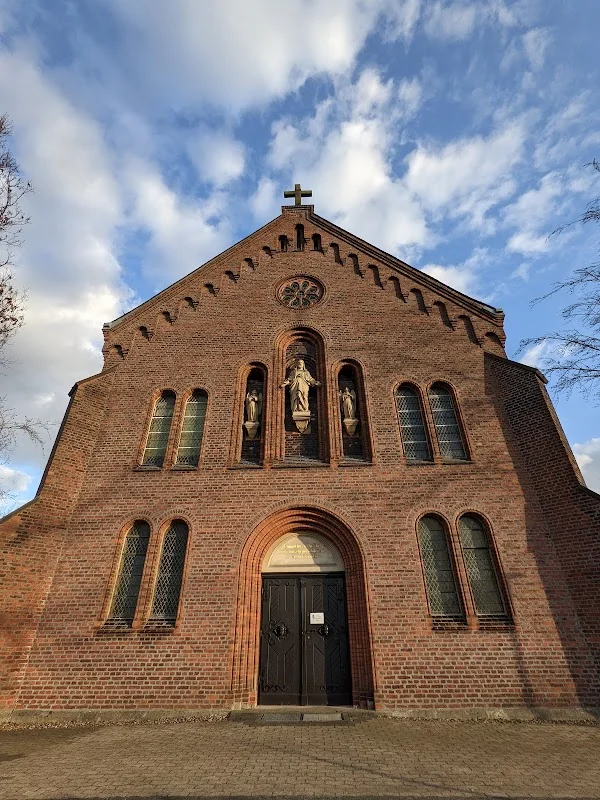
Bielefeld
Am Zionswald, 33617 Bielefeld, Deutschland
Zionskirche Bethel | Events & Tickets
The Zionskirche Bethel is much more than a church for Sunday services. It is a spiritual center, concert church, open meeting place, and a strong part of the community of Bethel in Bielefeld. Those looking for events, tickets, or the current program will find a location here that unusually closely connects faith, music, community life, and history. The congregation explicitly sees itself as an institutional church community while also being a local community in Bethel, Eckardtsheim, and the Schillingshof settlement; this is precisely what creates its special aura. The church is accessible daily as an Open Church, with services and concerts shaping the rhythm on Sundays, and through Antenne Bethel, services and selected musical formats are additionally made audible. This mix of spiritual everyday closeness and cultural openness makes the Zionskirche a place where many visitors not only arrive but also linger. ([kirche-bielefeld.de](https://www.kirche-bielefeld.de/auf-einen-blick/gemeinden/bethel/ev-anstaltskirchengemeinde-bethel-zionsgemeinde))
Events, Services, and Concerts at Zionskirche Bethel
Those interested in events at Zionskirche Bethel will find a profile with clear focuses. The Zions congregation publishes current service dates for the parish district of Bethel, and services are usually held on Sundays at 10:00 AM in the Zionskirche itself. This offering is complemented by other liturgical forms such as peace prayers on the first Tuesday of the month at 6:00 PM. Thus, the church is relevant not only on holidays but also as a reliable place for community, prayer, and music in the weekly rhythm. Particularly important is the transmission of services via Antenne Bethel, which allows the location to reach people who cannot be present in person. This media expansion is firmly anchored in Bethel and shows how traditional church space and modern reach are interconnected. For content analysis, this means: At this location, not only are “events” a search motive, but also services, peace prayers, broadcasts, and the desire to keep the spiritual life of the community in view. ([zionsgemeinde-bethel.de](https://www.zionsgemeinde-bethel.de/.cms/149?utm_source=openai))
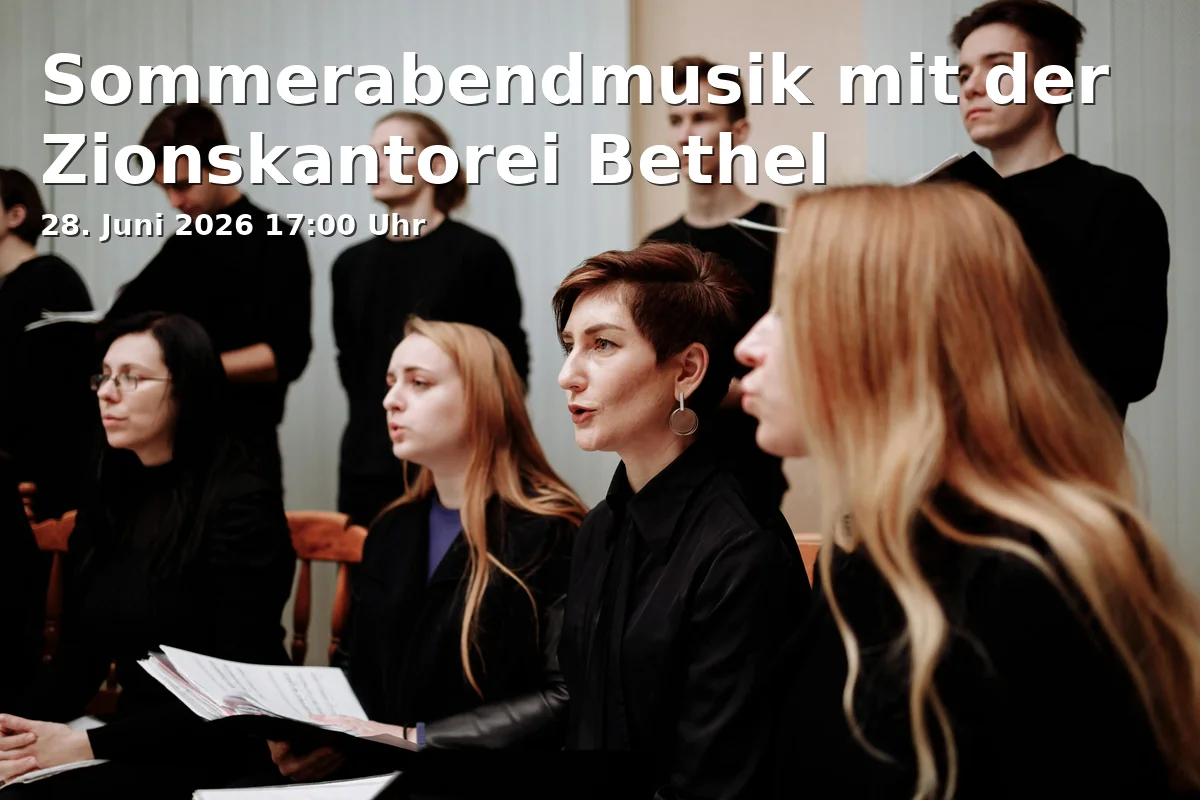
The event character becomes even clearer when looking at the Zions concerts. Regular concerts take place in the Zionskirche on Sundays at 5:00 PM; the series consciously focuses on contemporary music and highlights the FRAKZIONEN festival as a special focus. Admission is usually free, donations are requested at the exit, and individual concerts are broadcast live on Antenne Bethel. Additionally, choirs and instrumental groups from the Zions congregation keep the church musically vibrant. The Zions choir regularly sings oratorios, a cappella works, and music for choir and organ in the Zionskirche, and other ensembles like the vocal ensemble or the recorder ensemble enrich the repertoire. Therefore, those searching for “events” will not find an anonymous event hall here but a place where concert, community, and spiritual atmosphere intertwine. This connection makes Zionskirche Bethel equally attractive for culture enthusiasts and church-oriented visitors. ([zionsgemeinde-bethel.de](https://www.zionsgemeinde-bethel.de/.cms/112?utm_source=openai))
Tickets, Admission, and Musical Program
When it comes to the keyword “tickets,” an important classification is necessary for Zionskirche Bethel: For regular service attendance, no tickets in the traditional sense are required, and concerts are usually freely accessible according to the congregation's offerings. This means: If someone wants to attend a concert, they do not plan to buy a ticket like at a large arena, but rather an open cultural evening with the possibility of donations. This openness fits the self-understanding of the Zions congregation, which brings together people with and without support needs and sees itself as an interface between church, diaconia, and community. The threshold is also low for musical formats, as the series consciously focuses on accessibility while maintaining a demanding program. The fact that the concert offering is scheduled for Sundays at 5:00 PM also makes it easy for visitors to plan who want to combine their day in Bethel with a walk, a service, or a concert. ([kirche-bielefeld.de](https://www.kirche-bielefeld.de/auf-einen-blick/gemeinden/bethel/ev-anstaltskirchengemeinde-bethel-zionsgemeinde))
The musical profile of the church is particularly valuable for SEO because it covers several search intentions: church music, concerts, choirs, organ, and new music. According to the congregation, the Zions choir maintains the classical repertoire from the Baroque to the 20th century and regularly participates in services and concerts. Additionally, instrumental groups and other choirs from the congregation perform or rehearse in the Zionskirche. The repertoire is not understood as decorative embellishment but as part of a vibrant community identity. For visitors, this creates a place where one does not just experience “an event” but culture within a credible, historically grown framework. Therefore, those looking for tickets will encounter more the principle of voluntariness and donations than rigid admission systems. This character is an important distinguishing feature compared to commercial event venues. ([zionsgemeinde-bethel.de](https://www.zionsgemeinde-bethel.de/.cms/108?utm_source=openai))
Directions, Public Transport, and Parking in Bethel
The directions to Zionskirche Bethel are well documented thanks to the official local maps. With the tram line 1, you can reach Bethel from the main train station in Bielefeld towards Senne; the Bethel stop is the central point for public transport. Additionally, the church district mentions bus line 122 with the Gilead stop, from which it is about 280 meters uphill to the church. Those arriving by tram should also plan a short walk uphill, as it is about 500 meters from the Bethel stop to the Zionskirche. By car, the official directions lead via the A2, A33, and the Ostwestfalendamm or B61 towards Johannistal and Bethel. Therefore, both public transport and arrival by car are realistic and well-planned for visitors. ([kirche-bielefeld.de](https://www.kirche-bielefeld.de/auf-einen-blick/kirchen-in-bielefeld/evangelische-zionskirche-bethel))
When it comes to parking, a close look at the Bethel regulations is worthwhile, as they are often crucial for guests. According to the site plan, there are 3,800 privately designated and public parking spaces available in the community of Bethel, visitor parking is marked on the orientation plan, and a 2-hour parking disc regulation applies on all streets. Those parking on weekdays between 8 AM and 6 PM should expect fees depending on the parking space; the current site plan states 0.35 euros per started half hour. Additionally, there is a day parking permit for 3.00 euros, which is available at the Bethel bookstore, at Dankort, in Mara, and at the main administration. This is very practical for visitors to the Zionskirche, as a service, concert, or community visit can be combined with planned parking. At the same time, the community remains pedestrian-friendly and orderly due to the regulated parking structure. ([bethel.de](https://www.bethel.de/fileadmin/user_upload/Bethel/Website/Ueber_Bethel/Das_ist_Bethel/Ortsplan_neu_05_2024_RZ_korr_0924.pdf))
History of Zionskirche: from 1883 to Today
The history of Zionskirche Bethel begins in the 19th century and is closely linked to the development of Bethel. Bethel itself goes back to a care home for people with epilepsy, founded in 1867 by the Inner Mission in Bielefeld; from this developed a far-reaching diaconal place under Friedrich von Bodelschwingh. The Zionskirche was planned as a spiritual center of this development. According to the Bethel tour, the foundation stone was laid in 1883 by Crown Prince Friedrich Wilhelm. In November 1884, the church was consecrated; the first service took place on November 28, 1884. The church was intentionally designed to be simple, as a brick building and as a structure supported by community. This origin is still palpable today, as the church was not born out of representative abundance but from a social and spiritual self-understanding. This makes it historically interesting and emotionally credible for visitors. ([bethel.de](https://www.bethel.de/fileadmin/user_upload/Bethel/Website/Aktuelles/Publikationen/Infomaterial/rundgang.pdf))
Particularly noteworthy is the story of the construction itself. In Bethel, voluntary builders, patients, colonists, and even Bodelschwingh himself carried stones and sand to the construction site. The church was thus literally a community project, funded not only by donors but also built by people on site. This attitude shapes the self-image of the Zions congregation to this day, as the community sees itself as a place where people with and without disabilities, young and old, different talents and life situations come together. The history does not end in the past: Since 1989, a memorial plaque at the Zionskirche has commemorated the victims of World War II and the responsibility to engage with the troubled history of Bethel. The Zionskirche thus stands not only for piety and music but also for remembrance work, self-criticism, and historical depth. ([bethel.de](https://www.bethel.de/fileadmin/user_upload/Bethel/Website/Aktuelles/Publikationen/DER_RING/2024/RING_12_2024_bethel.de.pdf))
Architecture, Special Spaces, and Spiritual Symbolism
The architecture of Zionskirche Bethel thrives on simplicity and symbolic density. The earlier description of the church emphasizes the simple brick construction, and the tour through Bethel refers to the spiritual connection with Zion, the Temple Mount, and Psalm 126. Upon entering the space, one does not experience an arbitrary church hall but a deliberately designed place with liturgical and atmospheric effect. The magazine of the Bethel foundations describes a stone Christ above the main entrance, flanked by angels with open arms. Inside, the large cross in the altar area, the verse above the choir arch, the light blue vault with golden stars, and the large golden chandelier catch the eye. Such elements are not mere decoration but shape the perception of the space and make it understandable why the Zionskirche is experienced by many as a place of calm and arrival. ([offene-kirchen.info](https://www.offene-kirchen.info/offene-kirchen/bielefeld-bethel-zionskirche/))
A true special feature is the integrated quiet or emergency rooms for people with epilepsy, which Bethel itself explicitly points out. These rooms also explain why the Zionskirche is considered a place of special consideration in the history of Bethel. The magazine also reports on six quiet chambers for epileptic service attendees and a Herrnhuter star in one of the towers. Such details show how closely architecture, diaconia, and practical care are intertwined. For SEO, this is important because search queries for “special features,” “history,” “equipment,” or “highlights” do not aim for spectacular numbers but for genuine identity. The Zionskirche does not offer event architecture but a church space with memory, protection, and symbolism. This is precisely why it appears so distinctive in the profile of Bielefeld-Bethel. ([bethel.de](https://www.bethel.de/aktuelles/sein-antrieb-ist-die-veraenderung/das-weihnachtshaeuschen-in-bethel))
Open Church, Community Life, and Practical Information
As an Open Church, Zionskirche Bethel is accessible daily. The church district states opening hours from 10:00 AM to 4:00 PM, while the Open Churches initiative describes the church as open daily from 10:00 AM to 5:00 PM, with an extension until about 6:00 PM in summer and a reduction until about 4:00 PM in winter. For visitors, this means: The church is not only experienceable during services or concerts but also open during the day for silence, reflection, and a short visit. On-site, according to the Open Churches initiative, there are daily readings, Bibles, and daily texts available, as well as materials like community newsletters, small church guides, and event programs. Candles can also be lit. This openness makes the Zionskirche a place for people who do not necessarily come to an event but first seek atmosphere, calm, and orientation. ([kirche-bielefeld.de](https://www.kirche-bielefeld.de/auf-einen-blick/kirchen-in-bielefeld/evangelische-zionskirche-bethel))
Community life in Bethel means more than just a service schedule. The Zions congregation connects Bethel with the Protestant State Church and the Bielefeld church district and sees itself as an interface between church, diaconia, community, and society. The community area includes Bethel with Sarepta and Nazareth, the Schillingshof settlement, and Eckardtsheim. Additionally, there is a vibrant musical life with choirs, instrumental groups, and concerts. Those wanting to orient themselves on-site will find the community office at Nazarethweg 5 in Bielefeld; the Zionskirche itself is located at Am Zionswald 9. The service from the Zionskirche can also be heard on FM 94.3 MHz in the Bielefeld area. For practical use, this is ideal, as directions, opening hours, service attendance, and cultural programs can be easily combined. ([kirche-bielefeld.de](https://www.kirche-bielefeld.de/auf-einen-blick/gemeinden/bethel/ev-anstaltskirchengemeinde-bethel-zionsgemeinde))
Sources:
Show moreShow less
Zionskirche Bethel | Events & Tickets
The Zionskirche Bethel is much more than a church for Sunday services. It is a spiritual center, concert church, open meeting place, and a strong part of the community of Bethel in Bielefeld. Those looking for events, tickets, or the current program will find a location here that unusually closely connects faith, music, community life, and history. The congregation explicitly sees itself as an institutional church community while also being a local community in Bethel, Eckardtsheim, and the Schillingshof settlement; this is precisely what creates its special aura. The church is accessible daily as an Open Church, with services and concerts shaping the rhythm on Sundays, and through Antenne Bethel, services and selected musical formats are additionally made audible. This mix of spiritual everyday closeness and cultural openness makes the Zionskirche a place where many visitors not only arrive but also linger. ([kirche-bielefeld.de](https://www.kirche-bielefeld.de/auf-einen-blick/gemeinden/bethel/ev-anstaltskirchengemeinde-bethel-zionsgemeinde))
Events, Services, and Concerts at Zionskirche Bethel
Those interested in events at Zionskirche Bethel will find a profile with clear focuses. The Zions congregation publishes current service dates for the parish district of Bethel, and services are usually held on Sundays at 10:00 AM in the Zionskirche itself. This offering is complemented by other liturgical forms such as peace prayers on the first Tuesday of the month at 6:00 PM. Thus, the church is relevant not only on holidays but also as a reliable place for community, prayer, and music in the weekly rhythm. Particularly important is the transmission of services via Antenne Bethel, which allows the location to reach people who cannot be present in person. This media expansion is firmly anchored in Bethel and shows how traditional church space and modern reach are interconnected. For content analysis, this means: At this location, not only are “events” a search motive, but also services, peace prayers, broadcasts, and the desire to keep the spiritual life of the community in view. ([zionsgemeinde-bethel.de](https://www.zionsgemeinde-bethel.de/.cms/149?utm_source=openai))
The event character becomes even clearer when looking at the Zions concerts. Regular concerts take place in the Zionskirche on Sundays at 5:00 PM; the series consciously focuses on contemporary music and highlights the FRAKZIONEN festival as a special focus. Admission is usually free, donations are requested at the exit, and individual concerts are broadcast live on Antenne Bethel. Additionally, choirs and instrumental groups from the Zions congregation keep the church musically vibrant. The Zions choir regularly sings oratorios, a cappella works, and music for choir and organ in the Zionskirche, and other ensembles like the vocal ensemble or the recorder ensemble enrich the repertoire. Therefore, those searching for “events” will not find an anonymous event hall here but a place where concert, community, and spiritual atmosphere intertwine. This connection makes Zionskirche Bethel equally attractive for culture enthusiasts and church-oriented visitors. ([zionsgemeinde-bethel.de](https://www.zionsgemeinde-bethel.de/.cms/112?utm_source=openai))
Tickets, Admission, and Musical Program
When it comes to the keyword “tickets,” an important classification is necessary for Zionskirche Bethel: For regular service attendance, no tickets in the traditional sense are required, and concerts are usually freely accessible according to the congregation's offerings. This means: If someone wants to attend a concert, they do not plan to buy a ticket like at a large arena, but rather an open cultural evening with the possibility of donations. This openness fits the self-understanding of the Zions congregation, which brings together people with and without support needs and sees itself as an interface between church, diaconia, and community. The threshold is also low for musical formats, as the series consciously focuses on accessibility while maintaining a demanding program. The fact that the concert offering is scheduled for Sundays at 5:00 PM also makes it easy for visitors to plan who want to combine their day in Bethel with a walk, a service, or a concert. ([kirche-bielefeld.de](https://www.kirche-bielefeld.de/auf-einen-blick/gemeinden/bethel/ev-anstaltskirchengemeinde-bethel-zionsgemeinde))
The musical profile of the church is particularly valuable for SEO because it covers several search intentions: church music, concerts, choirs, organ, and new music. According to the congregation, the Zions choir maintains the classical repertoire from the Baroque to the 20th century and regularly participates in services and concerts. Additionally, instrumental groups and other choirs from the congregation perform or rehearse in the Zionskirche. The repertoire is not understood as decorative embellishment but as part of a vibrant community identity. For visitors, this creates a place where one does not just experience “an event” but culture within a credible, historically grown framework. Therefore, those looking for tickets will encounter more the principle of voluntariness and donations than rigid admission systems. This character is an important distinguishing feature compared to commercial event venues. ([zionsgemeinde-bethel.de](https://www.zionsgemeinde-bethel.de/.cms/108?utm_source=openai))
Directions, Public Transport, and Parking in Bethel
The directions to Zionskirche Bethel are well documented thanks to the official local maps. With the tram line 1, you can reach Bethel from the main train station in Bielefeld towards Senne; the Bethel stop is the central point for public transport. Additionally, the church district mentions bus line 122 with the Gilead stop, from which it is about 280 meters uphill to the church. Those arriving by tram should also plan a short walk uphill, as it is about 500 meters from the Bethel stop to the Zionskirche. By car, the official directions lead via the A2, A33, and the Ostwestfalendamm or B61 towards Johannistal and Bethel. Therefore, both public transport and arrival by car are realistic and well-planned for visitors. ([kirche-bielefeld.de](https://www.kirche-bielefeld.de/auf-einen-blick/kirchen-in-bielefeld/evangelische-zionskirche-bethel))
When it comes to parking, a close look at the Bethel regulations is worthwhile, as they are often crucial for guests. According to the site plan, there are 3,800 privately designated and public parking spaces available in the community of Bethel, visitor parking is marked on the orientation plan, and a 2-hour parking disc regulation applies on all streets. Those parking on weekdays between 8 AM and 6 PM should expect fees depending on the parking space; the current site plan states 0.35 euros per started half hour. Additionally, there is a day parking permit for 3.00 euros, which is available at the Bethel bookstore, at Dankort, in Mara, and at the main administration. This is very practical for visitors to the Zionskirche, as a service, concert, or community visit can be combined with planned parking. At the same time, the community remains pedestrian-friendly and orderly due to the regulated parking structure. ([bethel.de](https://www.bethel.de/fileadmin/user_upload/Bethel/Website/Ueber_Bethel/Das_ist_Bethel/Ortsplan_neu_05_2024_RZ_korr_0924.pdf))
History of Zionskirche: from 1883 to Today
The history of Zionskirche Bethel begins in the 19th century and is closely linked to the development of Bethel. Bethel itself goes back to a care home for people with epilepsy, founded in 1867 by the Inner Mission in Bielefeld; from this developed a far-reaching diaconal place under Friedrich von Bodelschwingh. The Zionskirche was planned as a spiritual center of this development. According to the Bethel tour, the foundation stone was laid in 1883 by Crown Prince Friedrich Wilhelm. In November 1884, the church was consecrated; the first service took place on November 28, 1884. The church was intentionally designed to be simple, as a brick building and as a structure supported by community. This origin is still palpable today, as the church was not born out of representative abundance but from a social and spiritual self-understanding. This makes it historically interesting and emotionally credible for visitors. ([bethel.de](https://www.bethel.de/fileadmin/user_upload/Bethel/Website/Aktuelles/Publikationen/Infomaterial/rundgang.pdf))
Particularly noteworthy is the story of the construction itself. In Bethel, voluntary builders, patients, colonists, and even Bodelschwingh himself carried stones and sand to the construction site. The church was thus literally a community project, funded not only by donors but also built by people on site. This attitude shapes the self-image of the Zions congregation to this day, as the community sees itself as a place where people with and without disabilities, young and old, different talents and life situations come together. The history does not end in the past: Since 1989, a memorial plaque at the Zionskirche has commemorated the victims of World War II and the responsibility to engage with the troubled history of Bethel. The Zionskirche thus stands not only for piety and music but also for remembrance work, self-criticism, and historical depth. ([bethel.de](https://www.bethel.de/fileadmin/user_upload/Bethel/Website/Aktuelles/Publikationen/DER_RING/2024/RING_12_2024_bethel.de.pdf))
Architecture, Special Spaces, and Spiritual Symbolism
The architecture of Zionskirche Bethel thrives on simplicity and symbolic density. The earlier description of the church emphasizes the simple brick construction, and the tour through Bethel refers to the spiritual connection with Zion, the Temple Mount, and Psalm 126. Upon entering the space, one does not experience an arbitrary church hall but a deliberately designed place with liturgical and atmospheric effect. The magazine of the Bethel foundations describes a stone Christ above the main entrance, flanked by angels with open arms. Inside, the large cross in the altar area, the verse above the choir arch, the light blue vault with golden stars, and the large golden chandelier catch the eye. Such elements are not mere decoration but shape the perception of the space and make it understandable why the Zionskirche is experienced by many as a place of calm and arrival. ([offene-kirchen.info](https://www.offene-kirchen.info/offene-kirchen/bielefeld-bethel-zionskirche/))
A true special feature is the integrated quiet or emergency rooms for people with epilepsy, which Bethel itself explicitly points out. These rooms also explain why the Zionskirche is considered a place of special consideration in the history of Bethel. The magazine also reports on six quiet chambers for epileptic service attendees and a Herrnhuter star in one of the towers. Such details show how closely architecture, diaconia, and practical care are intertwined. For SEO, this is important because search queries for “special features,” “history,” “equipment,” or “highlights” do not aim for spectacular numbers but for genuine identity. The Zionskirche does not offer event architecture but a church space with memory, protection, and symbolism. This is precisely why it appears so distinctive in the profile of Bielefeld-Bethel. ([bethel.de](https://www.bethel.de/aktuelles/sein-antrieb-ist-die-veraenderung/das-weihnachtshaeuschen-in-bethel))
Open Church, Community Life, and Practical Information
As an Open Church, Zionskirche Bethel is accessible daily. The church district states opening hours from 10:00 AM to 4:00 PM, while the Open Churches initiative describes the church as open daily from 10:00 AM to 5:00 PM, with an extension until about 6:00 PM in summer and a reduction until about 4:00 PM in winter. For visitors, this means: The church is not only experienceable during services or concerts but also open during the day for silence, reflection, and a short visit. On-site, according to the Open Churches initiative, there are daily readings, Bibles, and daily texts available, as well as materials like community newsletters, small church guides, and event programs. Candles can also be lit. This openness makes the Zionskirche a place for people who do not necessarily come to an event but first seek atmosphere, calm, and orientation. ([kirche-bielefeld.de](https://www.kirche-bielefeld.de/auf-einen-blick/kirchen-in-bielefeld/evangelische-zionskirche-bethel))
Community life in Bethel means more than just a service schedule. The Zions congregation connects Bethel with the Protestant State Church and the Bielefeld church district and sees itself as an interface between church, diaconia, community, and society. The community area includes Bethel with Sarepta and Nazareth, the Schillingshof settlement, and Eckardtsheim. Additionally, there is a vibrant musical life with choirs, instrumental groups, and concerts. Those wanting to orient themselves on-site will find the community office at Nazarethweg 5 in Bielefeld; the Zionskirche itself is located at Am Zionswald 9. The service from the Zionskirche can also be heard on FM 94.3 MHz in the Bielefeld area. For practical use, this is ideal, as directions, opening hours, service attendance, and cultural programs can be easily combined. ([kirche-bielefeld.de](https://www.kirche-bielefeld.de/auf-einen-blick/gemeinden/bethel/ev-anstaltskirchengemeinde-bethel-zionsgemeinde))
Sources:
Zionskirche Bethel | Events & Tickets
The Zionskirche Bethel is much more than a church for Sunday services. It is a spiritual center, concert church, open meeting place, and a strong part of the community of Bethel in Bielefeld. Those looking for events, tickets, or the current program will find a location here that unusually closely connects faith, music, community life, and history. The congregation explicitly sees itself as an institutional church community while also being a local community in Bethel, Eckardtsheim, and the Schillingshof settlement; this is precisely what creates its special aura. The church is accessible daily as an Open Church, with services and concerts shaping the rhythm on Sundays, and through Antenne Bethel, services and selected musical formats are additionally made audible. This mix of spiritual everyday closeness and cultural openness makes the Zionskirche a place where many visitors not only arrive but also linger. ([kirche-bielefeld.de](https://www.kirche-bielefeld.de/auf-einen-blick/gemeinden/bethel/ev-anstaltskirchengemeinde-bethel-zionsgemeinde))
Events, Services, and Concerts at Zionskirche Bethel
Those interested in events at Zionskirche Bethel will find a profile with clear focuses. The Zions congregation publishes current service dates for the parish district of Bethel, and services are usually held on Sundays at 10:00 AM in the Zionskirche itself. This offering is complemented by other liturgical forms such as peace prayers on the first Tuesday of the month at 6:00 PM. Thus, the church is relevant not only on holidays but also as a reliable place for community, prayer, and music in the weekly rhythm. Particularly important is the transmission of services via Antenne Bethel, which allows the location to reach people who cannot be present in person. This media expansion is firmly anchored in Bethel and shows how traditional church space and modern reach are interconnected. For content analysis, this means: At this location, not only are “events” a search motive, but also services, peace prayers, broadcasts, and the desire to keep the spiritual life of the community in view. ([zionsgemeinde-bethel.de](https://www.zionsgemeinde-bethel.de/.cms/149?utm_source=openai))
The event character becomes even clearer when looking at the Zions concerts. Regular concerts take place in the Zionskirche on Sundays at 5:00 PM; the series consciously focuses on contemporary music and highlights the FRAKZIONEN festival as a special focus. Admission is usually free, donations are requested at the exit, and individual concerts are broadcast live on Antenne Bethel. Additionally, choirs and instrumental groups from the Zions congregation keep the church musically vibrant. The Zions choir regularly sings oratorios, a cappella works, and music for choir and organ in the Zionskirche, and other ensembles like the vocal ensemble or the recorder ensemble enrich the repertoire. Therefore, those searching for “events” will not find an anonymous event hall here but a place where concert, community, and spiritual atmosphere intertwine. This connection makes Zionskirche Bethel equally attractive for culture enthusiasts and church-oriented visitors. ([zionsgemeinde-bethel.de](https://www.zionsgemeinde-bethel.de/.cms/112?utm_source=openai))
Tickets, Admission, and Musical Program
When it comes to the keyword “tickets,” an important classification is necessary for Zionskirche Bethel: For regular service attendance, no tickets in the traditional sense are required, and concerts are usually freely accessible according to the congregation's offerings. This means: If someone wants to attend a concert, they do not plan to buy a ticket like at a large arena, but rather an open cultural evening with the possibility of donations. This openness fits the self-understanding of the Zions congregation, which brings together people with and without support needs and sees itself as an interface between church, diaconia, and community. The threshold is also low for musical formats, as the series consciously focuses on accessibility while maintaining a demanding program. The fact that the concert offering is scheduled for Sundays at 5:00 PM also makes it easy for visitors to plan who want to combine their day in Bethel with a walk, a service, or a concert. ([kirche-bielefeld.de](https://www.kirche-bielefeld.de/auf-einen-blick/gemeinden/bethel/ev-anstaltskirchengemeinde-bethel-zionsgemeinde))
The musical profile of the church is particularly valuable for SEO because it covers several search intentions: church music, concerts, choirs, organ, and new music. According to the congregation, the Zions choir maintains the classical repertoire from the Baroque to the 20th century and regularly participates in services and concerts. Additionally, instrumental groups and other choirs from the congregation perform or rehearse in the Zionskirche. The repertoire is not understood as decorative embellishment but as part of a vibrant community identity. For visitors, this creates a place where one does not just experience “an event” but culture within a credible, historically grown framework. Therefore, those looking for tickets will encounter more the principle of voluntariness and donations than rigid admission systems. This character is an important distinguishing feature compared to commercial event venues. ([zionsgemeinde-bethel.de](https://www.zionsgemeinde-bethel.de/.cms/108?utm_source=openai))
Directions, Public Transport, and Parking in Bethel
The directions to Zionskirche Bethel are well documented thanks to the official local maps. With the tram line 1, you can reach Bethel from the main train station in Bielefeld towards Senne; the Bethel stop is the central point for public transport. Additionally, the church district mentions bus line 122 with the Gilead stop, from which it is about 280 meters uphill to the church. Those arriving by tram should also plan a short walk uphill, as it is about 500 meters from the Bethel stop to the Zionskirche. By car, the official directions lead via the A2, A33, and the Ostwestfalendamm or B61 towards Johannistal and Bethel. Therefore, both public transport and arrival by car are realistic and well-planned for visitors. ([kirche-bielefeld.de](https://www.kirche-bielefeld.de/auf-einen-blick/kirchen-in-bielefeld/evangelische-zionskirche-bethel))
When it comes to parking, a close look at the Bethel regulations is worthwhile, as they are often crucial for guests. According to the site plan, there are 3,800 privately designated and public parking spaces available in the community of Bethel, visitor parking is marked on the orientation plan, and a 2-hour parking disc regulation applies on all streets. Those parking on weekdays between 8 AM and 6 PM should expect fees depending on the parking space; the current site plan states 0.35 euros per started half hour. Additionally, there is a day parking permit for 3.00 euros, which is available at the Bethel bookstore, at Dankort, in Mara, and at the main administration. This is very practical for visitors to the Zionskirche, as a service, concert, or community visit can be combined with planned parking. At the same time, the community remains pedestrian-friendly and orderly due to the regulated parking structure. ([bethel.de](https://www.bethel.de/fileadmin/user_upload/Bethel/Website/Ueber_Bethel/Das_ist_Bethel/Ortsplan_neu_05_2024_RZ_korr_0924.pdf))
History of Zionskirche: from 1883 to Today
The history of Zionskirche Bethel begins in the 19th century and is closely linked to the development of Bethel. Bethel itself goes back to a care home for people with epilepsy, founded in 1867 by the Inner Mission in Bielefeld; from this developed a far-reaching diaconal place under Friedrich von Bodelschwingh. The Zionskirche was planned as a spiritual center of this development. According to the Bethel tour, the foundation stone was laid in 1883 by Crown Prince Friedrich Wilhelm. In November 1884, the church was consecrated; the first service took place on November 28, 1884. The church was intentionally designed to be simple, as a brick building and as a structure supported by community. This origin is still palpable today, as the church was not born out of representative abundance but from a social and spiritual self-understanding. This makes it historically interesting and emotionally credible for visitors. ([bethel.de](https://www.bethel.de/fileadmin/user_upload/Bethel/Website/Aktuelles/Publikationen/Infomaterial/rundgang.pdf))
Particularly noteworthy is the story of the construction itself. In Bethel, voluntary builders, patients, colonists, and even Bodelschwingh himself carried stones and sand to the construction site. The church was thus literally a community project, funded not only by donors but also built by people on site. This attitude shapes the self-image of the Zions congregation to this day, as the community sees itself as a place where people with and without disabilities, young and old, different talents and life situations come together. The history does not end in the past: Since 1989, a memorial plaque at the Zionskirche has commemorated the victims of World War II and the responsibility to engage with the troubled history of Bethel. The Zionskirche thus stands not only for piety and music but also for remembrance work, self-criticism, and historical depth. ([bethel.de](https://www.bethel.de/fileadmin/user_upload/Bethel/Website/Aktuelles/Publikationen/DER_RING/2024/RING_12_2024_bethel.de.pdf))
Architecture, Special Spaces, and Spiritual Symbolism
The architecture of Zionskirche Bethel thrives on simplicity and symbolic density. The earlier description of the church emphasizes the simple brick construction, and the tour through Bethel refers to the spiritual connection with Zion, the Temple Mount, and Psalm 126. Upon entering the space, one does not experience an arbitrary church hall but a deliberately designed place with liturgical and atmospheric effect. The magazine of the Bethel foundations describes a stone Christ above the main entrance, flanked by angels with open arms. Inside, the large cross in the altar area, the verse above the choir arch, the light blue vault with golden stars, and the large golden chandelier catch the eye. Such elements are not mere decoration but shape the perception of the space and make it understandable why the Zionskirche is experienced by many as a place of calm and arrival. ([offene-kirchen.info](https://www.offene-kirchen.info/offene-kirchen/bielefeld-bethel-zionskirche/))
A true special feature is the integrated quiet or emergency rooms for people with epilepsy, which Bethel itself explicitly points out. These rooms also explain why the Zionskirche is considered a place of special consideration in the history of Bethel. The magazine also reports on six quiet chambers for epileptic service attendees and a Herrnhuter star in one of the towers. Such details show how closely architecture, diaconia, and practical care are intertwined. For SEO, this is important because search queries for “special features,” “history,” “equipment,” or “highlights” do not aim for spectacular numbers but for genuine identity. The Zionskirche does not offer event architecture but a church space with memory, protection, and symbolism. This is precisely why it appears so distinctive in the profile of Bielefeld-Bethel. ([bethel.de](https://www.bethel.de/aktuelles/sein-antrieb-ist-die-veraenderung/das-weihnachtshaeuschen-in-bethel))
Open Church, Community Life, and Practical Information
As an Open Church, Zionskirche Bethel is accessible daily. The church district states opening hours from 10:00 AM to 4:00 PM, while the Open Churches initiative describes the church as open daily from 10:00 AM to 5:00 PM, with an extension until about 6:00 PM in summer and a reduction until about 4:00 PM in winter. For visitors, this means: The church is not only experienceable during services or concerts but also open during the day for silence, reflection, and a short visit. On-site, according to the Open Churches initiative, there are daily readings, Bibles, and daily texts available, as well as materials like community newsletters, small church guides, and event programs. Candles can also be lit. This openness makes the Zionskirche a place for people who do not necessarily come to an event but first seek atmosphere, calm, and orientation. ([kirche-bielefeld.de](https://www.kirche-bielefeld.de/auf-einen-blick/kirchen-in-bielefeld/evangelische-zionskirche-bethel))
Community life in Bethel means more than just a service schedule. The Zions congregation connects Bethel with the Protestant State Church and the Bielefeld church district and sees itself as an interface between church, diaconia, community, and society. The community area includes Bethel with Sarepta and Nazareth, the Schillingshof settlement, and Eckardtsheim. Additionally, there is a vibrant musical life with choirs, instrumental groups, and concerts. Those wanting to orient themselves on-site will find the community office at Nazarethweg 5 in Bielefeld; the Zionskirche itself is located at Am Zionswald 9. The service from the Zionskirche can also be heard on FM 94.3 MHz in the Bielefeld area. For practical use, this is ideal, as directions, opening hours, service attendance, and cultural programs can be easily combined. ([kirche-bielefeld.de](https://www.kirche-bielefeld.de/auf-einen-blick/gemeinden/bethel/ev-anstaltskirchengemeinde-bethel-zionsgemeinde))
Sources:
Frequently Asked Questions
Reviews
M Markis
22. December 2024
Holy spirit
Rick Paixão
4. May 2019
Lovely
Rheinmuse
16. January 2026
A church with a special charm, a must-see! Between simplicity and spirituality.
Heinrich
17. January 2019
Very beautiful building, simple yet impressive. At certain times, there is an excellent musical offering, like last weekend's festival "Frakzionen," where you could get a low-threshold impression of old and new church music over three days. It will take place again next year. So don't miss it.
Reinhold H.
28. November 2018
The simple brick building from 1884 is beautifully designed. The church is accessible and suitable for both disabled and non-disabled people to attend events or services. The church is open during the day, and it's worth a visit.