
Annelie Buntenbach
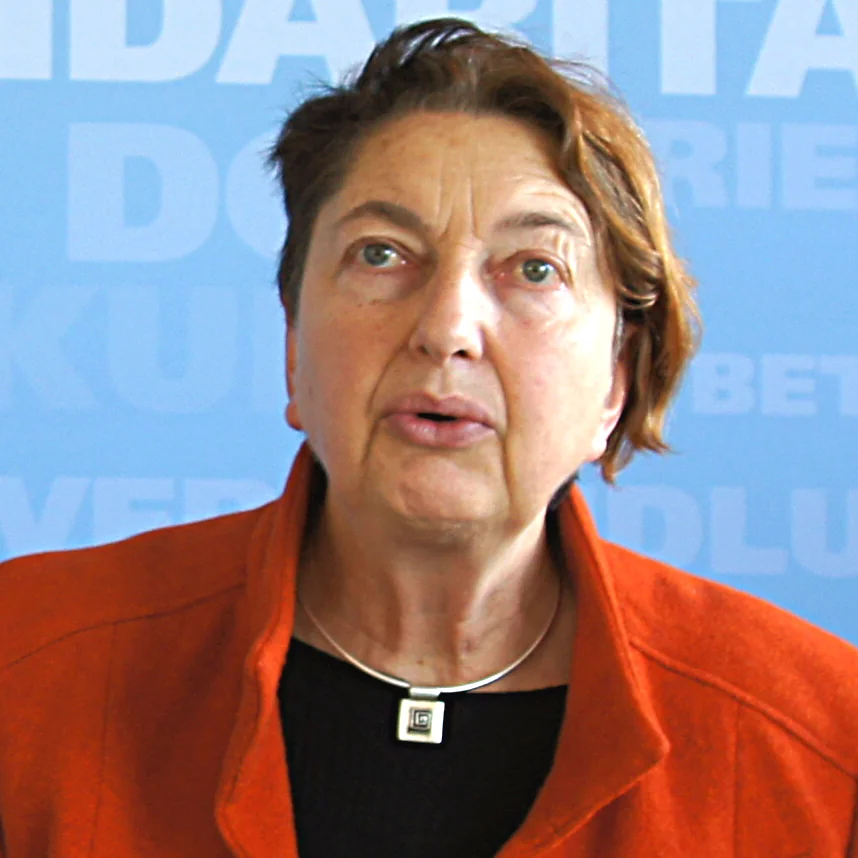
Image from Wikipedia
Image from Wikipedia
Annelie Buntenbach – Political Profile of a Formative Voice from Trade Union and Bundestag
Between Bundestag, Trade Union, and Social Engagement
Annelie Buntenbach, born on February 24, 1955, in Solingen, is considered one of the influential figures in German trade union and social policy over the past decades. Her career combines political practice, organizational responsibility, and a consistent commitment to workers' rights, retirement security, migration policy, and the fight against right-wing extremism. As a former member of the Bundestag for the Greens and later a member of the executive board of the DGB, she has long been at central intersections of social conflicts. ([de.wikipedia.org](https://de.wikipedia.org/wiki/Annelie_Buntenbach?utm_source=openai))
Early Years, Education, and Political Awakening
After graduating from high school in Opladen, Buntenbach began studying for a teaching degree in history and philosophy in Bielefeld in 1973. However, the path to becoming a civil servant in the education system was not her destiny: instead, she founded the pre-press company “Satzbau” in Bielefeld in 1984 while remaining politically active. She has been a member of Bündnis 90/Die Grünen since 1982; her engagement in the green-alternative movement and in initiatives against right-wing extremism early on shaped her public profile. ([de.wikipedia.org](https://de.wikipedia.org/wiki/Annelie_Buntenbach?utm_source=openai))
This early phase reveals the structure of her later music career—no, her political career: institutional work, a clear value compass, and the willingness not to shy away from conflicts. Buntenbach did not work as a classic party functionary in the background, but as an actor with a clear stance in local networks, in the city council, and later at the federal level. From 1984 to 1989, she was a member of the Bielefeld city council while also engaging with the autonomous and anti-fascist scene. ([de.wikipedia.org](https://de.wikipedia.org/wiki/Annelie_Buntenbach?utm_source=openai))
Years in the Bundestag: Social Policy, Labor, and Globalization
From 1994 to 2002, Buntenbach was a member of the German Bundestag. During this time, she established herself as the labor market policy spokesperson for her faction, worked on the Committee for Labor and Social Affairs, and led the expert commission on trade unions at Bündnis 90/Die Grünen. Additionally, she was responsible for the area of right-wing extremism in the parliamentary Enquete Commission on Globalization. ([dgb.de](https://www.dgb.de/fileadmin/download_center/Beschl%C3%BCsse/Gesch%C3%A4ftsbericht_Deutscher_Gewerkschaftsbund_2018%E2%80%932021.pdf?utm_source=openai))
Especially in debates about social security and working conditions, she took a clear position. Bundestag documents and newspaper reports from this period depict Buntenbach as a pointed spokesperson on issues of pension policy, labor market regulation, and the consequences of economic upheavals. Her contributions aimed at protecting against old-age poverty, achieving fairer employment conditions, and establishing global standards in an increasingly interwoven economy. ([bundestag.de](https://www.bundestag.de/webarchiv/textarchiv/2011/33281667_kw08_pa_arbeit_soziales-204522?utm_source=openai))
The Transition to Trade Union Work
In 2006, Buntenbach transitioned to the executive board of the German Trade Union Confederation (DGB) and remained there until 2020. At the DGB, she was responsible for central policy areas such as labor market policy, retirement security, occupational safety, health policy, as well as migration and anti-racism policy. This made her one of the most prominent union voices in debates over minimum wage, pension levels, integration, and social justice. ([vdi.de](https://www.vdi.de/fileadmin/pages/vdi_de/redakteure/vor_ort/bv/owl/dateien/broschuere_frauen_fuehrung_broschuere_2019_web.pdf?utm_source=openai))
DGB sources also illustrate the practical dimension of her work: Buntenbach contributed to statements, reports, and public positions that opposed social dumping, the intensification of precarious work, and advocated for a solidarity-based immigration and integration policy. In press interviews and Bundestag hearings, she was regularly invited as an expert on the labor market and social security. ([bundestag.de](https://www.bundestag.de/webarchiv/presse/hib/201606/428722-428722?utm_source=openai))
Thematic Focuses and Political Profile
Buntenbach's impact can primarily be described along four lines: protection of employees, security in old age, recognition of migration as a societal reality, and a firm opposition to racism. This is evident in her responsibilities in the trade union movement as well as in her earlier parliamentary work. Her involvement in issues of gender equality and quotas also points to an understanding of politics as a means of shaping social participation. ([vdi.de](https://www.vdi.de/fileadmin/pages/vdi_de/redakteure/vor_ort/bv/owl/dateien/broschuere_frauen_fuehrung_broschuere_2019_web.pdf?utm_source=openai))
Her profile represents a blend of analytical sharpness and normative clarity. In the sources, she appears not as a person of grand staging but as a consistent actor who translates arguments into concrete political and trade union practice. From this, she drew authority over the years: from expertise, institutional experience, and a precise view of social conflicts. ([de.wikipedia.org](https://de.wikipedia.org/wiki/Annelie_Buntenbach?utm_source=openai))
Current Role and Public Presence After the DGB
After concluding her board work in 2020, Buntenbach remained publicly active, participating in events, interviews, and memory-political formats. For instance, in 2022, she appeared in an interview at the Historical Museum Bielefeld as part of the exhibition “FRAUENBEWEGT.” She continues to be recognized in regional and professional contexts as a prominent former DGB official and political witness. ([dgb.de](https://www.dgb.de/fileadmin/download_center/Beschl%C3%BCsse/Gesch%C3%A4ftsbericht_Deutscher_Gewerkschaftsbund_2018%E2%80%932021.pdf?utm_source=openai))
This residual impact underscores that Buntenbach's influence was not tied to a mandate. Her public role derives from a long continuity between party politics, trade union work, and social engagement. Therefore, it is less a single career highlight that is crucial for a portrait of her person, but rather her sustained presence in central areas of conflict in the Federal Republic. ([de.wikipedia.org](https://de.wikipedia.org/wiki/Annelie_Buntenbach?utm_source=openai))
Discography, Songs, and Reception
No musical discography is available for Annelie Buntenbach. The researched sources do not provide evidence of albums, singles, charts, or music journalism reception in the sense of a musical artist biography. Instead, her public activity points to political speeches, trade union statements, and contributions to societal debates. ([de.wikipedia.org](https://de.wikipedia.org/wiki/Annelie_Buntenbach?utm_source=openai))
Current music projects, tours, or artistic releases were also not found in the research. Search results related to music and social media topics yielded no verifiable indications of a musical career or official profiles in the requested channels. Thus, any representation of a discography or fan reception would be inaccurate here. ([munzinger.de](https://www.munzinger.de/register/portrait/biographien/buntenbach%20annelie/00/25626?utm_source=openai))
Cultural Impact and Classification
Culturally, Annelie Buntenbach represents a type of political actor that has become rare in Germany: professionally precise, anchored in trade unions, and at the same time with a clear anti-fascist and social orientation. Her work has repeatedly touched on issues that extend far beyond party politics—from equality and pension justice to migration and democratic participation. ([de.wikipedia.org](https://de.wikipedia.org/wiki/Annelie_Buntenbach?utm_source=openai))
Her name therefore primarily appears in contexts where social conflicts materialize: in hearings, press reports, scholarly publications, and within the structures of the DGB. This form of efficacy is quieter than pop culture but no less significant. It shows how much political culture is also shaped by individuals who work with perseverance, expertise, and determination. ([bundestag.de](https://www.bundestag.de/webarchiv/textarchiv/2012/38485645_kw17_pa_inneres-208250?utm_source=openai))
Conclusion: Why Annelie Buntenbach Remains Compelling
Annelie Buntenbach is compelling because she combines political stance with organizational practice and has worked on core social issues for decades. Her biography tells a story of continuity instead of spectacular self-staging, of responsibility instead of mere appearance. Anyone who wants to understand how trade union politics, the welfare state, and anti-fascist engagement are interconnected in Germany finds a revealing example in her career. ([de.wikipedia.org](https://de.wikipedia.org/wiki/Annelie_Buntenbach?utm_source=openai))
Particularly her presence in debates about work, pensions, and social cohesion makes her an important voice in contemporary German history. As a public figure, she remains relevant because her topics endure. Those who experience her in conversation, in interviews, or at public events receive not a decorative performance but a clear, argument-driven perspective on the social situation of the country. ([bundestag.de](https://www.bundestag.de/webarchiv/textarchiv/2011/33281667_kw08_pa_arbeit_soziales-204522?utm_source=openai))
Official Channels of Annelie Buntenbach:
- Instagram: no official profile found
- Facebook: no official profile found
- YouTube: no official profile found
- Spotify: no official profile found
- TikTok: no official profile found
Sources:
- Wikipedia – Annelie Buntenbach
- German Bundestag – Blue EU Card Receives Mixed Reactions
- German Bundestag – Labor Market Situation for Older People Has Improved
- German Bundestag – Additional Contributions Receive Mixed Reactions
- German Bundestag – Calls for Improvements to the Integration Law
- DGB – Report of the German Trade Union Confederation 2018–2021
- Munzinger Biography – Annelie Buntenbach
- Historical Museum Bielefeld – Interview with Annelie Buntenbach
- Wikipedia: Image and text source