
Future Islands
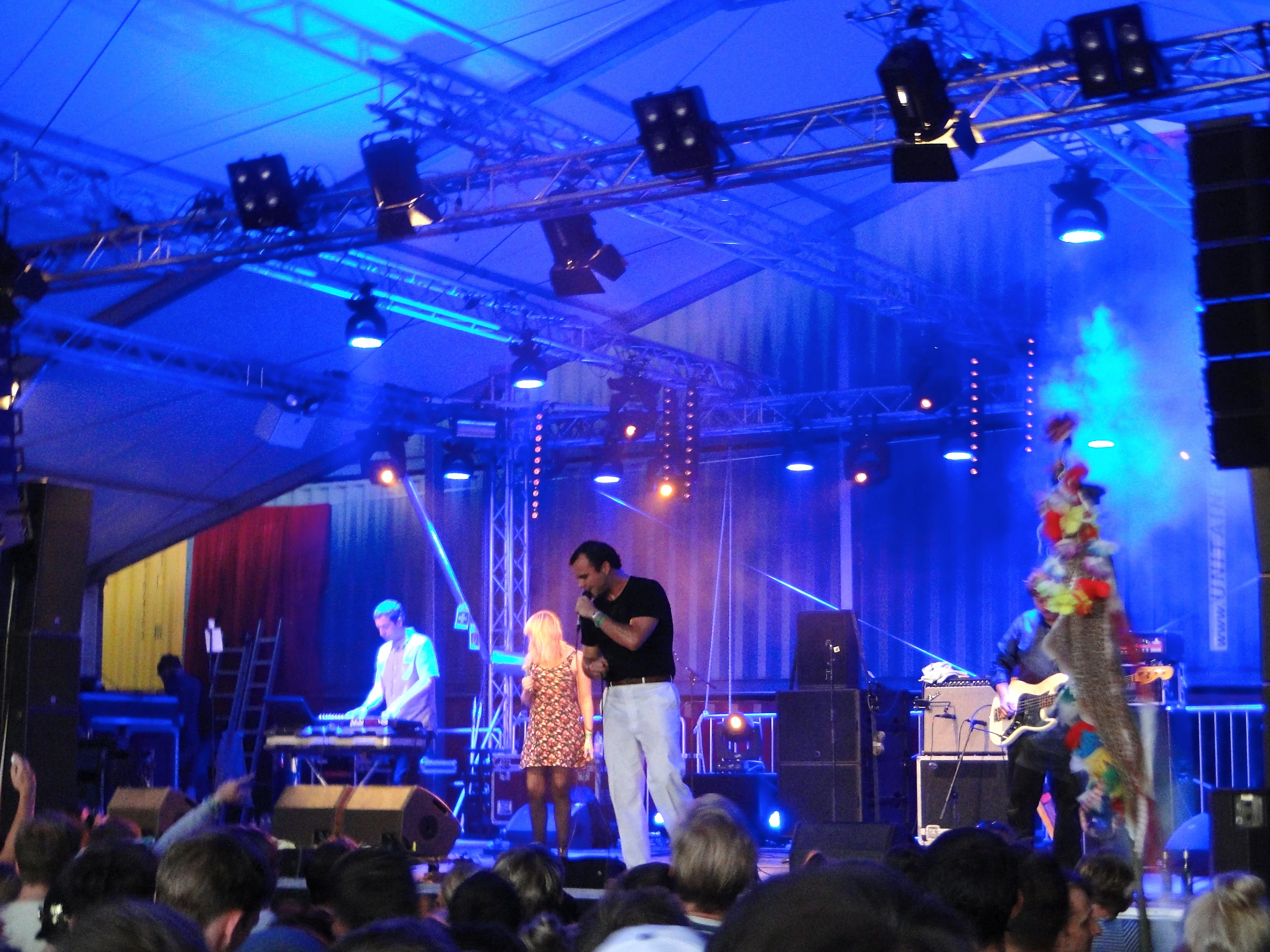
Image from Wikipedia
Image from Wikipedia
Future Islands: Synthpop with Heartbeat, Pathos, and Stage Magnetism
A Band from Baltimore Shaping Big Pop Moments from Intimacy
Future Islands are among the most distinctive American synthpop bands of the present day: a group that has emerged from the DIY scene and has developed a unique blend of melancholic electronics, powerful grooves, and Samuel T. Herring's highly expressive voice over the years. The band was founded in 2006 in Baltimore by Samuel Herring, William Cashion, and Gerrit Welmers; however, their roots trace back to their studies at East Carolina University and the predecessor formation Art Lord & the Self-Portraits. Early on, it became clear that Future Islands would not rely solely on retro aesthetics, but would concentrate synthesizers, bass, and vocals into an emotionally charged form of pop. ([de.wikipedia.org](https://de.wikipedia.org/wiki/Future_Islands))
The Beginnings: North Carolina, First Singles, and the Move to Baltimore
The band’s journey began with initiative and a high frequency: the first single “Little Advances” was released in 2006, followed shortly by further early releases and the move to Baltimore at the end of 2007. There, Future Islands found the urban resonance space that continues to shape the band's aesthetic today: nocturnal tension, cool electronic textures, and a sense of dramatic escalation. In 2008, the debut album “Wave Like Home” was released on Altin Village & Mine and Upset the Rhythm, followed by the EP “Feathers & Hallways” in 2009. ([de.wikipedia.org](https://de.wikipedia.org/wiki/Future_Islands))
Even in this early phase, the band was condensed into a clear core: Herring, Cashion, and Welmers formed the center, and later further lineup changes occurred. The sound at that time was still rawer, more lo-fi, and heavily influenced by the experimental indie and electro-punk spirit. Yet, these early recordings make it understandable why Future Islands are considered a band with a long learning curve today: the compositions have evolved over time to become not only larger but also more elegant, precise, and audience-friendly. ([de.wikipedia.org](https://de.wikipedia.org/wiki/Future_Islands))
The Breakthrough: From “In Evening Air” to “Singles”
With the transition to an independent label in 2009, a new phase of artistic consolidation opened up for Future Islands. “In Evening Air” was released in 2010, followed by “On the Water” in 2011; both albums sharpened the profile of a band that consistently aligns its songs with pulse, melody, and tension. AllMusic later described this crucial step as a development towards an accessible, very clear synthpop format that reached its full effect in 2014 with “Singles.” ([de.wikipedia.org](https://de.wikipedia.org/wiki/Future_Islands))
The actual boost in popularity came with the performance of “Seasons (Waiting on You)” on David Letterman’s late-night show. This live presence became a key moment, as it highlighted not only a song but also the entire stage identity of the band under a global spotlight. Critics praised the urgency of the album, with Pitchfork referring to it as “pop music distilled,” while Metacritic made clear in its reception that the band achieved a significant breakthrough in their discography here. ([allmusic.com](https://www.allmusic.com/artist/future-islands-mn0001772438))
Discography: A Clearly Recognizable Development with Growing Emotional Depth
The discography of Future Islands shows a remarkably consistent development: “Wave Like Home” (2008), “In Evening Air” (2010), “On the Water” (2011), “Singles” (2014), “The Far Field” (2017), “As Long as You Are” (2020), and “People Who Aren’t There Anymore” (2024). This album profile is complemented by a series of important EPs, singles, and later compilations that render the band's work as a living archive of melodies, versions, and B-sides. The band itself lists its albums on its official website, and the discography attests to a consistent work on form, sound, and recognizability. ([future-islands.com](https://future-islands.com/albums/?utm_source=openai))
“The Far Field” deepened the stylistic balance between hymn-like and darkness, while “As Long as You Are” continued this line in 2020 with even more balanced arrangements. “People Who Aren’t There Anymore” was released on January 26, 2024, as the seventh studio album on 4AD, produced by Future Islands and Steve Wright, with Chris Coady in the mix – a clear indication of how much the band now controls its sound language. The album reached chart placements in the UK and Germany, and was interpreted by the music press as a return to melancholic yet comforting consistency. ([en.wikipedia.org](https://en.wikipedia.org/wiki/People_Who_Aren%27t_There_Anymore))
Current Phase: New Material, Archival Work, and a Big Band Year in 2026
2026 marks a particularly active year for Future Islands. Their official website lists the album “From a Hole in the Floor to a Fountain of Youth” as a release for 2026; the band is also pointing to new music and announcing “a big year.” The official album page mentions a collection of early songs, fan favorites, and newer tracks, including “The Ink Well” and “One Day,” making it clear that Future Islands are not only working on new material but are also re-reading their own archive curatively. ([future-islands.com](https://future-islands.com/albums/?utm_source=openai))
The tour dates further underline this activity: the band documents numerous shows in North America and Europe on their official tour history page up to the year 2026. At the same time, reports from the music press show that the project is no longer solely functioning through records but has become a continuously working live band with a high presence and close connection to the audience. This combination of repertoire maintenance, release policy, and concert density keeps Future Islands relevant in the indie and synthpop spectrum. ([future-islands.com](https://future-islands.com/tour-history/?utm_source=openai))
Style and Sound: Synthpop with New Wave Edge, Post-Punk Shade, and Grand Gesture
The sound of Future Islands thrives on a precise tension between reduction and elevation. The fundamental building blocks are clear: pulsating bass lines, glassy synthesizers, dry drums, and Herring's voice, which fluctuates between vulnerability, hoarse outburst, and controlled drama. Rolling Stone describes this mixture as a consistency over the years: straightforwardly played drums, Joy Division-associated bass, clear synth melodies, and an exalted singing that emotionally opens the songs. ([rollingstone.de](https://www.rollingstone.de/reviews/future-islands-people-arent-anymore/))
This concentration makes the band so distinctive. Future Islands never sound arbitrarily retro, even though they clearly refer to New Wave, synthpop, and post-punk; rather, they shape a modern, emotionally readable pop vocabulary from it. AllMusic highlights the accessibility and the pop-structural focus of the later work, while the reviews of “People Who Aren’t There Anymore” describe the arrangements as more complex yet also comfortingly consistent. ([allmusic.com](https://www.allmusic.com/artist/future-islands-mn0001772438))
Stage Presence: Samuel T. Herring as the Engine of Live Ecstasy
On stage, Future Islands become a physical experience. The Washington Post describes the band as a formation with a reputation for a relentless concert calendar and Herring as a frontman who prowls the stage like a lion, ducking, lunging, and modulating his voice between softness and eruptive shouts. This stage presence is not just a spectacle but part of the musical dramaturgy: the singer's body extends the composition, and the performance becomes a visible form of the song. ([washingtonpost.com](https://www.washingtonpost.com/entertainment/2024/01/26/future-islands-album-tour-naps/))
This is where a significant part of Future Islands' authority lies. The band possesses that rare mix of studio precision and live intensity that makes great pop moments believable. The performance on Letterman and the documented tour history to this day illustrate that this group does not live on a single viral moment but is built on years of disciplined stage work. ([allmusic.com](https://www.allmusic.com/artist/future-islands-mn0001772438))
Cultural Influence and Resonance in the Music Press
Future Islands have carved out a firm place in indie history by creating a very personal form of electronic pop. Their songs work in clubs, on headphones, and on festival stages without losing their emotional intensity. The reviews of “Singles” and later “People Who Aren’t There Anymore” show that the band not only writes hits but also maintains a consistent aesthetic that repeatedly shines in the tension field of nostalgia, melancholy, and pop energy. ([metacritic.com](https://www.metacritic.com/music/singles/future-islands/critic-reviews?utm_source=openai))
Particularly noteworthy is the cultural longevity of individual songs and motifs. “Seasons (Waiting on You)” remains the reference point for public perception; however, the newer releases show a band that continues to write its own language instead of resting on its breakthrough. The fact that new releases, tour activity, and media accompaniment coincide in 2024 and 2026 speaks to a group that has achieved the status of a long-lasting, internationally recognized synthpop institution. ([allmusic.com](https://www.allmusic.com/artist/future-islands-mn0001772438))
Conclusion: Why Future Islands Remain So Exciting
Future Islands fascinate because they perceive pop not as a surface but as existential densification. Their music career speaks of persistence, stylistic discipline, and a stage presence that makes every song an event. Those who experience the band live see not a nostalgic synthpop routine but a formation that combines emotion, arrangement, and performance with unusual consistency. ([rollingstone.de](https://www.rollingstone.de/reviews/future-islands-people-arent-anymore/))
In a time of fleeting attention, this consistency seems extraordinary. Future Islands connect the harshness of touring, the precision of the studio, and the urgency of grand pop gestures into an art form that resonates long after. Those who know the band only through recordings have only understood half of it; live, the full force of this music unfolds. ([washingtonpost.com](https://www.washingtonpost.com/entertainment/2024/01/26/future-islands-album-tour-naps/))
Official Channels of Future Islands:
- Instagram: no official profile found
- Facebook: no official profile found
- YouTube: no official profile found
- Spotify: no official profile found
- TikTok: no official profile found
Sources:
- Future Islands - Official Website
- Future Islands - Albums
- Future Islands - Tour History
- Wikipedia - Future Islands
- Wikipedia - Future Islands (EN)
- AllMusic - Future Islands Biography, Discography, Albums & Expert Reviews
- Rolling Stone - Review: Future Islands “People Who Aren’t There Anymore”
- The Washington Post - Future Islands have a new album, “People Who Aren’t There Anymore,” and a need for naps
- Bandcamp - From a Hole in the Floor to a Fountain of Youth
- Bandcamp - The Ink Well
Upcoming Events
Summer Theater Workshop – Future Islands
Summer Theater Workshop – Future Islands