
Hans Brinkmann
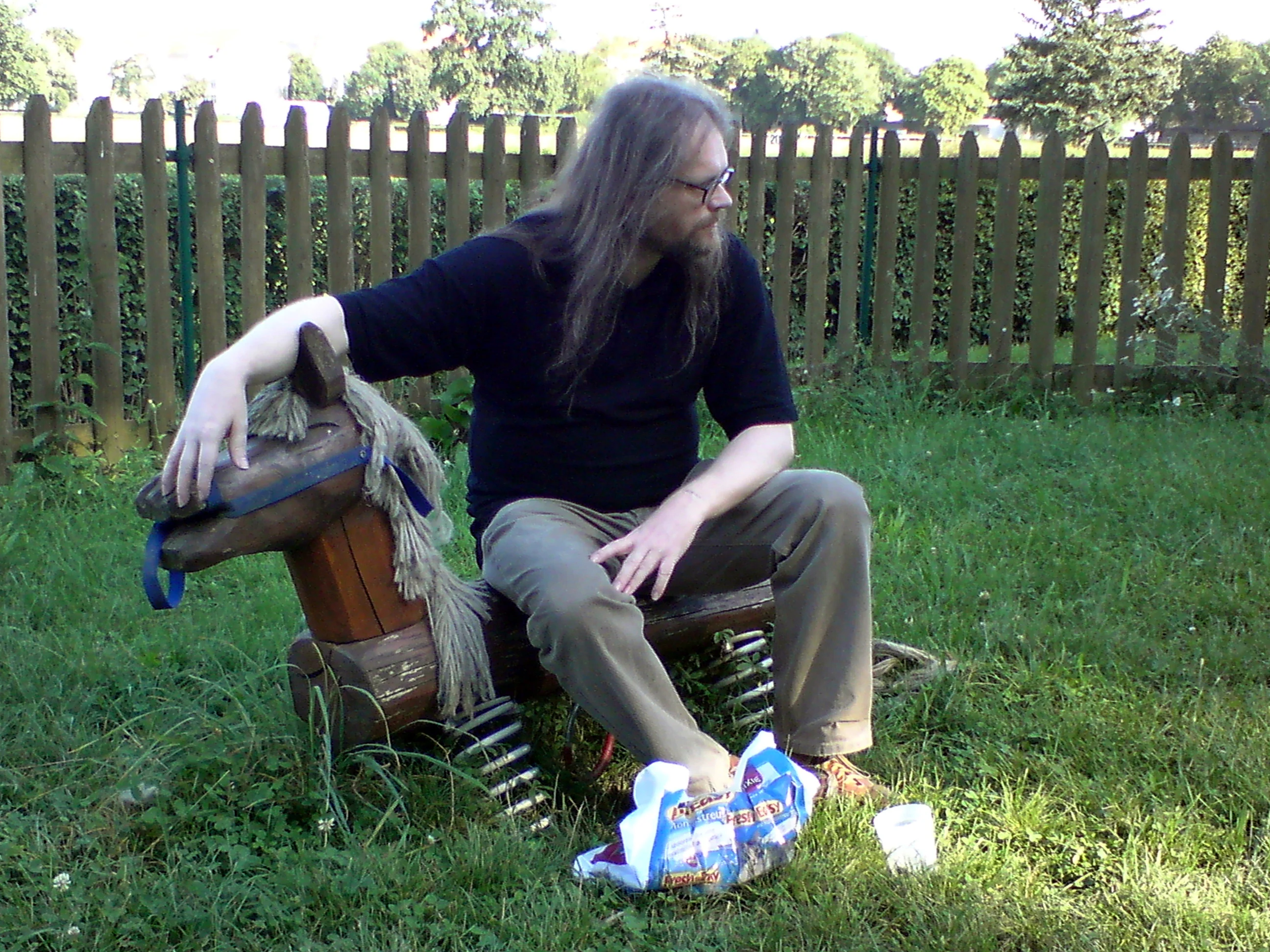
Image from Wikipedia
Image from Wikipedia
Hans Brinkmann: The Keen Chronicler from Chemnitz Between Poetry, Essays, and Art Critique
An Author Who Understands Language as Resistance and Perceptual Sharpness
Hans Brinkmann, born on December 26, 1956, in Freiberg/Saxony, is one of those German authors whose work cannot be confined to a single genre. He is a writer, journalist, and art critic – and it is precisely from this multiplicity that his literary presence derives its unique tension. His texts merge poetic condensation with social observation, linguistic precision with a clear stance towards the present and zeitgeist.
Brinkmann lives in Chemnitz and has established himself over decades as a distinctive voice of contemporary German-language poetry. Since 1976, his poems, commentaries, introductions to works, and essays have appeared in newspapers, magazines, exhibition catalogs, and anthologies. His profile is that of an author who perceives literature not as a quiet solitary project, but as part of a cultural dialogue that unfolds between art, the public, and personal experience.
Biography: From the Study of Museology to Literary Independence
Brinkmann studied museology in Leipzig and subsequently worked at Schloss Hinterglauchau and later at the City and District Library of Karl-Marx-Stadt. These early stages continue to shape his work today, as they point to an author who has evolved through engagement with culture, history, and archival knowledge. Literature for him does not appear as an abstract ivory tower but as a form of precise observation and remembrance.
At times, public perception of him was heavily overshadowed by biographical controversies; however, his literary work stands for an independent development. Eichenspinner Verlag emphasizes that Brinkmann has been writing poems, stories, and now novels for many years and that his work should not be reduced to biographical debates. It is precisely this tension between life experience, public attribution, and artistic self-assertion that makes his authorship so intriguing.
Literary Breakthrough and Continuous Presence in Contemporary Literature
His poems have been disseminated in various publication forms for decades, indicating a persistent reception within the literary scene. Brinkmann is not an author of loud media moments, but one who gradually takes shape over years and with each work. This is where his strength lies: he does not build short-term attention but develops a lasting literary identity.
After a longer publishing hiatus, the poetry collection Schlummernde Hunde was released in 2006, followed by further books. This return marked not just a simple restart but the continuation of an already established poetic line. His texts have continued to be present in literary contexts, readings, and anthologies, solidifying his status as a reliable voice of contemporary East German poetry.
Works and Publications: Between Poetry Collections, Stories, and Novels
Brinkmann's published books showcase a remarkable range. His titles include Wasserstände und Tauchtiefen (1985), Federn und Federn lassen (1988), Außer Trost (1992), Schlummernde Hunde (2006), knicken! (2009), Milchmädchen, rechne dich! (2009), Die Butter vom Brot (2011), DESPOTIE (2013), Der Tag, an dem der Kalender zurückkehrt (2017), Die Unheit (2018), Fabelbuch (2021), and Inhalte. Gedichte und Notizen (2024).
This bibliography presents an author who continually questions and expands lyrical forms. Particularly noteworthy is the connection between poetry and prose, between pointed observation and reflective social critique. Brinkmann writes not only about the interior but equally about political, cultural, and social realities, which imbue his texts with a strong contemporary relevance.
Awards and Recognition: A Work of Consistency
Brinkmann's literary work has been recognized multiple times. In 1992, he received a scholarship from the Deutsche Akademie Rom Villa Massimo, and in 2000, he won the 1st Chemnitz Poetry Slam, followed by several fellowships from the Saxon State Ministry for Science and Art and the Cultural Foundation of the Free State of Saxony. In 2011, he received the audience award "Bunter Hund" at the Leipzig Book Fair for Die Butter vom Brot.
He was also honored as a city writer in Tampere, Finland, in 2019. Such milestones illustrate that his work is not only regionally anchored but also recognized beyond the borders of Saxony. His acknowledgment is rooted less in trendy phenomena and more in linguistic sovereignty, thematic consistency, and a distinctly recognizable poetic signature.
Style and Themes: Wordplay, Societal Insight, and Precise Art Critique
Brinkmann's texts often function as sharply honed observational instruments. They merge irony, rhythmic density, and a precise tone that delves into critical societal diagnoses. The author is interested in margins, detours, and seemingly trivial phenomena that suddenly reveal great symbolic power in poetry.
A description of Inhalte emphasizes that his texts ponder history while incisively critiquing current conditions. This quality defines his style: Brinkmann works with hooks, with compression, and with a language that demands attention. As an art critic, he also brings a keen eye for image, form, and context, which further sharpens his literary work.
Readings and Public Appearances: Literature as a Living Form
Brinkmann is not only a book author but also a prominent reader of his own texts. At the Leipzig Book Fair, he participated in a reading combined with music, which aligns with his work that often engages with sound, rhythm, and performative presence. His literature gains an additional layer in oral presentation, as the tone further highlights his linguistic precision.
Other event formats also illustrate that his texts resonate in dialogue with the audience and musical accompaniment. This underscores his role as an author whose work does not end in a silent archive but continues to engage in lively cultural spaces. For readers who appreciate literature as an experience of voice and presence, Brinkmann holds a special appeal.
Cultural Influence: A Voice from Chemnitz with a Unique Profile
Hans Brinkmann stands for literature that intertwines East German experience, cultural observation, and poetic idiosyncrasy. His publications in anthologies and magazines, his reviews, and art-related essays portray him as an author who does not limit himself to lyrical introspection. He conceives literature in the context of society, art, and memory.
Thus, he belongs to a generation of writers who have shaped literary life in Saxony and beyond. His work is essential because it does not rely on quick effects but on sustainable linguistic substance. Brinkmann's texts invite readers not to consume the present superficially, but to read it in its friction, contradictions, and complexities.
Conclusion: Why Hans Brinkmann Remains Worth Reading
Hans Brinkmann is an author for readers who seek more than mere entertainment in literature. His work offers linguistic precision, societal sharpness, and a distinctive blend of poetry, essay, and critical observation. Engaging with his books reveals a writer who does not smooth over the world but makes it visible.
It is precisely this consistency that makes him exciting: Brinkmann writes with conviction, with experience, and with an eye for the culturally restless. His work is worthy of discovery in print as well as in encounters at readings. Anyone who wishes to experience literature as a vibrant, attentive, and independent art form should not miss the opportunity to see Hans Brinkmann live.
Official Channels of Hans Brinkmann:
- Instagram: no official profile found
- Facebook: no official profile found
- YouTube: no official profile found
- Spotify: no official profile found
- TikTok: no official profile found