
Matthias Muche
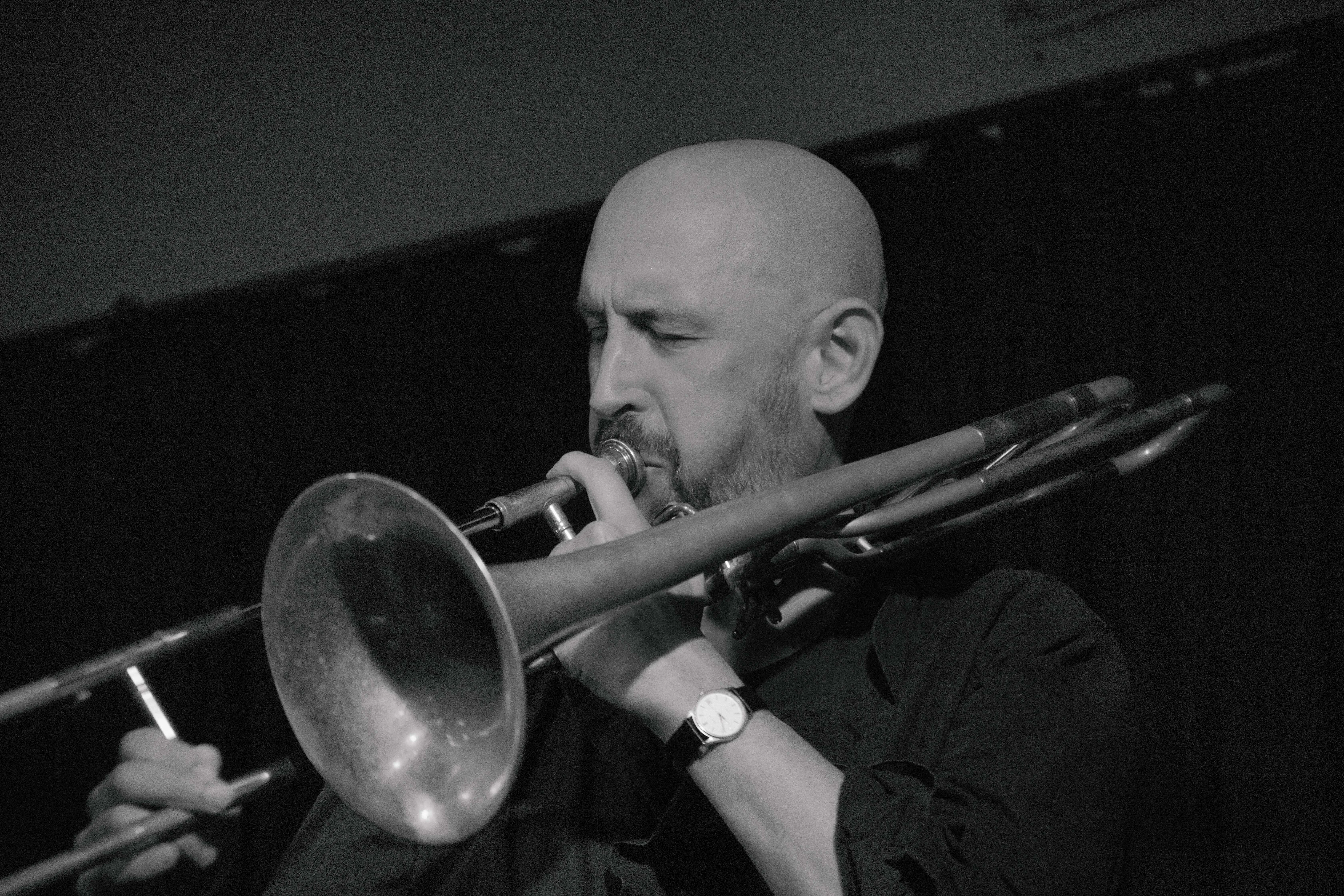
Image from Wikipedia
Image from Wikipedia
Matthias Muche – The Trombonist Redefining the Boundaries of Jazz
Sound as Body, Improvisation as Architecture
Matthias Muche, born in Bielefeld in 1972, is one of the most distinctive German trombonists navigating between jazz, improvisational music, new music, and media art. His artistic profile emerges from a rare combination of instrumental risk awareness, compositional precision, and interdisciplinary thinking. Those following his work encounter not just a soloist, but a sound researcher who perceives the trombone as a resonant body and consistently expands its possibilities. ([de.wikipedia.org](https://de.wikipedia.org/wiki/Matthias_Muche))
Early Influences, Academic Education and the Path to Cologne
Muche's musical education was international and focused: He studied trombone and composition at the Hochschule der Künste Amsterdam, the Rotterdam Conservatorium, and the Hochschule für Musik und Tanz Köln with Bart van Lier, Henning Berg, and Paulo Alvares. He then completed a postgraduate program in audiovisual media at the Kunsthochschule für Medien Köln under Anthony Moore. This dual anchoring in music and media explains the independence of his work: Muche thinks not only in tones but in spaces, images, textures, and processes. ([matthiasmuche.com](https://www.matthiasmuche.com/clients/public/downloads/0002/MatthiasMuche_Bio.pdf))
The musician living in Cologne describes his work through the often-cited "boundaries" that run like a common thread throughout his career. His playing combines the sonorous possibilities of the trombone with extended playing techniques, contributions from language and soundscapes, interactive computer graphics, and installation logic. This is precisely where the artistic development emerges that makes him so distinctive in the improvised music scene: Muche regards the instrument not as an endpoint but as a starting point for audiovisual composition. ([matthiasmuche.com](https://www.matthiasmuche.com/clients/public/downloads/0002/MatthiasMuche_Bio.pdf))
Career Between Jazz Scene, Ensemble Work, and Intermedial Performance
Muche's music career has been characterized early on by collaboration and collective thinking. He has worked with dancers, multimedia artists, and jazz bands at the North Sea Jazz Festival, belonged to groups of Norbert Stein, and was a member of the Schäl Sick Brass Band, the Multiple Joy(ce) Orchestra, das Mollsche Gesetz, and the Niels Klein Tentett. Between 2004 and 2015, he co-directed the Frischzelle Festival for intermedial improvisation and composition with Sven Hahne. This made him visible not only as an interpreter but also as a curatorial player in experimental music practice. ([de.wikipedia.org](https://de.wikipedia.org/wiki/Matthias_Muche))
His work illustrates how closely artistic development and scene openness are connected for Muche. The official website documents numerous projects showing that he regularly performs in new configurations, such as trombone solo formats, intermedial productions, European-transatlantic collaborations, and expanded ensemble works. His long-term relationships with Achim Tang and Philip Zoubek, Daniel Riegler, Jeb Bishop, Matthias Müller, Etienne Nillesen, Ken Vandermark, and other improvisational musicians particularly reflect his stylistic openness. ([matthiasmuche.com](https://www.matthiasmuche.com/))
Discography: From Trio Experiment to Large-Scale Brass Ensemble
The discography of Matthias Muche shows a consistent movement away from the classic role distribution between soloist and backing band. Early releases include Sator Rotas (2007), Catalogue of Improvisation (2008), Excerpts from Anything (2011), and Transferration (2016). Additionally, Konzert für Hannes with Jeb Bishop and Matthias Müller, T.On Plays Matthias Muche from 2020, and Bonecrusher from 2021 were released. These recordings not only mark stations in a career but document a continuous intensification of his aesthetic profile. ([de.wikipedia.org](https://de.wikipedia.org/wiki/Matthias_Muche))
Particularly insightful is the trio Muche/Zoubek/Tang, which, according to the official project description, has been working on an improvised music since 2004 that transcends conventional parameters of free jazz. The music is described as flat-static, lacking obvious rhythmic impulses and refusing overt communication rituals. This is where Muche's strength lies: he relies on formal awareness, tension build-up, and sonic reduction instead of demonstrative virtuosity. ([matthiasmuche.com](https://www.matthiasmuche.com/projects/muchezoubektang?utm_source=openai))
Bonecrusher, Solo Work, and the Expansion of the Trombone
With Bonecrusher, Muche has created an ensemble that consolidates his compositional imagination on a large scale. The project, founded in 2020, combines ten to twelve trombones and percussion into dense, sculptural soundscapes, navigating between composition and improvisation. On the official page, the group is described as a continuation of his artistic series exploring new paths and deepening the expressive power of the instrument. The lineup and texture make clear that Muche does not think of the trombone in isolation but as part of a collective resonance machine. ([matthiasmuche.com](https://www.matthiasmuche.com/projects/matthiasmuchesbonecrusher?utm_source=openai))
His solo work also follows this idea of physical sound exploration. The official project “Trombone Alone” announces the debut solo album on col legno and describes the music as an investigation of sound, space, breath, and material. The announcements for 2025 and 2026 refer to new release concerts in Vienna, Bielefeld, and Cologne, as well as work with resonance, objects, and electroacoustic extensions. Here, Muche presents himself as an artist transforming the trombone from a wind instrument into a performative resonance body. ([matthiasmuche.com](https://www.matthiasmuche.com/?utm_source=openai))
Current Projects, Releases, and International Presence
The latest project announcements show an artist in high activity. For 2024 and 2025, the official website documents, among other things, the BONECRUSHER Festival in Cologne, tour dates with Herzog | Muche | Nillesen, joint performances with Jeb Bishop and Matthias Müller, a US tour of the Trombone Trio, as well as new ensemble work with guests like Sarah Davachi, Anna Webber, and Sofia Jernberg. Additionally, a solo album, a new Bonecrusher album, and residencies in Vienna are announced for 2026. This is not routine production but a continued expansion of a very clear sound language. ([matthiasmuche.com](https://www.matthiasmuche.com/))
The international dimension of his work is also noteworthy. The bio PDF mentions performances in many cities across Europe, Asia, the Middle East, and Australia, as well as guest lectures at universities and art institutions in Cologne, Essen, Istanbul, Beirut, and Hangzhou. Matthias Muche's career demonstrates an artist who takes the local improvisation scene in Cologne as a starting point but is already embedded in a global network of current music. ([matthiasmuche.com](https://www.matthiasmuche.com/clients/public/downloads/0002/Matthias_Muche_Bio.pdf))
Style, Aesthetics, and Critical Reception
Critics describe Muche as a subtle improvisational musician, not as a loud effects specialist. In the Frankfurter Rundschau, he is recognized in connection with Bonecrusher as a musician who significantly expands the conventional and familiar sound worlds of the trombone. The text emphasizes the physical and musical peculiarity of the instrument and makes it clear that Muche's strength lies in reinterpreting: he thinks of sound not in bombastic terms but as organic, nuanced, and often surprisingly quiet. ([fr.de](https://www.fr.de/kultur/musik/matthias-muche-bonecrusher-vom-glockenklang-der-posaune-91166438.html))
The cultural portal succinctly summarizes this approach, describing Muche as a representative of a generation of composer-performers for whom the separation between jazz, improvised music, and contemporary music is no longer applicable. This classification strikes at the core of his artistic authority. Muche works on an open form where composition, improvisation, media art, and stage presence intertwine. This is precisely why his music never feels decorative but always material, focused, and immediate. ([kulturportal.de](https://kulturportal.de/de_DE/kulturschaffende/matthias-muche.79794?utm_source=openai))
Cultural Influence and Significance for Improvised Music
Muche's cultural influence lies not in charts or mass popularity but in the sustainable expansion of an entire instrument and its aesthetic context. He has shown that the trombone in the 21st century can be more than just a jazz voice instrument or solo exhibitionism: it can be a medium for sound research, dramaturgy, and intermedial narrative. His projects with musicians like Ken Vandermark, Thomas Lehn, and Martin Blume, as well as his festival work in the Frischzelle context, have significantly shaped the European improvisation scene. ([de.wikipedia.org](https://de.wikipedia.org/wiki/Matthias_Muche))
In addition, there is institutional recognition: in 2021, Muche received the WDR Jazz Prize in the category of “Improvisation.” Combined with his teaching activities and international performances, he forms the profile of a musician whose impact extends far beyond his own instrument. Muche embodies an attitude where research, risk, and ensemble culture are of equal importance. This makes him equally exciting for jazz lovers, supporters of new music, and friends of advanced sound art. ([de.wikipedia.org](https://de.wikipedia.org/wiki/Matthias_Muche))
Conclusion: An Artist to Not Only Hear But Experience
Matthias Muche is among the most impressive voices in European improvisational music because he perceives the trombone as a space for thought and continuously develops new forms of sound, space, and presence from it. His career combines academic depth, collective practice, and experimental courage into a distinctive artistic profile. Those seeking music that does not aim for surface but for substance will find one of the most interesting trombonists of his generation here. Live, it becomes especially clear how intense, physical, and immediate this music feels. ([matthiasmuche.com](https://www.matthiasmuche.com/clients/public/downloads/0002/Matthias_Muche_Bio.pdf))
Official Channels of Matthias Muche:
- Instagram: https://www.instagram.com/matthiasmuche/
- Facebook: no official profile found
- YouTube: no official profile found
- Spotify: no official profile found
- TikTok: no official profile found