
Norbert Horst
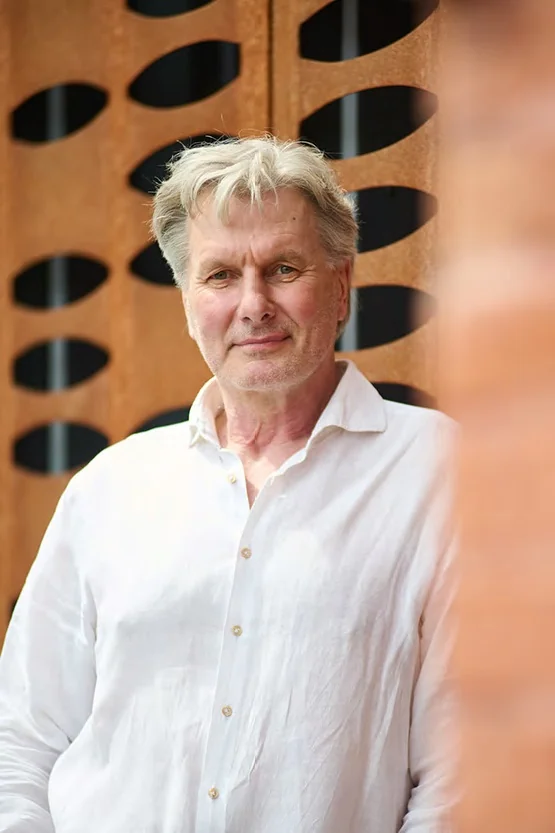
Image from Wikipedia
Image from Wikipedia
Norbert Horst – The Crime Author with a Police Perspective and Literary Precision
A German author who transforms investigative work into dense crime novels
Norbert Horst, born on April 8, 1956, in Bad Oeynhausen, is one of the most distinctive voices in German-language crime literature. His biography combines police practice, literary consistency, and a sober view of crime, lending a special credibility to his novels. Readers of his books encounter not flashy cinema, but an author who condenses reality, investigative work, and psychological tension into a unique narrative form. ([de.wikipedia.org](https://de.wikipedia.org/wiki/Norbert_Horst))
From Police Service to Literature: The Biography of Norbert Horst
Horst grew up in the East Westphalian town of Bergkirchen, became a police officer in 1974, and initially worked as a patrol officer. Later, he studied to become a criminal commissioner, was employed at the State Criminal Police Office from 1984, and accrued extensive experience as an investigator in Bielefeld from 1987, including in economic crime cases and homicide squads. This professional depth continues to shape his writing today, as his novels emerge from a life path where observation, analysis, and social reality are always intertwined. ([de.wikipedia.org](https://de.wikipedia.org/wiki/Norbert_Horst))
Additionally, he led seminars on stress management, conflict resolution, and communication at the Institute for Training and Further Education of the North Rhine-Westphalia Police for eleven years. He then worked for eight years in the press office and public relations of the Bielefeld Police Headquarters before returning to active investigator work until retirement. This interplay between direct police work, mediation, and reflection explains why his prose feels so close to the characters, yet so precise in structure. ([de.wikipedia.org](https://de.wikipedia.org/wiki/Norbert_Horst))
The Literary Development: Early Texts, Debut, and Breakthrough
Since he was 16 years old, Norbert Horst has been writing in his free time, initially song lyrics for his own band Goldmund, as well as poetry and later short stories. That this early writing practice eventually led to crime novels marks not a coincidence, but an organic development: Those who understand language early on as rhythm, condensation, and means of expression find the crime novel to be an ideal format. His first novel, Leichensache, was published in 2003, marking the beginning of a career that quickly surpassed the status of a debut. ([de.wikipedia.org](https://de.wikipedia.org/wiki/Norbert_Horst))
For Leichensache, Horst received the Friedrich-Glauser Prize in the debut category in 2004. Two years later, he received the German Crime Prize in 1st place in the national category for Todesmuster. The early accolades indicate that his work was perceived not just as authentic but also received high literary recognition. ([de.wikipedia.org](https://de.wikipedia.org/wiki/Norbert_Horst))
Konstantin Kirchenberg and Thomas Adam: Characters with Stance and Fractures
In the first four novels featuring Chief Detective Konstantin Kirchenberg from a fictional Westphalian town, Horst developed a tone that Tobias Gohlis described as "unheard of" in crime literature. According to the Wikipedia summary, the author draws readers into an immediate stream of consciousness, while Thomas Wörtche characterized his prose as driven by staccato, witty, and ironic. This is more than a stylistic judgment: it points to an author who creates tension not through effects but through inner movement, perspective, and linguistic energy. ([de.wikipedia.org](https://de.wikipedia.org/wiki/Norbert_Horst))
With Splitter im Auge, Horst embarked on a literary fresh start and introduced the Dortmund detective Thomas Adam, known as "Steiger." The character is weary of his job, down-to-earth, and complexly designed, highlighting Horst's strength: he does not write flawless investigators but characters with friction, keen observation, and social context. This essential appeal is a core element of his crime novels. ([de.wikipedia.org](https://de.wikipedia.org/wiki/Norbert_Horst))
Style and Narrative Technique: Realism, Rhythm, and Psychological Precision
Norbert Horst himself emphasizes in interviews that his books do not follow the classic pattern where everything is fine again after the resolution. His endings are much more multifaceted, open, and closer to reality, where even an apprehended perpetrator does not bring healing for victims, surroundings, and society. This stance shapes the entire dramaturgy of his crime novels: crime never stands alone but refers to structures, milieus, and social tensions. ([nw.de](https://www.nw.de/nachrichten/kultur/literatur/literatur/22469054_Bielefelder-Polizist-als-Krimi-Autor-Interview-mit-Norbert-Horst.html))
Also linguistically, Horst focuses on conciseness, movement, and precision. Reviews and critiques describe his style as suspenseful, daring, and strongly oriented toward the inner monologues of his characters. At the same time, it becomes clear how much his police experience informs the construction of processes, dialogues, and investigative details. The result is crime literature with documentary sharpness and literary awareness of form. ([de.wikipedia.org](https://de.wikipedia.org/wiki/Norbert_Horst))
Discography of Novels: Important Books, Series, and Current Releases
The central phase of his works includes the novels Leichensache, Todesmuster, Blutskizzen, Sterbezeit, Splitter im Auge, Mädchenware, Kaltes Land, and Bitterer Zorn. Later, a new series featuring Lopez, Rahn, and Müller followed with Lost Places – where the dead remain silent in 2024 and Sweet Home – you are nowhere safe in 2025. These publications demonstrate that Horst continues to develop his thematic world, connecting contemporary criminalistic issues with new characters, new constellations, and new social settings. ([de.wikipedia.org](https://de.wikipedia.org/wiki/Norbert_Horst))
Lost Places was published in 2024 by Goldmann and opens the series with a case set in Essen and Bochum that links several seemingly unrelated deaths into a murder series. Sweet Home followed on January 22, 2025, focusing on investigations surrounding a compromising video, a fatal mistake, and the connection to data theft and internet fraud. Both books show how Horst couples classical crime structures with current societal conflicts. ([penguin.de](https://www.penguin.de/buecher/norbert-horst-lost-places/paperback/9783442493678?utm_source=openai))
Critical Reception, Awards, and Literary Rank
The trade press has early recognized Horst as an author with extraordinary authenticity. Deutschlandfunk highlighted that he has written as a chief detective and has been awarded the German Crime Prize and the Glauser Crime Prize. The Süddeutsche Presse and other reviews have repeatedly emphasized the particular closeness of his novels to investigative practice and the psychological reality of police daily life. ([deutschlandfunk.de](https://www.deutschlandfunk.de/morde-der-klugen-denkungsart-106.html))
His accolades also underscore his standing: Friedrich-Glauser Prize 2004 for Leichensache, German Crime Prize 2006 for Todesmuster, Herzogenrather Handschelle 2008 for Blutskizzen, along with other nominations on crime best lists. These honors signify not just market success but also recognized literary quality within the genre. Horst thus belongs to the authors who have prominently shaped the German-language crime novel. ([de.wikipedia.org](https://de.wikipedia.org/wiki/Norbert_Horst))
Cultural Influence: Why Norbert Horst Remains Important in the Crime Genre
Norbert Horst has given a special form of credibility to the German crime novel. His books utilize the knowledge of the investigator without descending into mere case prose, and they combine social insights with literary ambition. This connection makes him interesting for readers who seek not just thrills in a crime story, but also social diagnosis, linguistic precision, and human depth. ([de.wikipedia.org](https://de.wikipedia.org/wiki/Norbert_Horst))
His influence is also evident in that he shapes characters not as mere serial machines but as independent individuals with fractures, routines, and inner conflicts. The criminal perspective becomes a literary lens on a society where violence, poverty, power, and repression intertwine. It is precisely therein that the lasting relevance of his work lies. ([de.wikipedia.org](https://de.wikipedia.org/wiki/Norbert_Horst))
Current Projects and Readings
Recently, Horst continues to be present. The publishing house Penguin Random House has scheduled readings for 2026 for Sweet Home, including in Recke and Bielefeld. This shows that his novels continue to live on not only in bookstores but also in direct contact with the audience. For an author whose stories thrive on proximity to reality, such appearances carry a particular credibility. ([penguin.de](https://www.penguin.de/empfehlungen/events/89612-norbert-horst-norbert-horst-liest-aus-sweet-home-?utm_source=openai))
Conclusion: Norbert Horst is an author who combines investigative experience, social observation, and literary power into a distinctive signature. His novels remain engaging because they do not merely solve cases but make reality visible. Those seeking depth in crime literature will find one of the most important German names in the genre in Horst – and should experience him live at a reading. ([de.wikipedia.org](https://de.wikipedia.org/wiki/Norbert_Horst))
Official Channels of Norbert Horst:
- Instagram: No official profile found
- Facebook: No official profile found
- YouTube: No official profile found
- Spotify: No official profile found
- TikTok: No official profile found
Sources:
- Wikipedia – Norbert Horst
- nw.de – Bielefeld Police Officer as a Crime Author: Interview with Norbert Horst
- Stern – “There Is Nothing More Exciting Than a Murder File”
- Deutschlandfunk – Murders of the Clever Mindset
- Penguin Random House – Lost Places
- Penguin Random House – Sweet Home
- Penguin Random House – Reading of Sweet Home