
Udo Zimmermann
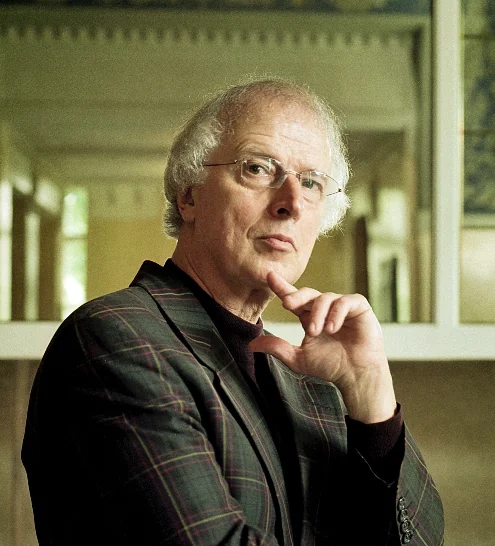
Image from Wikipedia
Image from Wikipedia
Udo Zimmermann – Composer, Conductor and Influential Innovator of German Music Theater
Udo Zimmermann: A Life Dedicated to New Music, Music Theater, and Artistic Responsibility
Udo Zimmermann was one of the key figures in German music of the 20th and early 21st centuries. Born on October 6, 1943, in Dresden and having passed away there in 2021, he combined composition, conducting, music theater, and cultural policy into an exceptionally multifaceted musical career. His name is synonymous with artistic development with conviction, a conceptual approach to music theater, and the consistent promotion of contemporary music. (de.wikipedia.org)
Early Influences: Dresden, Kreuzchor, and the School of Listening
Zimmermann's artistic biography begins in Dresden, where he grew up as a choirboy in the Dresden Kreuzchor. This early choral experience shaped his later sensitivity to vocal lines, sound balance, and the dramatic impact of language in music theater. From 1962 to 1968, he studied composition, conducting, and singing at the Hochschule für Musik "Carl Maria von Weber" in Dresden; afterward, he became a master student at the Akademie der Künste in Berlin. (breitkopf.com)
Even during these training years, he demonstrated a profile that extended beyond mere composition. Zimmermann always considered music simultaneously as a score, a stage situation, and a societal statement. This resulted in the unique combination of structural clarity, expressive intensity, and political resonance that characterizes his works. (breitkopf.com)
Early Career and Dresden: Dramaturg, Educator, Founder
After his training, Zimmermann worked as a composer and dramaturg at the Dresden State Opera from 1970 until 1984. Before that, he had spent two years as an assistant to the music theater director Walter Felsenstein, a period that significantly sharpened his understanding of scenic precision and theatrical authenticity. From 1976, he served as a lecturer and from 1979 as a professor of composition at the Dresden University of Music. (de.wikipedia.org)
In 1974, he founded the Dresden Studio "Neue Musik," which evolved into the Dresden Center for Contemporary Music in 1986. This center became an internationally recognized location for concerts, festivals, and aesthetic debates on New Music. Here, Zimmermann displayed not only artistic authority but also institutional creativity: he established structures that made contemporary composition permanently visible and audible. (de.wikipedia.org)
The Breakthrough in Music Theater: From "Levins Mühle" to "Weiße Rose"
Zimmermann's work is primarily characterized by music theater. His operas include Die zweite Entscheidung (1970), Levins Mühle (1972), Der Schuhu und die fliegende Prinzessin (1976), Die wundersame Schustersfrau (1982), and Weiße Rose (1986). These works showcase an artistic evolution from early experimental opera projects to the highly concentrated chamber opera that productively employs reduction as an expressive means. (de.wikipedia.org)
Especially, Weiße Rose became his most renowned work and an internationally recognized key piece of contemporary opera. The chamber opera about the Scholl siblings is regarded as one of the most performed music theater works of the 20th century and has been repeatedly described in professional reviews as compelling, concentrated, and historically as well as morally charged. That Zimmermann set the material to music twice and developed the 1986 version into a concise, dramatically condensed form illustrates his compositional consistency. (de.wikipedia.org)
Musical Language: Concentration, Expressiveness, and Theatrical Clarity
Zimmermann’s compositions often utilize condensed motifs, clear voice leading, and an atmosphere of inner tension. His music theater works connect political and historical themes with a compositional language that prioritizes dramatic intensity over ornamental breadth. This aesthetic is particularly evident in Weiße Rose: The music carries the text, sharpens the psychological situation, and avoids any decorative overload. (nmz.de)
His instrumental works also bear this signature. Pieces such as Dramatische Impression, L’Homme, Sieh, meine Augen, Sinfonia come un grande lamento, or Canticum marianum demonstrate that Zimmermann never understood sound as an abstract surface, but as a carrier of memory, conviction, and formal consistency. His music thus remained in a tension field of compositional technique, spiritual depth, and social awareness. (de.wikipedia.org)
Conductor and Artistic Director: Impact on Major Stages
Zimmermann was not only a composer but also a prominent conductor and cultural manager. Since 1979, he guest conducted leading orchestras such as the Berlin Philharmonic, the Vienna Symphony Orchestra, the Gewandhaus Orchestra Leipzig, the Bavarian Radio Symphony Orchestra, the NDR Symphony Orchestra, and the Staatskapelle Dresden. His guest conducting engagements also took him to opera houses in Vienna, Hamburg, Munich, and Bonn. (de.wikipedia.org)
As an artistic director and leader, he shaped key institutions: from 1990 to 2001 the Leipzig Opera, from 2001 to 2003 the Deutsche Oper Berlin, and from 2003 the European Center for the Arts Hellerau in Dresden. Additionally, from 1997 to 2011, he served as the artistic director of "musica viva" at the Bavarian Radio, where he premiered 175 works over 14 years. These figures reflect authority, repertoire policy, and a rare consistency in the service of New Music. (de.wikipedia.org)
Current Positioning and Posthumous Relevance
Even after his death, Zimmermann's work remains vibrant, as it continues to be read, performed, and discussed in the present. The reception of his Weiße Rose shows that the opera is not only a historical work but also a repeatedly questioned musical admonition against injustice and forgetfulness. Music press and opera criticism consistently emphasize the concentration, intensity, and relevance of his dramatic language. (nmz.de)
As a contemporary release in a broader sense, the 2024 documentary Ich bin ein Theatermensch. Udo Zimmermann – Erinnerungen und Dokumente is noteworthy, which once again highlights his status as a stage artist, organizer, and thinking figure in contemporary music. It underscores that Zimmermann's impact is felt not only through his scores but also through his aesthetic and institutional decisions. (de.wikipedia.org)
Critical Reception: Recognition, Awards, and Impact
Zimmermann received numerous awards and honors, including the Hanns-Eisler-Prize, the Critics' Prize for Music, the Order of Merit of the Federal Republic of Germany 1st Class, and the appointment as Officier des Ordre des Arts et des Lettres. Such recognitions not only reflect personal acknowledgment but also the authority of an artist who profoundly shaped the musical life in both East and West Germany. (breitkopf.com)
In music historical evaluation, he is considered a boundary-crosser between composition, opera reform, and cultural policy. Press and critics describe him as a courageous creator who did not confine New Music to an ivory tower but anchored it within operas, radio programs, universities, and institutions. In particular, Weiße Rose remains his most culturally impactful work, as it combines musical rigor with moral urgency. (zeit.de)
Conclusion: Why Udo Zimmermann Remains Exciting Today
Udo Zimmermann was a composer who uniquely integrated the power of music theater, the responsibility of cultural institutions, and the precision of compositional thinking. His works speak with unwavering intensity about resistance, memory, and humanity, while his career showcases how much an artist can influence as a artistic director, conductor, and mentor. Those seeking contemporary opera as an intellectual and emotional experience will find a significant name in Zimmermann in the history of German music. (de.wikipedia.org)
His oeuvre is worth rediscovery, as it is not only historically significant but also continues to have an impact on stage today. Udo Zimmermann remains compelling as a thinker of sound, theater artist, and an uncomfortable, engaged European. Experiencing his music live offers an encounter with a work that touches with great clarity and resonates long after. (zeit.de)
Official Channels of Udo Zimmermann:
- Instagram: no official profile found
- Facebook: no official profile found
- YouTube: no official profile found
- Spotify: no official profile found
- TikTok: no official profile found
Sources:
- Udo Zimmermann – Wikipedia
- Udo Zimmermann – Breitkopf & Härtel
- neue musikzeitung – On the Death of Composer, Conductor, and Director Udo Zimmermann
- Tagesspiegel – “The White Rose” Was His Greatest Success: Composer Udo Zimmermann Has Died
- Deutsche Biographie – Zimmermann, Udo
- neue musikzeitung – Impressive: Udo Zimmermann’s “Weiße Rose” at the Lübeck University of Music
- Wikipedia: Image and text source