
Bielefeld
Alter Markt, 33602 Bielefeld, Deutschland
Alter Markt Bielefeld | Old Town & Theater
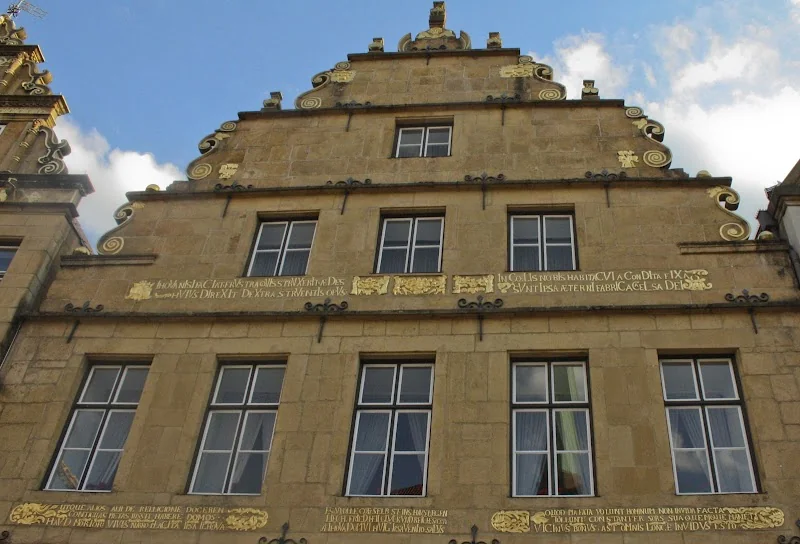
The Old Market in Bielefeld is much more than just a square in the city center: it is the historical heart of the Old Town, a meeting point for city strolls, culture, and events, and one of the places where the history of the city can be experienced most closely. Today, lovingly restored facades, striking gables, and the theater at the Old Market shape the image of the square. In the past, the town hall stood here, and this fact alone shows how central this place has been for urban life for many decades. Therefore, those who visit the Old Market find not only a beautiful backdrop but a place with a developed identity, where historical substance and current urban life are closely connected. Especially in the open-air season, the Old Market is one of the most popular meeting points for Bielefeld residents and visitors. This is complemented by culinary breaks in the surrounding cafes and restaurants, culture at the theater, and large festivals such as the wine market and the Leineweber market, which regularly transform the square into a vibrant stage. ([bielefeld.jetzt](https://www.bielefeld.jetzt/alter-markt))
Events at the Old Market: Leineweber Market, Wine Market, and Open-Air Season
If there is one theme that stands out particularly among the search terms related to the Old Market in Bielefeld, it is the event experience. The square is not only historically significant but also repeatedly serves as a venue for major urban formats throughout the year. This is particularly visible at the Leineweber Market, one of the most important city festivals in the region. On the official program page, the Old Market is listed as its own stage location; thus, not only incidental programming takes place here, but a specific part of the festival. For 2026, Bielefeld Marketing reports more than 200 program points and over 110 stalls throughout the city center. This makes clear the role that the Old Town and thus the Old Market play for the city festival. Those looking for music, live performances, and urban festival vibes will find a solid point of contact right in the historical center. ([bielefeld.jetzt](https://www.bielefeld.jetzt/leineweber))
A second strong theme is the Bielefeld Wine Market. It transforms the Old Town every September into a cozy wine village in the open air. According to Bielefeld Marketing, there are stalls from the Old Market through Niedernstraße to Altstädter Kirchplatz; for 2025, 29 stalls and a duration from September 2 to 7 were mentioned, and for 2026, the period is designated as September 1 to 6. Thus, the Old Market is not only a backdrop but a central place for enjoyment, encounters, and urban summer or late summer life. The general character of the square also fits this: The city describes the Old Market as a popular meeting point during the open-air season and recommends culinary tours through the Old Town for history and enjoyment-oriented visitors. So, for those looking for events, programming, open-air, and Old Town atmosphere, the Old Market is an excellent choice. ([bielefeld.jetzt](https://www.bielefeld.jetzt/alter-markt))
History and Historical Facades at the Old Market
The Old Market is not simply a beautifully staged square in Bielefeld, but a historically grown urban space. In a uni-bielefeld material on city history, it is described that the market was the economic center of the city for centuries. Goods were traded there that were vital for the supply of the citizens. The name itself also tells a story of urban development: At the time when the original marketplace became too small for the growing city and a new market was established at today's Niederwall, the square was designated as the Old Market. This renaming marks not stagnation but change and growth of the city. Later, in 1973, the square received a completely new face as part of the pedestrian zones and was largely closed to vehicle traffic. Today, it is again more a place of stay than of passage. ([uni-bielefeld.de](https://www.uni-bielefeld.de/fakultaeten/geschichtswissenschaft/forschung/geschichtskultur-region/unterrichtsreihen/uebergreifend/stadtgeschichte-bielefeld/Q24_Der_Alte_Markt.pdf))
Especially shaping the current image are the historical facades and gables. Bielefeld.JETZT particularly highlights the Crüwell House, whose late Gothic stepped gable is dated to 1530. In the stairwell of the house, around 7,000 Delft tiles from the 16th to 18th centuries can be seen, giving the building an extraordinary cultural-historical value. Additionally, the former town hall, which stood at the Old Market until 1904, is noteworthy. Today, the theater at the Old Market is located in the building, and the Gothic cellar vault is still accessible. This mix of preserved and repurposed historical structures makes the Old Market so interesting: Here, one sees not only half-timbered or gable romance but a genuine layer of the city's history. So, for those looking for history, Old Town, sights, and special architecture, the Old Market is one of the densest places in Bielefeld. ([bielefeld.jetzt](https://www.bielefeld.jetzt/alter-markt))
Theater at the Old Market: Program, Seating, and Cultural Profile
The theater at the Old Market, often referred to as TAM, is today one of the most important cultural anchor points of the square. According to Bielefeld.JETZT, the theater invites visitors to see remarkable performances, and the city's stage and orchestra pages explicitly name the house as a venue in the Old Town. The historical context is also interesting: The theater is located in the building of the former town hall, which was destroyed in 1944. The Gothic cellar vault remained intact, and since the reconstruction in 1949, the building has been used as a theater. Thus, TAM connects historical substance with vibrant present. Anyone considering the Old Market as a cultural location cannot overlook this house, as it anchors the square beyond the day as an evening venue for plays, performances, and theater visits. ([bielefeld.jetzt](https://www.bielefeld.jetzt/alter-markt))
For users looking for seating plans, seats, or practical theater information, the official service pages are particularly helpful. The stage and orchestra page points out that at the theater at the Old Market, the parquet, the theater gastronomy Lorca, and the accessible toilet are reachable by elevator. Additionally, up to four wheelchair spaces can be set up in the hall; these are located in the last row of the parquet and belong to price category 3. For the setup, an advance registration is required when booking tickets. The official directions page also provides a hall plan as a PDF, which is important for all those who want to check specific seats and sightlines before their visit. Even though the Old Market itself is not a classic hall with fixed seating, it is worth looking at the theater because there is a very concrete practical benefit arising from the search interest for seating plans, tickets, and programming. ([buo-bielefeld.de](https://buo-bielefeld.de/infos-mehr/service/barrierefreiheit))
Directions and Parking at the Old Market in Bielefeld
The approach to the Old Market is straightforward because the square is located in the middle of the city center and is well integrated into the traffic and pedestrian network. The official stage and orchestra information states the address for the theater at the Old Market as Alter Markt 1, 33602 Bielefeld. By tram, you can travel from the main train station to the Rathaus stop, then turn right into the pedestrian zone or Rathausstraße and reach the Old Market after about five minutes. It is also reachable on foot from the main train station; the official page indicates about 15 minutes for this. This is practical for visitors who are traveling without a car or who want to stroll through the city center before a theater visit. For searching users, it is clear: The Old Market is not a remote place but a very central city square with direct access to the inner-city pedestrian area. ([buo-bielefeld.de](https://buo-bielefeld.de/ls/infos-mehr/service/anfahrt))
When it comes to parking, the underground garage of the New Town Hall is particularly relevant. The entrance is located on Körnerstraße, and visitors to the city theater and the theater at the Old Market can park there for a flat rate of 2.50 euros, according to the official page. It is also important to have the parking ticket validated by the entrance staff. The accessibility page adds that there are numerous disabled parking spaces available around the theater and the Old Market, including directly at Niederwall or the corner of Brunnenstraße, at the House of Health on Brunnenstraße, and in the underground garage of the New Town Hall. For guests with cars, this is a reliable orientation because the most important parking options are in immediate proximity and tailored to a theater or Old Town visit. So, for those looking to park at the Old Market in Bielefeld or searching for directions, here are the key facts at a glance. ([buo-bielefeld.de](https://buo-bielefeld.de/infos-mehr/service/anfahrt))
Accessibility, Service, and Practical Tips
Even for practical questions, the Old Market or the theater at the Old Market provides clear information. For visitors with limited mobility, it is particularly important that at the theater at the Old Market, the parquet, the theater gastronomy Lorca, and the accessible toilet are reachable by elevator. Furthermore, up to four wheelchair spaces can be set up in the hall. These seats are located in the last row of the parquet and must be reserved at least a week before the performance, as the seating will be adjusted for this. This shows that the theater is not only culturally but also organizationally geared towards various visitor needs. The establishment of such spaces is a strong practical argument for all those looking for accessibility at the Old Market. ([buo-bielefeld.de](https://buo-bielefeld.de/infos-mehr/service/barrierefreiheit))
As for the public square itself: The Old Market is an open urban space without fixed seating arrangements and without a fixed capacity like in a hall or auditorium. This is not a disadvantage but an expression of its function as a square in the heart of the Old Town. For this reason, it thrives on seasonal uses, city festivals, markets, strolls, and theater visits. Those planning their stay can make good use of the combination of city center, gastronomy, and culture: first a walk across the square, then a break in a café or restaurant, and finally an evening at the theater or a market visit. Bielefeld.JETZT aptly describes the square as a meeting point characterized by historical facades, restaurants, and remarkable performances. For seekers, this means: The Old Market Bielefeld does not stand for a single event mode but for a flexible, easily accessible, and culturally vibrant city center location. ([bielefeld.jetzt](https://www.bielefeld.jetzt/alter-markt))
Old Town Stroll, Gastronomy, and Why the Square is So Popular
Those who visit the Old Market often seek not just a sight but a complete Old Town experience. This is exactly where the location shows its strength. Bielefeld.JETZT points to numerous cafes and restaurants around the square and recommends culinary tours through the Bielefeld Old Town for history and enjoyment-oriented visitors. This fits very well with the character of the place: The Old Market is not an isolated monument but part of a walkable, vibrant cityscape. During a city stroll, facades, gables, gastronomy, and culture alternate, and it is precisely this mixture that makes the square attractive. Those moving around the Old Town can navigate easily between staying, eating, architecture, and events without long distances. Thus, the Old Market is equally suitable for spontaneous coffee breaks as for planned visits before a theater appointment or a city festival. ([bielefeld.jetzt](https://www.bielefeld.jetzt/alter-markt))
The fact that the Old Market is particularly popular in the open-air season also reflects the city's perception of the square. It is a meeting point for locals and guests, historically charged and usable in everyday life. This combination is very valuable for an inner-city location because it keeps it relevant throughout the year. In summer and early autumn, events like the wine market attract additional visitors, while the theater at the Old Market ensures cultural continuity all year round. Additionally, the architectural environment with the Crüwell House and Old Town houses gives the square a distinctive framework. So, for those looking for a place that combines historical depth, cultural programming, and everyday usability, the Old Market in Bielefeld is an excellent choice. Here, the Old Town is not only shown but truly experienced. ([bielefeld.jetzt](https://www.bielefeld.jetzt/alter-markt))
Sources:
Mehr anzeigenWeniger anzeigen
Alter Markt Bielefeld | Old Town & Theater
The Old Market in Bielefeld is much more than just a square in the city center: it is the historical heart of the Old Town, a meeting point for city strolls, culture, and events, and one of the places where the history of the city can be experienced most closely. Today, lovingly restored facades, striking gables, and the theater at the Old Market shape the image of the square. In the past, the town hall stood here, and this fact alone shows how central this place has been for urban life for many decades. Therefore, those who visit the Old Market find not only a beautiful backdrop but a place with a developed identity, where historical substance and current urban life are closely connected. Especially in the open-air season, the Old Market is one of the most popular meeting points for Bielefeld residents and visitors. This is complemented by culinary breaks in the surrounding cafes and restaurants, culture at the theater, and large festivals such as the wine market and the Leineweber market, which regularly transform the square into a vibrant stage. ([bielefeld.jetzt](https://www.bielefeld.jetzt/alter-markt))
Events at the Old Market: Leineweber Market, Wine Market, and Open-Air Season
If there is one theme that stands out particularly among the search terms related to the Old Market in Bielefeld, it is the event experience. The square is not only historically significant but also repeatedly serves as a venue for major urban formats throughout the year. This is particularly visible at the Leineweber Market, one of the most important city festivals in the region. On the official program page, the Old Market is listed as its own stage location; thus, not only incidental programming takes place here, but a specific part of the festival. For 2026, Bielefeld Marketing reports more than 200 program points and over 110 stalls throughout the city center. This makes clear the role that the Old Town and thus the Old Market play for the city festival. Those looking for music, live performances, and urban festival vibes will find a solid point of contact right in the historical center. ([bielefeld.jetzt](https://www.bielefeld.jetzt/leineweber))
A second strong theme is the Bielefeld Wine Market. It transforms the Old Town every September into a cozy wine village in the open air. According to Bielefeld Marketing, there are stalls from the Old Market through Niedernstraße to Altstädter Kirchplatz; for 2025, 29 stalls and a duration from September 2 to 7 were mentioned, and for 2026, the period is designated as September 1 to 6. Thus, the Old Market is not only a backdrop but a central place for enjoyment, encounters, and urban summer or late summer life. The general character of the square also fits this: The city describes the Old Market as a popular meeting point during the open-air season and recommends culinary tours through the Old Town for history and enjoyment-oriented visitors. So, for those looking for events, programming, open-air, and Old Town atmosphere, the Old Market is an excellent choice. ([bielefeld.jetzt](https://www.bielefeld.jetzt/alter-markt))
History and Historical Facades at the Old Market
The Old Market is not simply a beautifully staged square in Bielefeld, but a historically grown urban space. In a uni-bielefeld material on city history, it is described that the market was the economic center of the city for centuries. Goods were traded there that were vital for the supply of the citizens. The name itself also tells a story of urban development: At the time when the original marketplace became too small for the growing city and a new market was established at today's Niederwall, the square was designated as the Old Market. This renaming marks not stagnation but change and growth of the city. Later, in 1973, the square received a completely new face as part of the pedestrian zones and was largely closed to vehicle traffic. Today, it is again more a place of stay than of passage. ([uni-bielefeld.de](https://www.uni-bielefeld.de/fakultaeten/geschichtswissenschaft/forschung/geschichtskultur-region/unterrichtsreihen/uebergreifend/stadtgeschichte-bielefeld/Q24_Der_Alte_Markt.pdf))
Especially shaping the current image are the historical facades and gables. Bielefeld.JETZT particularly highlights the Crüwell House, whose late Gothic stepped gable is dated to 1530. In the stairwell of the house, around 7,000 Delft tiles from the 16th to 18th centuries can be seen, giving the building an extraordinary cultural-historical value. Additionally, the former town hall, which stood at the Old Market until 1904, is noteworthy. Today, the theater at the Old Market is located in the building, and the Gothic cellar vault is still accessible. This mix of preserved and repurposed historical structures makes the Old Market so interesting: Here, one sees not only half-timbered or gable romance but a genuine layer of the city's history. So, for those looking for history, Old Town, sights, and special architecture, the Old Market is one of the densest places in Bielefeld. ([bielefeld.jetzt](https://www.bielefeld.jetzt/alter-markt))
Theater at the Old Market: Program, Seating, and Cultural Profile
The theater at the Old Market, often referred to as TAM, is today one of the most important cultural anchor points of the square. According to Bielefeld.JETZT, the theater invites visitors to see remarkable performances, and the city's stage and orchestra pages explicitly name the house as a venue in the Old Town. The historical context is also interesting: The theater is located in the building of the former town hall, which was destroyed in 1944. The Gothic cellar vault remained intact, and since the reconstruction in 1949, the building has been used as a theater. Thus, TAM connects historical substance with vibrant present. Anyone considering the Old Market as a cultural location cannot overlook this house, as it anchors the square beyond the day as an evening venue for plays, performances, and theater visits. ([bielefeld.jetzt](https://www.bielefeld.jetzt/alter-markt))
For users looking for seating plans, seats, or practical theater information, the official service pages are particularly helpful. The stage and orchestra page points out that at the theater at the Old Market, the parquet, the theater gastronomy Lorca, and the accessible toilet are reachable by elevator. Additionally, up to four wheelchair spaces can be set up in the hall; these are located in the last row of the parquet and belong to price category 3. For the setup, an advance registration is required when booking tickets. The official directions page also provides a hall plan as a PDF, which is important for all those who want to check specific seats and sightlines before their visit. Even though the Old Market itself is not a classic hall with fixed seating, it is worth looking at the theater because there is a very concrete practical benefit arising from the search interest for seating plans, tickets, and programming. ([buo-bielefeld.de](https://buo-bielefeld.de/infos-mehr/service/barrierefreiheit))
Directions and Parking at the Old Market in Bielefeld
The approach to the Old Market is straightforward because the square is located in the middle of the city center and is well integrated into the traffic and pedestrian network. The official stage and orchestra information states the address for the theater at the Old Market as Alter Markt 1, 33602 Bielefeld. By tram, you can travel from the main train station to the Rathaus stop, then turn right into the pedestrian zone or Rathausstraße and reach the Old Market after about five minutes. It is also reachable on foot from the main train station; the official page indicates about 15 minutes for this. This is practical for visitors who are traveling without a car or who want to stroll through the city center before a theater visit. For searching users, it is clear: The Old Market is not a remote place but a very central city square with direct access to the inner-city pedestrian area. ([buo-bielefeld.de](https://buo-bielefeld.de/ls/infos-mehr/service/anfahrt))
When it comes to parking, the underground garage of the New Town Hall is particularly relevant. The entrance is located on Körnerstraße, and visitors to the city theater and the theater at the Old Market can park there for a flat rate of 2.50 euros, according to the official page. It is also important to have the parking ticket validated by the entrance staff. The accessibility page adds that there are numerous disabled parking spaces available around the theater and the Old Market, including directly at Niederwall or the corner of Brunnenstraße, at the House of Health on Brunnenstraße, and in the underground garage of the New Town Hall. For guests with cars, this is a reliable orientation because the most important parking options are in immediate proximity and tailored to a theater or Old Town visit. So, for those looking to park at the Old Market in Bielefeld or searching for directions, here are the key facts at a glance. ([buo-bielefeld.de](https://buo-bielefeld.de/infos-mehr/service/anfahrt))
Accessibility, Service, and Practical Tips
Even for practical questions, the Old Market or the theater at the Old Market provides clear information. For visitors with limited mobility, it is particularly important that at the theater at the Old Market, the parquet, the theater gastronomy Lorca, and the accessible toilet are reachable by elevator. Furthermore, up to four wheelchair spaces can be set up in the hall. These seats are located in the last row of the parquet and must be reserved at least a week before the performance, as the seating will be adjusted for this. This shows that the theater is not only culturally but also organizationally geared towards various visitor needs. The establishment of such spaces is a strong practical argument for all those looking for accessibility at the Old Market. ([buo-bielefeld.de](https://buo-bielefeld.de/infos-mehr/service/barrierefreiheit))
As for the public square itself: The Old Market is an open urban space without fixed seating arrangements and without a fixed capacity like in a hall or auditorium. This is not a disadvantage but an expression of its function as a square in the heart of the Old Town. For this reason, it thrives on seasonal uses, city festivals, markets, strolls, and theater visits. Those planning their stay can make good use of the combination of city center, gastronomy, and culture: first a walk across the square, then a break in a café or restaurant, and finally an evening at the theater or a market visit. Bielefeld.JETZT aptly describes the square as a meeting point characterized by historical facades, restaurants, and remarkable performances. For seekers, this means: The Old Market Bielefeld does not stand for a single event mode but for a flexible, easily accessible, and culturally vibrant city center location. ([bielefeld.jetzt](https://www.bielefeld.jetzt/alter-markt))
Old Town Stroll, Gastronomy, and Why the Square is So Popular
Those who visit the Old Market often seek not just a sight but a complete Old Town experience. This is exactly where the location shows its strength. Bielefeld.JETZT points to numerous cafes and restaurants around the square and recommends culinary tours through the Bielefeld Old Town for history and enjoyment-oriented visitors. This fits very well with the character of the place: The Old Market is not an isolated monument but part of a walkable, vibrant cityscape. During a city stroll, facades, gables, gastronomy, and culture alternate, and it is precisely this mixture that makes the square attractive. Those moving around the Old Town can navigate easily between staying, eating, architecture, and events without long distances. Thus, the Old Market is equally suitable for spontaneous coffee breaks as for planned visits before a theater appointment or a city festival. ([bielefeld.jetzt](https://www.bielefeld.jetzt/alter-markt))
The fact that the Old Market is particularly popular in the open-air season also reflects the city's perception of the square. It is a meeting point for locals and guests, historically charged and usable in everyday life. This combination is very valuable for an inner-city location because it keeps it relevant throughout the year. In summer and early autumn, events like the wine market attract additional visitors, while the theater at the Old Market ensures cultural continuity all year round. Additionally, the architectural environment with the Crüwell House and Old Town houses gives the square a distinctive framework. So, for those looking for a place that combines historical depth, cultural programming, and everyday usability, the Old Market in Bielefeld is an excellent choice. Here, the Old Town is not only shown but truly experienced. ([bielefeld.jetzt](https://www.bielefeld.jetzt/alter-markt))
Sources:
Alter Markt Bielefeld | Old Town & Theater
The Old Market in Bielefeld is much more than just a square in the city center: it is the historical heart of the Old Town, a meeting point for city strolls, culture, and events, and one of the places where the history of the city can be experienced most closely. Today, lovingly restored facades, striking gables, and the theater at the Old Market shape the image of the square. In the past, the town hall stood here, and this fact alone shows how central this place has been for urban life for many decades. Therefore, those who visit the Old Market find not only a beautiful backdrop but a place with a developed identity, where historical substance and current urban life are closely connected. Especially in the open-air season, the Old Market is one of the most popular meeting points for Bielefeld residents and visitors. This is complemented by culinary breaks in the surrounding cafes and restaurants, culture at the theater, and large festivals such as the wine market and the Leineweber market, which regularly transform the square into a vibrant stage. ([bielefeld.jetzt](https://www.bielefeld.jetzt/alter-markt))
Events at the Old Market: Leineweber Market, Wine Market, and Open-Air Season
If there is one theme that stands out particularly among the search terms related to the Old Market in Bielefeld, it is the event experience. The square is not only historically significant but also repeatedly serves as a venue for major urban formats throughout the year. This is particularly visible at the Leineweber Market, one of the most important city festivals in the region. On the official program page, the Old Market is listed as its own stage location; thus, not only incidental programming takes place here, but a specific part of the festival. For 2026, Bielefeld Marketing reports more than 200 program points and over 110 stalls throughout the city center. This makes clear the role that the Old Town and thus the Old Market play for the city festival. Those looking for music, live performances, and urban festival vibes will find a solid point of contact right in the historical center. ([bielefeld.jetzt](https://www.bielefeld.jetzt/leineweber))
A second strong theme is the Bielefeld Wine Market. It transforms the Old Town every September into a cozy wine village in the open air. According to Bielefeld Marketing, there are stalls from the Old Market through Niedernstraße to Altstädter Kirchplatz; for 2025, 29 stalls and a duration from September 2 to 7 were mentioned, and for 2026, the period is designated as September 1 to 6. Thus, the Old Market is not only a backdrop but a central place for enjoyment, encounters, and urban summer or late summer life. The general character of the square also fits this: The city describes the Old Market as a popular meeting point during the open-air season and recommends culinary tours through the Old Town for history and enjoyment-oriented visitors. So, for those looking for events, programming, open-air, and Old Town atmosphere, the Old Market is an excellent choice. ([bielefeld.jetzt](https://www.bielefeld.jetzt/alter-markt))
History and Historical Facades at the Old Market
The Old Market is not simply a beautifully staged square in Bielefeld, but a historically grown urban space. In a uni-bielefeld material on city history, it is described that the market was the economic center of the city for centuries. Goods were traded there that were vital for the supply of the citizens. The name itself also tells a story of urban development: At the time when the original marketplace became too small for the growing city and a new market was established at today's Niederwall, the square was designated as the Old Market. This renaming marks not stagnation but change and growth of the city. Later, in 1973, the square received a completely new face as part of the pedestrian zones and was largely closed to vehicle traffic. Today, it is again more a place of stay than of passage. ([uni-bielefeld.de](https://www.uni-bielefeld.de/fakultaeten/geschichtswissenschaft/forschung/geschichtskultur-region/unterrichtsreihen/uebergreifend/stadtgeschichte-bielefeld/Q24_Der_Alte_Markt.pdf))
Especially shaping the current image are the historical facades and gables. Bielefeld.JETZT particularly highlights the Crüwell House, whose late Gothic stepped gable is dated to 1530. In the stairwell of the house, around 7,000 Delft tiles from the 16th to 18th centuries can be seen, giving the building an extraordinary cultural-historical value. Additionally, the former town hall, which stood at the Old Market until 1904, is noteworthy. Today, the theater at the Old Market is located in the building, and the Gothic cellar vault is still accessible. This mix of preserved and repurposed historical structures makes the Old Market so interesting: Here, one sees not only half-timbered or gable romance but a genuine layer of the city's history. So, for those looking for history, Old Town, sights, and special architecture, the Old Market is one of the densest places in Bielefeld. ([bielefeld.jetzt](https://www.bielefeld.jetzt/alter-markt))
Theater at the Old Market: Program, Seating, and Cultural Profile
The theater at the Old Market, often referred to as TAM, is today one of the most important cultural anchor points of the square. According to Bielefeld.JETZT, the theater invites visitors to see remarkable performances, and the city's stage and orchestra pages explicitly name the house as a venue in the Old Town. The historical context is also interesting: The theater is located in the building of the former town hall, which was destroyed in 1944. The Gothic cellar vault remained intact, and since the reconstruction in 1949, the building has been used as a theater. Thus, TAM connects historical substance with vibrant present. Anyone considering the Old Market as a cultural location cannot overlook this house, as it anchors the square beyond the day as an evening venue for plays, performances, and theater visits. ([bielefeld.jetzt](https://www.bielefeld.jetzt/alter-markt))
For users looking for seating plans, seats, or practical theater information, the official service pages are particularly helpful. The stage and orchestra page points out that at the theater at the Old Market, the parquet, the theater gastronomy Lorca, and the accessible toilet are reachable by elevator. Additionally, up to four wheelchair spaces can be set up in the hall; these are located in the last row of the parquet and belong to price category 3. For the setup, an advance registration is required when booking tickets. The official directions page also provides a hall plan as a PDF, which is important for all those who want to check specific seats and sightlines before their visit. Even though the Old Market itself is not a classic hall with fixed seating, it is worth looking at the theater because there is a very concrete practical benefit arising from the search interest for seating plans, tickets, and programming. ([buo-bielefeld.de](https://buo-bielefeld.de/infos-mehr/service/barrierefreiheit))
Directions and Parking at the Old Market in Bielefeld
The approach to the Old Market is straightforward because the square is located in the middle of the city center and is well integrated into the traffic and pedestrian network. The official stage and orchestra information states the address for the theater at the Old Market as Alter Markt 1, 33602 Bielefeld. By tram, you can travel from the main train station to the Rathaus stop, then turn right into the pedestrian zone or Rathausstraße and reach the Old Market after about five minutes. It is also reachable on foot from the main train station; the official page indicates about 15 minutes for this. This is practical for visitors who are traveling without a car or who want to stroll through the city center before a theater visit. For searching users, it is clear: The Old Market is not a remote place but a very central city square with direct access to the inner-city pedestrian area. ([buo-bielefeld.de](https://buo-bielefeld.de/ls/infos-mehr/service/anfahrt))
When it comes to parking, the underground garage of the New Town Hall is particularly relevant. The entrance is located on Körnerstraße, and visitors to the city theater and the theater at the Old Market can park there for a flat rate of 2.50 euros, according to the official page. It is also important to have the parking ticket validated by the entrance staff. The accessibility page adds that there are numerous disabled parking spaces available around the theater and the Old Market, including directly at Niederwall or the corner of Brunnenstraße, at the House of Health on Brunnenstraße, and in the underground garage of the New Town Hall. For guests with cars, this is a reliable orientation because the most important parking options are in immediate proximity and tailored to a theater or Old Town visit. So, for those looking to park at the Old Market in Bielefeld or searching for directions, here are the key facts at a glance. ([buo-bielefeld.de](https://buo-bielefeld.de/infos-mehr/service/anfahrt))
Accessibility, Service, and Practical Tips
Even for practical questions, the Old Market or the theater at the Old Market provides clear information. For visitors with limited mobility, it is particularly important that at the theater at the Old Market, the parquet, the theater gastronomy Lorca, and the accessible toilet are reachable by elevator. Furthermore, up to four wheelchair spaces can be set up in the hall. These seats are located in the last row of the parquet and must be reserved at least a week before the performance, as the seating will be adjusted for this. This shows that the theater is not only culturally but also organizationally geared towards various visitor needs. The establishment of such spaces is a strong practical argument for all those looking for accessibility at the Old Market. ([buo-bielefeld.de](https://buo-bielefeld.de/infos-mehr/service/barrierefreiheit))
As for the public square itself: The Old Market is an open urban space without fixed seating arrangements and without a fixed capacity like in a hall or auditorium. This is not a disadvantage but an expression of its function as a square in the heart of the Old Town. For this reason, it thrives on seasonal uses, city festivals, markets, strolls, and theater visits. Those planning their stay can make good use of the combination of city center, gastronomy, and culture: first a walk across the square, then a break in a café or restaurant, and finally an evening at the theater or a market visit. Bielefeld.JETZT aptly describes the square as a meeting point characterized by historical facades, restaurants, and remarkable performances. For seekers, this means: The Old Market Bielefeld does not stand for a single event mode but for a flexible, easily accessible, and culturally vibrant city center location. ([bielefeld.jetzt](https://www.bielefeld.jetzt/alter-markt))
Old Town Stroll, Gastronomy, and Why the Square is So Popular
Those who visit the Old Market often seek not just a sight but a complete Old Town experience. This is exactly where the location shows its strength. Bielefeld.JETZT points to numerous cafes and restaurants around the square and recommends culinary tours through the Bielefeld Old Town for history and enjoyment-oriented visitors. This fits very well with the character of the place: The Old Market is not an isolated monument but part of a walkable, vibrant cityscape. During a city stroll, facades, gables, gastronomy, and culture alternate, and it is precisely this mixture that makes the square attractive. Those moving around the Old Town can navigate easily between staying, eating, architecture, and events without long distances. Thus, the Old Market is equally suitable for spontaneous coffee breaks as for planned visits before a theater appointment or a city festival. ([bielefeld.jetzt](https://www.bielefeld.jetzt/alter-markt))
The fact that the Old Market is particularly popular in the open-air season also reflects the city's perception of the square. It is a meeting point for locals and guests, historically charged and usable in everyday life. This combination is very valuable for an inner-city location because it keeps it relevant throughout the year. In summer and early autumn, events like the wine market attract additional visitors, while the theater at the Old Market ensures cultural continuity all year round. Additionally, the architectural environment with the Crüwell House and Old Town houses gives the square a distinctive framework. So, for those looking for a place that combines historical depth, cultural programming, and everyday usability, the Old Market in Bielefeld is an excellent choice. Here, the Old Town is not only shown but truly experienced. ([bielefeld.jetzt](https://www.bielefeld.jetzt/alter-markt))
Sources:
Upcoming Events
No events found
Frequently Asked Questions
Reviews
No reviews found