
Bielefeld
Stapenhorststraße 83, 33615 Bielefeld, Deutschland
Community Atelier | Opening Hours & Sewing Atelier
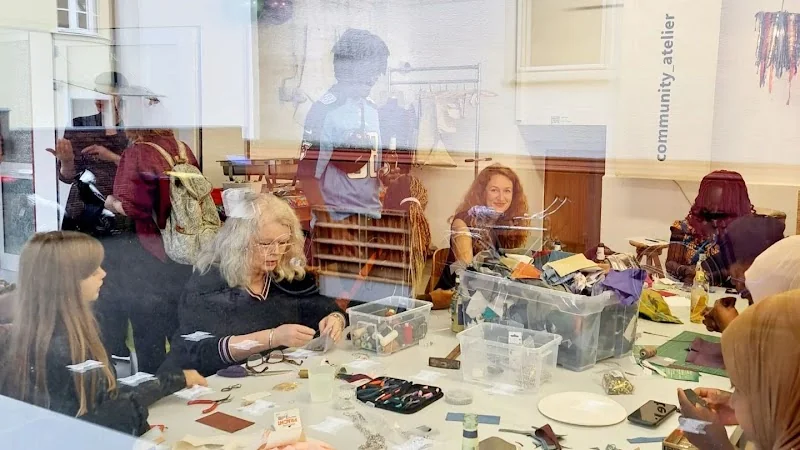
The Community Atelier at Stapenhorststraße 83 in Bielefeld is more than just a place to sew: it is an open space for encounters, exchange, and textile creativity. The organization Afrika Wakati e. V. describes the project as a cost- and consumption-free, fully equipped sewing atelier where people can work on their own projects, learn together, and exchange ideas about materials, techniques, and concepts. Since its opening in July 2023, the atelier has developed into a meeting point where textile practice, social participation, and community are consciously thought together. The fact that the place serves as both a craft infrastructure and a social meeting space is also reflected in the mix of open atelier hours, thematic workshops, and community-oriented formats. ([afrika-wakati.org](https://www.afrika-wakati.org/portfolio/community-atelier-2023-2026))
What is the Community Atelier of Afrika Wakati e. V.?
The basic idea of the Community Atelier is clear and accessible: people should find a place where they can work with textiles without it automatically becoming a commercial offering or a traditional course operation. Afrika Wakati e. V. describes the atelier as a space for encounters and exchange, where one can get to know each other through creative work with fabrics and develop joint projects. The open character is particularly important. The atelier is not only intended for experienced sewers but also for people who are simply curious, want to repair their own clothing, or are looking for a social space to engage in conversation. This openness aligns with the history of the association: Afrika Wakati e. V. was founded in May 2021 in Bielefeld and sees itself as a non-profit organization that connects integration, education, intercultural dialogue, and a clear stance against racism. The Community Atelier is therefore not an isolated creative project but a visible building block of a larger social and cultural effort. ([afrika-wakati.org](https://www.afrika-wakati.org/portfolio/community-atelier-2023-2026))
Feedback from local media also shows how the concept works: In a NRWision report, the atelier is described as a meeting place for people from different cultures, initiated by the association in 2023. This shift in perspective is important for the positioning of the place. Those searching for Community Atelier Bielefeld are often looking not just for an address but for a place with values: open, supportive, practical, and communal. The atelier combines textile skills with low-threshold participation. This means that one does not just consume but also creates, repairs, upcycles, and shares experiences. This creates a space where craft learning and social encounters do not stand side by side but reinforce each other. For SEO, this combination is particularly valuable because it serves multiple search intents simultaneously: information seeking, orientation, workshop interest, and local community interest. ([nrwision.de](https://www.nrwision.de/mediathek/das-community-atelier-in-bielefeld-feiert-sein-einjaehriges-jubilaeum-240821/))
Opening Hours, Workshops, and Textile Project Work
The regular opening hours are a central search and usage factor for the Community Atelier. On the official project page, Afrika Wakati e. V. states the following opening hours starting in April: Tuesdays a crochet and knitting group from 5:00 PM to 8:00 PM, Wednesdays from 3:00 PM to 8:00 PM, Thursdays from 10:00 AM to 3:00 PM, and on the first and third Saturday of the month from 12:00 PM to 3:00 PM, unless a workshop program is announced. The page also documents that the atelier has been open since July 1, 2023, and the initial openings and reflections were strongly characterized by spontaneous projects, exchange, and shared use. Therefore, those looking for Community Atelier opening hours will find a place with fixed times but consciously flexible usage. This is important because the offerings are not only oriented towards traditional course calendars but also towards open workshop moments where people can bring their ideas. ([afrika-wakati.org](https://www.afrika-wakati.org/portfolio/community-atelier-2023-2026))
The workshop offerings complement these open times with structured learning formats. The project page mentions basic tutorials on cutting, ironing, sewing machines, and overlock. Additionally, current entries on Bielefeld.JETZT show that textile courses are continuously taking place at the Community Atelier, including basic sewing, T-shirt sewing, waistband and hem variations, as well as workshops for beginners working on a specific project like a shopper or a jersey shirt. This variety is strong for SEO because it consolidates search terms like sewing, workshop, upcycling, overlock, jersey, and beginner in a local context. At the same time, the event lists make it clear that the atelier does not offer just one type of format but a whole learning landscape: from entry-level sewing to material knowledge to advanced processing techniques. For visitors, this is attractive because they can find very different entry points depending on their prior knowledge. ([afrika-wakati.org](https://www.afrika-wakati.org/portfolio/community-atelier-2023-2026))
Important for practice is also the organizational framework. Afrika Wakati e. V. states on the project page that workshops take place during regular opening hours, require reservations, and have a maximum participant number of 10 people. Prior binding registration is required for workshops. This speaks for a personal, well-supported learning environment rather than mass operation. For seekers, this is relevant because the questions are often very specific: Do I need to register? How big is the group? Can I just drop by? The answers are clear: For open atelier times, one can stick to the regular slots; for courses, registration is necessary. This makes the Community Atelier particularly suitable for people who want to learn textile work not alone in a quiet room but in exchange with others. ([afrika-wakati.org](https://www.afrika-wakati.org/portfolio/community-atelier-2023-2026))
Address, Location, and Directions in Bielefeld
The address of the Community Atelier is Stapenhorststraße 83, 33615 Bielefeld. This information is provided on the official project page of Afrika Wakati e. V. and also appears on several local event and course pages. In the event entries from Bielefeld.JETZT, the location is additionally assigned to the Bielefeld-Mitte district. For users searching for address, location, or directions, this is an important orientation because the place is well located within the urban structure of Bielefeld. The atelier is therefore not remote but part of an urban area where cultural and social offerings mix. For local SEO, the combination of name, street, postal code, and city is particularly strong because many search queries are made in this form. ([afrika-wakati.org](https://www.afrika-wakati.org/portfolio/community-atelier-2023-2026))
For directions, official city documents clearly indicate public transport: The current public transport plan of the city of Bielefeld lists bus lines 61 and 83 in connection with Stapenhorststraße. This is a useful hint for anyone wanting to reach the Community Atelier by bus and train. Since no specific parking space is explicitly mentioned in the found official sources, it is advisable to plan the journey by public transport or on foot and to check the current traffic situation around Stapenhorststraße in advance when traveling by car. This caution is particularly warranted because Stapenhorststraße regularly appears in urban documents as an important traffic axis in Bielefeld. For visitors, this means: The location is well connected, but a specific parking guarantee is not advertised by the verified sources. ([bielefeld.de](https://www.bielefeld.de/sites/default/files/datei/2021/Nahverkehrsplan_Dezember-2021.pdf?utm_source=openai))
Those searching for directions or parking usually seek a reliable practical recommendation. From the researched sources, a clear tendency emerges: Traveling by public transport is more straightforward than searching for a fixed parking spot. Because the street is anchored in urban traffic documents and regular event listings repeatedly confirm the location, the Community Atelier is easily findable. At the same time, especially for workshop dates or events, one should plan enough time for arrival, as it can be sensible to briefly inquire on-site about the exact entrance or current daily notes. For the SEO strategy, this means: Search terms like address, directions, Bielefeld-Mitte, and opening hours are particularly closely connected here. ([afrika-wakati.org](https://www.afrika-wakati.org/portfolio/community-atelier-2023-2026))
Facilities: Sewing Atelier, Kitchen, and Fabric Storage
The facilities of the Community Atelier are a central feature of the place because they make the project practically usable. On the official page, Afrika Wakati e. V. speaks of a fully equipped sewing atelier. The barrier-free assessment in Bielefeld additionally mentions a kitchen, a sewing atelier, and a fabric storage. Together, this creates the image of a very functional creative space: fabrics are stored, work steps can be implemented directly on-site, and a kitchen is available for breaks, planning, or joint organizing. This is important not only for workshops but also for spontaneous projects where people come with their own materials or continue working together on-site. Especially for textile formats, this type of infrastructure is a real advantage because it creates little friction between idea and finished result. ([afrika-wakati.org](https://www.afrika-wakati.org/portfolio/community-atelier-2023-2026))
Moreover, the atelier is not limited to a single technique. The project page mentions practical support for individual projects, and the workshop texts on Bielefeld.JETZT show that work is done on-site with sewing machines, overlock, jersey, patterns, cuffs, hems, and upcycling. This makes it clear that the Community Atelier is interesting for both beginners and people with prior experience. The facilities are therefore not only spatially but also didactically relevant: they allow for simple basics as well as advanced processing techniques. For search intents related to sewing atelier, fabric storage, workshop, overlock, and textile work, this is perfect because visitors here expect not only a space but a real working environment. The fact that such formats also appear in partner offerings like repair cafés, basic sewing, or clothing workshops further demonstrates the broad practical utility of the place. ([afrika-wakati.org](https://www.afrika-wakati.org/portfolio/community-atelier-2023-2026))
Particularly strong is the mix of self-help, learning, and community. Those wanting to shorten pants, repair a shirt, sew a shopper, or reuse textile scraps will find not only machines here but also a framework in which questions can be asked and steps explained. This mix makes the Community Atelier relevant for Bielefeld: it is not simply a workshop but a place where the facilities support the social idea. The kitchen, sewing atelier, and fabric storage are therefore not just spaces but functional building blocks of a project that aims to make creative practice accessible and communal. For SEO, this section is important because search queries related to facilities, space, sewing machine, overlock, fabric storage, and kitchen can be answered directly here. ([bielefeld-barrierefrei.de](https://bielefeld-barrierefrei.de/gebaeude/community-atelier-afrika-wakati-e-v/))
Encounters, Upcycling, and the Importance for Bielefeld
The social and cultural value of the Community Atelier is evident from its history. The official project page reports on the opening on July 1, 2023, and the very lively first kickoff with a DIY table, conversations, African finger food, and a musical program. The NRWision report on the one-year anniversary explicitly categorizes the atelier as a meeting place where people from different cultures come together. This perspective makes the place particularly special for Bielefeld: it is not just a workshop for textile questions but also a space where people can connect who might never have met otherwise. In a city where integration, cultural participation, and social networking are important topics, a practical place for everyday encounters is created here. ([afrika-wakati.org](https://www.afrika-wakati.org/portfolio/community-atelier-2023-2026))
The event landscape around the atelier also shows this effect. Bielefeld.JETZT lists, for example, an upcycling bazaar at the Community Atelier as well as a winter celebration with a bazaar and swap party. It becomes clear that textile creativity does not only take place in a quiet sewing process but also as a communal event with exchange, passing on, and reusing. This is content-rich because terms like upcycling, bazaar, swap party, sewing atelier, and community merge together. Particularly noteworthy is that, according to the event description, proceeds from such actions directly benefit the maintenance of the Community Atelier. This means that the place is supported both economically and socially. For visitors, this is a positive signal: those who participate there not only support an offering but a vibrant community project. ([bielefeld.jetzt](https://www.bielefeld.jetzt/node/1412212?utm_source=openai))
The larger embedding of the project also explains why the place is relevant beyond just sewing. According to the Municipal Integration Center Bielefeld, Afrika Wakati e. V. works on social cohesion, strengthening the African diaspora, and on education and integration. The Community Atelier is a particularly illustrative project within this framework because it connects all these topics in a practical way: people work with fabrics, learn from each other, organize workshops, invite to open times, and thereby create a place where encounters are not abstract but visible and usable. For the city, this is a gain because a sewing atelier becomes a social anchor point. For seekers, it is also attractive because the search for Community Atelier Bielefeld, Afrika Wakati e. V., or project work Africa leads here to a concrete, real, and well-explained place. ([ki-bielefeld.de](https://ki-bielefeld.de/beratungsstellen/afrika-wakati-e-v/))
Sources:
- Afrika Wakati e. V. - Community Atelier 2023-2026
- Afrika Wakati e. V. - Who are we?
- Municipal Integration Center Bielefeld - Afrika Wakati e. V.
- NRWision - The Community Atelier in Bielefeld celebrates its one-year anniversary
- Bielefeld.JETZT - Upcycling Bazaar at the Community Atelier
- Bielefeld.JETZT - Basic Sewing
- City of Bielefeld - Public Transport Plan 2021
Mehr anzeigenWeniger anzeigen
Community Atelier | Opening Hours & Sewing Atelier
The Community Atelier at Stapenhorststraße 83 in Bielefeld is more than just a place to sew: it is an open space for encounters, exchange, and textile creativity. The organization Afrika Wakati e. V. describes the project as a cost- and consumption-free, fully equipped sewing atelier where people can work on their own projects, learn together, and exchange ideas about materials, techniques, and concepts. Since its opening in July 2023, the atelier has developed into a meeting point where textile practice, social participation, and community are consciously thought together. The fact that the place serves as both a craft infrastructure and a social meeting space is also reflected in the mix of open atelier hours, thematic workshops, and community-oriented formats. ([afrika-wakati.org](https://www.afrika-wakati.org/portfolio/community-atelier-2023-2026))
What is the Community Atelier of Afrika Wakati e. V.?
The basic idea of the Community Atelier is clear and accessible: people should find a place where they can work with textiles without it automatically becoming a commercial offering or a traditional course operation. Afrika Wakati e. V. describes the atelier as a space for encounters and exchange, where one can get to know each other through creative work with fabrics and develop joint projects. The open character is particularly important. The atelier is not only intended for experienced sewers but also for people who are simply curious, want to repair their own clothing, or are looking for a social space to engage in conversation. This openness aligns with the history of the association: Afrika Wakati e. V. was founded in May 2021 in Bielefeld and sees itself as a non-profit organization that connects integration, education, intercultural dialogue, and a clear stance against racism. The Community Atelier is therefore not an isolated creative project but a visible building block of a larger social and cultural effort. ([afrika-wakati.org](https://www.afrika-wakati.org/portfolio/community-atelier-2023-2026))
Feedback from local media also shows how the concept works: In a NRWision report, the atelier is described as a meeting place for people from different cultures, initiated by the association in 2023. This shift in perspective is important for the positioning of the place. Those searching for Community Atelier Bielefeld are often looking not just for an address but for a place with values: open, supportive, practical, and communal. The atelier combines textile skills with low-threshold participation. This means that one does not just consume but also creates, repairs, upcycles, and shares experiences. This creates a space where craft learning and social encounters do not stand side by side but reinforce each other. For SEO, this combination is particularly valuable because it serves multiple search intents simultaneously: information seeking, orientation, workshop interest, and local community interest. ([nrwision.de](https://www.nrwision.de/mediathek/das-community-atelier-in-bielefeld-feiert-sein-einjaehriges-jubilaeum-240821/))
Opening Hours, Workshops, and Textile Project Work
The regular opening hours are a central search and usage factor for the Community Atelier. On the official project page, Afrika Wakati e. V. states the following opening hours starting in April: Tuesdays a crochet and knitting group from 5:00 PM to 8:00 PM, Wednesdays from 3:00 PM to 8:00 PM, Thursdays from 10:00 AM to 3:00 PM, and on the first and third Saturday of the month from 12:00 PM to 3:00 PM, unless a workshop program is announced. The page also documents that the atelier has been open since July 1, 2023, and the initial openings and reflections were strongly characterized by spontaneous projects, exchange, and shared use. Therefore, those looking for Community Atelier opening hours will find a place with fixed times but consciously flexible usage. This is important because the offerings are not only oriented towards traditional course calendars but also towards open workshop moments where people can bring their ideas. ([afrika-wakati.org](https://www.afrika-wakati.org/portfolio/community-atelier-2023-2026))
The workshop offerings complement these open times with structured learning formats. The project page mentions basic tutorials on cutting, ironing, sewing machines, and overlock. Additionally, current entries on Bielefeld.JETZT show that textile courses are continuously taking place at the Community Atelier, including basic sewing, T-shirt sewing, waistband and hem variations, as well as workshops for beginners working on a specific project like a shopper or a jersey shirt. This variety is strong for SEO because it consolidates search terms like sewing, workshop, upcycling, overlock, jersey, and beginner in a local context. At the same time, the event lists make it clear that the atelier does not offer just one type of format but a whole learning landscape: from entry-level sewing to material knowledge to advanced processing techniques. For visitors, this is attractive because they can find very different entry points depending on their prior knowledge. ([afrika-wakati.org](https://www.afrika-wakati.org/portfolio/community-atelier-2023-2026))
Important for practice is also the organizational framework. Afrika Wakati e. V. states on the project page that workshops take place during regular opening hours, require reservations, and have a maximum participant number of 10 people. Prior binding registration is required for workshops. This speaks for a personal, well-supported learning environment rather than mass operation. For seekers, this is relevant because the questions are often very specific: Do I need to register? How big is the group? Can I just drop by? The answers are clear: For open atelier times, one can stick to the regular slots; for courses, registration is necessary. This makes the Community Atelier particularly suitable for people who want to learn textile work not alone in a quiet room but in exchange with others. ([afrika-wakati.org](https://www.afrika-wakati.org/portfolio/community-atelier-2023-2026))
Address, Location, and Directions in Bielefeld
The address of the Community Atelier is Stapenhorststraße 83, 33615 Bielefeld. This information is provided on the official project page of Afrika Wakati e. V. and also appears on several local event and course pages. In the event entries from Bielefeld.JETZT, the location is additionally assigned to the Bielefeld-Mitte district. For users searching for address, location, or directions, this is an important orientation because the place is well located within the urban structure of Bielefeld. The atelier is therefore not remote but part of an urban area where cultural and social offerings mix. For local SEO, the combination of name, street, postal code, and city is particularly strong because many search queries are made in this form. ([afrika-wakati.org](https://www.afrika-wakati.org/portfolio/community-atelier-2023-2026))
For directions, official city documents clearly indicate public transport: The current public transport plan of the city of Bielefeld lists bus lines 61 and 83 in connection with Stapenhorststraße. This is a useful hint for anyone wanting to reach the Community Atelier by bus and train. Since no specific parking space is explicitly mentioned in the found official sources, it is advisable to plan the journey by public transport or on foot and to check the current traffic situation around Stapenhorststraße in advance when traveling by car. This caution is particularly warranted because Stapenhorststraße regularly appears in urban documents as an important traffic axis in Bielefeld. For visitors, this means: The location is well connected, but a specific parking guarantee is not advertised by the verified sources. ([bielefeld.de](https://www.bielefeld.de/sites/default/files/datei/2021/Nahverkehrsplan_Dezember-2021.pdf?utm_source=openai))
Those searching for directions or parking usually seek a reliable practical recommendation. From the researched sources, a clear tendency emerges: Traveling by public transport is more straightforward than searching for a fixed parking spot. Because the street is anchored in urban traffic documents and regular event listings repeatedly confirm the location, the Community Atelier is easily findable. At the same time, especially for workshop dates or events, one should plan enough time for arrival, as it can be sensible to briefly inquire on-site about the exact entrance or current daily notes. For the SEO strategy, this means: Search terms like address, directions, Bielefeld-Mitte, and opening hours are particularly closely connected here. ([afrika-wakati.org](https://www.afrika-wakati.org/portfolio/community-atelier-2023-2026))
Facilities: Sewing Atelier, Kitchen, and Fabric Storage
The facilities of the Community Atelier are a central feature of the place because they make the project practically usable. On the official page, Afrika Wakati e. V. speaks of a fully equipped sewing atelier. The barrier-free assessment in Bielefeld additionally mentions a kitchen, a sewing atelier, and a fabric storage. Together, this creates the image of a very functional creative space: fabrics are stored, work steps can be implemented directly on-site, and a kitchen is available for breaks, planning, or joint organizing. This is important not only for workshops but also for spontaneous projects where people come with their own materials or continue working together on-site. Especially for textile formats, this type of infrastructure is a real advantage because it creates little friction between idea and finished result. ([afrika-wakati.org](https://www.afrika-wakati.org/portfolio/community-atelier-2023-2026))
Moreover, the atelier is not limited to a single technique. The project page mentions practical support for individual projects, and the workshop texts on Bielefeld.JETZT show that work is done on-site with sewing machines, overlock, jersey, patterns, cuffs, hems, and upcycling. This makes it clear that the Community Atelier is interesting for both beginners and people with prior experience. The facilities are therefore not only spatially but also didactically relevant: they allow for simple basics as well as advanced processing techniques. For search intents related to sewing atelier, fabric storage, workshop, overlock, and textile work, this is perfect because visitors here expect not only a space but a real working environment. The fact that such formats also appear in partner offerings like repair cafés, basic sewing, or clothing workshops further demonstrates the broad practical utility of the place. ([afrika-wakati.org](https://www.afrika-wakati.org/portfolio/community-atelier-2023-2026))
Particularly strong is the mix of self-help, learning, and community. Those wanting to shorten pants, repair a shirt, sew a shopper, or reuse textile scraps will find not only machines here but also a framework in which questions can be asked and steps explained. This mix makes the Community Atelier relevant for Bielefeld: it is not simply a workshop but a place where the facilities support the social idea. The kitchen, sewing atelier, and fabric storage are therefore not just spaces but functional building blocks of a project that aims to make creative practice accessible and communal. For SEO, this section is important because search queries related to facilities, space, sewing machine, overlock, fabric storage, and kitchen can be answered directly here. ([bielefeld-barrierefrei.de](https://bielefeld-barrierefrei.de/gebaeude/community-atelier-afrika-wakati-e-v/))
Encounters, Upcycling, and the Importance for Bielefeld
The social and cultural value of the Community Atelier is evident from its history. The official project page reports on the opening on July 1, 2023, and the very lively first kickoff with a DIY table, conversations, African finger food, and a musical program. The NRWision report on the one-year anniversary explicitly categorizes the atelier as a meeting place where people from different cultures come together. This perspective makes the place particularly special for Bielefeld: it is not just a workshop for textile questions but also a space where people can connect who might never have met otherwise. In a city where integration, cultural participation, and social networking are important topics, a practical place for everyday encounters is created here. ([afrika-wakati.org](https://www.afrika-wakati.org/portfolio/community-atelier-2023-2026))
The event landscape around the atelier also shows this effect. Bielefeld.JETZT lists, for example, an upcycling bazaar at the Community Atelier as well as a winter celebration with a bazaar and swap party. It becomes clear that textile creativity does not only take place in a quiet sewing process but also as a communal event with exchange, passing on, and reusing. This is content-rich because terms like upcycling, bazaar, swap party, sewing atelier, and community merge together. Particularly noteworthy is that, according to the event description, proceeds from such actions directly benefit the maintenance of the Community Atelier. This means that the place is supported both economically and socially. For visitors, this is a positive signal: those who participate there not only support an offering but a vibrant community project. ([bielefeld.jetzt](https://www.bielefeld.jetzt/node/1412212?utm_source=openai))
The larger embedding of the project also explains why the place is relevant beyond just sewing. According to the Municipal Integration Center Bielefeld, Afrika Wakati e. V. works on social cohesion, strengthening the African diaspora, and on education and integration. The Community Atelier is a particularly illustrative project within this framework because it connects all these topics in a practical way: people work with fabrics, learn from each other, organize workshops, invite to open times, and thereby create a place where encounters are not abstract but visible and usable. For the city, this is a gain because a sewing atelier becomes a social anchor point. For seekers, it is also attractive because the search for Community Atelier Bielefeld, Afrika Wakati e. V., or project work Africa leads here to a concrete, real, and well-explained place. ([ki-bielefeld.de](https://ki-bielefeld.de/beratungsstellen/afrika-wakati-e-v/))
Sources:
- Afrika Wakati e. V. - Community Atelier 2023-2026
- Afrika Wakati e. V. - Who are we?
- Municipal Integration Center Bielefeld - Afrika Wakati e. V.
- NRWision - The Community Atelier in Bielefeld celebrates its one-year anniversary
- Bielefeld.JETZT - Upcycling Bazaar at the Community Atelier
- Bielefeld.JETZT - Basic Sewing
- City of Bielefeld - Public Transport Plan 2021
Community Atelier | Opening Hours & Sewing Atelier
The Community Atelier at Stapenhorststraße 83 in Bielefeld is more than just a place to sew: it is an open space for encounters, exchange, and textile creativity. The organization Afrika Wakati e. V. describes the project as a cost- and consumption-free, fully equipped sewing atelier where people can work on their own projects, learn together, and exchange ideas about materials, techniques, and concepts. Since its opening in July 2023, the atelier has developed into a meeting point where textile practice, social participation, and community are consciously thought together. The fact that the place serves as both a craft infrastructure and a social meeting space is also reflected in the mix of open atelier hours, thematic workshops, and community-oriented formats. ([afrika-wakati.org](https://www.afrika-wakati.org/portfolio/community-atelier-2023-2026))
What is the Community Atelier of Afrika Wakati e. V.?
The basic idea of the Community Atelier is clear and accessible: people should find a place where they can work with textiles without it automatically becoming a commercial offering or a traditional course operation. Afrika Wakati e. V. describes the atelier as a space for encounters and exchange, where one can get to know each other through creative work with fabrics and develop joint projects. The open character is particularly important. The atelier is not only intended for experienced sewers but also for people who are simply curious, want to repair their own clothing, or are looking for a social space to engage in conversation. This openness aligns with the history of the association: Afrika Wakati e. V. was founded in May 2021 in Bielefeld and sees itself as a non-profit organization that connects integration, education, intercultural dialogue, and a clear stance against racism. The Community Atelier is therefore not an isolated creative project but a visible building block of a larger social and cultural effort. ([afrika-wakati.org](https://www.afrika-wakati.org/portfolio/community-atelier-2023-2026))
Feedback from local media also shows how the concept works: In a NRWision report, the atelier is described as a meeting place for people from different cultures, initiated by the association in 2023. This shift in perspective is important for the positioning of the place. Those searching for Community Atelier Bielefeld are often looking not just for an address but for a place with values: open, supportive, practical, and communal. The atelier combines textile skills with low-threshold participation. This means that one does not just consume but also creates, repairs, upcycles, and shares experiences. This creates a space where craft learning and social encounters do not stand side by side but reinforce each other. For SEO, this combination is particularly valuable because it serves multiple search intents simultaneously: information seeking, orientation, workshop interest, and local community interest. ([nrwision.de](https://www.nrwision.de/mediathek/das-community-atelier-in-bielefeld-feiert-sein-einjaehriges-jubilaeum-240821/))
Opening Hours, Workshops, and Textile Project Work
The regular opening hours are a central search and usage factor for the Community Atelier. On the official project page, Afrika Wakati e. V. states the following opening hours starting in April: Tuesdays a crochet and knitting group from 5:00 PM to 8:00 PM, Wednesdays from 3:00 PM to 8:00 PM, Thursdays from 10:00 AM to 3:00 PM, and on the first and third Saturday of the month from 12:00 PM to 3:00 PM, unless a workshop program is announced. The page also documents that the atelier has been open since July 1, 2023, and the initial openings and reflections were strongly characterized by spontaneous projects, exchange, and shared use. Therefore, those looking for Community Atelier opening hours will find a place with fixed times but consciously flexible usage. This is important because the offerings are not only oriented towards traditional course calendars but also towards open workshop moments where people can bring their ideas. ([afrika-wakati.org](https://www.afrika-wakati.org/portfolio/community-atelier-2023-2026))
The workshop offerings complement these open times with structured learning formats. The project page mentions basic tutorials on cutting, ironing, sewing machines, and overlock. Additionally, current entries on Bielefeld.JETZT show that textile courses are continuously taking place at the Community Atelier, including basic sewing, T-shirt sewing, waistband and hem variations, as well as workshops for beginners working on a specific project like a shopper or a jersey shirt. This variety is strong for SEO because it consolidates search terms like sewing, workshop, upcycling, overlock, jersey, and beginner in a local context. At the same time, the event lists make it clear that the atelier does not offer just one type of format but a whole learning landscape: from entry-level sewing to material knowledge to advanced processing techniques. For visitors, this is attractive because they can find very different entry points depending on their prior knowledge. ([afrika-wakati.org](https://www.afrika-wakati.org/portfolio/community-atelier-2023-2026))
Important for practice is also the organizational framework. Afrika Wakati e. V. states on the project page that workshops take place during regular opening hours, require reservations, and have a maximum participant number of 10 people. Prior binding registration is required for workshops. This speaks for a personal, well-supported learning environment rather than mass operation. For seekers, this is relevant because the questions are often very specific: Do I need to register? How big is the group? Can I just drop by? The answers are clear: For open atelier times, one can stick to the regular slots; for courses, registration is necessary. This makes the Community Atelier particularly suitable for people who want to learn textile work not alone in a quiet room but in exchange with others. ([afrika-wakati.org](https://www.afrika-wakati.org/portfolio/community-atelier-2023-2026))
Address, Location, and Directions in Bielefeld
The address of the Community Atelier is Stapenhorststraße 83, 33615 Bielefeld. This information is provided on the official project page of Afrika Wakati e. V. and also appears on several local event and course pages. In the event entries from Bielefeld.JETZT, the location is additionally assigned to the Bielefeld-Mitte district. For users searching for address, location, or directions, this is an important orientation because the place is well located within the urban structure of Bielefeld. The atelier is therefore not remote but part of an urban area where cultural and social offerings mix. For local SEO, the combination of name, street, postal code, and city is particularly strong because many search queries are made in this form. ([afrika-wakati.org](https://www.afrika-wakati.org/portfolio/community-atelier-2023-2026))
For directions, official city documents clearly indicate public transport: The current public transport plan of the city of Bielefeld lists bus lines 61 and 83 in connection with Stapenhorststraße. This is a useful hint for anyone wanting to reach the Community Atelier by bus and train. Since no specific parking space is explicitly mentioned in the found official sources, it is advisable to plan the journey by public transport or on foot and to check the current traffic situation around Stapenhorststraße in advance when traveling by car. This caution is particularly warranted because Stapenhorststraße regularly appears in urban documents as an important traffic axis in Bielefeld. For visitors, this means: The location is well connected, but a specific parking guarantee is not advertised by the verified sources. ([bielefeld.de](https://www.bielefeld.de/sites/default/files/datei/2021/Nahverkehrsplan_Dezember-2021.pdf?utm_source=openai))
Those searching for directions or parking usually seek a reliable practical recommendation. From the researched sources, a clear tendency emerges: Traveling by public transport is more straightforward than searching for a fixed parking spot. Because the street is anchored in urban traffic documents and regular event listings repeatedly confirm the location, the Community Atelier is easily findable. At the same time, especially for workshop dates or events, one should plan enough time for arrival, as it can be sensible to briefly inquire on-site about the exact entrance or current daily notes. For the SEO strategy, this means: Search terms like address, directions, Bielefeld-Mitte, and opening hours are particularly closely connected here. ([afrika-wakati.org](https://www.afrika-wakati.org/portfolio/community-atelier-2023-2026))
Facilities: Sewing Atelier, Kitchen, and Fabric Storage
The facilities of the Community Atelier are a central feature of the place because they make the project practically usable. On the official page, Afrika Wakati e. V. speaks of a fully equipped sewing atelier. The barrier-free assessment in Bielefeld additionally mentions a kitchen, a sewing atelier, and a fabric storage. Together, this creates the image of a very functional creative space: fabrics are stored, work steps can be implemented directly on-site, and a kitchen is available for breaks, planning, or joint organizing. This is important not only for workshops but also for spontaneous projects where people come with their own materials or continue working together on-site. Especially for textile formats, this type of infrastructure is a real advantage because it creates little friction between idea and finished result. ([afrika-wakati.org](https://www.afrika-wakati.org/portfolio/community-atelier-2023-2026))
Moreover, the atelier is not limited to a single technique. The project page mentions practical support for individual projects, and the workshop texts on Bielefeld.JETZT show that work is done on-site with sewing machines, overlock, jersey, patterns, cuffs, hems, and upcycling. This makes it clear that the Community Atelier is interesting for both beginners and people with prior experience. The facilities are therefore not only spatially but also didactically relevant: they allow for simple basics as well as advanced processing techniques. For search intents related to sewing atelier, fabric storage, workshop, overlock, and textile work, this is perfect because visitors here expect not only a space but a real working environment. The fact that such formats also appear in partner offerings like repair cafés, basic sewing, or clothing workshops further demonstrates the broad practical utility of the place. ([afrika-wakati.org](https://www.afrika-wakati.org/portfolio/community-atelier-2023-2026))
Particularly strong is the mix of self-help, learning, and community. Those wanting to shorten pants, repair a shirt, sew a shopper, or reuse textile scraps will find not only machines here but also a framework in which questions can be asked and steps explained. This mix makes the Community Atelier relevant for Bielefeld: it is not simply a workshop but a place where the facilities support the social idea. The kitchen, sewing atelier, and fabric storage are therefore not just spaces but functional building blocks of a project that aims to make creative practice accessible and communal. For SEO, this section is important because search queries related to facilities, space, sewing machine, overlock, fabric storage, and kitchen can be answered directly here. ([bielefeld-barrierefrei.de](https://bielefeld-barrierefrei.de/gebaeude/community-atelier-afrika-wakati-e-v/))
Encounters, Upcycling, and the Importance for Bielefeld
The social and cultural value of the Community Atelier is evident from its history. The official project page reports on the opening on July 1, 2023, and the very lively first kickoff with a DIY table, conversations, African finger food, and a musical program. The NRWision report on the one-year anniversary explicitly categorizes the atelier as a meeting place where people from different cultures come together. This perspective makes the place particularly special for Bielefeld: it is not just a workshop for textile questions but also a space where people can connect who might never have met otherwise. In a city where integration, cultural participation, and social networking are important topics, a practical place for everyday encounters is created here. ([afrika-wakati.org](https://www.afrika-wakati.org/portfolio/community-atelier-2023-2026))
The event landscape around the atelier also shows this effect. Bielefeld.JETZT lists, for example, an upcycling bazaar at the Community Atelier as well as a winter celebration with a bazaar and swap party. It becomes clear that textile creativity does not only take place in a quiet sewing process but also as a communal event with exchange, passing on, and reusing. This is content-rich because terms like upcycling, bazaar, swap party, sewing atelier, and community merge together. Particularly noteworthy is that, according to the event description, proceeds from such actions directly benefit the maintenance of the Community Atelier. This means that the place is supported both economically and socially. For visitors, this is a positive signal: those who participate there not only support an offering but a vibrant community project. ([bielefeld.jetzt](https://www.bielefeld.jetzt/node/1412212?utm_source=openai))
The larger embedding of the project also explains why the place is relevant beyond just sewing. According to the Municipal Integration Center Bielefeld, Afrika Wakati e. V. works on social cohesion, strengthening the African diaspora, and on education and integration. The Community Atelier is a particularly illustrative project within this framework because it connects all these topics in a practical way: people work with fabrics, learn from each other, organize workshops, invite to open times, and thereby create a place where encounters are not abstract but visible and usable. For the city, this is a gain because a sewing atelier becomes a social anchor point. For seekers, it is also attractive because the search for Community Atelier Bielefeld, Afrika Wakati e. V., or project work Africa leads here to a concrete, real, and well-explained place. ([ki-bielefeld.de](https://ki-bielefeld.de/beratungsstellen/afrika-wakati-e-v/))
Sources:
- Afrika Wakati e. V. - Community Atelier 2023-2026
- Afrika Wakati e. V. - Who are we?
- Municipal Integration Center Bielefeld - Afrika Wakati e. V.
- NRWision - The Community Atelier in Bielefeld celebrates its one-year anniversary
- Bielefeld.JETZT - Upcycling Bazaar at the Community Atelier
- Bielefeld.JETZT - Basic Sewing
- City of Bielefeld - Public Transport Plan 2021
Upcoming Events
No events found
Frequently Asked Questions
Reviews
No reviews found