
Bielefeld
Teutoburger Str. 106, 33607 Bielefeld, Deutschland
International Meeting Center Friedenshaus e.V.| Photos & Location
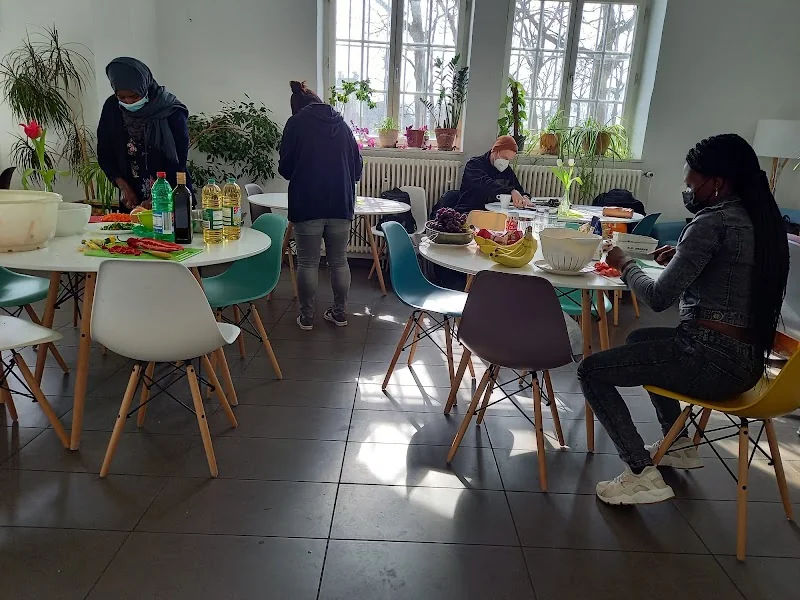
The International Meeting Center Friedenshaus e.V. at Teutoburger Straße 106 in Bielefeld is much more than a classic event venue. The house sees itself as an open meeting place for people with and without a migration background, a place for education, counseling, political debate, and cultural encounters. Since its founding in 1981, the IBZ has developed into a fixed address for diversity, participation, and shared learning. Those looking for a location that combines integration courses, language offerings, political education, and cultural events under one roof will find a profile here with a clear stance and real practical relevance. The official self-presentation emphasizes openness, encounter, and the idea that integration succeeds particularly well where people come together to talk and take on shared responsibility. ([ibz-bielefeld.de](https://ibz-bielefeld.de/en/about-us/?utm_source=openai))
History of the International Meeting Center Friedenshaus e.V.
The history of the IBZ began in 1981 with people from Bielefeld who wanted to create a self-organized meeting place together. According to the official website, the center emerged from a coalition of people with and without migration experience who wanted to build a space for exchange, political communication, and advocacy. This origin is crucial for the current positioning of the house: the IBZ was not created as a neutral consumption place, but as a consciously designed social and cultural space. That is why the history of the house reads like a piece of city history, in which migration, engagement, and educational work are closely intertwined. A particularly important step was the move to the Old Lodging House in 1982. The building was previously a place where workers from various parts of Europe had lived. This historical connection between living, working, and cultural diversity fits remarkably well with the later role of the house as a place for coexistence and participation. ([ibz-bielefeld.de](https://ibz-bielefeld.de/en/about-us/?utm_source=openai))
Over the decades, this idea has turned into a vibrant house where around 30 migrant communities are now organized. The official site describes these house groups as an important part of everyday life at the IBZ. They make it clear that the center not only offers events but also structurally creates space for self-organization. This is a crucial difference from many other locations: here, not only the stage program and bookings are the focus, but the ongoing work on community, participation, and social visibility. The mission statement page formulates this particularly clearly when it advocates for the full societal, social, political, and cultural participation of all people and positions itself against racism, discrimination, and social exclusion. In practice, this means: the IBZ is not a place for short-lived effects, but a house with a stance that has developed over many years as a reliable anchor for Bielefeld. For inquiries about history, special features, and background, this origin provides the strongest added value. ([ibz-bielefeld.de](https://ibz-bielefeld.de/hausgruppen/?utm_source=openai))
Integration Courses, Language Courses, and Counseling at IBZ Bielefeld
A central search interest related to the IBZ concerns integration courses, language courses, and counseling. The official homepage clearly states these focal points: the house offers integration courses for adults with BAMF funding, general courses, literacy, and other language learning offerings. This is complemented by free or low-threshold support in everyday life, including migration counseling, family support, and assistance with important life questions. The simple language version of the website also confirms this broad practice: it explicitly mentions counseling for people who have come to Germany from other countries, integration courses, a language café, and a meeting offer for women. This makes it clear that the IBZ is not only an educational institution but also a service point for everyday life. So, for those looking for help settling in Bielefeld, this is not just a course location but also a contact point with multiple levels of support. This is particularly relevant for people seeking a place with social, linguistic, and organizational support. ([ibz-bielefeld.de](https://ibz-bielefeld.de/en/?utm_source=openai))
Particularly important is the connection between language, education, and orientation. On a course page, the IBZ describes the integration course as a combination of language course and orientation course; another official course reference mentions the German test for immigrants and makes it clear that the house also plays a role in examination and qualification topics. For the content orientation of the house, this is a strong signal: language is not understood here as an isolated learning goal, but as a key to social participation, independence, and political maturity. Therefore, offerings such as language cafés, women's meetings, children's and youth areas, and creative learning formats are also present on the website. In SEO terms, this is a broad semantic field of integration courses, language courses, literacy, counseling, women's café, migration counseling, and educational offerings. These terms reflect the real usage interest and explain why the IBZ is more of a community center than a pure event location for many seekers. Those who come here are not only looking for lessons but often also for a piece of orientation and an environment where learning is anchored in practice. ([ibz-bielefeld.de](https://ibz-bielefeld.de/en/?utm_source=openai))
Political Education, Democracy, and Participation
Another key theme of the IBZ is political education. The website explicitly describes the educational institution as a state-recognized facility for political adult education. The house works on topics such as immigration and integration, democracy and media competence, human rights and political culture, international politics, and climate change and development. This shows that the IBZ not only imparts basic knowledge but also covers a wide range of socially relevant questions. This is enormously important for the positioning of the location: the house has a clear profile as a place where debates are not avoided but actively shaped. That is why political education is not a marginal topic here but one of the most important identities of the entire house. For visitors, this means that events at the IBZ often take place in a context of reflection, exchange, and social responsibility. This is as relevant for the perception of the location as for the keywords political education, democracy, participation, and human rights. ([ibz-bielefeld.de](https://ibz-bielefeld.de/politische-bildung/?utm_source=openai))
This claim becomes particularly vivid in the current and regular formats. The website documents, for example, an open educational and reading circle for young adults that addresses topics such as racism, fascism, militarism, and the history of women's and labor struggles. Such formats make it clear that political education at the IBZ does not take place in a dry or abstract manner, but dialogically, currently, and oriented towards the life reality of young people. The house creates spaces for discussion, reading, reflection, and joint thinking. In addition, there are workshops on democratic education and other events that explicitly focus on participation and critical engagement. This combination of educational offerings and open discussion culture makes the IBZ a very special place in Bielefeld. Those looking for a location that not only offers program points but also conveys a stance will find a clear, credible profile here. Therefore, search terms like political education Bielefeld, democracy, participation, and workshops fit particularly well with this house. It is a place where social questions do not end at the entrance but form the very core of the work. ([ibz-bielefeld.de](https://ibz-bielefeld.de/allgemeine-veranstaltungen/offener-bildungs-und-lesekreis-politische-bildung-fuer-junge-erwachsene-im-ibz/?utm_source=openai))
Events, Culture, and House Groups at Friedenshaus
The IBZ is also a cultural meeting point with a remarkably broad event landscape. The website mentions international festivals, workshops, political discussions, cultural evenings, as well as children's and youth offerings. The simple language version summarizes this very clearly: here there are working groups on racism and discrimination, creative groups, readings, film evenings, counseling, integration courses, a language café, and various house groups. This mix is one of the strongest reasons why the IBZ appears in search results not only as an educational institution but also as a lively community location. The event topics range from culture to political debates to everyday encounter formats. The house thrives on repetition, belonging, and activity, not just on individual events. This is important for the search intention because many users are not looking for just any event archive but a place with identity, history, and regular use. ([ibz-bielefeld.de](https://ibz-bielefeld.de/en/einfache-sprache/?utm_source=openai))
Particularly formative are the house groups. The website describes that the IBZ hosts around 29 to 30 international, politically and/or culturally active groups. Examples range from the Eritrean community to Philippine club structures to other associations that organize their own meetings, celebrations, and exchange formats in the house. This creates a vibrant network that goes far beyond the character of a single event series. The groups use the house as a platform to make their perspectives visible, maintain cultural identity, and network in Bielefeld. The members' page also emphasizes this open spirit and mentions international festivals, cultural evenings, and political discussions as part of everyday life. Additionally, the websites refer to recurring festivals and program lines, such as summer festivals and themes related to refugee work and integration. Overall, the IBZ is not a quiet house but a social hub. Those looking for photos, impressions, or reviews are usually searching for this mix of activity, openness, and human closeness. This also explains why the house is perceived by many people as both a cultural address and a meeting place. ([ibz-bielefeld.de](https://ibz-bielefeld.de/hausgruppen/?utm_source=openai))
Rooms, Hall, Accessibility, and Rental
For practical user questions, the area of rooms and rental is particularly important. According to the Working Group of German Educational Institutions, the IBZ has 10 seminar and conference rooms; up to 50 people can be accommodated in the premises. This is a clear classification: the house is flexible but not designed for large events in stadium style. Instead, it is particularly suitable for workshops, seminars, smaller cultural formats, discussion rounds, and educational offerings. On the event level, room designations such as IBZ Hall or Room 1 on the second floor appear, suggesting a structured but rather intimate room layout. For SEO and user intention, terms like hall, room rental, seminar rooms, and capacity are therefore particularly relevant. The IBZ is not a classic concert hall with a standardized seating plan but a versatile house with several usable areas tailored to political and cultural formats. ([adb.de](https://www.adb.de/mitglied/internationales-begegnungszentrum-friedenshaus?utm_source=openai))
It is also important to note the clear usage rule: the official contact page explicitly states that the rooms are rented exclusively for political or cultural events. Private parties are not permitted. For room inquiries, Magatte Gaye is named as the contact person. This is strong and very clear information because it protects the profile of the house and also gives seekers immediate orientation. Additionally, the barrier-free facilities are noteworthy: the ADB entry mentions barrier-free parking spaces, barrier-free sanitary facilities, step-free access via elevator, and assistance technology. This makes the IBZ relevant for visitors with mobility or support needs. In practice, this means: the house is functional, socially accessible, and thematically clearly positioned. Those looking for a flexible location for political education, cultural evenings, or workshops in Bielefeld will find a well-documented offering here. However, those expecting a private party location are consciously mistaken. This clarity makes the house attractive to the appropriate target group. For the keyword logic, strong search terms like room rental, barrier-free, capacity, and hall arise here. ([ibz-bielefeld.de](https://ibz-bielefeld.de/en/contact/?utm_source=openai))
Contact, Opening Hours, and Directions to IBZ in Bielefeld
The practical contact details are clearly visible on the official website. The address Teutoburger Straße 106, 33607 Bielefeld, the phone number 0521-521-9030, and the email info@ibz-bielefeld.de are mentioned. The contact page also specifies concrete opening hours: Monday to Thursday from 08:30 to 15:00 and Friday from 08:30 to 14:00. For users who are quickly looking for a location, an office, or a contact person, this is exactly the information that counts in everyday life. The page additionally refers to a map for directions, so the journey can be prepared directly. This fulfills the most important expectations of a well-findable address: clear contact details, opening hours, and a note on the route. ([ibz-bielefeld.de](https://ibz-bielefeld.de/kontakt/?utm_source=openai))
For the search intention related to directions and parking, it is important what is actually published on the official pages and what is not. The contact page offers a route map, but no separate, detailed parking guide can be found on the verified pages. Therefore, the safest practical recommendation is to inquire by phone in advance about specific questions regarding arrival or parking spaces. This restraint is not a weakness but shows that the IBZ is organized more as a functional, program-oriented house than as a classic event complex with its own parking service. This makes its positioning honest and credible. Those looking for a place for education, encounter, counseling, and cultural formats receive reliable information and a clear profile here. For users from Bielefeld or for guests from other cities, the IBZ is thus well accessible and thematically unique. The house combines an open attitude with a clear structure, and this combination ensures that it remains interesting in search results for photos, reviews, opening hours, address, and directions. ([ibz-bielefeld.de](https://ibz-bielefeld.de/kontakt/?utm_source=openai))
Sources:
Mehr anzeigenWeniger anzeigen
International Meeting Center Friedenshaus e.V.| Photos & Location
The International Meeting Center Friedenshaus e.V. at Teutoburger Straße 106 in Bielefeld is much more than a classic event venue. The house sees itself as an open meeting place for people with and without a migration background, a place for education, counseling, political debate, and cultural encounters. Since its founding in 1981, the IBZ has developed into a fixed address for diversity, participation, and shared learning. Those looking for a location that combines integration courses, language offerings, political education, and cultural events under one roof will find a profile here with a clear stance and real practical relevance. The official self-presentation emphasizes openness, encounter, and the idea that integration succeeds particularly well where people come together to talk and take on shared responsibility. ([ibz-bielefeld.de](https://ibz-bielefeld.de/en/about-us/?utm_source=openai))
History of the International Meeting Center Friedenshaus e.V.
The history of the IBZ began in 1981 with people from Bielefeld who wanted to create a self-organized meeting place together. According to the official website, the center emerged from a coalition of people with and without migration experience who wanted to build a space for exchange, political communication, and advocacy. This origin is crucial for the current positioning of the house: the IBZ was not created as a neutral consumption place, but as a consciously designed social and cultural space. That is why the history of the house reads like a piece of city history, in which migration, engagement, and educational work are closely intertwined. A particularly important step was the move to the Old Lodging House in 1982. The building was previously a place where workers from various parts of Europe had lived. This historical connection between living, working, and cultural diversity fits remarkably well with the later role of the house as a place for coexistence and participation. ([ibz-bielefeld.de](https://ibz-bielefeld.de/en/about-us/?utm_source=openai))
Over the decades, this idea has turned into a vibrant house where around 30 migrant communities are now organized. The official site describes these house groups as an important part of everyday life at the IBZ. They make it clear that the center not only offers events but also structurally creates space for self-organization. This is a crucial difference from many other locations: here, not only the stage program and bookings are the focus, but the ongoing work on community, participation, and social visibility. The mission statement page formulates this particularly clearly when it advocates for the full societal, social, political, and cultural participation of all people and positions itself against racism, discrimination, and social exclusion. In practice, this means: the IBZ is not a place for short-lived effects, but a house with a stance that has developed over many years as a reliable anchor for Bielefeld. For inquiries about history, special features, and background, this origin provides the strongest added value. ([ibz-bielefeld.de](https://ibz-bielefeld.de/hausgruppen/?utm_source=openai))
Integration Courses, Language Courses, and Counseling at IBZ Bielefeld
A central search interest related to the IBZ concerns integration courses, language courses, and counseling. The official homepage clearly states these focal points: the house offers integration courses for adults with BAMF funding, general courses, literacy, and other language learning offerings. This is complemented by free or low-threshold support in everyday life, including migration counseling, family support, and assistance with important life questions. The simple language version of the website also confirms this broad practice: it explicitly mentions counseling for people who have come to Germany from other countries, integration courses, a language café, and a meeting offer for women. This makes it clear that the IBZ is not only an educational institution but also a service point for everyday life. So, for those looking for help settling in Bielefeld, this is not just a course location but also a contact point with multiple levels of support. This is particularly relevant for people seeking a place with social, linguistic, and organizational support. ([ibz-bielefeld.de](https://ibz-bielefeld.de/en/?utm_source=openai))
Particularly important is the connection between language, education, and orientation. On a course page, the IBZ describes the integration course as a combination of language course and orientation course; another official course reference mentions the German test for immigrants and makes it clear that the house also plays a role in examination and qualification topics. For the content orientation of the house, this is a strong signal: language is not understood here as an isolated learning goal, but as a key to social participation, independence, and political maturity. Therefore, offerings such as language cafés, women's meetings, children's and youth areas, and creative learning formats are also present on the website. In SEO terms, this is a broad semantic field of integration courses, language courses, literacy, counseling, women's café, migration counseling, and educational offerings. These terms reflect the real usage interest and explain why the IBZ is more of a community center than a pure event location for many seekers. Those who come here are not only looking for lessons but often also for a piece of orientation and an environment where learning is anchored in practice. ([ibz-bielefeld.de](https://ibz-bielefeld.de/en/?utm_source=openai))
Political Education, Democracy, and Participation
Another key theme of the IBZ is political education. The website explicitly describes the educational institution as a state-recognized facility for political adult education. The house works on topics such as immigration and integration, democracy and media competence, human rights and political culture, international politics, and climate change and development. This shows that the IBZ not only imparts basic knowledge but also covers a wide range of socially relevant questions. This is enormously important for the positioning of the location: the house has a clear profile as a place where debates are not avoided but actively shaped. That is why political education is not a marginal topic here but one of the most important identities of the entire house. For visitors, this means that events at the IBZ often take place in a context of reflection, exchange, and social responsibility. This is as relevant for the perception of the location as for the keywords political education, democracy, participation, and human rights. ([ibz-bielefeld.de](https://ibz-bielefeld.de/politische-bildung/?utm_source=openai))
This claim becomes particularly vivid in the current and regular formats. The website documents, for example, an open educational and reading circle for young adults that addresses topics such as racism, fascism, militarism, and the history of women's and labor struggles. Such formats make it clear that political education at the IBZ does not take place in a dry or abstract manner, but dialogically, currently, and oriented towards the life reality of young people. The house creates spaces for discussion, reading, reflection, and joint thinking. In addition, there are workshops on democratic education and other events that explicitly focus on participation and critical engagement. This combination of educational offerings and open discussion culture makes the IBZ a very special place in Bielefeld. Those looking for a location that not only offers program points but also conveys a stance will find a clear, credible profile here. Therefore, search terms like political education Bielefeld, democracy, participation, and workshops fit particularly well with this house. It is a place where social questions do not end at the entrance but form the very core of the work. ([ibz-bielefeld.de](https://ibz-bielefeld.de/allgemeine-veranstaltungen/offener-bildungs-und-lesekreis-politische-bildung-fuer-junge-erwachsene-im-ibz/?utm_source=openai))
Events, Culture, and House Groups at Friedenshaus
The IBZ is also a cultural meeting point with a remarkably broad event landscape. The website mentions international festivals, workshops, political discussions, cultural evenings, as well as children's and youth offerings. The simple language version summarizes this very clearly: here there are working groups on racism and discrimination, creative groups, readings, film evenings, counseling, integration courses, a language café, and various house groups. This mix is one of the strongest reasons why the IBZ appears in search results not only as an educational institution but also as a lively community location. The event topics range from culture to political debates to everyday encounter formats. The house thrives on repetition, belonging, and activity, not just on individual events. This is important for the search intention because many users are not looking for just any event archive but a place with identity, history, and regular use. ([ibz-bielefeld.de](https://ibz-bielefeld.de/en/einfache-sprache/?utm_source=openai))
Particularly formative are the house groups. The website describes that the IBZ hosts around 29 to 30 international, politically and/or culturally active groups. Examples range from the Eritrean community to Philippine club structures to other associations that organize their own meetings, celebrations, and exchange formats in the house. This creates a vibrant network that goes far beyond the character of a single event series. The groups use the house as a platform to make their perspectives visible, maintain cultural identity, and network in Bielefeld. The members' page also emphasizes this open spirit and mentions international festivals, cultural evenings, and political discussions as part of everyday life. Additionally, the websites refer to recurring festivals and program lines, such as summer festivals and themes related to refugee work and integration. Overall, the IBZ is not a quiet house but a social hub. Those looking for photos, impressions, or reviews are usually searching for this mix of activity, openness, and human closeness. This also explains why the house is perceived by many people as both a cultural address and a meeting place. ([ibz-bielefeld.de](https://ibz-bielefeld.de/hausgruppen/?utm_source=openai))
Rooms, Hall, Accessibility, and Rental
For practical user questions, the area of rooms and rental is particularly important. According to the Working Group of German Educational Institutions, the IBZ has 10 seminar and conference rooms; up to 50 people can be accommodated in the premises. This is a clear classification: the house is flexible but not designed for large events in stadium style. Instead, it is particularly suitable for workshops, seminars, smaller cultural formats, discussion rounds, and educational offerings. On the event level, room designations such as IBZ Hall or Room 1 on the second floor appear, suggesting a structured but rather intimate room layout. For SEO and user intention, terms like hall, room rental, seminar rooms, and capacity are therefore particularly relevant. The IBZ is not a classic concert hall with a standardized seating plan but a versatile house with several usable areas tailored to political and cultural formats. ([adb.de](https://www.adb.de/mitglied/internationales-begegnungszentrum-friedenshaus?utm_source=openai))
It is also important to note the clear usage rule: the official contact page explicitly states that the rooms are rented exclusively for political or cultural events. Private parties are not permitted. For room inquiries, Magatte Gaye is named as the contact person. This is strong and very clear information because it protects the profile of the house and also gives seekers immediate orientation. Additionally, the barrier-free facilities are noteworthy: the ADB entry mentions barrier-free parking spaces, barrier-free sanitary facilities, step-free access via elevator, and assistance technology. This makes the IBZ relevant for visitors with mobility or support needs. In practice, this means: the house is functional, socially accessible, and thematically clearly positioned. Those looking for a flexible location for political education, cultural evenings, or workshops in Bielefeld will find a well-documented offering here. However, those expecting a private party location are consciously mistaken. This clarity makes the house attractive to the appropriate target group. For the keyword logic, strong search terms like room rental, barrier-free, capacity, and hall arise here. ([ibz-bielefeld.de](https://ibz-bielefeld.de/en/contact/?utm_source=openai))
Contact, Opening Hours, and Directions to IBZ in Bielefeld
The practical contact details are clearly visible on the official website. The address Teutoburger Straße 106, 33607 Bielefeld, the phone number 0521-521-9030, and the email info@ibz-bielefeld.de are mentioned. The contact page also specifies concrete opening hours: Monday to Thursday from 08:30 to 15:00 and Friday from 08:30 to 14:00. For users who are quickly looking for a location, an office, or a contact person, this is exactly the information that counts in everyday life. The page additionally refers to a map for directions, so the journey can be prepared directly. This fulfills the most important expectations of a well-findable address: clear contact details, opening hours, and a note on the route. ([ibz-bielefeld.de](https://ibz-bielefeld.de/kontakt/?utm_source=openai))
For the search intention related to directions and parking, it is important what is actually published on the official pages and what is not. The contact page offers a route map, but no separate, detailed parking guide can be found on the verified pages. Therefore, the safest practical recommendation is to inquire by phone in advance about specific questions regarding arrival or parking spaces. This restraint is not a weakness but shows that the IBZ is organized more as a functional, program-oriented house than as a classic event complex with its own parking service. This makes its positioning honest and credible. Those looking for a place for education, encounter, counseling, and cultural formats receive reliable information and a clear profile here. For users from Bielefeld or for guests from other cities, the IBZ is thus well accessible and thematically unique. The house combines an open attitude with a clear structure, and this combination ensures that it remains interesting in search results for photos, reviews, opening hours, address, and directions. ([ibz-bielefeld.de](https://ibz-bielefeld.de/kontakt/?utm_source=openai))
Sources:
International Meeting Center Friedenshaus e.V.| Photos & Location
The International Meeting Center Friedenshaus e.V. at Teutoburger Straße 106 in Bielefeld is much more than a classic event venue. The house sees itself as an open meeting place for people with and without a migration background, a place for education, counseling, political debate, and cultural encounters. Since its founding in 1981, the IBZ has developed into a fixed address for diversity, participation, and shared learning. Those looking for a location that combines integration courses, language offerings, political education, and cultural events under one roof will find a profile here with a clear stance and real practical relevance. The official self-presentation emphasizes openness, encounter, and the idea that integration succeeds particularly well where people come together to talk and take on shared responsibility. ([ibz-bielefeld.de](https://ibz-bielefeld.de/en/about-us/?utm_source=openai))
History of the International Meeting Center Friedenshaus e.V.
The history of the IBZ began in 1981 with people from Bielefeld who wanted to create a self-organized meeting place together. According to the official website, the center emerged from a coalition of people with and without migration experience who wanted to build a space for exchange, political communication, and advocacy. This origin is crucial for the current positioning of the house: the IBZ was not created as a neutral consumption place, but as a consciously designed social and cultural space. That is why the history of the house reads like a piece of city history, in which migration, engagement, and educational work are closely intertwined. A particularly important step was the move to the Old Lodging House in 1982. The building was previously a place where workers from various parts of Europe had lived. This historical connection between living, working, and cultural diversity fits remarkably well with the later role of the house as a place for coexistence and participation. ([ibz-bielefeld.de](https://ibz-bielefeld.de/en/about-us/?utm_source=openai))
Over the decades, this idea has turned into a vibrant house where around 30 migrant communities are now organized. The official site describes these house groups as an important part of everyday life at the IBZ. They make it clear that the center not only offers events but also structurally creates space for self-organization. This is a crucial difference from many other locations: here, not only the stage program and bookings are the focus, but the ongoing work on community, participation, and social visibility. The mission statement page formulates this particularly clearly when it advocates for the full societal, social, political, and cultural participation of all people and positions itself against racism, discrimination, and social exclusion. In practice, this means: the IBZ is not a place for short-lived effects, but a house with a stance that has developed over many years as a reliable anchor for Bielefeld. For inquiries about history, special features, and background, this origin provides the strongest added value. ([ibz-bielefeld.de](https://ibz-bielefeld.de/hausgruppen/?utm_source=openai))
Integration Courses, Language Courses, and Counseling at IBZ Bielefeld
A central search interest related to the IBZ concerns integration courses, language courses, and counseling. The official homepage clearly states these focal points: the house offers integration courses for adults with BAMF funding, general courses, literacy, and other language learning offerings. This is complemented by free or low-threshold support in everyday life, including migration counseling, family support, and assistance with important life questions. The simple language version of the website also confirms this broad practice: it explicitly mentions counseling for people who have come to Germany from other countries, integration courses, a language café, and a meeting offer for women. This makes it clear that the IBZ is not only an educational institution but also a service point for everyday life. So, for those looking for help settling in Bielefeld, this is not just a course location but also a contact point with multiple levels of support. This is particularly relevant for people seeking a place with social, linguistic, and organizational support. ([ibz-bielefeld.de](https://ibz-bielefeld.de/en/?utm_source=openai))
Particularly important is the connection between language, education, and orientation. On a course page, the IBZ describes the integration course as a combination of language course and orientation course; another official course reference mentions the German test for immigrants and makes it clear that the house also plays a role in examination and qualification topics. For the content orientation of the house, this is a strong signal: language is not understood here as an isolated learning goal, but as a key to social participation, independence, and political maturity. Therefore, offerings such as language cafés, women's meetings, children's and youth areas, and creative learning formats are also present on the website. In SEO terms, this is a broad semantic field of integration courses, language courses, literacy, counseling, women's café, migration counseling, and educational offerings. These terms reflect the real usage interest and explain why the IBZ is more of a community center than a pure event location for many seekers. Those who come here are not only looking for lessons but often also for a piece of orientation and an environment where learning is anchored in practice. ([ibz-bielefeld.de](https://ibz-bielefeld.de/en/?utm_source=openai))
Political Education, Democracy, and Participation
Another key theme of the IBZ is political education. The website explicitly describes the educational institution as a state-recognized facility for political adult education. The house works on topics such as immigration and integration, democracy and media competence, human rights and political culture, international politics, and climate change and development. This shows that the IBZ not only imparts basic knowledge but also covers a wide range of socially relevant questions. This is enormously important for the positioning of the location: the house has a clear profile as a place where debates are not avoided but actively shaped. That is why political education is not a marginal topic here but one of the most important identities of the entire house. For visitors, this means that events at the IBZ often take place in a context of reflection, exchange, and social responsibility. This is as relevant for the perception of the location as for the keywords political education, democracy, participation, and human rights. ([ibz-bielefeld.de](https://ibz-bielefeld.de/politische-bildung/?utm_source=openai))
This claim becomes particularly vivid in the current and regular formats. The website documents, for example, an open educational and reading circle for young adults that addresses topics such as racism, fascism, militarism, and the history of women's and labor struggles. Such formats make it clear that political education at the IBZ does not take place in a dry or abstract manner, but dialogically, currently, and oriented towards the life reality of young people. The house creates spaces for discussion, reading, reflection, and joint thinking. In addition, there are workshops on democratic education and other events that explicitly focus on participation and critical engagement. This combination of educational offerings and open discussion culture makes the IBZ a very special place in Bielefeld. Those looking for a location that not only offers program points but also conveys a stance will find a clear, credible profile here. Therefore, search terms like political education Bielefeld, democracy, participation, and workshops fit particularly well with this house. It is a place where social questions do not end at the entrance but form the very core of the work. ([ibz-bielefeld.de](https://ibz-bielefeld.de/allgemeine-veranstaltungen/offener-bildungs-und-lesekreis-politische-bildung-fuer-junge-erwachsene-im-ibz/?utm_source=openai))
Events, Culture, and House Groups at Friedenshaus
The IBZ is also a cultural meeting point with a remarkably broad event landscape. The website mentions international festivals, workshops, political discussions, cultural evenings, as well as children's and youth offerings. The simple language version summarizes this very clearly: here there are working groups on racism and discrimination, creative groups, readings, film evenings, counseling, integration courses, a language café, and various house groups. This mix is one of the strongest reasons why the IBZ appears in search results not only as an educational institution but also as a lively community location. The event topics range from culture to political debates to everyday encounter formats. The house thrives on repetition, belonging, and activity, not just on individual events. This is important for the search intention because many users are not looking for just any event archive but a place with identity, history, and regular use. ([ibz-bielefeld.de](https://ibz-bielefeld.de/en/einfache-sprache/?utm_source=openai))
Particularly formative are the house groups. The website describes that the IBZ hosts around 29 to 30 international, politically and/or culturally active groups. Examples range from the Eritrean community to Philippine club structures to other associations that organize their own meetings, celebrations, and exchange formats in the house. This creates a vibrant network that goes far beyond the character of a single event series. The groups use the house as a platform to make their perspectives visible, maintain cultural identity, and network in Bielefeld. The members' page also emphasizes this open spirit and mentions international festivals, cultural evenings, and political discussions as part of everyday life. Additionally, the websites refer to recurring festivals and program lines, such as summer festivals and themes related to refugee work and integration. Overall, the IBZ is not a quiet house but a social hub. Those looking for photos, impressions, or reviews are usually searching for this mix of activity, openness, and human closeness. This also explains why the house is perceived by many people as both a cultural address and a meeting place. ([ibz-bielefeld.de](https://ibz-bielefeld.de/hausgruppen/?utm_source=openai))
Rooms, Hall, Accessibility, and Rental
For practical user questions, the area of rooms and rental is particularly important. According to the Working Group of German Educational Institutions, the IBZ has 10 seminar and conference rooms; up to 50 people can be accommodated in the premises. This is a clear classification: the house is flexible but not designed for large events in stadium style. Instead, it is particularly suitable for workshops, seminars, smaller cultural formats, discussion rounds, and educational offerings. On the event level, room designations such as IBZ Hall or Room 1 on the second floor appear, suggesting a structured but rather intimate room layout. For SEO and user intention, terms like hall, room rental, seminar rooms, and capacity are therefore particularly relevant. The IBZ is not a classic concert hall with a standardized seating plan but a versatile house with several usable areas tailored to political and cultural formats. ([adb.de](https://www.adb.de/mitglied/internationales-begegnungszentrum-friedenshaus?utm_source=openai))
It is also important to note the clear usage rule: the official contact page explicitly states that the rooms are rented exclusively for political or cultural events. Private parties are not permitted. For room inquiries, Magatte Gaye is named as the contact person. This is strong and very clear information because it protects the profile of the house and also gives seekers immediate orientation. Additionally, the barrier-free facilities are noteworthy: the ADB entry mentions barrier-free parking spaces, barrier-free sanitary facilities, step-free access via elevator, and assistance technology. This makes the IBZ relevant for visitors with mobility or support needs. In practice, this means: the house is functional, socially accessible, and thematically clearly positioned. Those looking for a flexible location for political education, cultural evenings, or workshops in Bielefeld will find a well-documented offering here. However, those expecting a private party location are consciously mistaken. This clarity makes the house attractive to the appropriate target group. For the keyword logic, strong search terms like room rental, barrier-free, capacity, and hall arise here. ([ibz-bielefeld.de](https://ibz-bielefeld.de/en/contact/?utm_source=openai))
Contact, Opening Hours, and Directions to IBZ in Bielefeld
The practical contact details are clearly visible on the official website. The address Teutoburger Straße 106, 33607 Bielefeld, the phone number 0521-521-9030, and the email info@ibz-bielefeld.de are mentioned. The contact page also specifies concrete opening hours: Monday to Thursday from 08:30 to 15:00 and Friday from 08:30 to 14:00. For users who are quickly looking for a location, an office, or a contact person, this is exactly the information that counts in everyday life. The page additionally refers to a map for directions, so the journey can be prepared directly. This fulfills the most important expectations of a well-findable address: clear contact details, opening hours, and a note on the route. ([ibz-bielefeld.de](https://ibz-bielefeld.de/kontakt/?utm_source=openai))
For the search intention related to directions and parking, it is important what is actually published on the official pages and what is not. The contact page offers a route map, but no separate, detailed parking guide can be found on the verified pages. Therefore, the safest practical recommendation is to inquire by phone in advance about specific questions regarding arrival or parking spaces. This restraint is not a weakness but shows that the IBZ is organized more as a functional, program-oriented house than as a classic event complex with its own parking service. This makes its positioning honest and credible. Those looking for a place for education, encounter, counseling, and cultural formats receive reliable information and a clear profile here. For users from Bielefeld or for guests from other cities, the IBZ is thus well accessible and thematically unique. The house combines an open attitude with a clear structure, and this combination ensures that it remains interesting in search results for photos, reviews, opening hours, address, and directions. ([ibz-bielefeld.de](https://ibz-bielefeld.de/kontakt/?utm_source=openai))
Sources:
Upcoming Events
No events found
Frequently Asked Questions
Reviews
fun with Mustafa
17. April 2025
I am happy to share my experience that I have completed my integration course (B1 German course + living in Germany) from IBZ in my first attempt. I enjoyed learning there so much. Highly recommend the institute. The teachers and office staff are very cooperative. Thank you, Team IBZ.
Ruth
13. March 2025
IBZ has the most friendly learning environment, supportive and understanding teachers.
Eguare Maureen
30. April 2024
A place for learning and very accommodating to foreigners.
Maga Mohammed
16. February 2023
Good environment 🌻 very helpful people👌.
Tasha Osagie
13. May 2024
Best place ever.