
Gilbert Bender
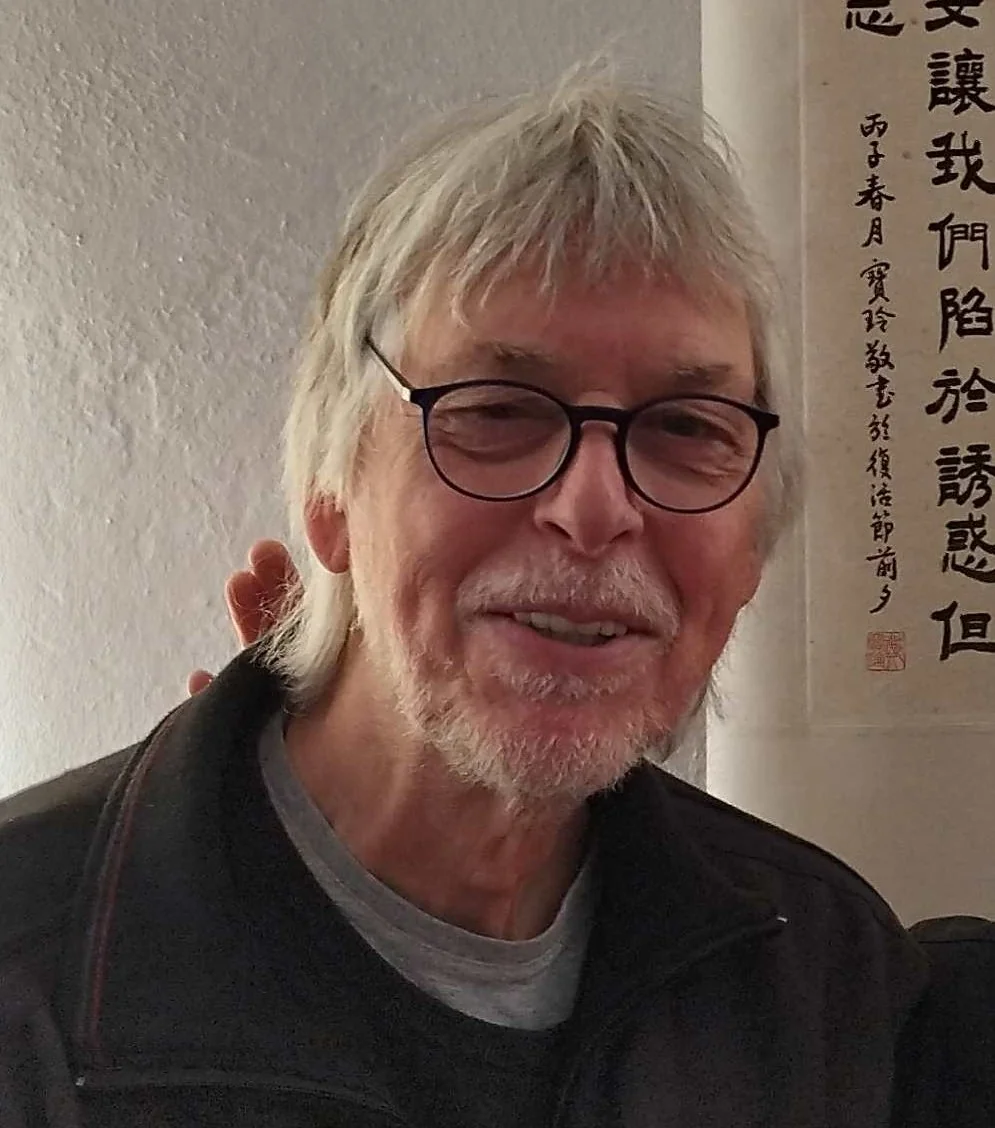
Image from Wikipedia
Image from Wikipedia
Gilbert Bender: Artist, Radiesthesist, and Zen Teacher with an Unusually Multifaceted Life’s Work
A Bielefeld Artist Between Free Graphic Art, Studio Work, and Spiritual Practice
Gilbert Bender, born in 1952 in Bielefeld, is one of those German artistic personalities whose work cannot be reduced to a single discipline. He is a visual artist, radiesthesist, and Zen teacher of the Sanbôzen lineage with roots in Kamakura, Japan. His biography merges artistic training, freelance practice, and spiritual development into a life path that holds a unique position in the German art and meditation landscape. ([de.wikipedia.org](https://de.wikipedia.org/wiki/Gilbert_Bender?utm_source=openai))
When one observes Gilbert Bender, one does not encounter a routine specialist, but rather a personality who understands art as a space of experience. His work revolves around the interplay between humans, their surroundings, perception, and the subtle dimensions. This is precisely where the tension of his creation lies: the visual language remains open, the attitude is focused, and the thinking is interdisciplinary. ([de.wikipedia.org](https://de.wikipedia.org/wiki/Gilbert_Bender?utm_source=openai))
Education and Artistic Breakthrough
After training as an advertising salesman, Bender studied Free Graphic Art with Karl-Heinz Meyer at the Fachhochschule Bielefeld from 1974 to 1978. This phase marks a decisive transition from applied training to independent artistic formulation. After his studies, he initially worked as a freelance illustrator in Cologne, later returned to being an advertising salesman, before taking the leap into full-time freelancing in 1981. ([de.wikipedia.org](https://de.wikipedia.org/wiki/Gilbert_Bender?utm_source=openai))
Since 1981, Bender has dedicated himself exclusively to artistic work. This turning point is central to his oeuvre, as it allowed for a concentration on individual picture and object worlds. His large-scale paintings, objects, and installations refer to the tension between human and environment, making perception itself a subject. In doing so, Bender operates at the intersection of expression, observation, and spatial impact. ([de.wikipedia.org](https://de.wikipedia.org/wiki/Gilbert_Bender?utm_source=openai))
Art as a Space of Perception: Images, Objects, and Installations
The description of his oeuvre makes it clear that Bender does not think solely in classical mediums of drawing or painting. Rather, he develops formats in which materiality, location, and observation play a joint role. His stated goal is to transform the subtle interplay between art, time, and location into a holistic experience for the viewer. This attitude lends his work a meditative depth that goes beyond mere aesthetic form. ([de.wikipedia.org](https://de.wikipedia.org/wiki/Gilbert_Bender?utm_source=openai))
What is particularly interesting is his connection to radiesthesia, which Bender has been engaged with since 1986. In collaboration with Harald Walther and Reginald Kress, he placed questions of vibration, location experience, and perception at the center. This gives his artistic approach a unique language, in which art is not only created but also explored. ([de.wikipedia.org](https://de.wikipedia.org/wiki/Gilbert_Bender?utm_source=openai))
Radiesthesia, Art, and the Field Between the Visible and the Invisible
It is precisely the connection between art and radiesthesia that makes Gilbert Bender remarkable for culture-interested readers. His work does not follow a trendy strategy but rather a consistent search for resonance, impact, and depth of perception. The connection of image, space, and energetic concept shifts the perspective from mere objects to an experiential process. ([de.wikipedia.org](https://de.wikipedia.org/wiki/Gilbert_Bender?utm_source=openai))
This orientation is also biographically consistent: Bender does not only work in the studio but locates his practice within a broader field of training, observation, and communication. His art is meant not only to be viewed but to be experienced. This makes his position within the contemporary German art scene distinct and unmistakable. ([de.wikipedia.org](https://de.wikipedia.org/wiki/Gilbert_Bender?utm_source=openai))
ZEN Teaching and Spiritual Development
Alongside his artistic work, Bender's Zen practice has developed into another central strand of his life. According to existing sources, he has been on the Zen meditation path since 1989, has been a Zen student since 1990, and was appointed Assistant Zen Teacher of the Sanbo Zen School in 2021. In 2024, he was appointed Zen Teacher by the school's abbot, Yamadha Ryôun Rôshi. This development underscores the continuity of his spiritual path. ([zen-bielefeld.de](https://zen-bielefeld.de/category/veranstaltungen/?utm_source=openai))
His role as a teacher is not a side aspect but a second focus of his public work. In Bielefeld, he is active with courses, lectures, and event formats that connect meditation, perception, and self-experience. In this way, he expands his profile from visual artist to mediator of a practice that relates art and mindfulness. ([gilbert-bender.de](https://gilbert-bender.de/kontakt/?utm_source=openai))
Illustration, Children's Comics, and Educational Work
Another aspect of his career is illustration. According to Wikipedia, book illustrations such as "Tableau d’amour," "der kleine König," and "Nachtkerzen" flowed from his pen, as well as the children's comic "Nessy und Wolf," which comprised over 800 episodes for the Neue Westfälische Zeitung. This broad journalistic work showcases an artistic signature that is not limited to the exhibition format. ([de.wikipedia.org](https://de.wikipedia.org/wiki/Gilbert_Bender?utm_source=openai))
His work with children and groups also points to an educational dimension. An art project at the Theesen primary school, for instance, documents the collaboration with the friendly musician Heino Lamm in the construction of didgeridoos. Such projects illustrate how seamlessly Bender connects artistic practice, mediation, and communal experience. ([gs-theesen.de](https://gs-theesen.de/355-Kunstprojekt_mit_dem_Kuenstler_Gilbert_Bender?utm_source=openai))
Studio, Courses, and Presence in Bielefeld
Today, Bender remains active in Bielefeld. His studio at Voltmannstraße 169 serves as a space for art courses, workshops, and encounters. Offerings range from life drawing and human representation to face worlds and woodcut workshops, demonstrating his ongoing presence as a teacher and practicing artist. ([gilbert-bender.de](https://gilbert-bender.de/kunstkurse/?utm_source=openai))
Recent indications of his activities portray an artist who continues to work and teach into the present. Art education, expressive painting, and drawing exercises constitute not a footnote but the core of his public endeavors. Hence, Bender's presence is not museum-like but productive, dialogical, and work-oriented. ([gilbert-bender.de](https://gilbert-bender.de/kunstkurse/?utm_source=openai))
Cultural Influence and Artistic Uniqueness
Gilbert Bender's cultural relevance lies less in mass media fame and more in the consistency of his integrated life model. He connects art, perception, meditation, and teaching into a comprehensive work that is designed for duration and depth. In a time of rapid visibility, this attitude appears consciously decelerated and thus all the more independent. ([de.wikipedia.org](https://de.wikipedia.org/wiki/Gilbert_Bender?utm_source=openai))
His influence is particularly evident in local and regional cultural work, course formats, spiritual contexts, and the connection between art and consciousness work. Those who follow his career recognize an artist who not only produces works but also creates spaces of experience. This is exactly where the enduring strength of his biography lies. ([gilbert-bender.de](https://gilbert-bender.de/kontakt/?utm_source=openai))
Conclusion: An Artist of Attentive Gaze and Quiet Intensity
Gilbert Bender is compelling because he does not understand art as an isolated discipline but as a living practice between studio, teaching, and spiritual training. His work embodies concentration, perception, and the quest for connection between humans and their environment. Those interested in art that does not shout, but deeply resonates, will find in Bender a remarkable position within contemporary German culture. Attending his events or courses is worthwhile for anyone who understands art as experience, not just as result. ([de.wikipedia.org](https://de.wikipedia.org/wiki/Gilbert_Bender?utm_source=openai))
Official Channels of Gilbert Bender:
- Instagram: No official profile found
- Facebook: No official profile found
- YouTube: No official profile found
- Spotify: No official profile found
- TikTok: No official profile found