
Helmut Lotti
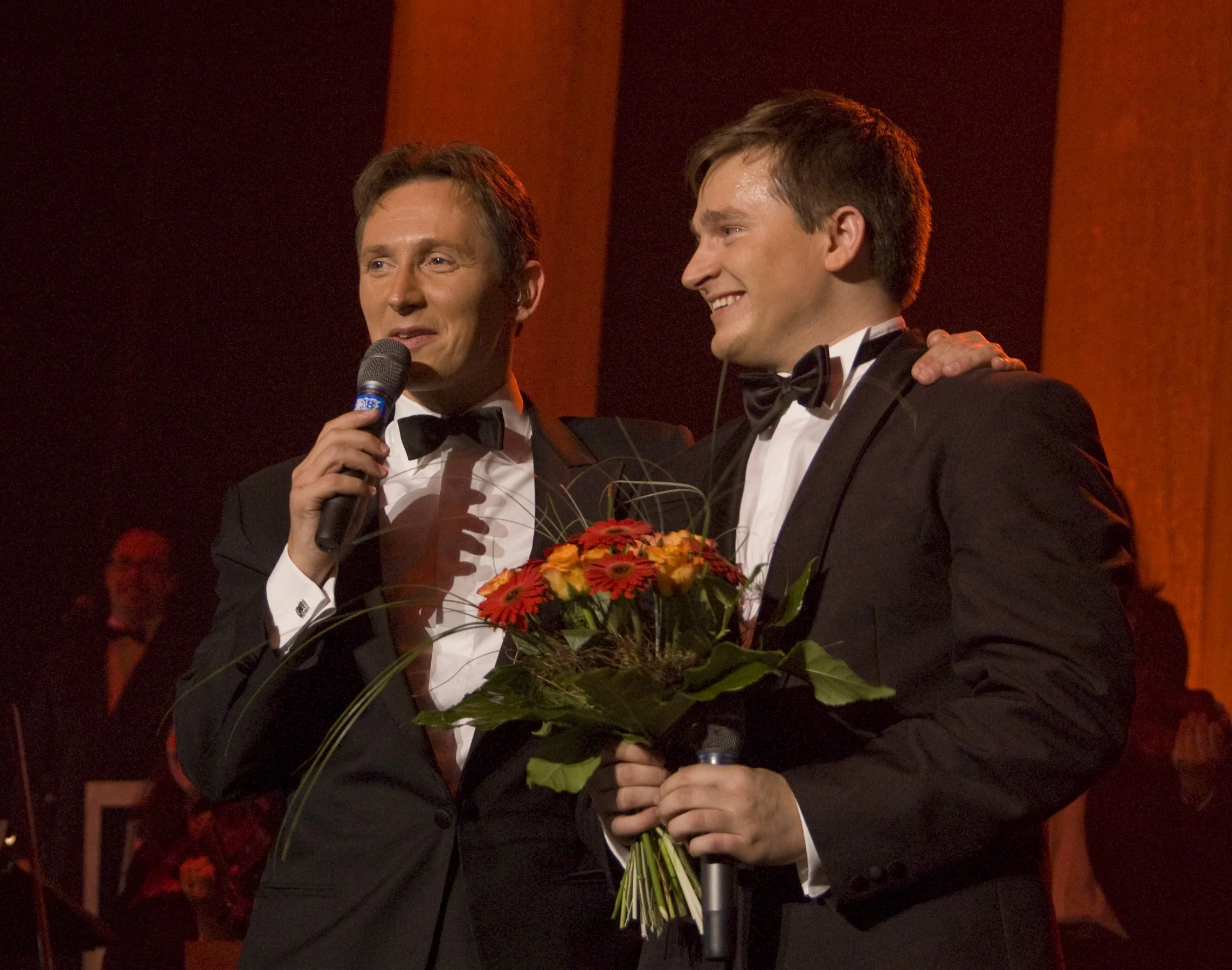
Image from Wikipedia
Image from Wikipedia
Helmut Lotti – The Belgian Crossover Star Between Pop, Classical Music, and Grand Stage Art
A singer who breaks down boundaries and reaches millions
Helmut Lotti, born on October 22, 1969, as Helmut Barthold Johannes Alma Lotigiers in Sint-Amandsberg near Ghent, is one of the most distinctive voices in Belgian music history. The singer became known as a crossover and pop artist, evolving from a young Elvis interpreter to an international favorite with a unique profile that bridges pop, classical music, and stylistic versatility. His name stands for a musical career that has grown from early stage experiences, strong stage presence, and a consistent artistic development. ([de.wikipedia.org](https://de.wikipedia.org/wiki/Helmut_Lotti))
Lotti's breakthrough came in the mid-1990s with Helmut Lotti goes Classic, an album that quickly became the fastest and most sold album of its time in Flanders. Today, he is regarded as the most successful singer in Flanders, with over 13 million albums sold. These figures are not only a commercial testament but also a sign of his exceptional ability to translate musical traditions into a broad, cross-generational listening experience. ([de.wikipedia.org](https://de.wikipedia.org/wiki/Helmut_Lotti))
From Ghent to the Stage: The Early Years
Lotti's musical roots shaped him early on: he grew up in a Catholic and musical household, his father was a classical tenor, and his grandfather Bart Lotigiers was the artistic director of the Ghent Opera from 1973. Helmut Lotti first took the stage there in 1974, then still in a minor role in the operetta Friederike by Franz Lehár. This early proximity to the world of opera created a foundation for his later assured intonation, orchestral thinking, and affinity for grand melodic arcs. ([de.wikipedia.org](https://de.wikipedia.org/wiki/Helmut_Lotti))
As a child, he was captivated by Elvis Presley and crooner singing. From 1988, he performed under the pseudonym Kevin Leach in talent competitions and gained recognition in 1989 by placing second in the Soundmix Show with Elvis’s My Boy. Two months later, he received his first recording contract with BMG Ariola, along with the artist name Helmut Lotti, which he later described as somewhat unfortunate. The start of his career was by no means coincidental; it was the result of stage routine, recognizability, and a clear sense of performance. ([de.wikipedia.org](https://de.wikipedia.org/wiki/Helmut_Lotti))
The Pop Success of the Early Years
As a pop singer, Lotti launched with the single Kom nu, released in 1989, which topped the charts. His debut album Vlaamse Nachten brought Flemish pop songs into an accessible, melodically clear form and was awarded Gold. This was followed by Alles wat ik voel, also certified Gold, and Memories, which received Platinum for the first time. Even at this stage, it was clear that Lotti could not only interpret but also shape songs into his own, catchy pop aesthetic. ([de.wikipedia.org](https://de.wikipedia.org/wiki/Helmut_Lotti))
With Just for you in 1995, he expanded his repertoire to include English-language pop songs and began collaborating on a larger number of titles. This phase marked the transition from a regionally successful singer to an artist with broader appeal. The style became internationally more relatable without losing the emotional core of his earlier recordings. ([de.wikipedia.org](https://de.wikipedia.org/wiki/Helmut_Lotti))
The Major Turning Point: Helmut Lotti Goes Classic
As early as 1994, Lotti gave concerts with a 23-piece orchestra and received prolonged applause for his interpretation of Lucio Dalla's Caruso. This led to the idea for an album of classical songs, accompanied by the enlarged Golden Symphonic Orchestra under conductor André Walschaerts. In 1995, Helmut Lotti Goes Classic was released, featuring 18 arrangements of classical melodies and arias, arranged among others by Wim Bohets. The album became the fastest and most sold album in Flanders at that time, with around 600,000 copies sold, and received twelve Platinum certifications. ([de.wikipedia.org](https://de.wikipedia.org/wiki/Helmut_Lotti))
The subsequent albums Helmut Lotti Goes Classic II and Helmut Lotti Goes Classic III continued this trend and refined the approach. In the German and international marketing, the releases were partly rearranged and later compiled into a final version. This gave rise to one of the defining crossover series of European pop in the 1990s: popular classical music with mass appeal, orchestral grandeur, and a singer who reached both pop listeners and classical audiences. ([de.wikipedia.org](https://de.wikipedia.org/wiki/Helmut_Lotti))
International Expansion: Africa, Latin America, and Other Sound Worlds
After the success in Belgium and the Netherlands, international steps followed. In 1996, Helmut Lotti's success began in South Africa, and after several tours, he recorded an album of traditional African songs entitled Out of Africa. The recordings for the TV special were made in 1999 at the Basotho Cultural Village in South Africa. This shifted Lotti's focus from a purely classical niche to a global repertoire that combined musical heritage and cultural openness. ([de.wikipedia.org](https://de.wikipedia.org/wiki/Helmut_Lotti))
In the following years, he also worked with thematic concepts: Latino-inspired programs, Russian songs, Elvis tributes, swing, and crooner aesthetics defined his discography. This versatility is no coincidence but an expression of an artistic strategy that seeks both recognizability and format change. Lotti masters the balance between popular accessibility and a careful culture of arrangement. ([en.wikipedia.org](https://en.wikipedia.org/wiki/Helmut_Lotti?utm_source=openai))
Style, Voice, and Musical Signature
Press descriptions depict Lotti's voice as highly versatile; it is also emphasized that he confidently merges genres, moods, and orchestral colors. His repertoire ranges from pop and rock'n'roll to easy listening and classical-inspired versions, and his long-standing label underscores his multilingualism and ability to bring together different musical traditions. His core brand lies precisely in this: not radical reinvention but stylistically disciplined refinement of familiar materials. ([en.wikipedia.org](https://en.wikipedia.org/wiki/Helmut_Lotti?utm_source=openai))
Particularly significant is his work with the Golden Symphonic Orchestra, which accompanied his tours and recordings for a long time. The arrangements focus on broad string sections, clear melodic direction, and an elegant dramaturgy that positions Lotti's tenor between warmth and pathos. This creates a sound that is both solemn, accessible, and professionally controlled. ([de.wikipedia.org](https://de.wikipedia.org/wiki/Helmut_Lotti))
Discography, Achievements, and Critical Reception
Some of his most important albums include Vlaamse Nachten, Alles wat ik voel, Memories, Just for you, Helmut Lotti Goes Classic, Helmut Lotti Goes Classic II, Helmut Lotti Goes Classic III, Out of Africa, My Tribute To The King, From Russia With Love, The Crooners, Time to Swing, The Comeback Album, and the anniversary edition Helmut Lotti Goes Classic 30 Years Jubilee Edition. Spotify lists several of these releases as central releases in the catalog, including the Classic series, the Elvis tribute, and later stylistic fields such as swing and world music. This range makes the discography a mirror of his changing artistic interests. ([de.wikipedia.org](https://de.wikipedia.org/wiki/Helmut_Lotti))
Critically, Lotti has been labeled by some parts of the press as the "softener of classical music," yet this debate highlights his cultural relevance: he brought classical motifs into the pop mainstream and made them accessible to a mass audience. At the same time, reports praised his ability to refine songs with soul, gospel, jazz, and swing. Thus, the discussion around his music reflects not merely approval or rejection, but the impact of an artist who consciously pushes musical boundaries. ([de.wikipedia.org](https://de.wikipedia.org/wiki/Helmut_Lotti))
Current Projects, Anniversary, and Late Career Phase
In 2025, Helmut Lotti found himself once again at the center of an anniversary phase: three decades after Helmut Lotti Goes Classic 1, he celebrated this chapter of his career with a major anniversary edition and tour. The official website announced the release of Helmut Lotti Goes Classic 30 Years Jubilee Edition in November 2026, featuring 14 new popular-classical songs, duets, and a best-of from the first three Classic albums. This was accompanied by numerous concert dates in Belgium, Germany, and the Netherlands, which impressively demonstrates his ongoing live presence. ([helmutlotti.com](https://helmutlotti.com/))
The official communication emphasizes that Lotti is not a nostalgic marginal figure but an active concert artist with a continuous release practice. The combination of anniversary, new recordings, and tour showcases a career that cannot be reduced to a past hit. Rather, Lotti maintains his repertoire as a living, continuously curated work. ([helmutlotti.com](https://helmutlotti.com/))
Conclusion: Why Helmut Lotti continues to Fascinate
Helmut Lotti remains intriguing because he accomplishes the rare feat of combining popularity and musical discipline. He is a singer with strong stage presence, a recognizable tone, and a career that spans from pop, Schlager, and Elvis pathos to popular classical music. Those who wish to experience how an artist merges grand melodies, orchestral elegance, and audience-oriented emotionality should hear Helmut Lotti live. ([de.wikipedia.org](https://de.wikipedia.org/wiki/Helmut_Lotti))
Official Channels of Helmut Lotti:
- Instagram: https://www.instagram.com/helmutlottiofficial/
- Facebook: https://www.facebook.com/official.helmutlotti
- YouTube: http://www.youtube.com/@HelmutLottiOfficial
- Spotify: no official profile found
- TikTok: no official profile found