
Julia Platt
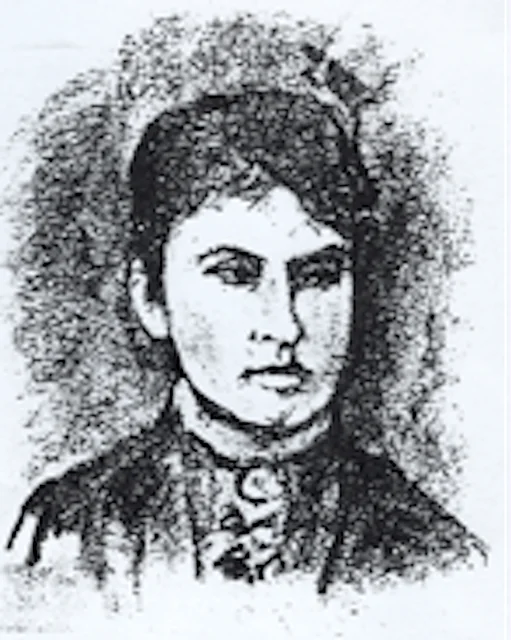
Image from Wikipedia
Image from Wikipedia
Julia Platt – Pioneer of Embryology and Unyielding Voice of Civic Leadership
A woman who shaped science and politics with exceptional determination
Julia Barlow Platt, born on September 14, 1857, in San Francisco and died in 1935, is one of the most remarkable American female scientists of her time. She was a vertebrate embryologist and politician, a researcher who focused on the development of heads and skulls in sharks and salamanders while also playing a formative role in the local politics of Pacific Grove. Her life path uniquely combines academic perseverance, scientific originality, and civic responsibility. ([de.wikipedia.org](https://de.wikipedia.org/wiki/Julia_Platt?utm_source=openai))
Early Influences Between the West Coast, Vermont, and Academic Ambition
Platt grew up in an era when women faced massive structural barriers in the sciences. She studied in Vermont and at Harvard University before earning her doctorate in 1898 in Freiburg im Breisgau. That she even reached the doctoral level was already a sign of exceptional determination, as university careers for women were still the exception in the 19th century. Her education took her through different scientific environments and sharpened her perspective on comparative developmental biology. ([de.wikipedia.org](https://de.wikipedia.org/wiki/Julia_Platt?utm_source=openai))
The stages of her education not only demonstrate academic mobility but also an early, well-defined interest in experimental research. At Harvard, she worked on embryological questions, later continuing her studies in Europe, where women could more frequently attain a doctorate than in the United States at that time. Her scientific career emerged not in a sheltered space but in conflict with the norms of her era. This very conflict continues to lend her biography its tension today. ([embryo.asu.edu](https://embryo.asu.edu/pages/julia-barlow-platt-1857-1935?utm_source=openai))
Scientific Breakthrough: Head Development, Neural Crest, and a Dispute Over Germ Layer Theory
Platt's most significant contributions lie in the study of embryogenesis, particularly head development in sharks and salamanders. She demonstrated that ectodermal cells, specifically cells from the cranial neural crest, are involved in the cartilage formation of skull elements. This contradicted a central tenet of the then-prevalent germ layer theory, reopening the discussion on the assignment of tissue development. This observation faced considerable opposition in the scientific community but was later confirmed by further studies. ([de.wikipedia.org](https://de.wikipedia.org/wiki/Julia_Platt?utm_source=openai))
It is in this controversy that Platt’s scientific authority is evident. Her research was not merely descriptive but methodically precise and theoretically provocative. She addressed the early development of skull structures with a clarity that was only fully confirmed by later researchers such as Sven Hörstadius and Sven Sellman. The fact that her hypotheses initially met with resistance underscores her standing as a pioneer: she conceived development not within established boundaries but where biological systems proved to be dynamic and complex. ([de.wikipedia.org](https://de.wikipedia.org/wiki/Julia_Platt?utm_source=openai))
A Career Without a Permanent Professorship – Yet with a Lasting Impact
Despite a high number of independent scientific publications, Julia Platt never secured a permanent position at a university. This fact makes her career particularly telling, as it exposes the contradictions of academic institutions in the late 19th and early 20th centuries. Her scientific quality was unquestionable, yet the structural openness of the higher education system for women remained limited. Platt’s career thus also serves as a case study of the discrepancy between achievement and institutional recognition. ([de.wikipedia.org](https://de.wikipedia.org/wiki/Julia_Platt?utm_source=openai))
After earning her doctorate, she continued her work and moved to California in 1899, where she became involved at the Hopkins Marine Station Marine Biology Laboratory in Pacific Grove. There, her research intertwined with a new, more public engagement for the region. Platt did not remain in the academic niche but sought contact with a community whose political and ecological issues increasingly occupied her. Thus, her biography evolved from laboratory work to local responsibility. ([embryo.asu.edu](https://embryo.asu.edu/pages/julia-barlow-platt-1857-1935?utm_source=openai))
Political Stance and Civic Responsibility in Pacific Grove
In Pacific Grove, Julia Platt became an active shaper of local politics. She engaged in community issues and was elected mayor of Pacific Grove in 1931. In doing so, she made a visible statement about women's political participation at a time when municipal leadership positions for women were by no means a given. Her work extended beyond merely representative duties and aimed at concrete structural changes. ([de.wikipedia.org](https://de.wikipedia.org/wiki/Julia_Platt?utm_source=openai))
Her commitment to coastal protection and reorganization of municipal administration was particularly significant. She advocated for the preservation and management of the shoreline and contributed to the establishment of a protected marine area in California. The historical context of this work is remarkable: industrial wastewater and overfishing heavily burdened Monterey Bay, and Platt combined scientific expertise with political action. Her career thus demonstrates a rare connection between natural science, city politics, and environmental consciousness. ([embryo.asu.edu](https://embryo.asu.edu/pages/julia-barlow-platt-1857-1935?utm_source=openai))
Style, Method, and Scientific Signature
Julia Platt's scientific style was characterized by comparative embryology, meticulous observation, and a boldness in hypothesis. She worked on animal models like sharks and salamanders, drawing far-reaching conclusions about the formation of skull cartilage and nerve tissue from her findings. Her research bridged microscopic detail work with a broader inquiry into the origins of tissues in the embryo. Therein lies her professional strength: she translated individual observations into theory. ([de.wikipedia.org](https://de.wikipedia.org/wiki/Julia_Platt?utm_source=openai))
Her significance extends beyond individual findings, as she participated in a central debate in developmental biology. The later confirmation of her observations by other researchers shows how robust her approaches were. Platt thus belongs to that group of scientists who not only gathered knowledge but also challenged scientific ordering systems. Her work serves as an early example of methodological independence and intellectual steadfastness. ([de.wikipedia.org](https://de.wikipedia.org/wiki/Julia_Platt?utm_source=openai))
Public Remembrance and Cultural Significance
Today, Julia Platt is remembered as a trailblazer in science and municipal politics. Various regional and historical scientific sources honor her as an outstanding embryologist and the first female mayor of Pacific Grove. This dual recognition is important because it does not reduce her biography to a single field. She exemplifies women who pave the way in scientific fields while also transforming societal spaces. ([montereycountynow.com](https://www.montereycountynow.com/news/cover/julia-platt-pacific-grove-s-first-woman-mayor-made-an-indelible-mark-locally-and-in/article_ffd43202-5fe2-11ef-bbf3-1f6f6312ae02.html?utm_source=openai))
Her legacy is also visible in institutional and geographical names that bear her name or reference her work. Thus, she remains present in California's regional history and is anchored in the history of science. Julia Platt is not a figure of loud myth but a personality of quiet yet enduring consequence. This is precisely what makes her story so impressive. ([cdfwmarine.wordpress.com](https://cdfwmarine.wordpress.com/2020/02/03/exploring-californias-marine-protected-areas-lovers-point-julia-platt-state-marine-reserve/?utm_source=openai))
Conclusion: A Biography Full of Perseverance, Insight, and Public Responsibility
Julia Platt fascinates because she shaped two areas with real authority: developmental biology and municipal politics. She overcame scientific prejudices, confirmed a now-central understanding of the neural crest, and later took political responsibility in her city. Her life story stands for courage, analytical sharpness, and social engagement. Those interested in the history of great women in science and public life will find Julia Platt to be an extraordinary personality. ([de.wikipedia.org](https://de.wikipedia.org/wiki/Julia_Platt?utm_source=openai))
A visit to her historic places of influence, her scientific endeavors, and the sites of her political engagement is worthwhile because Platt’s legacy continues to be felt today. She demonstrates how far an individual biography can reach when knowledge and responsibility come together. This is where her enduring impact lies. ([embryo.asu.edu](https://embryo.asu.edu/pages/julia-barlow-platt-1857-1935?utm_source=openai))
Official Channels of Julia Platt:
- Instagram: No official profile found
- Facebook: No official profile found
- YouTube: No official profile found
- Spotify: No official profile found
- TikTok: No official profile found
Sources:
- Wikipedia – Julia Platt
- Embryo Project Encyclopedia – Julia Barlow Platt (1857–1935)
- Monterey County Now – Julia Platt: Trailblazer in Civic Leadership and Science
- Marine Management News – Lovers Point-Julia Platt State Marine Reserve
- Monterey Regional Airport – Women in Aviation Week
- Wikipedia (EN) – Julia Platt
Upcoming Events
Members' Trip in the Neighborhood: Studio Visit with Julia Platt
Condition – Julia Platt