
Katika Kühnreich
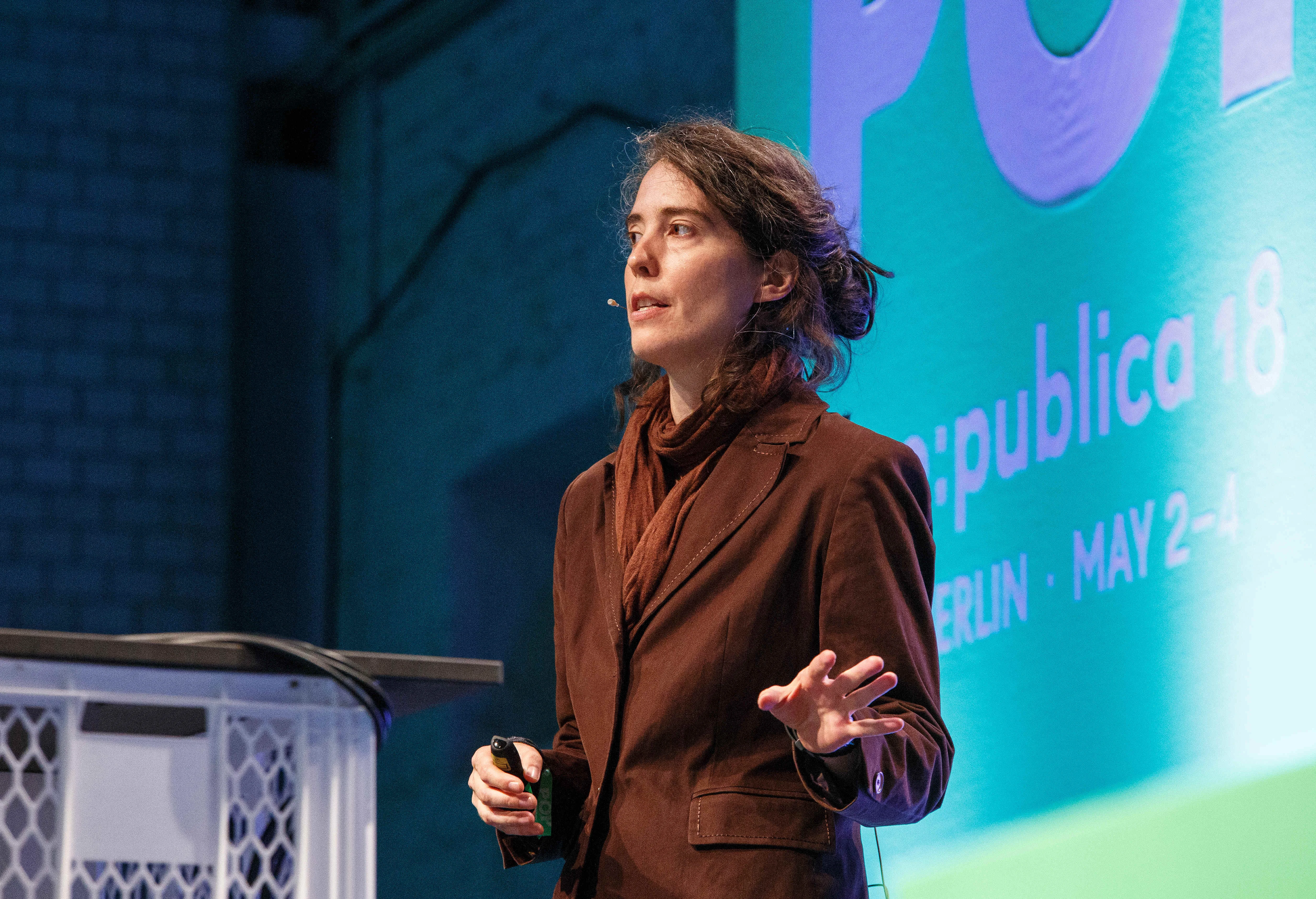
Image from Wikipedia
Image from Wikipedia
Katika Kühnreich: Political Science Analysis, Sinology, and Digital Critique with a Clear Voice
A Concise Voice on the Societal Power of Digitalization
Katika Kühnreich is a German political scientist and sinologist whose work focuses on the social, ecological, and political consequences of digitalization. Her emphasis is on topics like social media platforms, artificial intelligence, gamification, surveillance capitalism, and digital authoritarianism. On her official website, she describes herself as a speaker, workshop leader, author, and consultant. ([de.wikipedia.org](https://de.wikipedia.org/wiki/Katika_K%C3%BChnreich))
Biographical Background and Academic Influence
Wikipedia classifies Kühnreich as an expert with a scholarly profile that combines political science and sinology. On her website, she specifies that she holds a Magistra degree in political science and Chinese studies with a philosophical focus. Additionally, her academic work aligns with research interests in digitalization and its societal impact. ([de.wikipedia.org](https://de.wikipedia.org/wiki/Katika_K%C3%BChnreich))
Her intellectual orientation is particularly evident in her engagement with China, social control, and digital power structures. Even her master’s thesis from 2014 addressed the topic of “Harmonious Society” and “Mass Incidents,” which thematically aligns with her later analyses of control, order, and political governance. This continuity lends her profile a recognizable scholarly trajectory. ([de.wikipedia.org](https://de.wikipedia.org/wiki/Katika_K%C3%BChnreich))
Career Between Research, Lectures, and Public Debate
Kühnreich regularly appears as a speaker, panel participant, and workshop leader. Her talks at the Chaos Computer Club, at conferences, and educational institutions reflect a career in communication rather than music—navigating the intersection of research, enlightenment, and digital political debate. In this public format, she connects theoretical analysis with accessible communication. ([de.wikipedia.org](https://de.wikipedia.org/wiki/Katika_K%C3%BChnreich))
Her presentation “Gamified Control? China’s Social Credit Systems” at the 34C3 received particular attention. According to Wikipedia, the topic was covered in media outlets such as heise, Süddeutsche Zeitung, Spiegel, and Le Monde, enhancing her visibility beyond academic circles. Such resonance indicates that her work is perceived as an analytical contribution to the current debate. ([de.wikipedia.org](https://de.wikipedia.org/wiki/Katika_K%C3%BChnreich))
Areas of Work: Digitalization, AI, Platforms, and Digital Authoritarianism
On her website, Kühnreich describes the societal and ecological impacts of digitalization as a central research area. This includes working and living conditions, the resource consumption of digital technologies, and the political manipulation potential of social media and artificial intelligence. She also categorizes cybernetic thought patterns and gamification as ideological and theoretical backgrounds of these technologies. ([katika-kuehnreich.com](https://katika-kuehnreich.com/en/about-me/?utm_source=openai))
Wikipedia adds that Kühnreich analyzes the growing influence of AI and social platforms, particularly concerning working conditions, ecological resources, and political manipulation. In a discussion at the Red Salon of the Berliner Volksbühne, she also explored the connections between artificial intelligence and fascism. Her contributions at the 39C3 and at the Academy for Political Education in Tutzing underscore the timeliness of this work. ([de.wikipedia.org](https://de.wikipedia.org/wiki/Katika_K%C3%BChnreich))
Publications and Scholarly Classification
Kühnreich’s publications include articles and contributions to books. Notably, her article “Social Control 4.0? China’s Social Credit Systems” featured in the Blätter für deutsche und internationale Politik in 2018. Other contributions can be found in anthologies, including topics on repression, social credit, and the relationship between freedom, surveillance, and digital order. ([de.wikipedia.org](https://de.wikipedia.org/wiki/Katika_K%C3%BChnreich))
These publications demonstrate a clear thematic focus, extending from the analysis of Chinese control systems to broader questions of digital power structures. Kühnreich does not work merely as an observer, but as a critic, sharpening terms such as social control, manipulation capitalism, and digital authoritarianism analytically. This conceptual precision lends her profile authority. ([de.wikipedia.org](https://de.wikipedia.org/wiki/Katika_K%C3%BChnreich))
Public Presence and Media Visibility
The web results show a strong presence on lecture platforms and in documented recordings. These include the media pages of the Chaos Computer Club, YouTube recordings, and the website of the Digital Society Switzerland. Her website systematically collects these appearances, making it clear that Kühnreich consciously communicates her research publicly and discursively. ([de.wikipedia.org](https://de.wikipedia.org/wiki/Katika_K%C3%BChnreich))
Her role as a spokesperson for the Internet and Society Working Group at the Society for Computer Science is also an important signal. She links scientific expertise with voluntary engagement in a policy-oriented context. This creates a profile that mediates between research, activism, and public education. ([de.wikipedia.org](https://de.wikipedia.org/wiki/Katika_K%C3%BChnreich))
Cultural Influence and Relevance in the Digital Age
Kühnreich's relevance lies in the sharpness of her analysis and the contemporaneity of her topics. She connects China research, media critique, and technology ethics into a perspective that transcends individual cases and understands digital systems as societal orders. In debates about AI, platform power, and democracy, her approach provides a much-needed counterpoint to techno-optimistic rhetoric. ([de.wikipedia.org](https://de.wikipedia.org/wiki/Katika_K%C3%BChnreich))
Her influence does not stem from pop culture, chart success, or a discography but from intellectual presence, scholarly grounding, and public effectiveness. This makes her equally interesting for conferences, universities, political education work, and media debates. Anyone engaging with digital authoritarianism, social credit, AI critique, and platform logics inevitably encounters her perspective. ([de.wikipedia.org](https://de.wikipedia.org/wiki/Katika_K%C3%BChnreich))
Conclusion: Why Katika Kühnreich Remains Engaging
Katika Kühnreich represents a clear, analytical, and socially relevant voice in the debate on digitalization. Her strength lies in the combination of scientific depth, public communication, and political vigilance. Those who want to understand how digital systems transform power, work, and freedom find in her a committed and precise observer. ([de.wikipedia.org](https://de.wikipedia.org/wiki/Katika_K%C3%BChnreich))
A live appearance with her promises no show in the musical sense but an equally intense and enlightening encounter with the central conflicts of the digital present. For this reason, it is worthwhile to closely follow her lectures, discussions, and publications. Those who wish to not only consume but understand digital politics should experience Katika Kühnreich live. ([de.wikipedia.org](https://de.wikipedia.org/wiki/Katika_K%C3%BChnreich))
Official Channels of Katika Kühnreich:
- Instagram: No official profile found
- Facebook: No official profile found
- YouTube: No official profile found
- Spotify: No official profile found
- TikTok: No official profile found
Sources:
- Wikipedia – Katika Kühnreich
- Katika Kühnreich – Social impact of digitalization | Gesellschaftliche Auswirkungen der Digitalisierung
- Katika Kühnreich – About me
- Katika Kuehnreich – Social impact of digitalization
- Katika Kühnreich – Video of the lecture “Magical AI World?”
- Katika Kühnreich – Video of the discussion with Aunt on the Tour de Lorraine online