
Thomas D
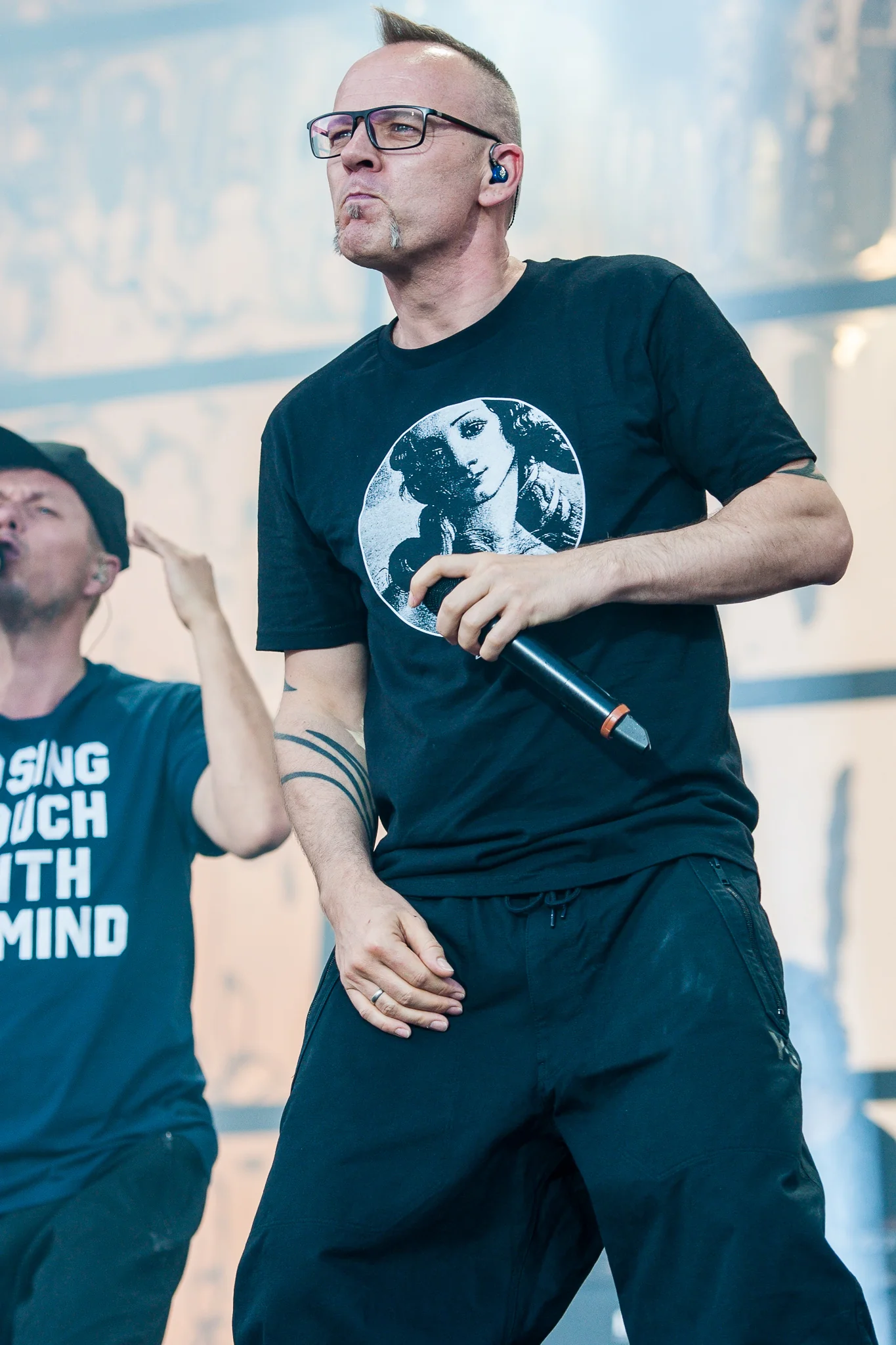
Image from Wikipedia
Image from Wikipedia
Thomas D: The Powerful Poet Between Rap, Attitude, and German Pop History
An exceptional artist from Stuttgart who has given depth, heart, and attitude to German hip-hop
Thomas D, born in 1968 in Stuttgart, has been one of the defining voices of German-language rap for decades. As a member of the Fantastischen Vier, he made music history, and as a solo artist, he sharpened his profile with reflective lyrics, philosophical imagery, and an unmistakable stage presence. His musical career fuses pop, rap, spoken word, and societal awareness into an artistic development that has become rare in the German music canon. ([de.wikipedia.org](https://de.wikipedia.org/wiki/Thomas_D))
From Stuttgart's Young Talent to a Mainstay of German Rap
Thomas D became known as Thomas Dürr and found his way early into a scene that was still searching for its own language in Germany. With the Fantastischen Vier, he was part of a generation that brought rap out of its niche status and into mainstream recognition. The group established itself with a mix of intelligent word art, humor, self-irony, and musical precision—a foundation that Thomas D continues to build upon to this day. ([de.wikipedia.org](https://de.wikipedia.org/wiki/Thomas_D))
His artistic attitude has always been more than mere self-expression. Thomas D viewed rap as a form of expression with a message, a space for inner conflicts, societal questions, and personal authenticity. This blend of introspection and public voice characterizes his career and explains why his lyrics not only resonate but also linger. ([thomasd.de](https://www.thomasd.de/?utm_source=openai))
Breaking Through with the Fantastischen Vier and Opening Up to a Mass Audience
The major surge in popularity for the Fantastischen Vier came in the early 1990s, and Thomas D was part of that formation that made German rap radio- and chart-friendly. What started as an originally subcultural form of expression transformed into a central element of German pop culture with the band. This created a career path for Thomas D that combined artistic credibility with wide visibility. ([de.wikipedia.org](https://de.wikipedia.org/wiki/Thomas_D))
This early phase also shaped his later solo career. Those who reduce Thomas D to his role in the collective overlook the multiplicity of his oeuvre: He evolved into an author with his own voice, whose solo works focus much more on inner imagery, moral questions, and poetic intensifications. This is precisely where his enduring relevance lies. ([de.wikipedia.org](https://de.wikipedia.org/wiki/Thomas_D))
Solo as Artistic Self-Assertion
With Solo (1997), Thomas D released his first solo album, which charted in Germany, Austria, and Switzerland, marking the transition from band member to independent artist. Particularly the singles “Rückenwind” and “Solo” showcased how adeptly he translates language, rhythm, and melody into a personal form. Also, “Wish” featuring Franka Potente, created in the context of Lola rennt, highlighted how open Thomas D was to crossovers between rap, pop, and film music. ([de.wikipedia.org](https://de.wikipedia.org/wiki/Thomas_D))
With Lektionen in Demut in 2001, he followed up with an even more condensed work that climbed to number 3 on the charts in Germany and Austria. The title alone programmatically signals what Thomas D is striving for in his solo art: self-examination, discipline, inner work, and a consciously set counterpoint to superficial posturing. Since then, his solo releases have been regarded as profound, linguistically aware, and content-rich. ([de.wikipedia.org](https://de.wikipedia.org/wiki/Thomas_D))
Between Conceptual Art, Collaborations, and Musical Openness
Thomas D's discography shows a remarkable willingness to collaborate. Alongside his solo albums, he has worked with artists such as Nina Hagen, Franka Potente, BAP, Knorkator, Reinhard Mey, and Schiller. These collaborations demonstrate that Thomas D does not view rap as a closed genre, but rather as an open field where voice, attitude, and compositional ideas intersect. ([de.wikipedia.org](https://de.wikipedia.org/wiki/Thomas_D))
His work with Son Goku also expanded this spectrum. The band made a chart impact with “Alle für Jeden” in 2002, confirming Thomas D as a musician capable of flexibly navigating between rap, rock, pop, and substantive intensification. He also took on a mentorship role, for instance, in the project Junge Dichter und Denker, where his affinity for language and education took on an additional artistic dimension. ([de.wikipedia.org](https://de.wikipedia.org/wiki/Thomas_D))
A New Phase with The KBCS, M.A.R.S Sessions, and Mega D
In recent years, Thomas D has further visibly expanded his musical development. With The KBCS, he explored a more organic, band-oriented sound that places his lyrics within a rocky, bluesy, atmospheric environment. The official website describes this constellation as an especially intense live and studio experience, where intimacy, energy, and analog production aesthetics play a central role. ([thomasd.de](https://www.thomasd.de/?utm_source=openai))
The M.A.R.S Sessions, released in 2021, the 2024 sequel M.A.R.S Sessions II, and the 2025 EP Mega D with Flo Mega and The KBCS mark a productive late phase, where Thomas D reframes and condenses his repertoire. The official website also refers to Neocortex and a tour in 2026, emphasizing his presence as a current live artist. ([de.wikipedia.org](https://de.wikipedia.org/wiki/Thomas_D))
Lyrics with Weight: Style, Language, and Artistic Signature
Thomas D is not a rapper of mere punchlines but an author with linguistic gravity. His lyrics revolve around vulnerability, truth, responsibility, and forgiveness; at the same time, they remain rhythmically precise and musically viable. This connection of composition, lyrical sharpness, and emotional directness makes his songs accessible beyond hip-hop. ([thomasd.de](https://www.thomasd.de/?utm_source=openai))
Additionally, there is a strong cultural anchoring. Thomas D is not only a musician but also someone who transforms personal experiences into art: The tsunami of 2004 in Khao Lak was later processed in his songs, as was the idea of a more conscious, authentic life. His long-standing vegetarian and largely vegan lifestyle, his commitment to ecological and social beliefs, and even his television presence with nature themes sharpen his public profile as a credible artist with conviction. ([de.wikipedia.org](https://de.wikipedia.org/wiki/Thomas_D))
Critical Reception, Awards, and Cultural Influence
The recognition of Thomas D goes far beyond sales numbers. He has received, among other accolades, an MTV Europe Music Award, an ECHO with the Fantastischen Vier, the GreenTec Award Music, and the Order of Merit of Baden-Württemberg. These awards reflect not only success but also the breadth of his influence on music, pop culture, and societal debates. ([de.wikipedia.org](https://de.wikipedia.org/wiki/Thomas_D))
His cultural influence primarily lies in normalizing a German-language rap understanding that does not see depth of content as contradictory to popularity. Thomas D has shown that rap in Germany can be philosophical, poetic, and mass-appealing at the same time. He belongs to the artists who not only release hits but also shift aesthetic standards. ([de.wikipedia.org](https://de.wikipedia.org/wiki/Thomas_D))
Conclusion: An Artist with a Mission, Voice, and Lasting Relevance
Thomas D remains intriguing because he takes rap as an art form seriously and has never reduced his career to routine. He combines personal truth, social responsibility, and musical openness into a biography that feels both rich and consistent. Anyone who wants to understand German music history cannot overlook him. Those who experience him live see an artist who does not merely recite his lyrics but embodies them. ([thomasd.de](https://www.thomasd.de/?utm_source=openai))
Official Channels of Thomas D:
- Instagram: https://www.instagram.com/tdissoo
- Facebook: https://www.facebook.com/thomasdsolo
- YouTube: https://youtube.com/playlist?feature=shared&list=PLI713C3VT9FP7PuFNh9Y32iqJeq2YlH12
- Spotify: No official profile found
- TikTok: No official profile found
Sources:
Upcoming Events
THOMAS D & The KBCS
Thomas D & The KBCS at Ampere: an evening full of groove, attitude, and club intensity. 6.5.2026, presale from 35.20 Euro. #Munich #Live
Thomas D & The KBCS – Neocortex Tour 2026
Dive into the world of vintage-soul with Thomas D & The KBCS on May 7 at Colos-Saal, Aschaffenburg.
Smartphone Photography in Erlangen – Spotlighting Motifs
See Erlangen anew: In the photo walk of vhs, strong smartphone images full of light, perspective, and movement are created. 28.06.2026, 10:00 AM, 37.30 €. Book now! #Erlangen
Opal Grinding Event & Exhibition
Experience opals, light, and craftsmanship in Braunschweig: Kinzel & Bode showcases the transformation of raw stone live. 28.07.2026. #ExperienceArt
Opal Grinding Event & Exhibition in Braunschweig
Sparkling opals, precise craftsmanship, and genuine work observation in Braunschweig: Live at Kinzel & Bode on 08.08.2026, free entry. #Craftsmanship
Opal Grinding Event & Exhibition
A special day for gemstone fans in Braunschweig: Live grinding, opals, and shining details at Kinzel & Bode. #Braunschweig #Opal #Artisanry
Opal Grinding Event & Exhibition
Experience opals in full splendor: At Kinzel & Bode, live grinding meets a large exhibition. On 08.08.2026, free entry, #Braunschweig
Opal Grinding Event & Exhibition - Kinzel & Bode Braunschweig 2026
Braunschweig shines in the sign of the opal: Live Grinding, hundreds of stones, and a real workshop atmosphere. Discover for free on 08.08.2026. #Braunschweig #Opal
Thomas D and The KBCS in Erlangen
Live on August 22, 2026, at E-Werk Erlangen: Thomas D and The KBCS. A must for all music fans!
Thomas D & The KBCS – Neocortex Tour 2026
Experience Thomas D and The KBCS live at E-Werk Erlangen on August 22, 2026. An evening full of hip-hop and live music.